Tiling a Niche in a Shower: Complete Professional Guide
Oct 23,2025 | Shiloman
Tiling a Niche in a Shower: Complete Professional Guide
Master the art of shower niche installation with expert techniques, design inspiration, and step-by-step instructions
A shower niche is more than just a practical storage solution—it's a design feature that can transform your bathroom from ordinary to extraordinary. This recessed space in your shower wall provides convenient, water-resistant storage for toiletries while adding visual interest and value to your home.
Whether you're embarking on a complete bathroom remodel or simply upgrading your shower space, learning how to properly tile a shower niche is essential for achieving professional results. This comprehensive guide will walk you through everything you need to know, from planning and preparation to installation techniques and finishing touches.
Why Add a Shower Niche to Your Bathroom?
Convenient Storage
Provides a designated space for shampoo, conditioner, soap, and other bath essentials within easy reach, eliminating the need for bulky shower caddies.
Enhanced Aesthetics
Creates a beautiful focal point in your shower with custom tile designs, adding an upscale and finished look to your bathroom.
Space Optimization
Utilizes vertical wall space efficiently, especially valuable in smaller bathrooms where floor space is limited.
Waterproof Protection
When properly installed with waterproofing measures, protects surrounding walls and prevents water damage better than hanging organizers.
Easy Maintenance
Cleaning a tiled shower niche is relatively simple compared to free-standing storage units, with no rust or deterioration concerns.
Increased Home Value
A well-designed shower niche is a desirable feature that can increase your home's resale value and appeal to potential buyers.
Stunning Shower Niche Design Ideas
Get inspired by these beautiful tile combinations and design approaches for your shower niche project

Luxury Marble with Accent Patterns
Elegant marble tile combined with decorative patterned tiles creates a sophisticated focal point. Gold fixtures complement the warm tones perfectly.
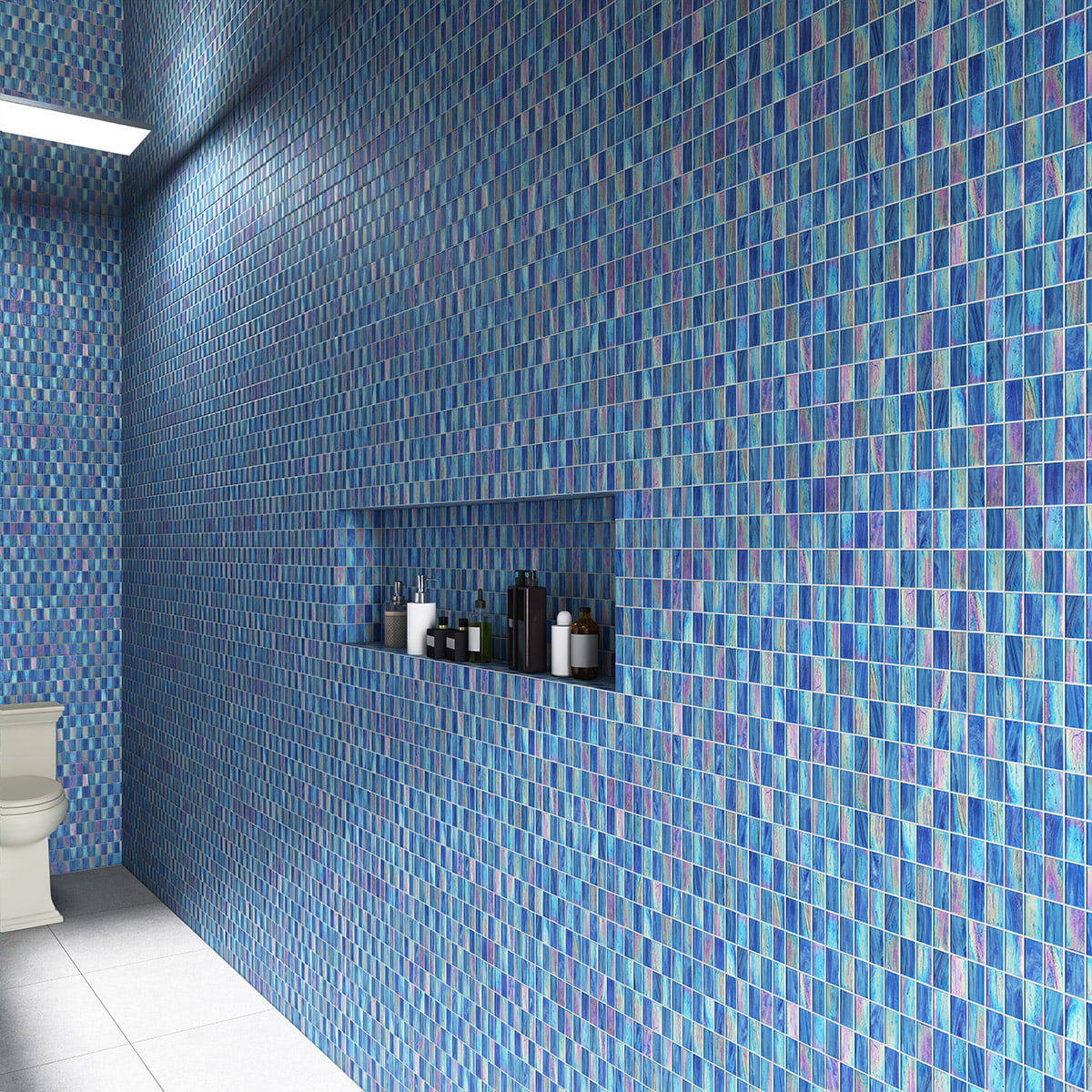
Vibrant Blue Mosaic Design
Bold blue mosaic tiles create stunning visual interest. Perfect for accent walls or full niche coverage, adding coastal or Mediterranean vibes.

Pink Mosaic with Gold Accents
Luxurious pink mosaic tiles mixed with 24k gold create a glamorous statement. Black matte fixtures provide striking contrast.

Modern Hexagon Glass Mosaic
Clean, minimalist design featuring hexagon glass mosaic tiles. Perfect for contemporary bathrooms seeking geometric elegance.

Turquoise Glass Mosaic Retreat
Serene turquoise glass mosaic tiles evoke spa-like tranquility. Ideal for creating a calming, ocean-inspired bathroom atmosphere.

Neutral Gray & White Elegance
Timeless gray and white glass mosaic combination provides versatile backdrop. Gold fixtures add warmth to neutral palette.
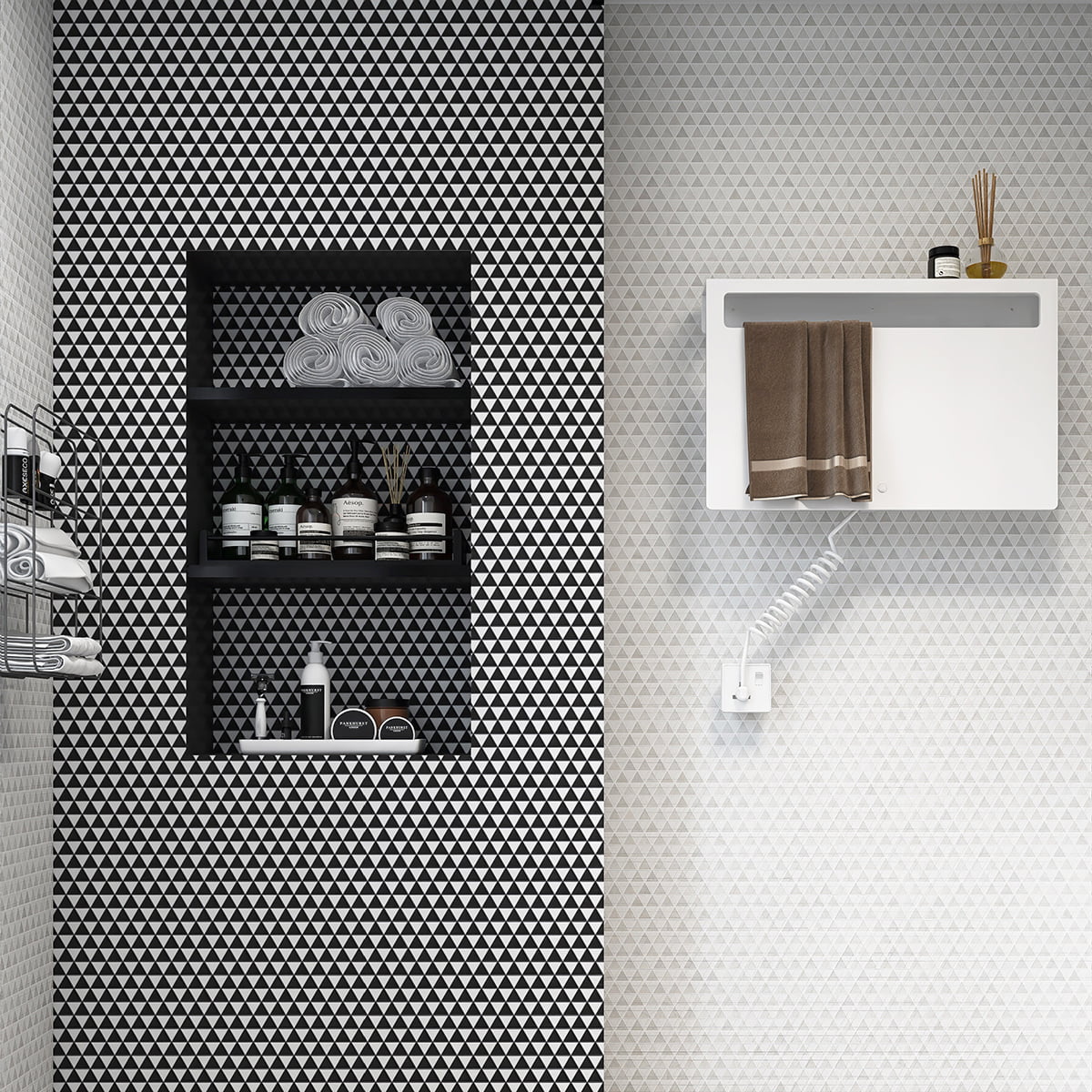
Bold Triangle Pattern Design
Striking black and white triangle mosaic creates dramatic geometric impact. Perfect for modern, art-deco inspired bathrooms.

Classic Blue & White Mosaic
Traditional blue and white mosaic pattern brings timeless charm. Natural wood elements add warmth and spa-like ambiance.
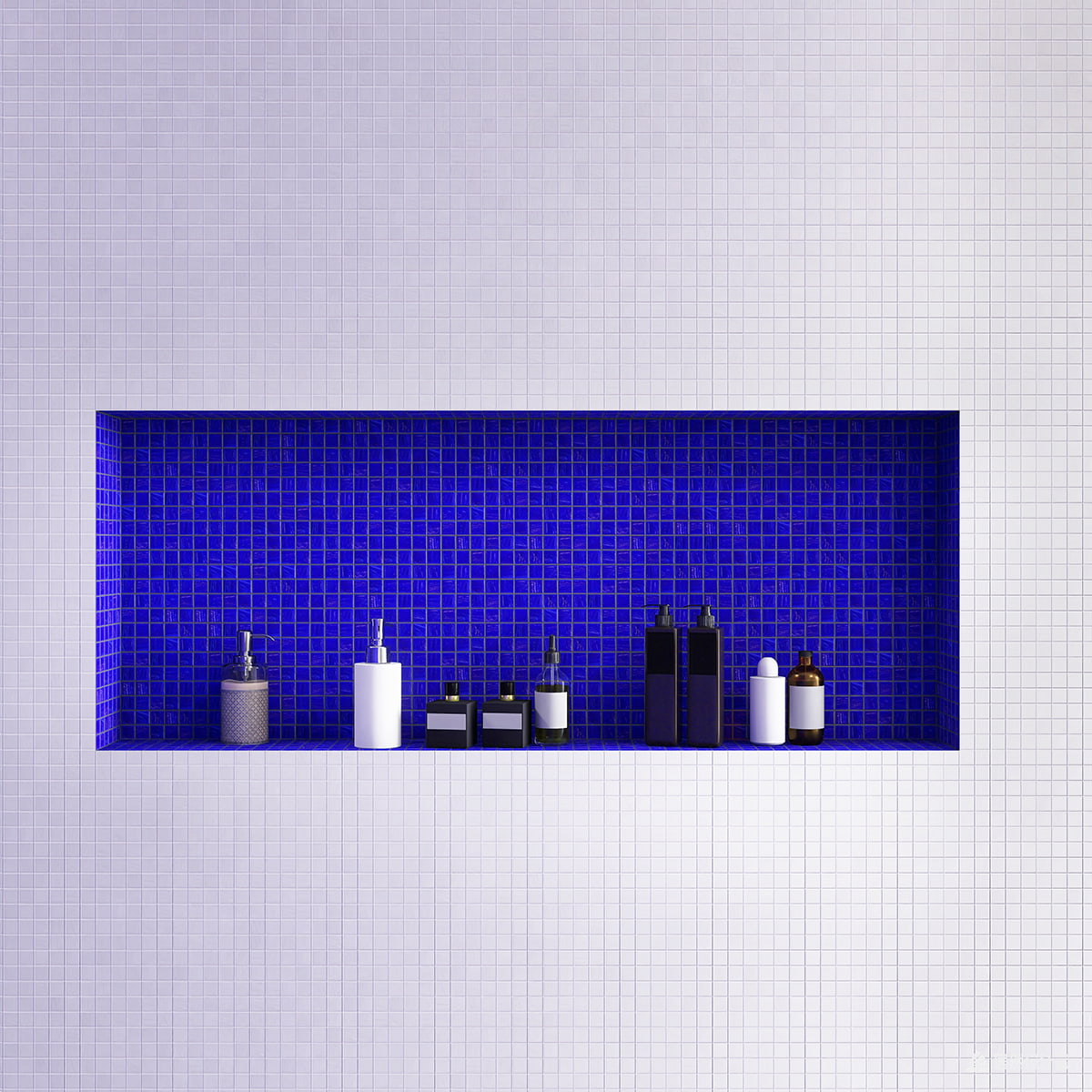
Royal Blue Accent Niche
Pristine white walls with vibrant royal blue mosaic niche creates stunning contrast. Perfect way to add color without overwhelming space.

Forest Green Moss Mosaic
Rich forest green mosaic tiles bring nature indoors, creating a botanical retreat. Pairs beautifully with brass or gold fixtures.
Planning Your Shower Niche Installation
Size and Placement Considerations
Standard Dimensions: Most shower niches are built between wall studs, which are typically 14.5 inches apart. This allows for a niche approximately 12-13 inches wide.
Height Placement: Position the niche at a comfortable height for all users. Consider the tallest and shortest people in your household. Generally, 48-60 inches from the shower floor works well.
Depth: A depth of 3.5 to 4 inches is standard, providing adequate storage without protruding too far into the wall cavity.
Avoid These Locations:
- Exterior walls (insulation interference and potential freezing issues)
- Areas with plumbing or electrical wiring
- Load-bearing structures
- Direct shower spray path (causes water pooling)
Types of Shower Niches
Built-In Custom Niches
Constructed directly into the wall between studs using cement board or foam board. Offers complete customization in size, shape, and placement. Requires waterproofing before tiling.
Preformed Niche Kits
Ready-to-install units made from plastic, fiberglass, stainless steel, or foam. Come pre-waterproofed and in standard sizes. Easier installation but less customization.
Metal Frame Niches
Metal frame inserts that slide into the wall opening. Popular options include stainless steel and aluminum. Modern appearance and easy to keep clean.
Essential Tools and Materials
Required Tools
- Notched Trowel - 1/4" x 1/4" square notch for most tiles
- Laser Level - Ensures perfect alignment across multiple niches
- Torpedo Level - For checking slopes and small adjustments
- Tile Cutter or Wet Saw - For precise tile cuts
- Angle Grinder - With diamond blade for detailed cuts
- Grout Float - For applying and embedding tiles
- Mixing Drill & Bucket - For preparing thin-set and grout
- Tape Measure - Accurate measurements are crucial
- Tile Spacers - 1/16" or 1/8" depending on design
- Grout Sponge - For cleaning excess grout
- Utility Knife - For various cutting tasks
- Caulk Gun - For silicone sealant application
Required Materials
- Thin-Set Mortar - Modified thin-set for wet areas (not mastic!)
- Tiles - Your choice of ceramic, porcelain, glass, or stone
- Waterproofing Membrane - Liquid or sheet membrane
- Grout - Epoxy or polymer-modified for wet areas
- Grout Sealer - Protects grout from moisture and stains
- Silicone Caulk - 100% silicone for wet areas
- Edge Trim (Optional) - Schluter profiles, pencil trim, or bullnose
- Cement Board or Foam Board - For building custom niches
Critical Safety Equipment
- • Safety glasses or goggles
- • Dust mask or respirator
- • Work gloves
- • Knee pads for comfort
Step-by-Step: How to Tile a Shower Niche
Follow this professional installation sequence for perfect results
Waterproofing Preparation
Foundation of a leak-free niche
This is the most critical step. Apply waterproofing membrane to the entire niche interior, including the sill, back wall, sides, and ceiling. Extend the membrane at least 2-3 inches beyond the niche opening onto the surrounding wall.
For liquid membranes, apply 2-3 coats according to manufacturer specifications. For sheet membranes, ensure all seams are properly sealed and corners are reinforced with additional material.
Never Use Mastic in Wet Areas!
Mastic is organic and will break down when exposed to constant moisture. Always use modified thin-set mortar for shower applications.
Select Your Trowel Size
Proper trowel = proper adhesion
The trowel size must match your tile thickness for optimal thin-set coverage:
- 1/4" thick tiles: Use 1/4" x 1/4" square-notched trowel
- 3/8" thick tiles: Use 3/8" x 3/8" square-notched trowel
- Mosaic tiles: Use 3/16" V-notched trowel
Square notches create better adhesion for wall tiles. The ridges should stand up without sagging—if they droop, your thin-set is too wet.
Install the Sill Tile First
The foundation of your niche
The sill (bottom shelf) is the first tile you install. This critical piece requires special attention:
- Apply thin-set to the niche sill area with your trowel
- Back-butter the sill tile with additional thin-set
- Press the tile firmly into place
- Create a 1/16" forward slope toward the shower (critical for drainage!)
- Extend the sill 1/16" beyond the niche opening if using trim
- Use a torpedo level to verify the slope
- Use a laser level to ensure it's level side-to-side
Pro Tip: Why Slope Matters
A level sill causes water to pool in the back corner, creating perfect conditions for mold and mildew. A slight forward slope (barely noticeable) allows water to drain naturally.
Tile the Back Wall
Center of visual attention
After the sill is set, move to the back wall:
- Comb thin-set onto the back wall with your notched trowel
- For mosaic sheets, embed by hand first, then press with grout float
- For individual tiles, back-butter each piece before setting
- Ensure factory edges face the outside for clean grout joints
- Use tile spacers (1/16" or 1/8") to maintain consistent grout lines
- Remove thin-set that oozes from joints with a utility knife and damp sponge
For mosaic tiles: You can cut sheets with a wet saw or tile cutter. Use 1/16" horseshoe shims to space pieces evenly when piecing together cut sheets.
Install the Ceiling Tile
Top it off perfectly
Install the top tile before the side tiles:
- Measure and cut the top tile to fit
- Apply thin-set and back-butter the tile
- Position with factory edge facing outward
- Use your laser level to ensure it's level with the sill
- If installing multiple niches, verify all top tiles align
This tile hides any imperfections in the back wall tiles and creates a clean finished look at the top of your niche.
Cut and Install Side Tiles
Precision cutting required
The side tiles are the most challenging because they must accommodate the sill's slope:
- Measure the front dimension between top and bottom tiles
- Account for the sill's 1/16" slope when measuring
- Make a scribe cut on the bottom edge to match the slope
- Use an angle grinder with diamond blade for precise cuts
- Test fit before applying thin-set
- Apply thin-set and embed the side tiles
- Use laser level to verify they're plumb (perfectly vertical)
Safety Warning
Always wear safety glasses, dust mask, and gloves when using angle grinders. Use the wheel guard and work in a well-ventilated area.
Add Edge Trim or Finishing
Professional polished appearance
Choose your preferred edge finishing method:
Option 1: Schluter Metal Trim
Modern, professional appearance. Install the L-shaped profiles by sliding the blade behind the main wall tiles before tiling around the niche. Chrome, brushed nickel, and matte black available.
Option 2: Pencil Trim Tile
Decorative tile trim pieces that create a picture-frame effect. Install after main tiling, applying thin-set to the edges and pressing trim pieces into place.
Option 3: Bullnose Tiles
Rounded-edge tiles that provide smooth transition. Use bullnose pieces for all exposed edges of the niche for a seamless integrated look.
Option 4: Mitered Edges
Cut tiles at 45° angles to create seamless corners. Requires precision cutting but creates ultra-clean contemporary look without separate trim pieces.
Grout Application
Seal the joints properly
Wait 24-48 hours after tiling before grouting:
- Remove all tile spacers
- Clean out any remaining thin-set from joints
- Mix grout according to manufacturer instructions
- Consider using latex additive instead of water for better performance
- Apply grout with grout float at 45° angle to joints
- Work grout into joints completely, eliminating air pockets
- Remove excess with float held at steep angle
- Clean tiles with damp (not wet) sponge using circular motions
- Rinse sponge frequently
- Allow grout to cure per manufacturer specs (usually 72 hours)
Pro Tip: Epoxy Grout
For ultimate water resistance and stain protection in shower niches, consider epoxy grout. It's more expensive and tricky to work with, but never needs sealing and resists mold perfectly.
Seal and Final Touches
Protection and longevity
Complete your niche installation with proper sealing:
- After grout cures (72 hours), clean tiles with tile cleaner
- Remove any grout haze with appropriate cleaner
- Apply grout sealer according to manufacturer directions
- Allow sealer to dry completely
- Apply 100% silicone caulk around niche perimeter where it meets main wall
- Smooth caulk bead with finger or caulk tool
- Allow all materials to cure before using shower (typically 7 days total)
Congratulations! Your shower niche is complete and ready for use!
7 Critical Mistakes to Avoid
Learn from common errors that can ruin your shower niche project
Mistake #1: Skipping Waterproofing
The Problem: Thinking tile and grout alone make a waterproof shower.
The Solution: Always apply proper waterproofing membrane to the entire niche interior before any tile work. This is your primary water barrier—tile is just decorative protection.
Mistake #2: Installing a Level Sill
The Problem: A perfectly flat shelf causes water to pool in the back corner, creating mold and mildew.
The Solution: Always slope the sill 1/16" to 1/8" toward the shower. This subtle angle is invisible but ensures proper drainage.
Mistake #3: Using Mastic Instead of Thin-Set
The Problem: Mastic is organic and breaks down in constant moisture, causing tile failure.
The Solution: Always use modified thin-set mortar for shower applications. It's specifically formulated for wet areas and provides superior bond strength.
Mistake #4: Installing Niche in Exterior Wall
The Problem: Exterior walls contain insulation and can freeze in cold climates, causing water damage and tile failure.
The Solution: Only install niches in interior walls. If you must use an exterior wall, use a surface-mounted metal niche instead of cutting into the wall.
Mistake #5: Wrong Installation Order
The Problem: Installing tiles in the wrong sequence makes alignment difficult and creates drainage issues.
The Solution: Always follow this order: Sill first, back wall second, ceiling third, sides last. This sequence ensures proper water management and easier installation.
Mistake #6: Not Planning Tile Layout
The Problem: Starting to tile without planning results in awkward cuts, slivers of tile, and misaligned grout lines.
The Solution: Measure carefully and plan your layout before mixing thin-set. Use a laser level to mark reference lines and ensure your niche integrates seamlessly with surrounding tile.
Mistake #7: Forgetting to Seal Grout
The Problem: Unsealed grout absorbs water, leading to staining, mildew, and eventual grout deterioration.
The Solution: After grout fully cures (72 hours), apply quality grout sealer. Reapply annually to maintain water resistance and keep your niche looking new.
Professional Tips for Perfect Results
Use Smaller Tiles for Easier Installation
Mosaic tiles, penny tiles, or small format tiles are much easier to work with in the confined space of a niche. They also allow for better slope adjustment on the sill.
Invest in a Laser Level
If you're installing multiple niches or want professional results, a laser level is invaluable. It ensures perfect alignment across large areas and saves hours of measuring.
Back-Butter Every Tile
In addition to combing thin-set on the wall, apply a thin layer to the back of each tile. This ensures 100% coverage and maximum bond strength, eliminating hollow spots.
Keep Factory Edges Outward
Always position tiles so the factory-finished edges face the exterior of the niche. This creates cleaner grout lines and better appearance with trim pieces.
Test Fit Before Setting
Always dry-fit tiles before applying thin-set, especially cut pieces. This prevents errors and allows you to make adjustments without wasting materials or time.
Create an Accent Feature
Use contrasting tile in the niche to create a focal point. Glass mosaics, textured tiles, or bold colors make your niche stand out as a design element.
Maintaining Your Shower Niche
Regular Maintenance Schedule
Daily
Squeegee water off the niche surfaces after each shower use. This simple habit prevents soap scum buildup and water spots.
Weekly
Clean with mild bathroom cleaner or vinegar solution. Spray, let sit for a few minutes, scrub gently with soft brush, and rinse thoroughly.
Monthly
Inspect grout lines for any cracks or deterioration. Check caulk seals around niche perimeter. Address any issues immediately to prevent water damage.
Annually
Reapply grout sealer to maintain water resistance. Remove all items, clean thoroughly, apply sealer per manufacturer instructions, and allow to dry completely.
Recommended Cleaning Products
Safe to Use:
- • pH-neutral tile cleaners
- • White vinegar (diluted 1:1 with water)
- • Baking soda paste for stubborn spots
- • Mild dish soap and water
- • Commercial grout cleaners (as directed)
Avoid These:
- • Bleach (deteriorates grout over time)
- • Ammonia-based cleaners
- • Acidic cleaners on natural stone
- • Abrasive scrubbers (scratch tile surface)
- • Oil-based soaps (leave residue)
Frequently Asked Questions
What size should my shower niche be?
Standard niches are 12-14 inches wide (between wall studs), 12-20 inches tall, and 3.5-4 inches deep. However, you can customize based on your needs and the products you'll store. Multiple smaller niches often work better than one large one.
Can I tile a shower niche without bullnose?
Absolutely! You have several options: use Schluter metal trim profiles, pencil trim tiles, miter the tile edges at 45°, or use glass/stone tiles with finished edges that don't require additional trim. Each method creates a professional appearance.
How long does it take to tile a shower niche?
For an experienced DIYer, plan on 4-6 hours for the tiling process itself. However, you must factor in drying time: 24 hours for thin-set to cure, 72 hours for grout to cure, plus sealing time. Total project time from start to finish is typically 5-7 days.
Should I use the same tile or different tile in the niche?
Both approaches work beautifully! Using the same tile creates a seamless, integrated look that makes the shower appear larger. Using contrasting tile (like colorful mosaics or textured tiles) creates a stunning focal point. Consider your overall bathroom design and personal preference.
What's the best tile for a shower niche?
Porcelain and ceramic tiles are excellent choices due to their durability and water resistance. Glass mosaics are popular for their beauty and ease of cleaning. Natural stone like marble or travertine looks luxurious but requires more maintenance and sealing. Avoid porous materials without proper sealing.
Do I need to slope all four sides of the niche?
No, only the sill (bottom shelf) needs to be sloped forward toward the shower. The back wall, sides, and ceiling remain perfectly vertical and level. The 1/16" slope on just the sill is sufficient for proper water drainage.
Can I add a shower niche to an existing shower?
While technically possible, it's challenging and expensive to cut into finished tile walls. A better option is installing a surface-mounted metal niche or a retrofit niche that adheres to the existing wall. Alternatively, consider a full shower remodel if you want a truly integrated built-in niche.
Ready to Transform Your Shower?
Tiling a shower niche is a rewarding project that combines practical storage with stunning design. By following the step-by-step instructions in this guide, avoiding common mistakes, and using proper materials and techniques, you can create a professional-quality shower niche that will enhance your bathroom for years to come.
Key Takeaways
- Always waterproof completely before tiling—this is your primary protection against water damage
- Slope the sill 1/16" forward for proper drainage and mold prevention
- Install in correct order: sill, back wall, ceiling, sides for easiest installation
- Use modified thin-set mortar (never mastic) for wet area applications
- Choose appropriate edge finishing: Schluter trim, pencil trim, bullnose, or mitered edges
- Seal grout after curing and maintain annually for long-lasting beauty
Whether you're a first-time DIYer or experienced contractor, a well-executed shower niche adds value, function, and style to any bathroom. Take your time, follow best practices, and enjoy the satisfaction of creating a beautiful feature that will serve you well for decades.
Need professional tile and installation supplies?
Explore our featured tile collections and find the perfect materials for your shower niche project.
Comment