













Explore Modern Tile Materials, Shapes and Finishes
Modern tile design is not limited to one color or material. Clean geometric layouts, linear arrangements, reflective metals, dimensional surfaces and carefully balanced colors can all create a contemporary appearance. Explore the collection by material, shape, finish and approved application.
What Are Modern Tiles?
Key Characteristics
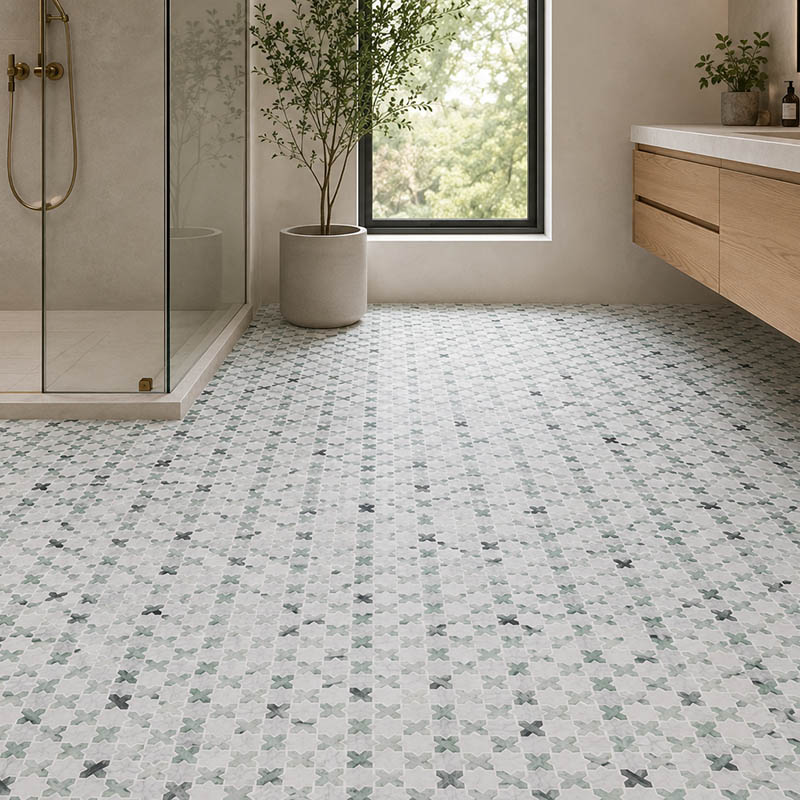
Modern tiles feature clean, minimalist lines with uncluttered surfaces and deliberate geometric presence. Neutral color palettes dominate—gray tones (light to charcoal), white, beige, and black create timeless foundations. Matte or soft-gloss finishes offer refined elegance while hiding fingerprints and water spots. Subtle textures add tactile interest without overwhelming spaces, while strong geometric forms—hexagons, rectangles, linear patterns—create visual rhythm.
Why Choose Modern Tiles
- Timeless appeal that remains stylish for decades
- Versatile across bathrooms, kitchens, living areas
- Easy maintenance with practical finishes
- Visual continuity that enhances space perception
- 20+ year lifespan with proper care
Materials and Finishes
Popular Materials
Glass Mosaic Tiles
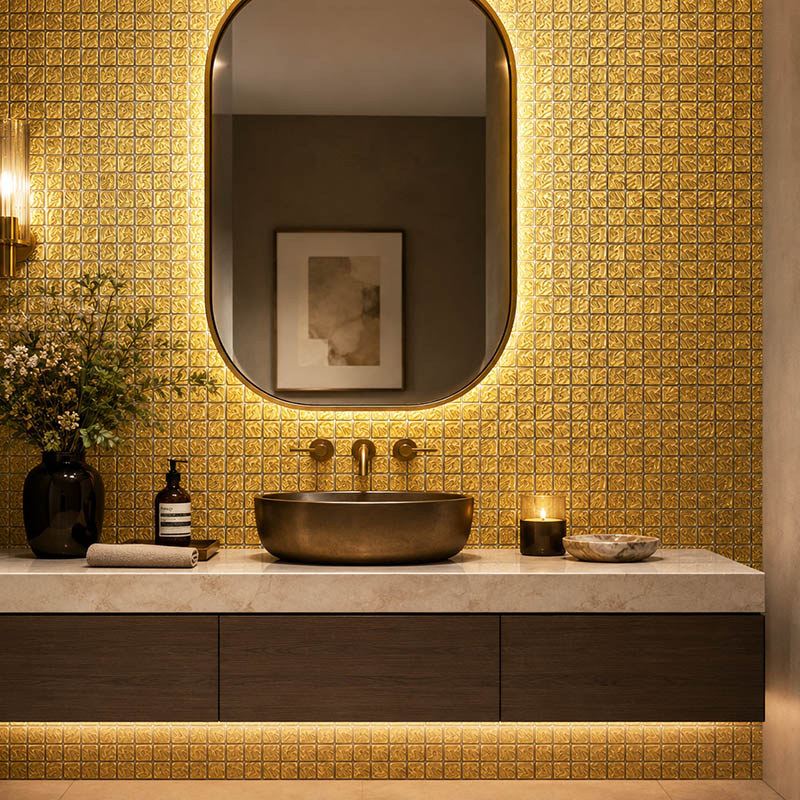
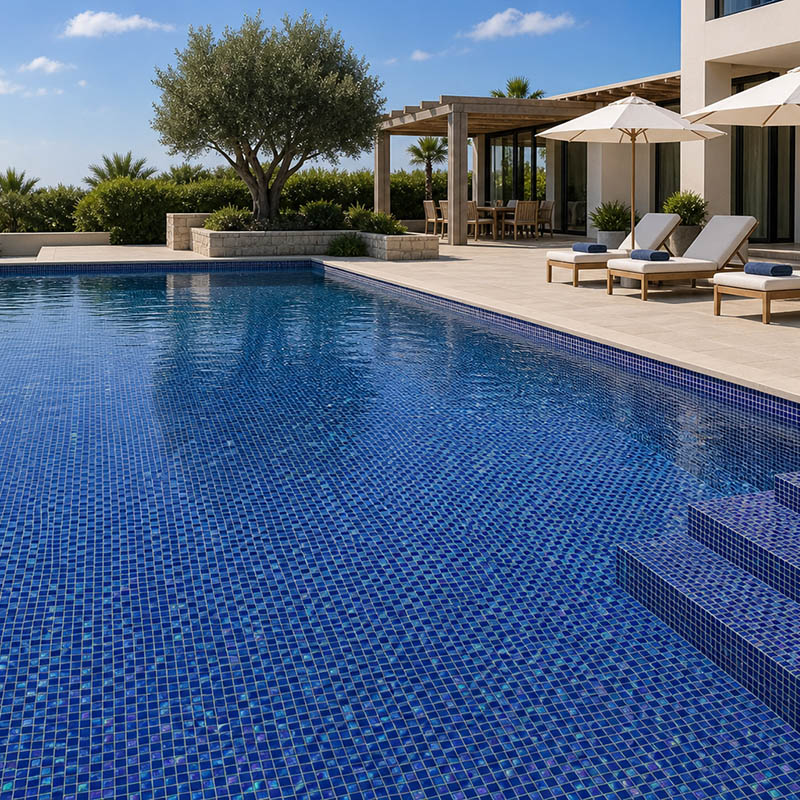
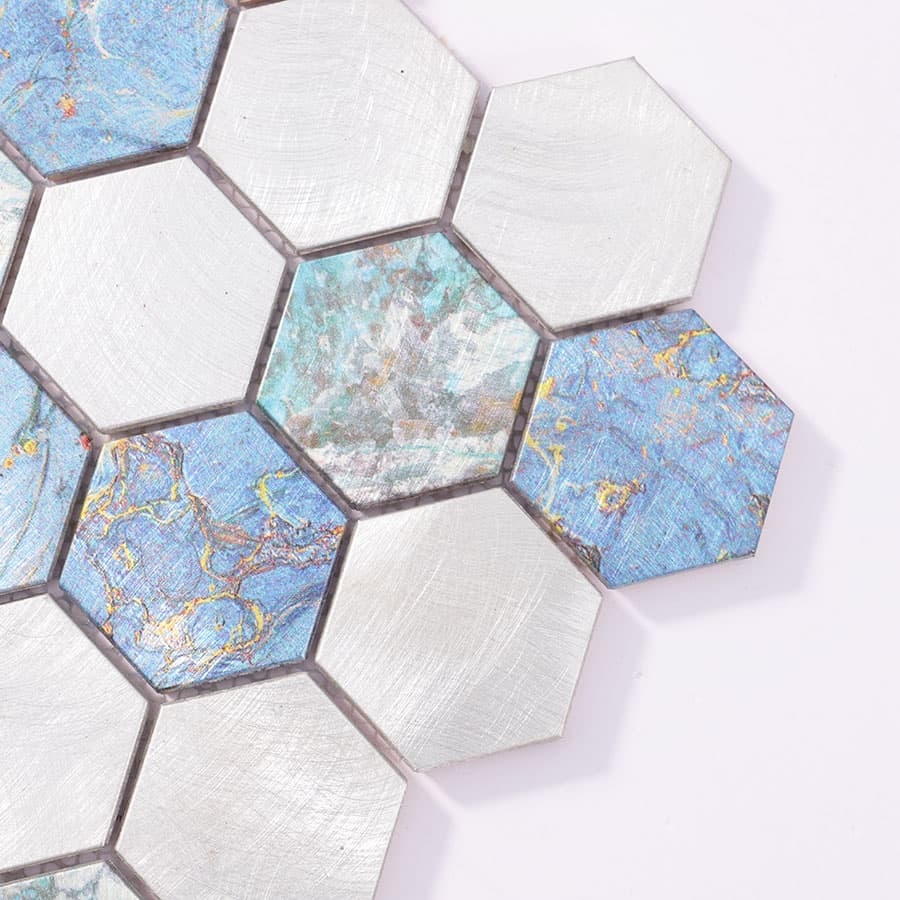
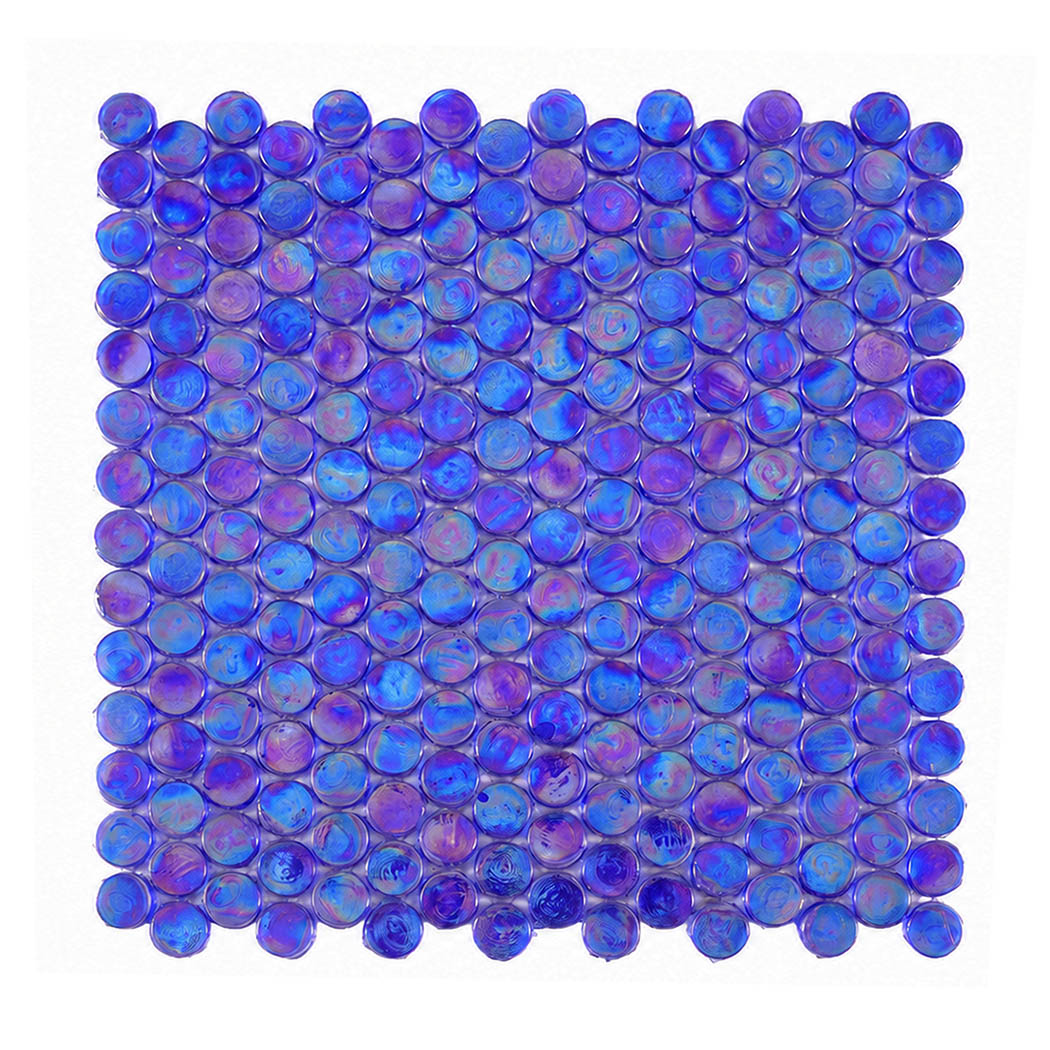
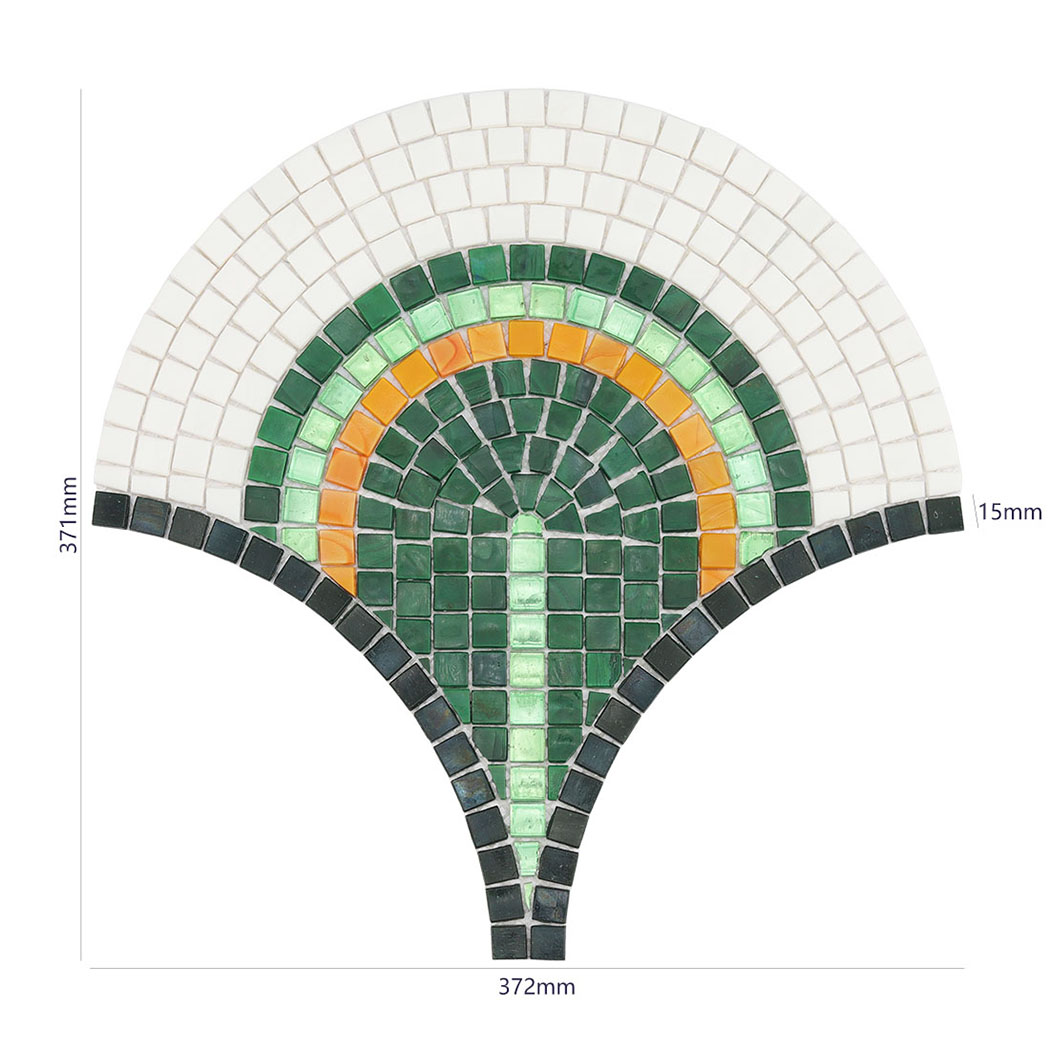
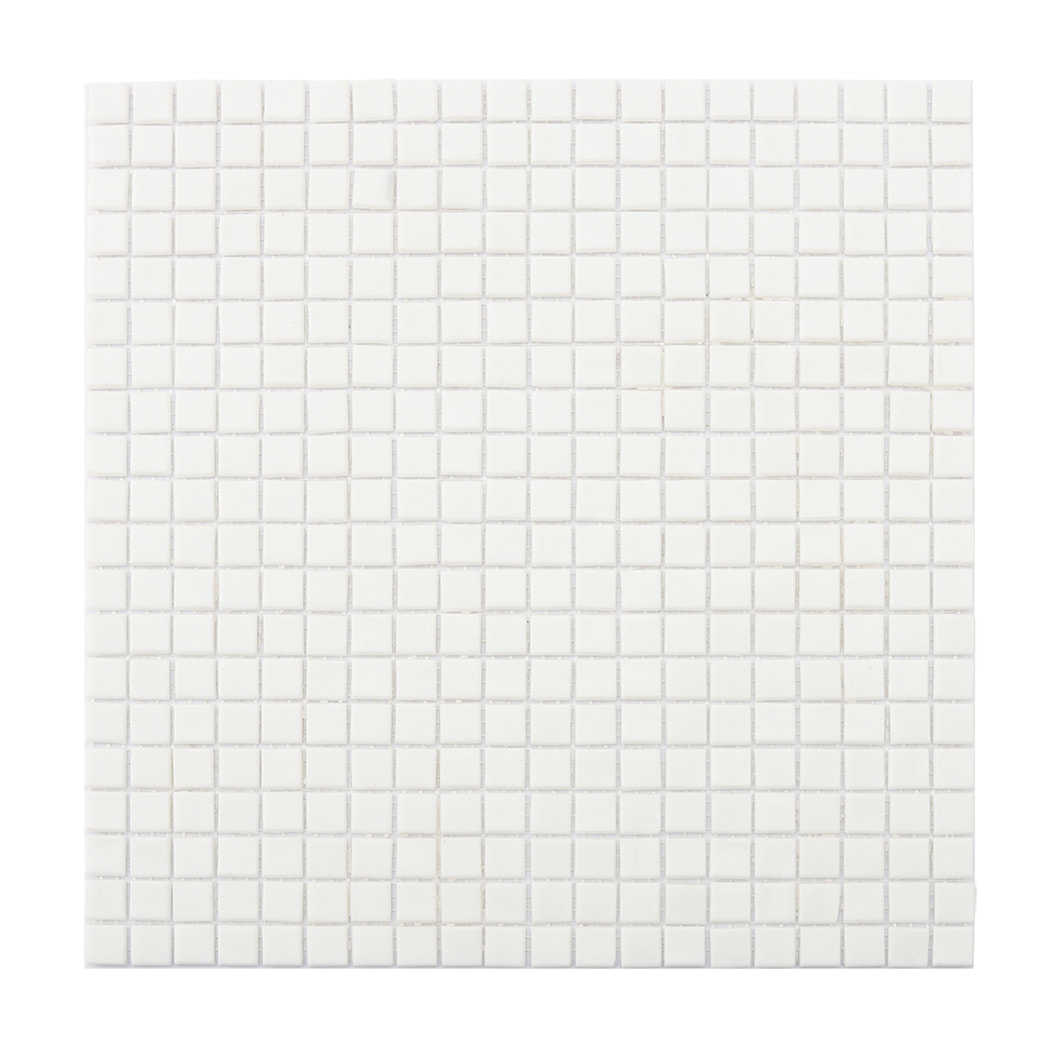
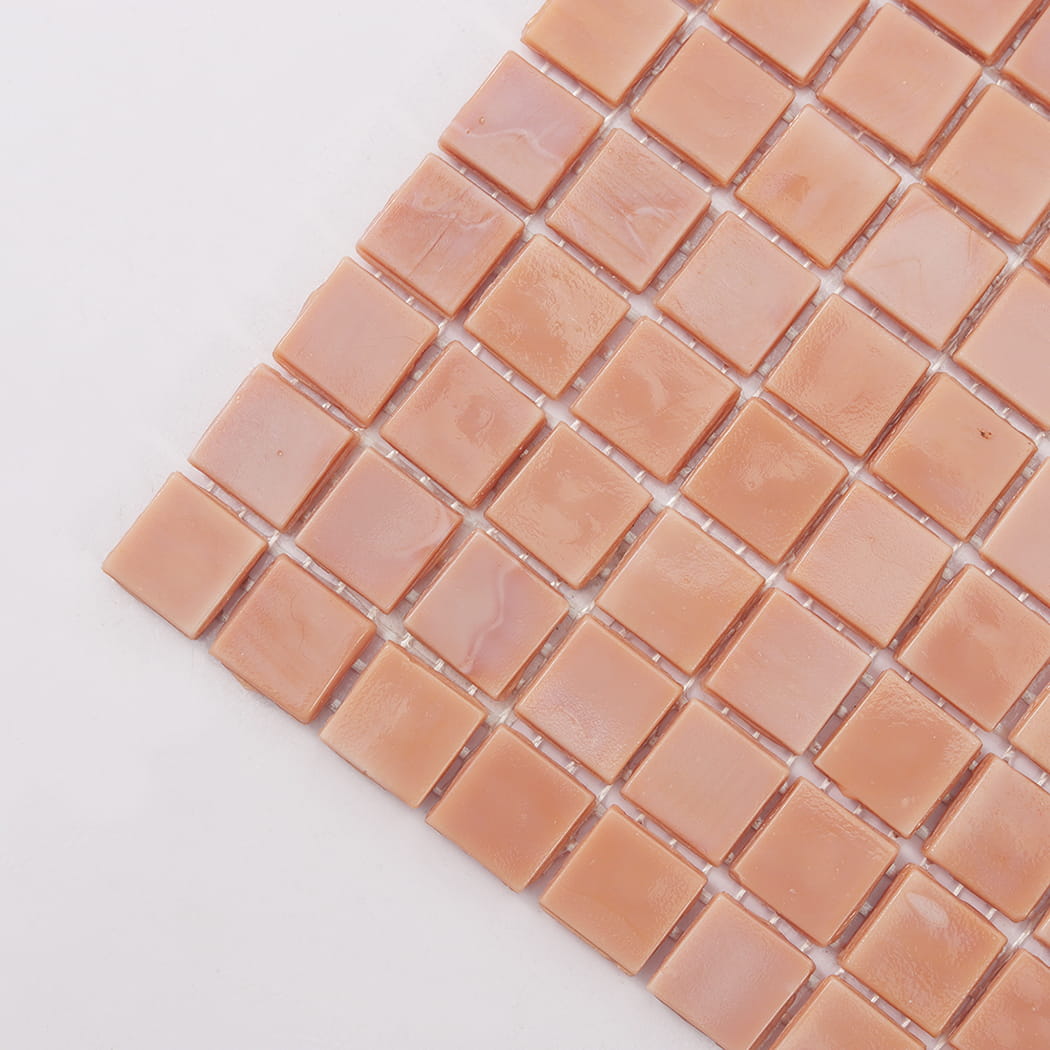
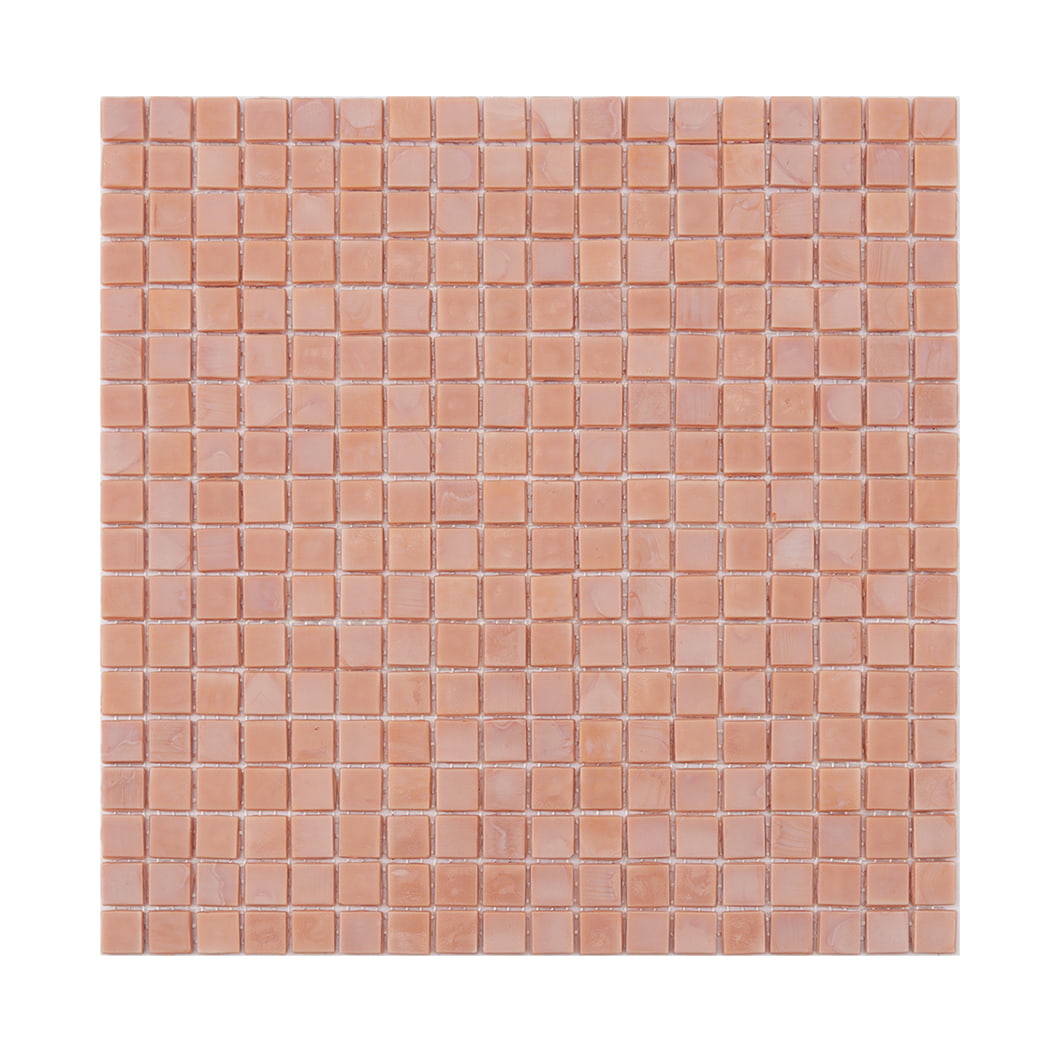
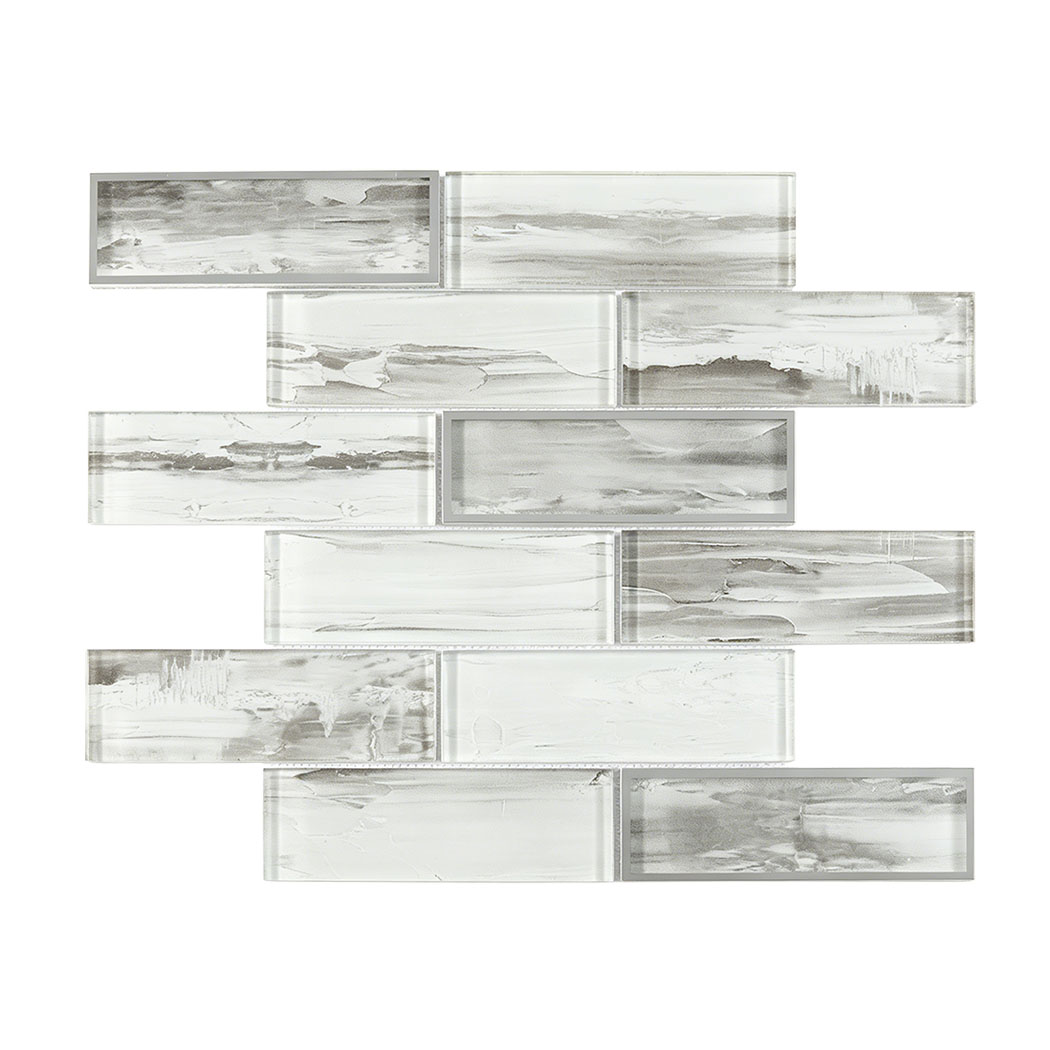
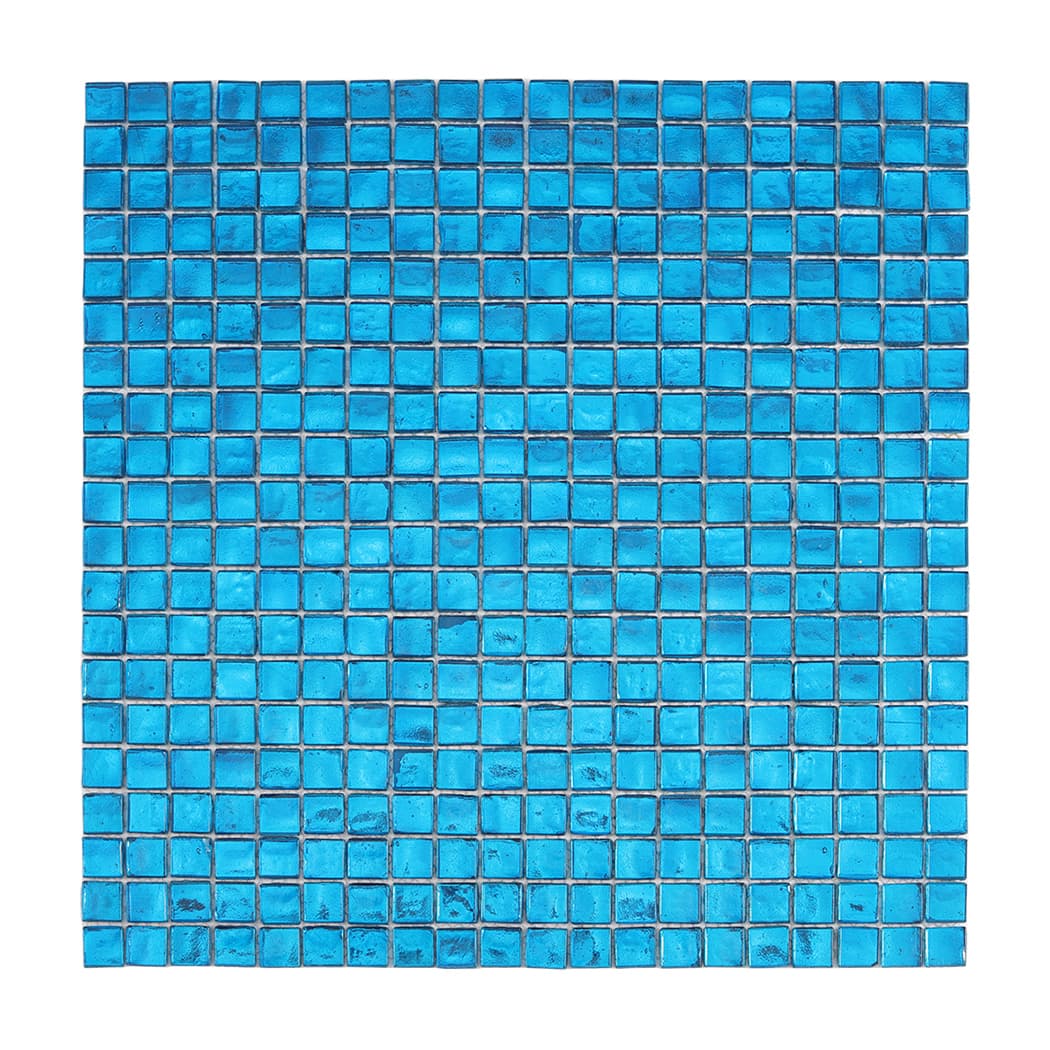
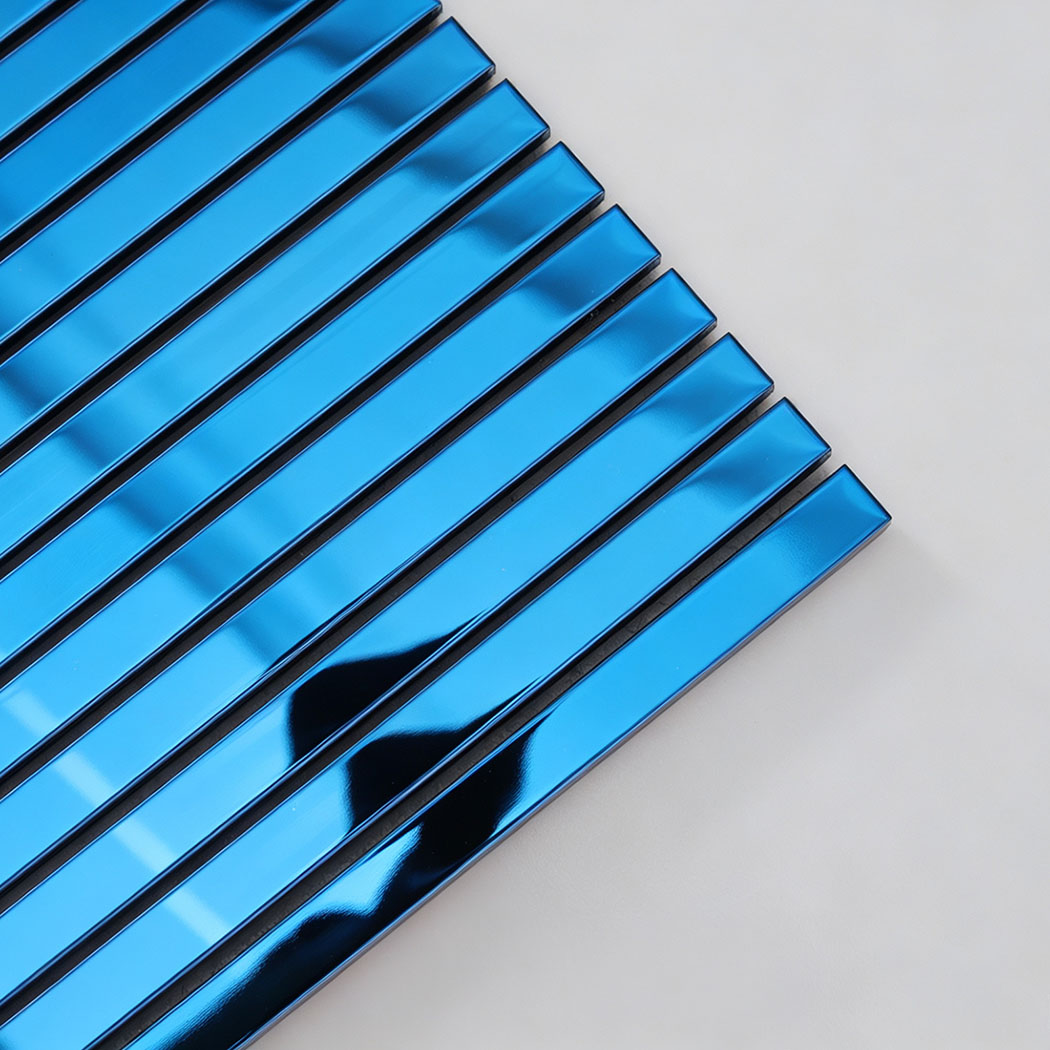
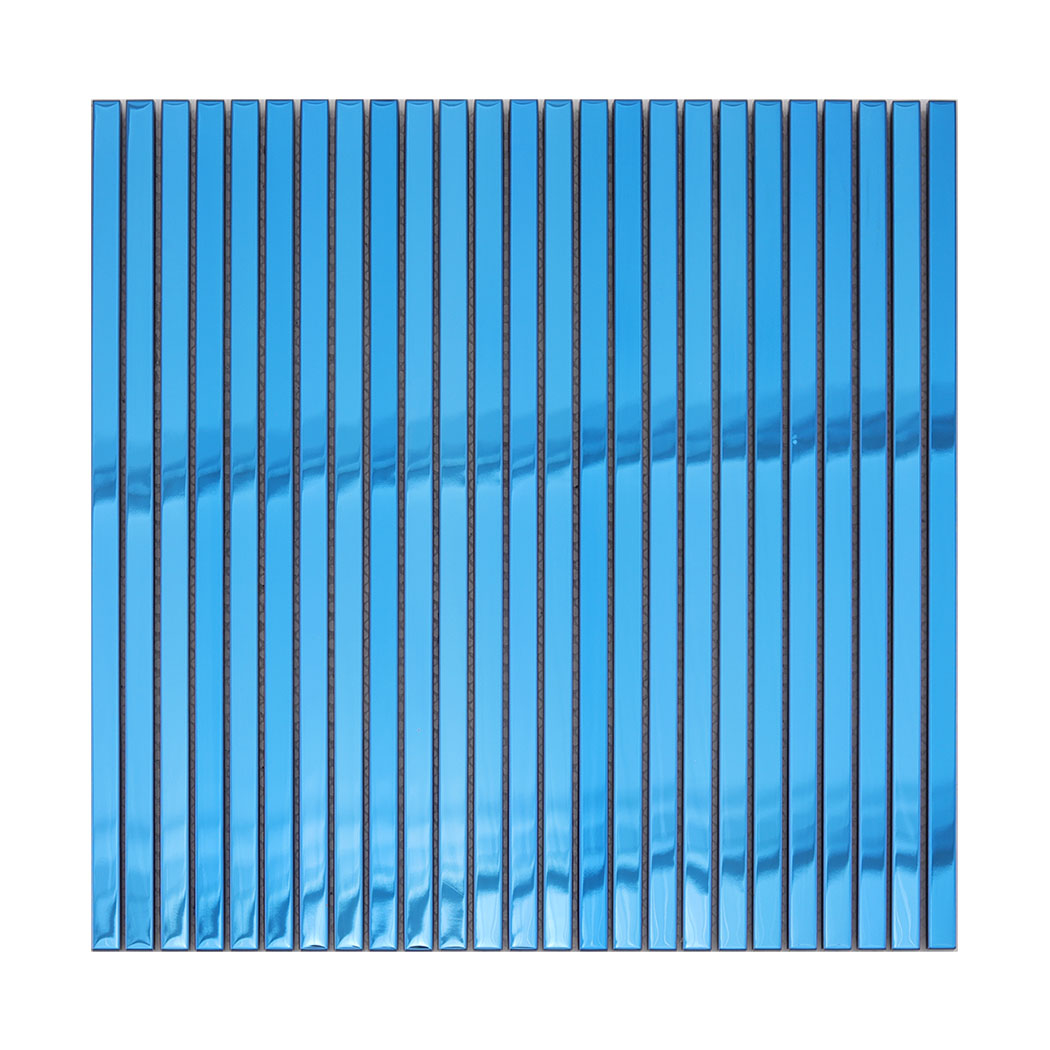
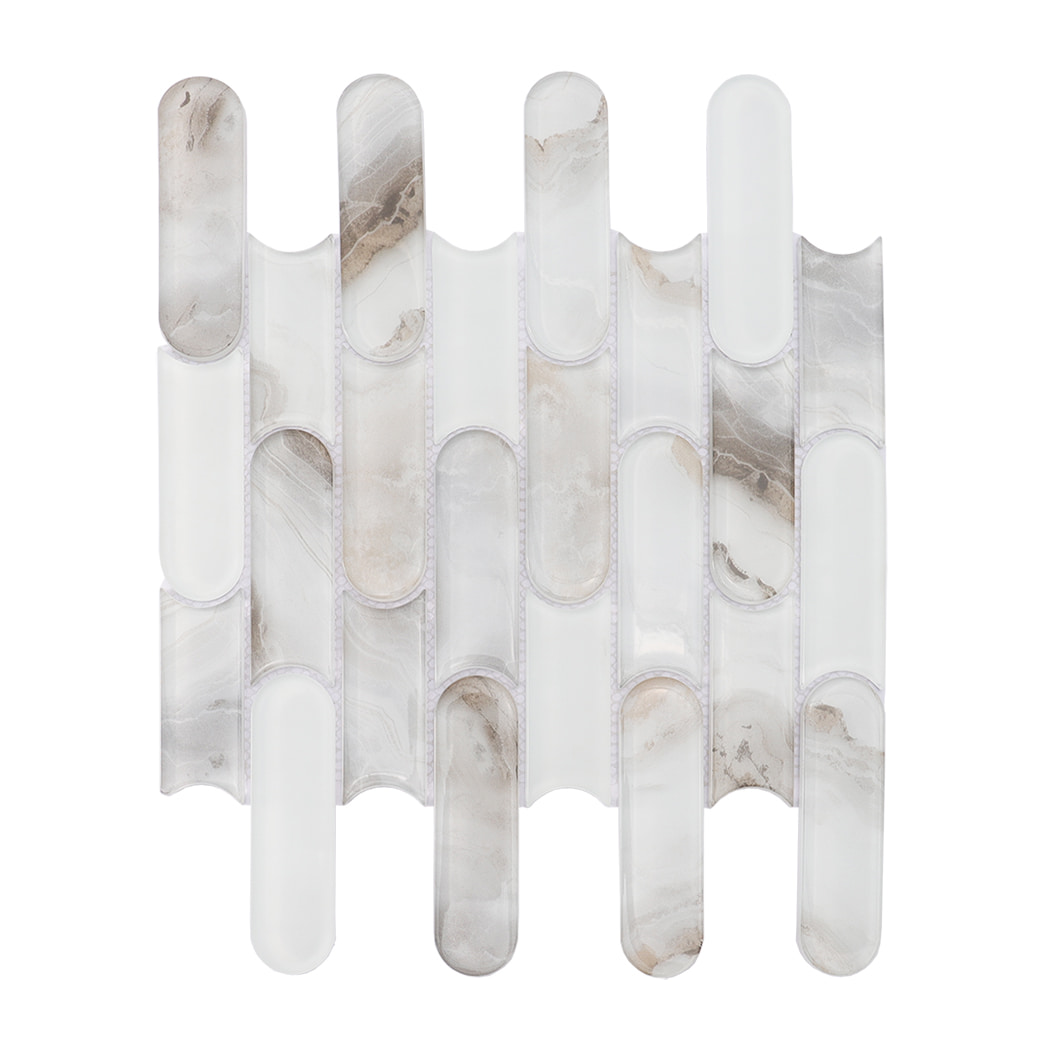
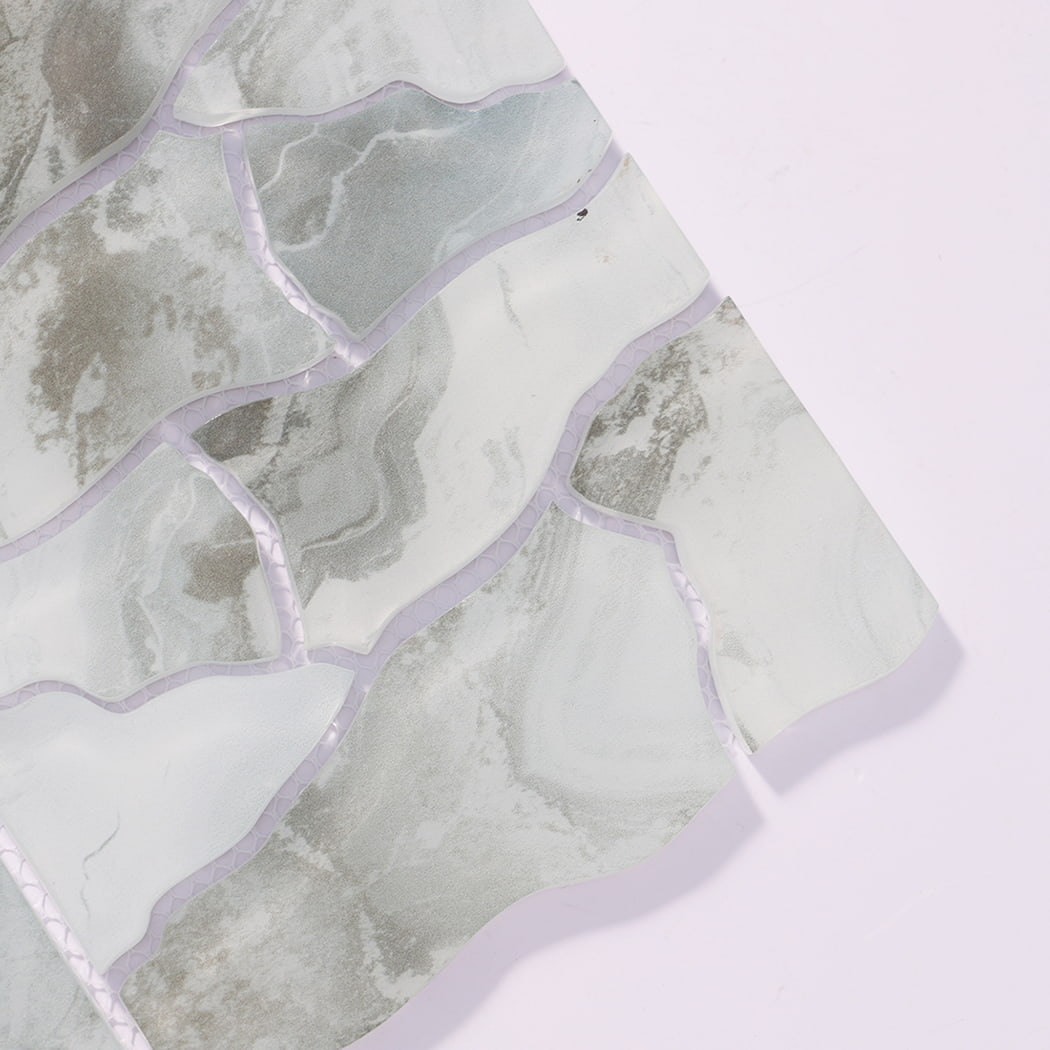
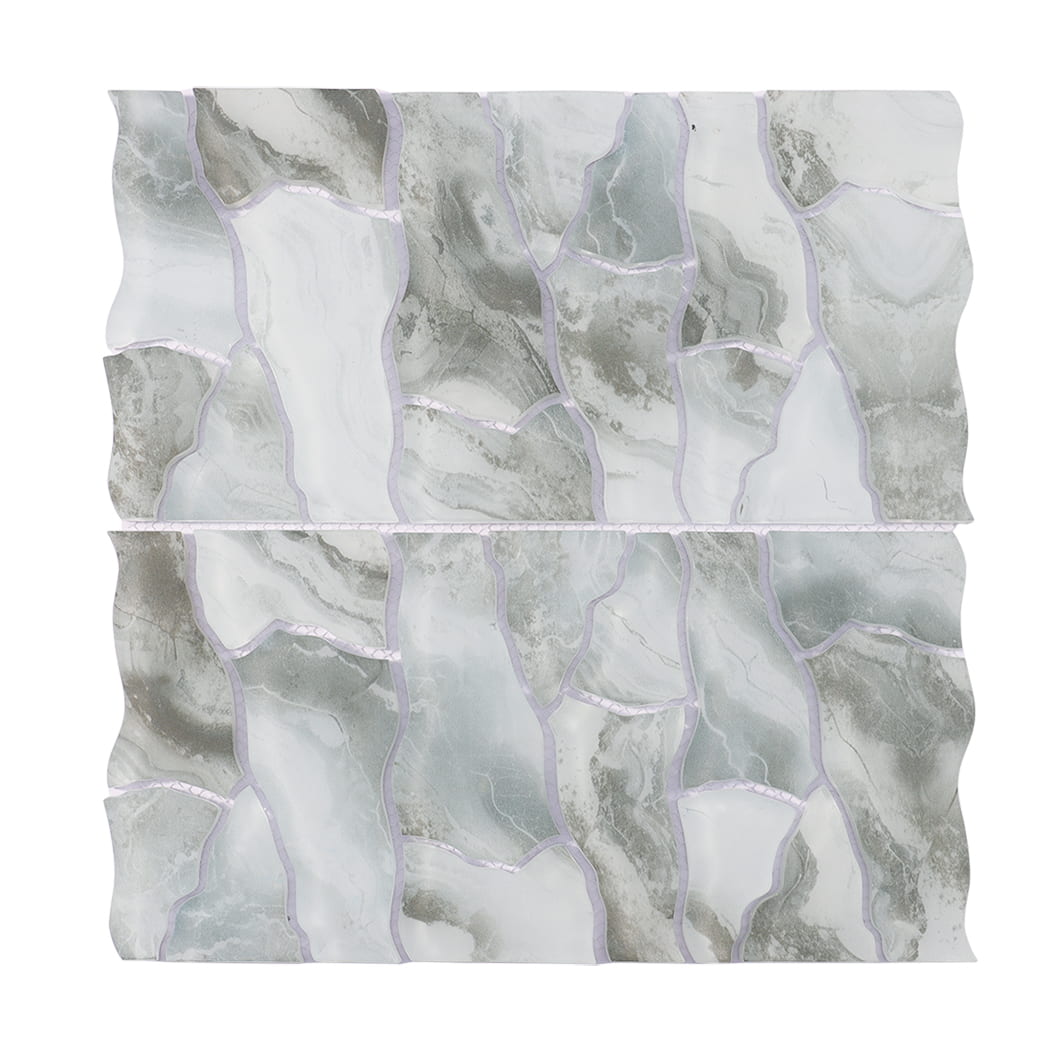
Glass mosaics introduce color, reflection and visual depth. Glossy, frosted, iridescent, water-glass and electroplated finishes can create anything from subtle neutral walls to bold contemporary focal points.
Metal Mosaic Tiles
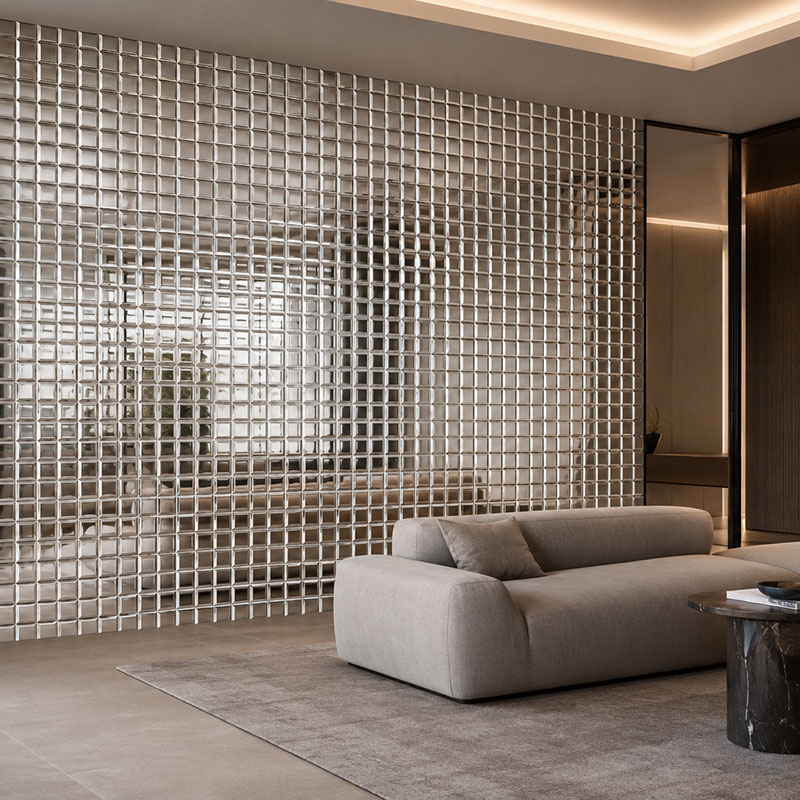
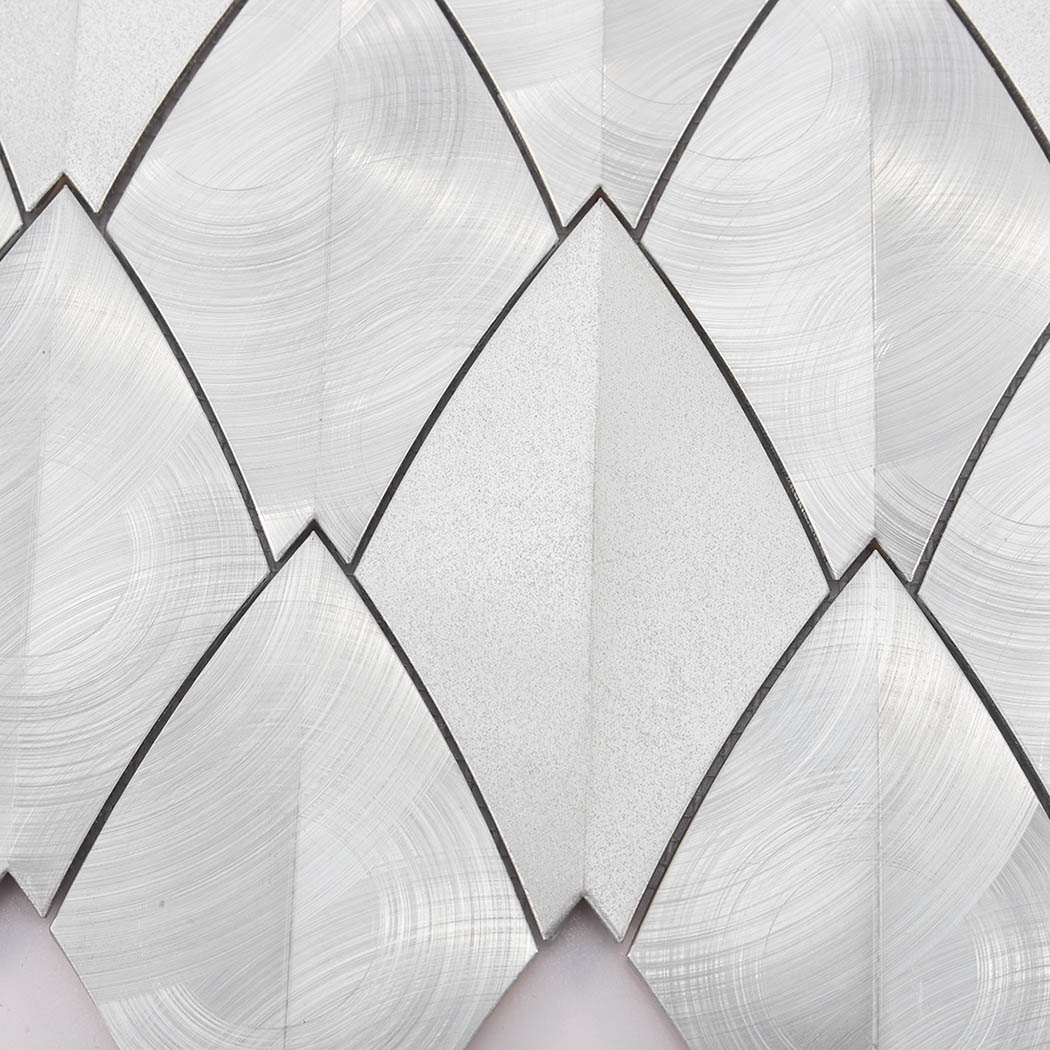
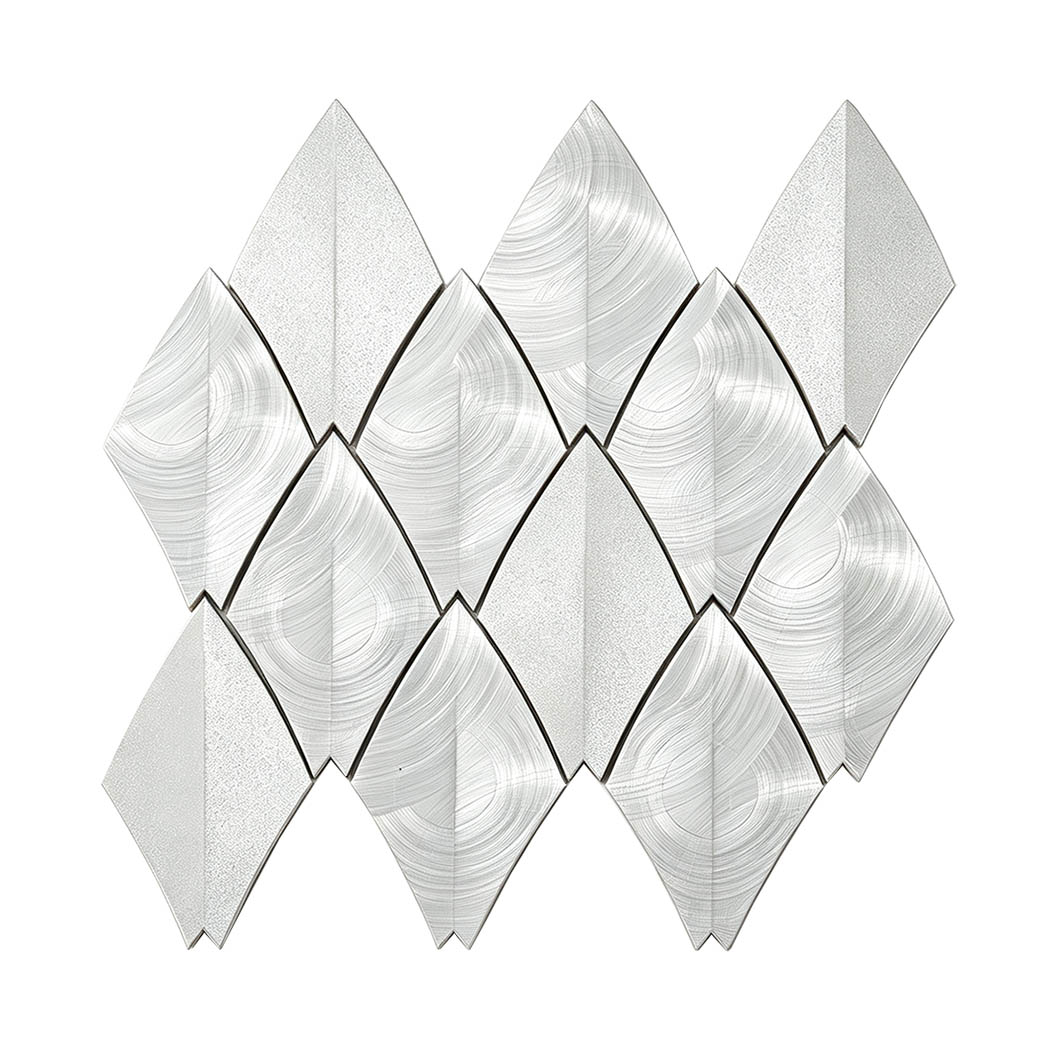
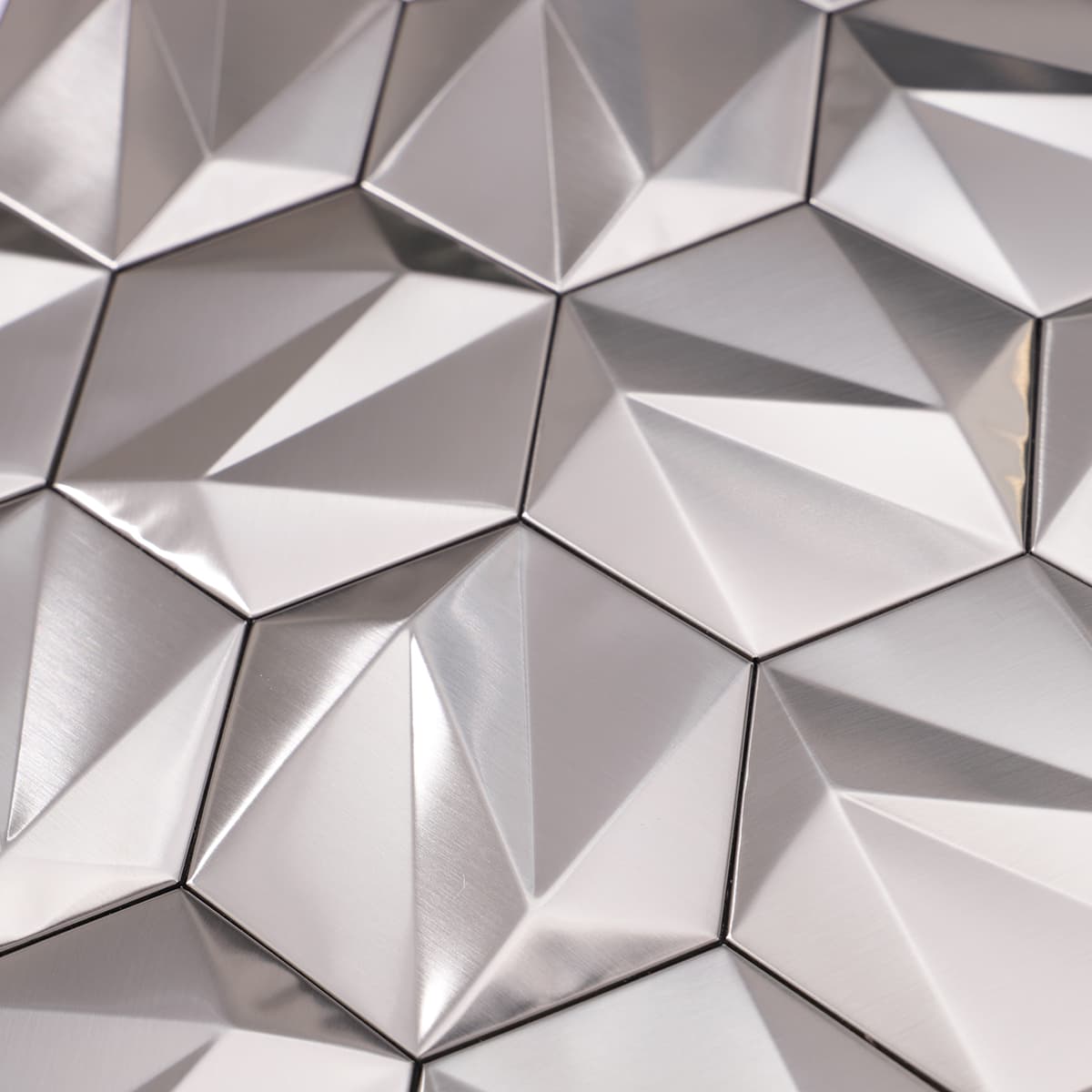
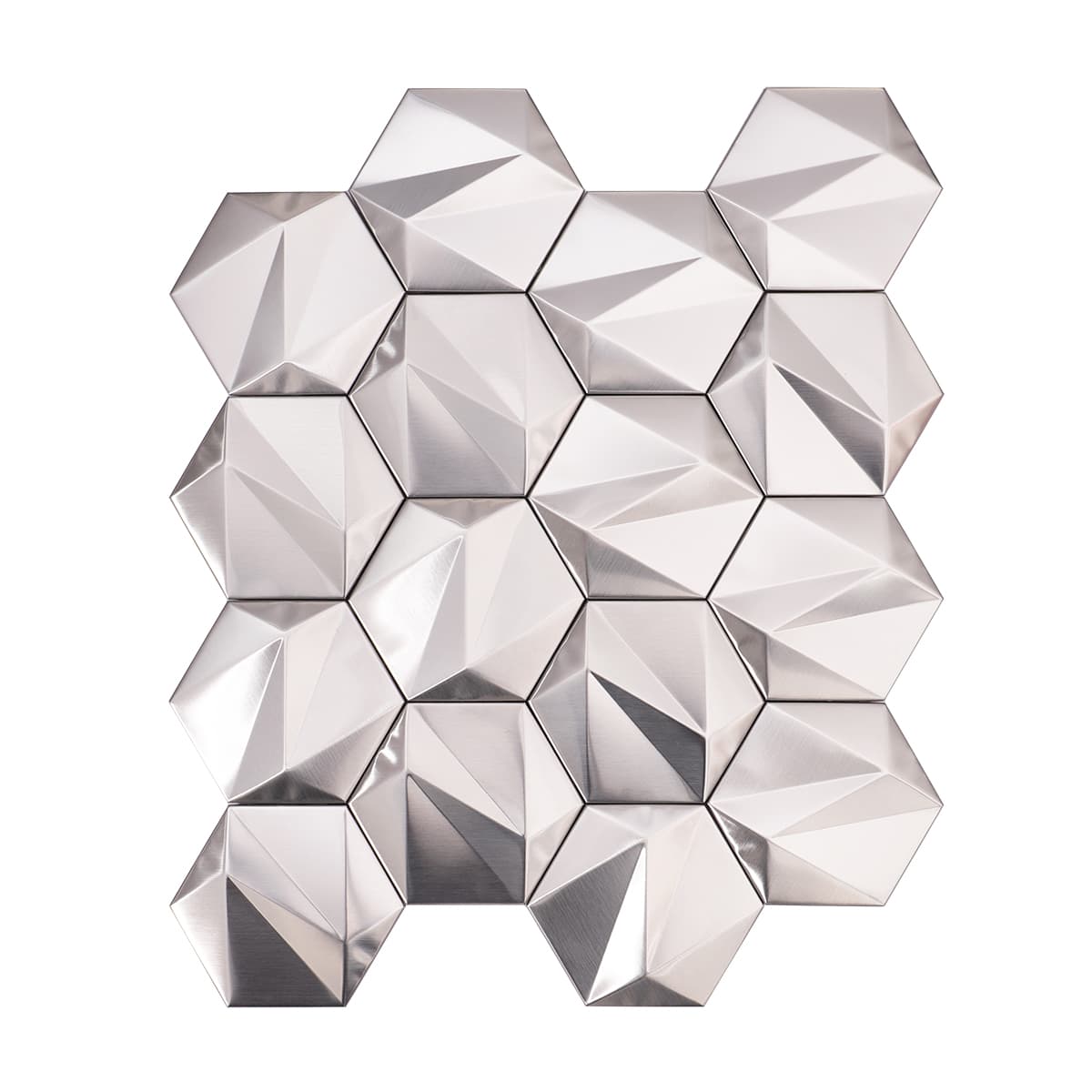
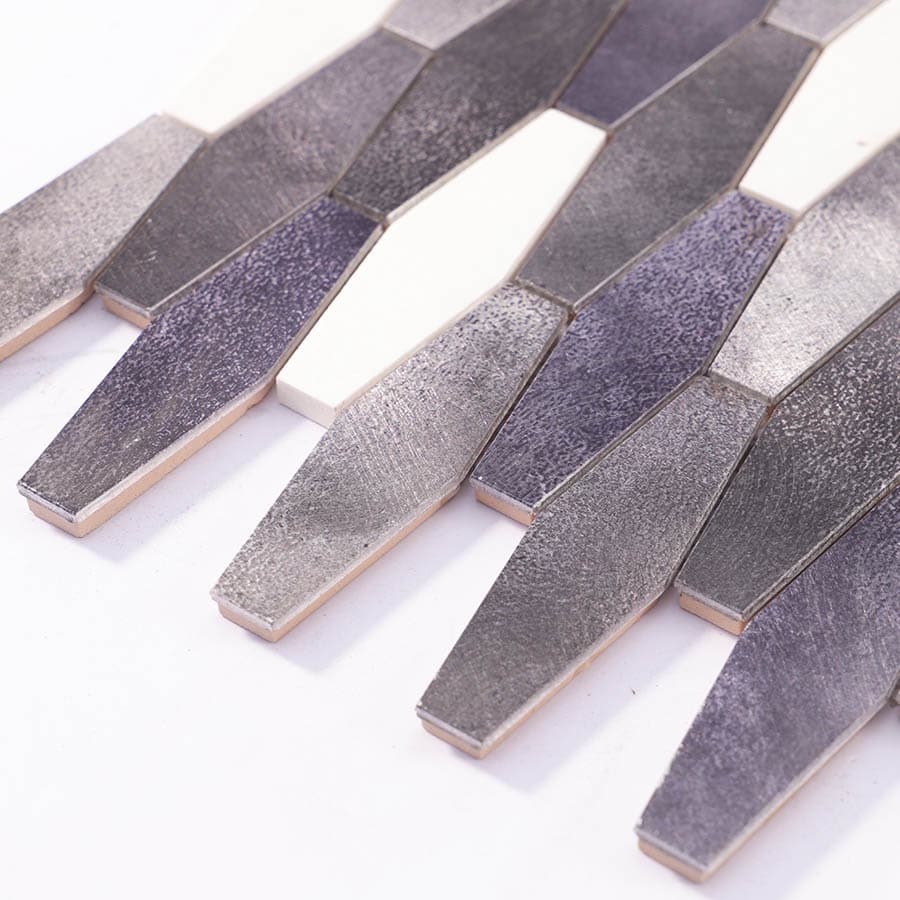
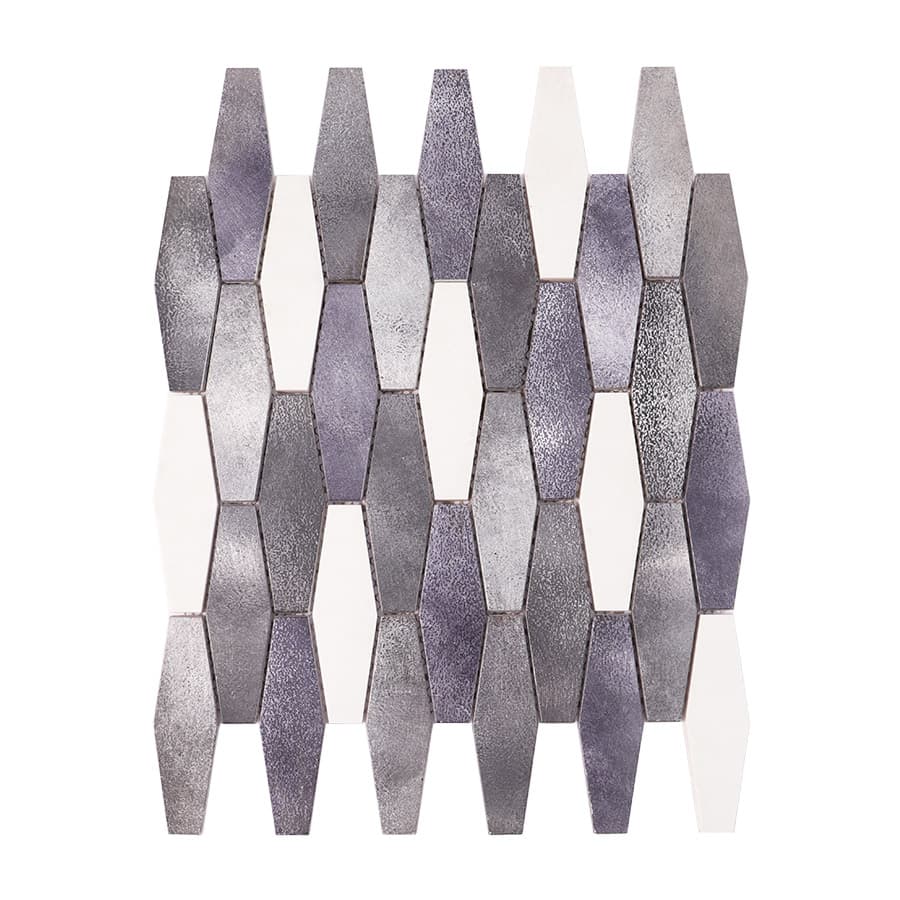
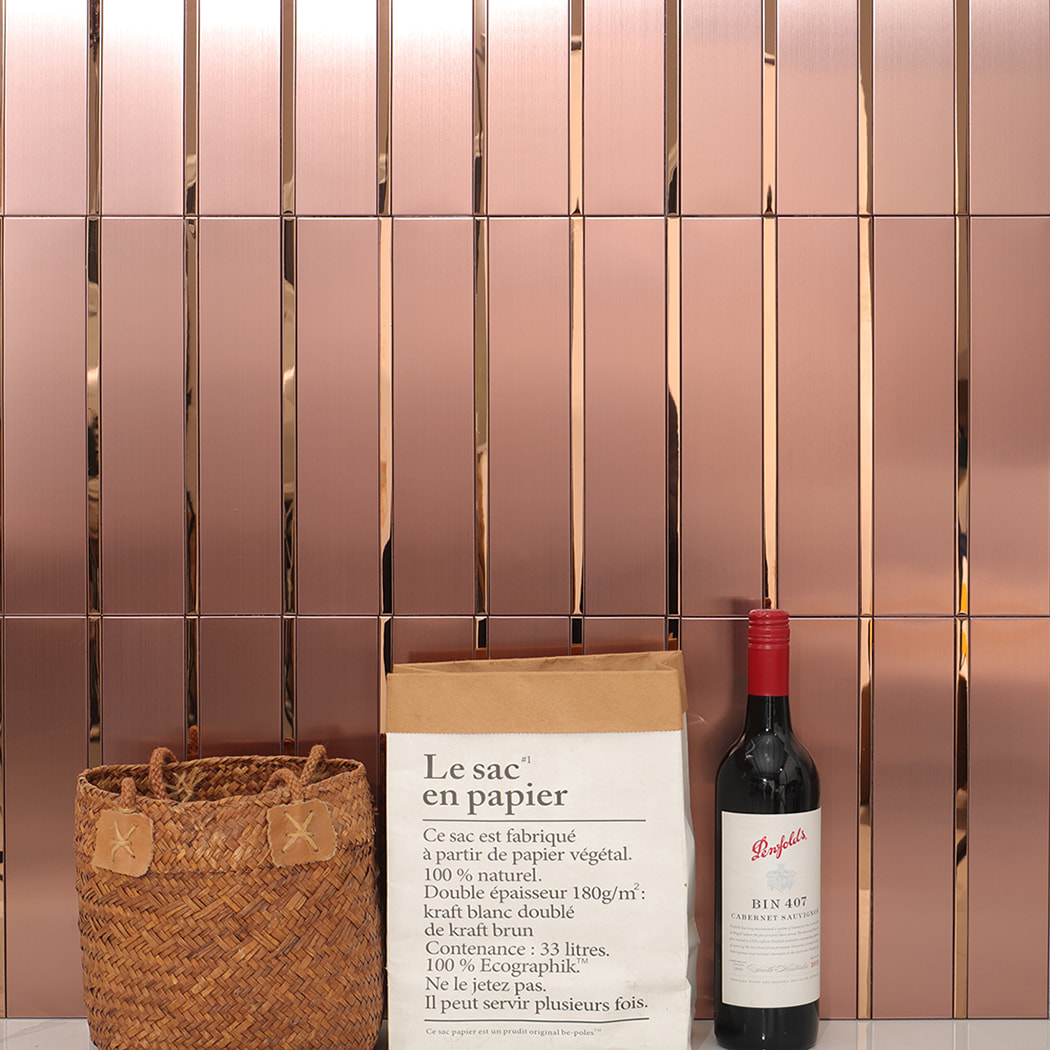
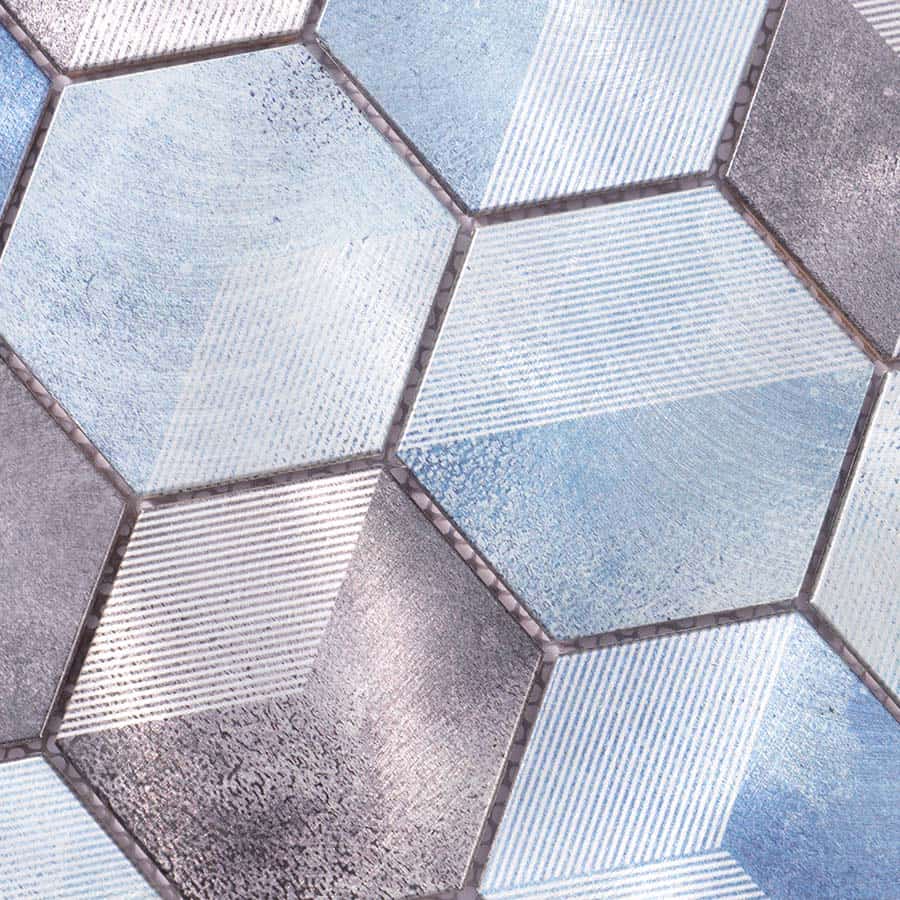
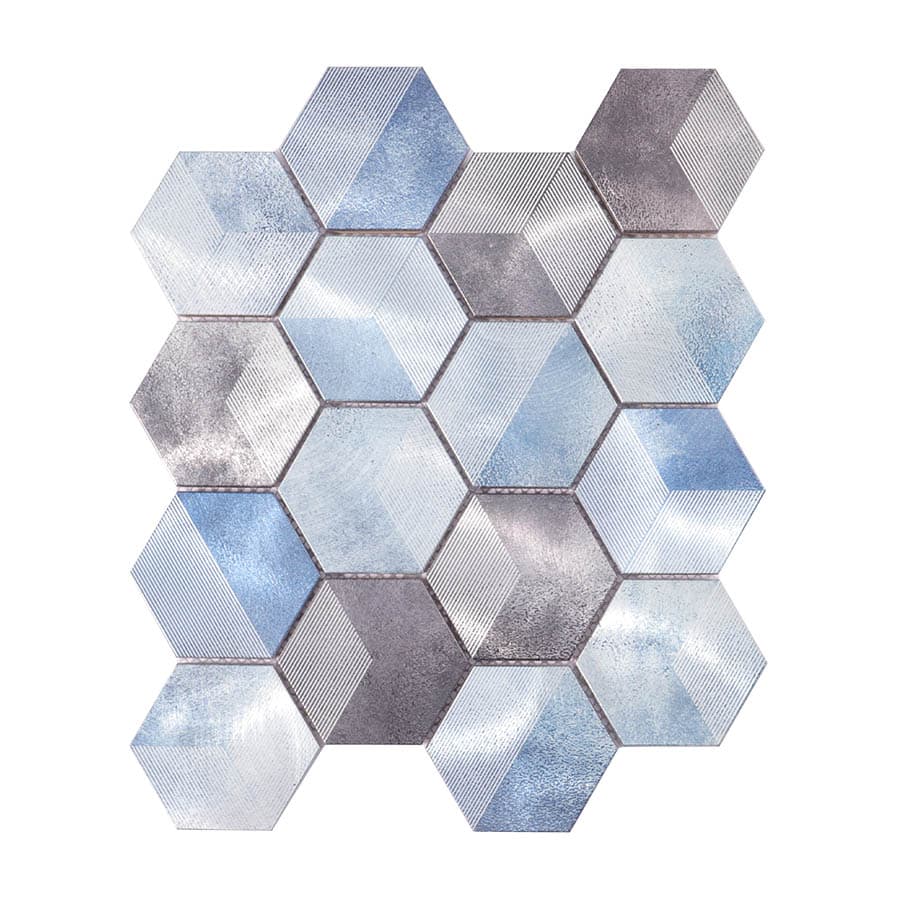
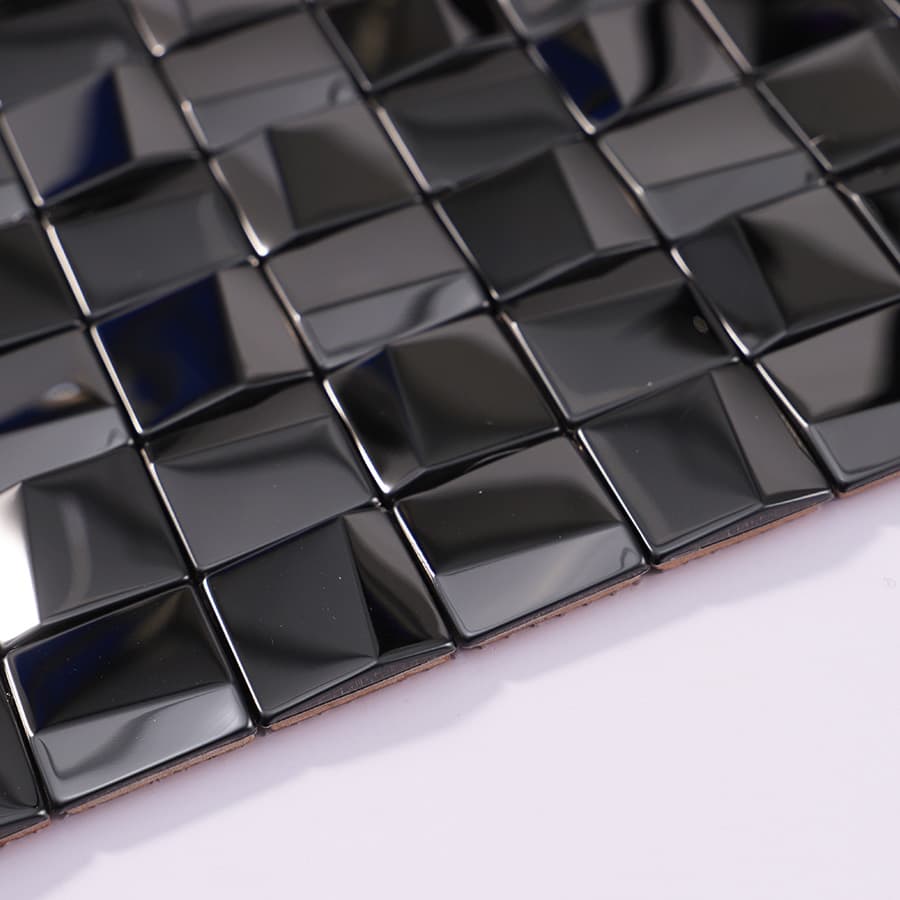
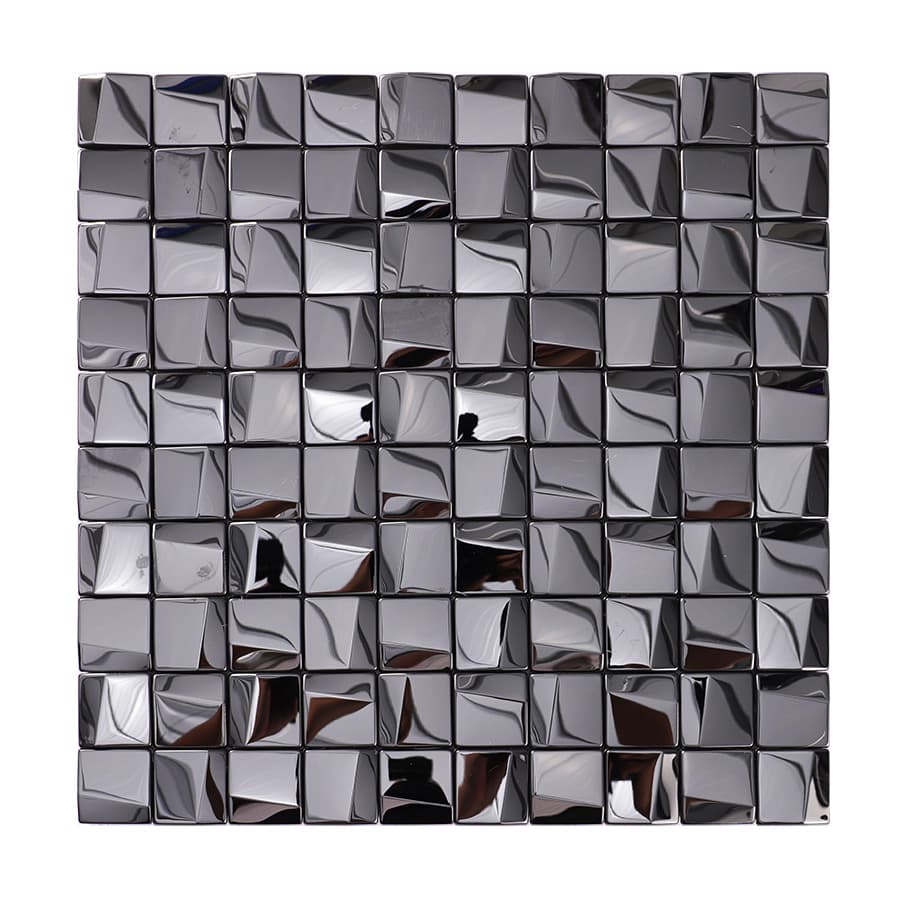
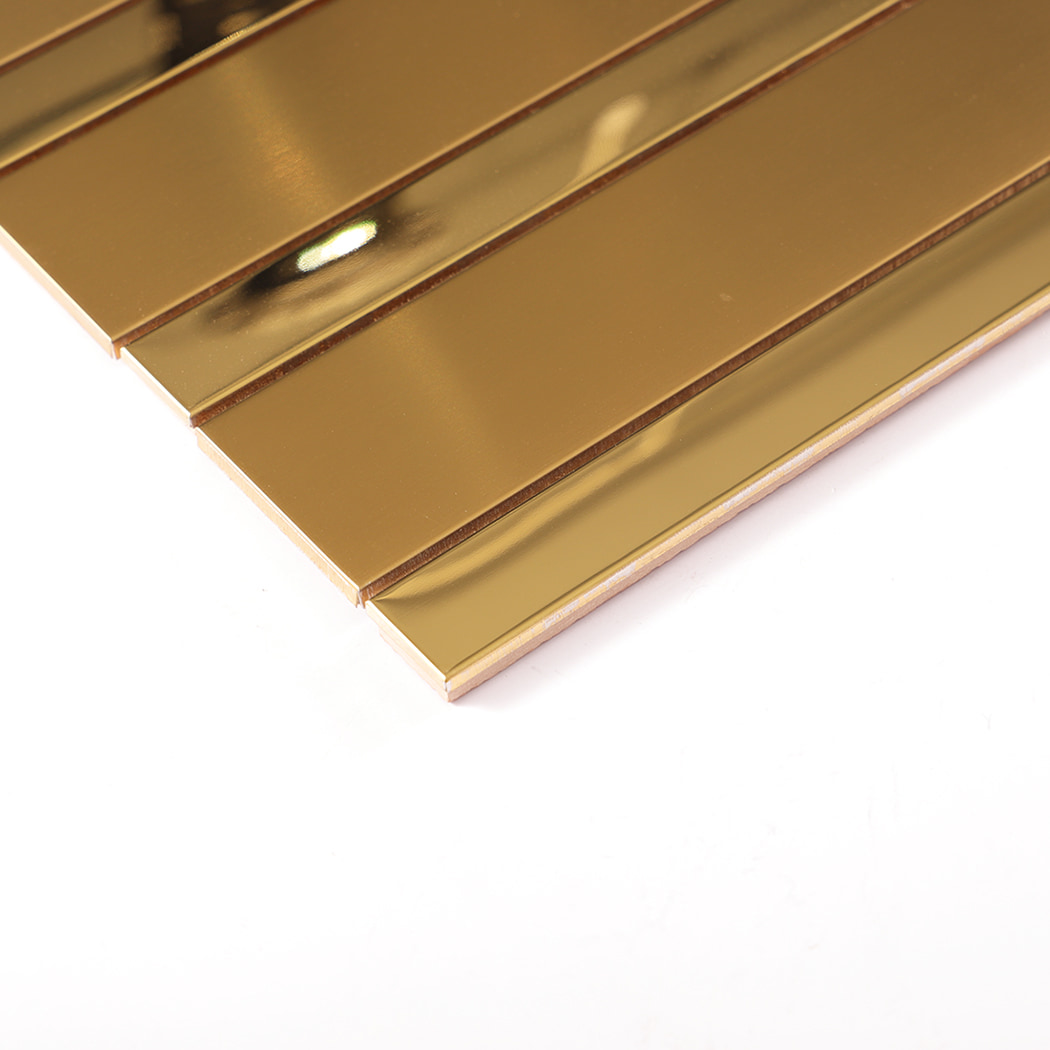
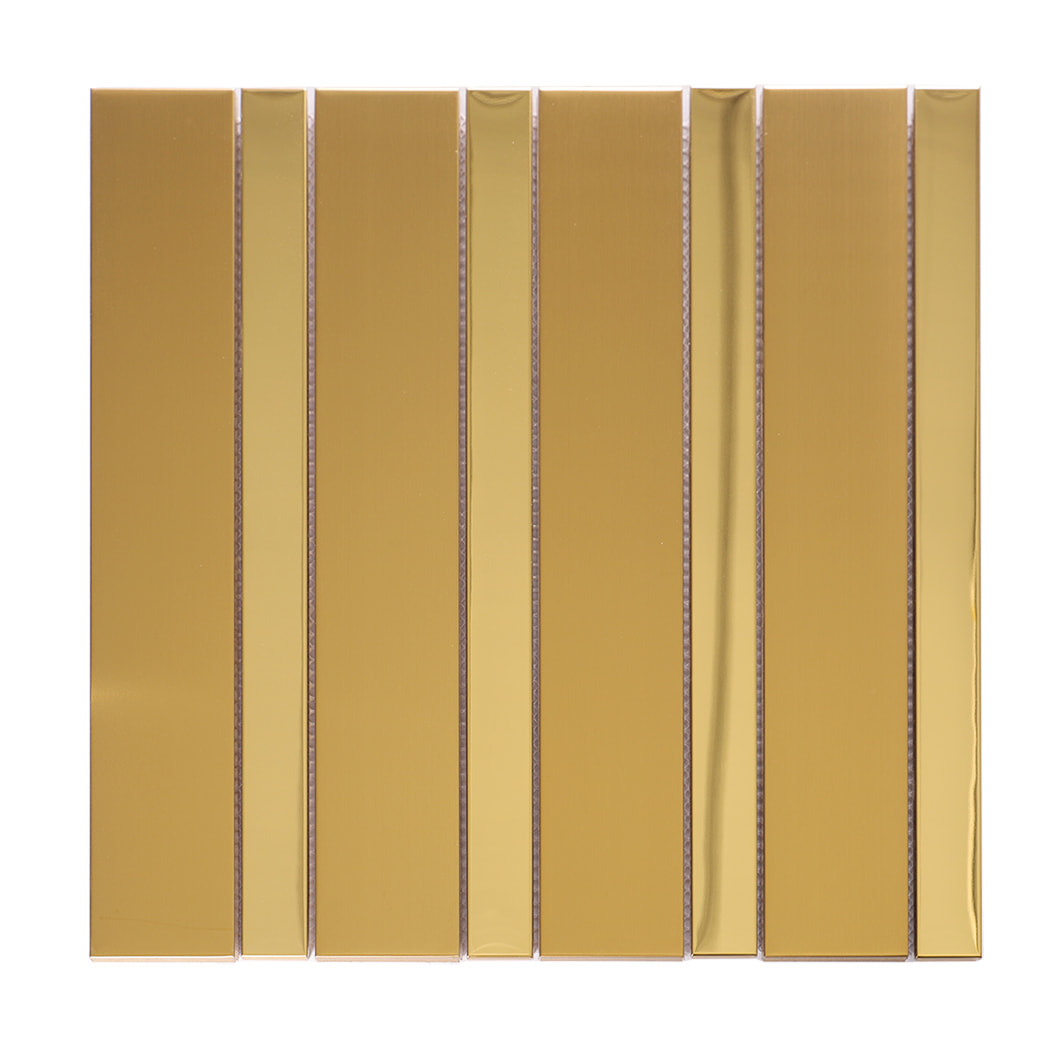
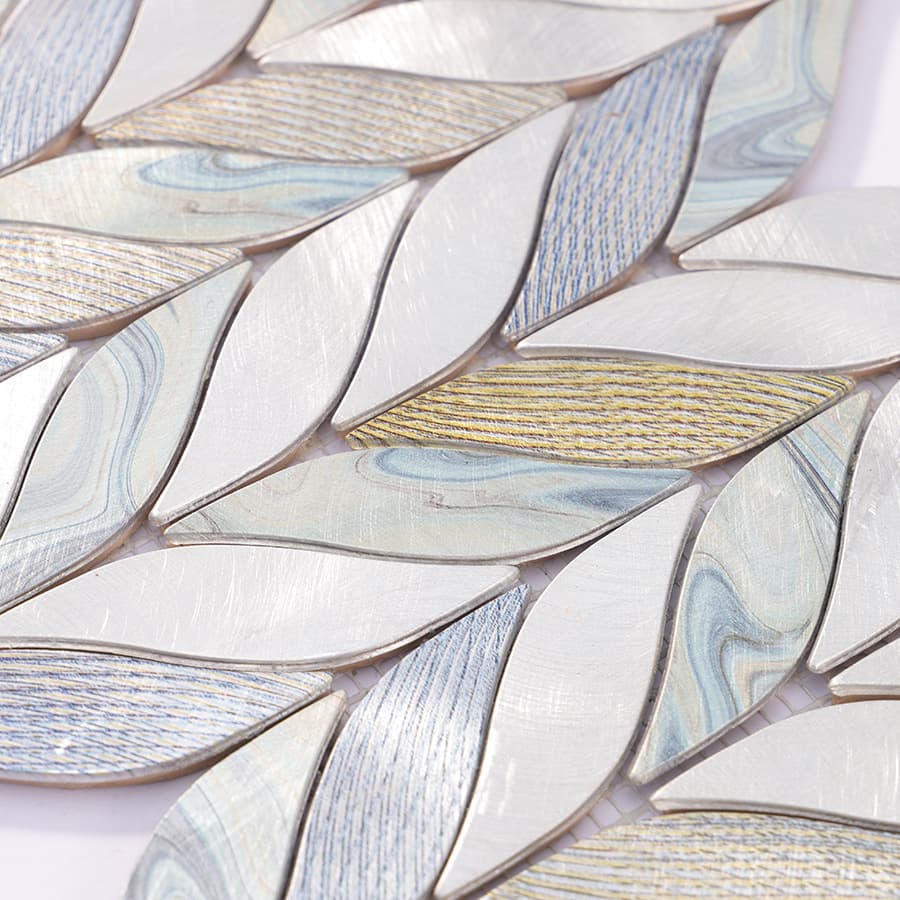
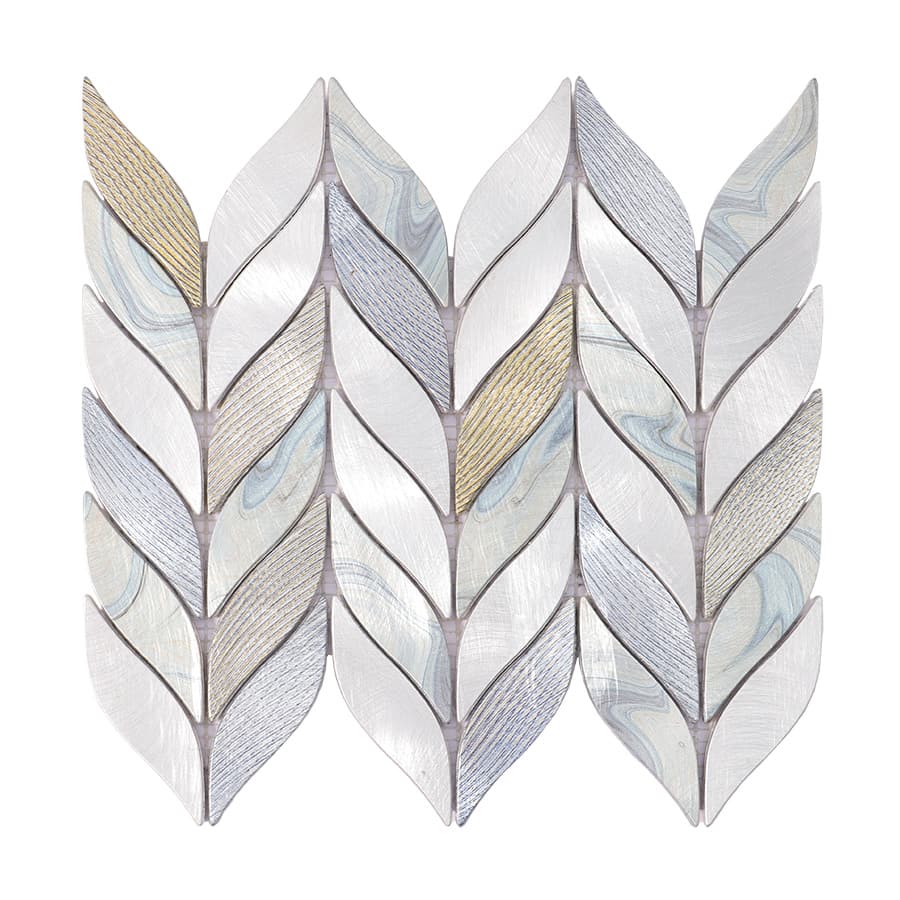
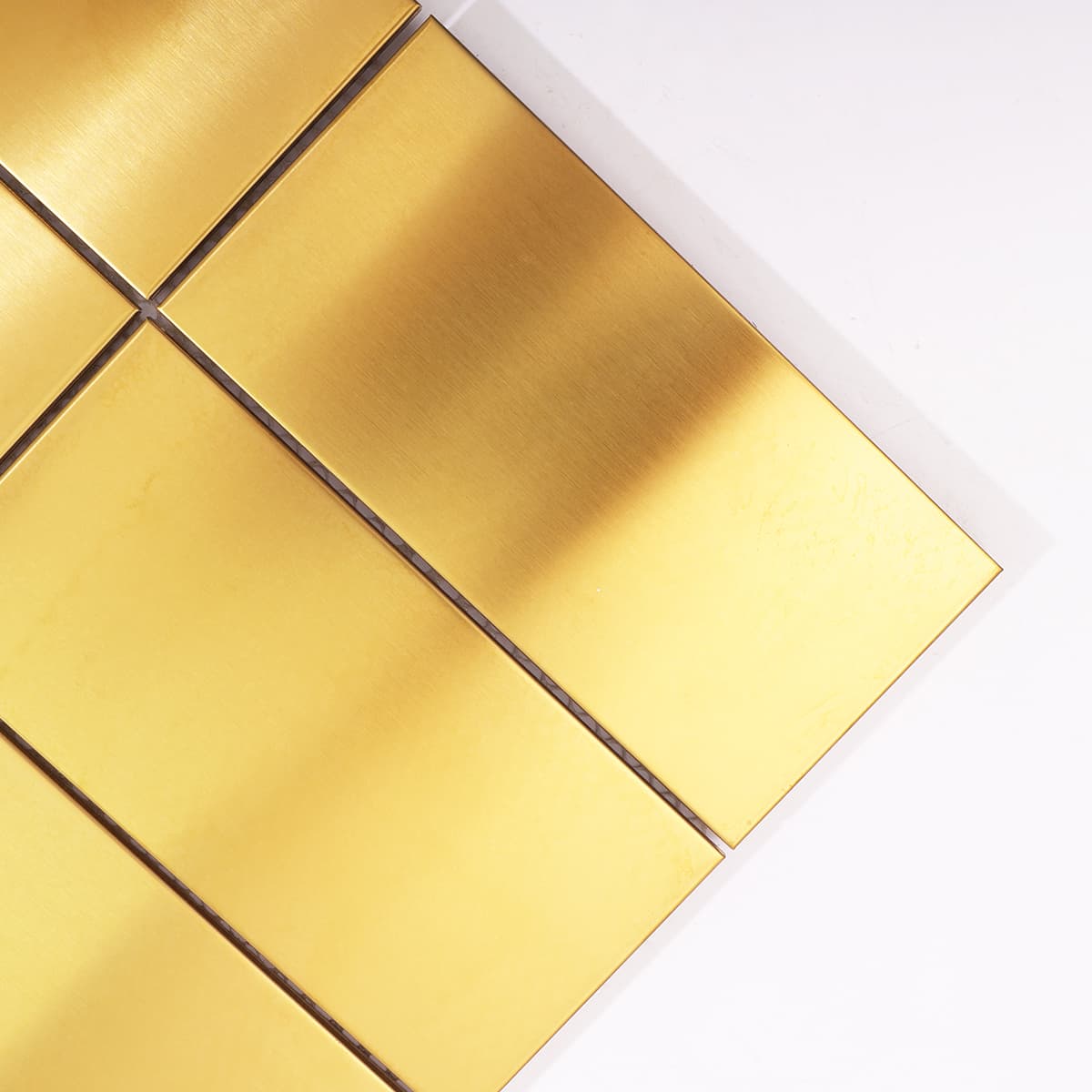
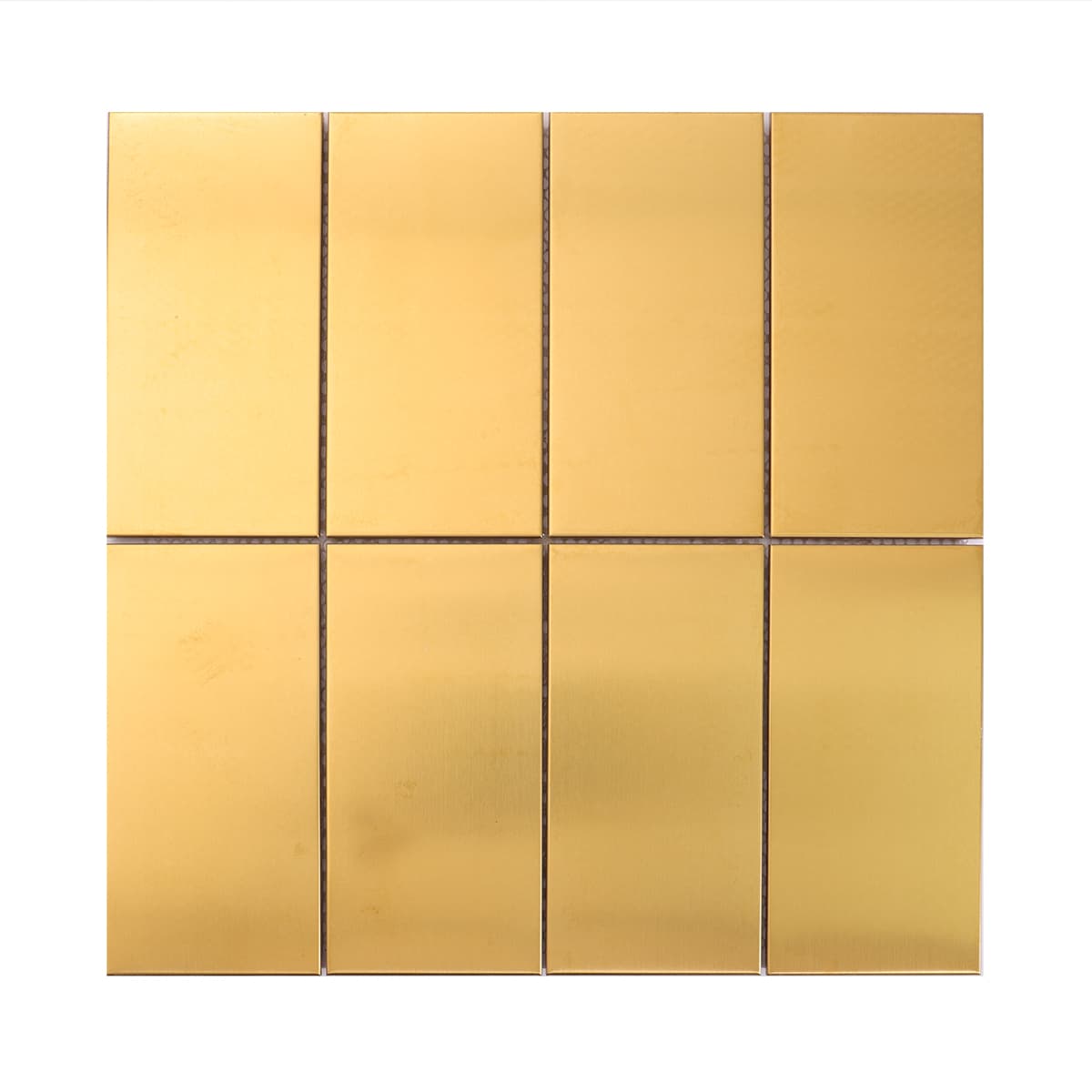
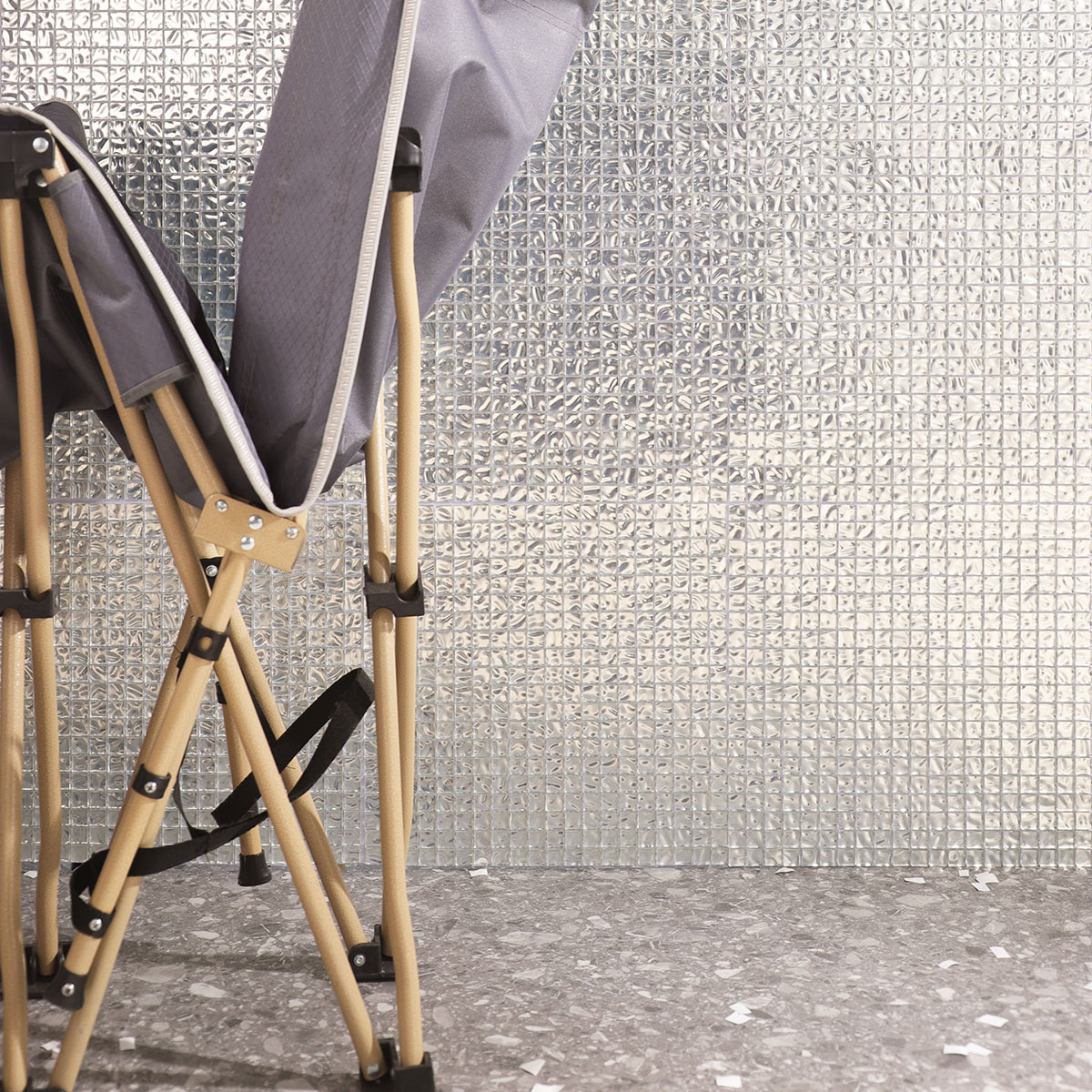
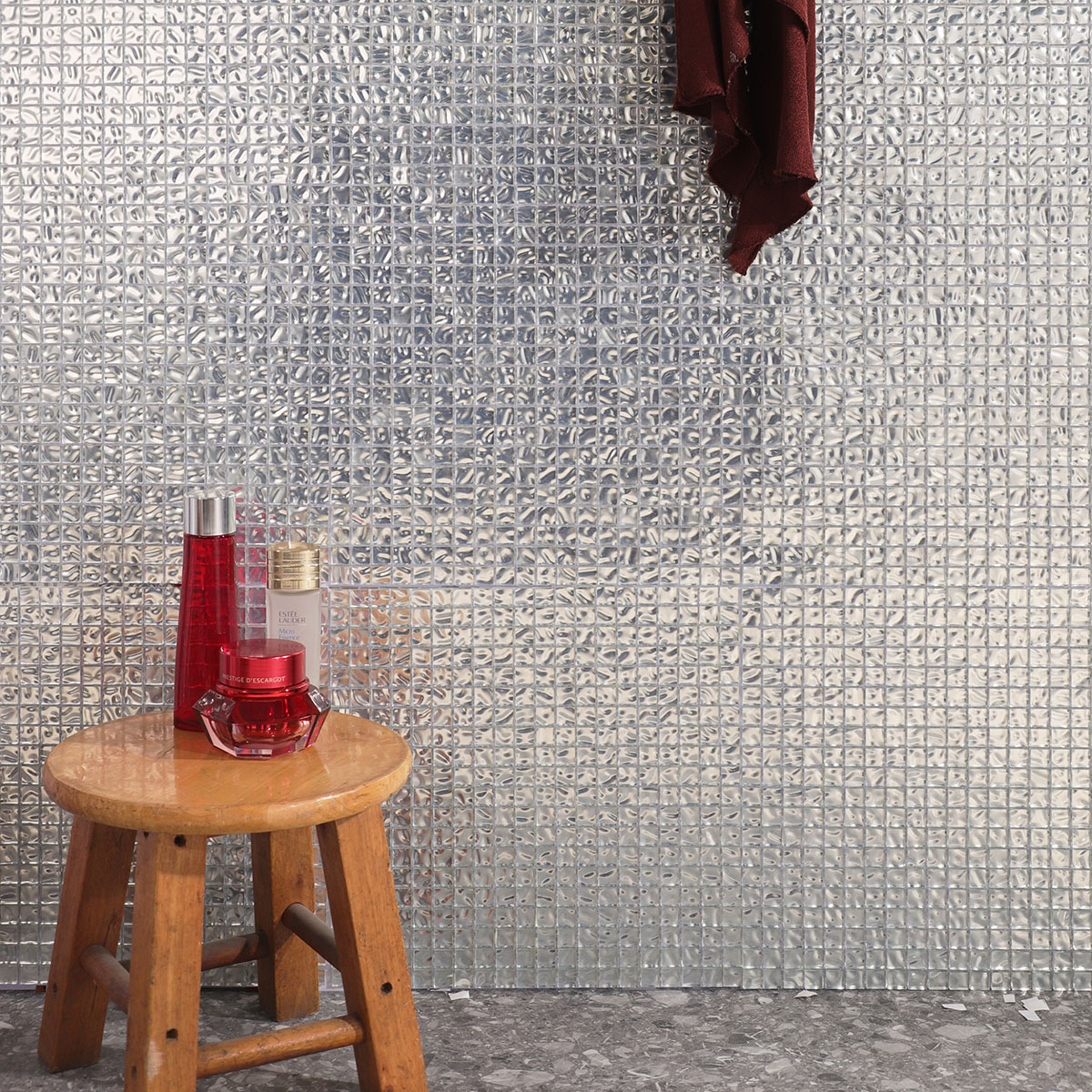
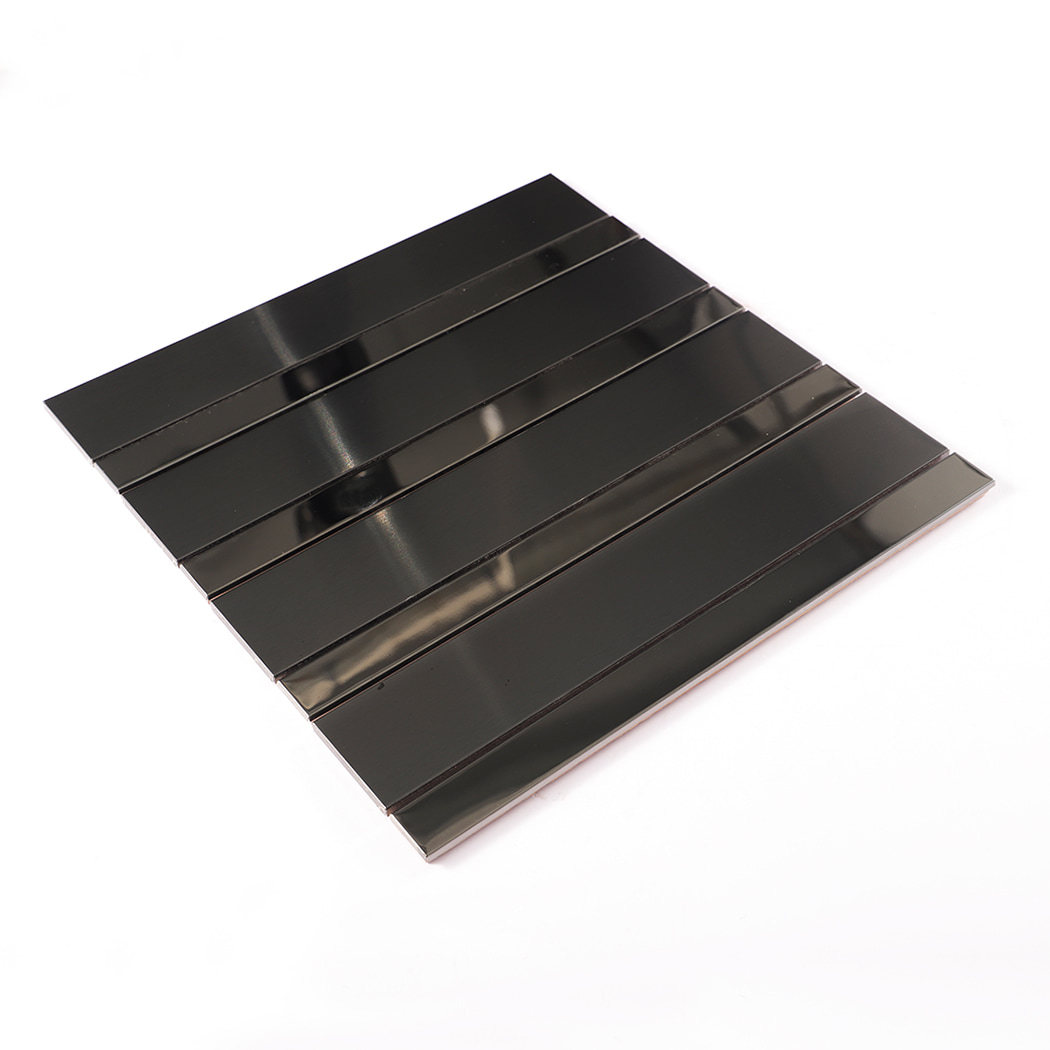
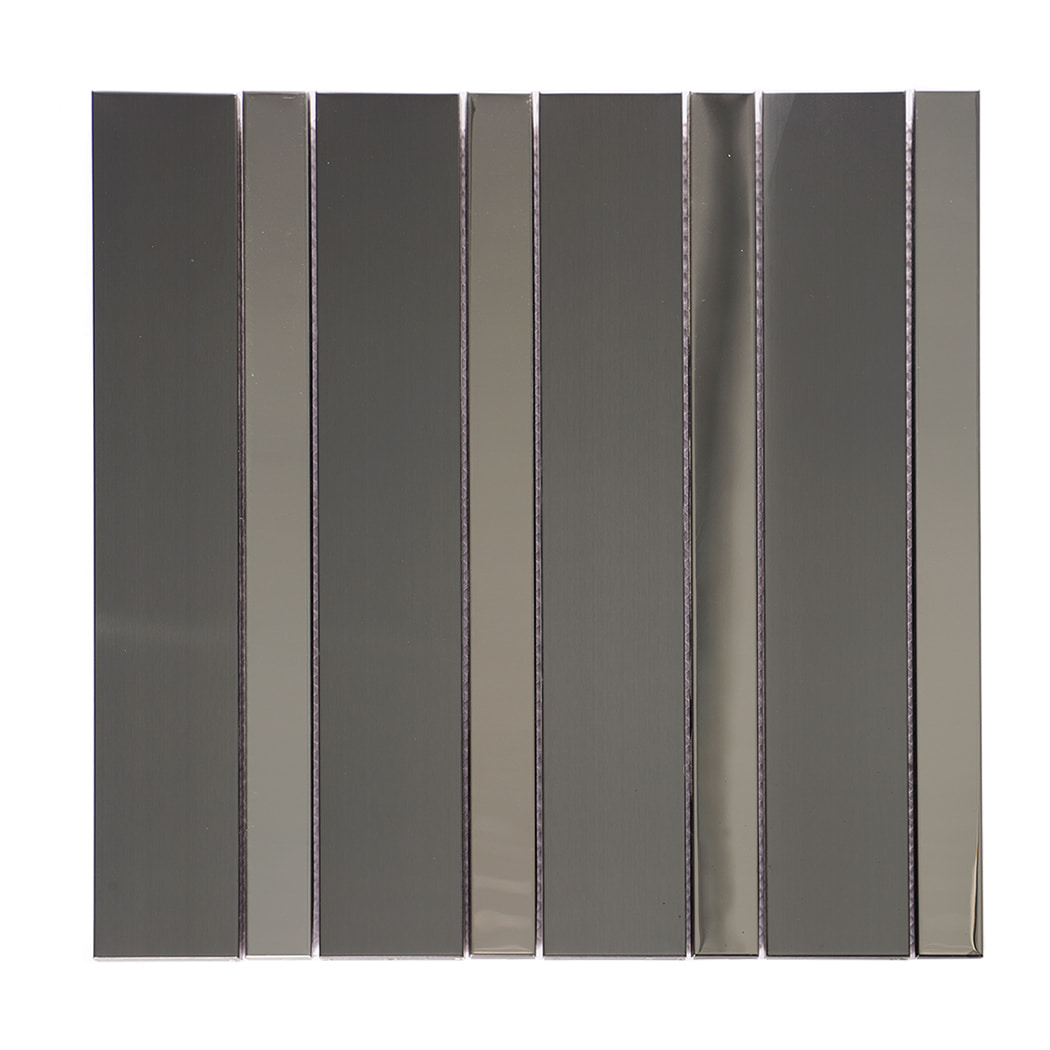
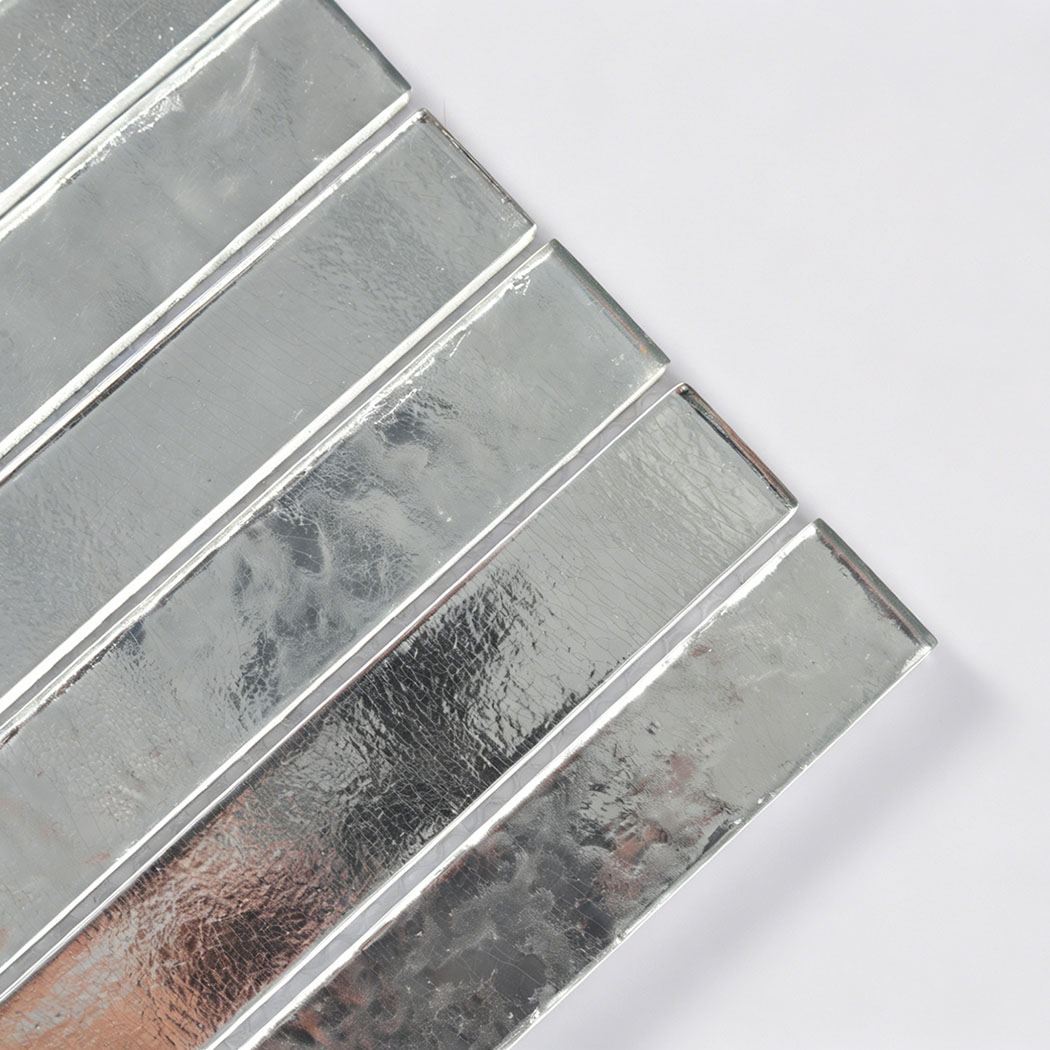
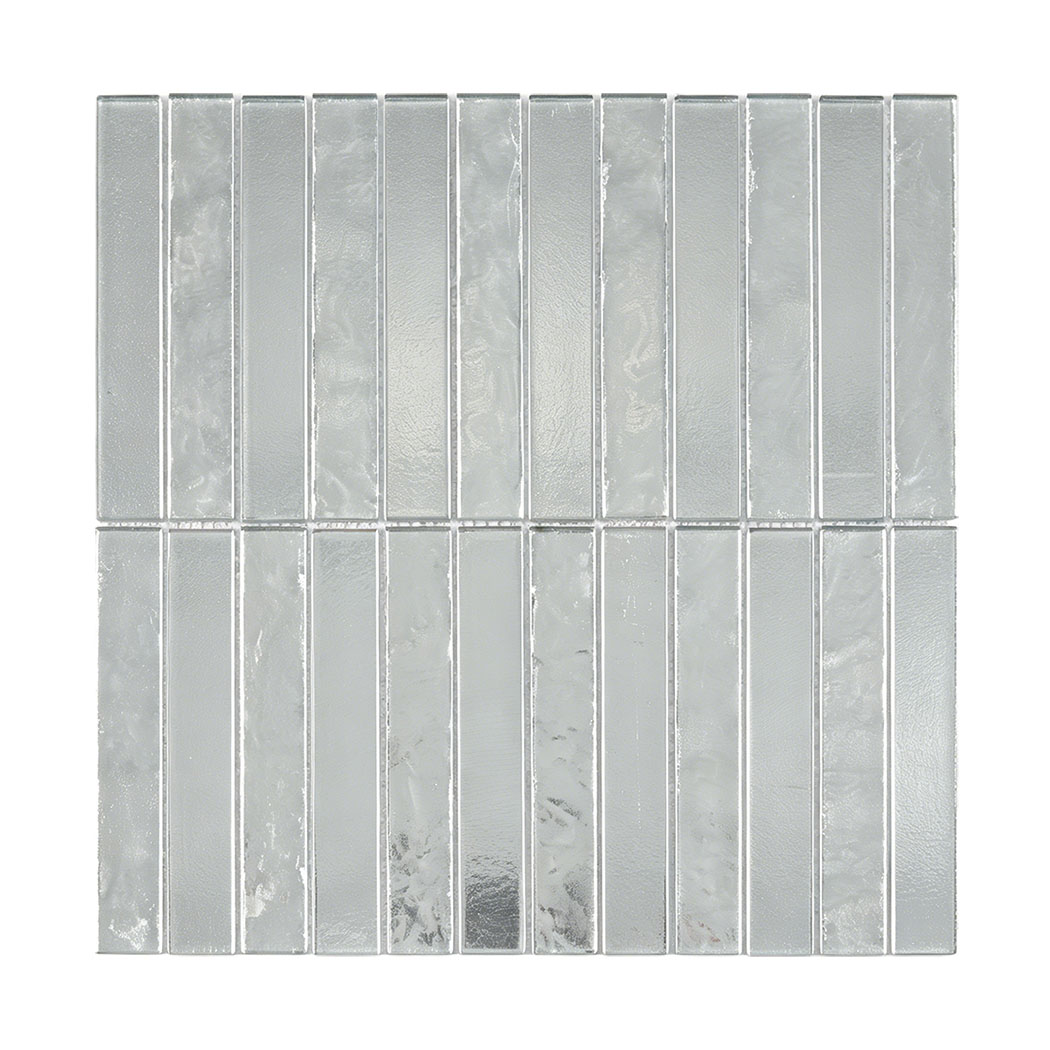
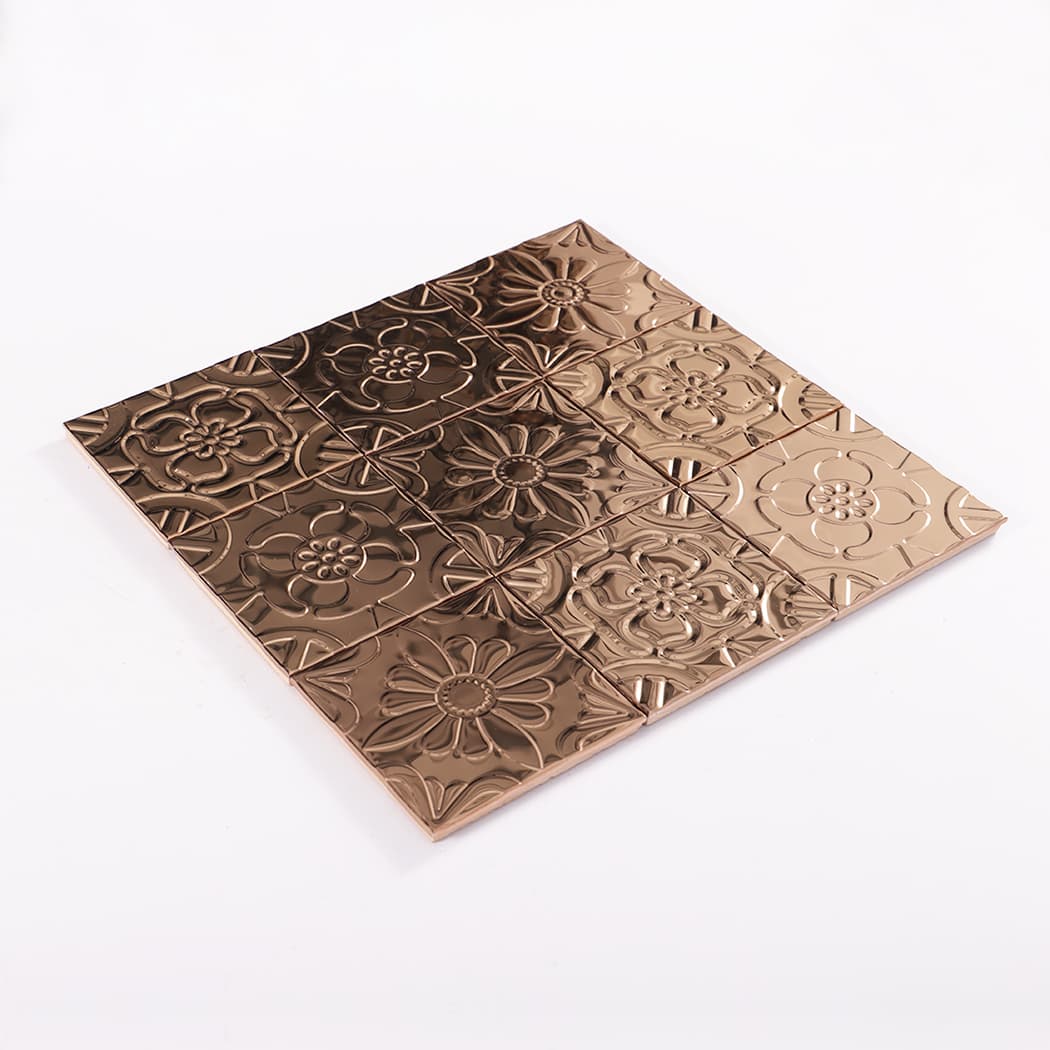
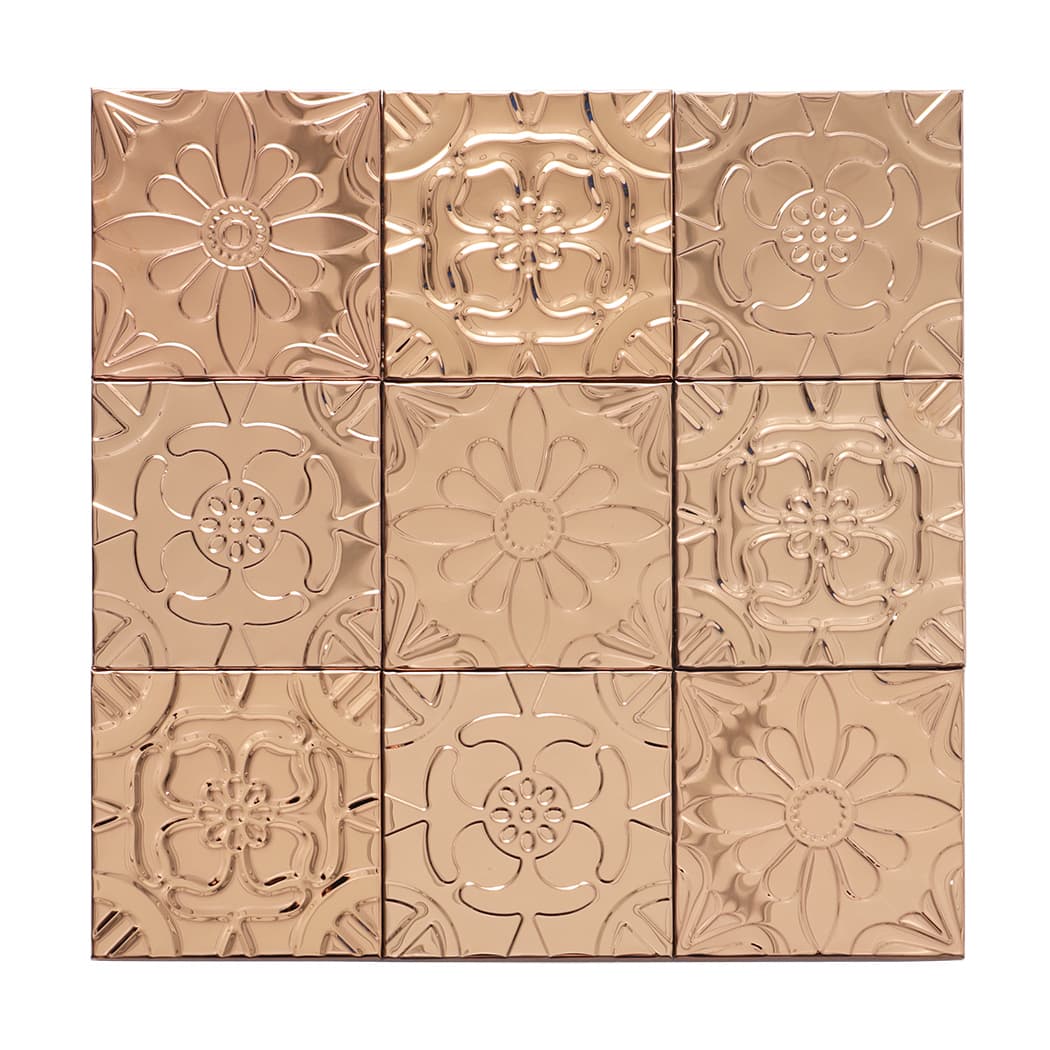
Aluminum and stainless steel mosaics bring brushed, polished, embossed and dimensional surfaces to modern interiors. They are especially suited to dry interior walls, kitchen backsplashes, bar fronts and decorative commercial features.
Marble Mosaic Tiles
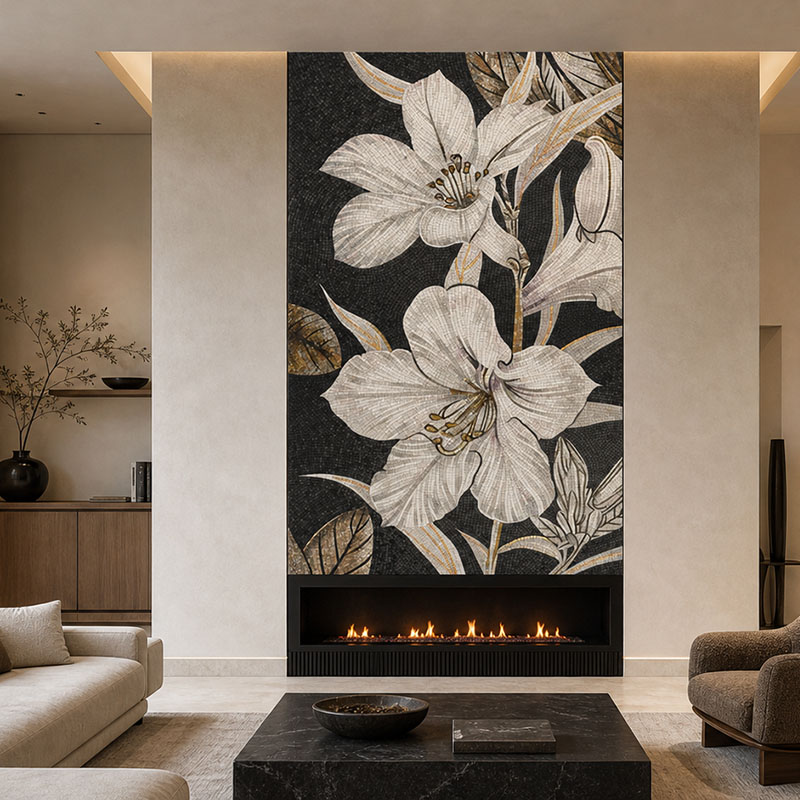
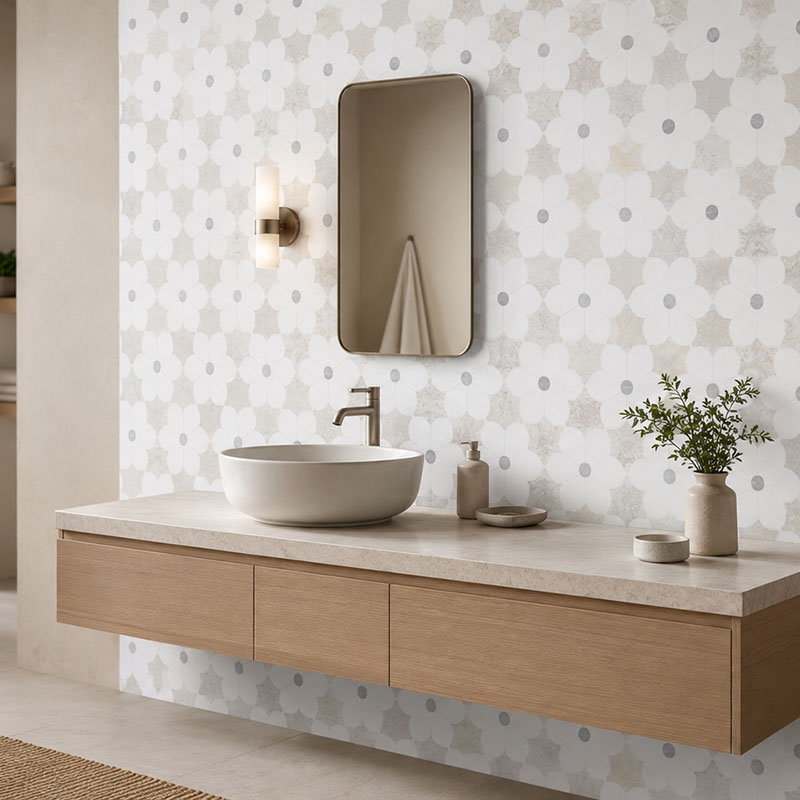
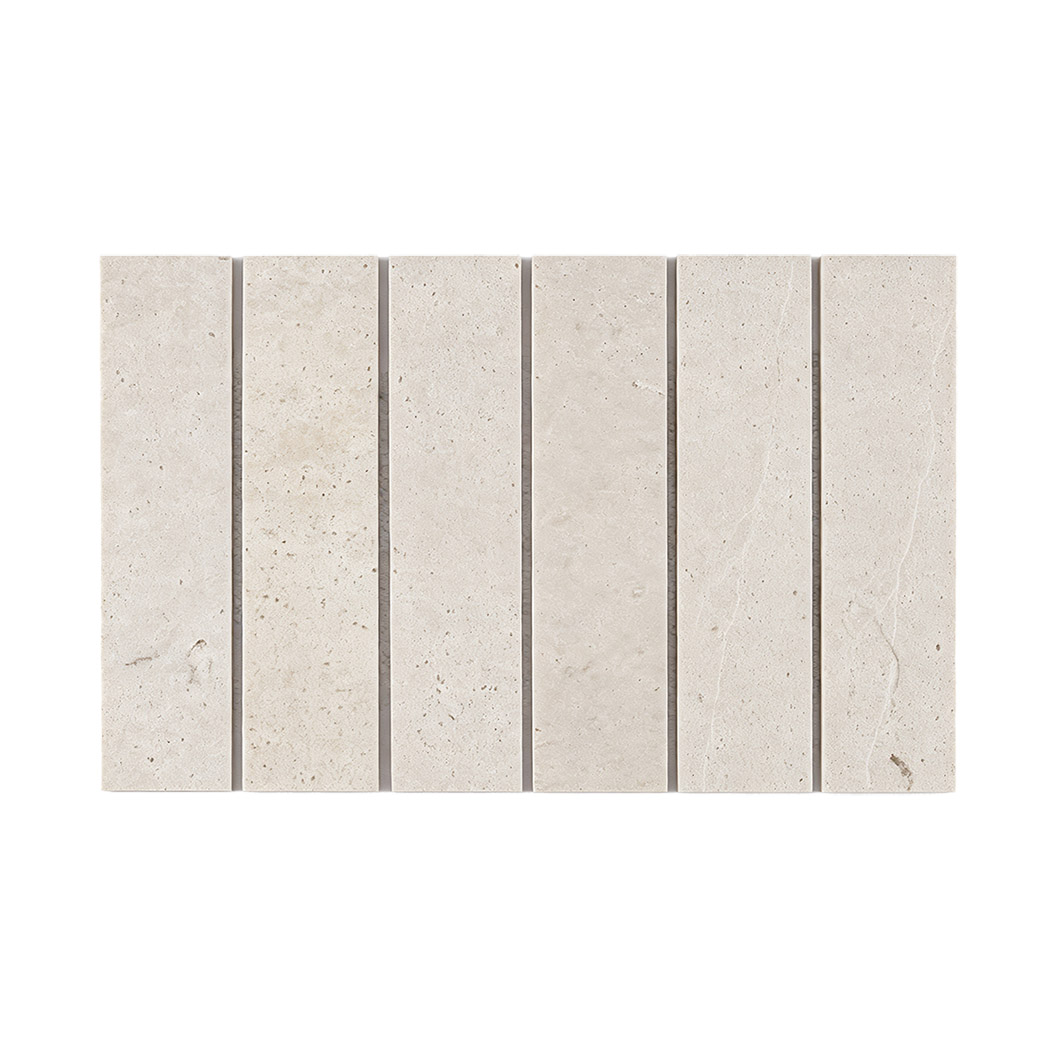
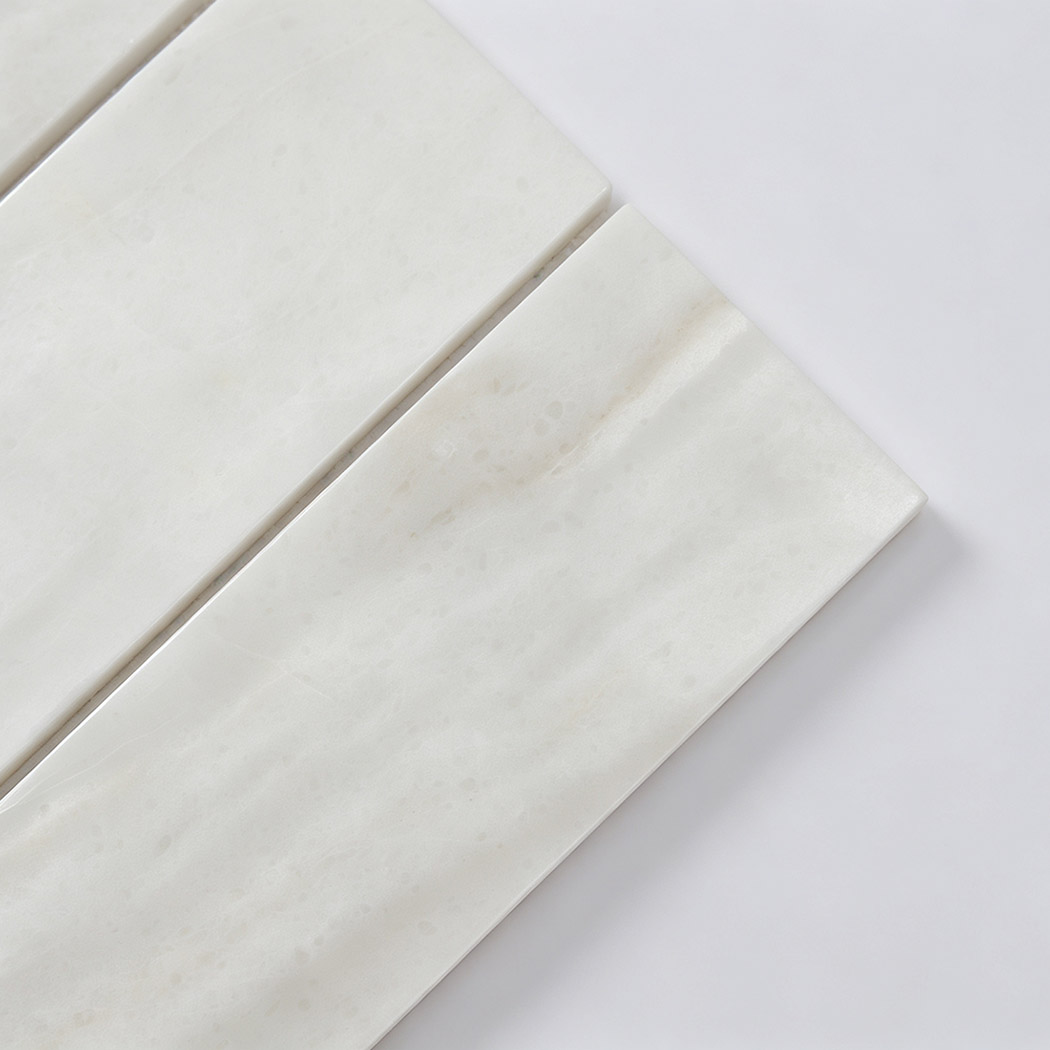
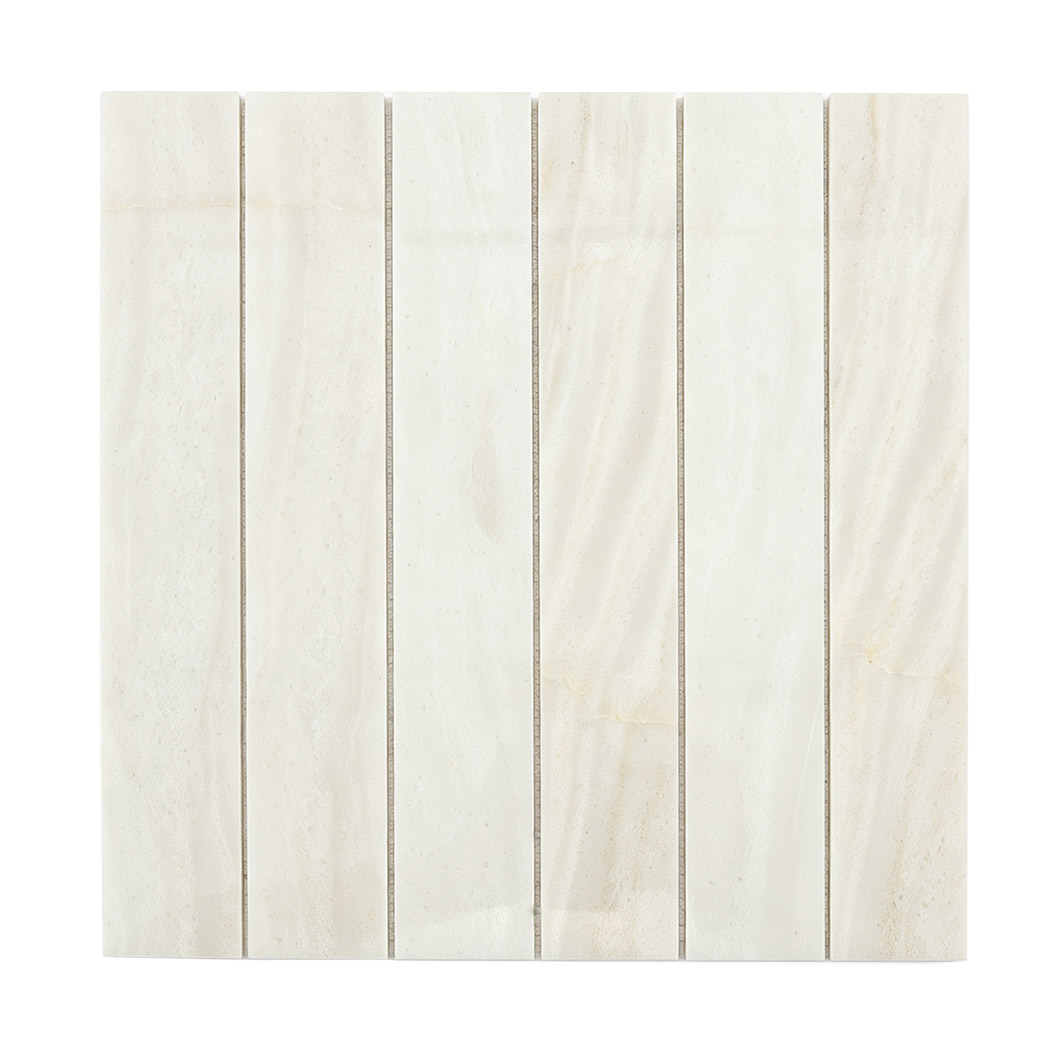
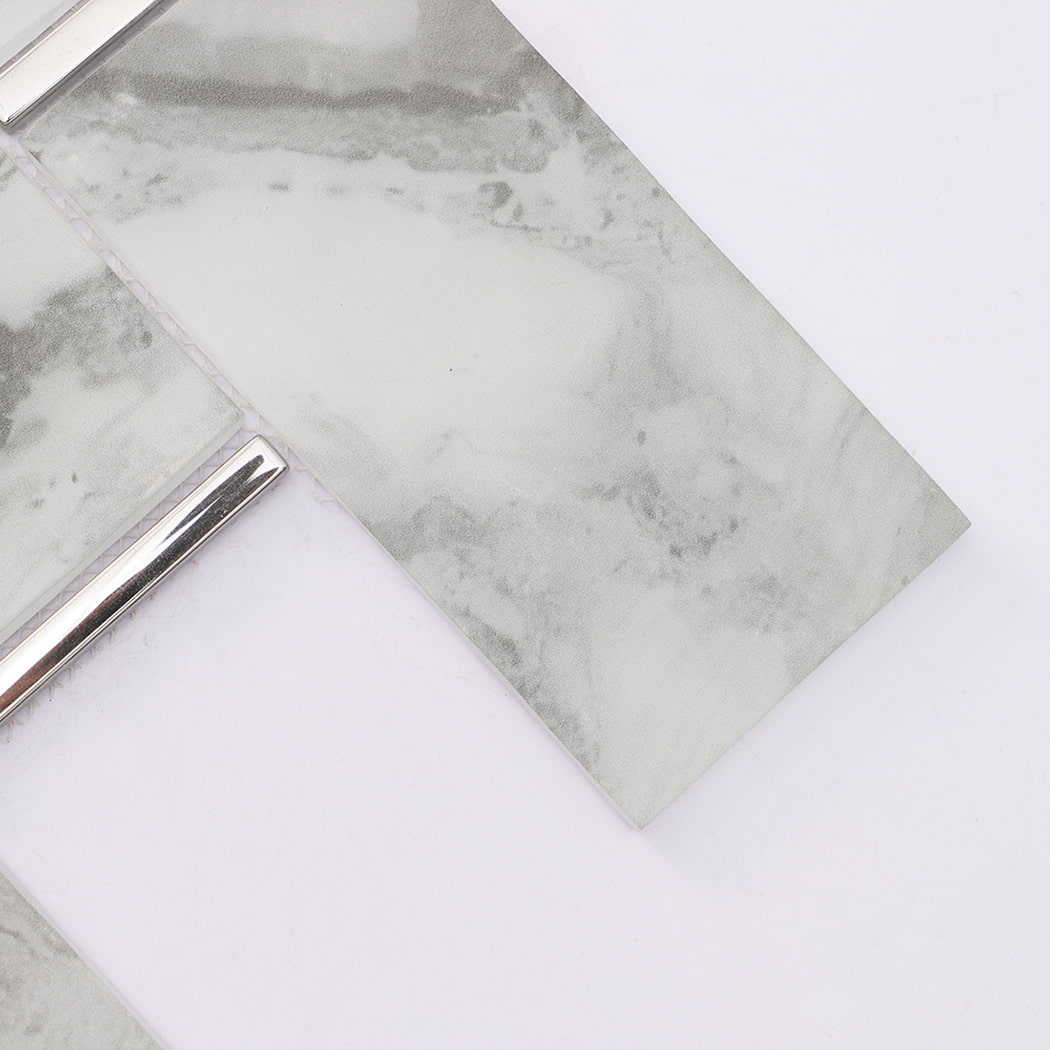
Natural marble adds individual veining and tonal variation to geometric modern patterns. Available applications depend on the marble type, finish and product construction.
Natural Wood Mosaic Tiles
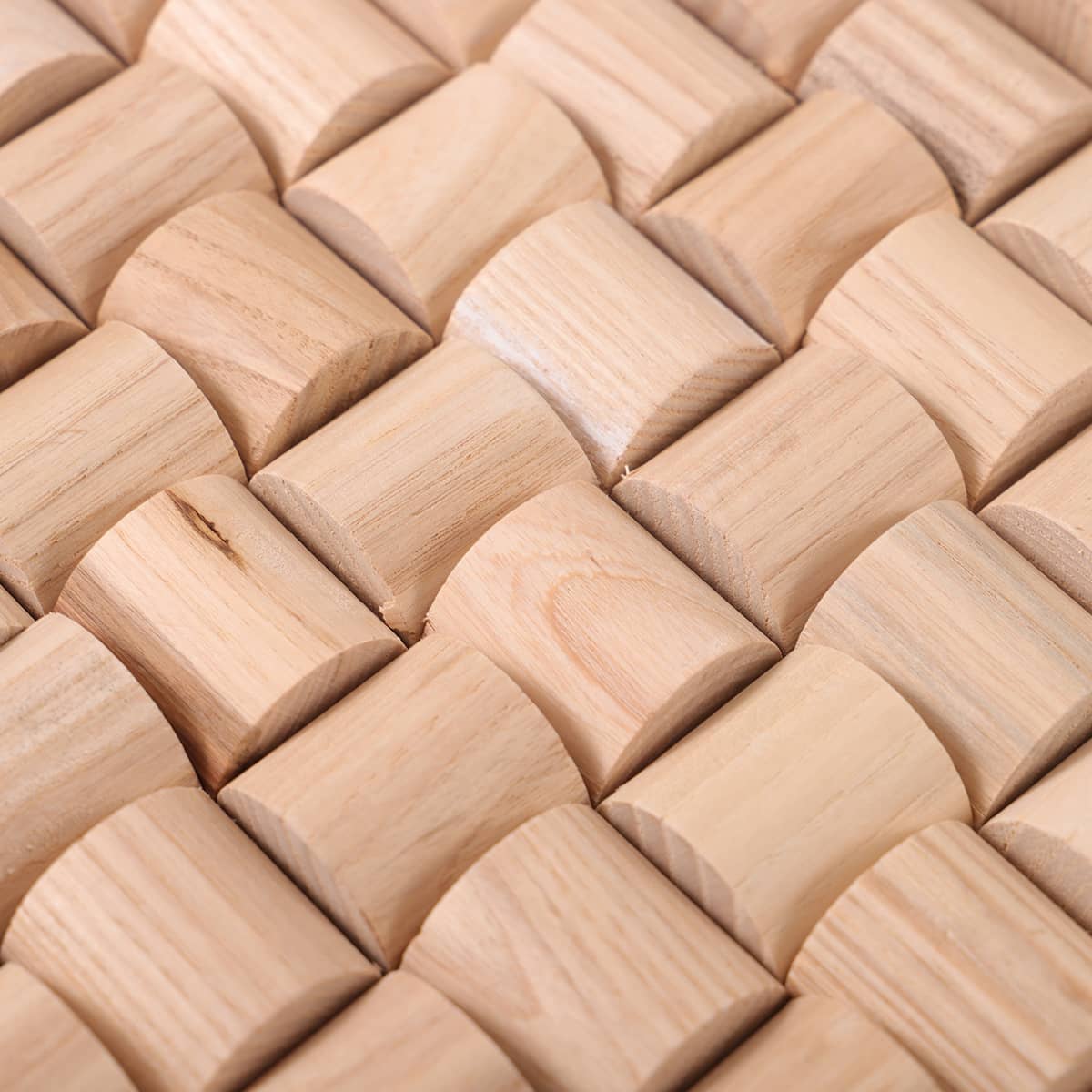
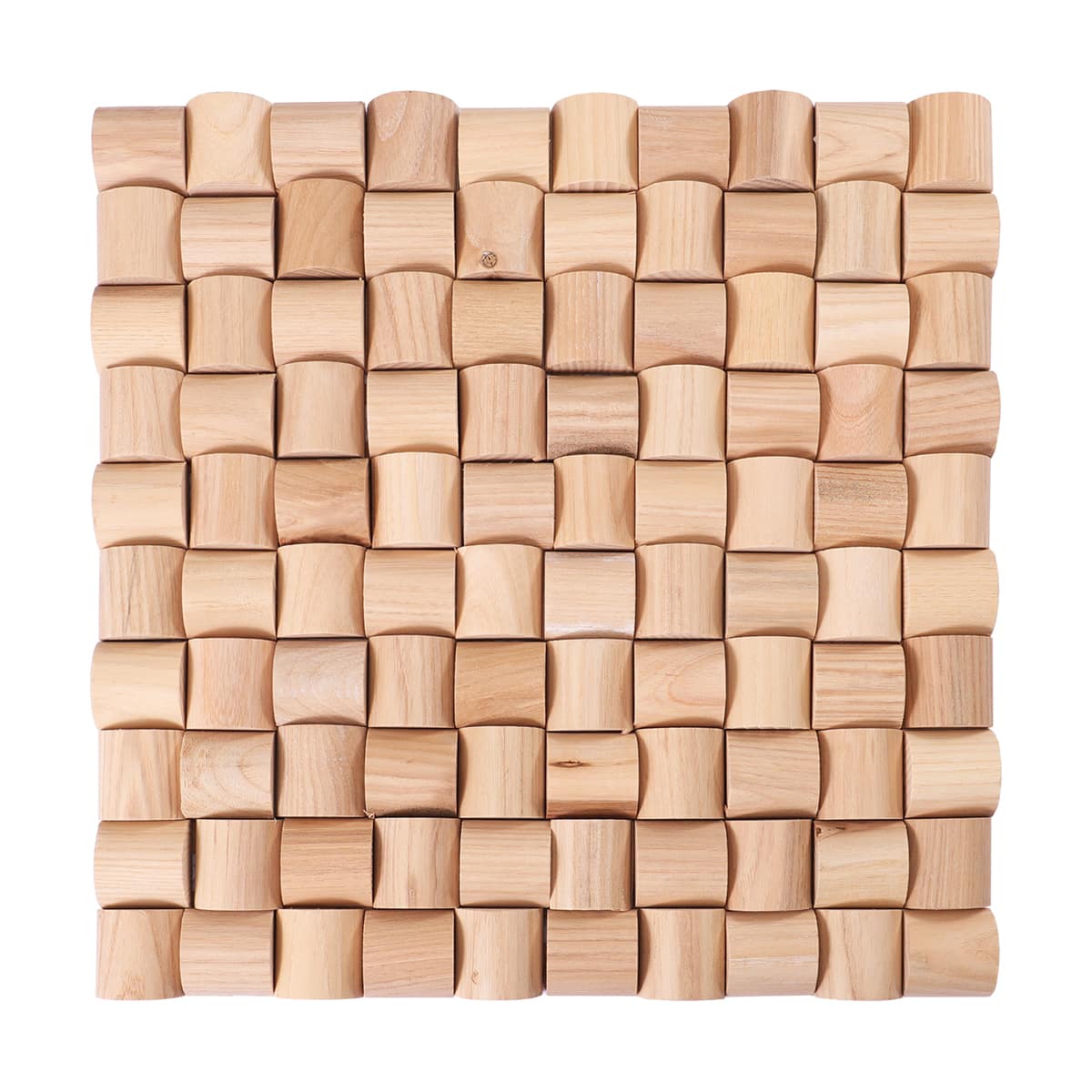
Natural wood mosaics create warmth and sculptural texture on dry interior feature walls. They are not intended for showers, pools or continuously wet areas.
Surface Finishes
Brushed and Matte
Brushed metal and matte surfaces create a softer, more restrained appearance with reduced reflectivity.
Glossy and Mirror-Polished
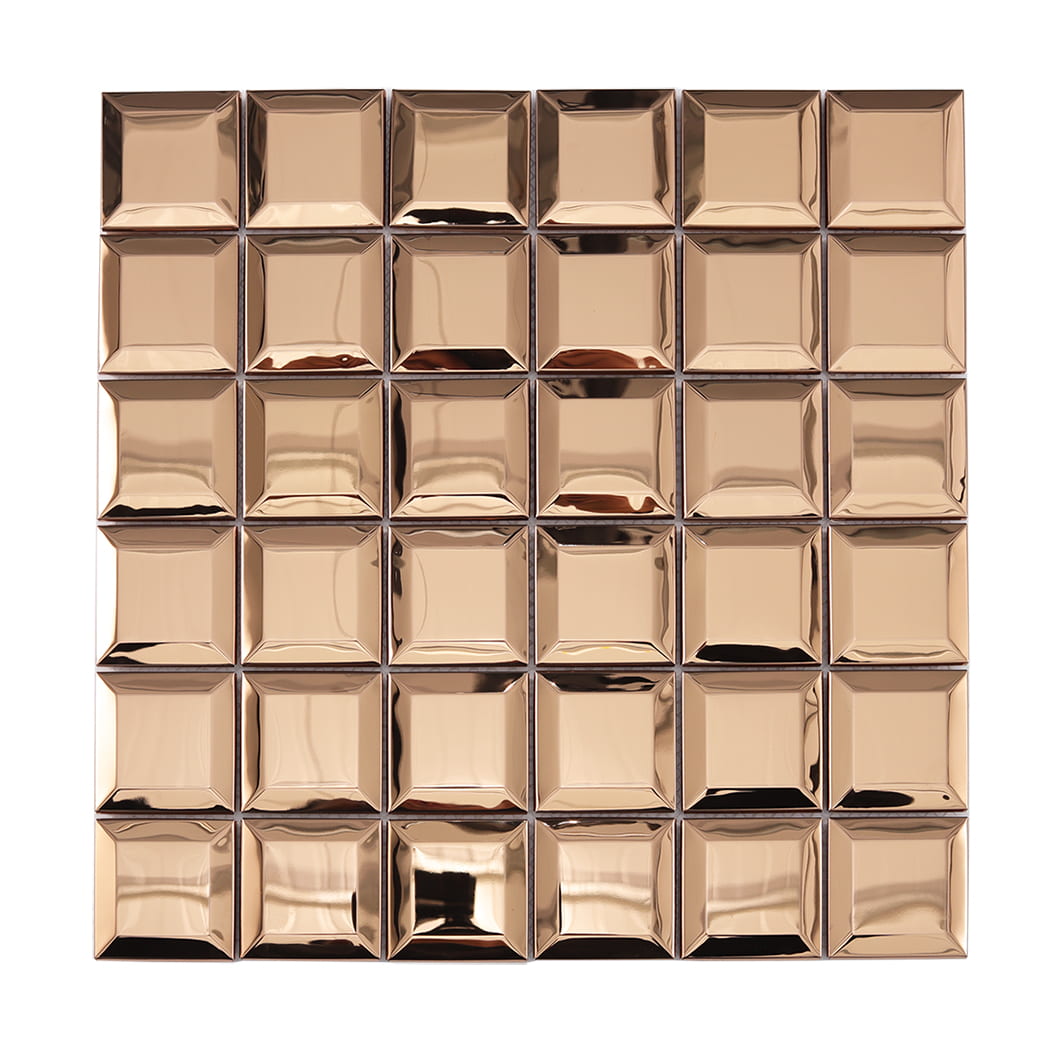
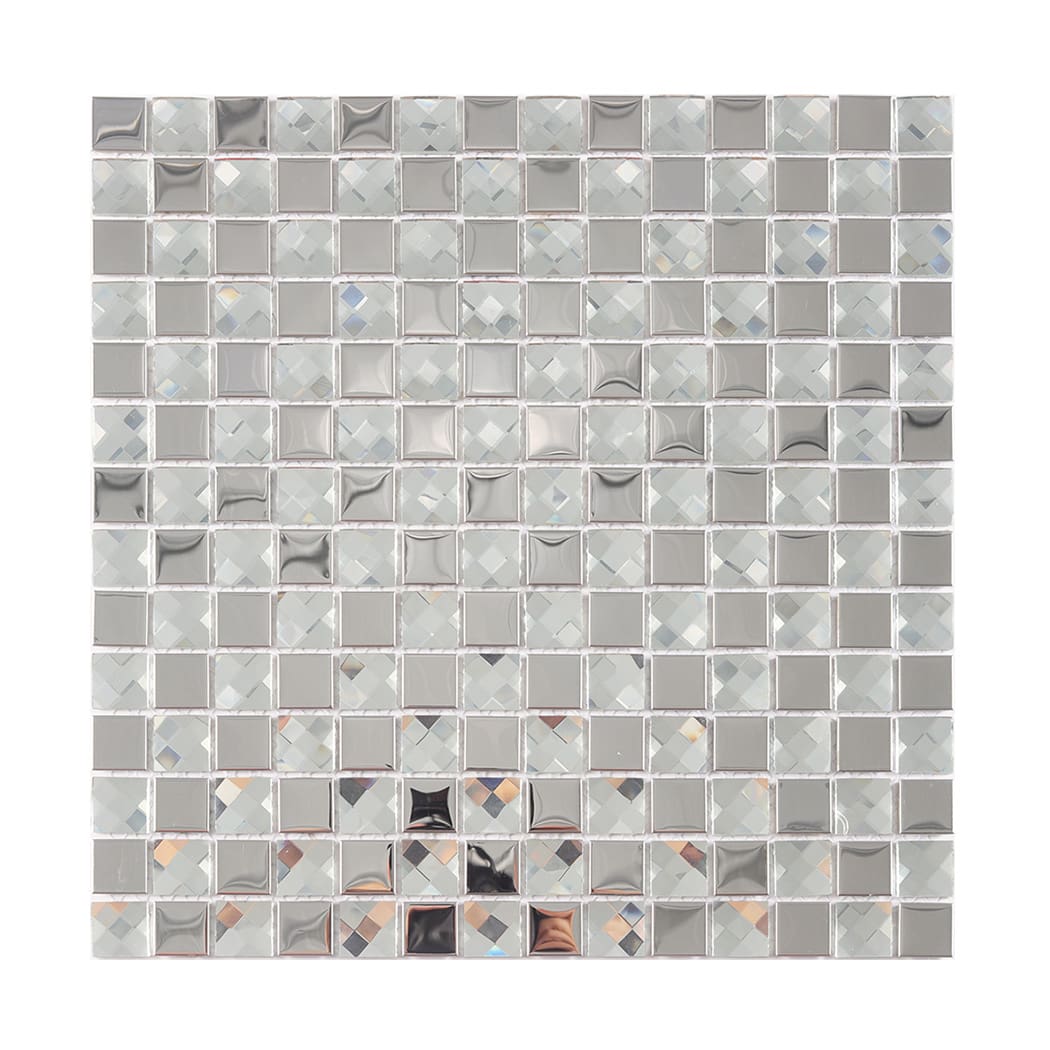
Glossy glass and polished metal reflect light and create a brighter, more dramatic focal point.
Iridescent
Iridescent glass shifts subtly with the viewing angle and surrounding light, adding layered color to modern walls.
Textured and 3D
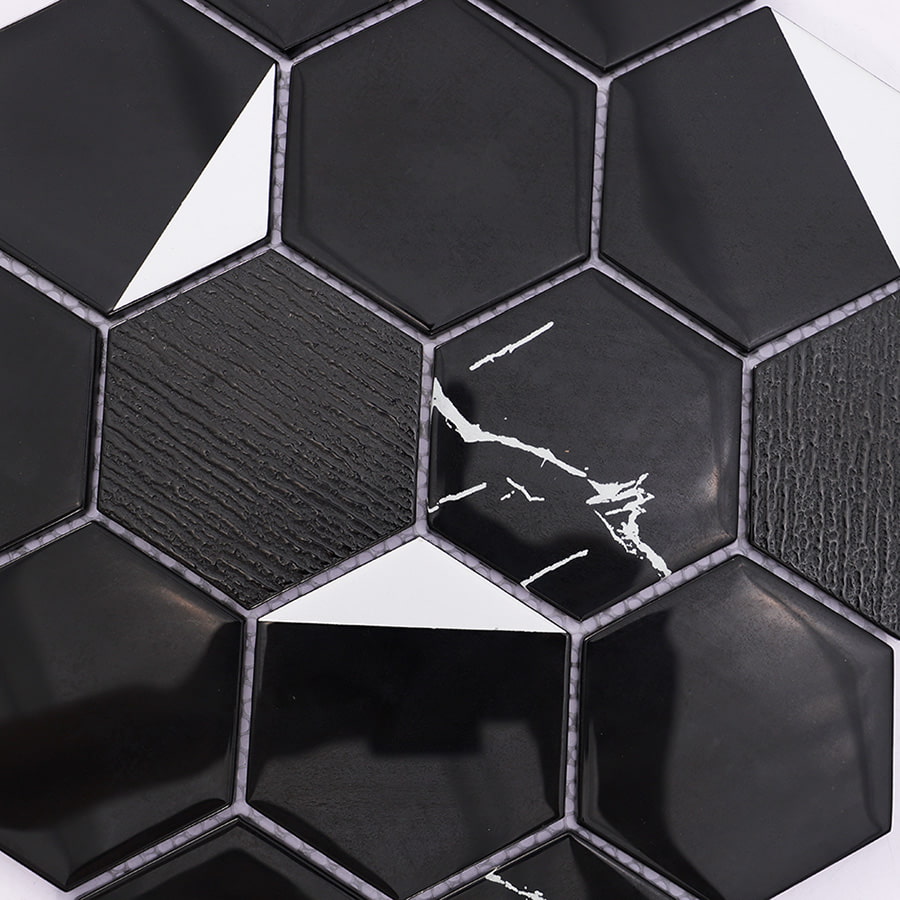
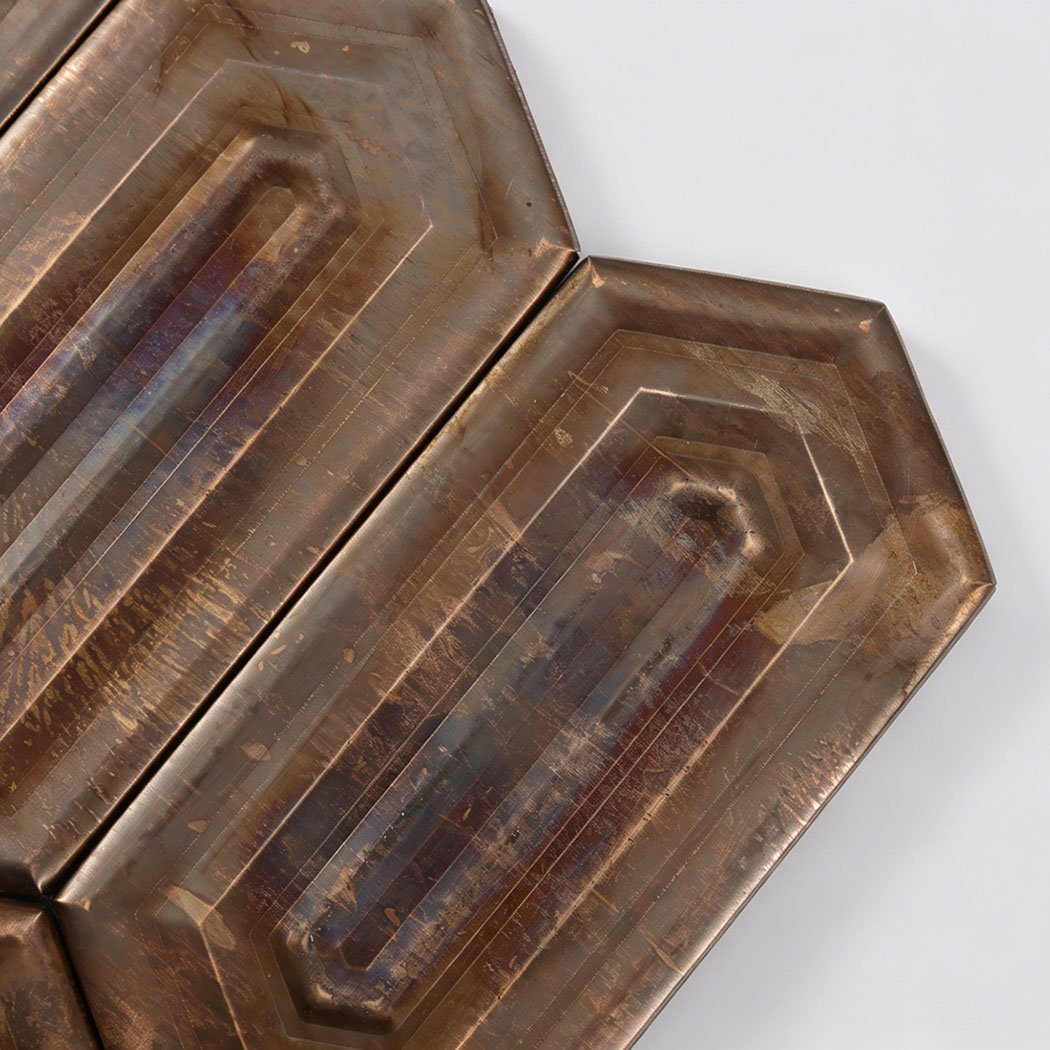
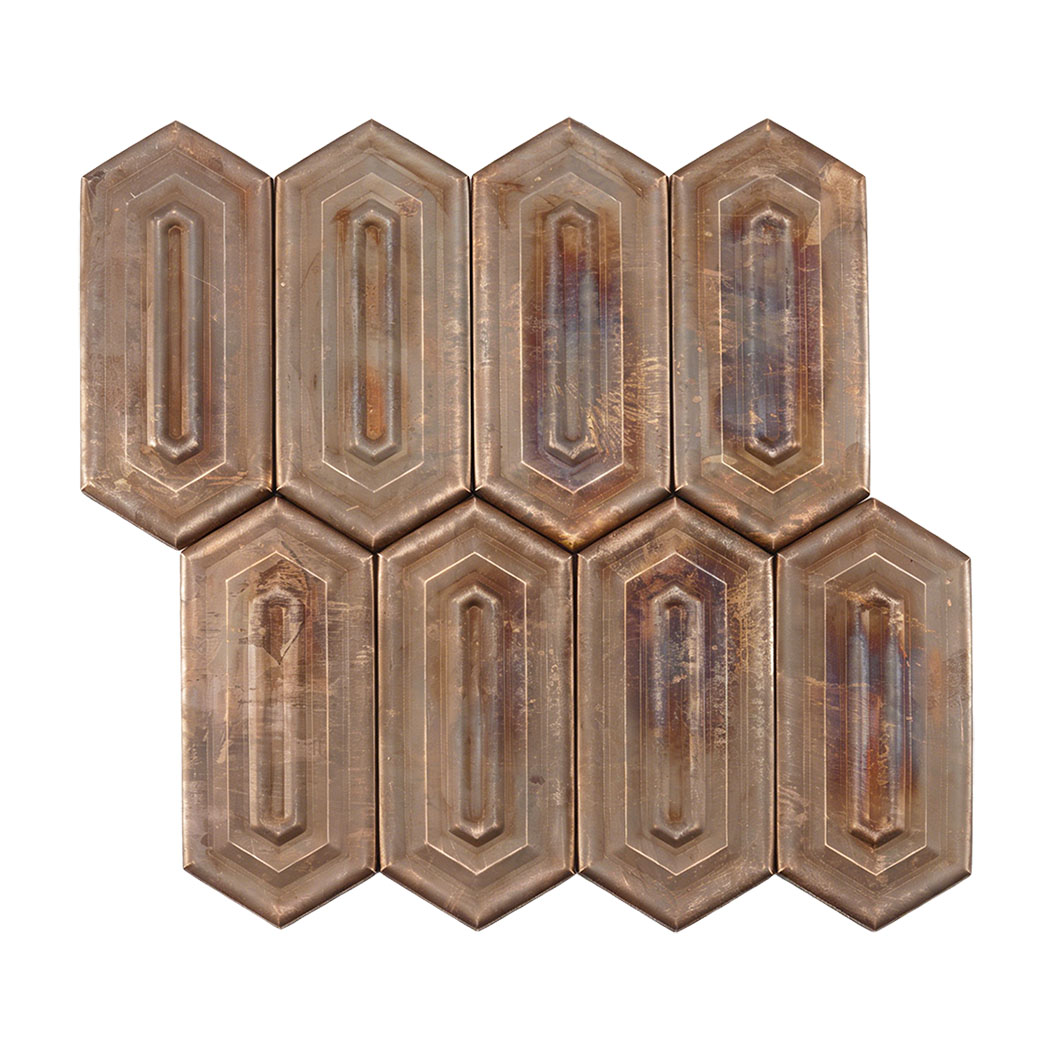
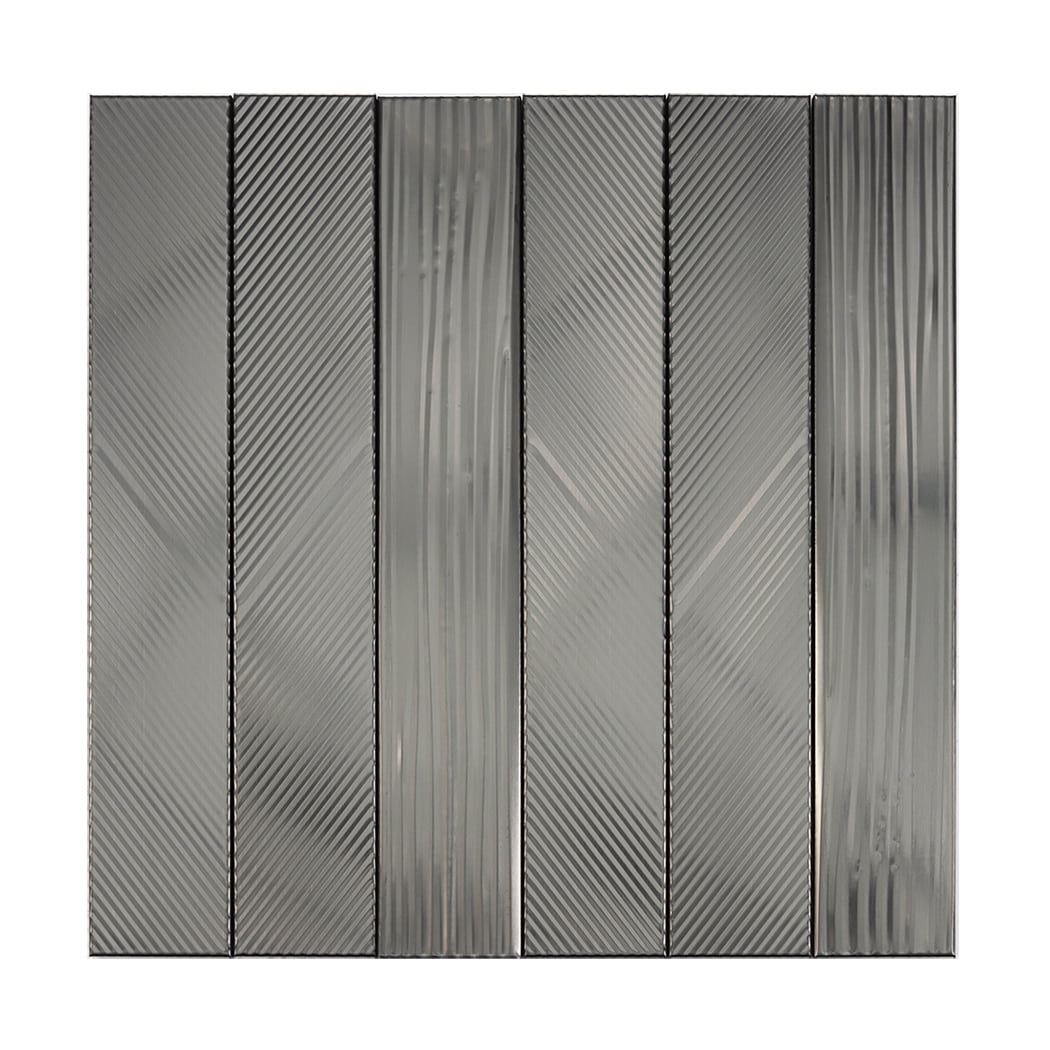
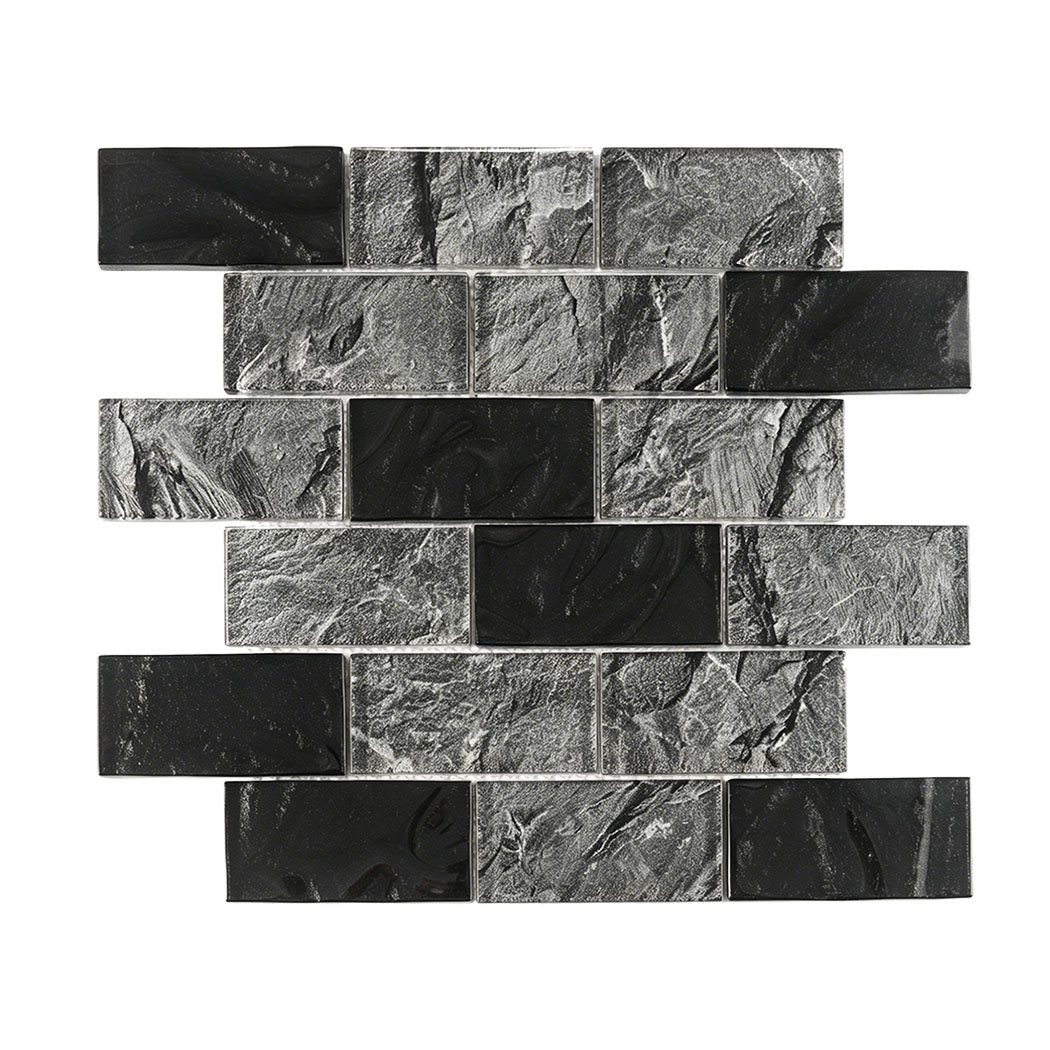
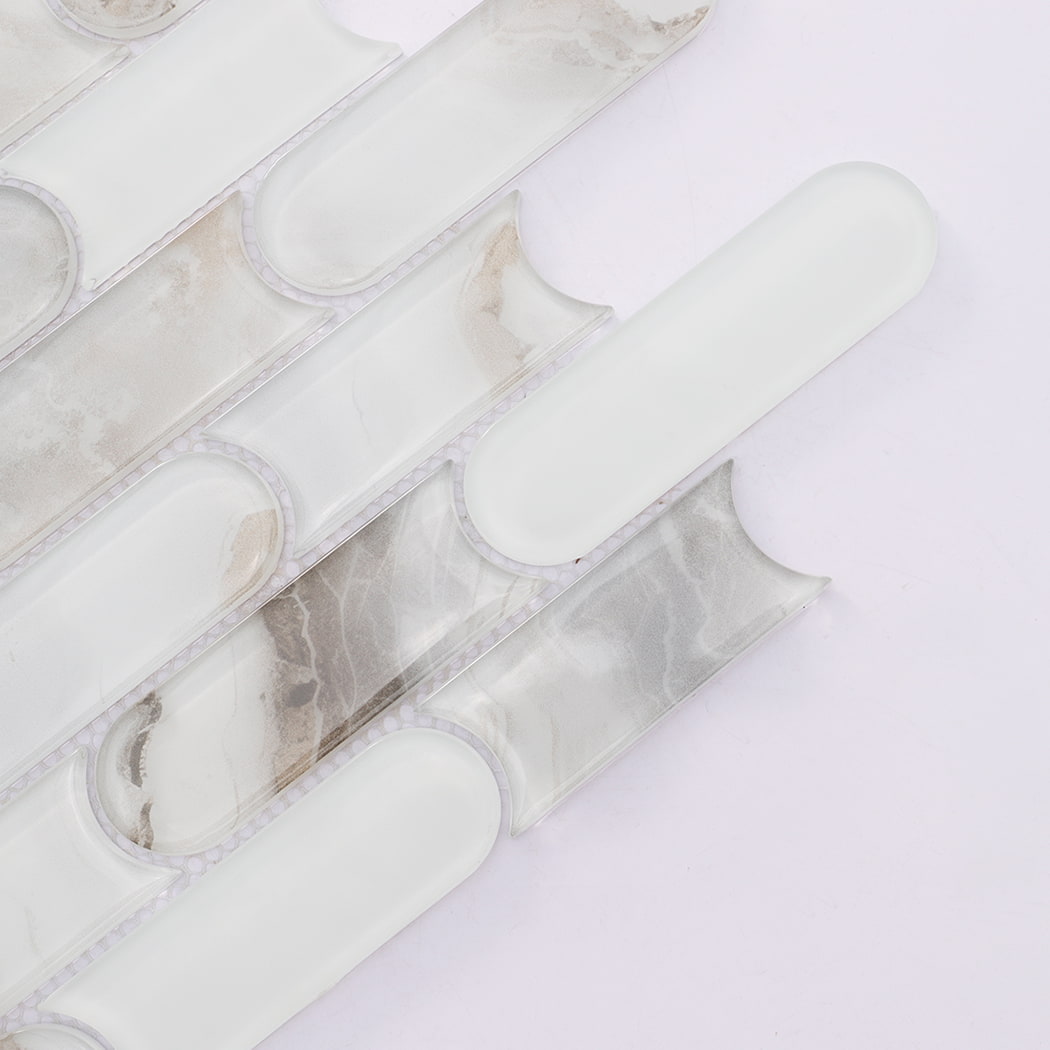
Embossed, curved and dimensional surfaces introduce shadow and depth. These tiles are generally best suited to walls rather than floors.
Modern Tile Colors
Neutral Colors
White, beige, gray and black create versatile foundations for minimalist and architectural interiors.
Blue and Green
Blue, teal, sage and deep green tiles add controlled color while maintaining a contemporary appearance.
Metallic Tones
Silver, gold, copper and rose gold finishes introduce reflective accents and modern material contrast.
Multicolor Designs
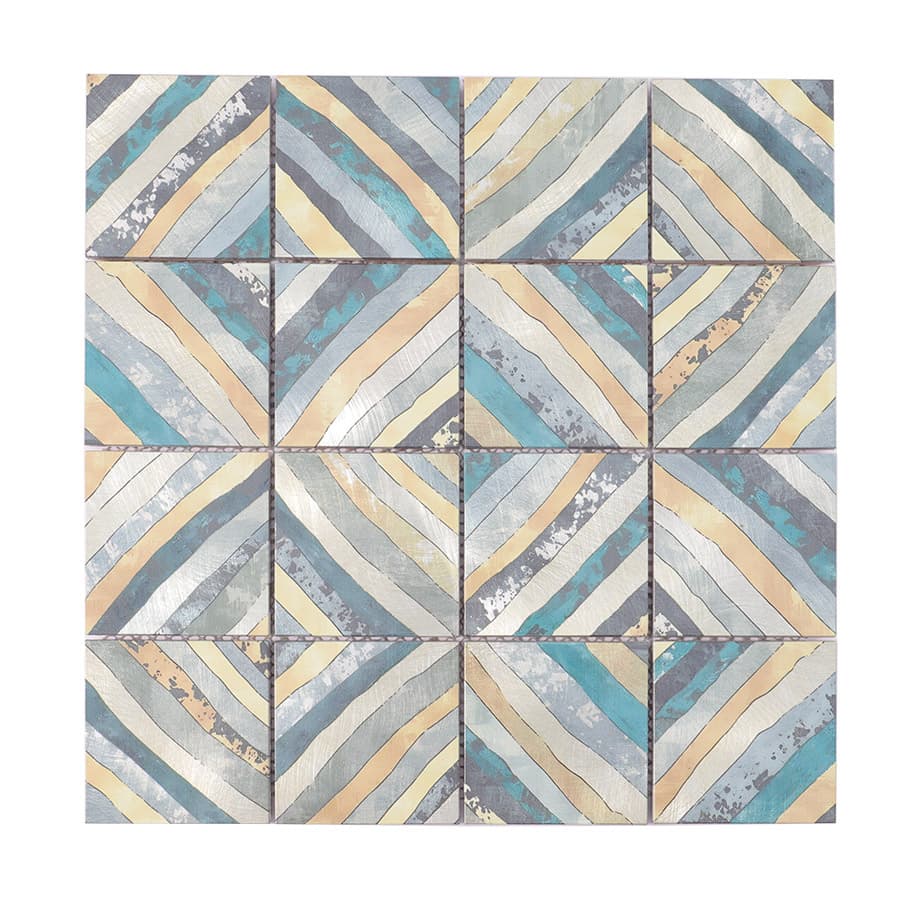
Carefully balanced mixed-color mosaics can create artistic feature walls without relying on traditional decorative patterns.
Patterns and Layouts
Geometric Designs
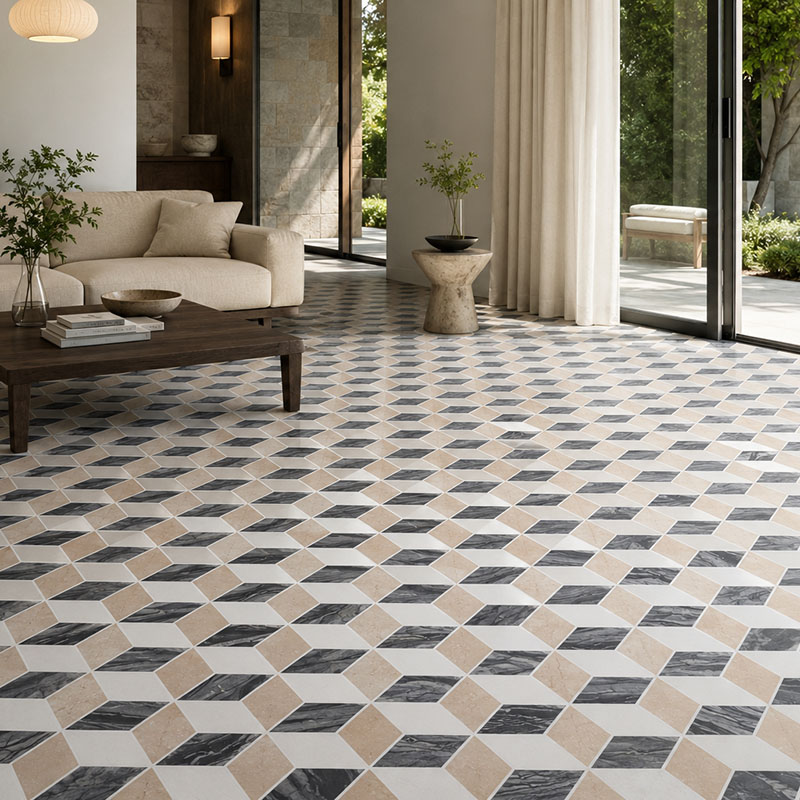
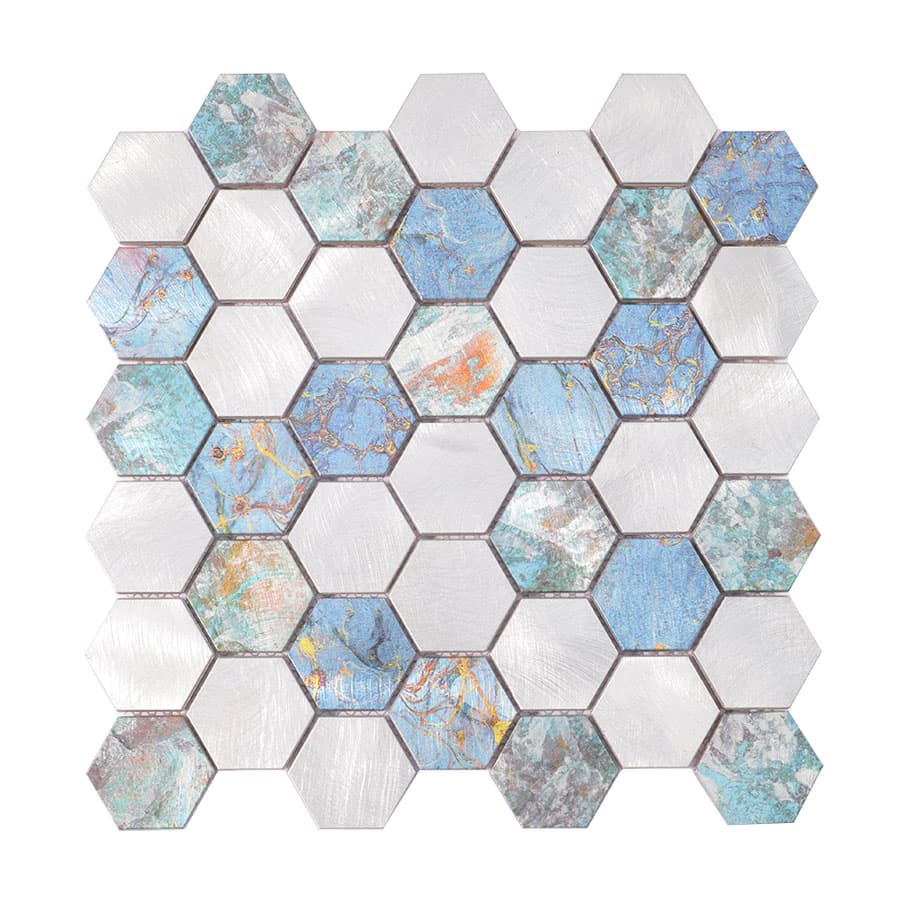
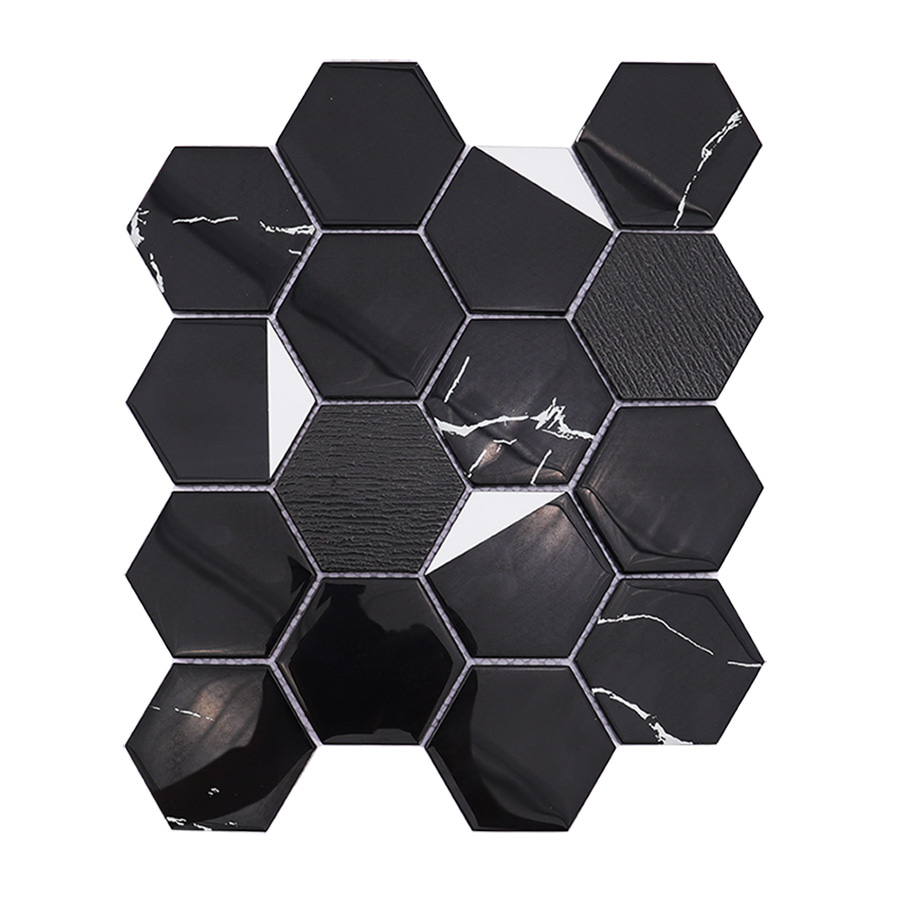
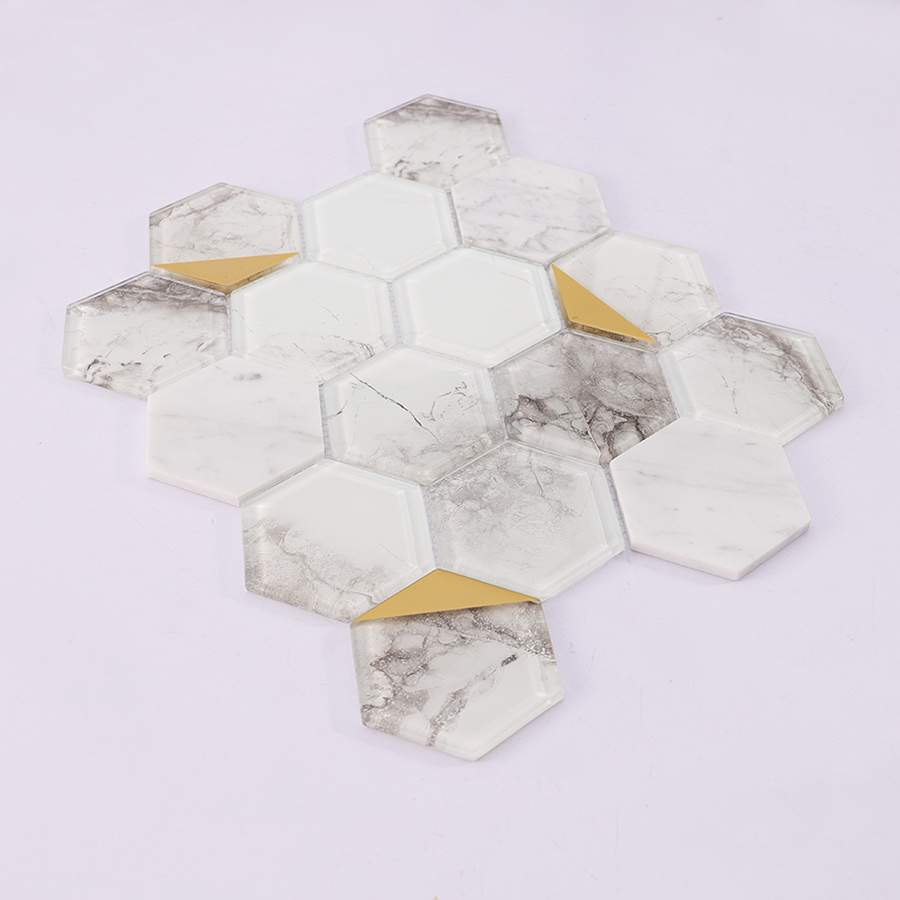
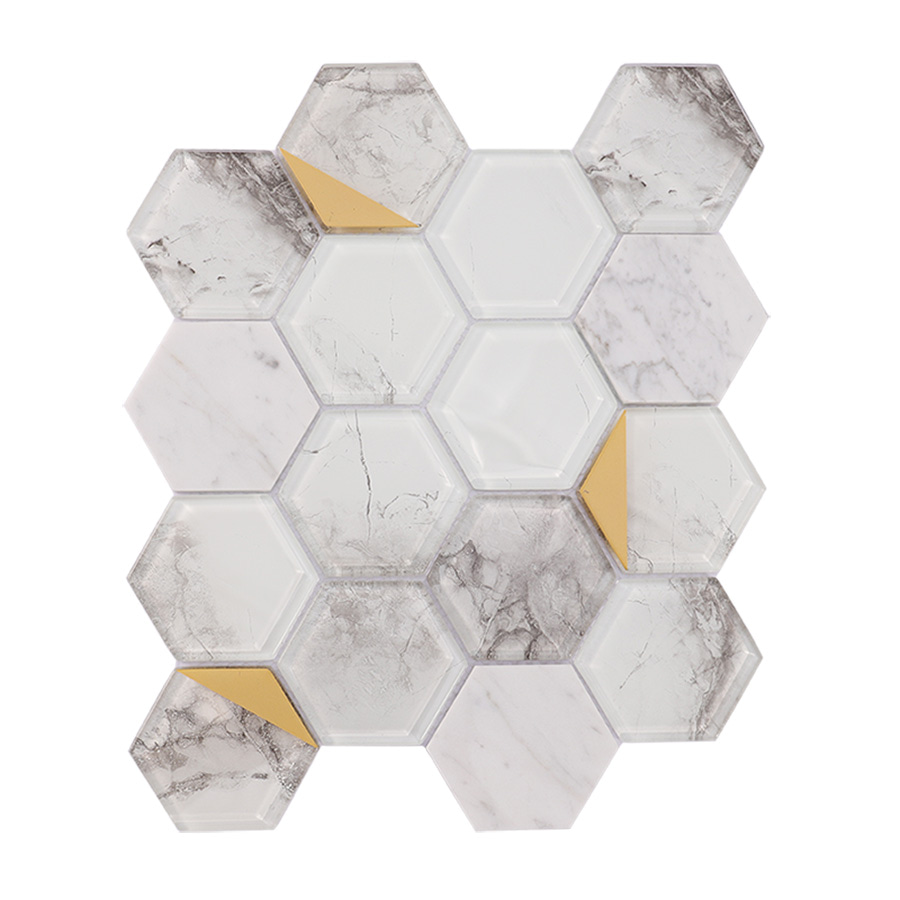
Hexagons: 2-8 inch honeycomb patterns for bathrooms and backsplashes. Herringbone: Rectangular tiles adding sophisticated movement. Linear Layouts: Horizontal stretches spaces; vertical adds height. Checkerboard: Black-white or gray-white timeless combinations.
Large Format Benefits
Popular sizes include 12×24, 24×24, and 24×48 inches. Creates seamless appearance with minimal grout lines, making spaces feel larger. Requires professional installation with flat substrates.
Small Format
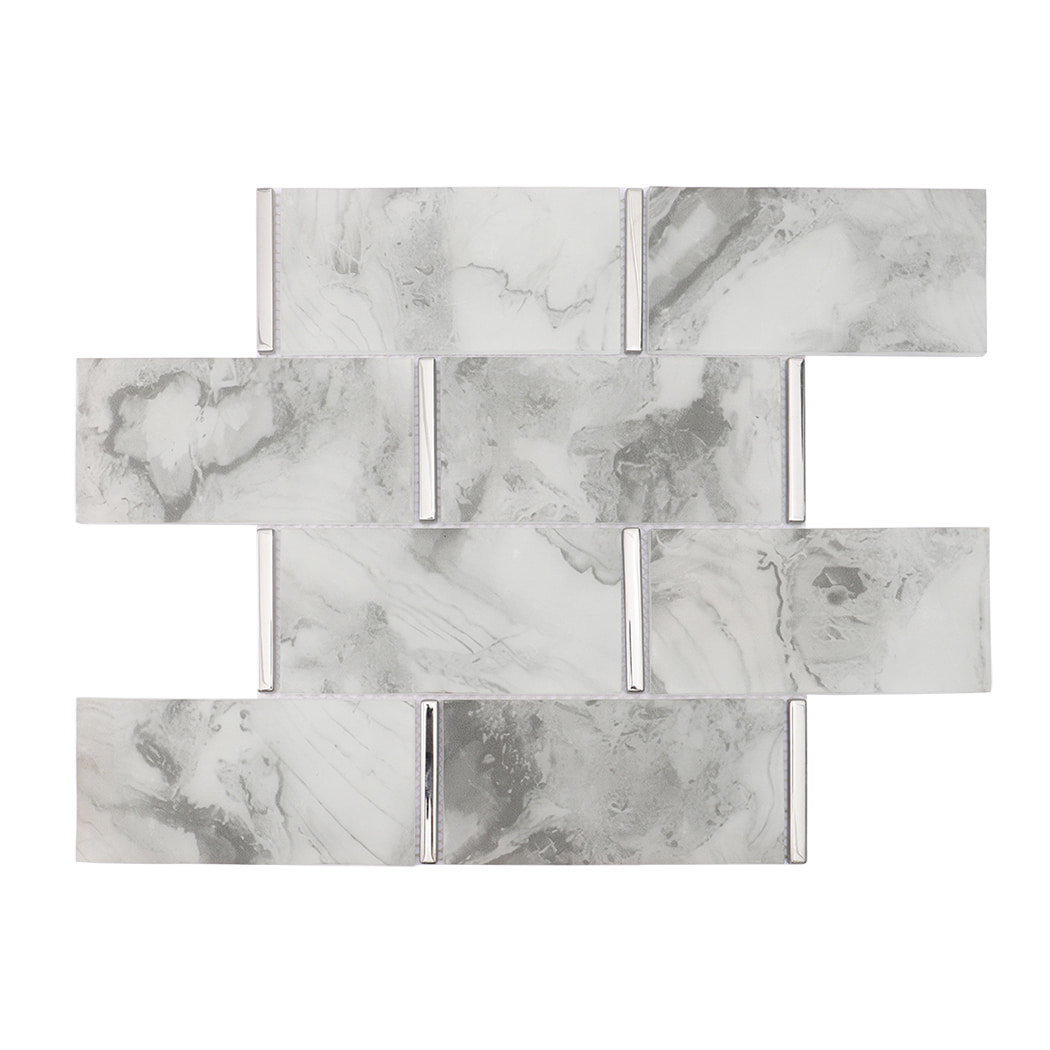
Subway Tiles: Modern 3×6-inch matte tiles in neutral colors. Mosaics: Geometric accents for showers and backsplashes.
Applications
Modern Bathrooms
Geometric Mosaic Patterns
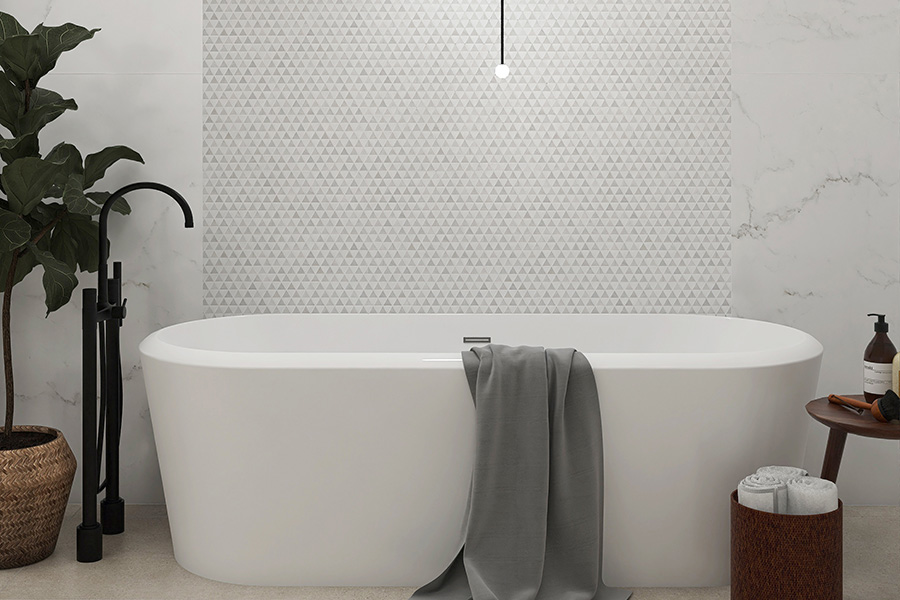
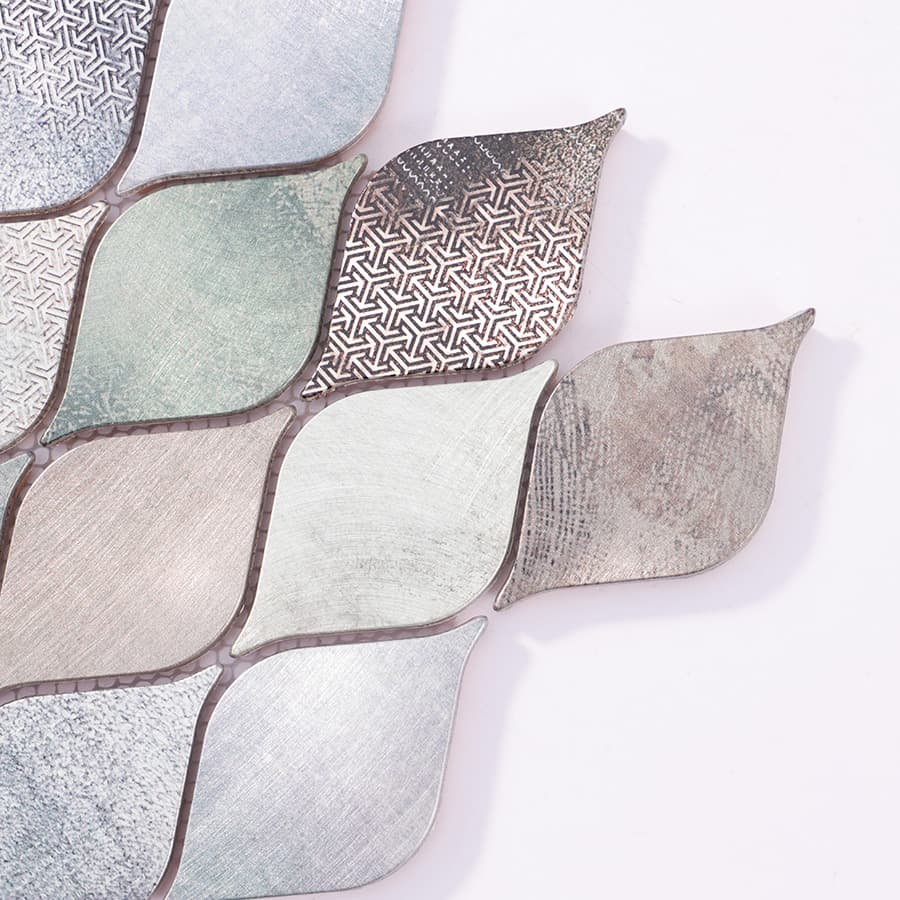
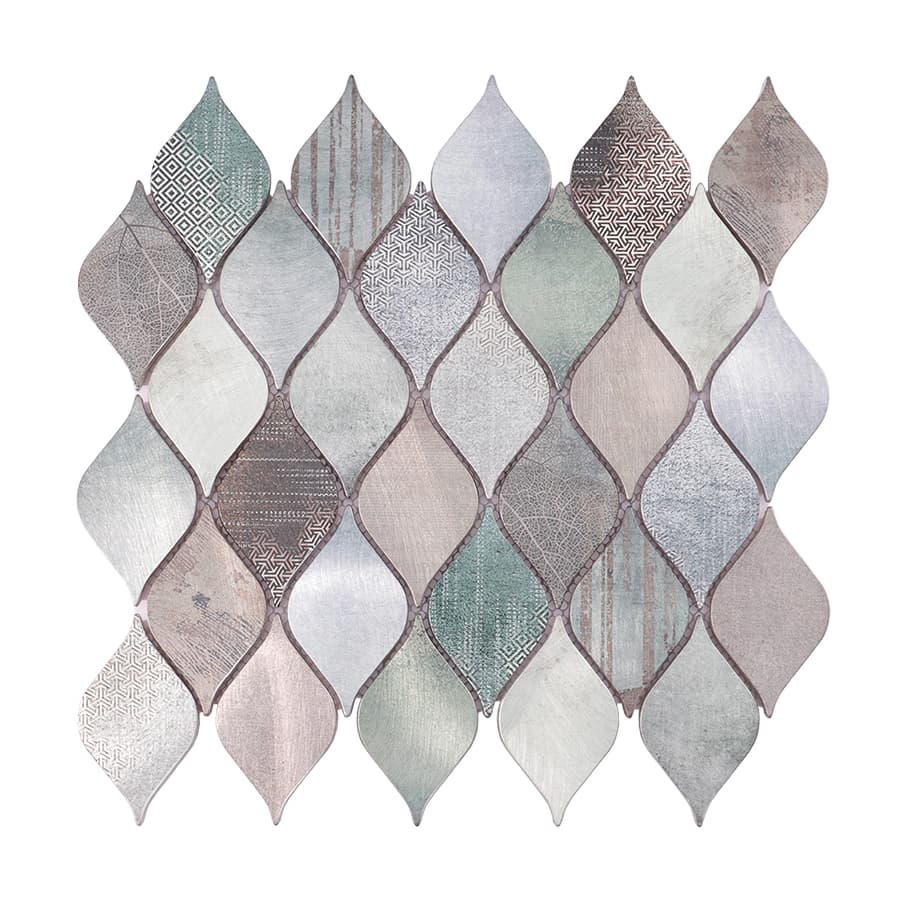
Hexagon, diamond, square and leaf-shaped mosaics use repeated geometry to create clear visual rhythm.
Linear and Subway Layouts
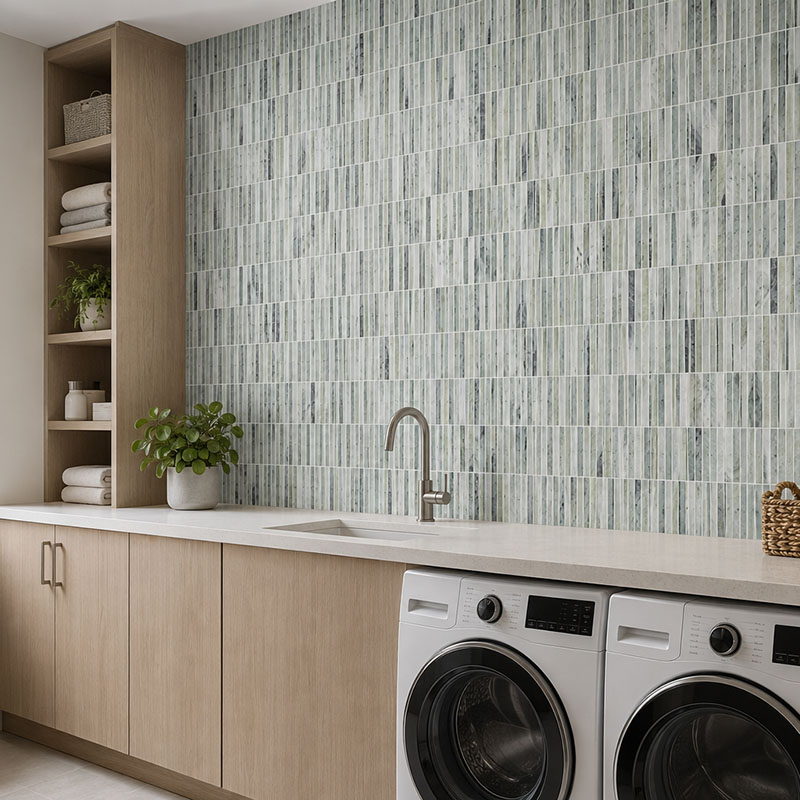
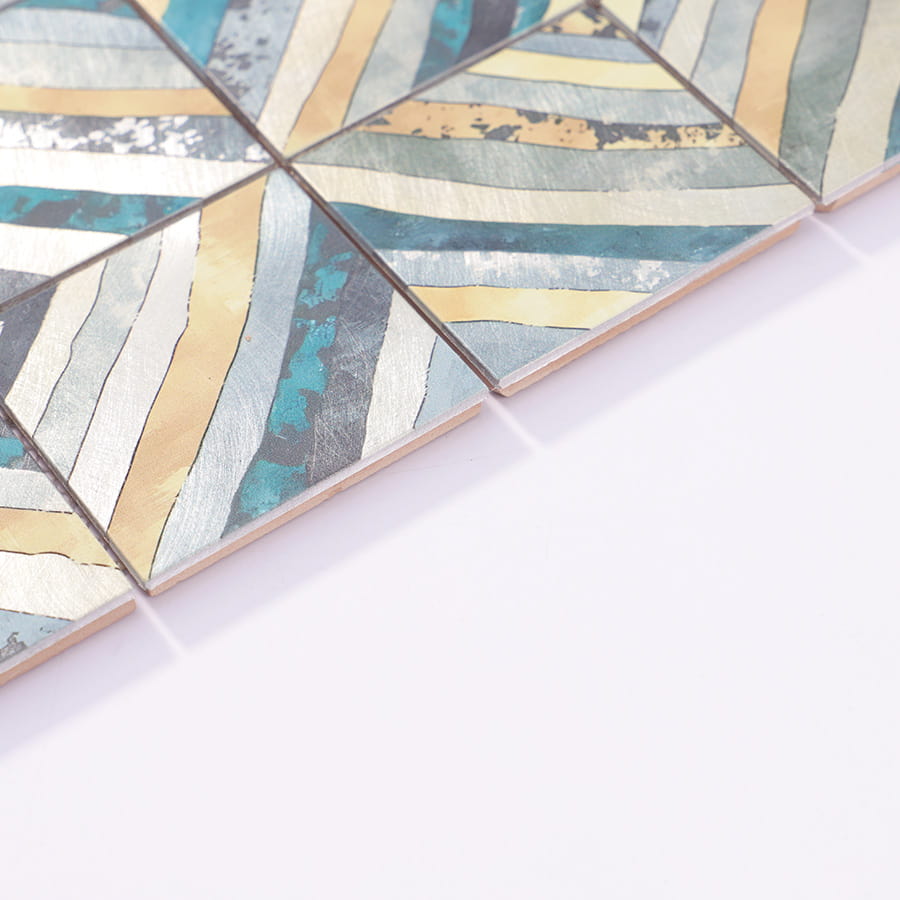
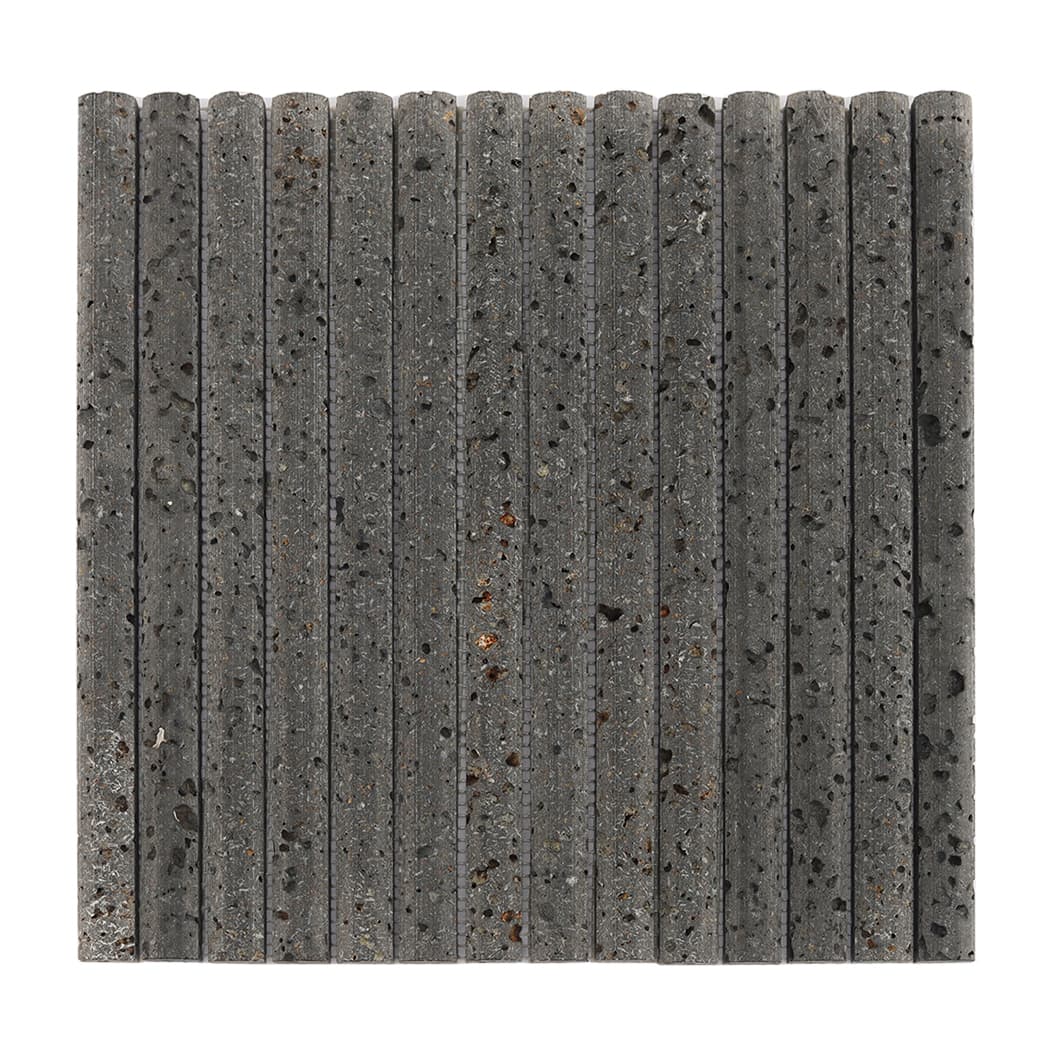
Long strips, subway formats and vertical arrangements emphasize direction and bring a structured appearance to modern walls.
Irregular and Organic Patterns
Irregular glass pieces, curved surfaces and nature-inspired shapes soften strict geometry while preserving a contemporary character.
Dimensional Patterns
Embossed and 3D metal or wood surfaces use light and shadow to create architectural depth on feature walls.
Accent Walls: Full coverage or 3D textured tiles create focal points while maintaining monochromatic restraint.
Design Styles
Minimalist Modern: Single-color large format with invisible grout. Interest through texture and scale.
Industrial Modern: Concrete-look tiles, raw textures, metallic accents for urban loft character.
Scandinavian Modern: Light colors, wood-look tiles, functional beauty creating bright, warm spaces.
Quiet Luxury: Premium materials, oversized slabs, perfect installation—refined rather than flashy.
Installation and Care
Installation
Installation requirements vary significantly between glass, marble, metal and natural wood tiles. Select the mortar or adhesive, trowel, grout and cutting method according to the product material, backing and installation location.
Keep the joints between mounted sheets consistent with the joints within each sheet. Follow the product and setting-material manufacturer’s instructions.
Cleaning and Maintenance
Clean each tile according to its material and finish. Use non-abrasive tools on glass and polished metal, pH-neutral stone-safe cleaners on marble, and products approved for natural wood on wood mosaics.
Sealing requirements vary by natural stone and grout type. Test cleaning products and sealers on a sample or inconspicuous area before full use.
Choosing Your Tiles
Key Considerations
Small rooms need light colors and large formats. Family bathrooms require slip-resistant tiles. Quality porcelain provides better long-term value. Ensure tiles harmonize with your overall design style.
Where to Buy
Order samples from online retailers or visit local showrooms. Always view samples in actual space under room lighting before purchasing.
Modern Tile FAQs
What makes a tile look modern?
Modern tiles often use clean geometry, structured layouts, refined textures and carefully balanced colors. Glass, marble, metal and natural wood can all create a modern appearance when used with the right shape, finish and layout.
Are modern tiles only available in neutral colors?
No. White, gray, beige and black are popular, but blue, green, gold, silver, copper and rose gold can also suit modern interiors. The overall effect depends on how the color is combined with the material and pattern.
Can modern tiles be used on floors?
Only products specifically identified as floor-rated should be used on floors. Metal, dimensional and natural wood wall tiles should not be assumed suitable for flooring.
Can modern tiles be used in showers?
Some glass and natural stone mosaics may be suitable for approved shower applications. Always check the product’s material, finish, backing and wet-area specifications. Metal and natural wood tiles are generally intended for dry interior walls.
Are modern mosaic tiles mesh mounted?
Many modern mosaic tiles are supplied on mesh-mounted sheets for easier placement. Mounting methods and sheet dimensions vary by product, so review the individual product specifications before ordering.
How should modern tiles be cleaned?
Use cleaning products that are compatible with the tile material. Avoid abrasive tools on glass and polished metal, and use a pH-neutral stone-safe cleaner on natural marble.
Can I request a sample?
Yes. Samples are available to help you evaluate the actual color, finish, texture and scale before placing a full order. Contact SAICINA TILES for sample options and shipping details.