















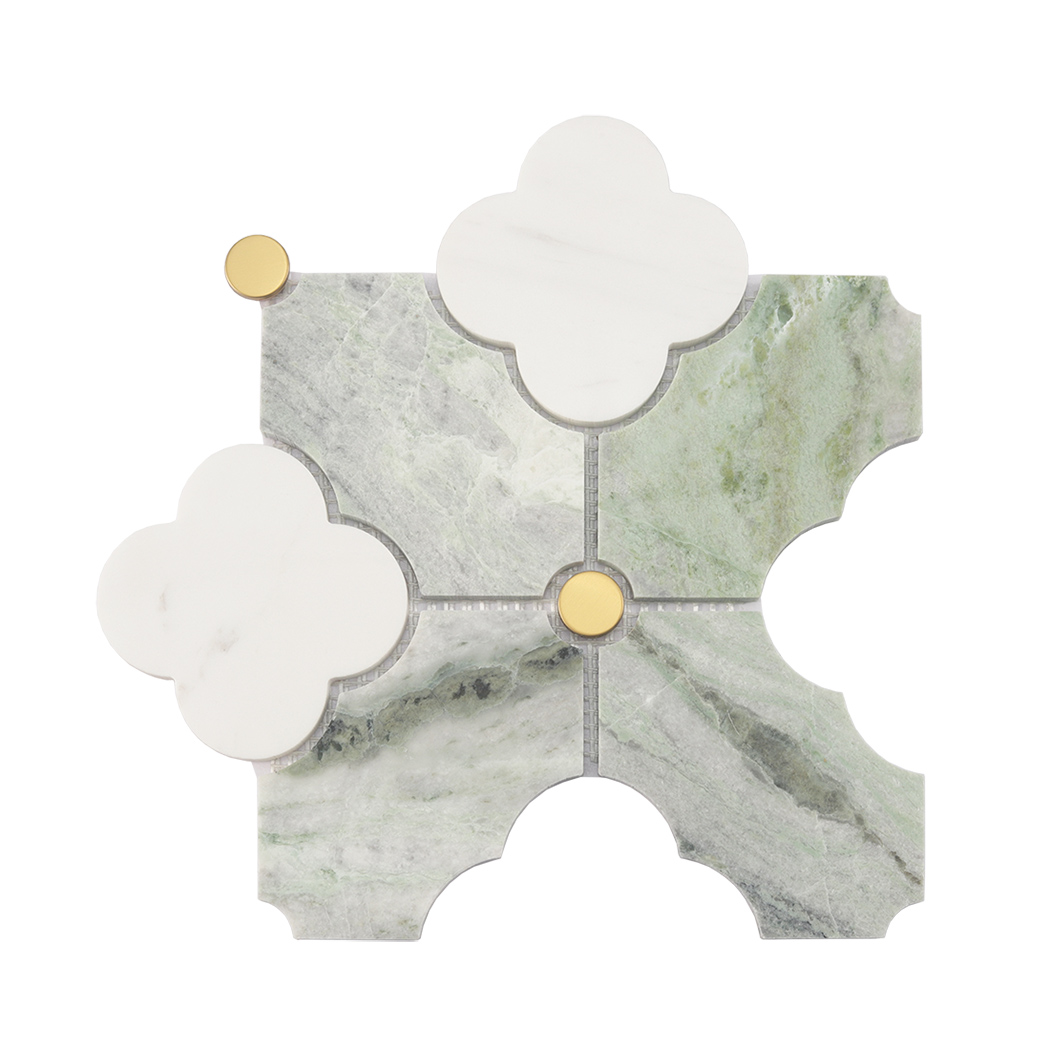
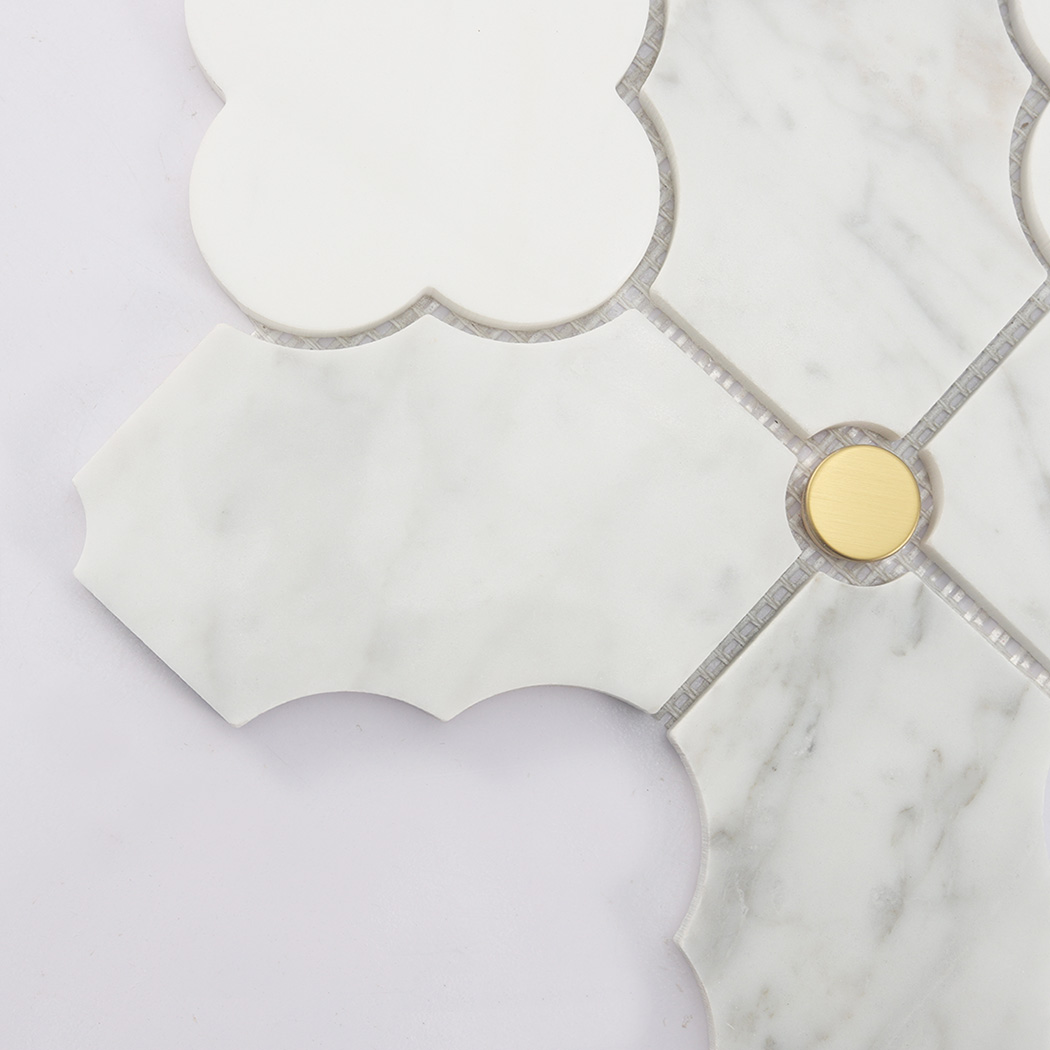
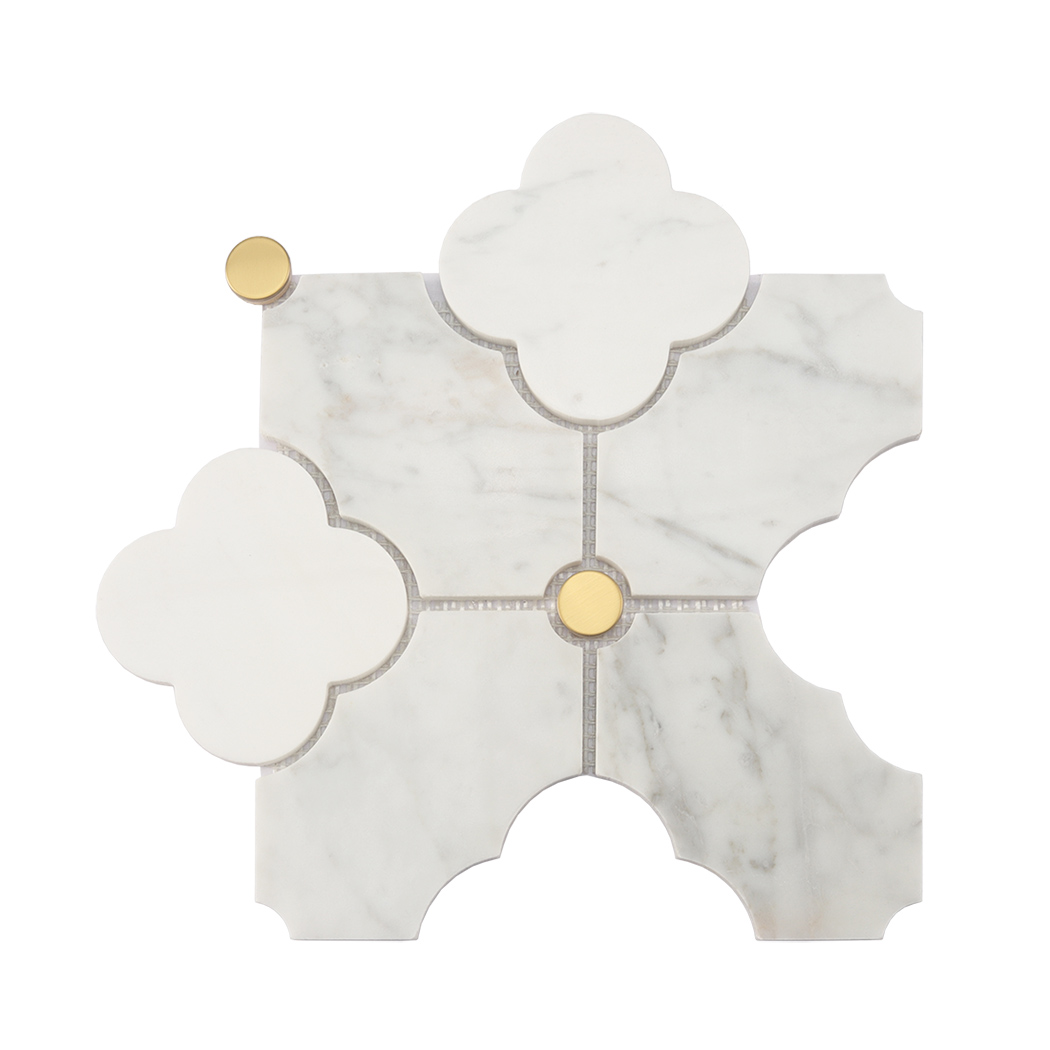
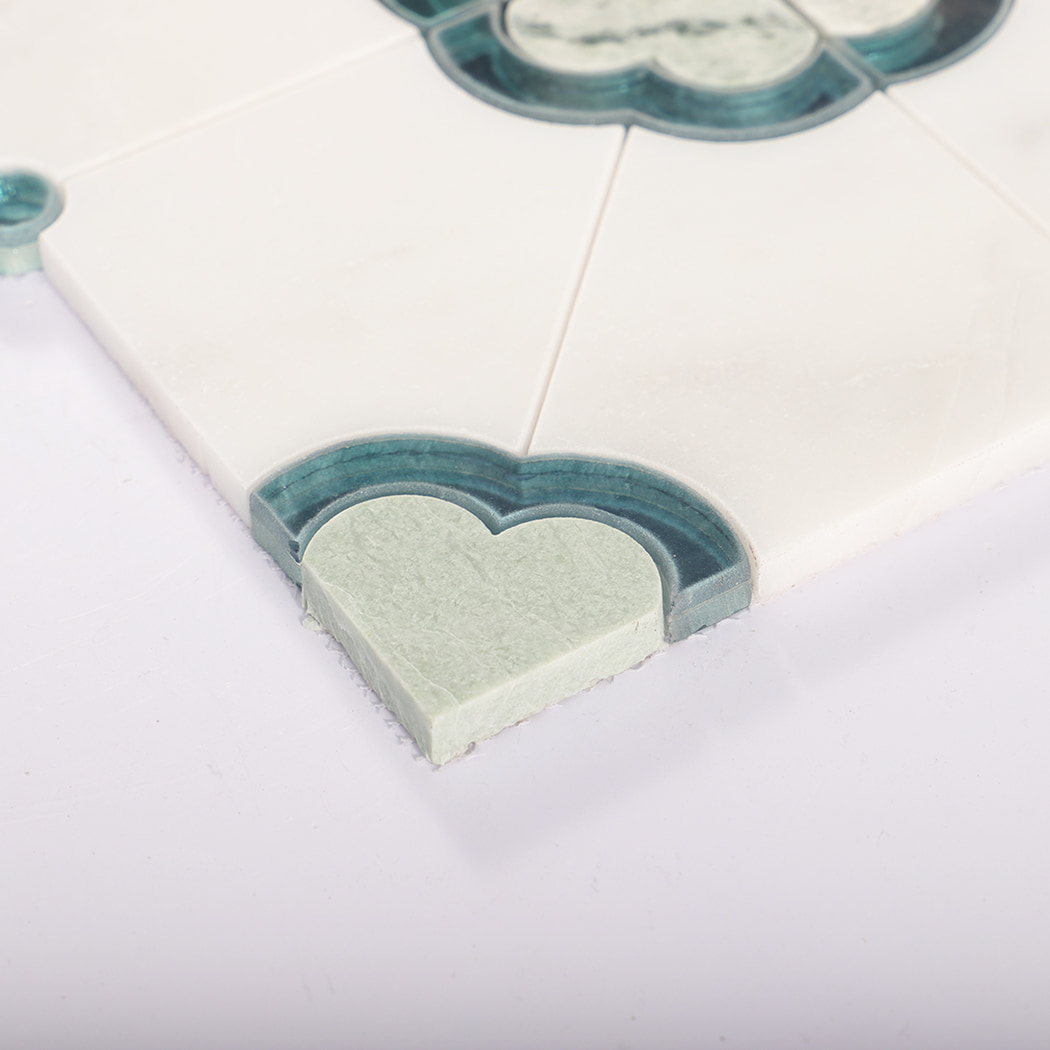
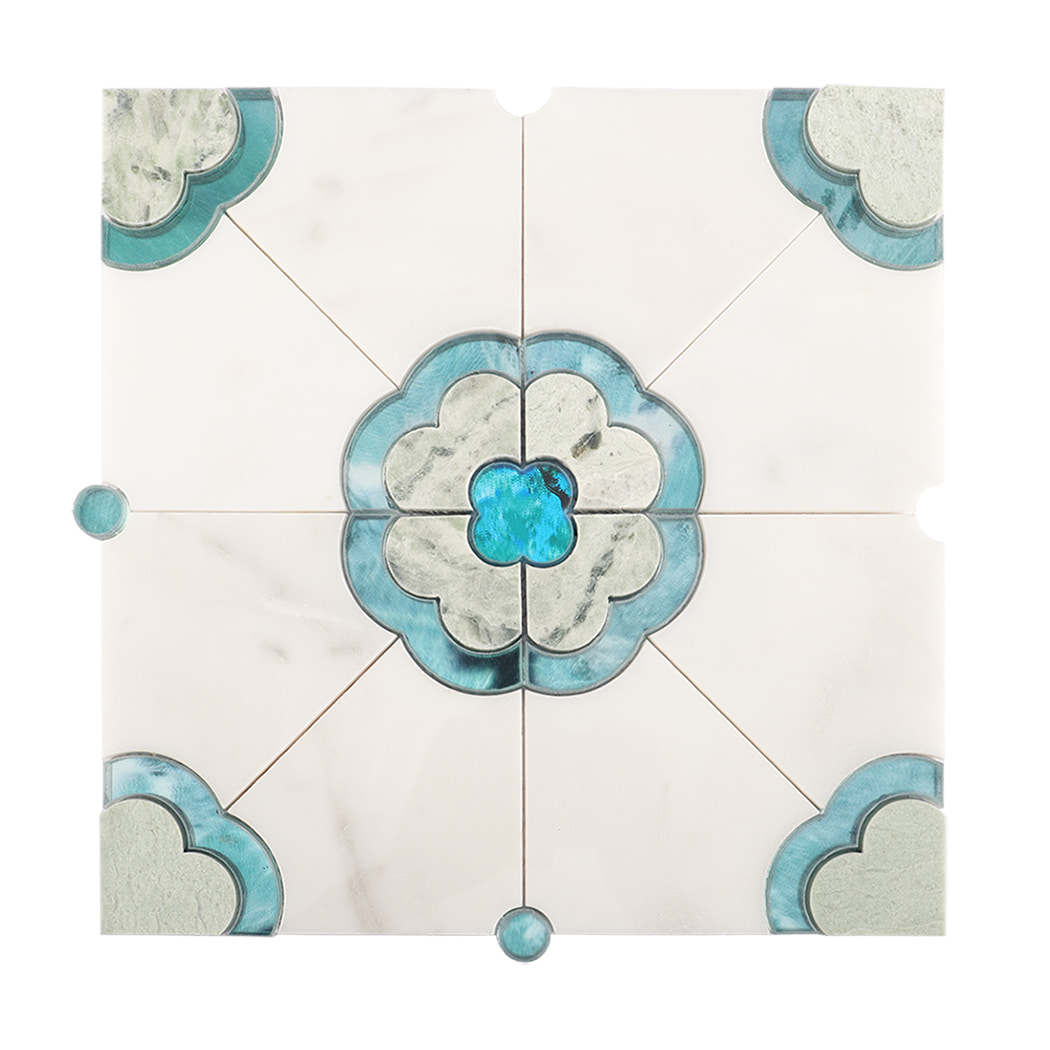

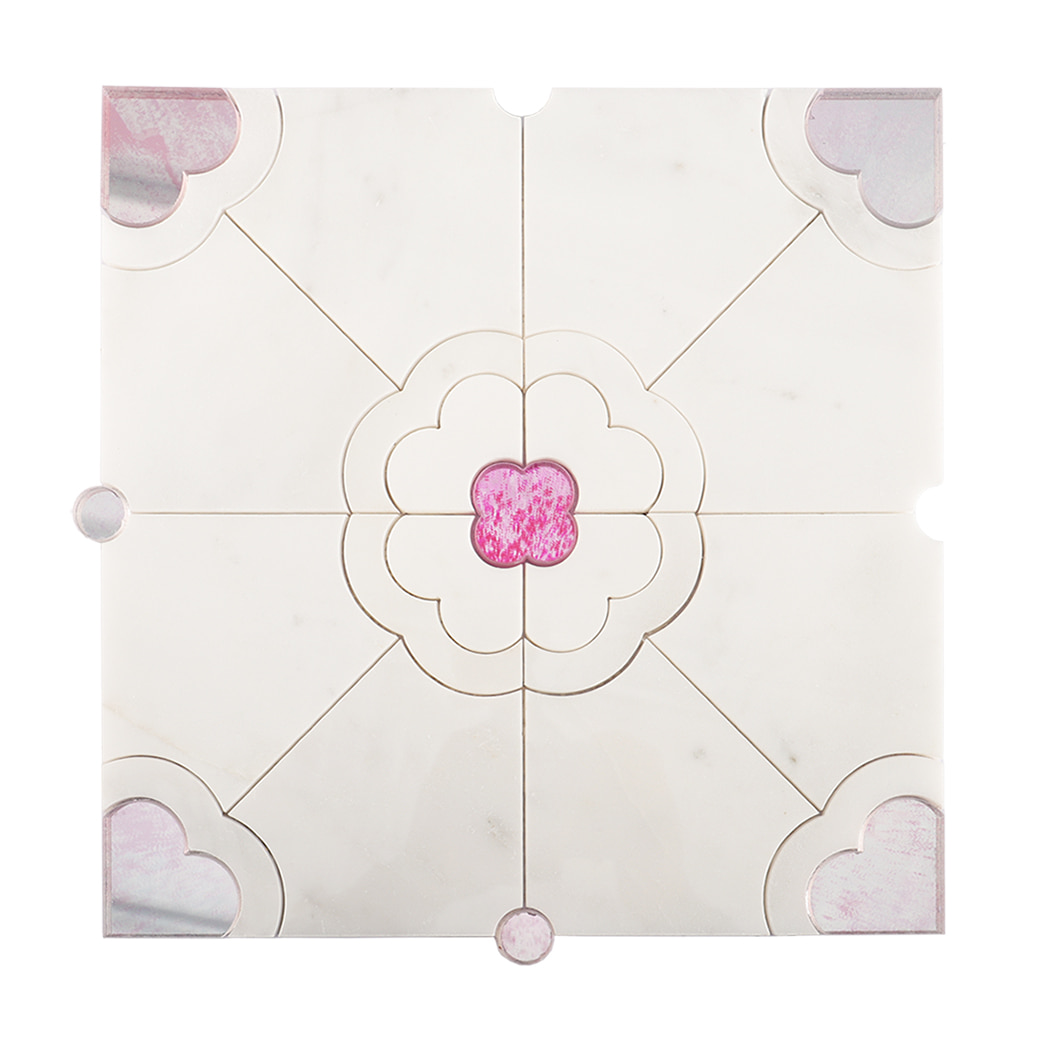

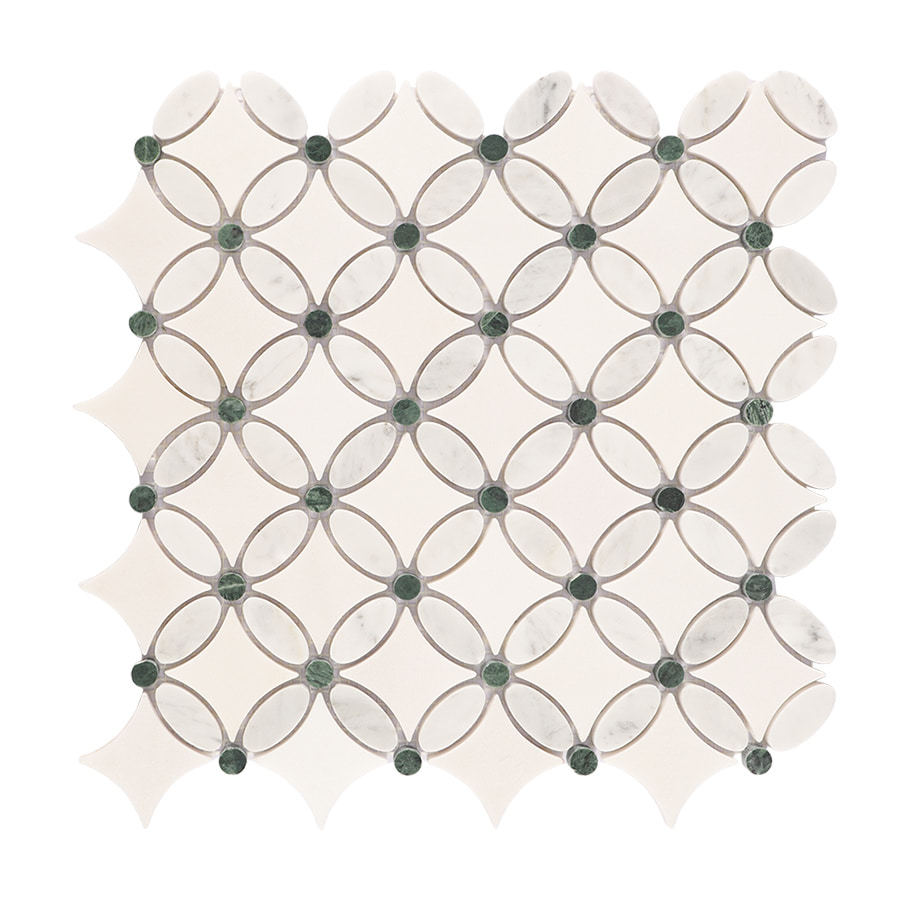

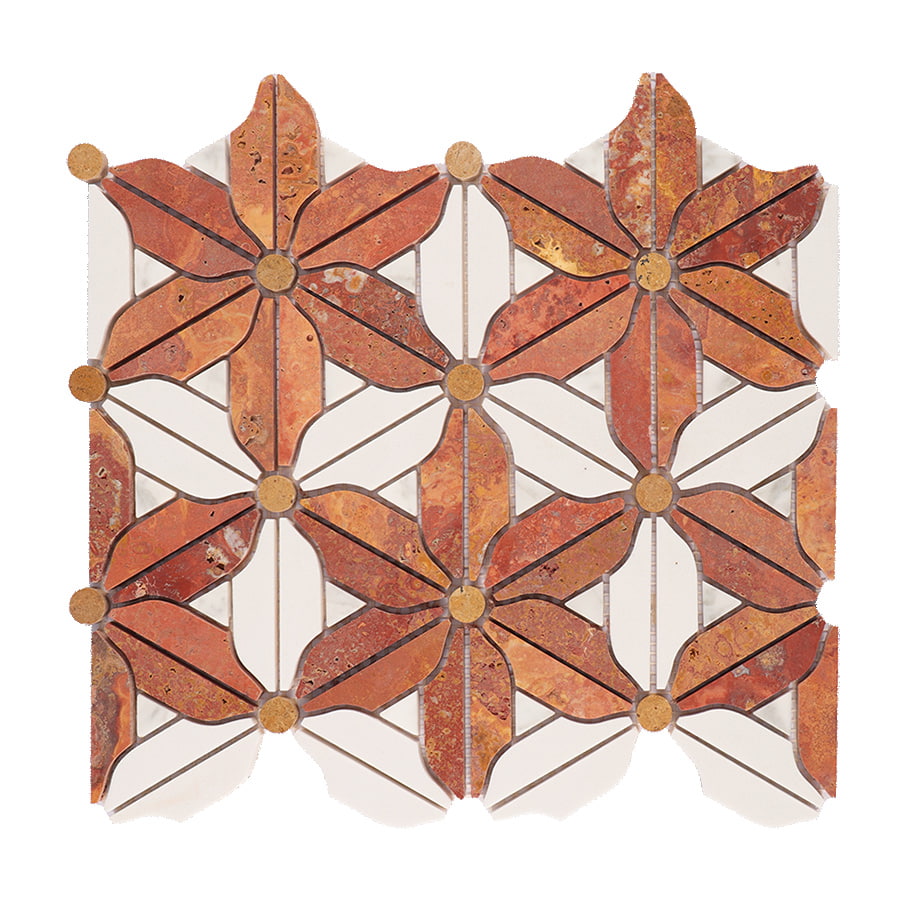

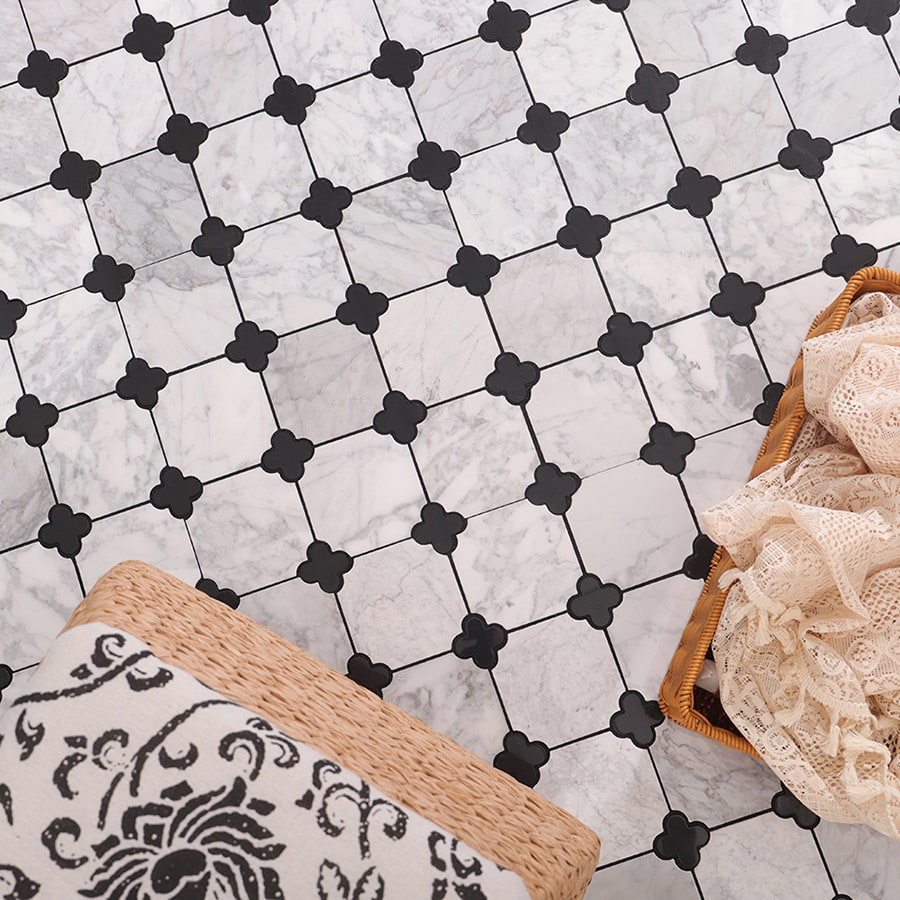

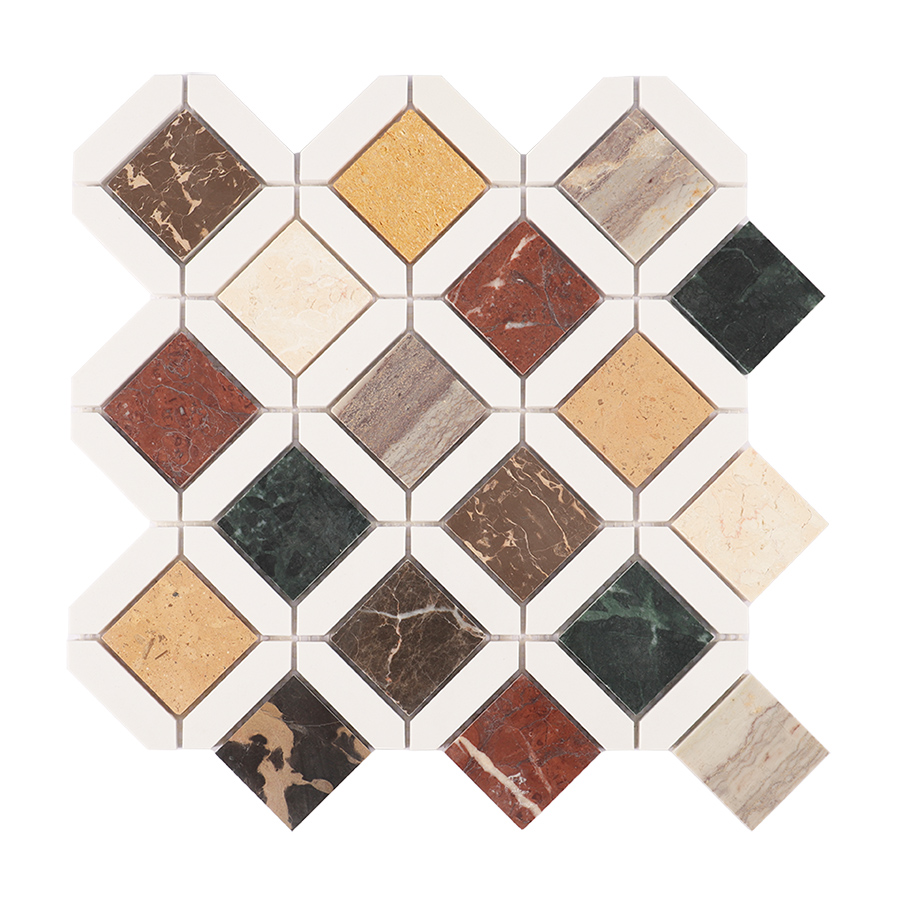

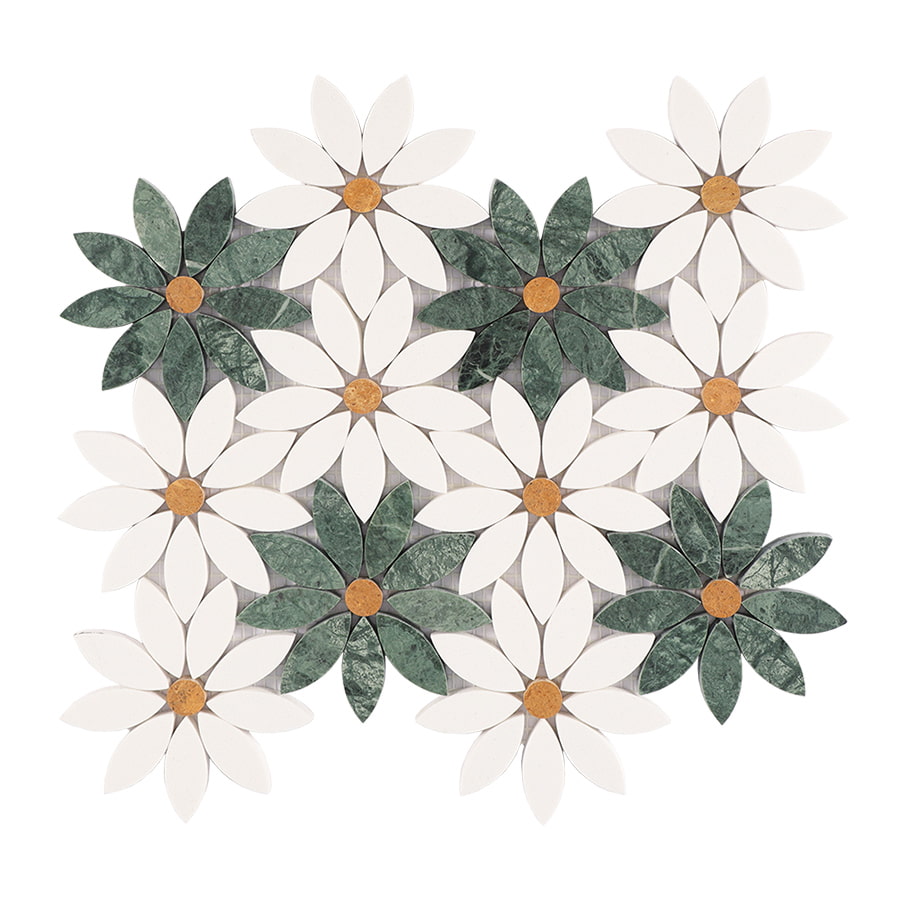
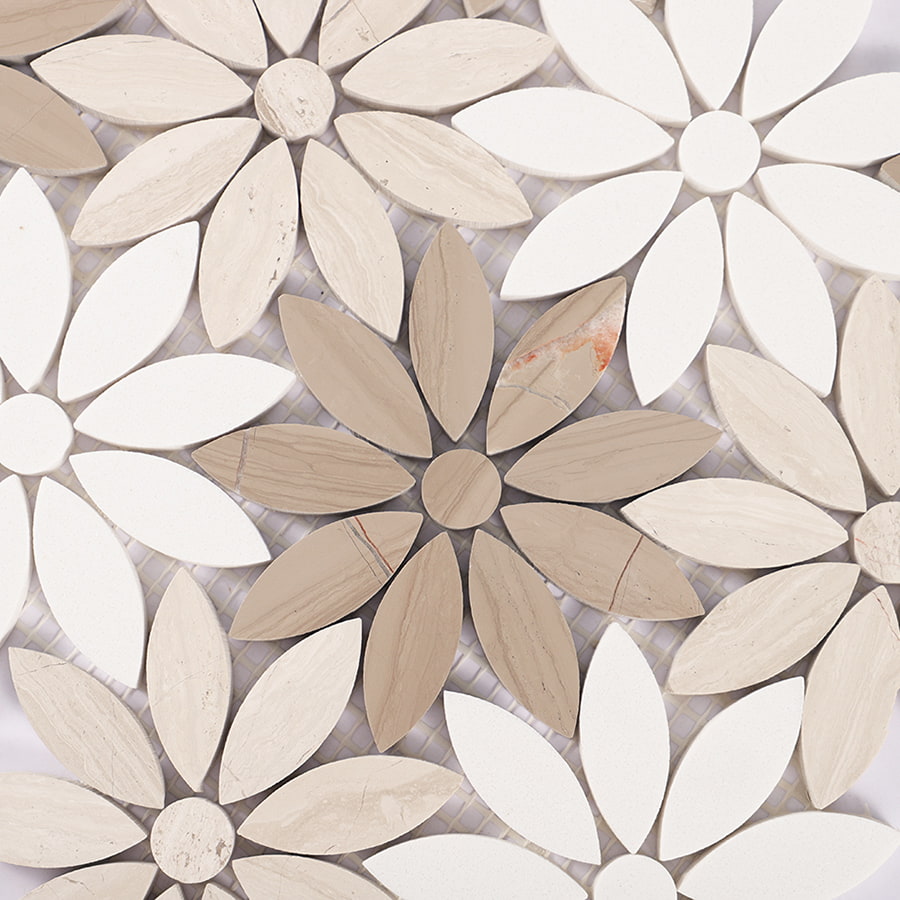



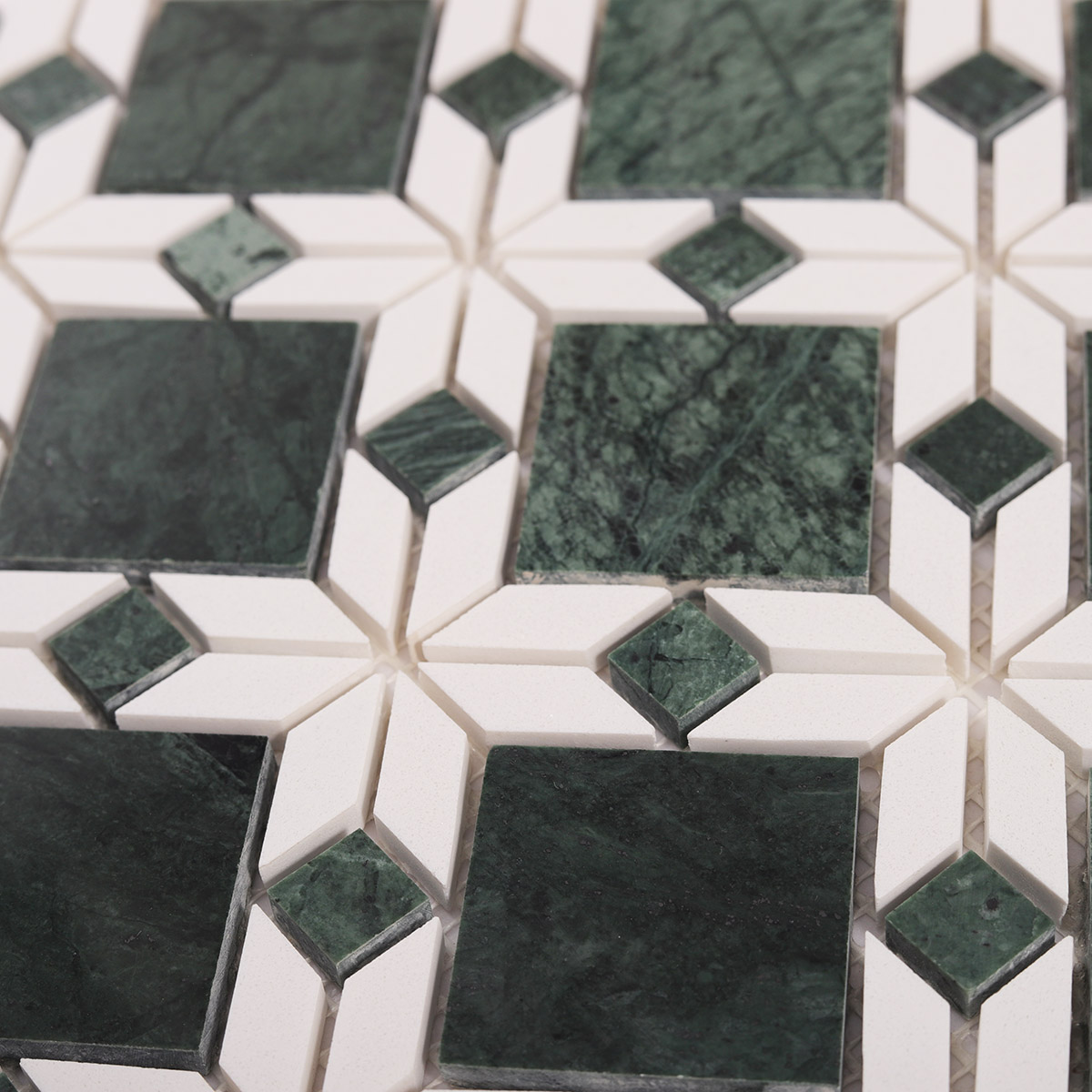
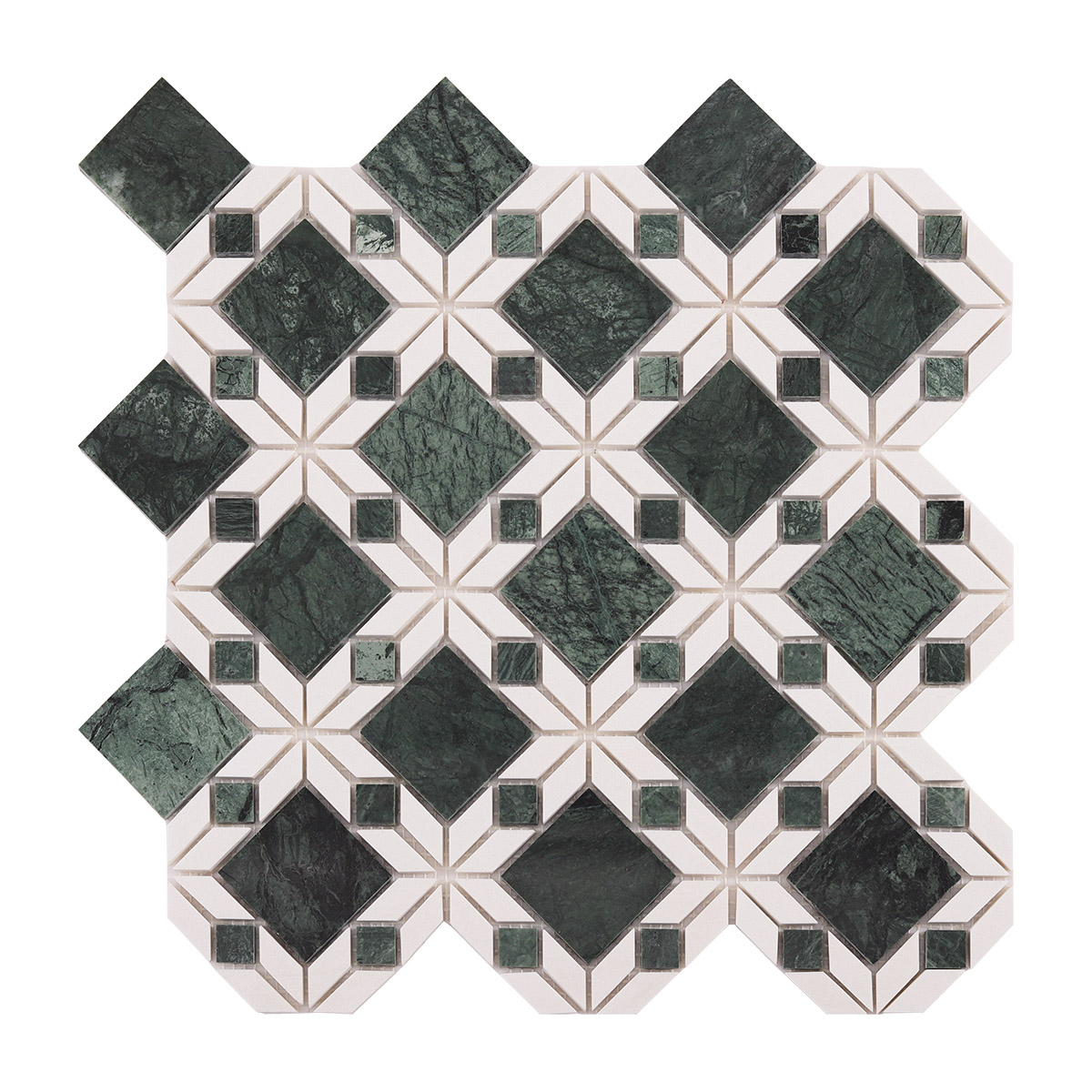
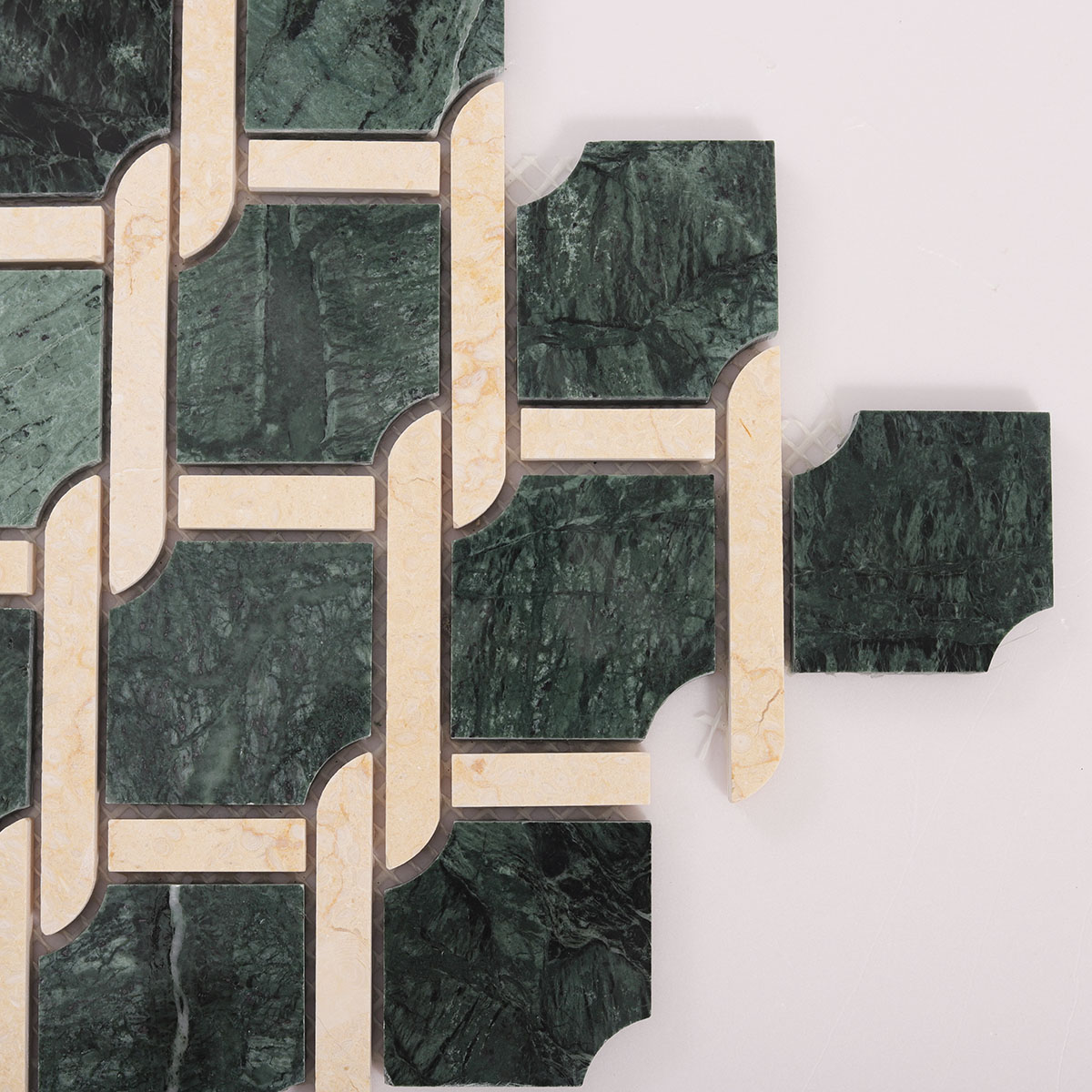
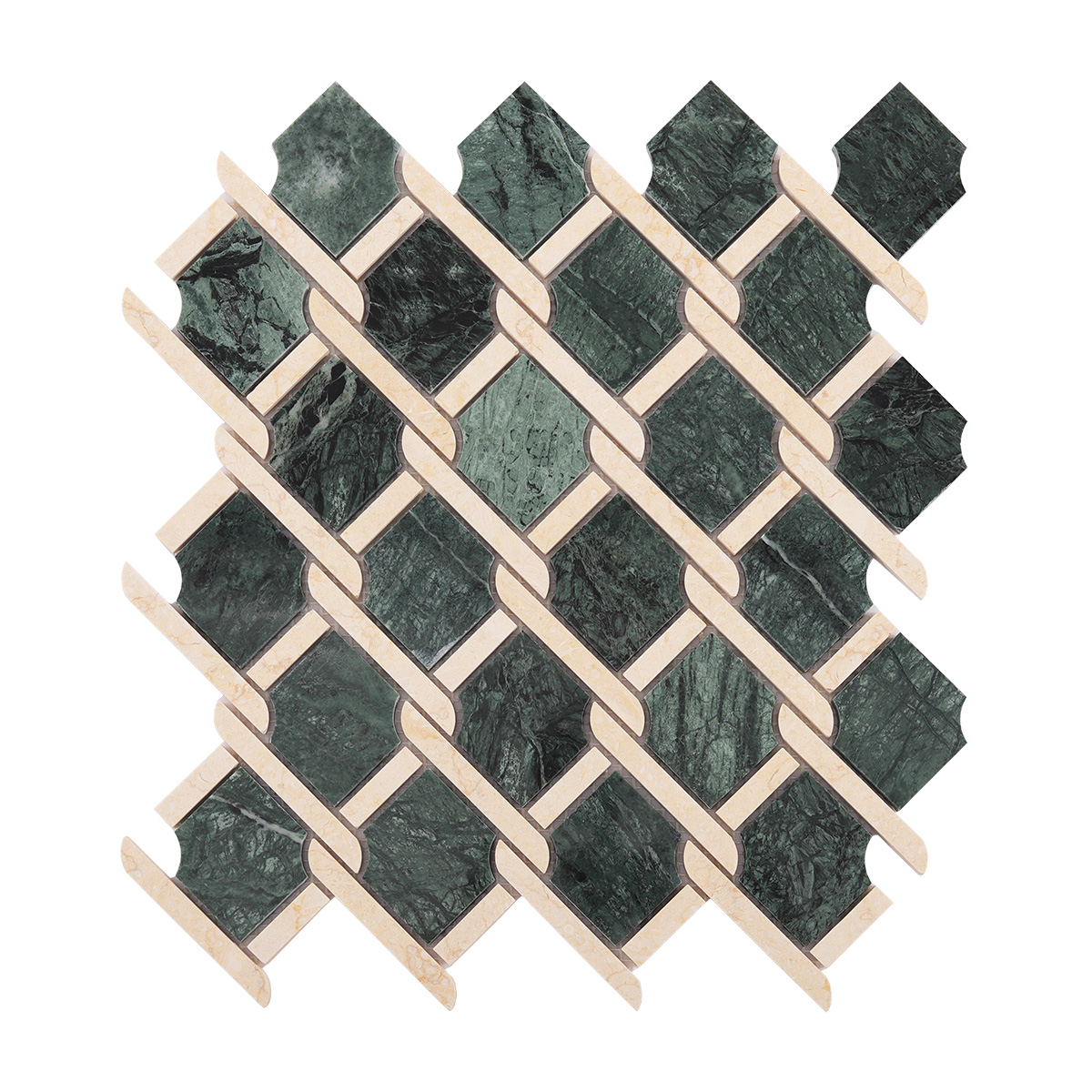
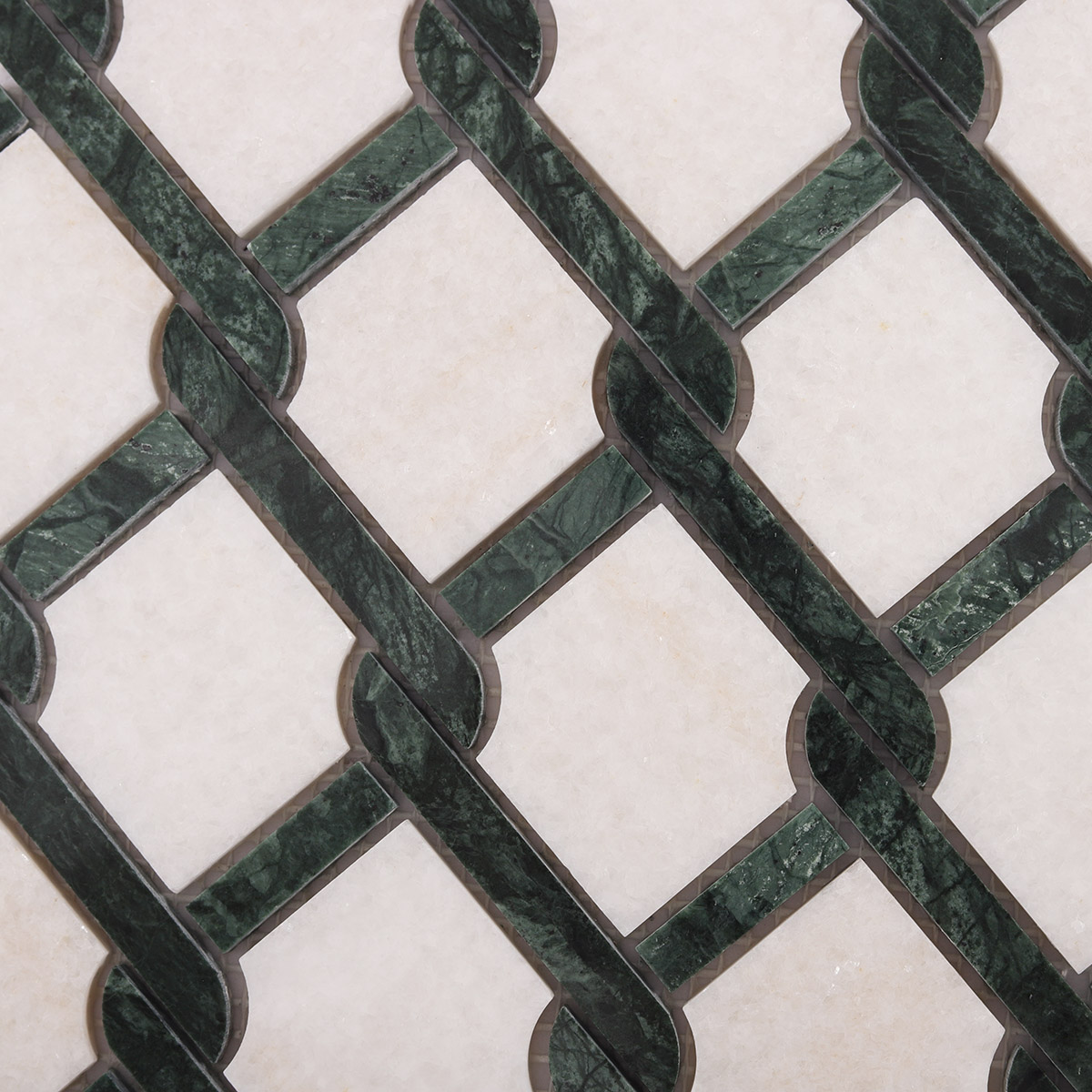
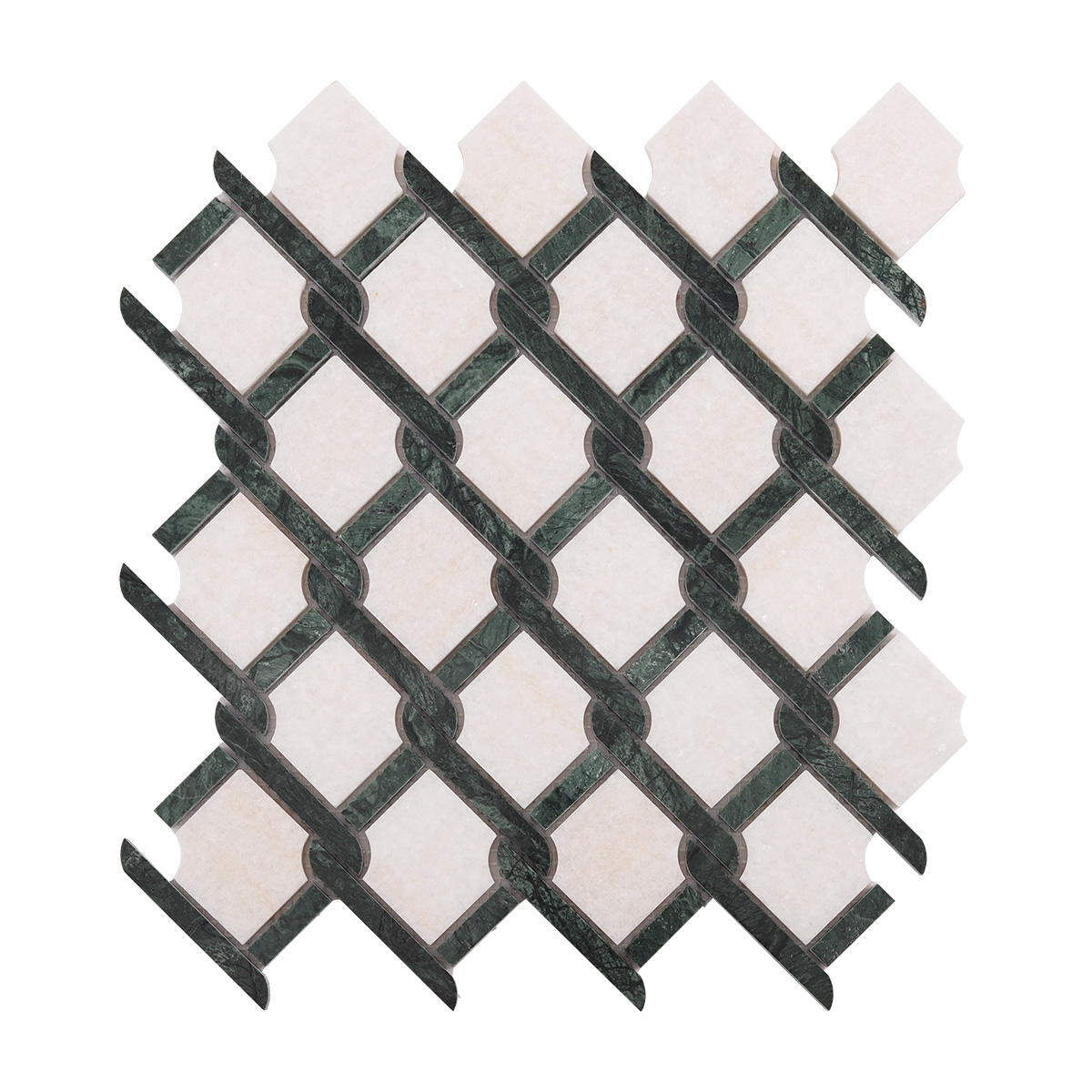
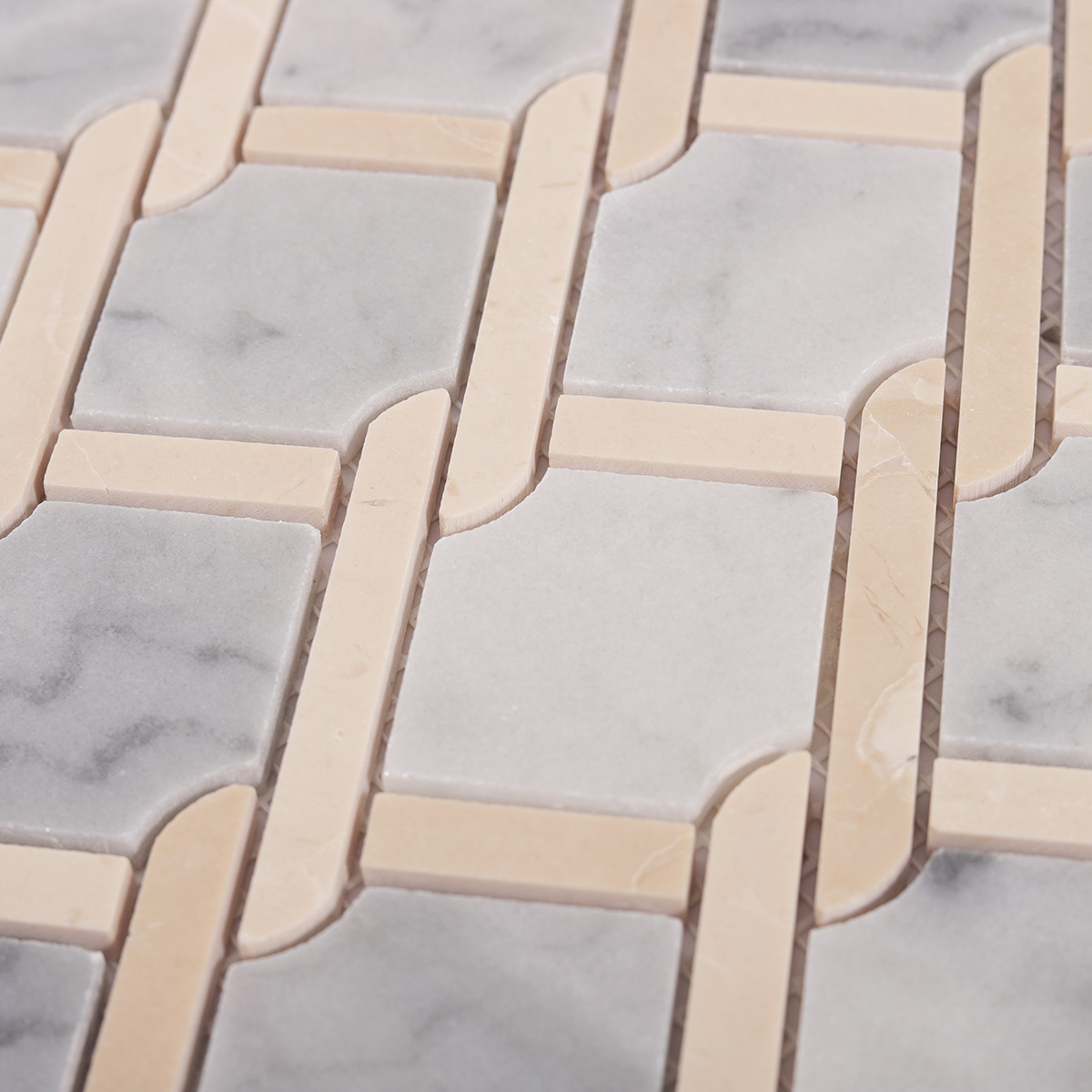
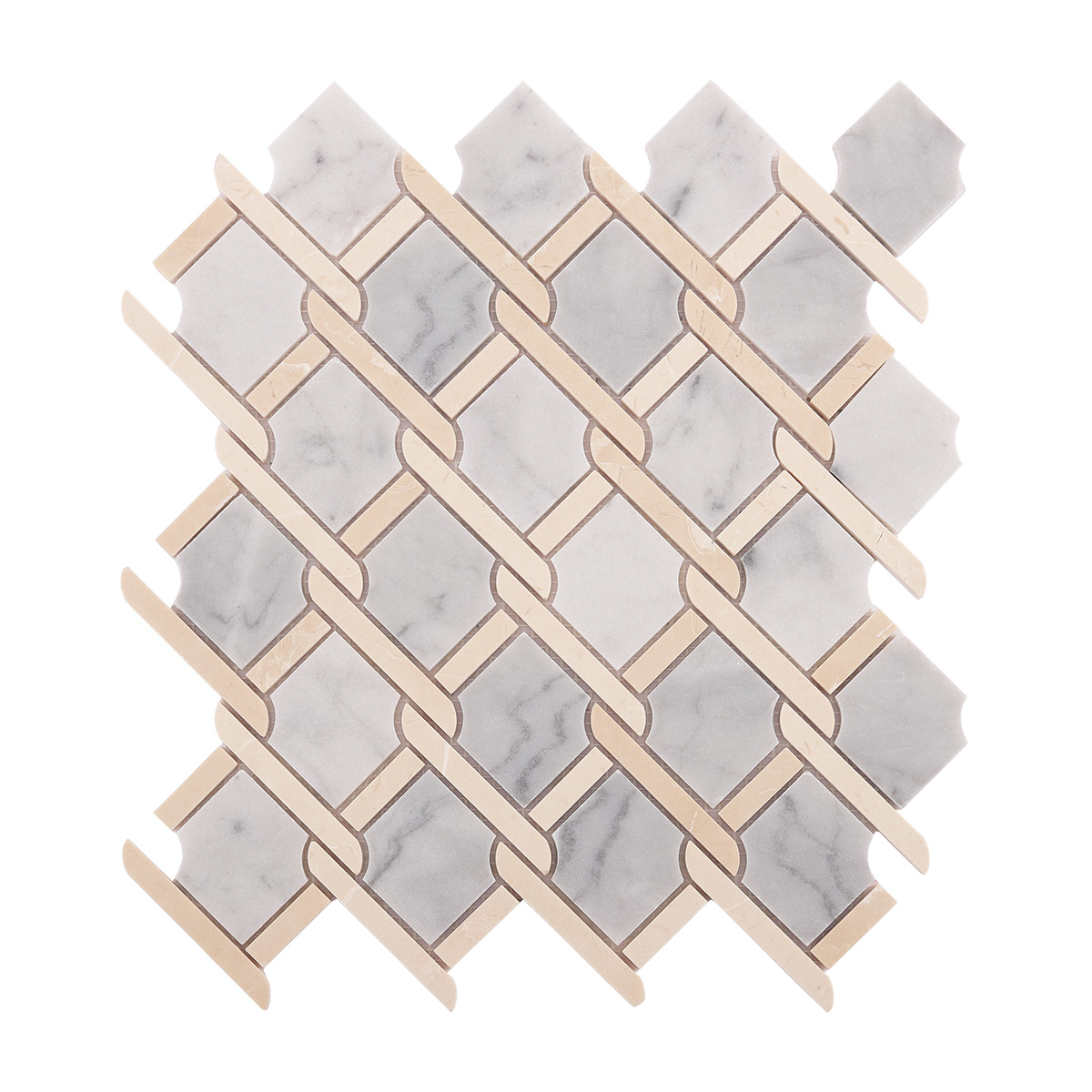
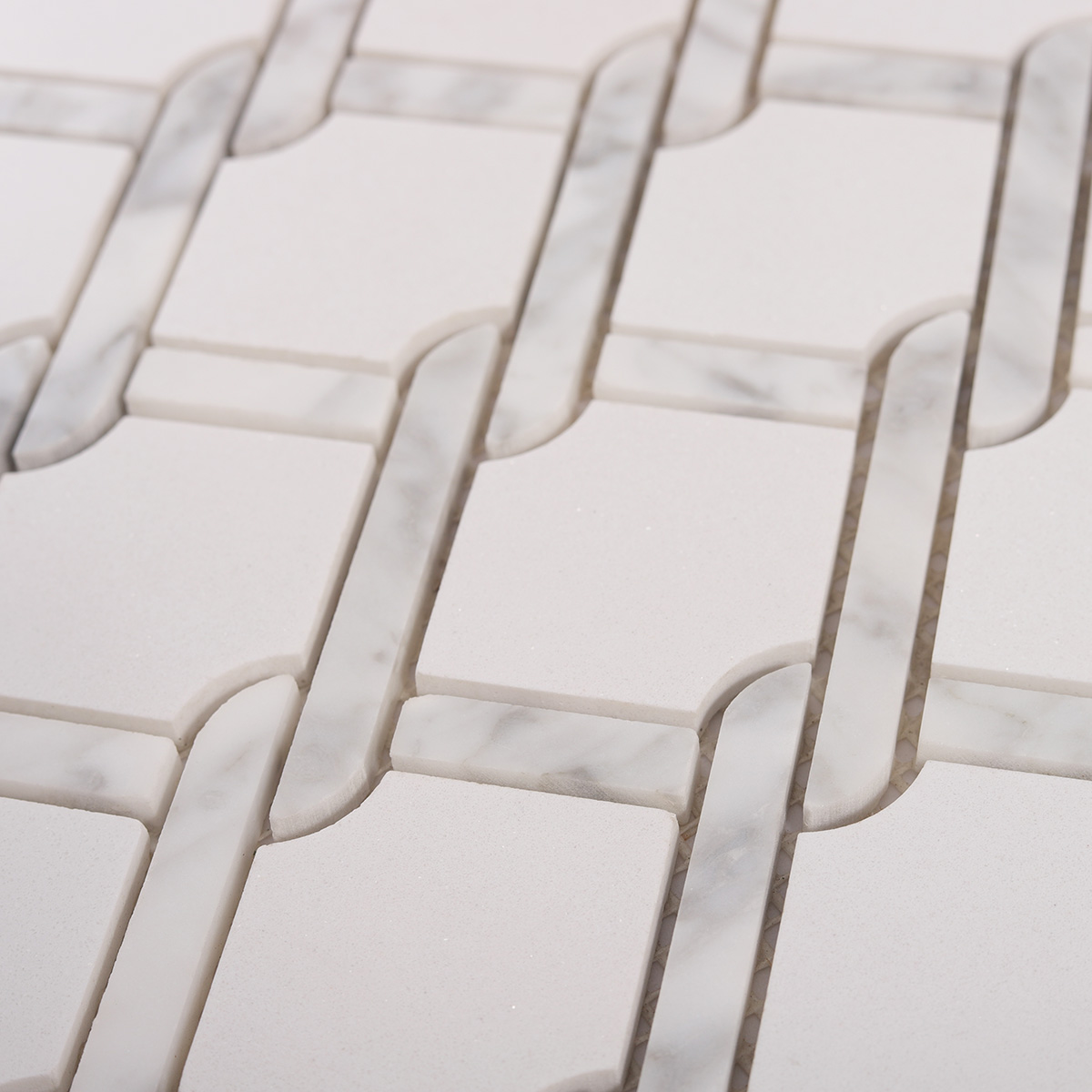
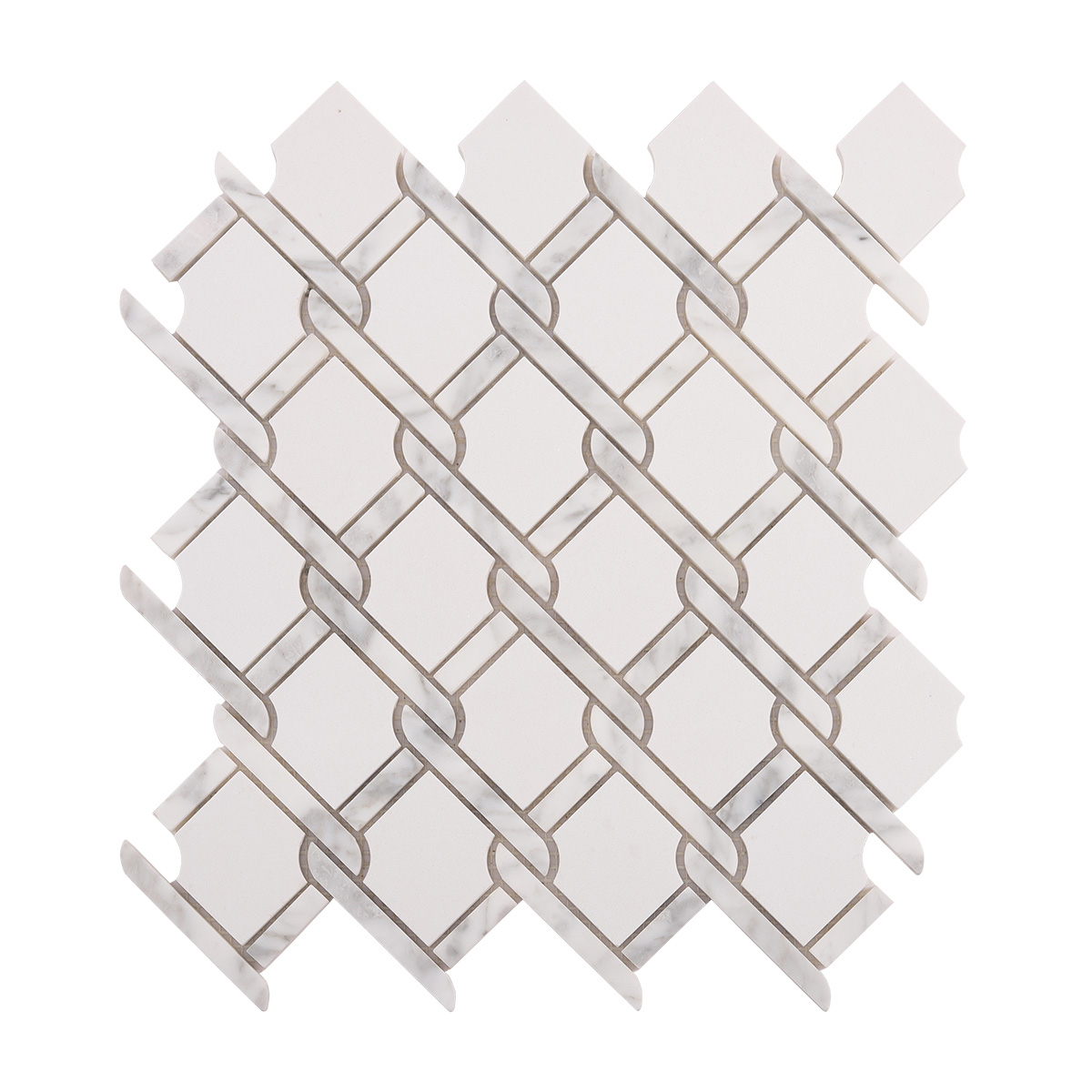
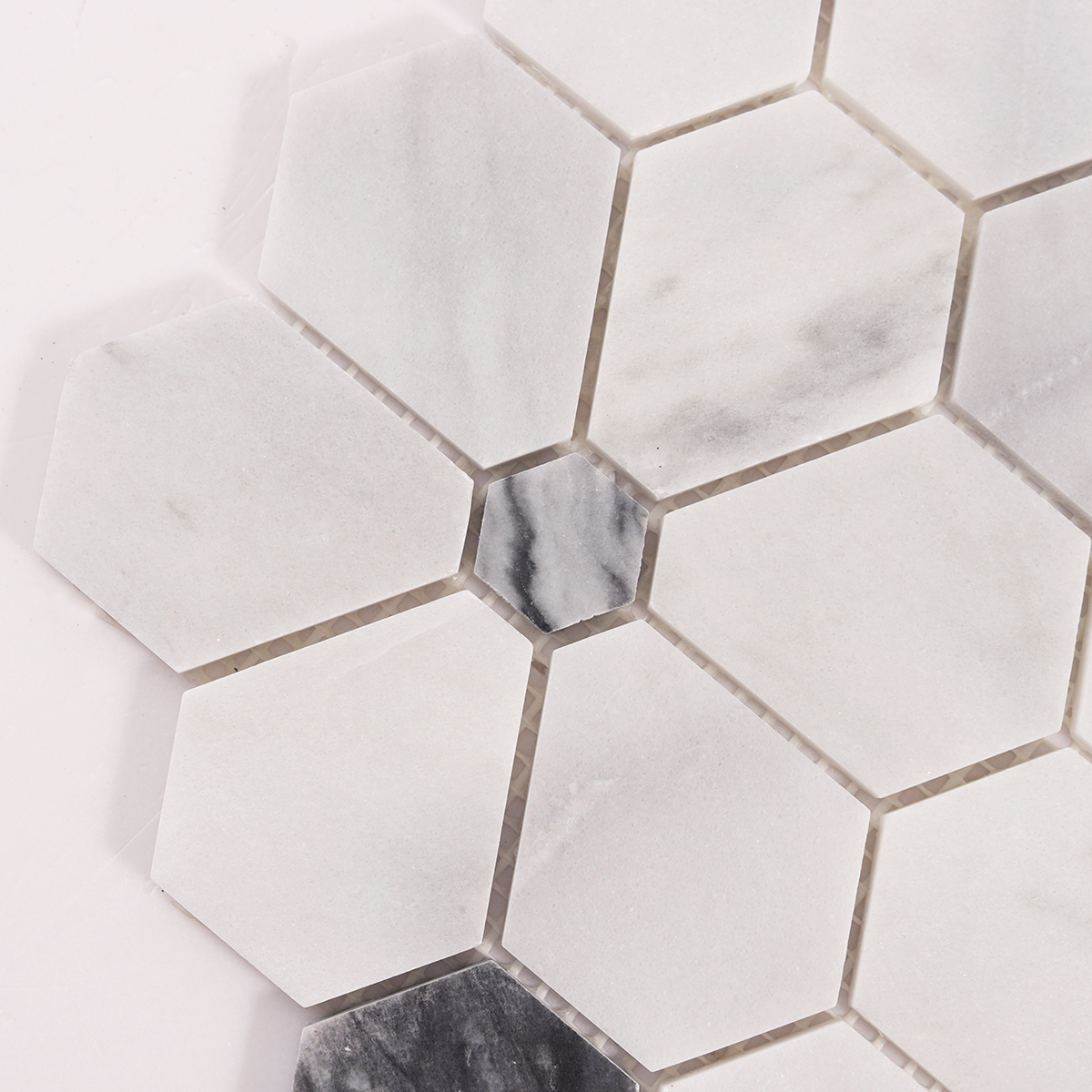
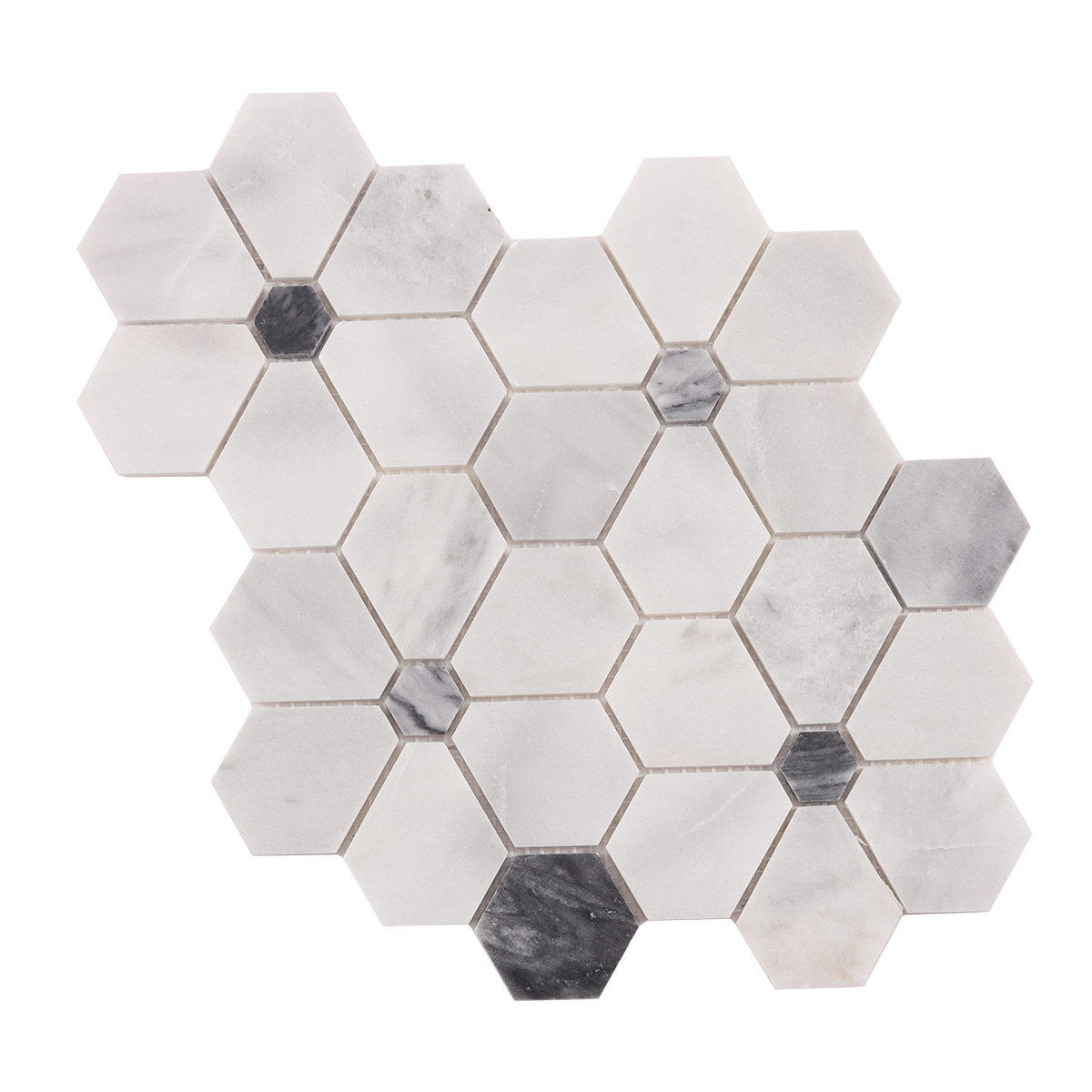

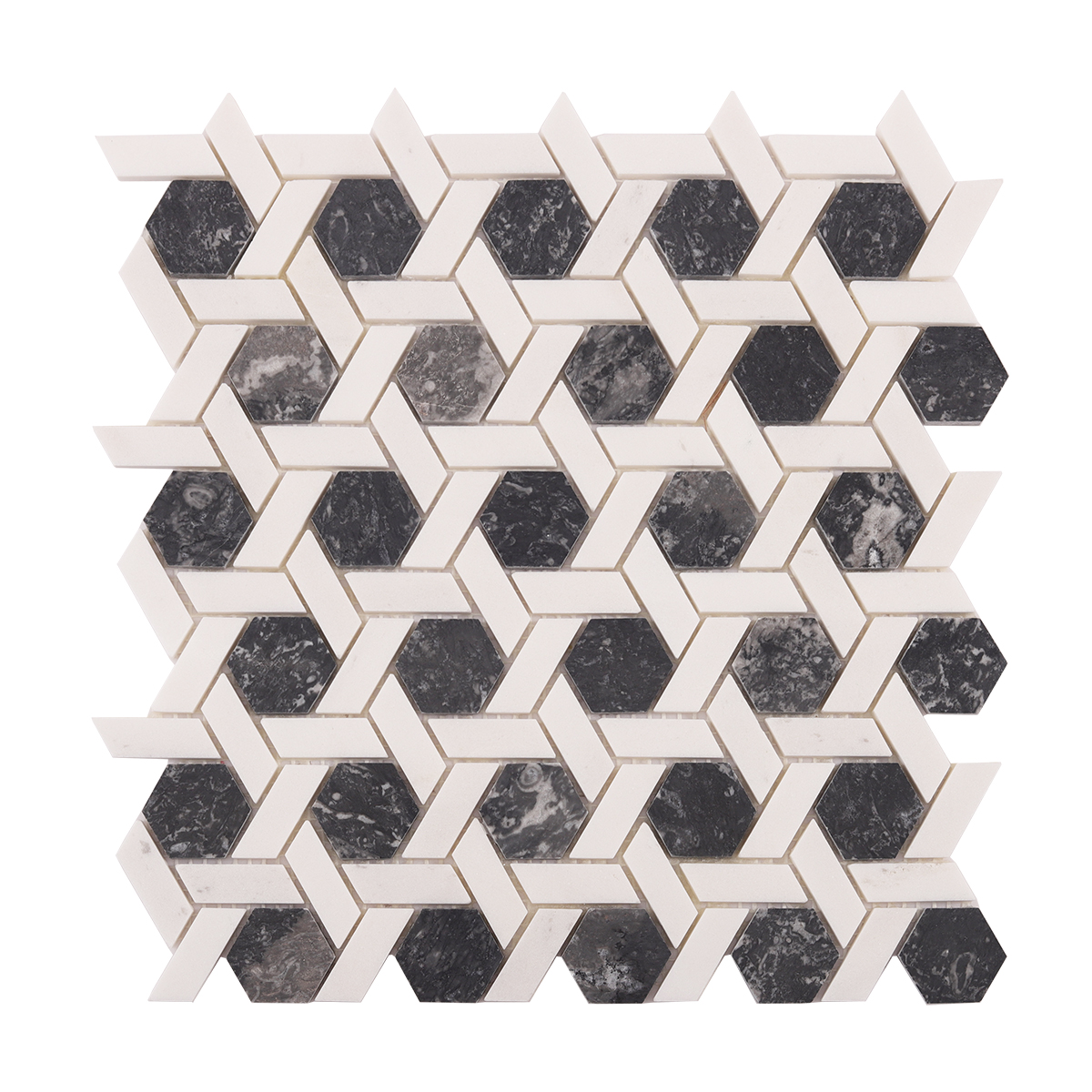

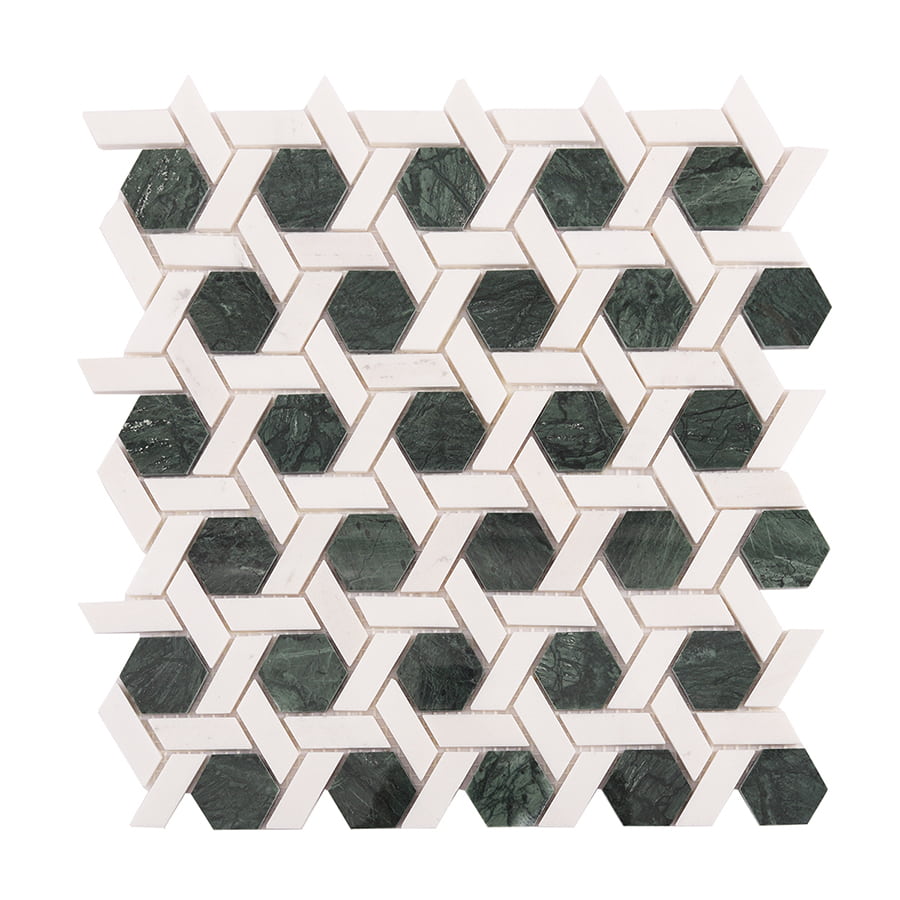


Bohemian tiles bring color, pattern and natural texture together in a way that feels personal rather than prescribed. Inspired by craft traditions, vintage interiors, travel and the beauty of imperfect materials, these expressive surfaces turn an ordinary wall or floor into a layered design feature.
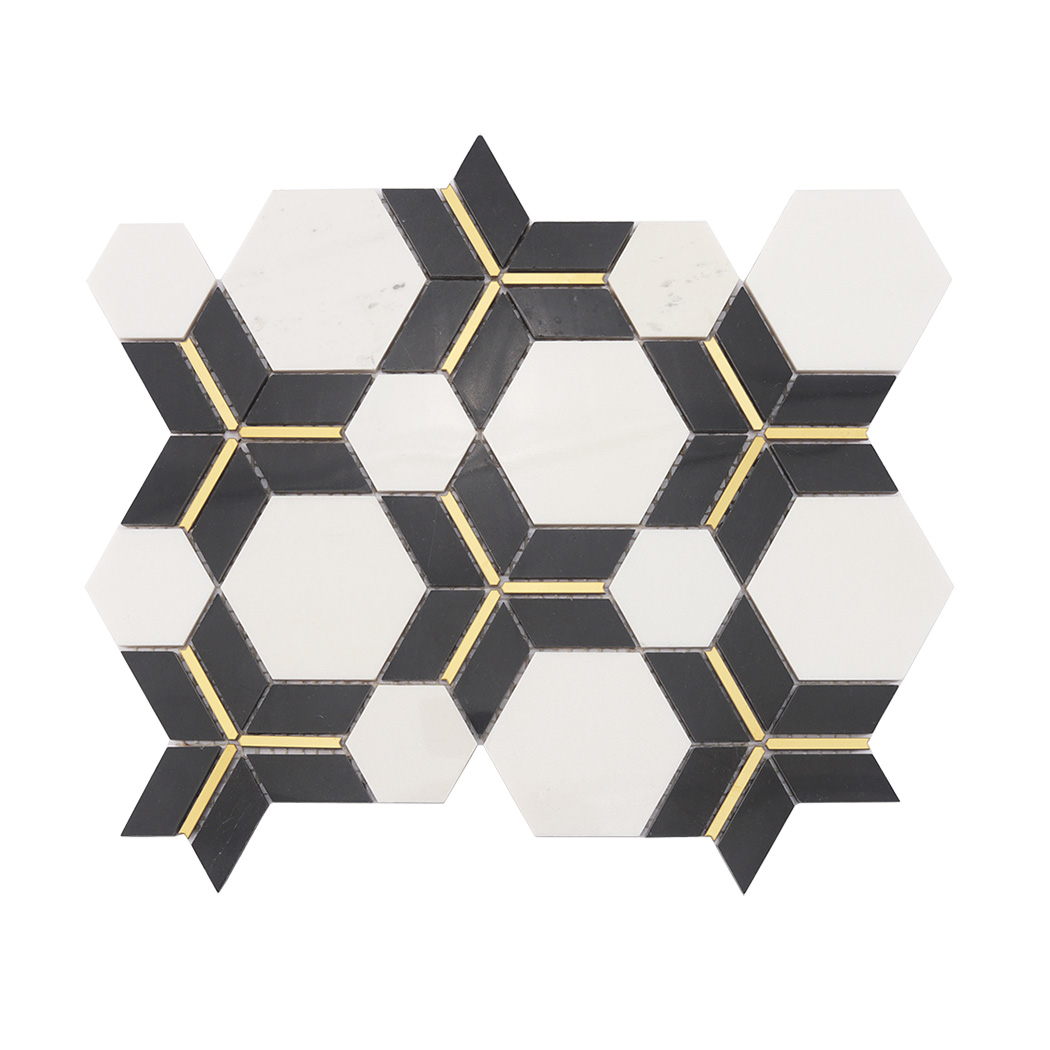
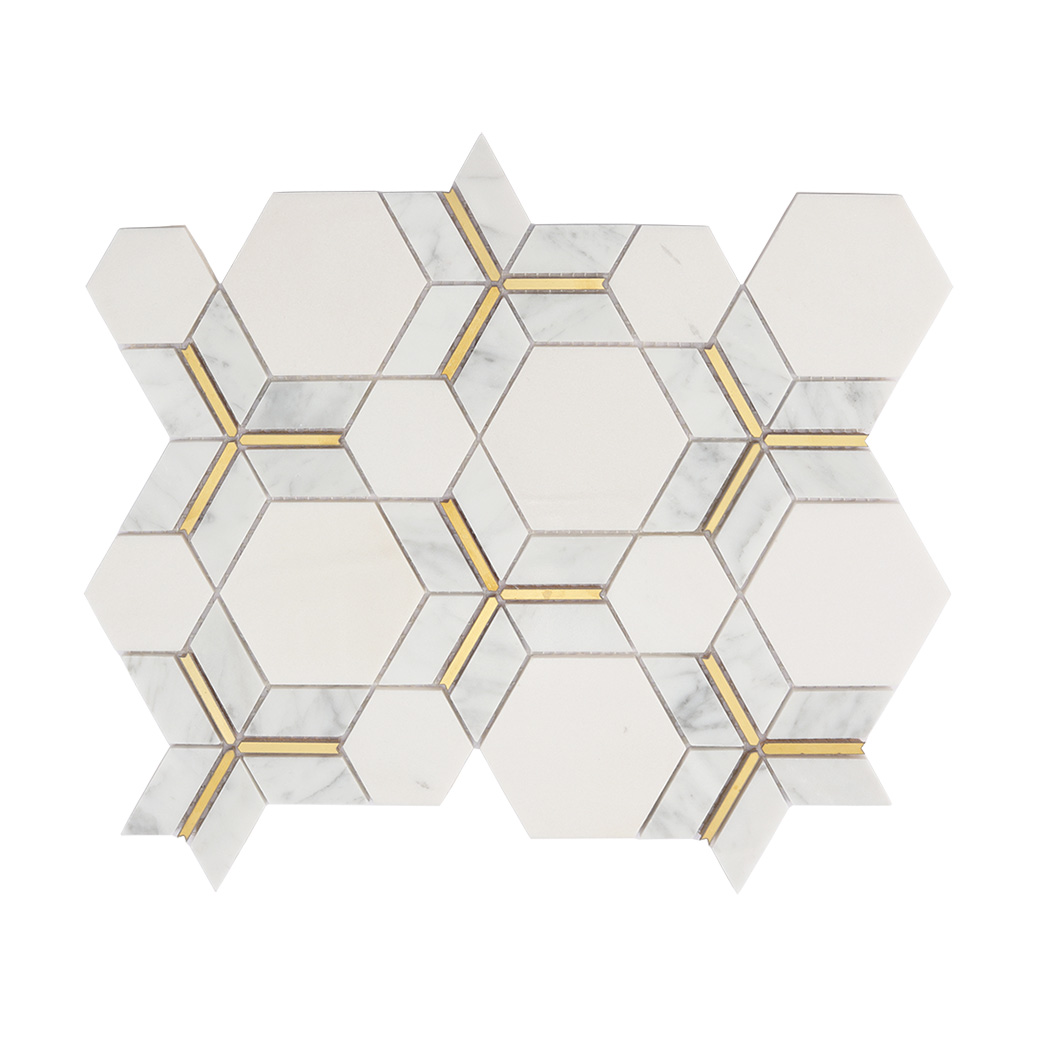
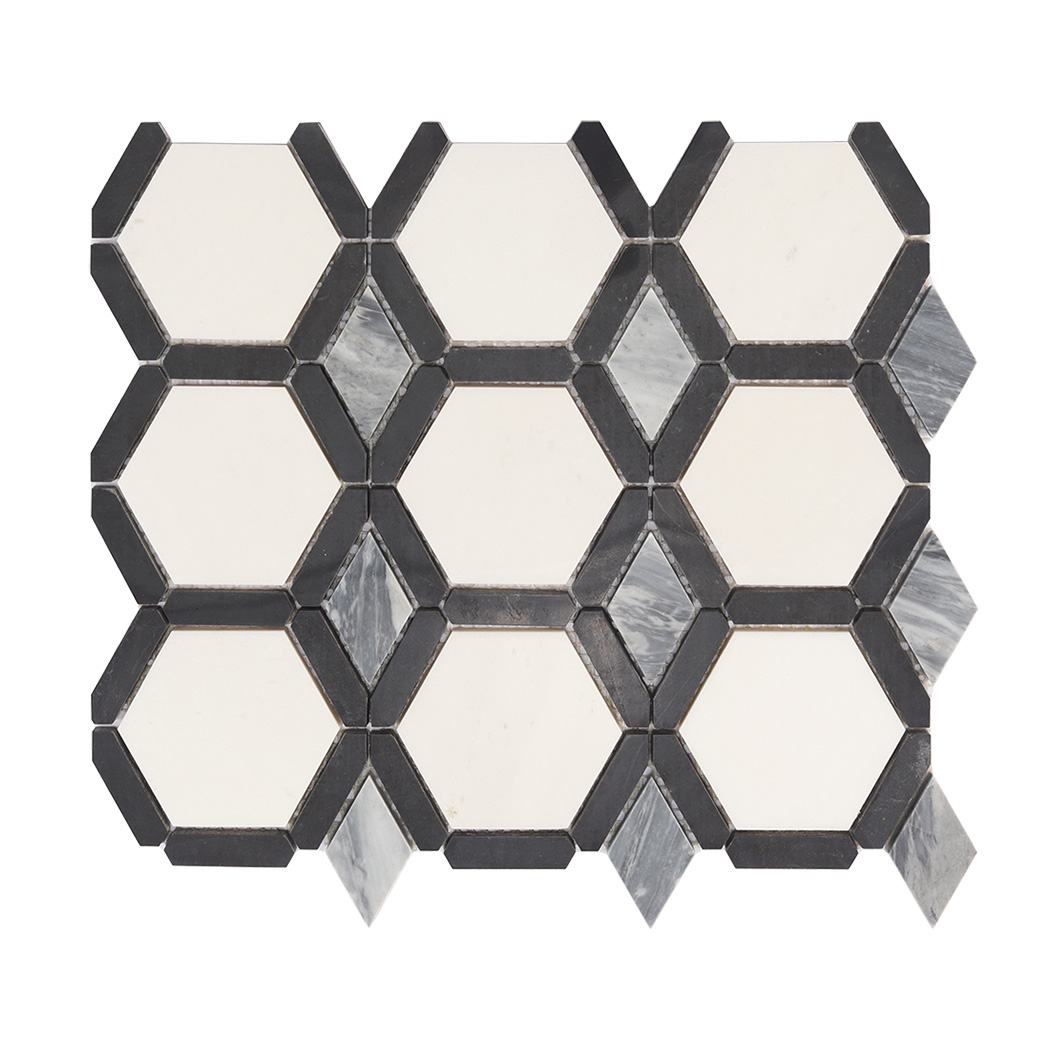
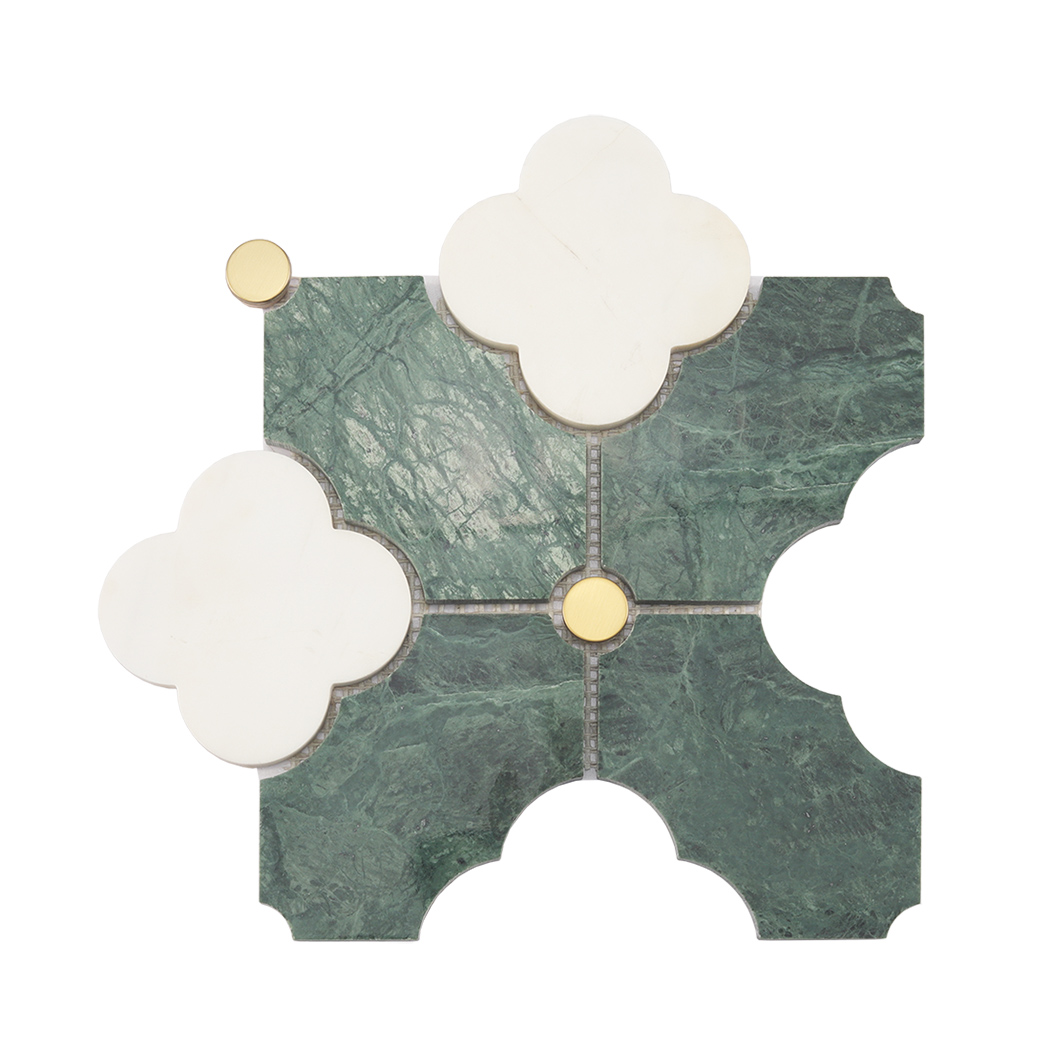
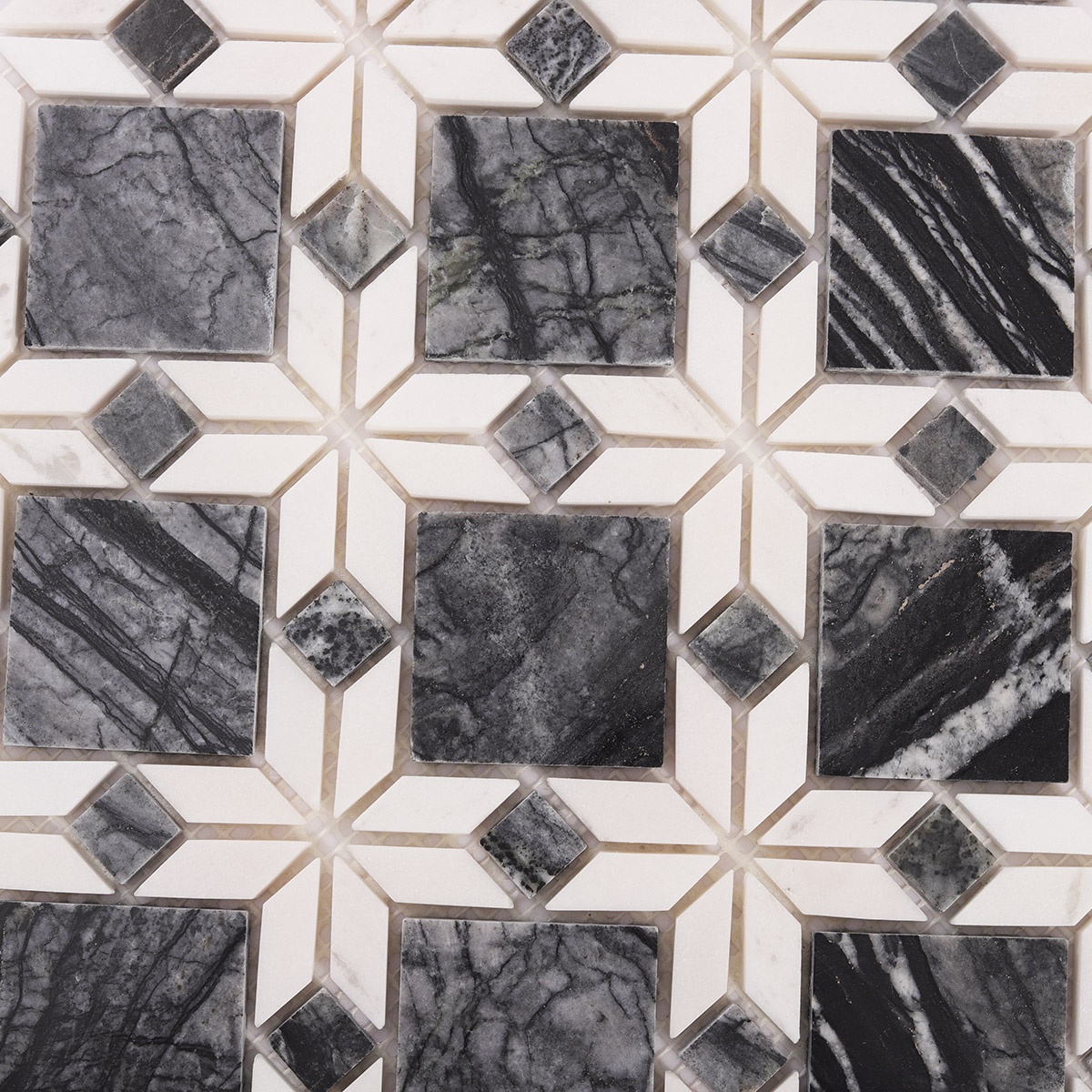
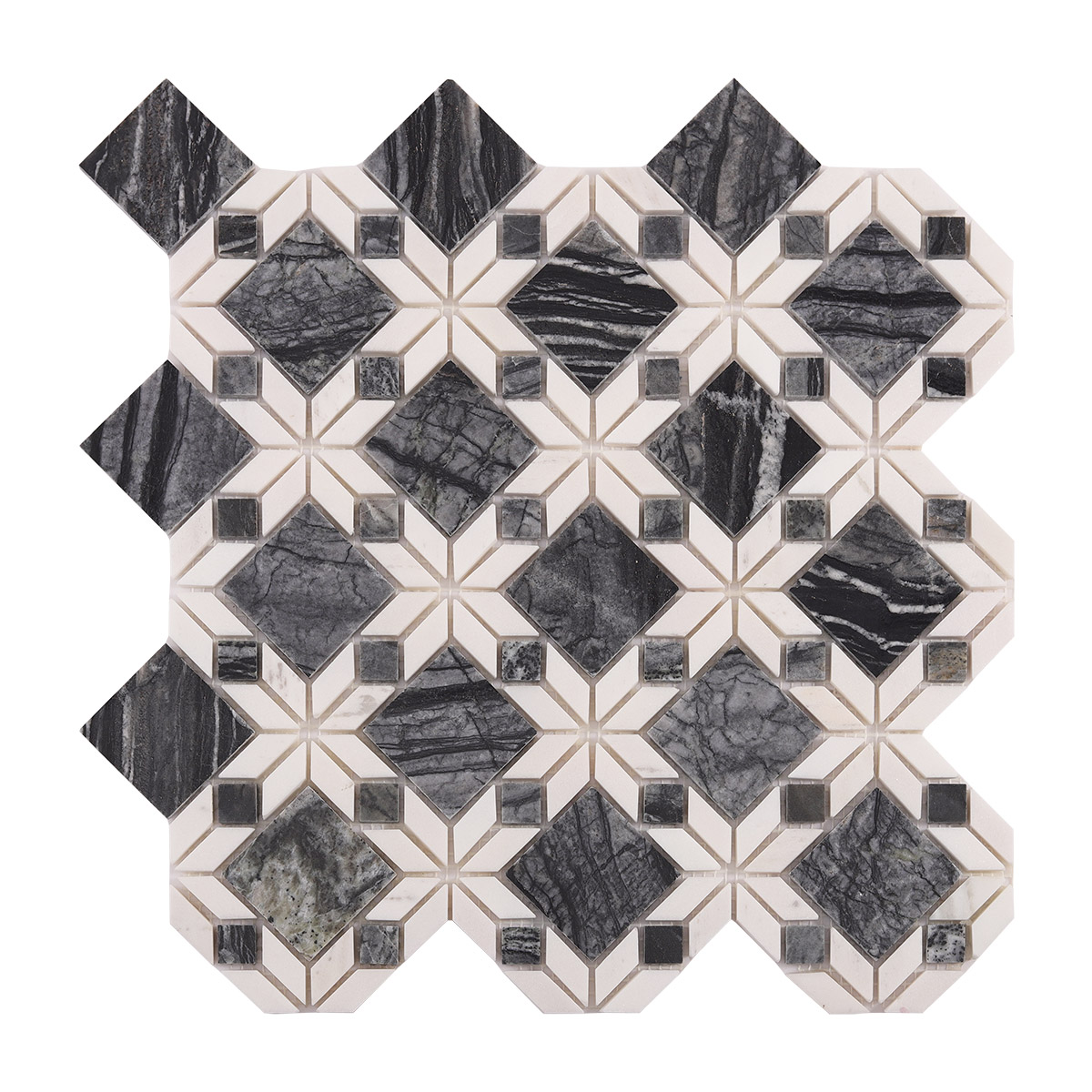
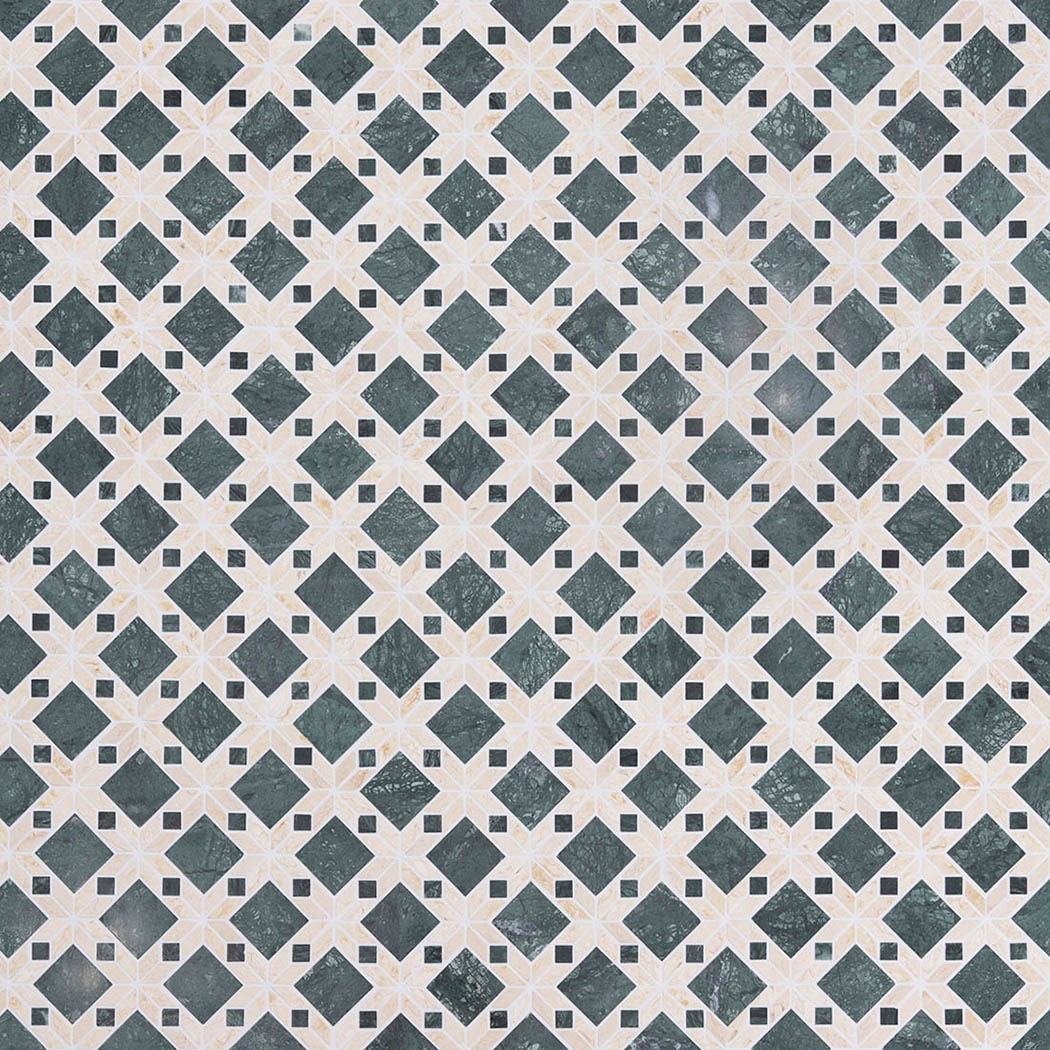
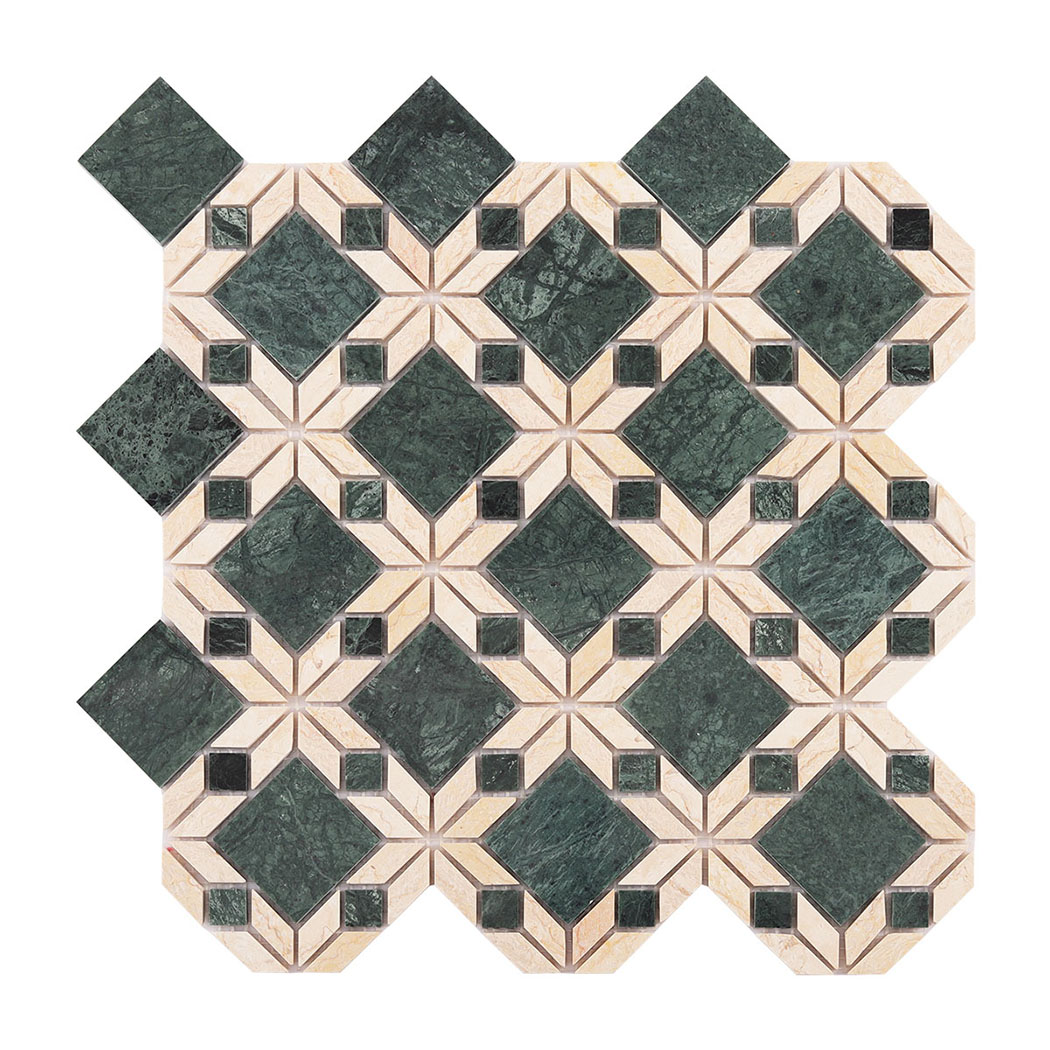
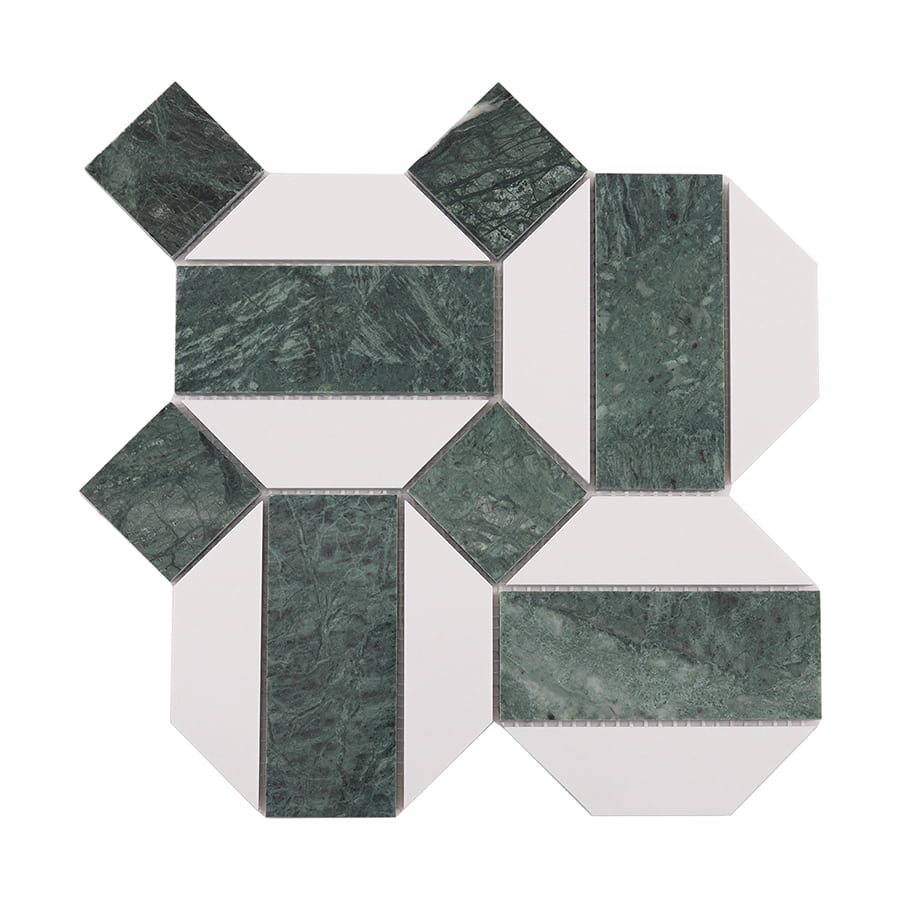
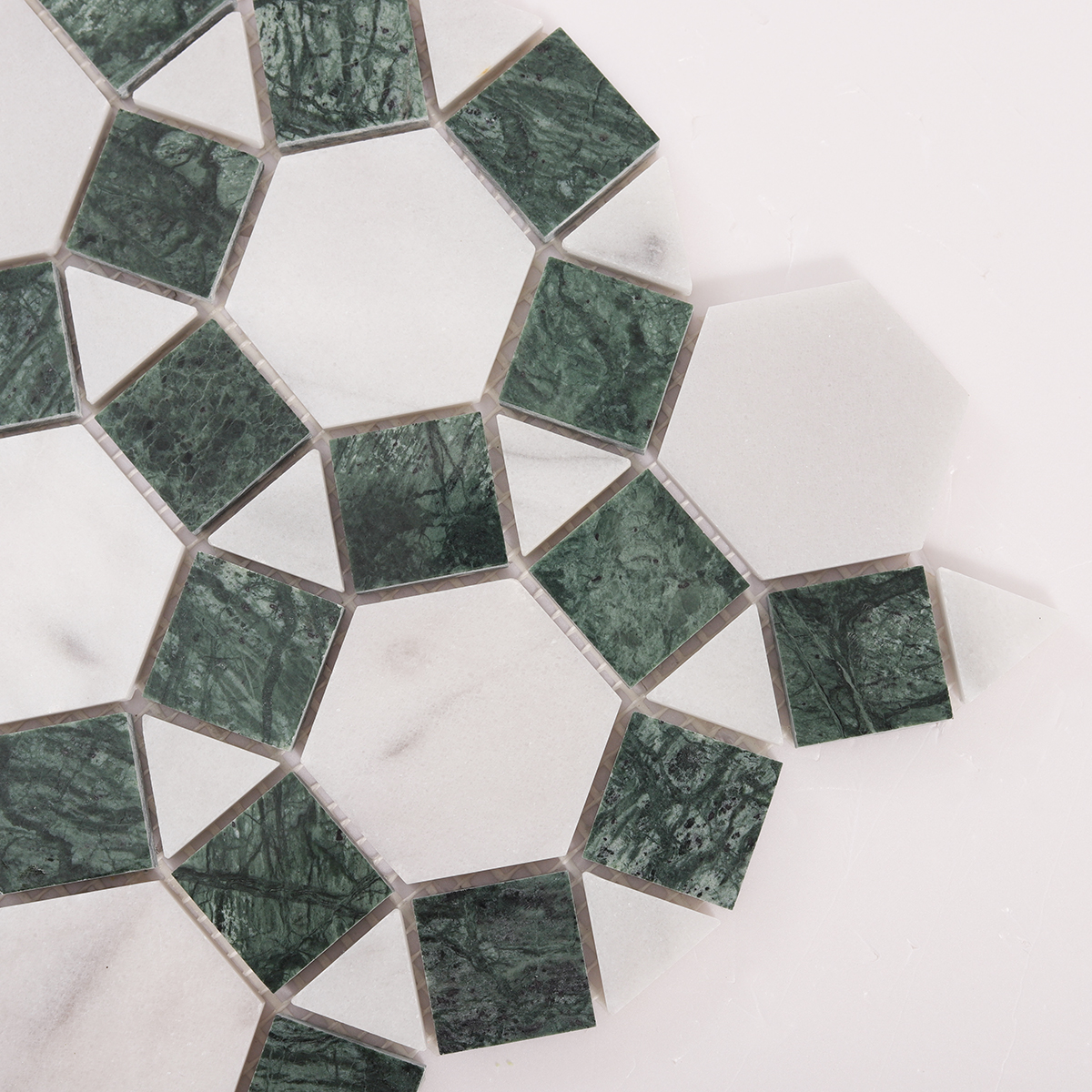
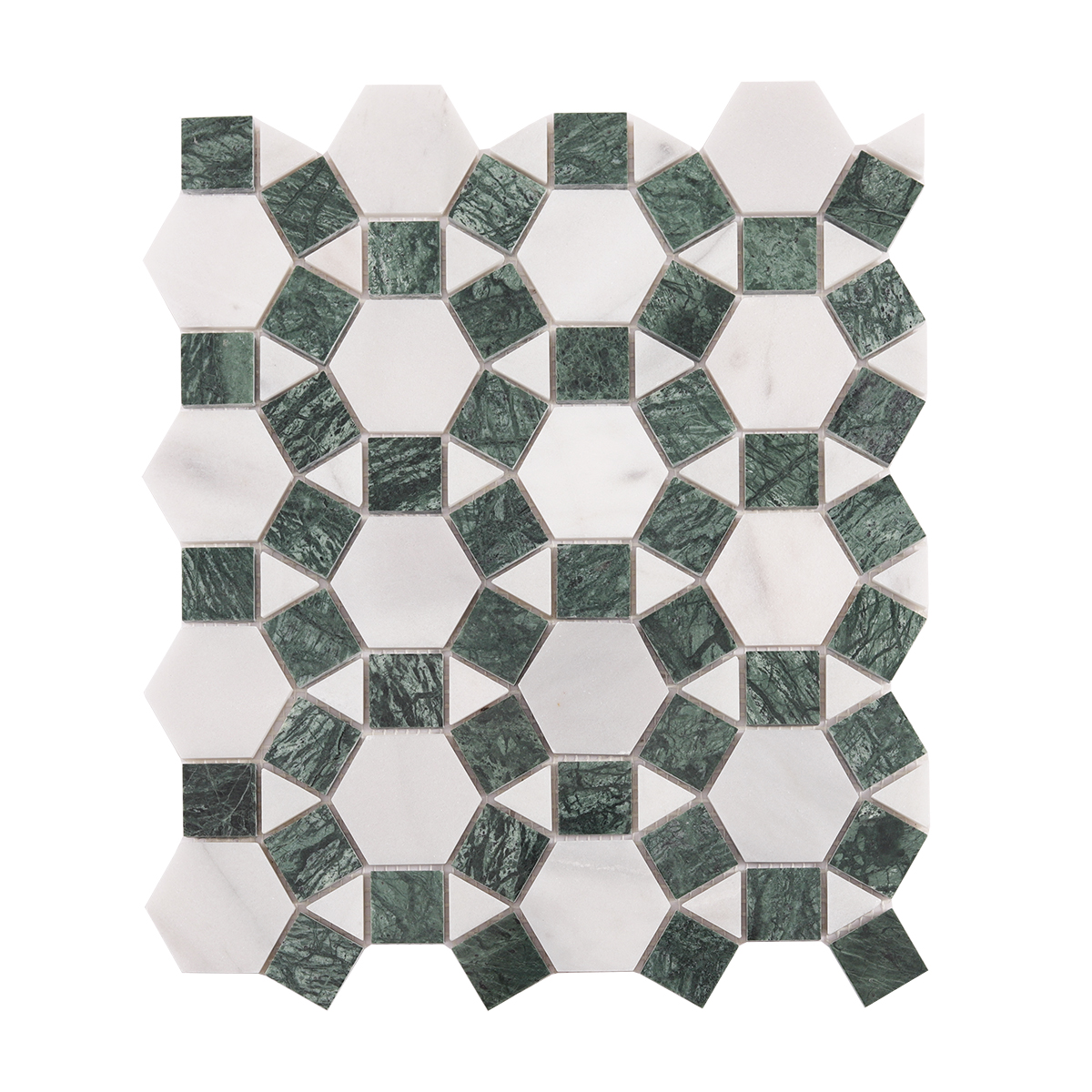
At Saicina Tiles, our Bohemian tile collection centers on natural stone mosaics that can be cut into geometric, floral and freeform shapes, then assembled into distinctive patterns. Subtle mineral movement, tonal variation and carefully considered color combinations give every installation an individual character. From a compact kitchen backsplash to a feature floor in a boutique hotel, these tiles create spaces that feel warm, artistic and collected over time.
What Are Bohemian Tiles?
Bohemian tile is a design category rather than one specific material, shape or historical pattern. The look is defined by creative freedom: layered colors, globally influenced motifs, organic materials, vintage references and a deliberate mix of shapes and textures. A Bohemian installation can be colorful and exuberant, or quiet and earthy. What matters is that the surface feels expressive, tactile and personal.
Bohemian tiles may draw inspiration from Moroccan geometry, Mediterranean color, Victorian ornament, folk art, botanical forms or mid-century pattern. However, “Bohemian,” “Moroccan” and “encaustic” are not interchangeable material terms. Moroccan describes a regional design influence, while encaustic traditionally refers to a specific tile-making method. Bohemian style can combine these visual references with natural stone, ceramic, porcelain, glass or metal, depending on the product and required application.
The Saicina Approach to Bohemian Tile Design
Our collection interprets the relaxed Bohemian aesthetic through precise stone cutting, thoughtful color placement and pattern-led mosaic construction. Rather than relying only on printed decoration, many Saicina designs use the inherent colors and veining of the selected materials to build the composition.
Natural Stone with Individual Character
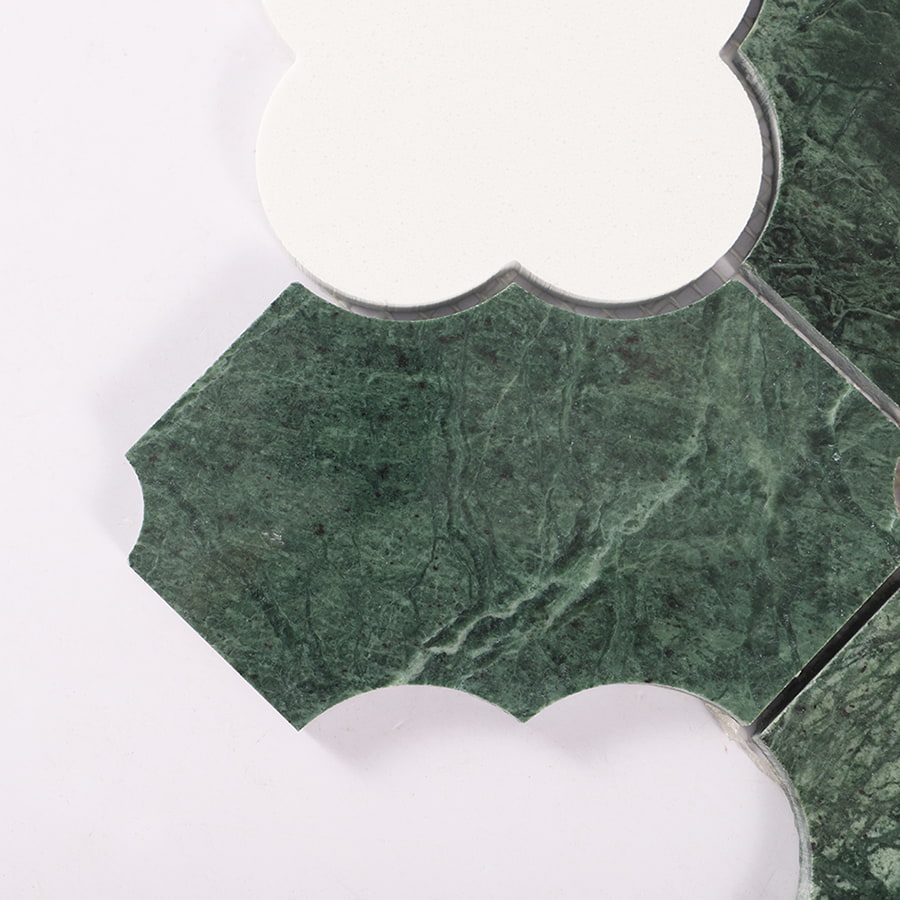
Marble, travertine and other natural stones contain authentic variations in tone, veining and mineral structure. These differences are part of the material’s appeal: they prevent a finished surface from looking flat or mechanically repetitive. When several stones are combined, the installation gains greater depth while retaining a refined, architectural quality.
Geometric, Floral and Freeform Pattern
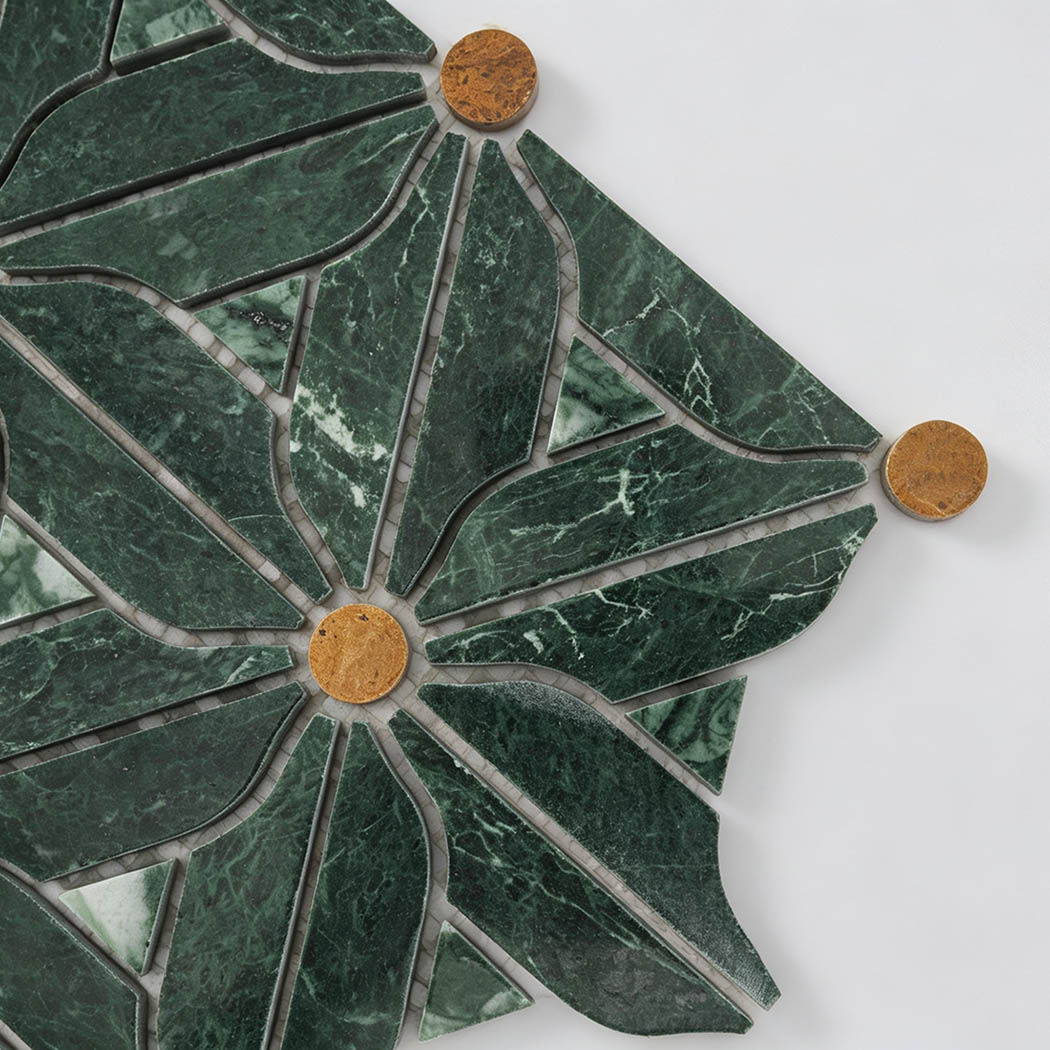
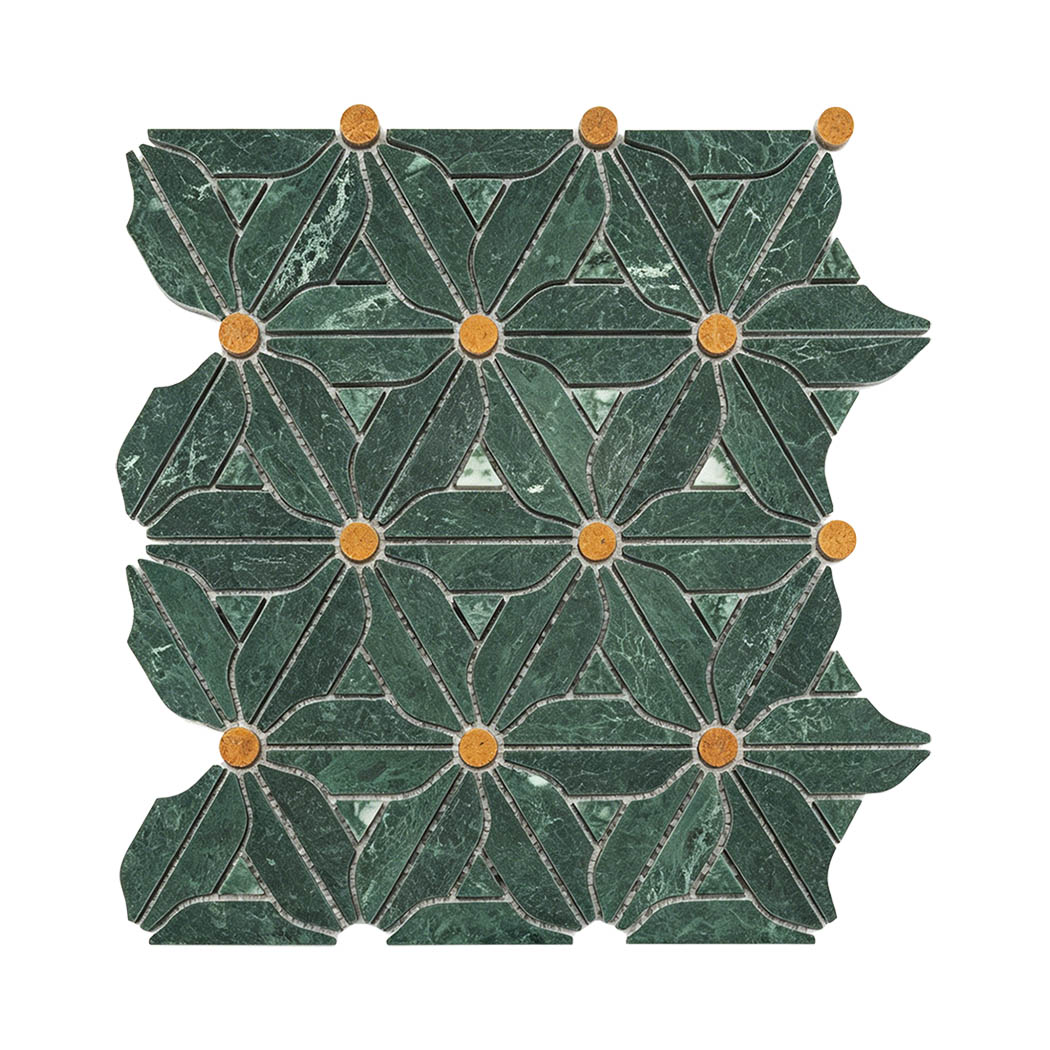
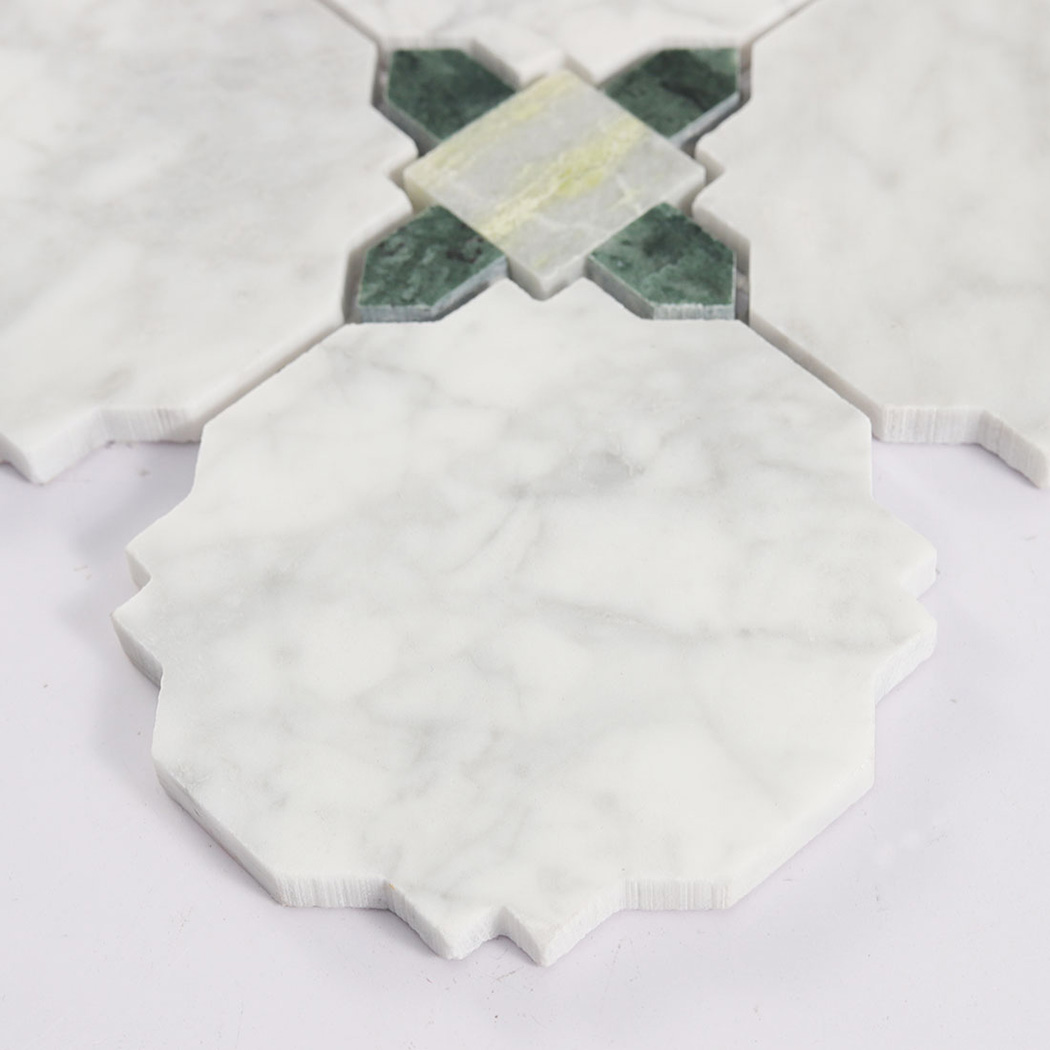
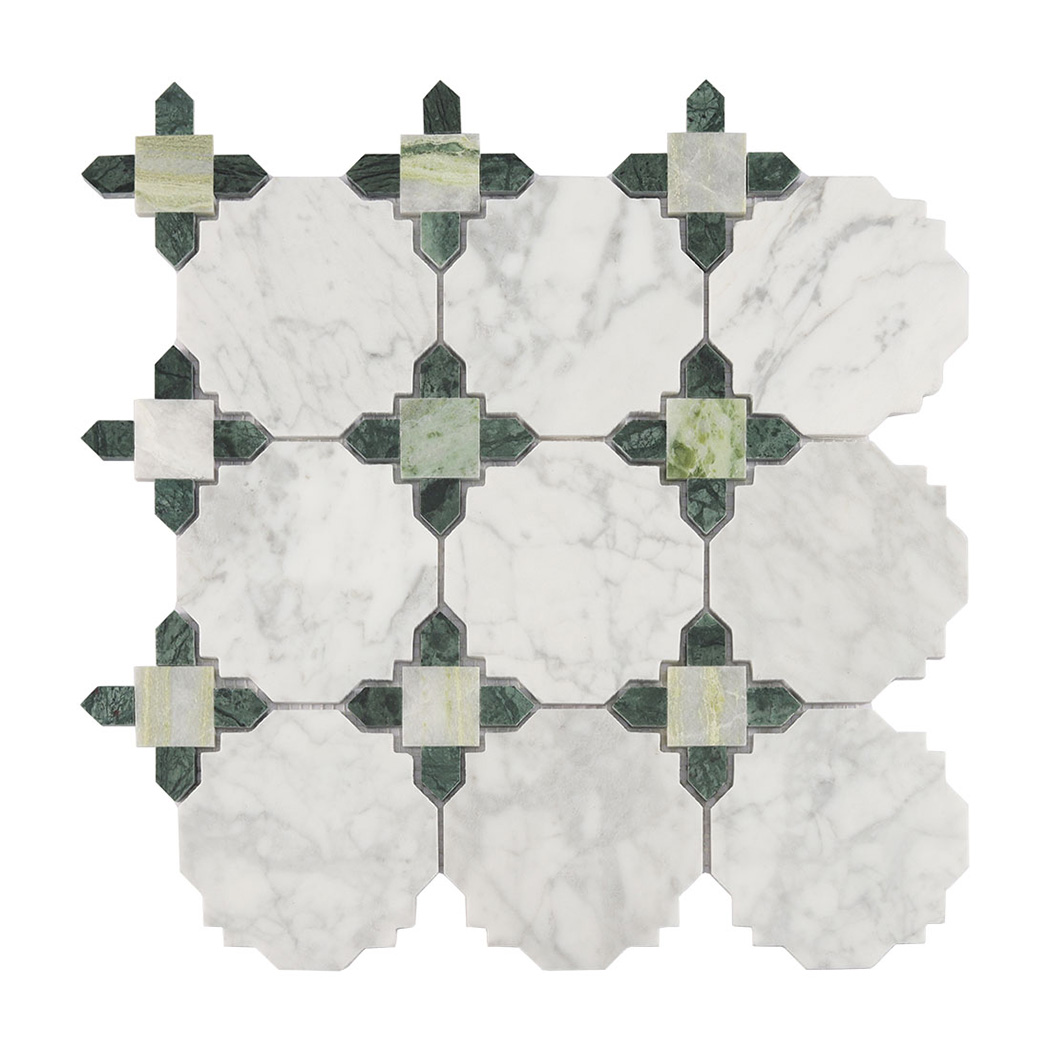
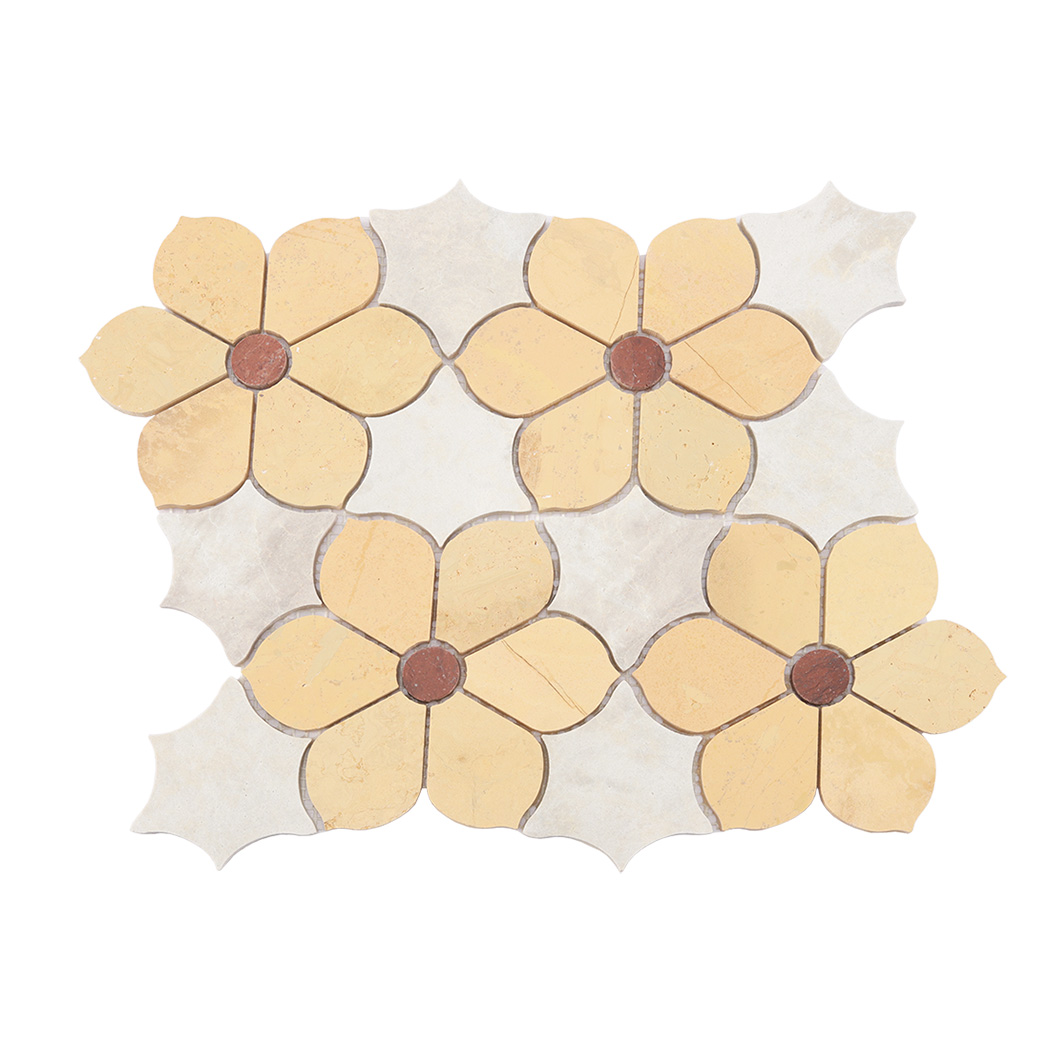
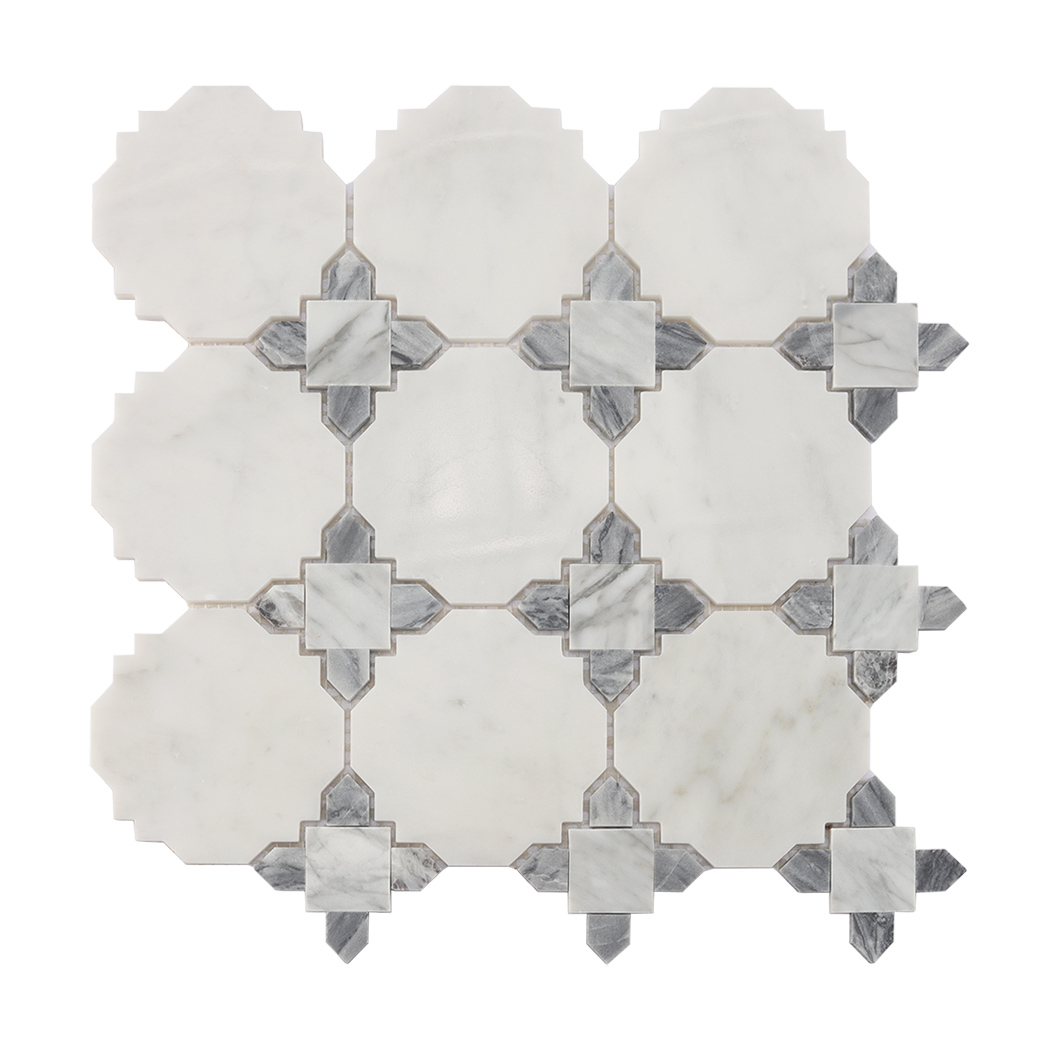
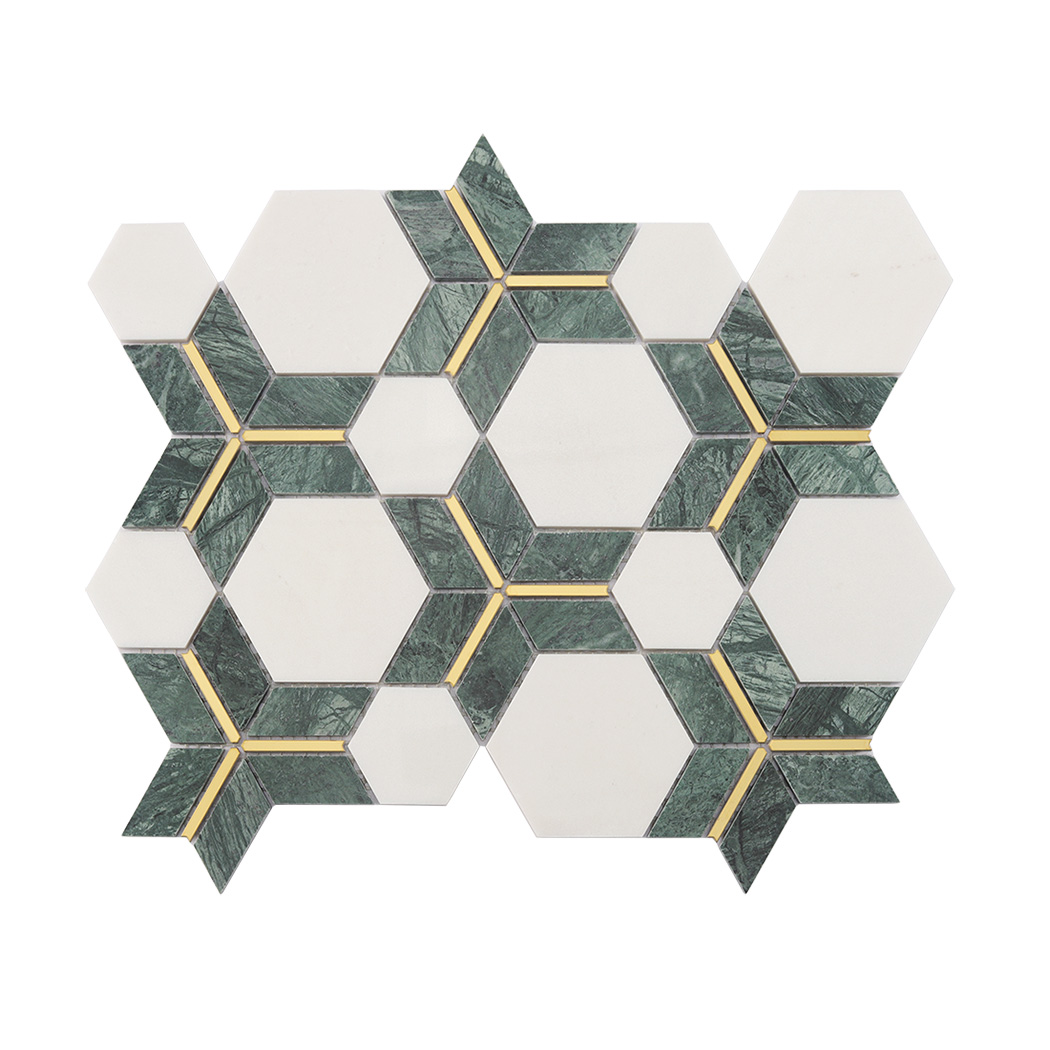
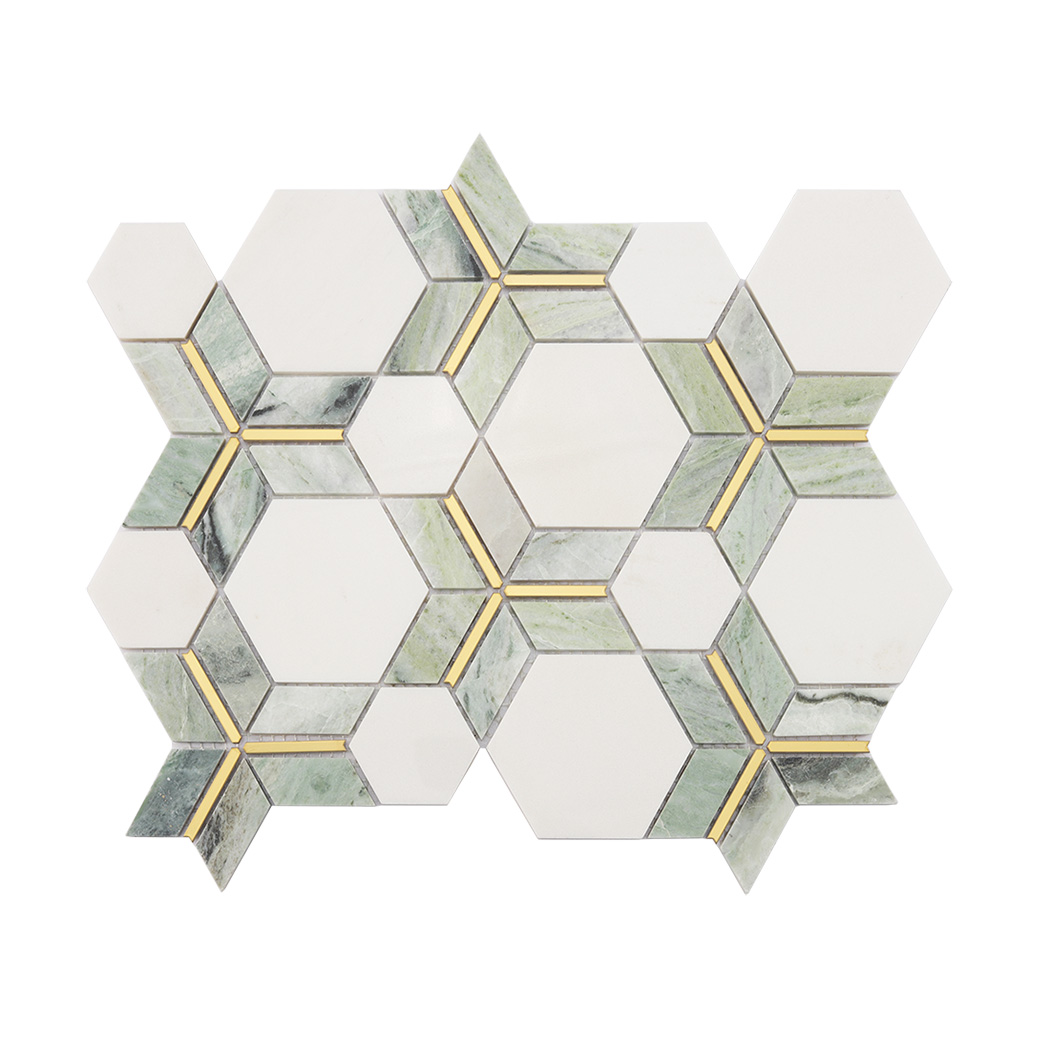
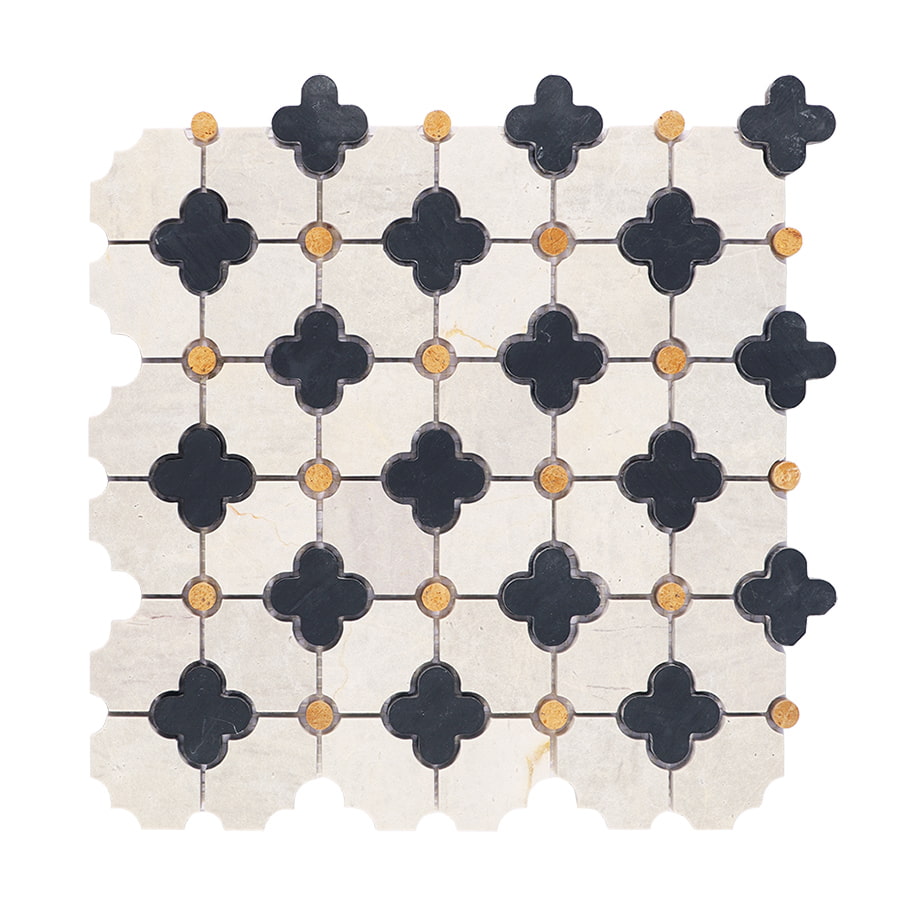
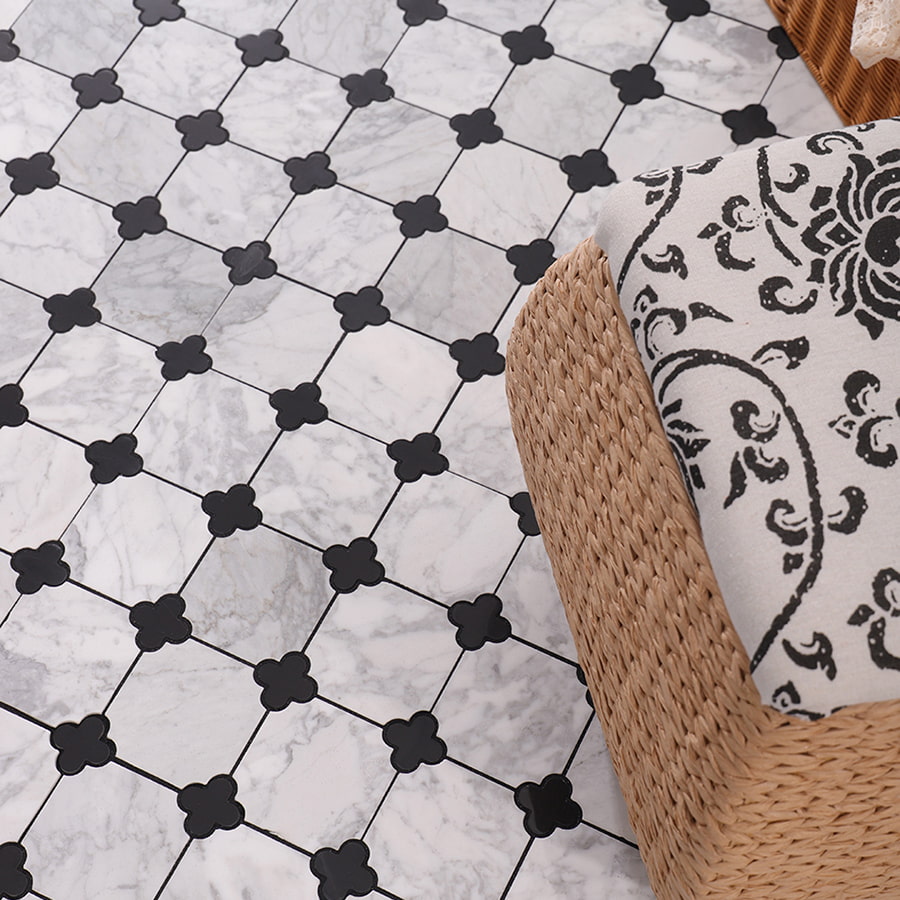
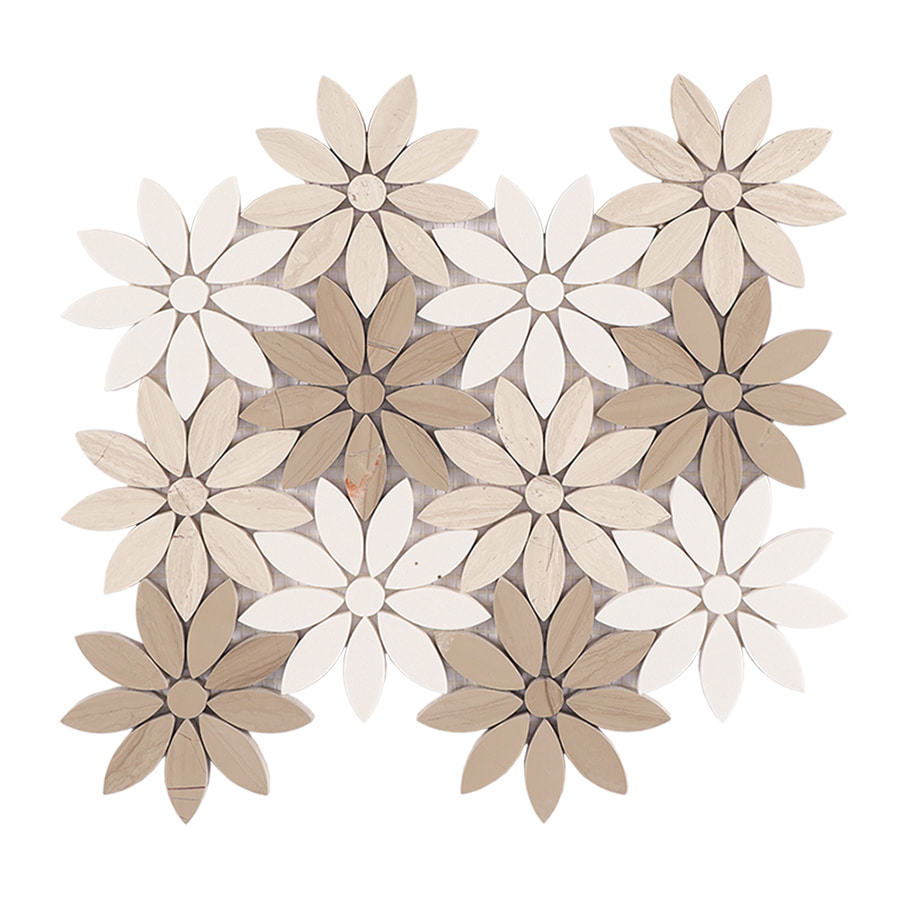
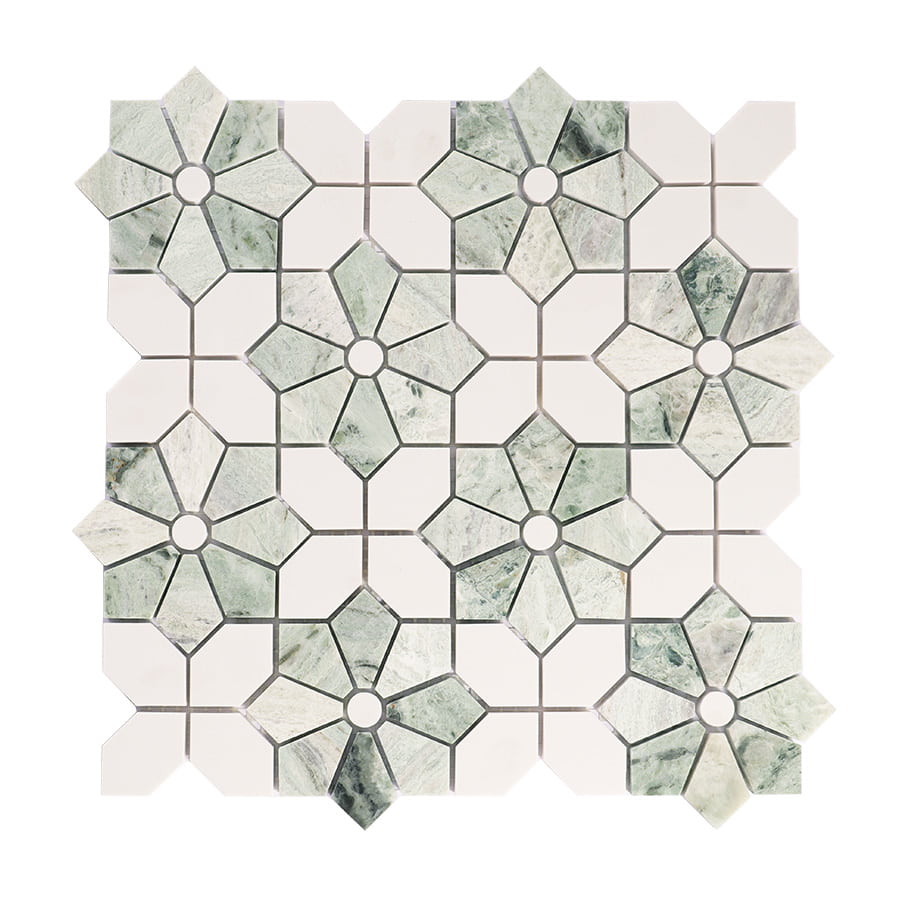
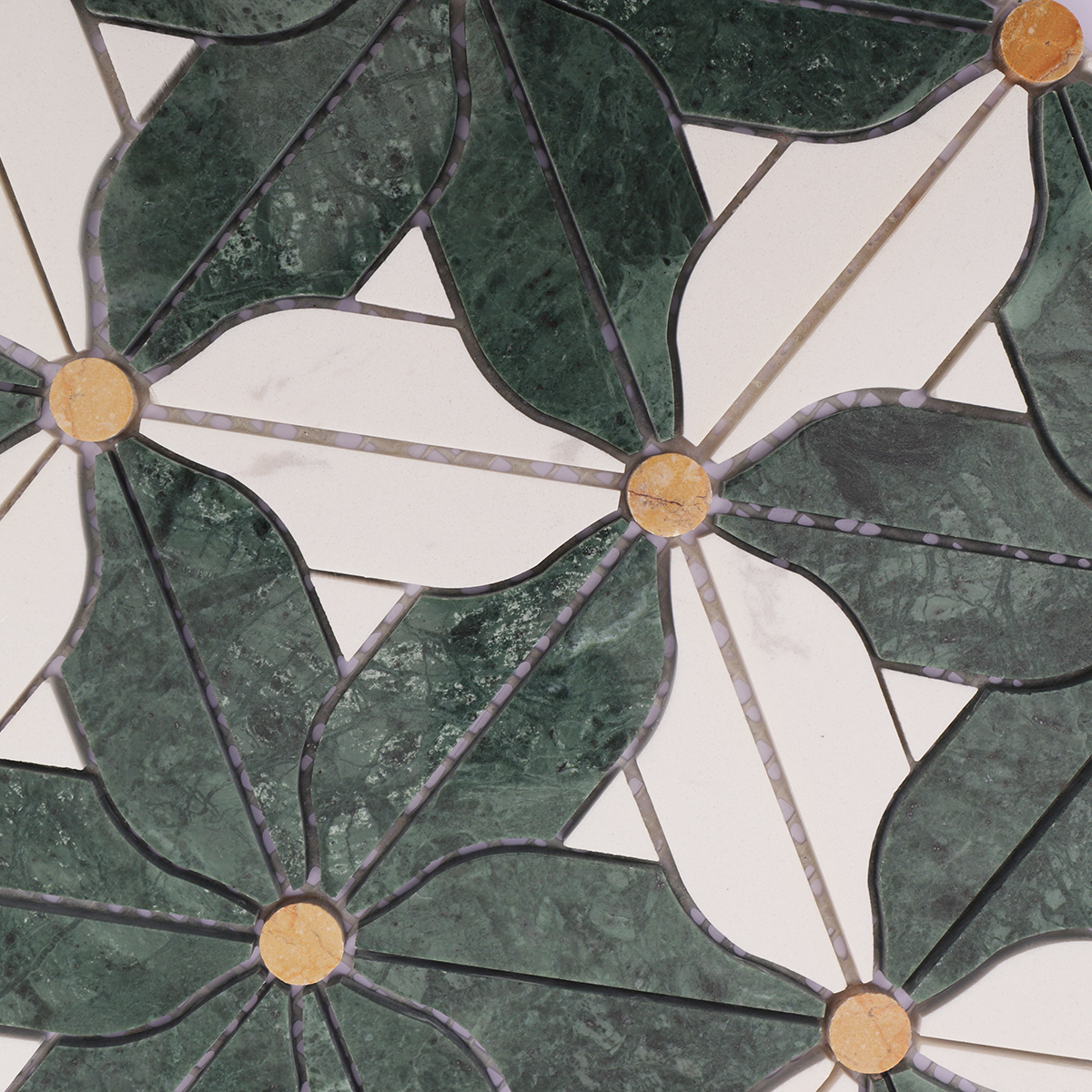
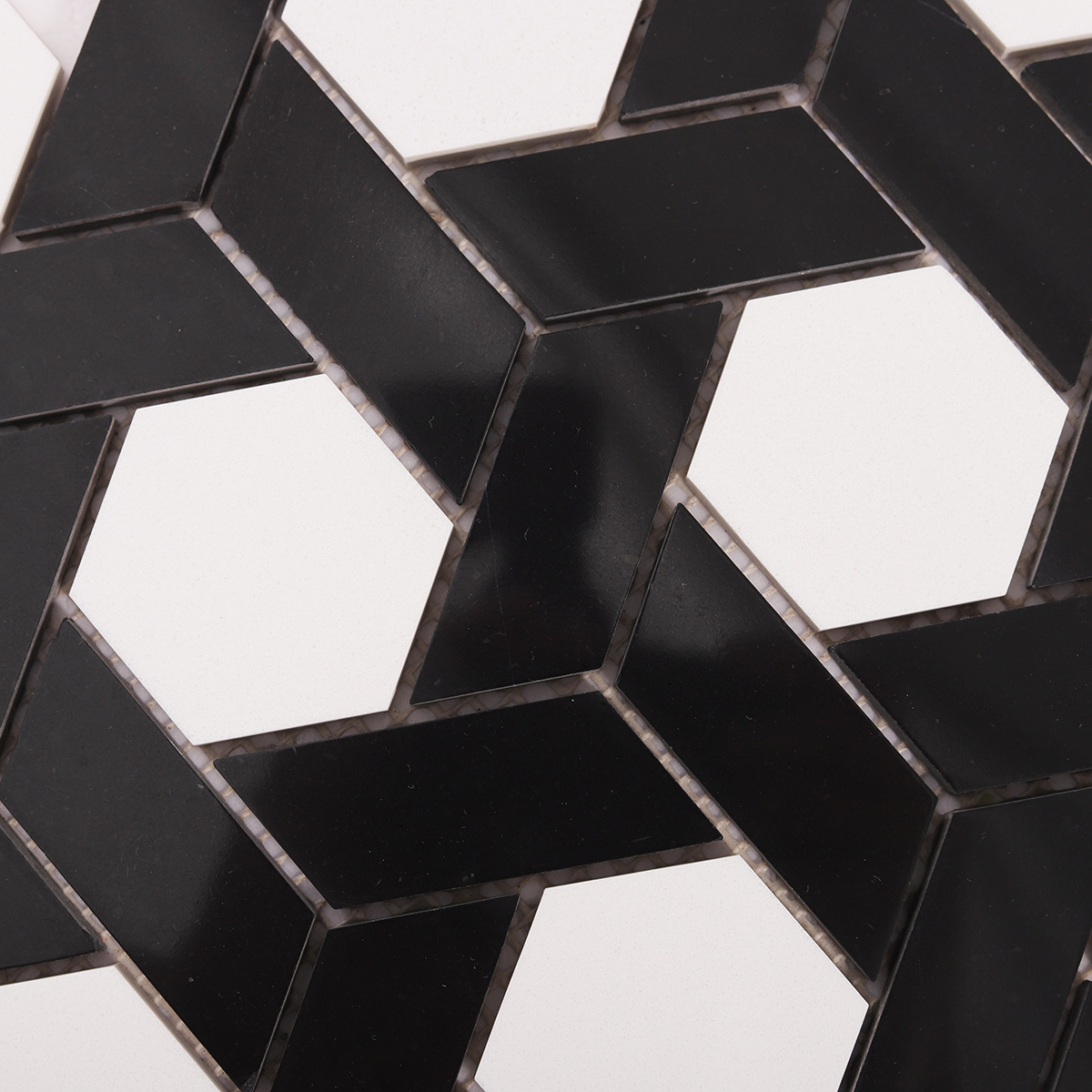
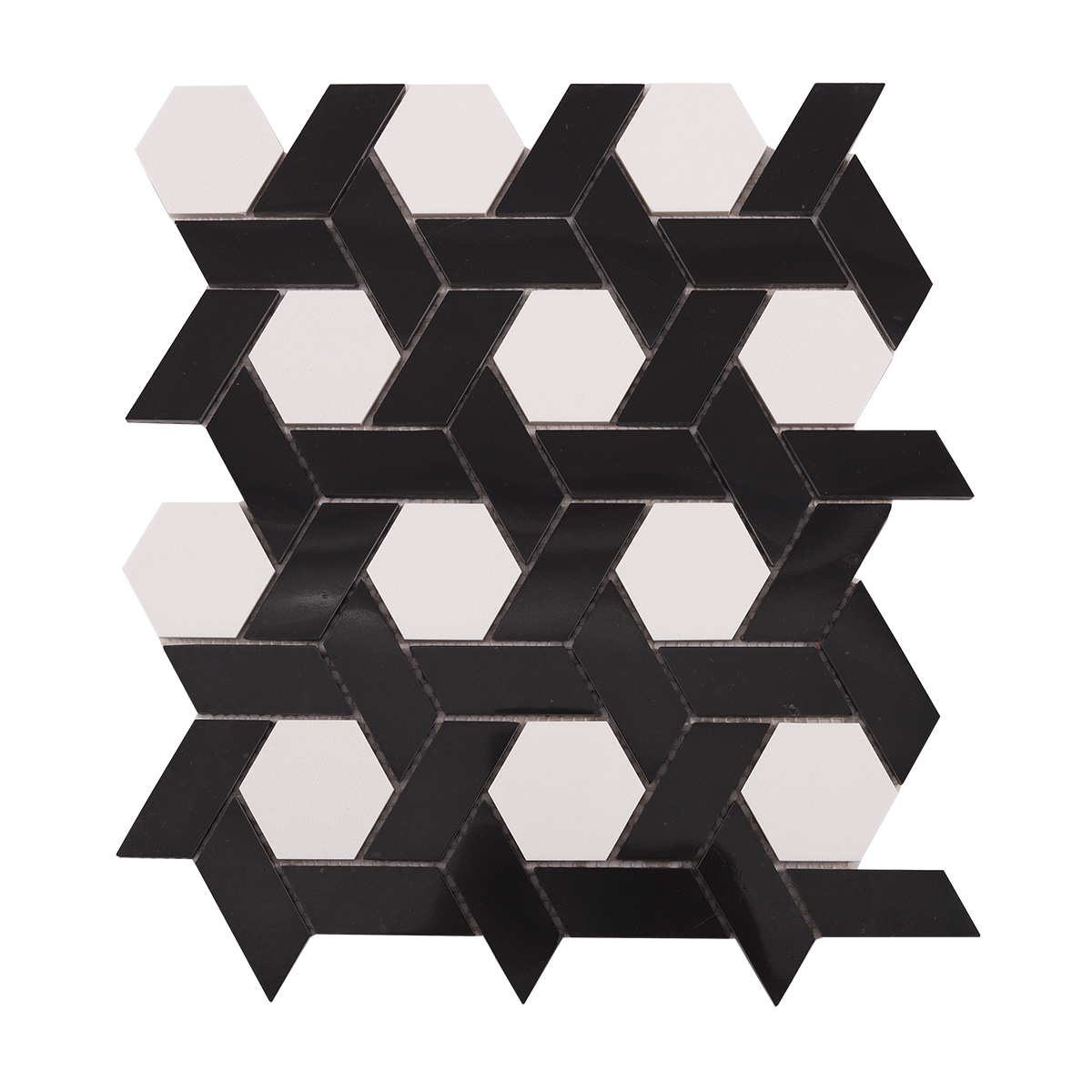
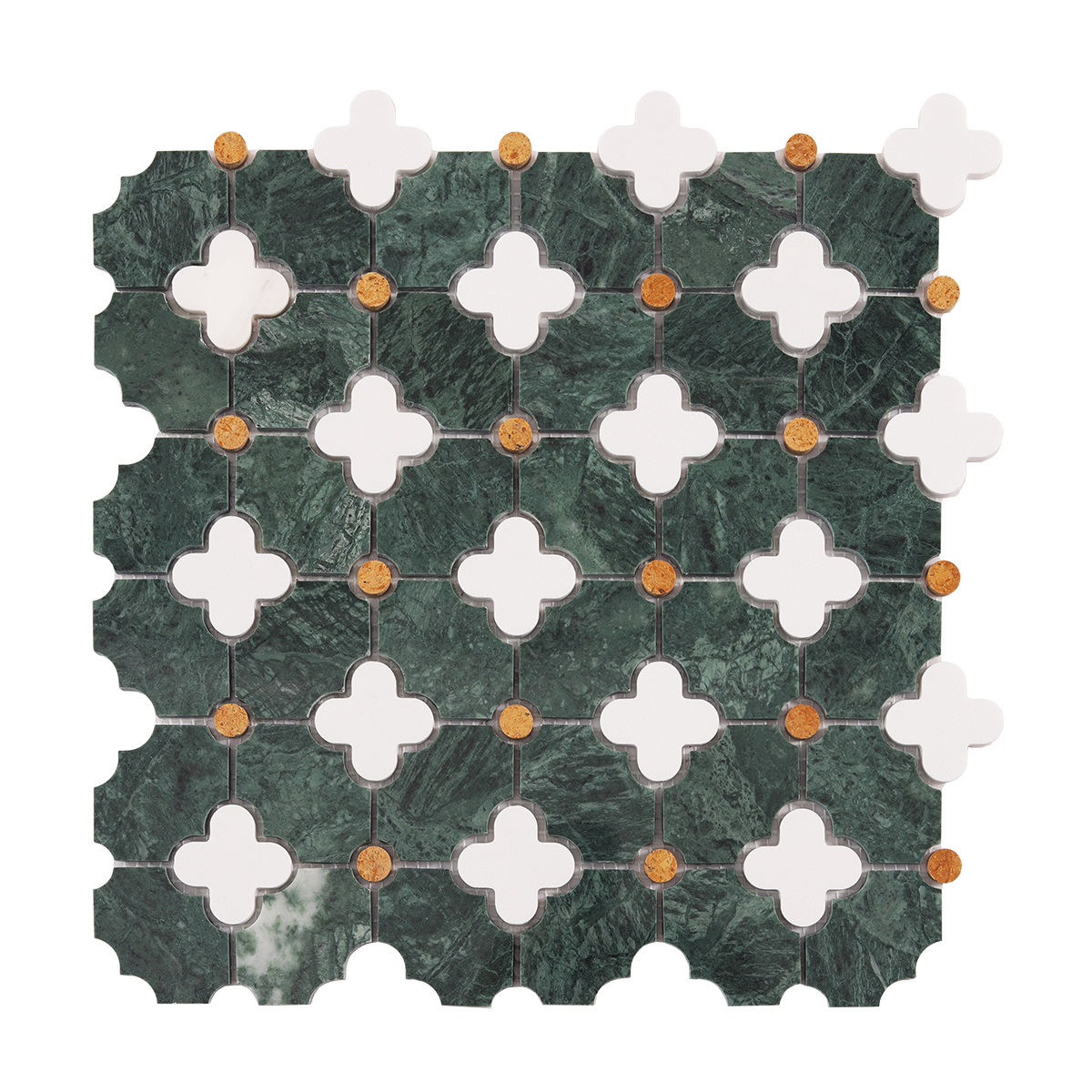
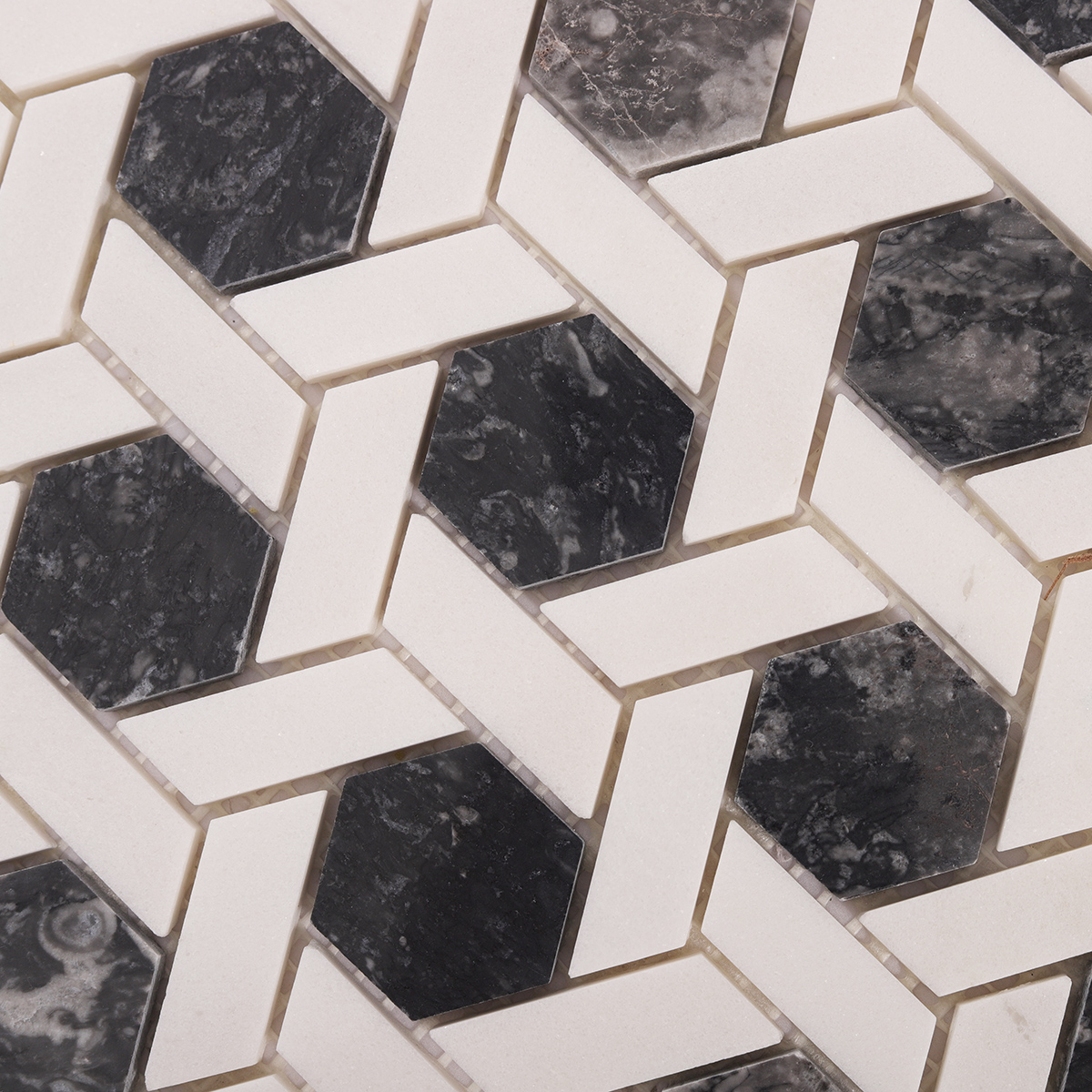
Stone can be cut into small tesserae and nonstandard shapes, allowing simple lines to develop into detailed mosaics. Depending on the design, the collection may include diamonds, hexagons, circles, squares, arabesque-inspired forms, star-and-cross layouts, basketweaves, scallops, leaves, flowers and custom waterjet-cut pieces. Repetition creates rhythm, while changes in color and veining keep the result lively and natural.
Expressive Color without Visual Clutter
Bohemian style is often associated with strong color, but it does not need to feel busy. Warm beige, cream, brown, terracotta and muted gold create an earthy foundation. Sage, olive, dusty blue, burgundy or black can add contrast, while white stone introduces breathing room. The most successful palettes repeat a limited group of colors throughout the room so that the tile feels connected to surrounding finishes.
Matte, Honed and Polished Effects
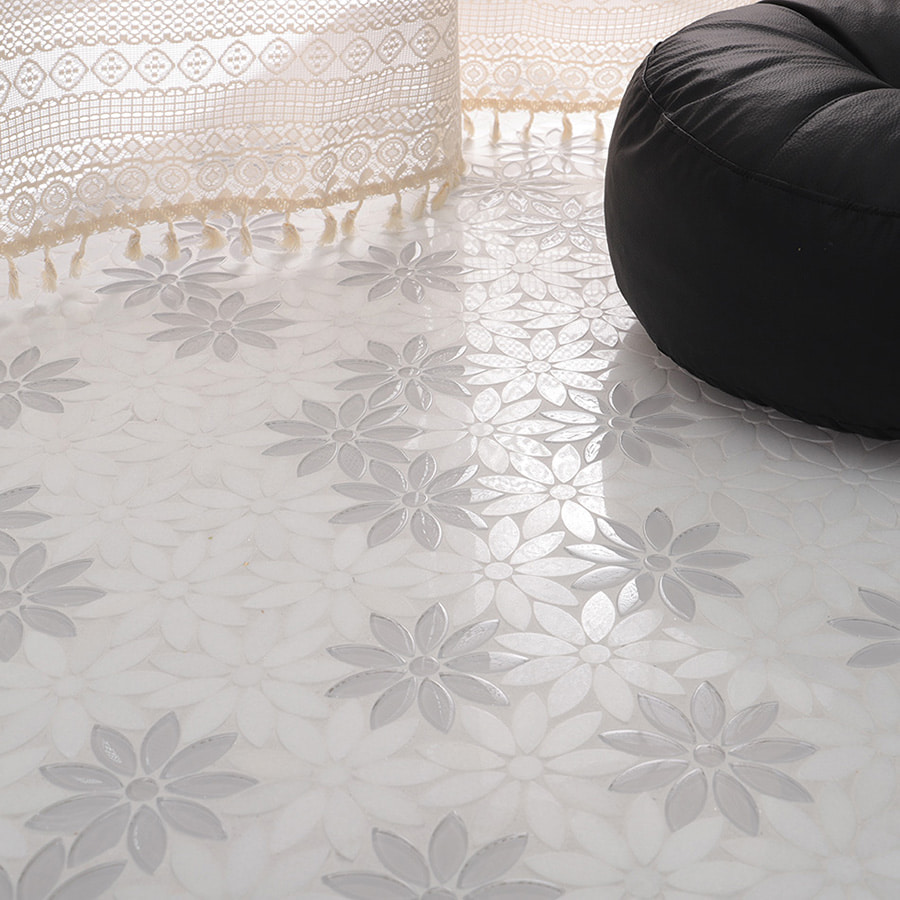
Finish changes how a tile responds to light. Honed and matte surfaces produce a soft, grounded appearance that works beautifully with wood, linen, plaster and aged metal. Polished stone reflects more light and highlights color and veining, making it effective for decorative walls and glamorous focal areas. Always confirm the finish and application rating of the individual product, especially for wet or high-traffic floors.
Bohemian Tile Materials
Natural Stone Mosaic Tiles
Natural stone is ideal for a sophisticated Bohemian interior because its movement and color variation feel organic rather than manufactured. It can be cut into highly detailed patterns and combined with contrasting stones to create borders, repeating fields, medallions or custom feature panels. Because stone characteristics vary, product-specific sealing, cleaning and application guidance should be followed.
Ceramic and Porcelain Options
Selected Bohemian-style designs may use ceramic or porcelain where a more consistent surface, printed motif or easy-care field tile is preferred. These materials are especially useful for larger wall or floor areas, but suitability still depends on the product’s technical rating, finish and intended installation.
Glass and Metal Accents
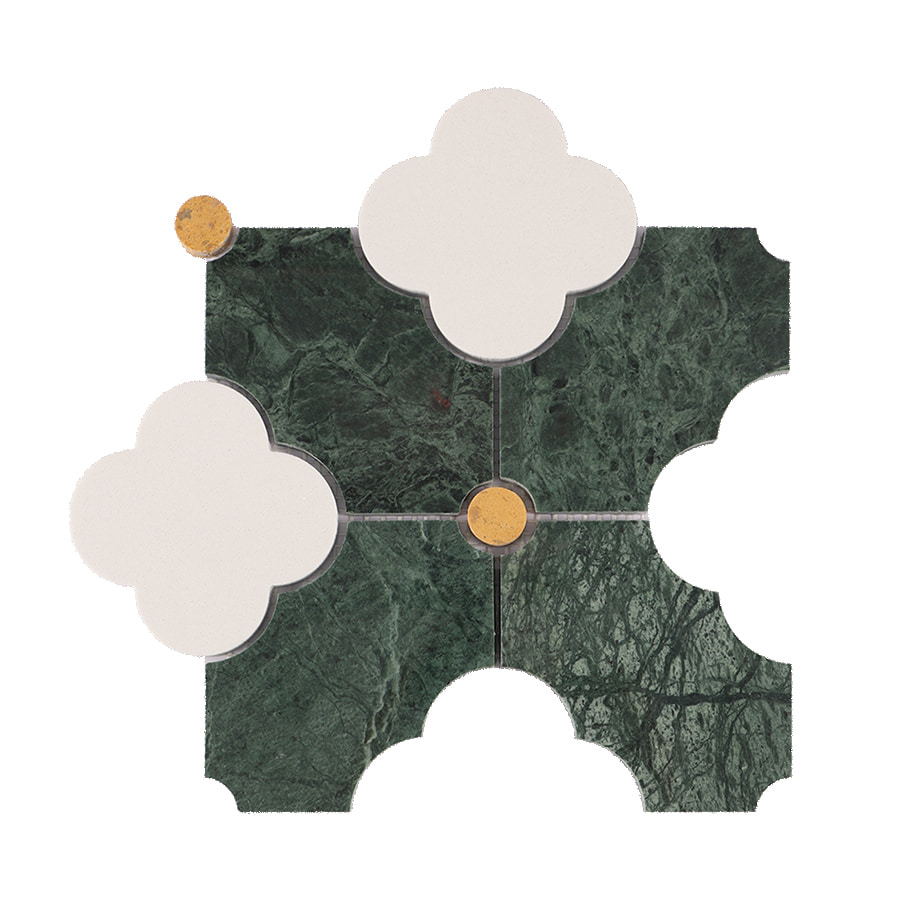
Glass can add translucent color and light, while brass, stainless steel or other metal details introduce a jewelry-like highlight. Used sparingly, these materials create contrast within a natural stone mosaic or define a border. Check product specifications before placing glass or metal in showers, steam rooms, pools, floors or exterior environments.
Popular Bohemian Tile Patterns and Shapes
Geometric Mosaics
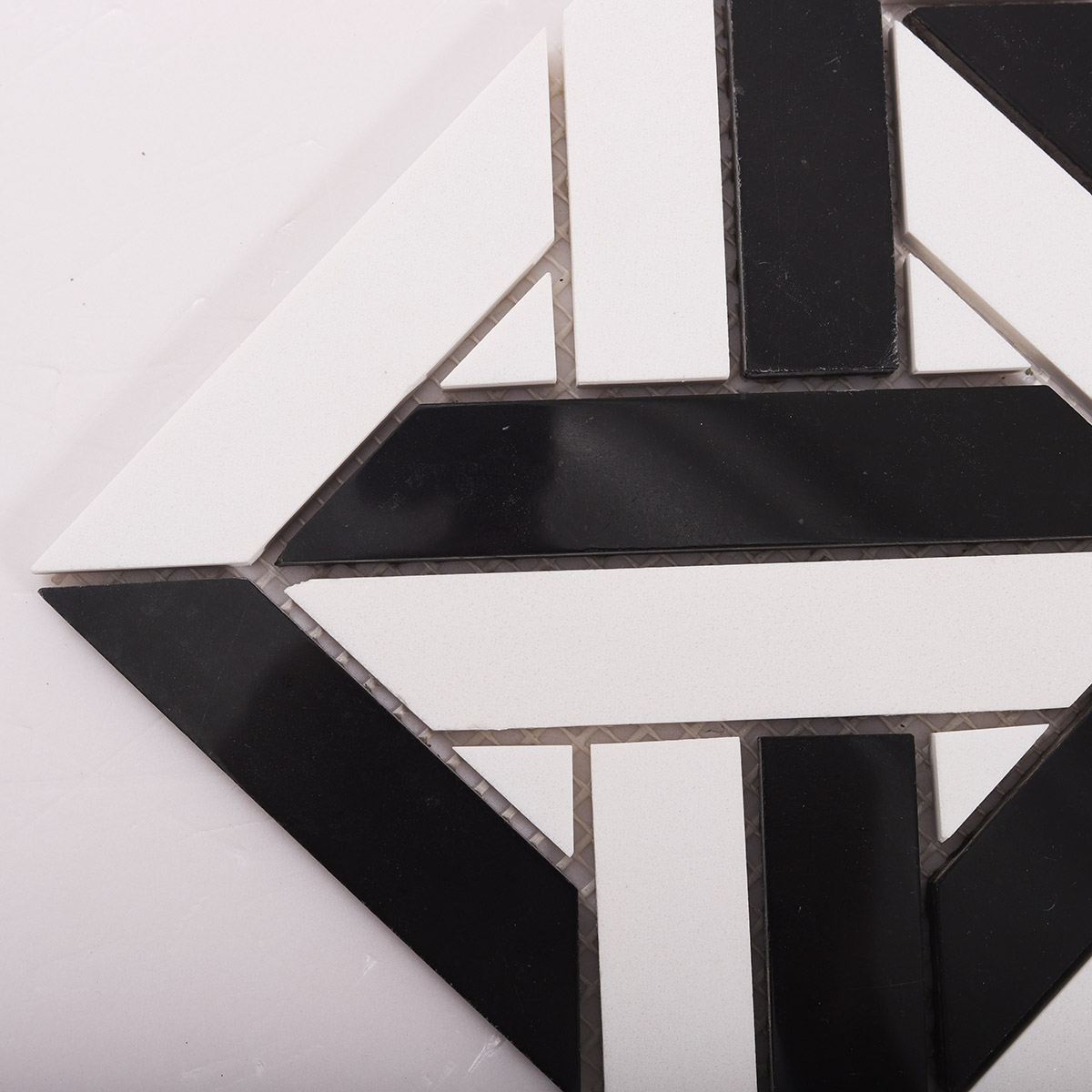
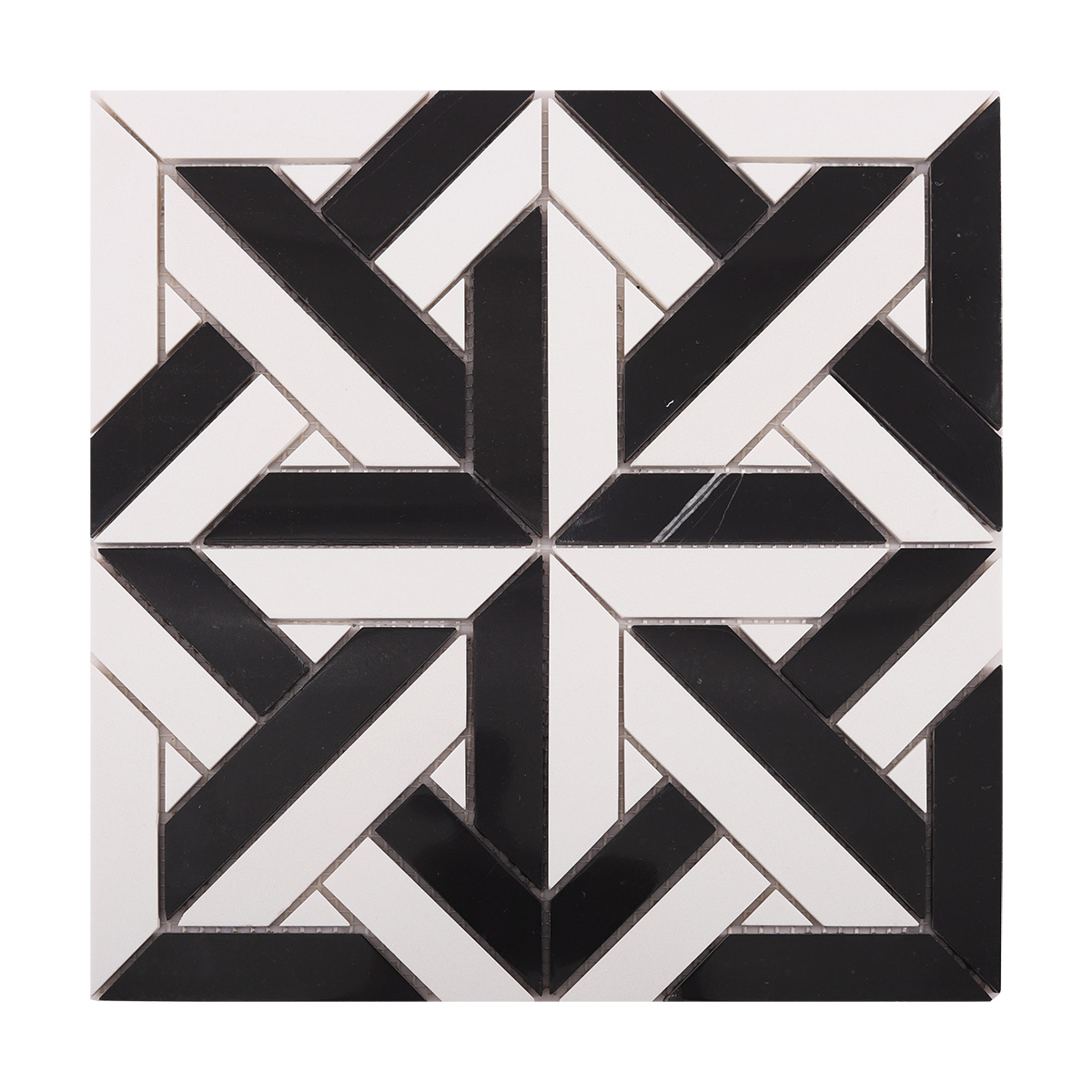
Diamonds, hexagons, chevrons, squares and interlocking polygons bring order to an eclectic palette. They are a strong choice when you want a Bohemian look that still feels clean and architectural.
Floral and Botanical Motifs
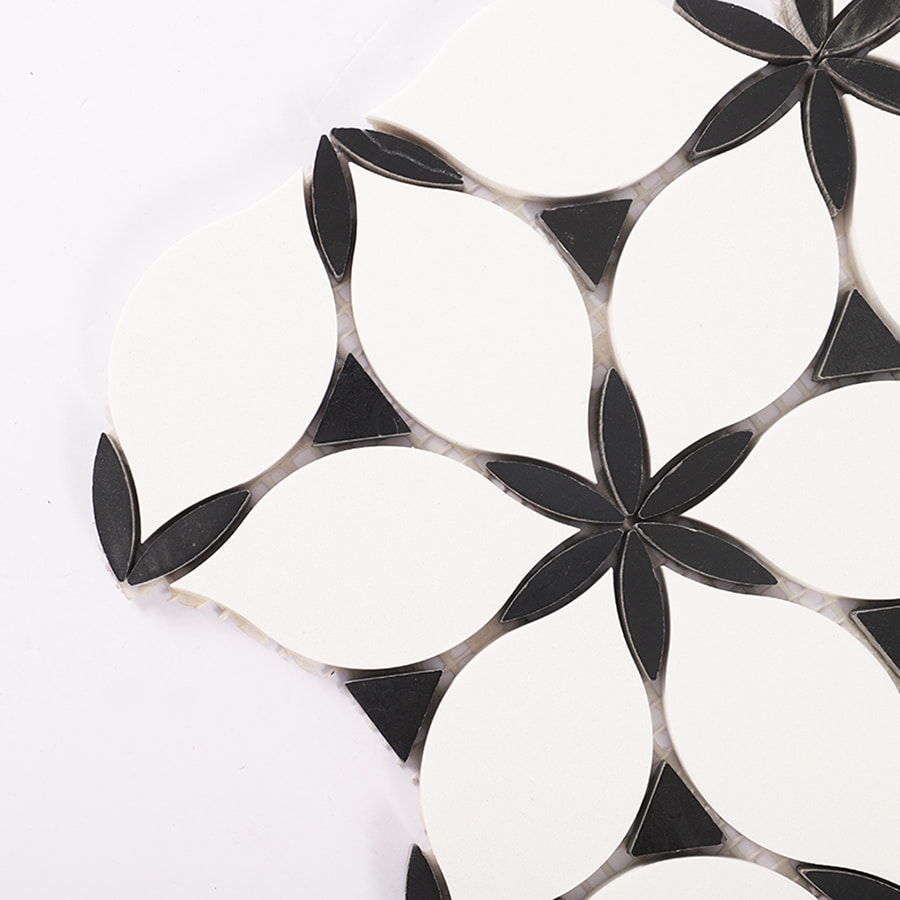
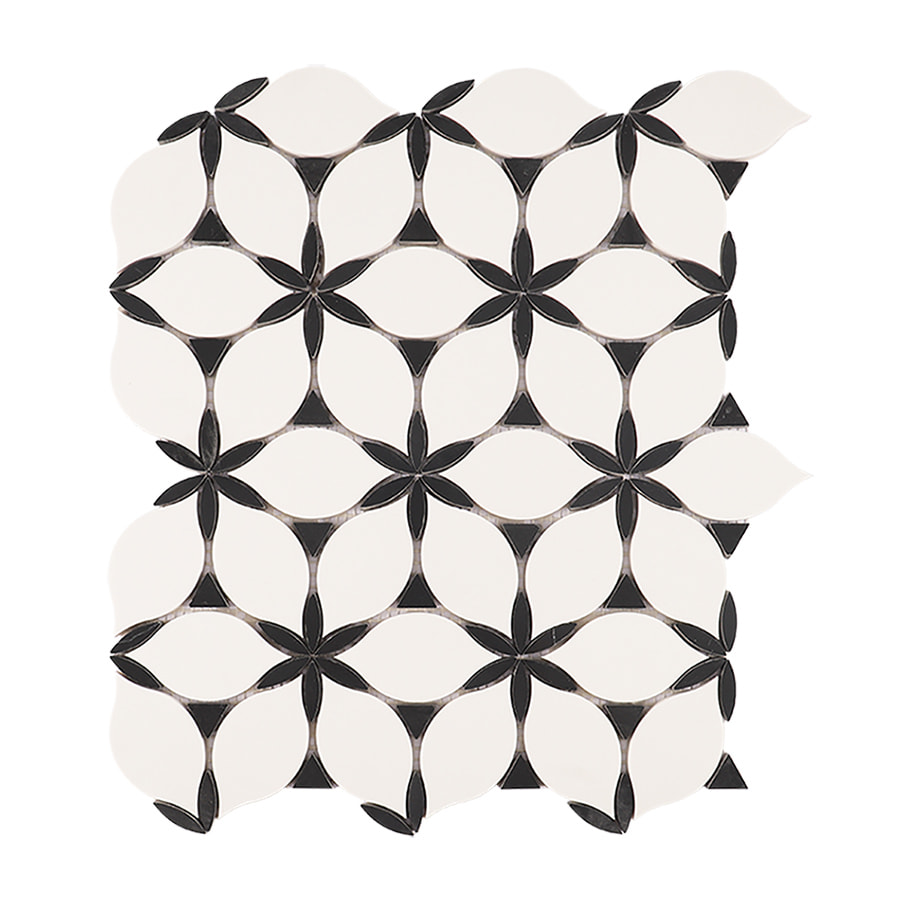
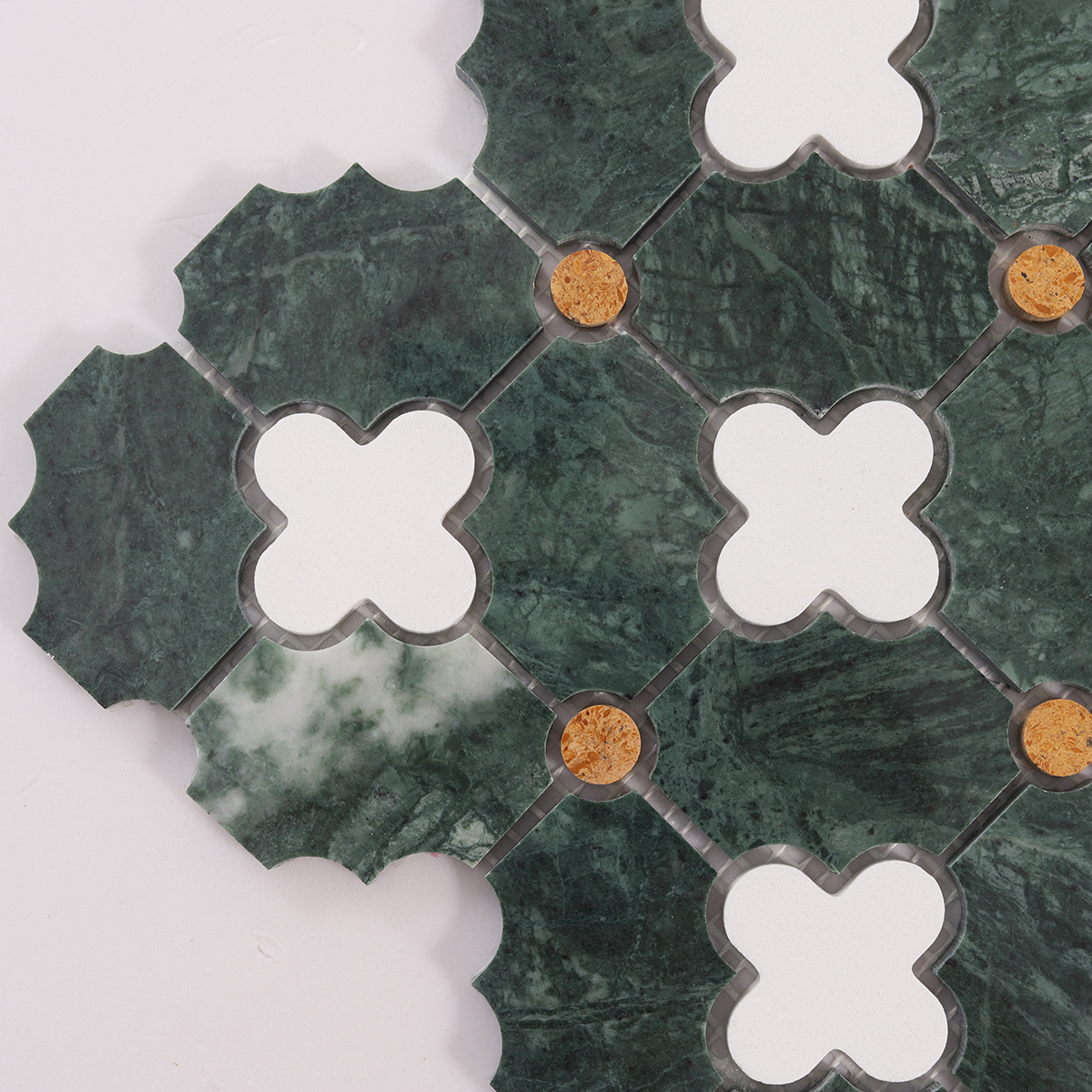
Flowers, leaves and petal-like shapes soften hard surfaces and connect the room to natural materials. These patterns work especially well on decorative walls, powder-room floors and restaurant features.
Arabesque, Lantern and Star-Inspired Forms
Curved lantern shapes and radiating star patterns create a sense of movement and global character. Keep nearby cabinetry and furnishings restrained when the pattern is highly detailed.
Penny Rounds, Scallops and Organic Shapes
Small circles, fan shapes and irregular outlines introduce a playful, handcrafted quality. Their many grout joints also make the choice of grout color an important part of the finished design.
Mixed-Pattern Layouts
A controlled patchwork can combine several related motifs, but cohesion is essential. Repeat one or two colors across every pattern and use a consistent scale or grout treatment to prevent the surface from becoming visually fragmented.
Where to Use Bohemian Tiles
Boho Kitchen Backsplash
A Bohemian backsplash can become the visual center of a kitchen without covering a large area. Use a patterned natural stone mosaic behind the range, across the full countertop wall or inside a framed panel. Pair it with simple cabinet fronts, warm wood, unlacquered brass or handmade accessories so the pattern remains the focal point.
Bohemian Bathroom and Shower
Bathroom walls, vanity backsplashes, shower niches and selected floors are natural settings for decorative mosaics. Earthy colors create a spa-like atmosphere, while blue, green or floral designs add personality. For any wet area, confirm that the specific tile, backing, finish, adhesive, grout and waterproofing system are approved for the intended location. Floor products should also meet the slip and wear requirements of the project.
Entryway, Hall and Feature Floor
A patterned entry floor creates an immediate sense of identity and can visually define a transition between rooms. Choose a product rated for floor use and consider pattern scale, traffic level, cleaning needs and transitions to adjoining materials before installation.
Living Room and Fireplace Surround
Use Bohemian mosaic tiles on a fireplace surround, hearth, alcove, bar front or statement wall to introduce color and craftsmanship. For fireplaces, confirm the product and setting materials are suitable for the expected temperature and installation zone.
Bedrooms and Quiet Living Spaces
In rooms designed for rest, a smaller tiled feature usually works better than a heavily patterned full surface. Consider a headboard wall panel, vanity backsplash or recessed niche in muted stone colors, then repeat the palette through textiles and artwork.
Restaurants, Hotels and Retail Interiors
Bohemian tiles are particularly effective in hospitality and retail spaces where memorable design matters. A custom reception backdrop, restaurant floor inset, bar front, restroom wall or boutique display can reinforce the project’s visual identity. For commercial use, select materials according to traffic, wet-area exposure, maintenance plans and local building requirements.
How to Choose the Right Bohemian Tile
Start with the Application
Decide whether the tile will be installed on an interior wall, residential floor, commercial floor, shower wall, shower floor, steam room, pool or exterior surface. Never assume that every decorative tile is suitable for every location. Review the individual product specifications or ask Saicina Tiles to confirm compatibility.
Match the Pattern Scale to the Space
Small mosaics add detail and can follow curves or compact surfaces. Larger repeats are easier to appreciate across open floors and broad walls. In a small powder room, one bold pattern can create a complete design statement; in an open-plan interior, a larger-scale motif can define a zone without adding a physical divider.
Choose a Practical Finish
Polished surfaces provide brightness and visual depth, while honed or matte finishes feel softer and show fewer reflections. Floors and wet areas require special attention to traction and maintenance. Select by technical suitability first, then refine the aesthetic.
Review Real Samples
Screens cannot fully reproduce stone color, reflectivity, texture or scale. Order a sample and view it in the project’s daytime and evening lighting. Compare it with cabinetry, countertops, paint, metal finishes and textiles before approving the final palette.
Plan Quantity and Natural Variation
Include material for cuts, pattern alignment, breakage and future repairs. The appropriate allowance varies with room shape, tile format and layout complexity, so confirm quantities with the installer. For natural stone, blend pieces from multiple sheets or cartons during dry layout to distribute tonal and veining variation naturally.
How to Create a Cohesive Bohemian Interior
Balance Pattern with Quiet Surfaces
Let one tiled area lead the room, then support it with calmer finishes. A detailed backsplash works well with plain countertops and cabinets; a patterned floor is easier to appreciate beside softly textured walls.
Build around a Controlled Palette
Choose two or three recurring colors from the tile and repeat them in paint, upholstery, lighting or accessories. This makes a mixed-material room feel intentional rather than random.
Layer Natural Materials
Bohemian tile pairs naturally with oak, walnut, rattan, linen, limewash, handmade pottery, plants and aged brass. These materials reinforce warmth and tactility without competing with the mosaic pattern.
Use Grout as a Design Element
A close grout color allows the pattern and stone variation to flow across the surface. Contrasting grout emphasizes every individual shape and creates a more graphic result. Test the grout color with an actual tile sample, and follow product guidance regarding sealers or grout-release products.
Mix Patterns with Restraint
Pattern mixing works best when the designs share a color family, visual weight or geometric language. Combine one dominant motif with a smaller supporting pattern instead of using several equally strong designs in the same view.
Installation and Care
Professional Installation
Detailed mosaics and natural stone benefit from installation by an experienced tile professional. The substrate should be clean, stable, flat and appropriate for the setting system. Dry-lay the material before installation, check sheet alignment and blend natural variation across the work area.
Wet locations require a complete, correctly specified waterproofing assembly behind the tile. Movement joints, crack-isolation requirements, mortar selection, grout width and coverage should follow the tile and setting-material manufacturers’ instructions as well as applicable industry standards and local codes.
Some natural stones benefit from sealing before or after grouting, while others may require a grout-release product. Test cleaners, grout and sealers on spare material or in an inconspicuous area before treating the full installation.
Routine Cleaning
Remove dust and grit with a soft broom, vacuum or clean mop. For natural stone, use a pH-neutral stone cleaner or another product approved for the material. Avoid acidic cleaners such as vinegar or lemon, and avoid abrasive powders that can etch or scratch sensitive surfaces. Rinse away cleaner residue and dry the surface with a soft cloth where practical. In showers, regular ventilation and a squeegee help reduce moisture and soap buildup.
Custom Bohemian Mosaics by Saicina Tiles
A free-spirited design should not be limited to a standard catalog. Saicina Tiles can work with homeowners, interior designers, architects, builders and hospitality teams to develop custom mosaic concepts based on a drawing, reference image, project palette or required installation size.
Customization may include:
-
Stone and accent-material combinations
-
Color adjustments and coordinated palettes
-
Custom geometric, floral or freeform shapes
-
Pattern scale and sheet-size adjustments
-
Borders, corner pieces, medallions and feature panels
-
Waterjet-cut details and hand-assembled mosaic layouts
-
Samples or project mockups before production
-
Project-specific packaging and international shipping support
Because natural materials vary, samples and approved drawings provide an important reference for production while preserving the organic character that makes each installation unique. Contact Saicina Tiles with your dimensions, application, preferred colors, drawings and required quantity so our team can evaluate the design.
Why Choose Saicina Tiles?
-
Design-led mosaic expertise: Explore expressive patterns created for residential, hospitality, retail and other commercial interiors.
-
Natural material character: Use authentic stone color, texture and veining to create depth that printed repetition cannot fully reproduce.
-
Flexible customization: Adjust the color combination, shape, pattern scale and project format to suit a specific design direction.
-
Project support: Discuss application, drawings, samples and quantity before placing a production order.
-
Careful packing: Project-specific packaging helps protect detailed mosaic sheets and cut components during transportation.
Create a Space That Feels Collected, Not Copied
Bohemian tiles offer the freedom to create interiors that are relaxed, expressive and unmistakably personal. Whether you prefer soft earth tones, dramatic geometry, botanical forms or a richly colored custom mosaic, Saicina Tiles can help translate the idea into a practical wall or floor surface.
Explore the Bohemian tile collection, request a sample or contact Saicina Tiles to discuss a custom pattern for your next residential or commercial project.
Frequently Asked Questions About Bohemian Tiles
What makes a tile Bohemian?
A Bohemian tile is defined by its expressive design language rather than one material. Common features include layered color, geometric or botanical pattern, natural texture, vintage character and influences from craft traditions around the world.
Are Bohemian tiles the same as Moroccan or encaustic tiles?
No. Moroccan is a regional design reference, and encaustic describes a particular traditional production method. Both can contribute to a Bohemian look, but Bohemian style also includes many other materials, patterns and cultural influences.
Can Bohemian tiles be used on floors?
Yes, when the specific product is rated for the intended floor and traffic level. Decorative wall-only mosaics should not be installed on floors. For bathrooms and other wet floors, confirm slip, water-exposure and maintenance requirements before purchase.
Can I use Bohemian tiles in a shower?
Many mosaics can be used on shower walls, and selected products can be used on shower floors. Suitability depends on the tile material, finish, backing, joint layout and product rating. A correctly designed waterproofing system is required behind the tile.
Do Bohemian tiles work in a small room?
Yes. A compact powder room, backsplash or shower niche is an excellent place for a strong pattern because the limited area keeps the design focused. Use a restrained surrounding palette if you want the room to feel calm and open.
What colors are best for a Bohemian interior?
Earth tones such as cream, sand, taupe, terracotta, brown and muted gold create warmth. Olive, sage, dusty blue, burgundy, black or brighter accents can add contrast. The best palette is one that repeats selected tile colors elsewhere in the room.
Should I choose a matte or polished finish?
Choose according to both appearance and application. Matte or honed tile has a soft, organic character; polished tile reflects light and emphasizes color and veining. Confirm floor, wet-area and maintenance suitability for each finish.
What grout color should I use with patterned tile?
A grout color close to the main tile color creates a continuous surface, while contrasting grout makes the shapes more graphic. Test the selected grout on a sample because it can change the perceived color and rhythm of the mosaic.
Do natural stone Bohemian tiles need sealing?
Some natural stones and installation conditions benefit from sealing, while requirements vary by stone, finish, grout and sealer system. Follow the product and sealer manufacturers’ guidance and test the treatment before applying it to the entire installation.
Can Saicina Tiles create a custom Bohemian pattern?
Yes. Customization can include material combinations, colors, shapes, dimensions, repeating layouts, borders and feature mosaics. Send us your project dimensions, application, reference image or drawing, quantity and target schedule for evaluation.