
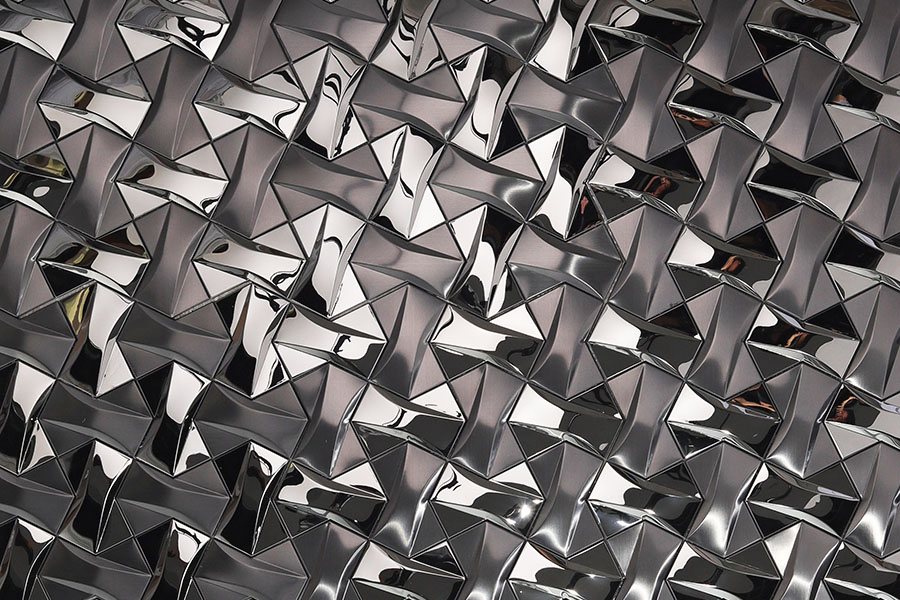
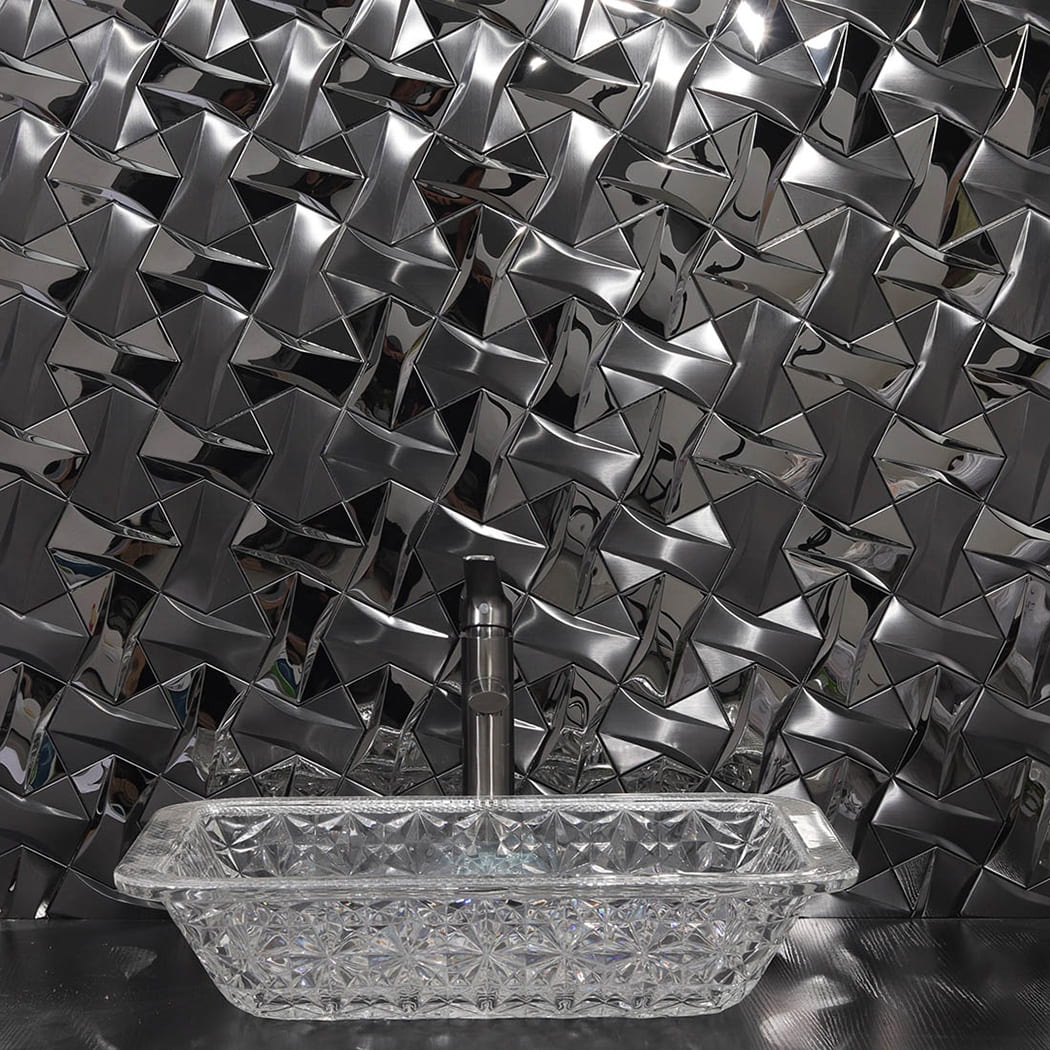
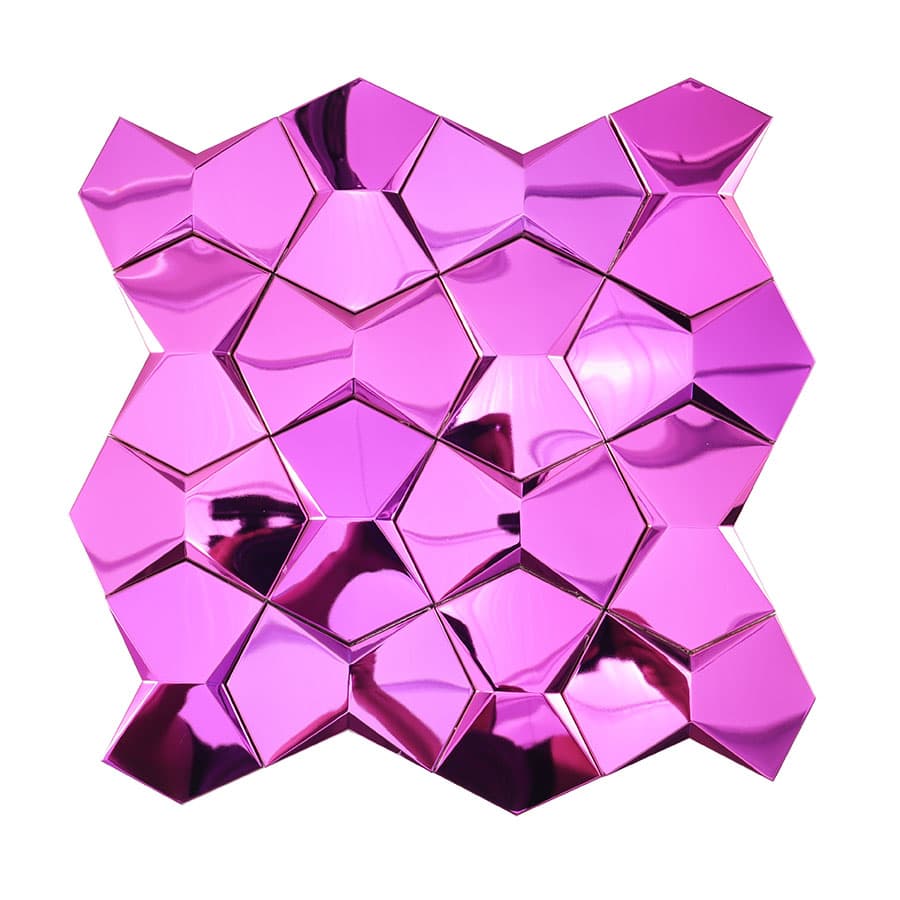
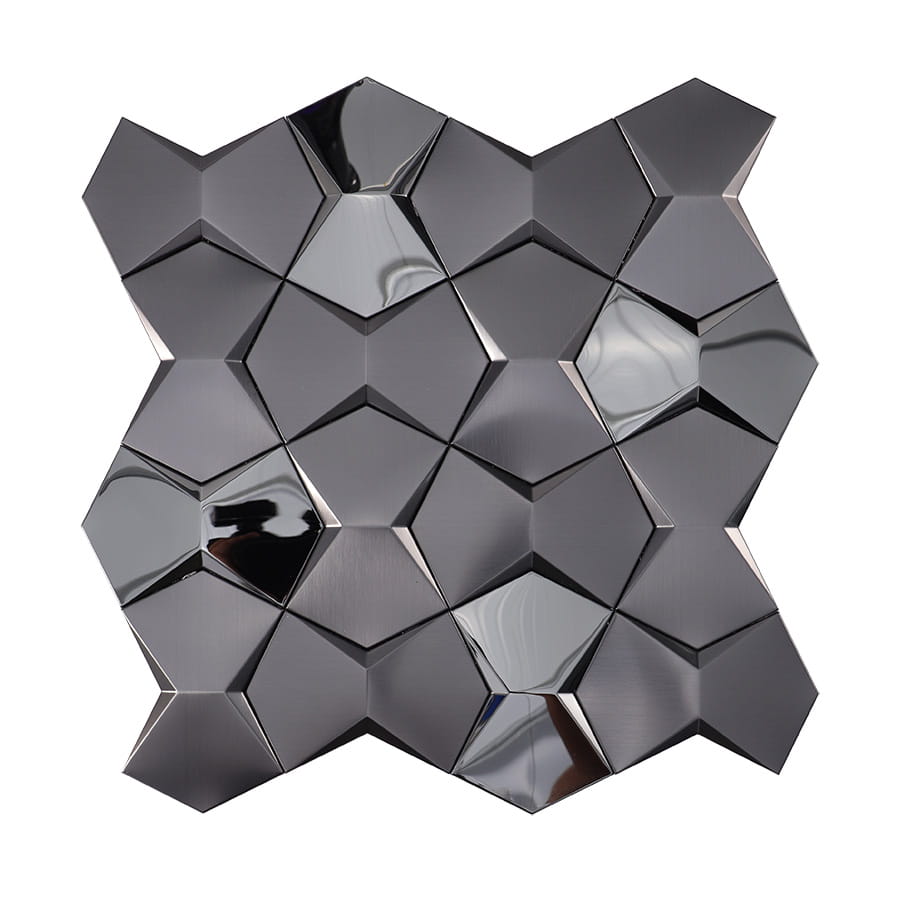
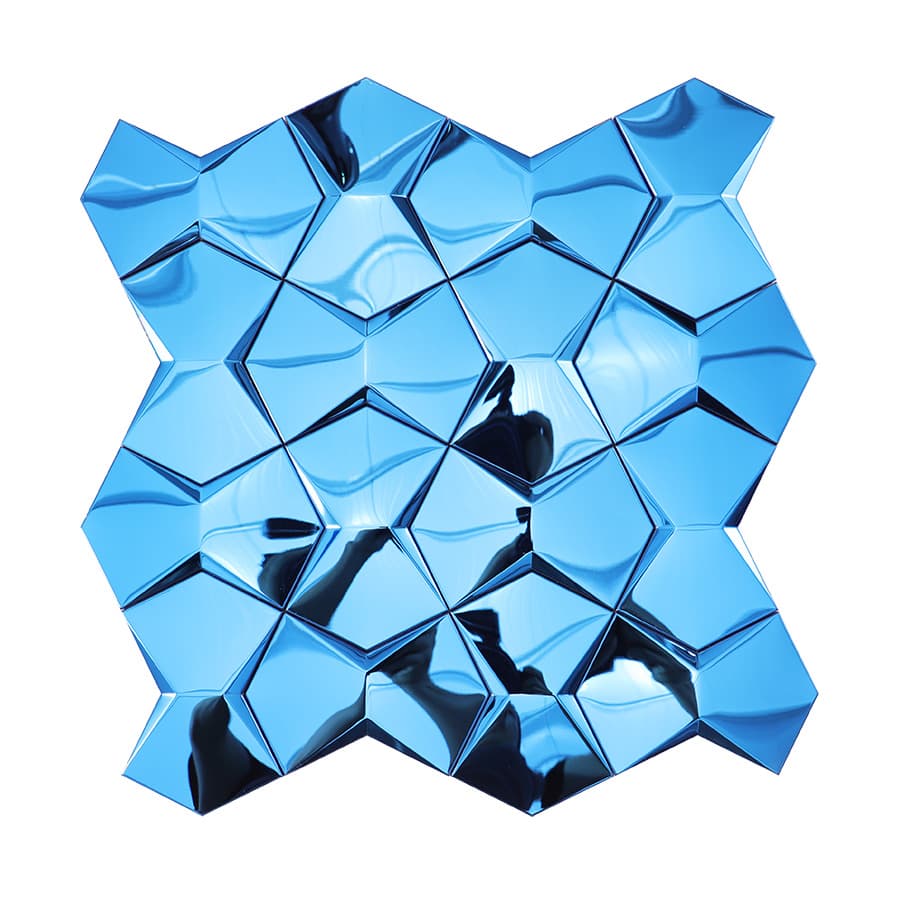
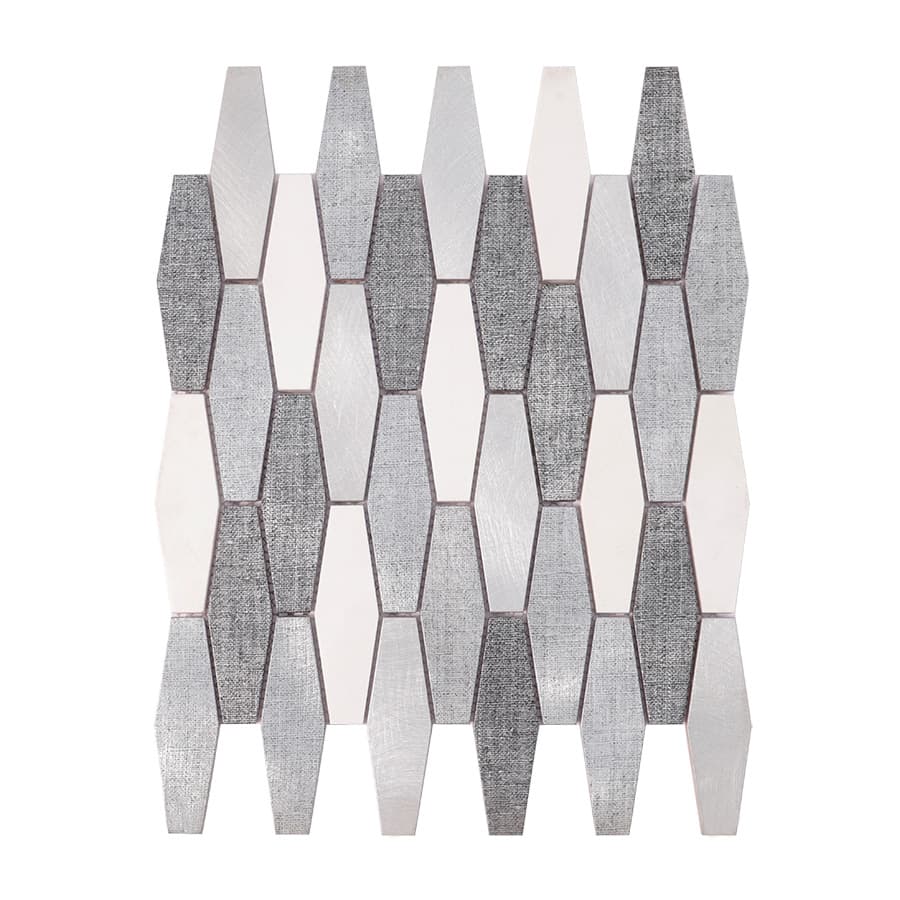
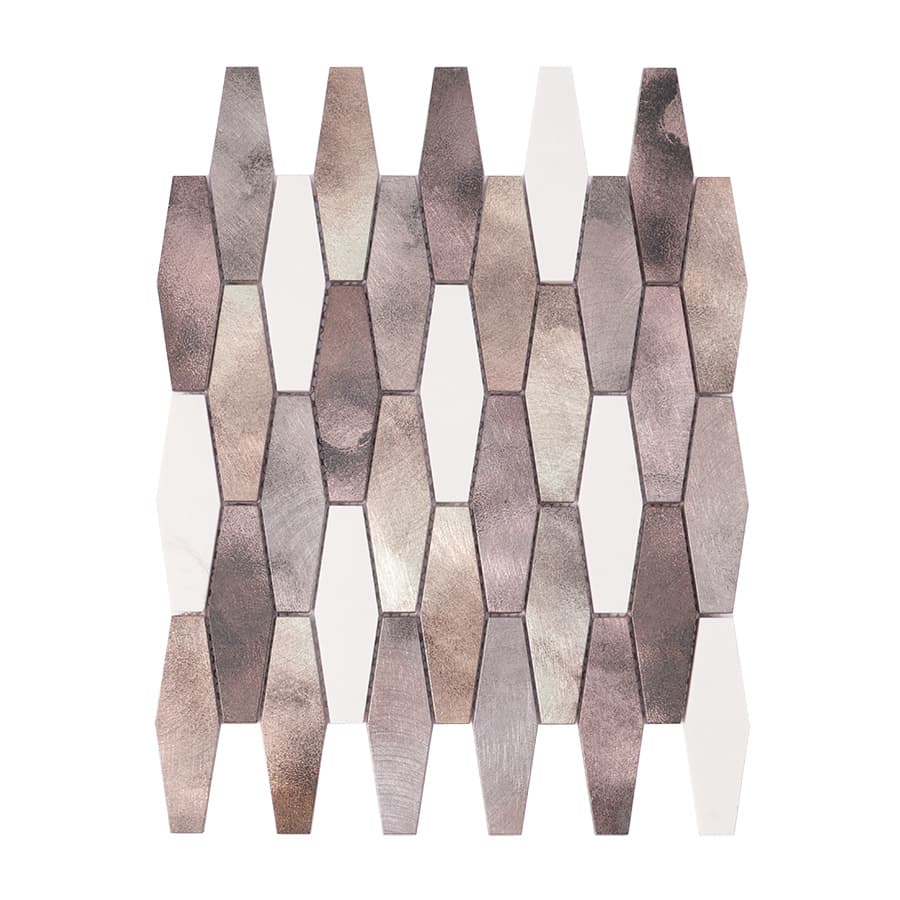
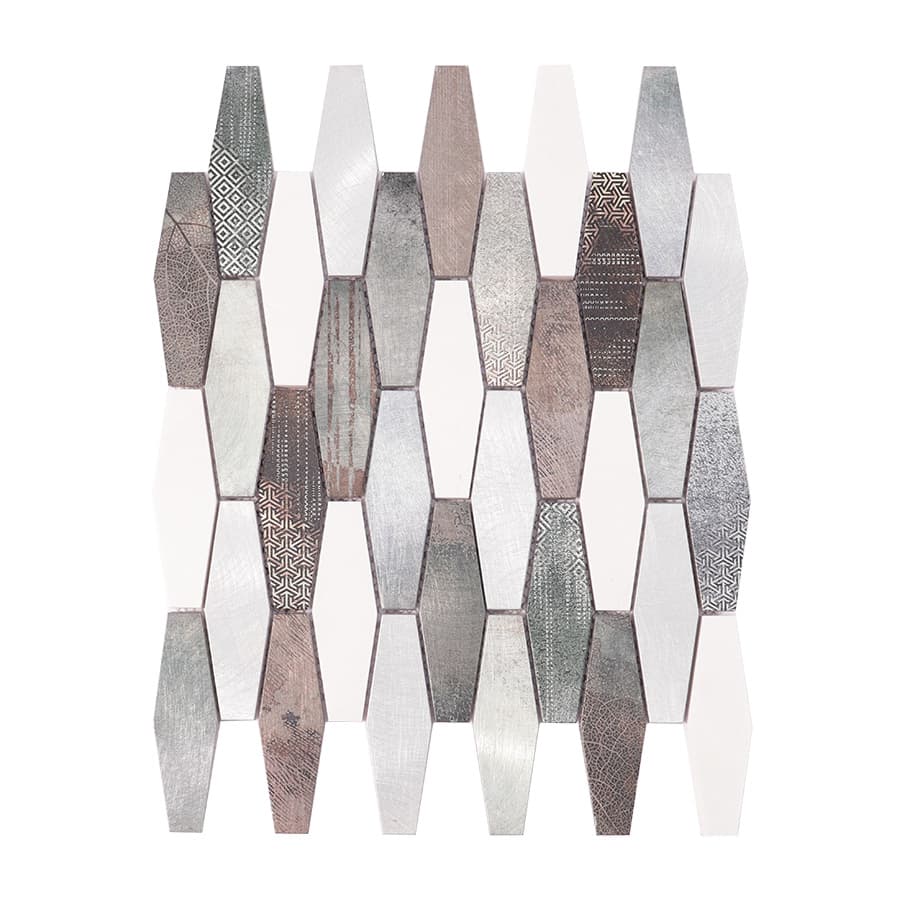
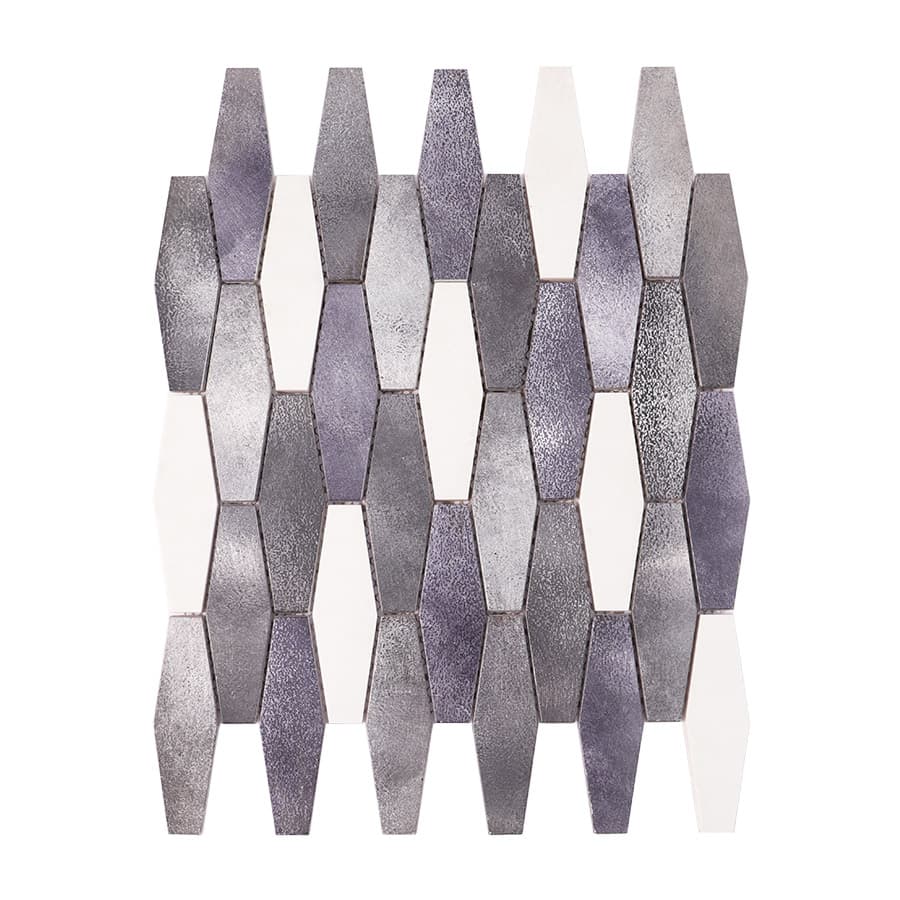
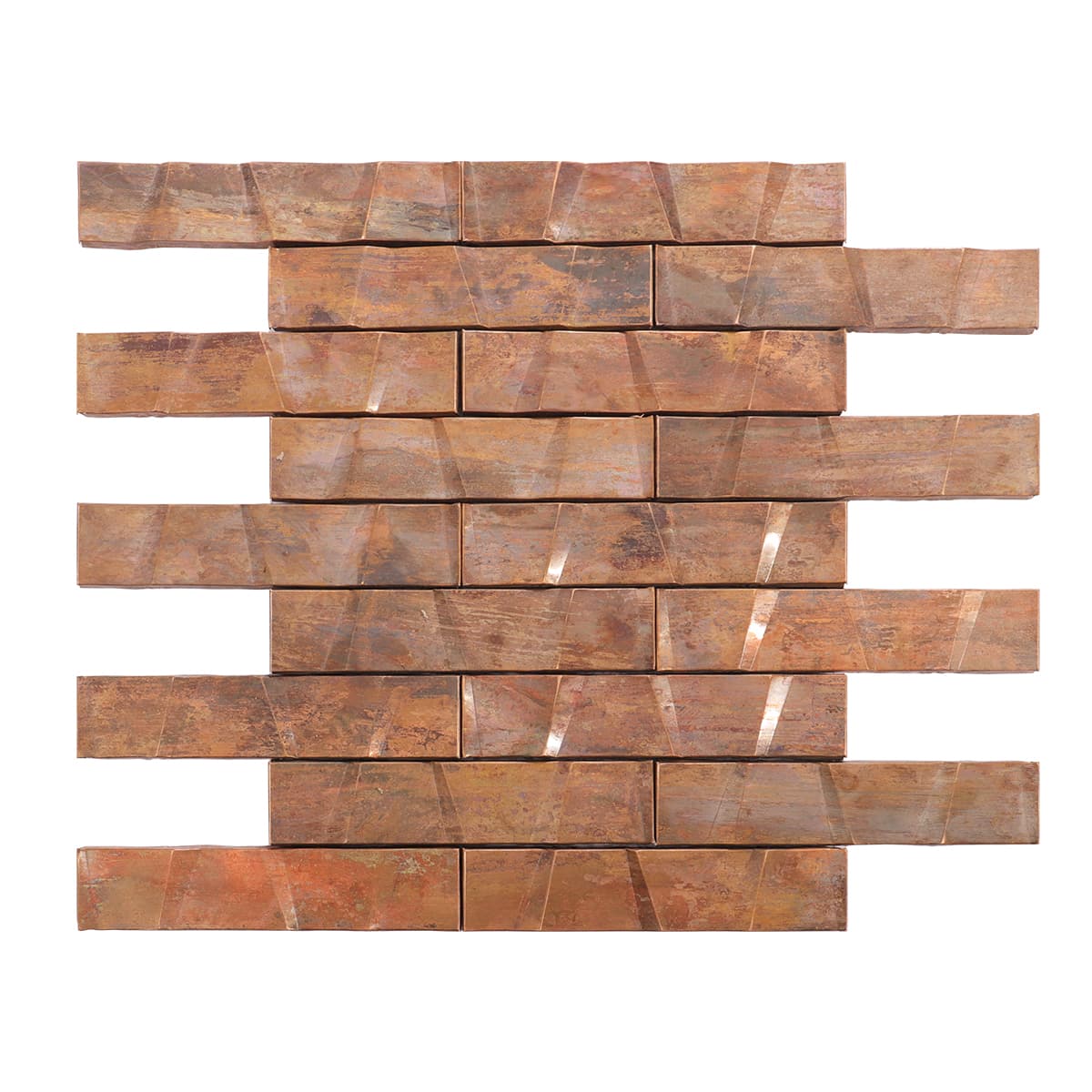
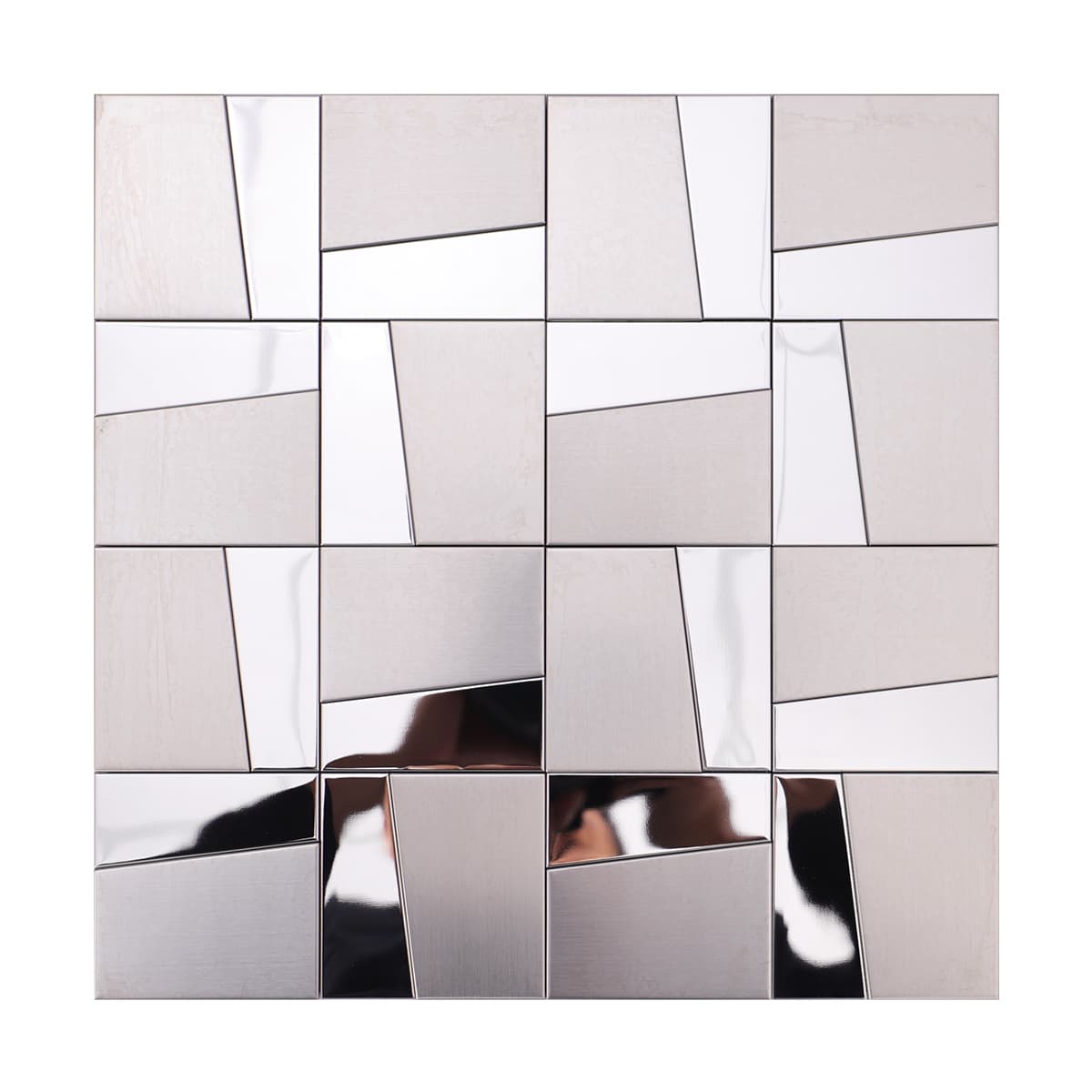
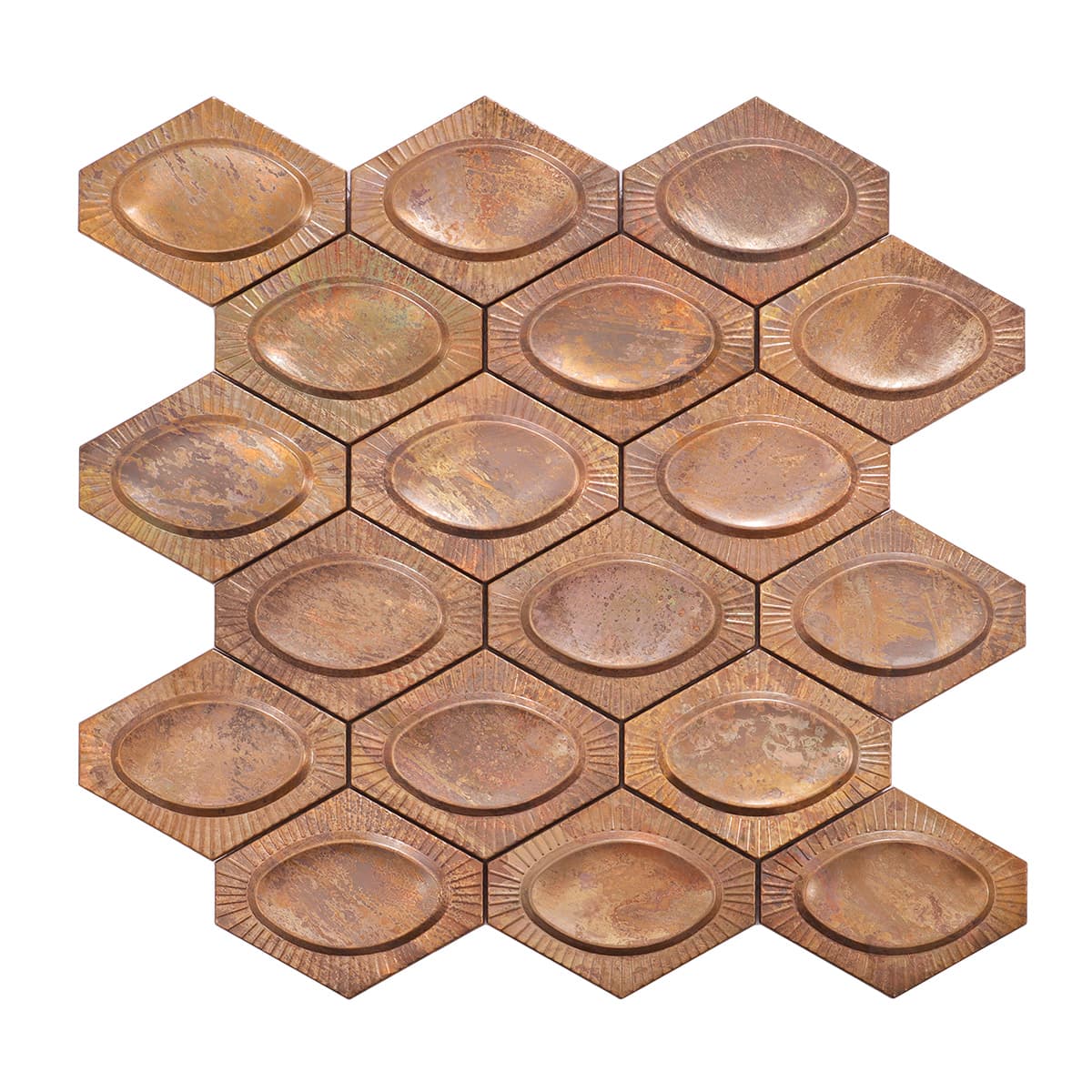
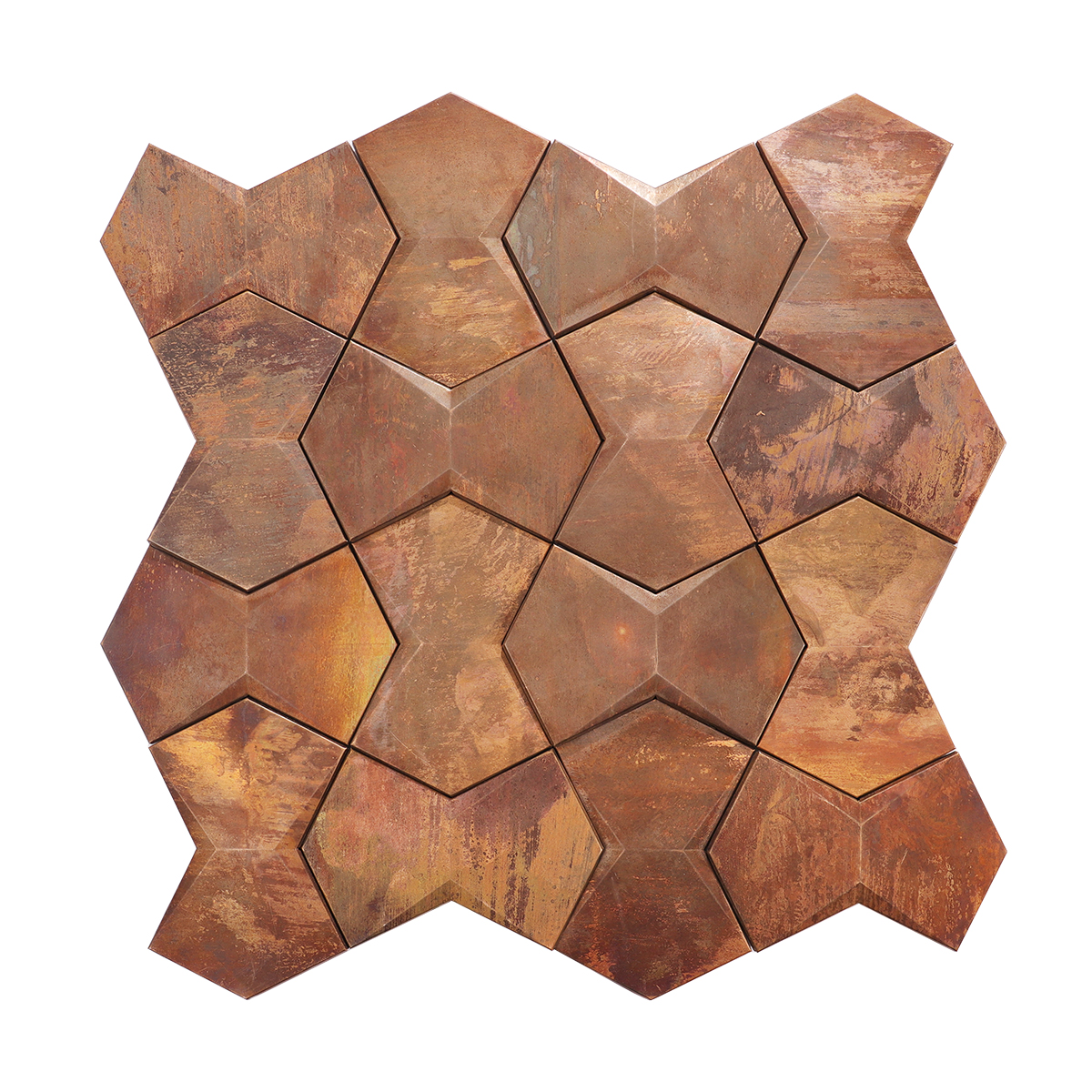
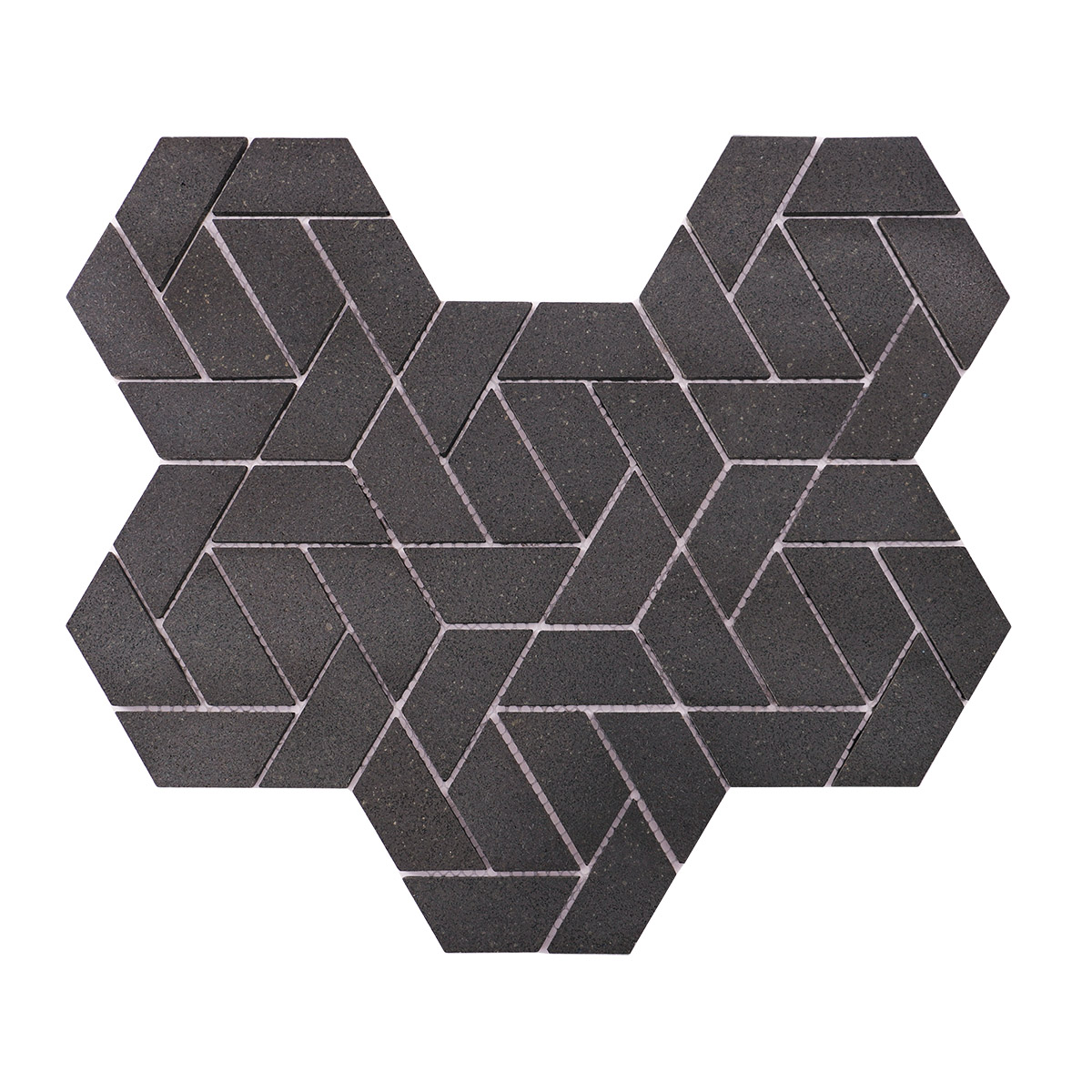
Trapezoid Tiles bring movement, direction, and architectural rhythm to a wall. As a type of geometric tile, trapezoid mosaics can be arranged into striking patterns that feel more dynamic than square or subway tile. They are ideal for bathroom walls, kitchen backsplashes, living room feature walls, and statement walls in dining spaces. Current market results also show trapezoid formats being used across stone, glass, ceramic, porcelain, and handmade zellige categories, which confirms that this shape appeals to both decorative and design-led searches.
What Are Trapezoid Tiles?
Trapezoid tiles are tapered geometric tiles with two parallel sides and angled edges. That simple shape opens up far more layout freedom than standard rectangular tile, allowing designers to create directional repeats, faceted compositions, and modern mosaic surfaces. Many current trapezoid tile pages position them as statement-making geometric surfaces rather than purely functional wall coverings.
Why Choose Trapezoid Tiles?
Trapezoid tiles are a strong choice when you want a surface to look custom, artistic, and architectural. Their angled form naturally creates motion, so even a single-color installation can feel rich and layered. Compared with more familiar shapes, trapezoid mosaics help a wall stand out with a more tailored geometric identity. Many competing pages emphasize this same visual advantage by highlighting bold pattern, texture, or dimensional appeal.
Materials for Trapezoid Tiles
Marble Trapezoid Tiles
Marble trapezoid tiles offer a refined, natural look with unique veining and timeless depth. Because natural stone can be cut into many custom trapezoid sizes, it works well for both subtle and bold geometric layouts. In the current market, marble trapezoid mosaics are commonly shown for backsplashes, shower surrounds, bathroom areas, dining rooms, and other interior spaces. Some stone trapezoid mosaics are also sold for wall-and-floor use, depending on finish, slip performance, and application conditions.
Metal Trapezoid Tiles
Metal trapezoid tiles bring a sharper, more contemporary feel. Stainless steel, copper, brass, and aluminum options are especially effective when the goal is to create a feature wall with light reflection, contrast, or a more luxurious geometric finish. Current trapezoid products that combine marble with brass or metal details are frequently positioned for interior wall use, especially in kitchens, bathrooms, and shower walls.
Trapezoid Tiles as Geometric Tiles
Trapezoid tiles are one of the most flexible categories within geometric tile design. They can be repeated in clean linear rows, rotated into more decorative compositions, or combined with contrasting finishes to produce a custom mosaic effect. Design-focused pages now specifically present trapezoid tiles as a shape that expands geometric layout possibilities for architects and interior designers.
Where to Use Trapezoid Tiles
Bathroom Wall Tiles
Trapezoid tiles are excellent for bathroom walls because the shape adds texture and visual flow without overwhelming the room. They work especially well behind vanities, around bathtubs, and on shower feature walls. Competing trapezoid tile pages frequently showcase bathroom installations as a core use case.
Kitchen Backsplash Tiles
In kitchens, trapezoid tiles create a backsplash that feels more custom than standard subway tile. Marble offers a softer natural elegance, while metal adds a sleek reflective finish. Backsplash use is one of the most consistent applications across current trapezoid tile product pages.
Living Room Feature Walls
A trapezoid mosaic can turn a plain wall into a strong design focal point. This is especially effective in spaces where pattern and material contrast matter more than heavy foot traffic. The geometric character of the shape makes it ideal for statement walls in modern interiors.
Dining Room Accent Walls
Dining rooms benefit from trapezoid tiles because the angled layout brings movement and sophistication. Marble versions feel calm and upscale, while metallic finishes create a more dramatic decorative wall. This kind of application aligns with how current competitors position trapezoid tile as a decorative surface rather than only a basic field tile.
Custom Trapezoid Tiles
At Saicina Tiles, we focus on custom trapezoid tile solutions in natural marble and metal. Marble can be cut into different trapezoid proportions, while metal options can be produced in stainless steel, copper, and aluminum to create distinctive geometric wall mosaics. This makes trapezoid tile a strong choice for designers who want more freedom in size, proportion, finish, and overall pattern direction.
How to Choose the Right Trapezoid Tile
Choose marble trapezoid tiles when you want natural veining, softness, and a timeless architectural look. Choose metal trapezoid tiles when you want a cleaner edge, a modern geometric effect, or more visual reflection. Also consider whether the installation is decorative wall use, a wet-area wall, or a surface that may need more technical performance. Current product pages show that application suitability varies by material, so the same trapezoid shape should not automatically be treated as universal across all spaces.
Installation Notes for Trapezoid Mosaic Tiles
Because trapezoid mosaics rely on angled pieces, layout planning matters more than with basic square tile. Mosaic installation guides stress the importance of a flat substrate, correct adhesive selection, and careful alignment. Handmade trapezoid products, such as zellige, may also require tighter visual control during installation, with edge-to-edge placement or very small joints depending on the look desired.
Why Designers Choose Shin Tile
We create trapezoid tiles for projects that need more than a standard wall finish. Our custom marble and metal trapezoid mosaics are designed for kitchens, bathrooms, living rooms, and dining feature walls where geometry, material quality, and pattern composition matter. Whether you need a refined natural stone surface or a bold metallic statement wall, we can help develop a trapezoid design that fits your project.
FAQ
Are trapezoid tiles geometric tiles?
Yes. Trapezoid tiles are widely treated as a geometric tile format because their angled shape allows more complex compositions than standard rectangular tile.
Are trapezoid tiles good for bathroom walls?
Yes. Bathroom walls are one of the most common applications shown across current trapezoid tile product pages, especially for marble, decorative metal, glass, and zellige styles.
Can trapezoid tiles be used on floors?
Some can, especially certain natural stone or porcelain mosaics, but it depends on the material, finish, thickness, and slip resistance. Many decorative metal or marble-and-brass trapezoid mosaics are marketed for wall use only.
What materials are available for trapezoid tiles?
In the wider market, trapezoid tiles are sold in natural stone, ceramic, porcelain, glass, zellige, and mixed-material designs. Our trapezoid tile collection focuses on custom marble and metal options.
Can marble trapezoid tiles be customized?
Yes. Marble can be cut into different trapezoid sizes and proportions, making it a strong material for custom geometric mosaics.
Can metal trapezoid tiles be made in different finishes?
Yes. Stainless steel, copper, and aluminum trapezoid tiles can be developed in different finishes and tones for decorative wall applications.
Request a Sample or Custom Design
Looking for a trapezoid tile in marble or metal? Contact us for custom sizes, finishes, and geometric mosaic options. We can help you develop a trapezoid tile design for a kitchen backsplash, bathroom wall, living room feature wall, or dining room statement wall.