
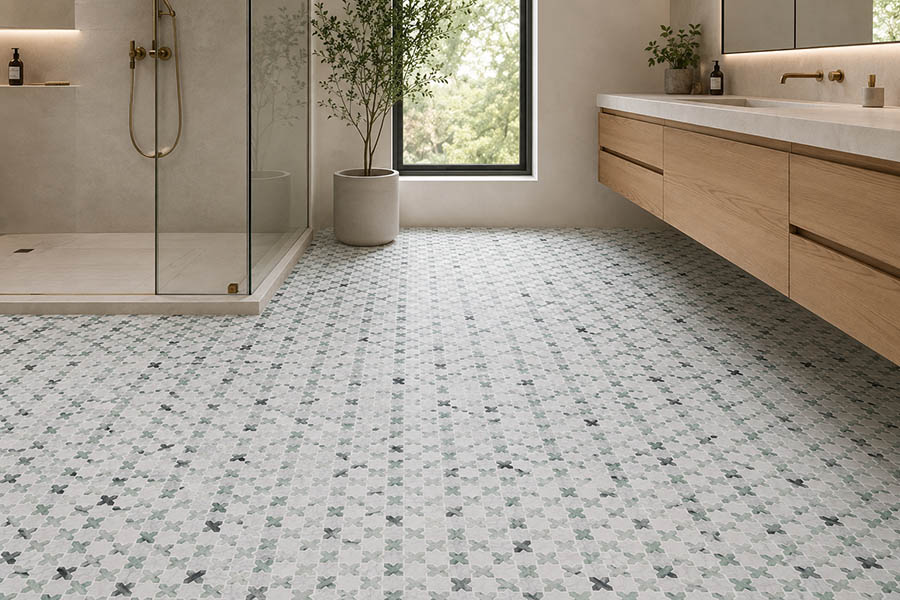
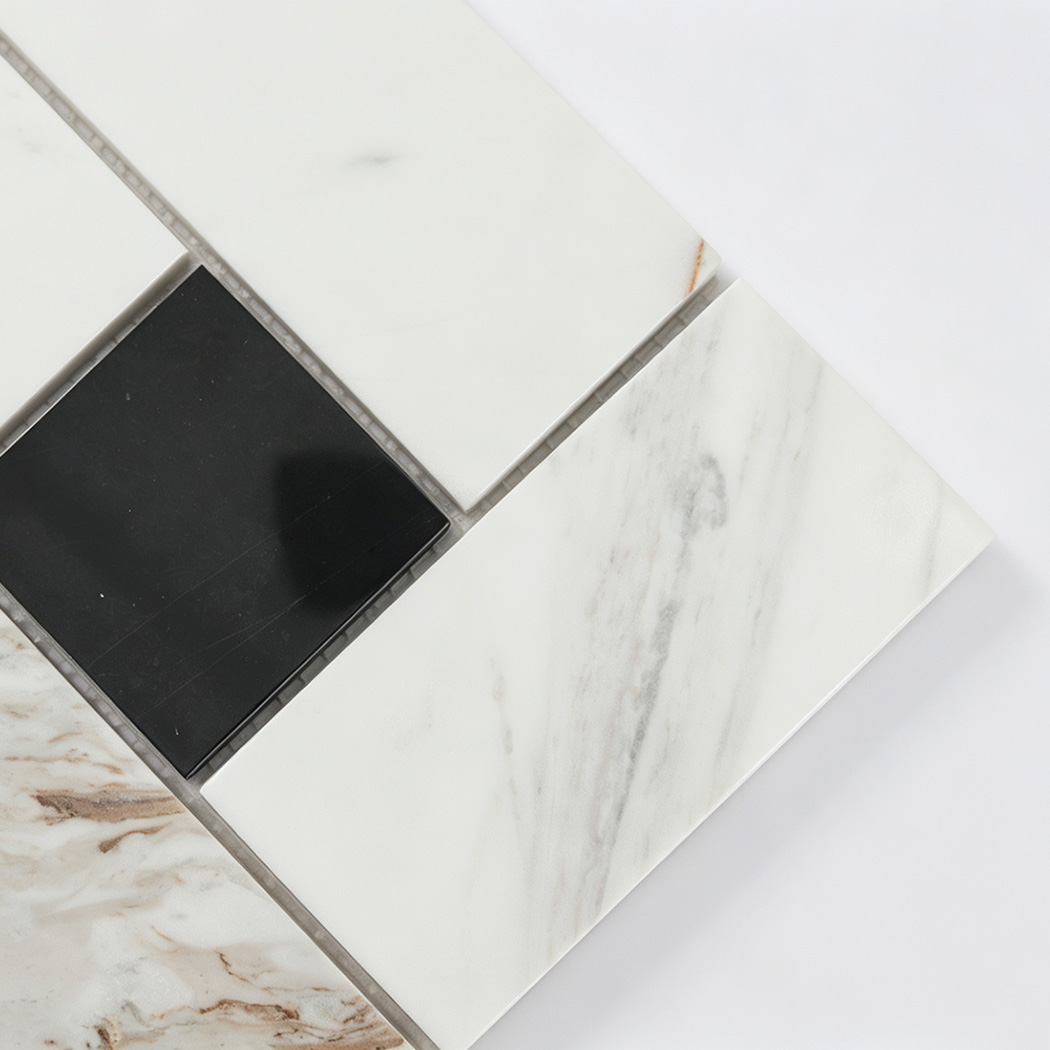
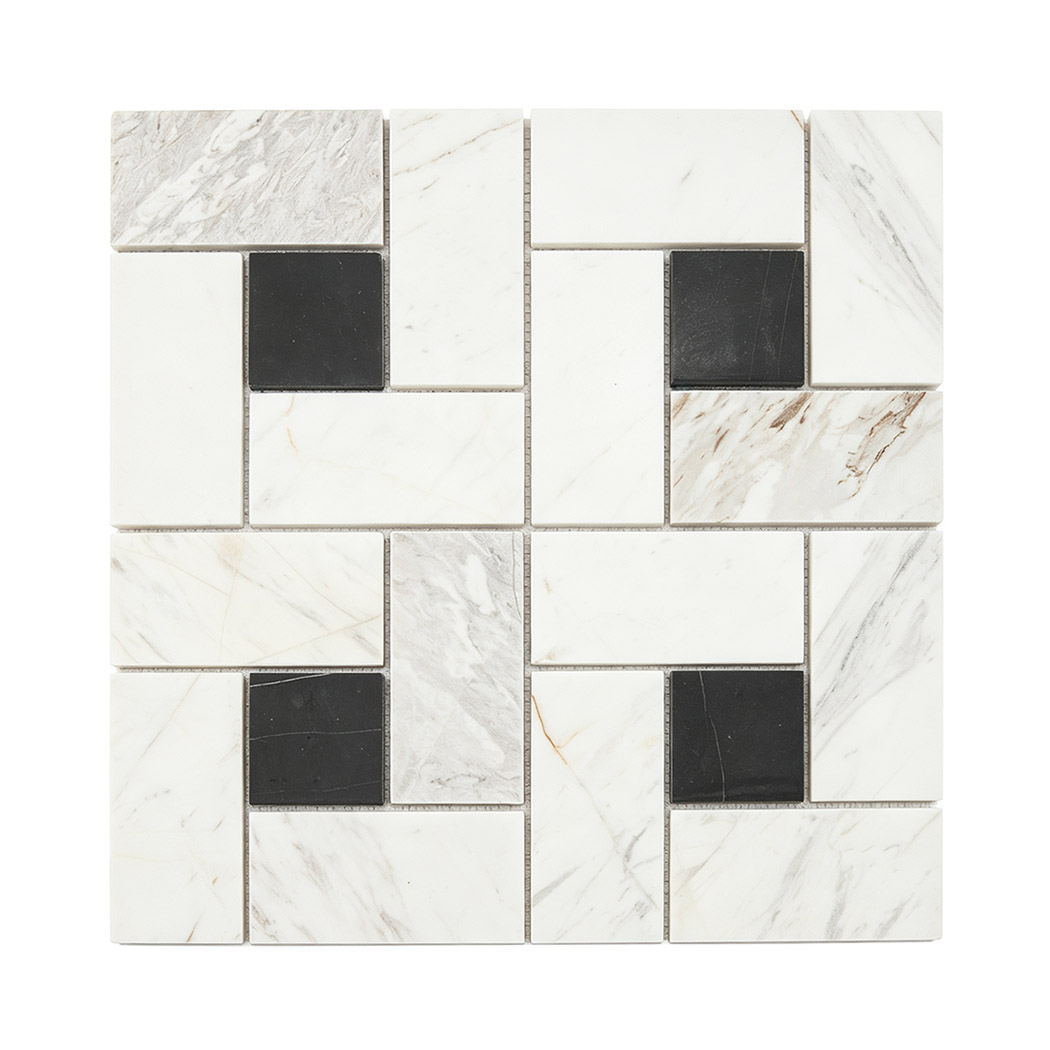
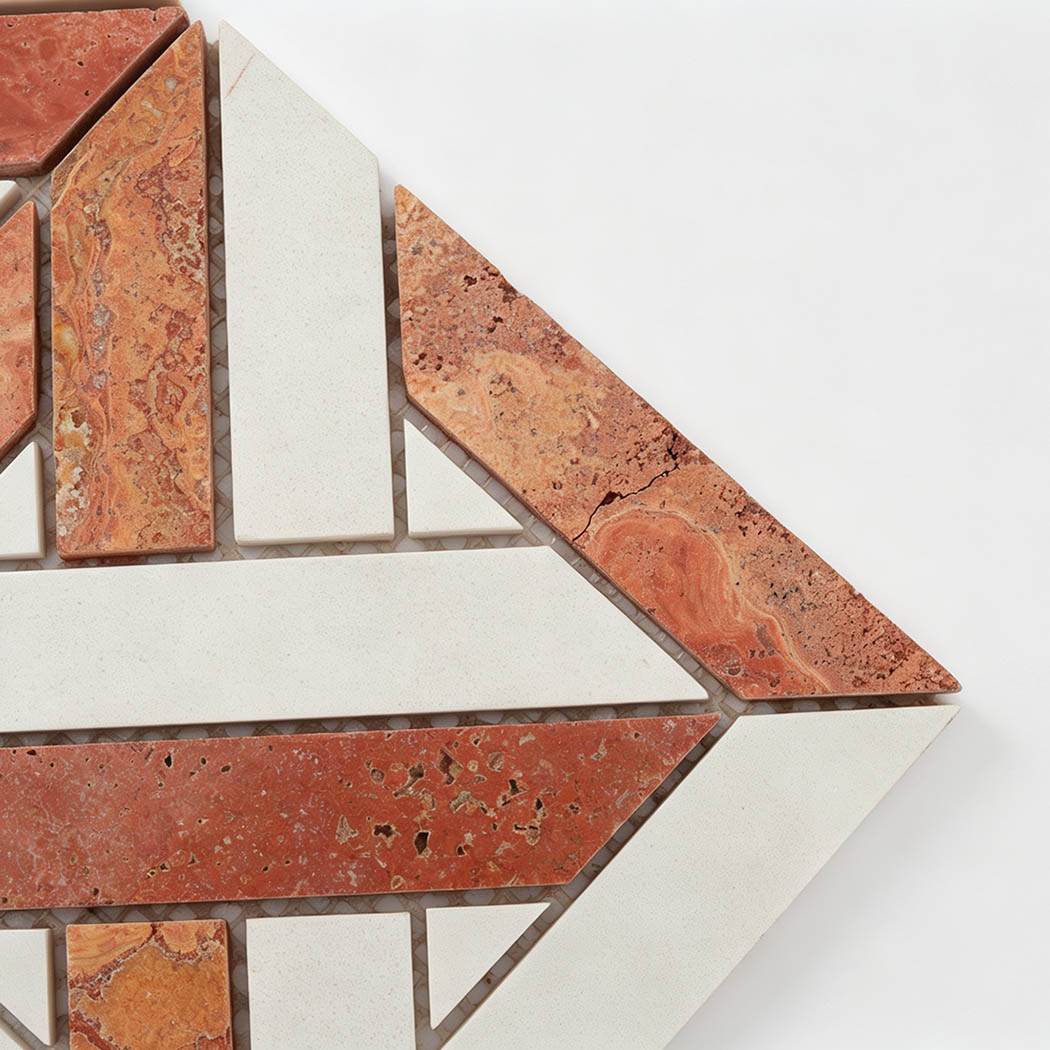
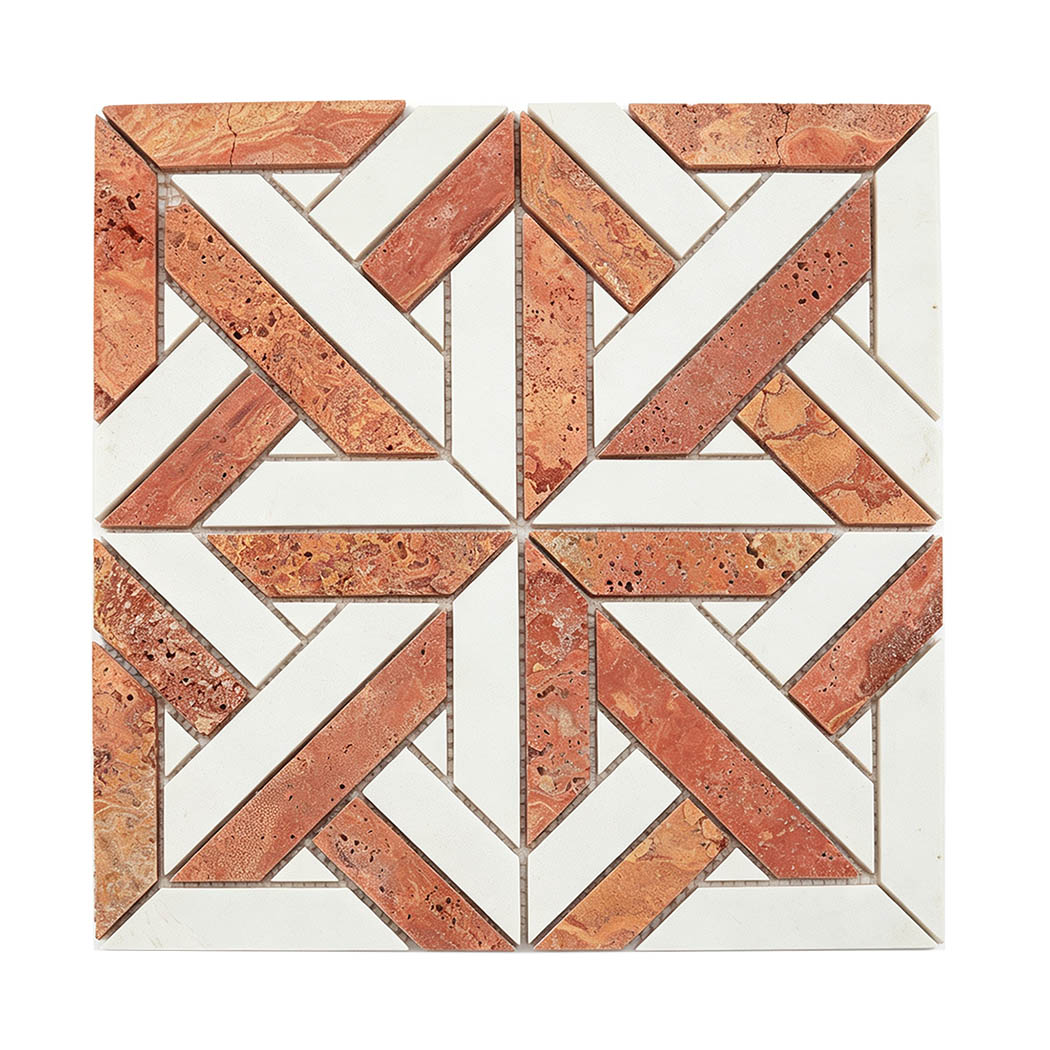


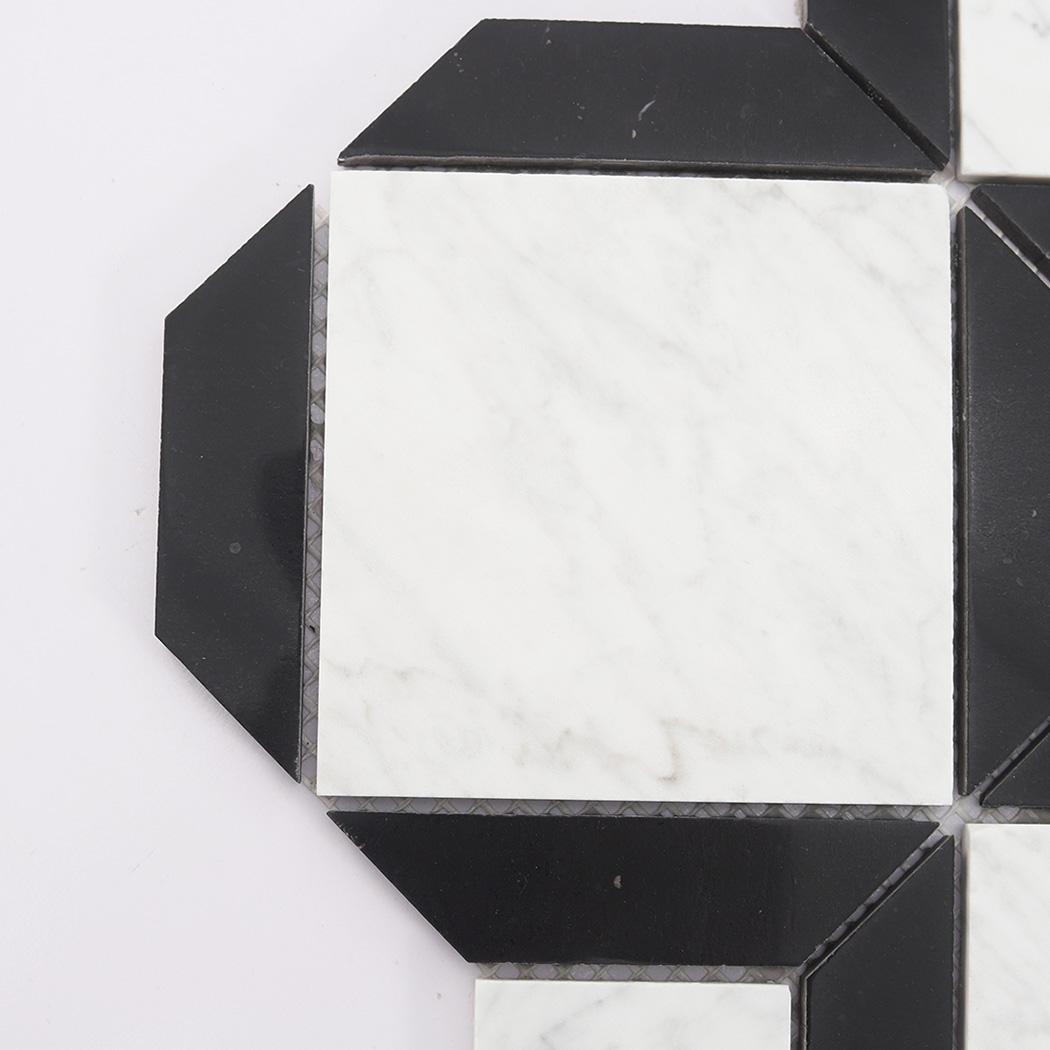
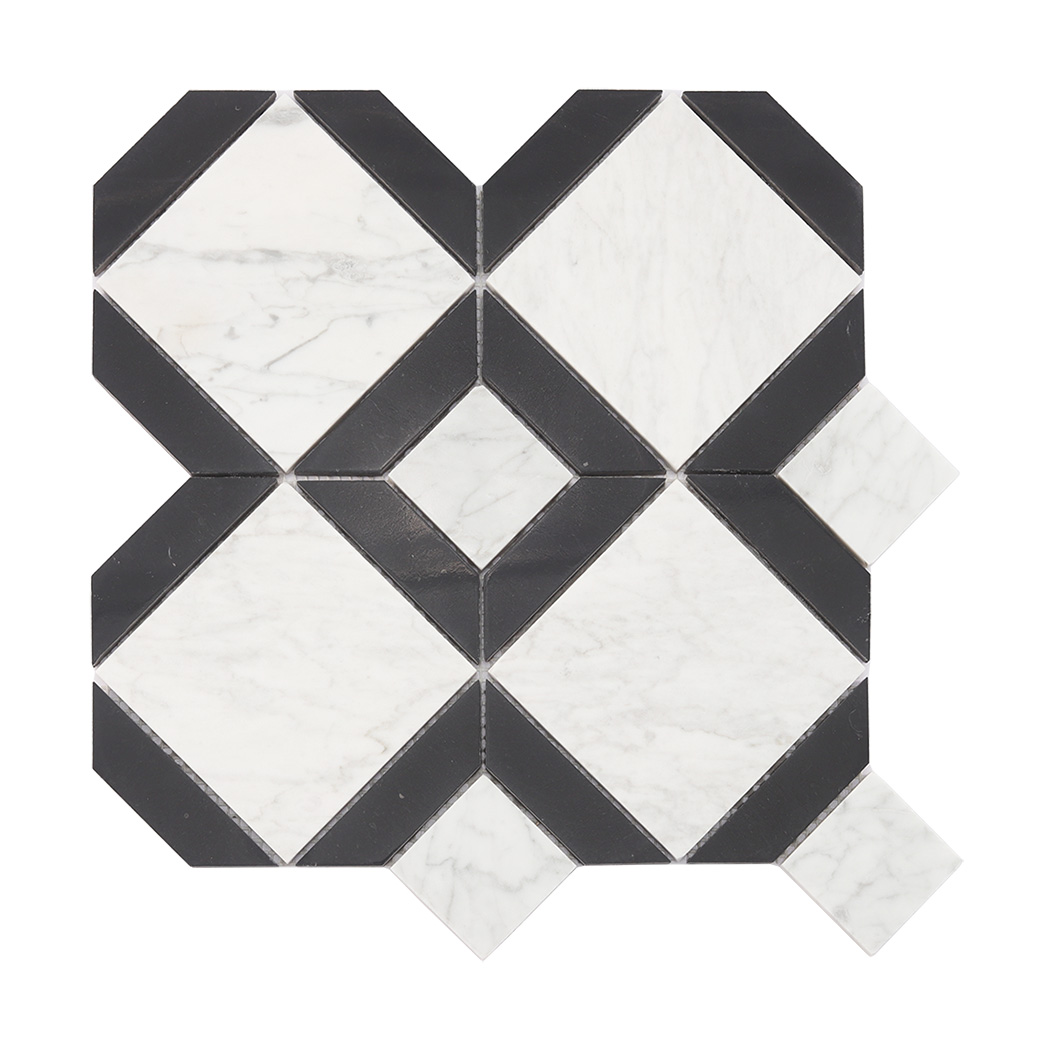


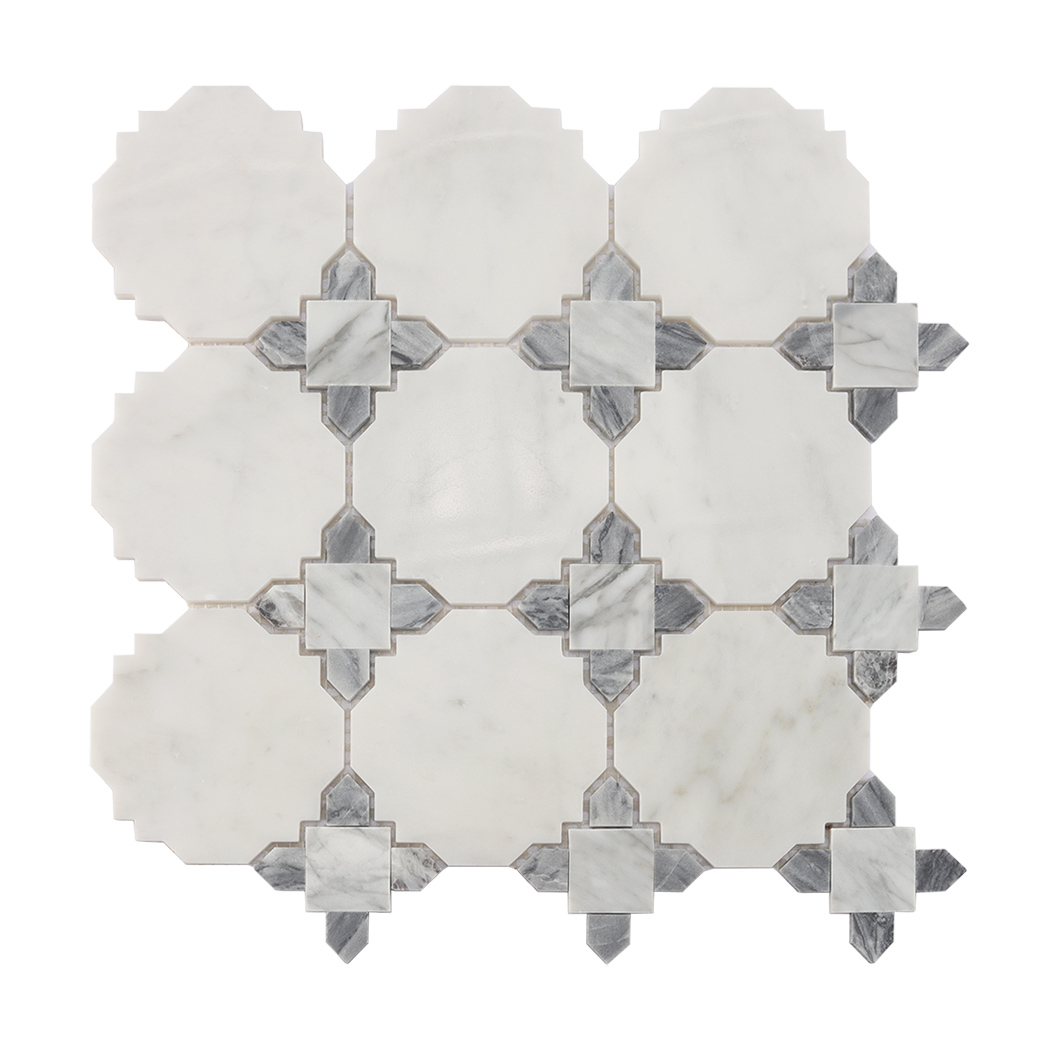

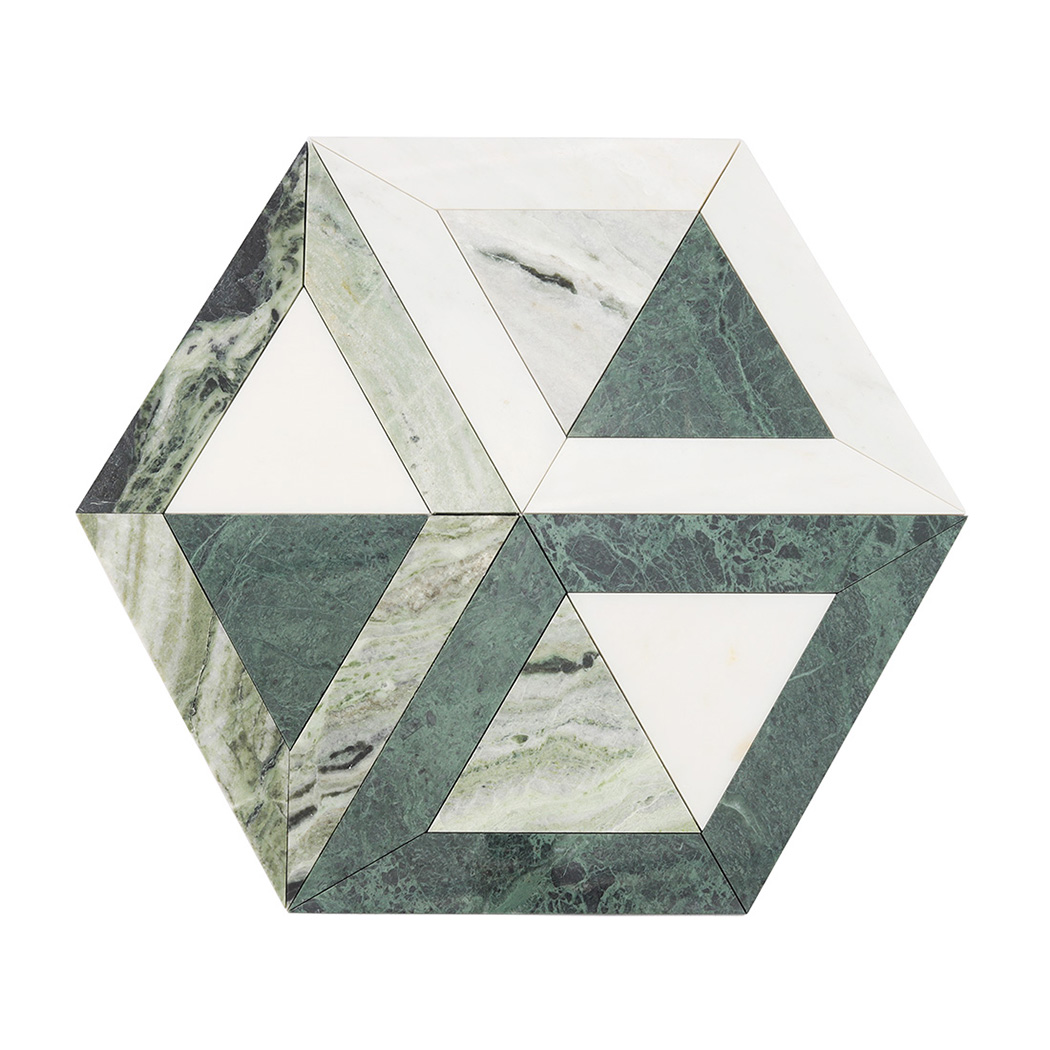


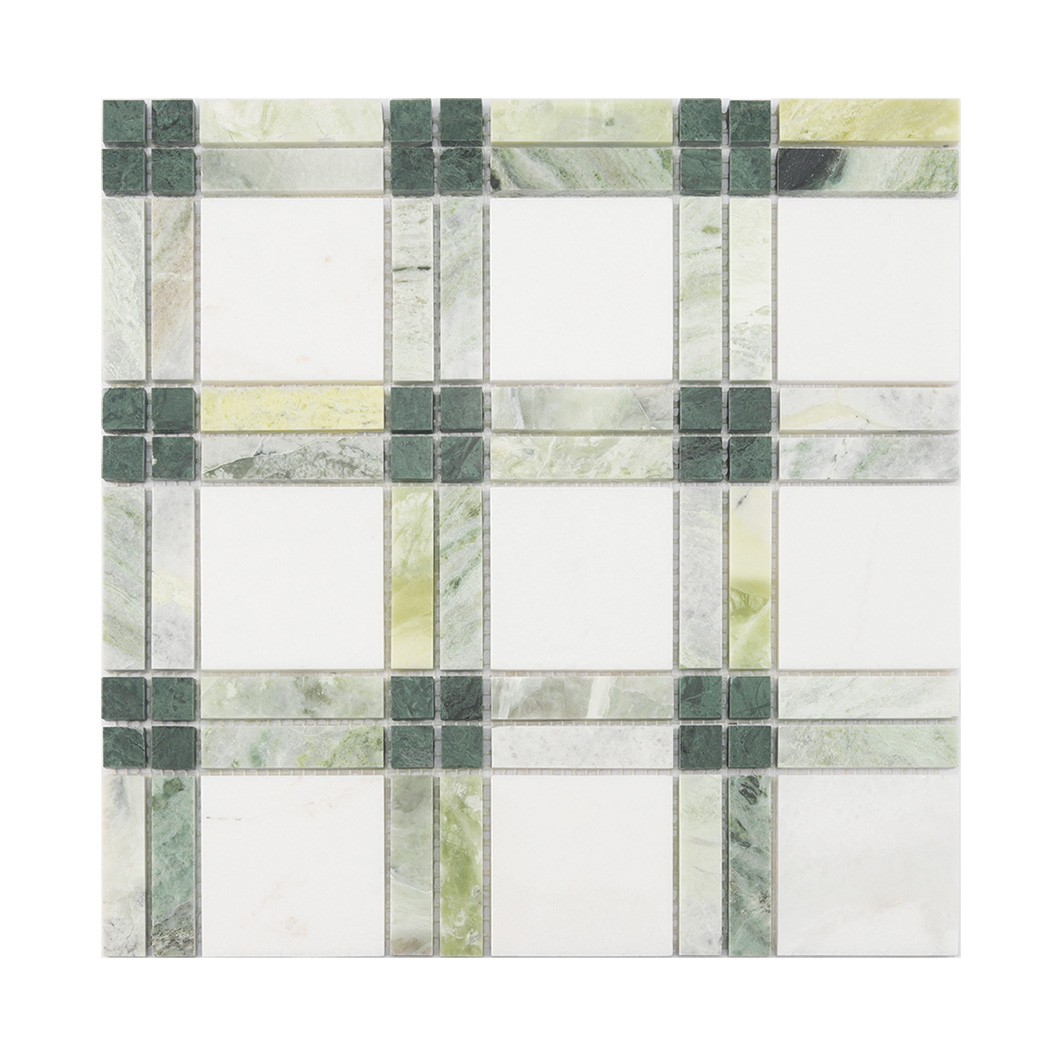
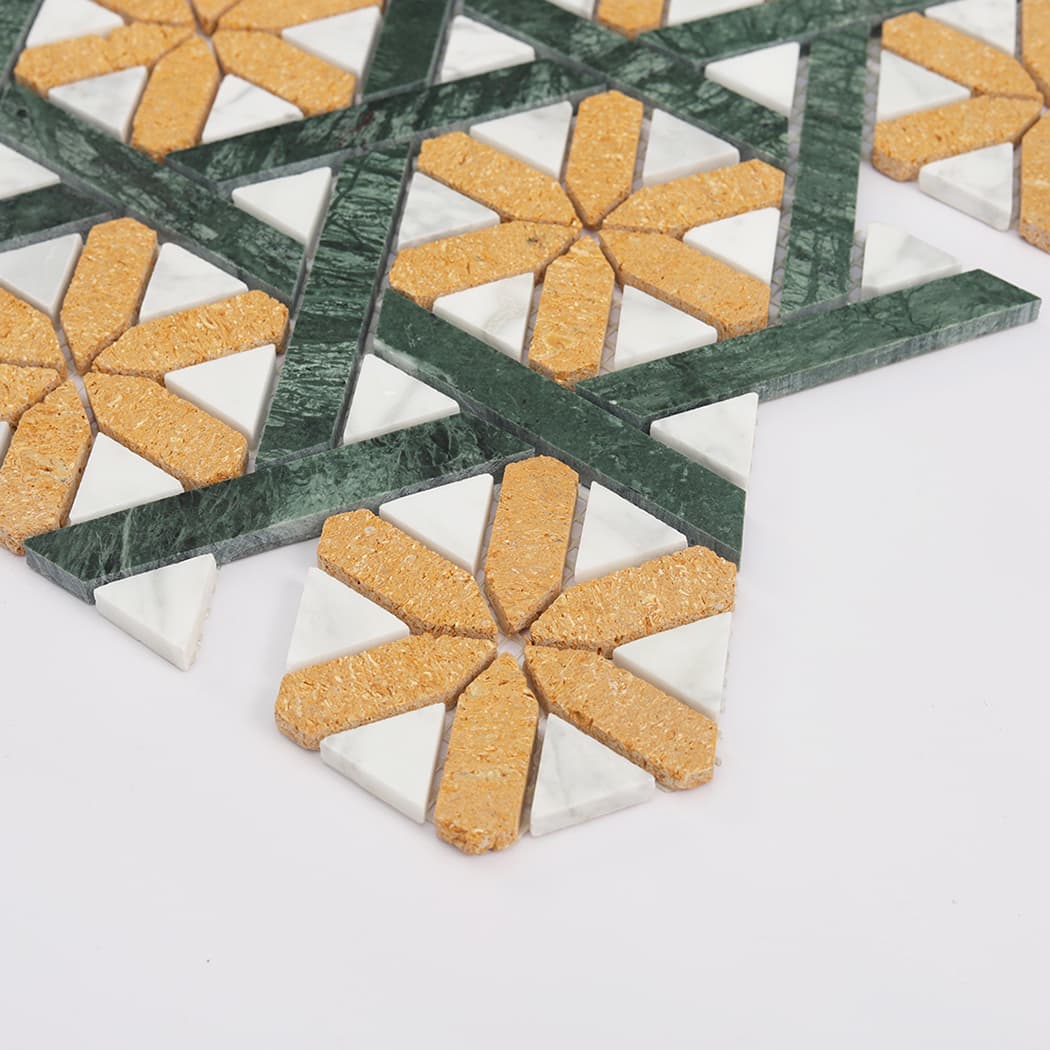
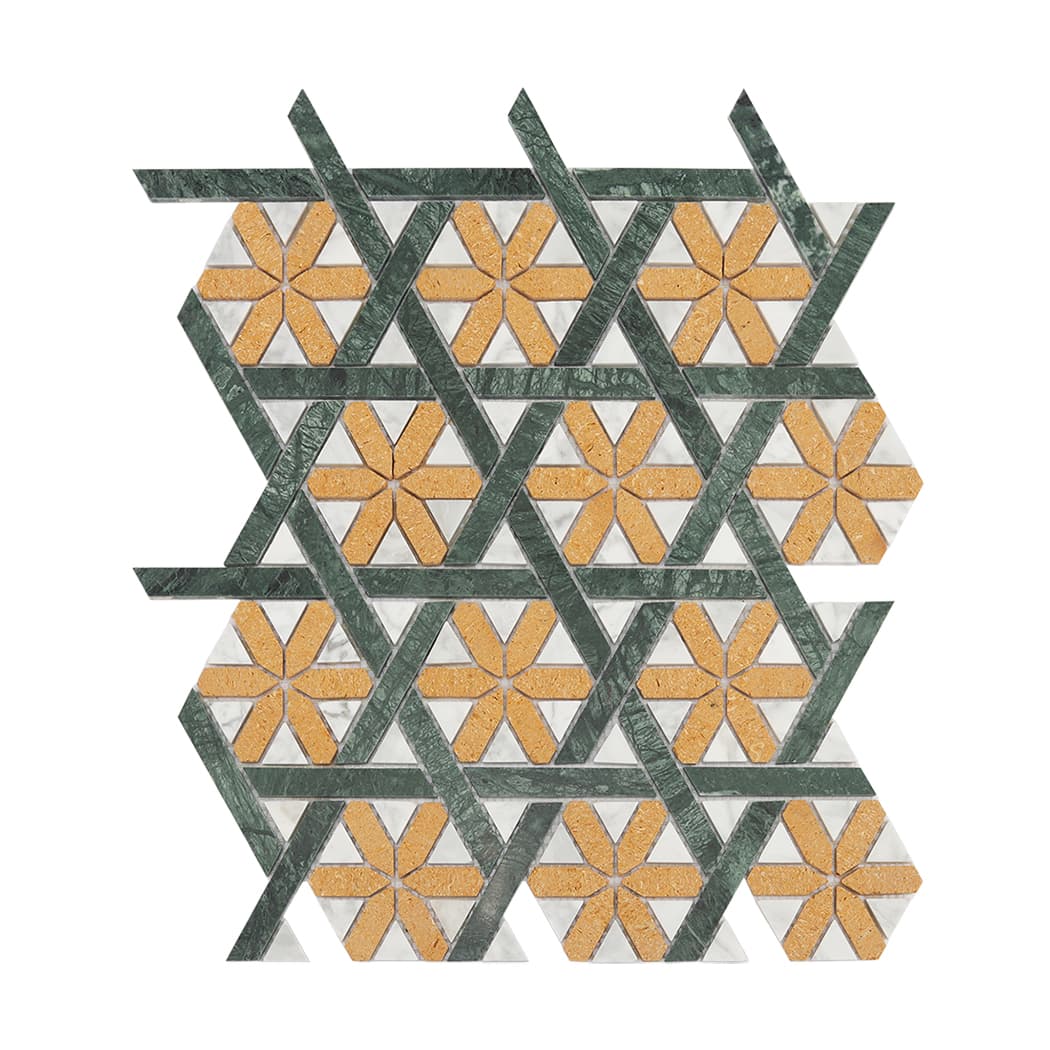

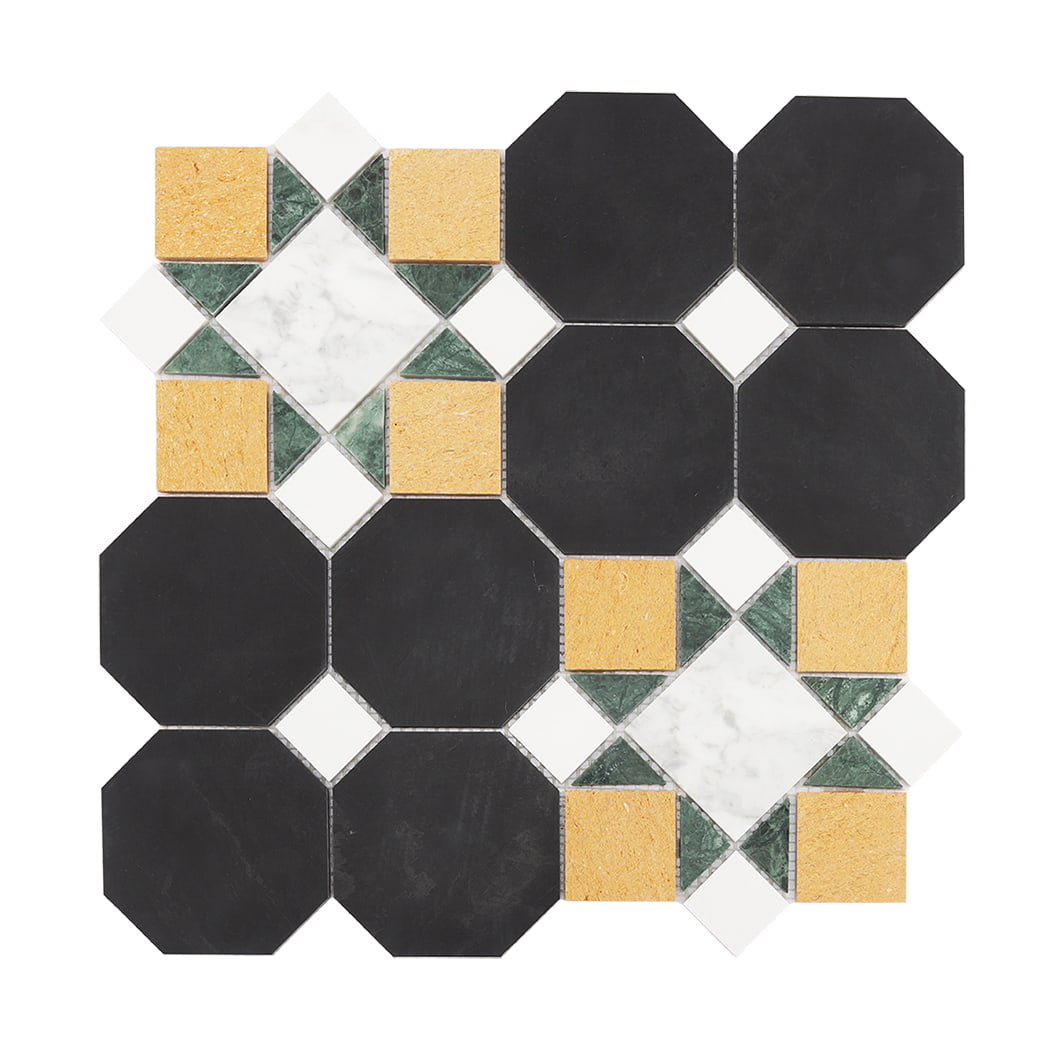
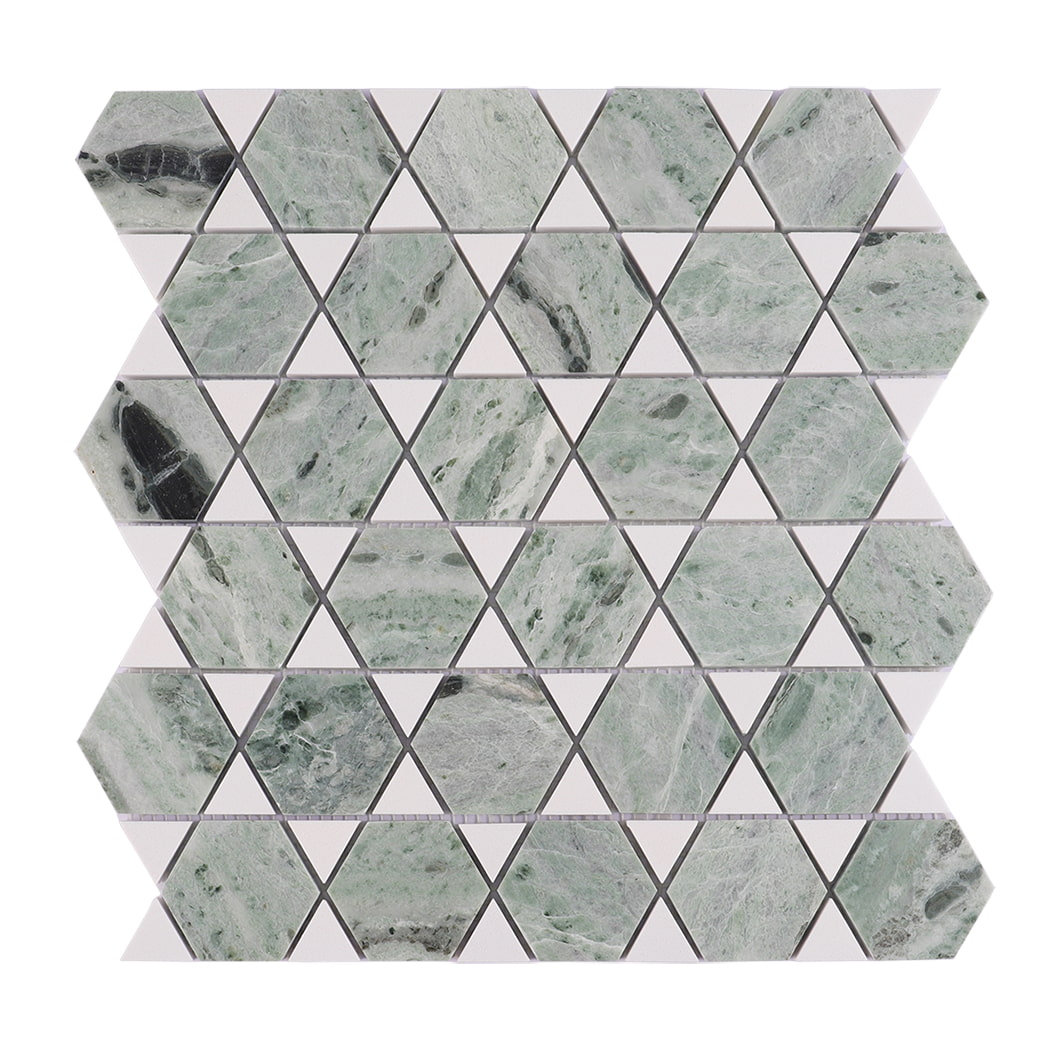
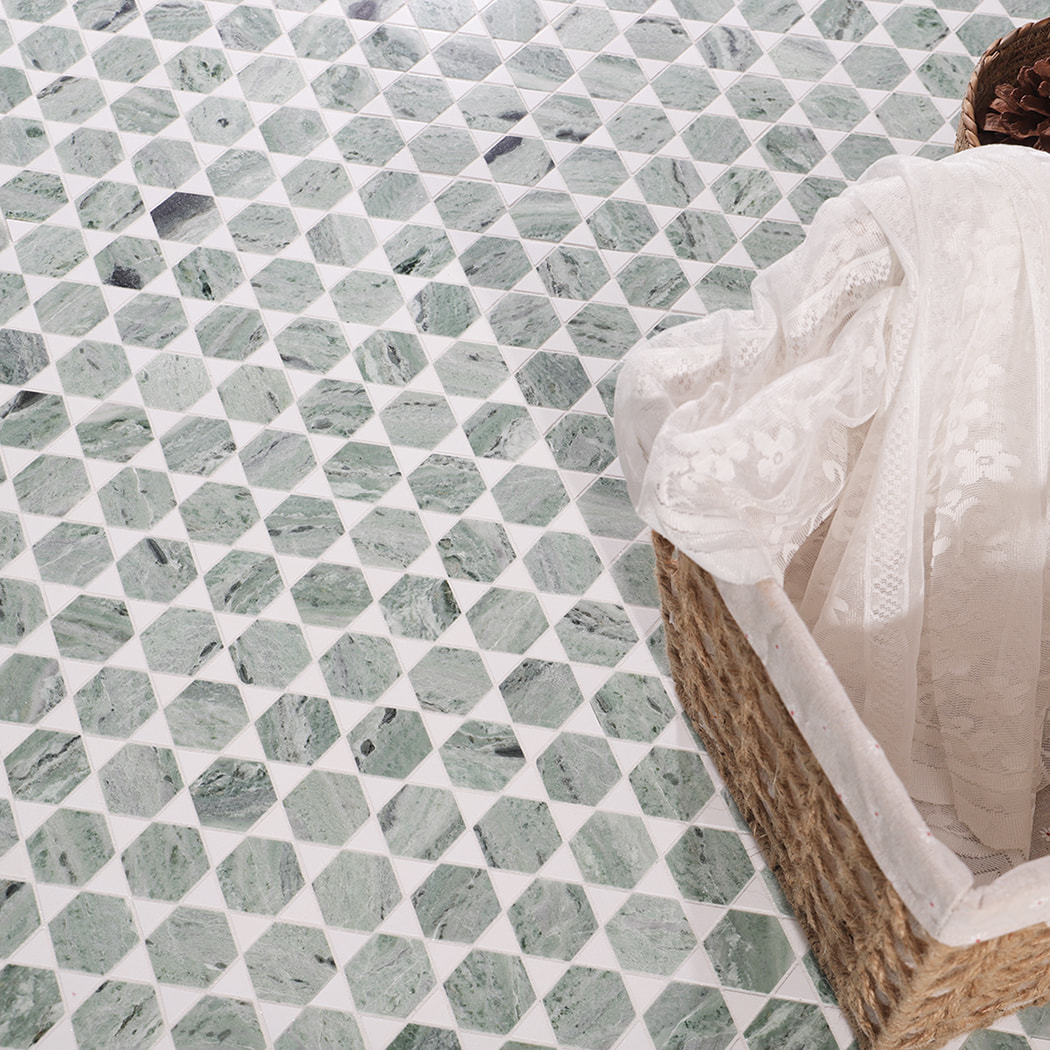
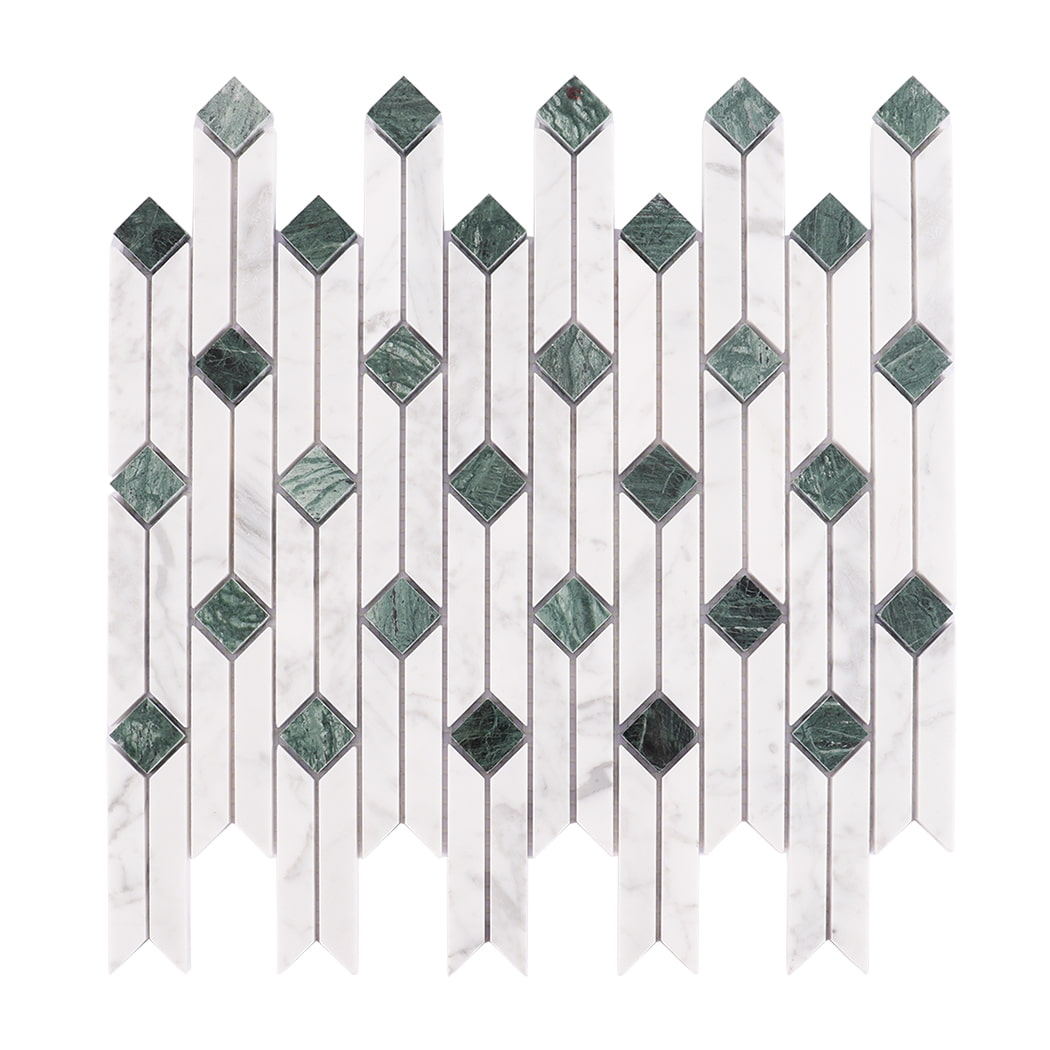
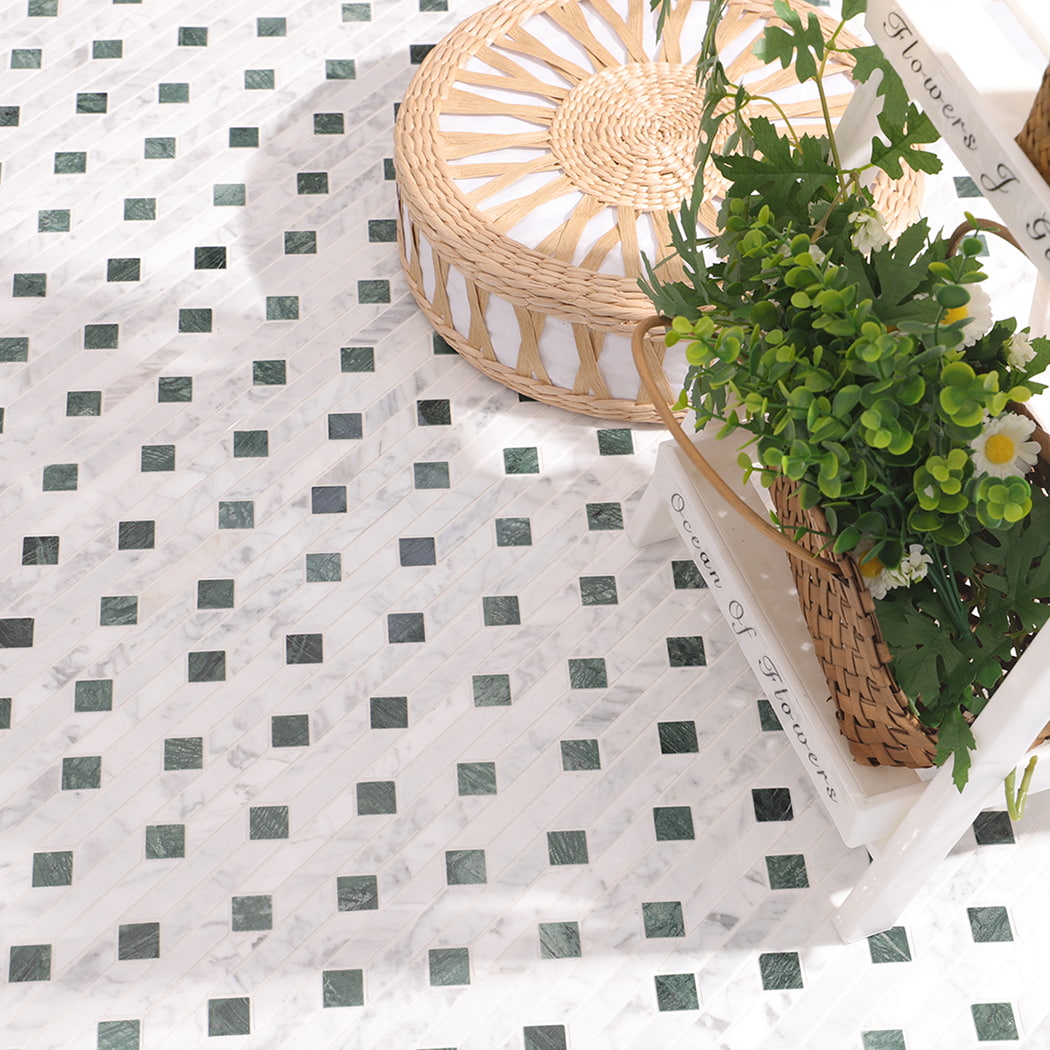
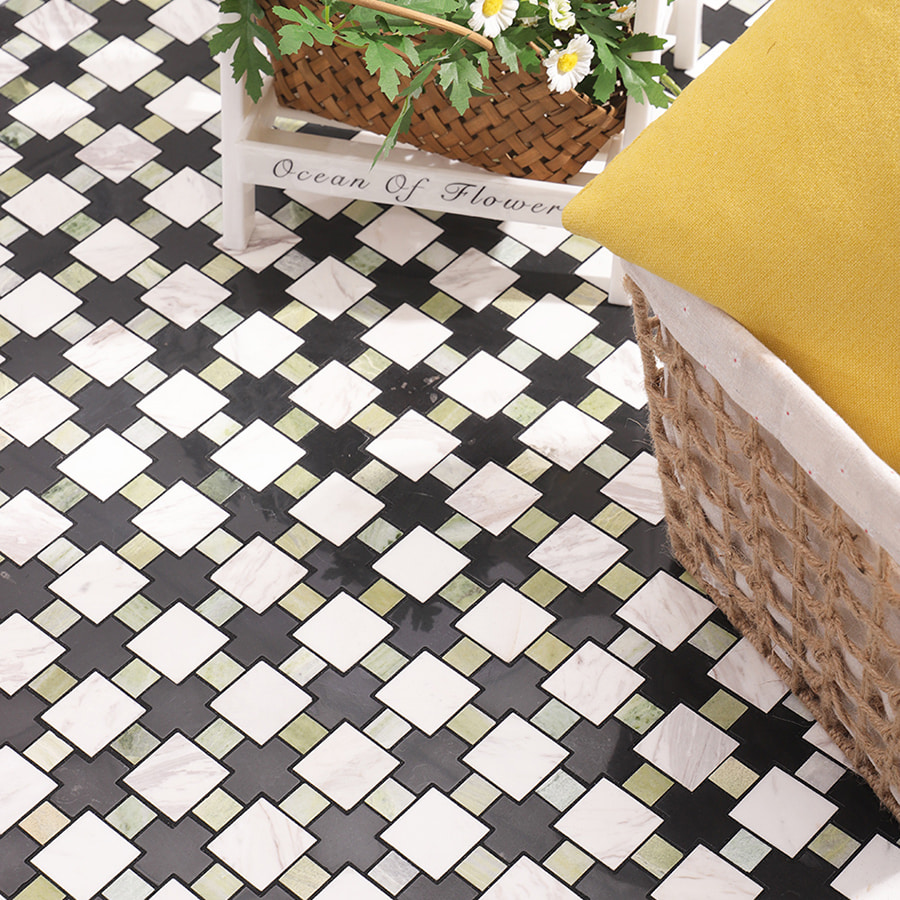
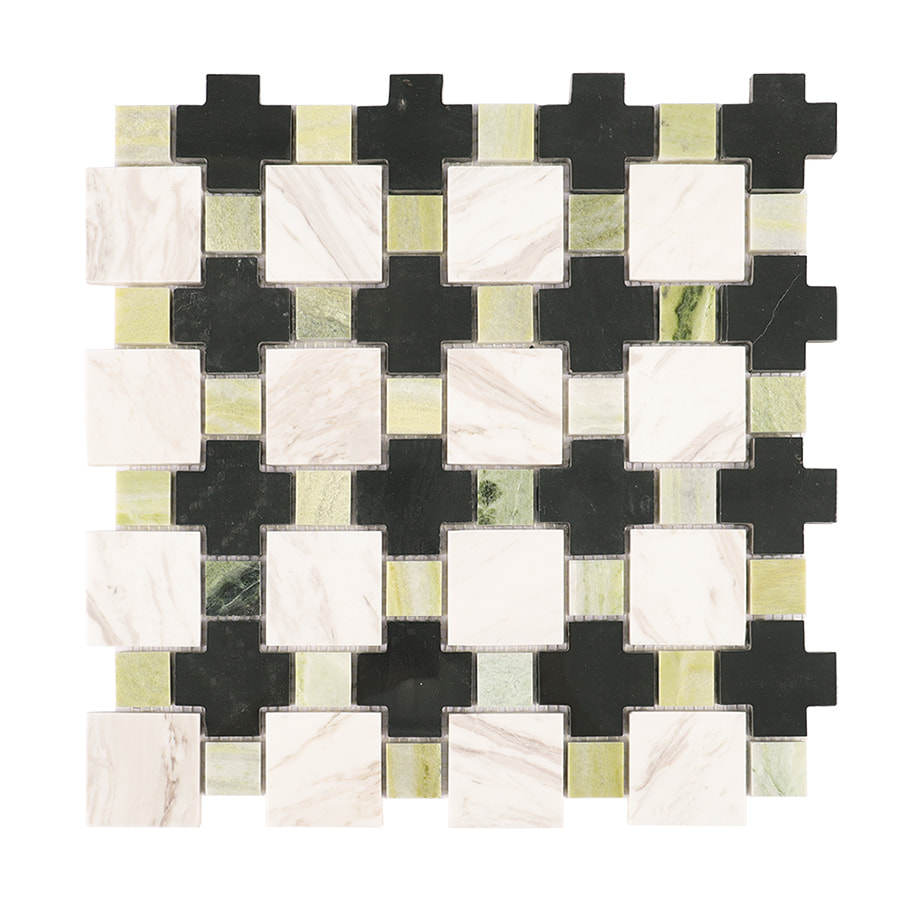
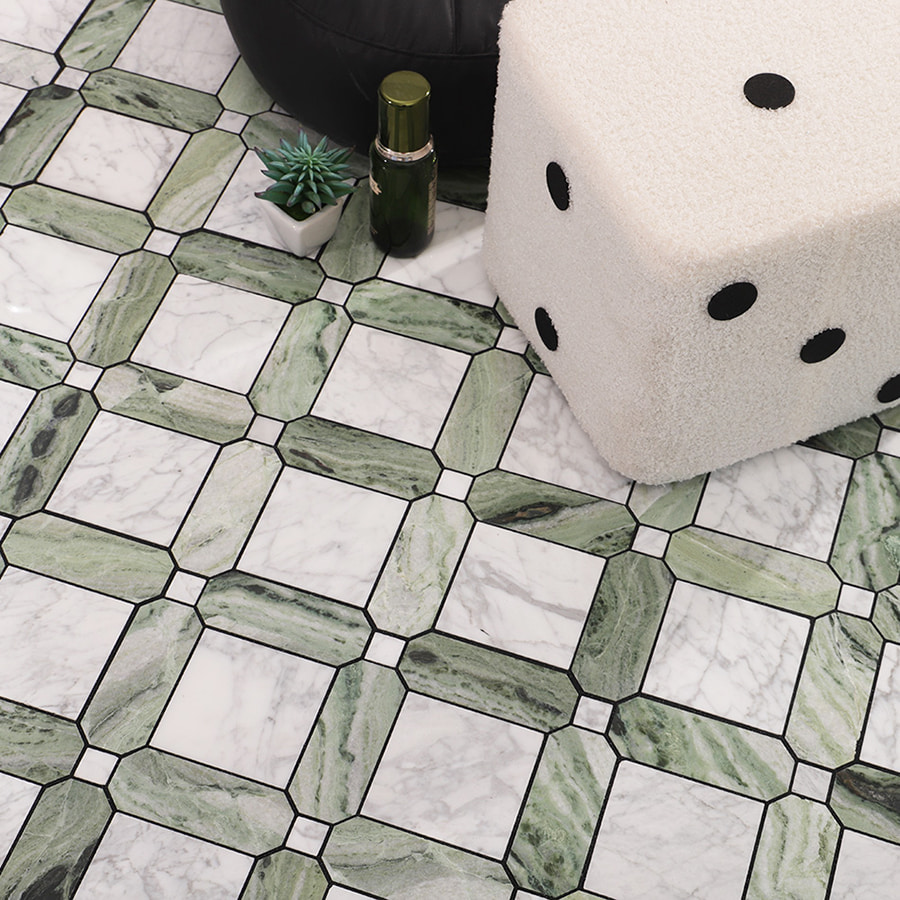
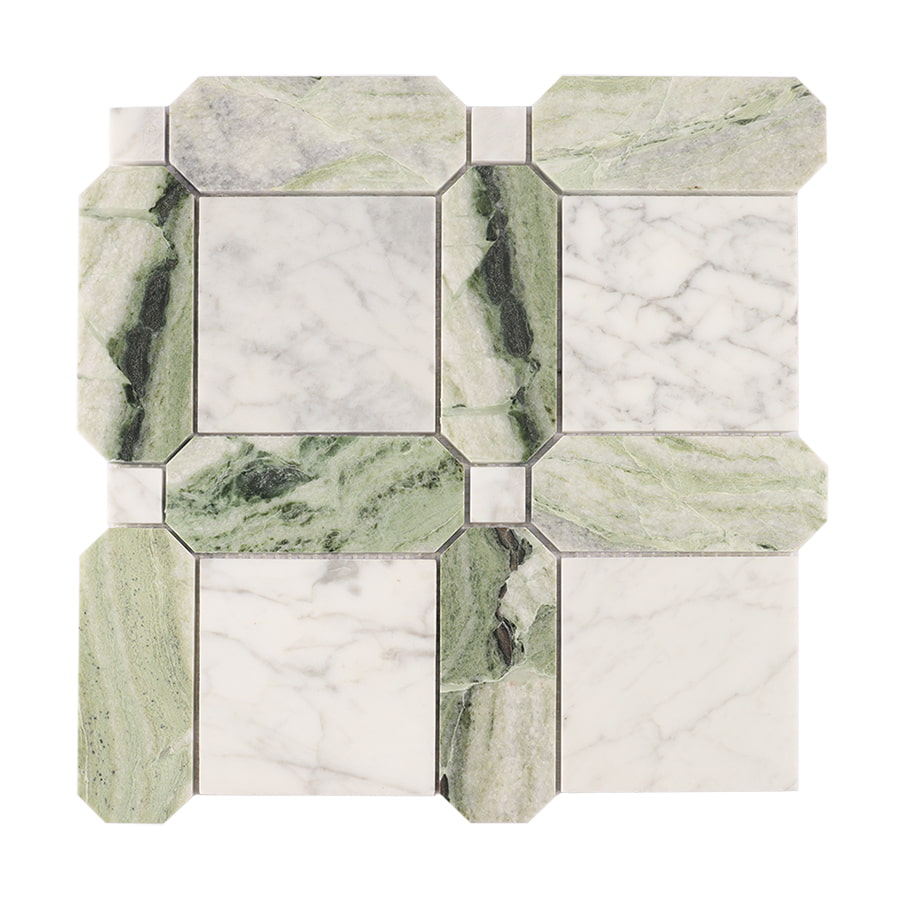
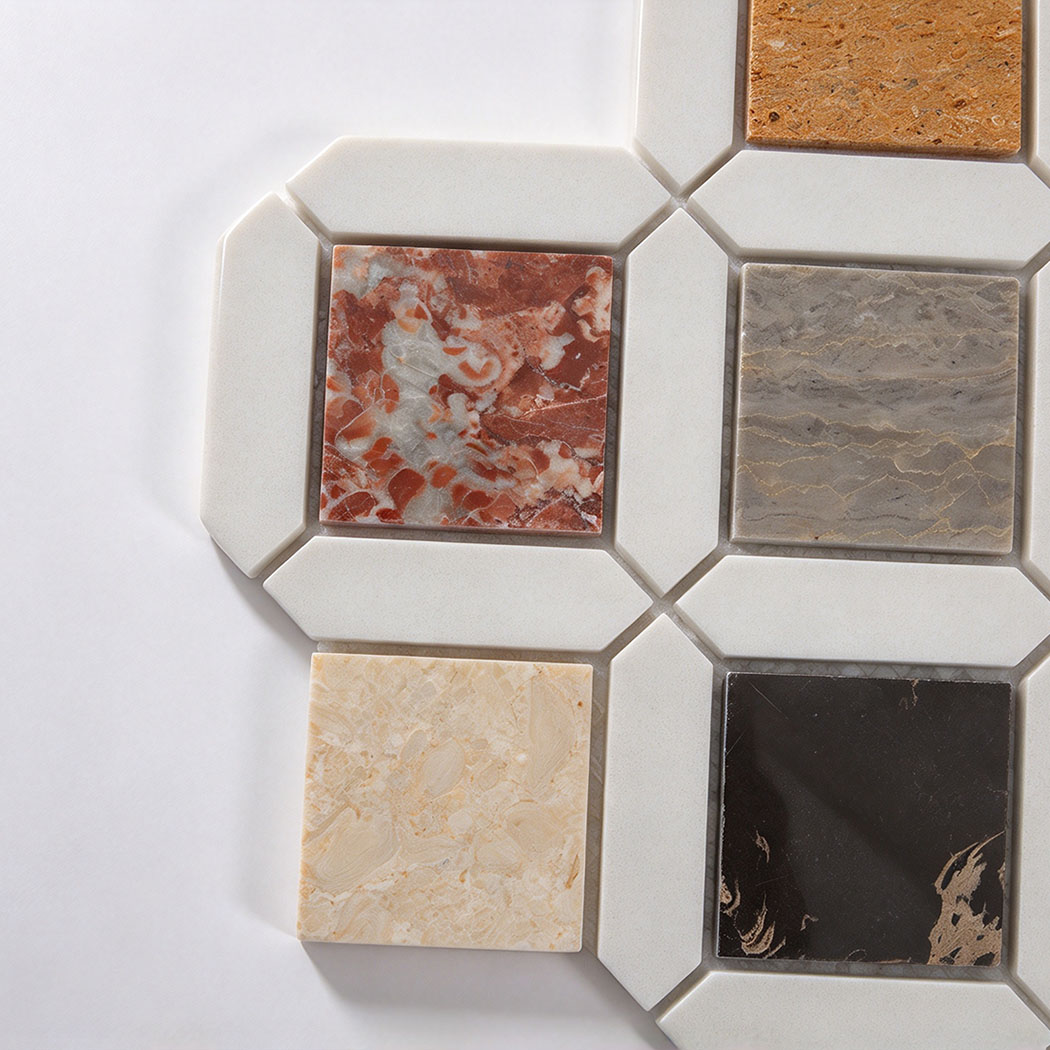
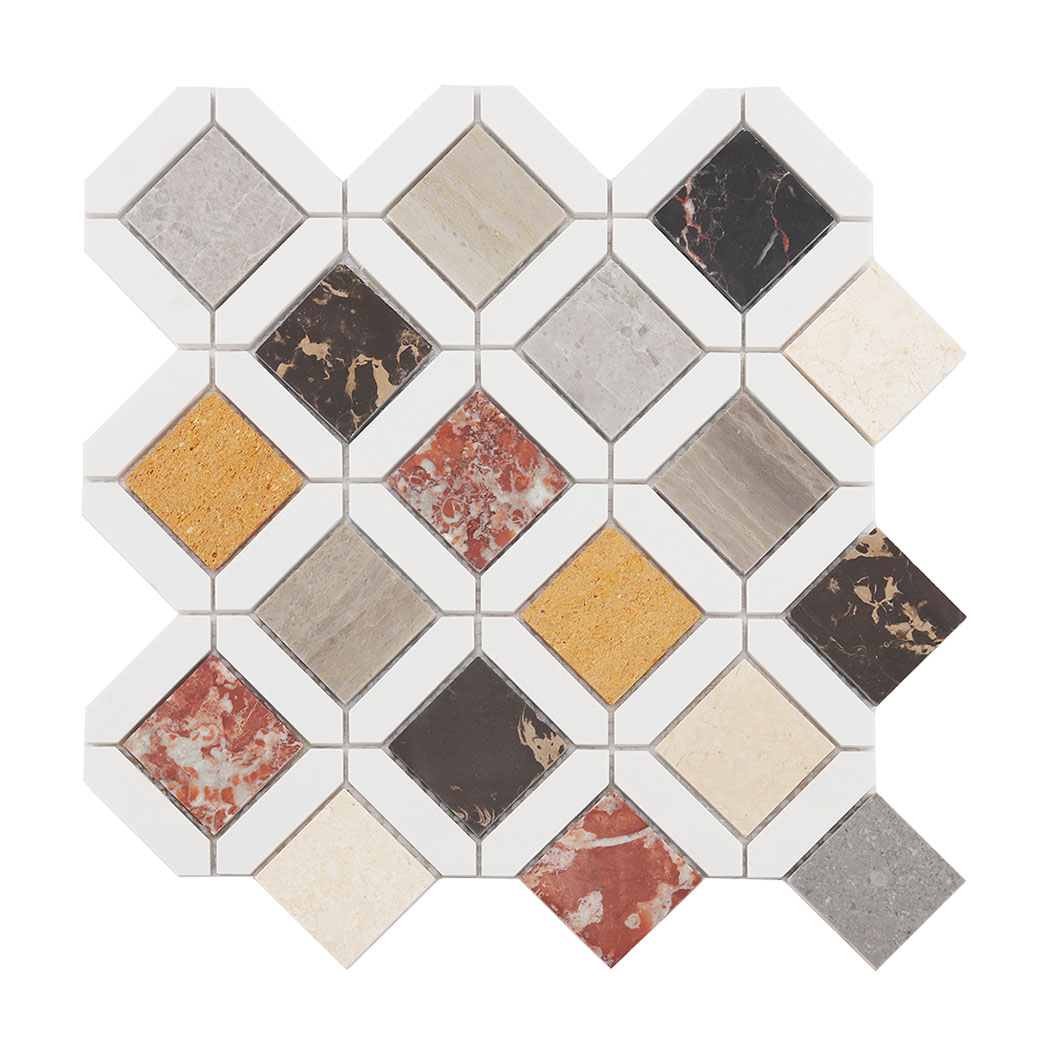

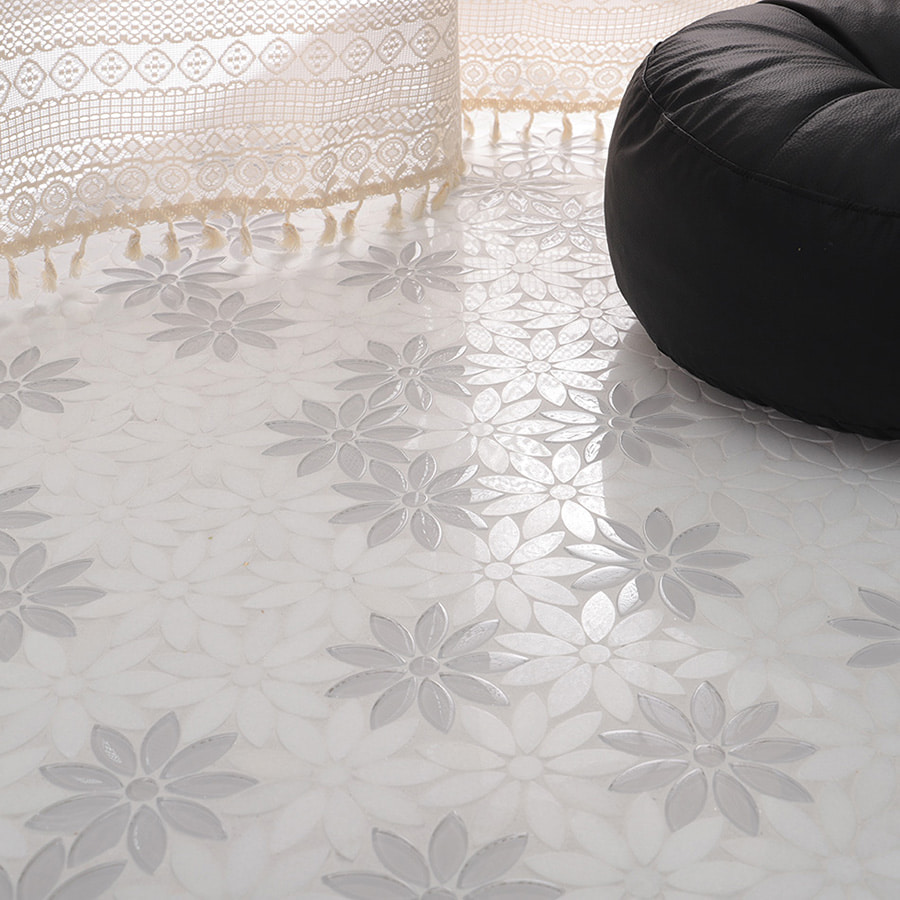

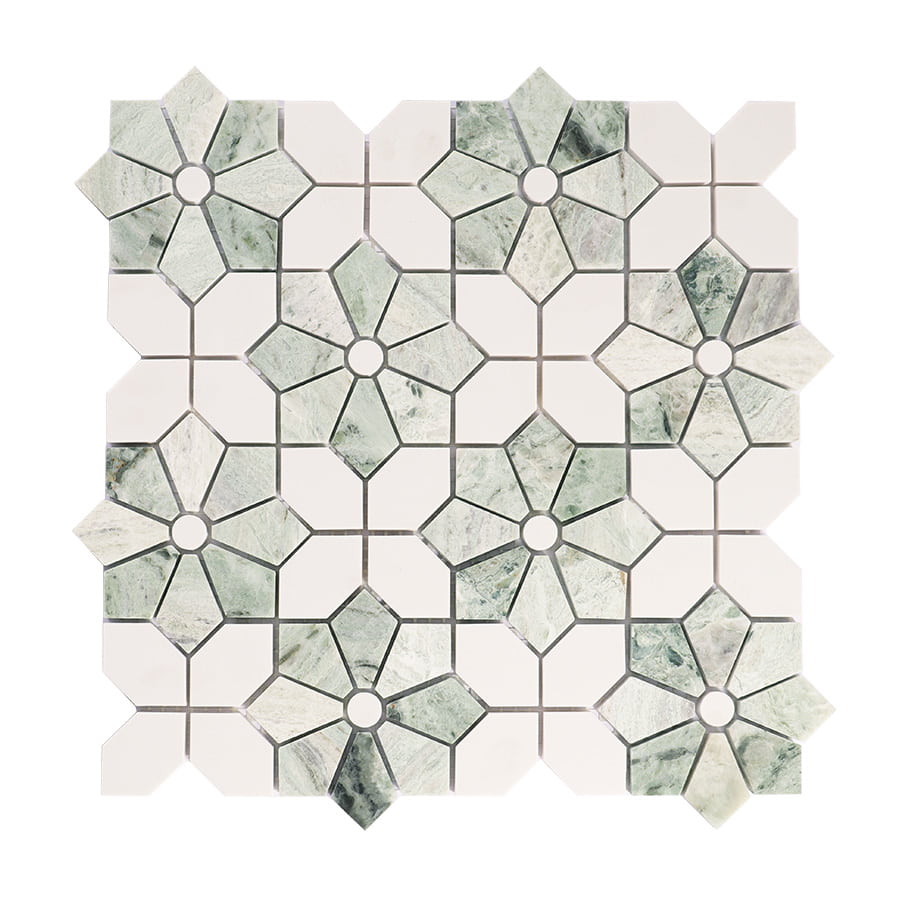
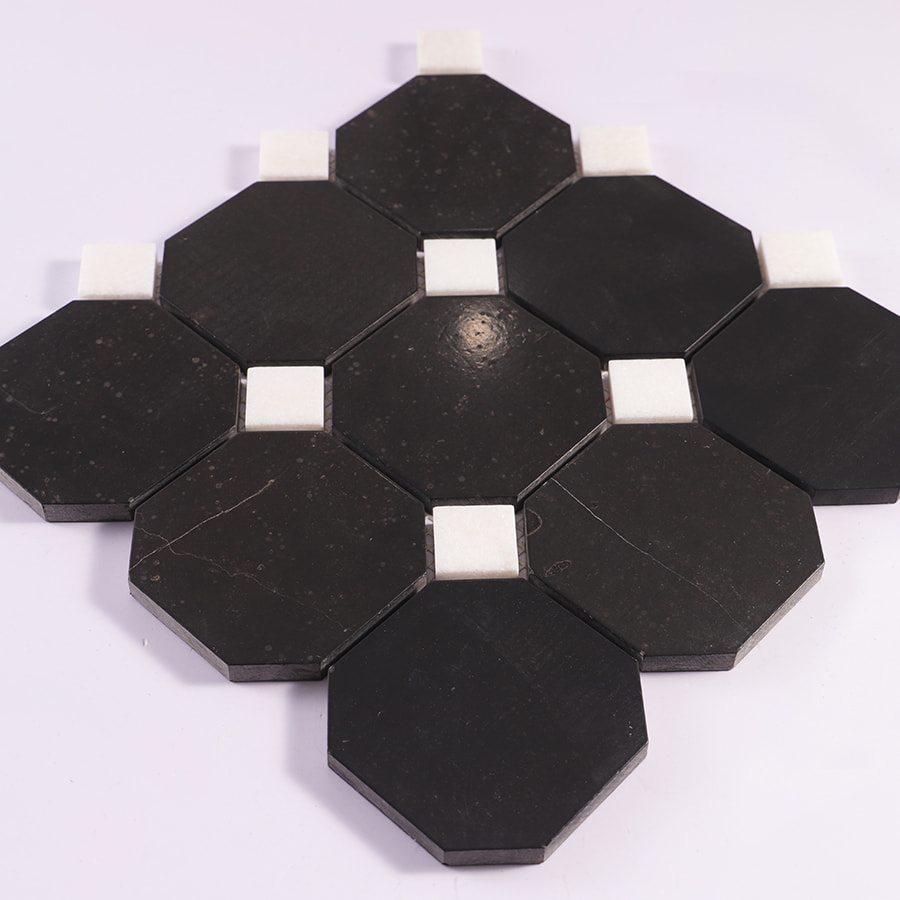

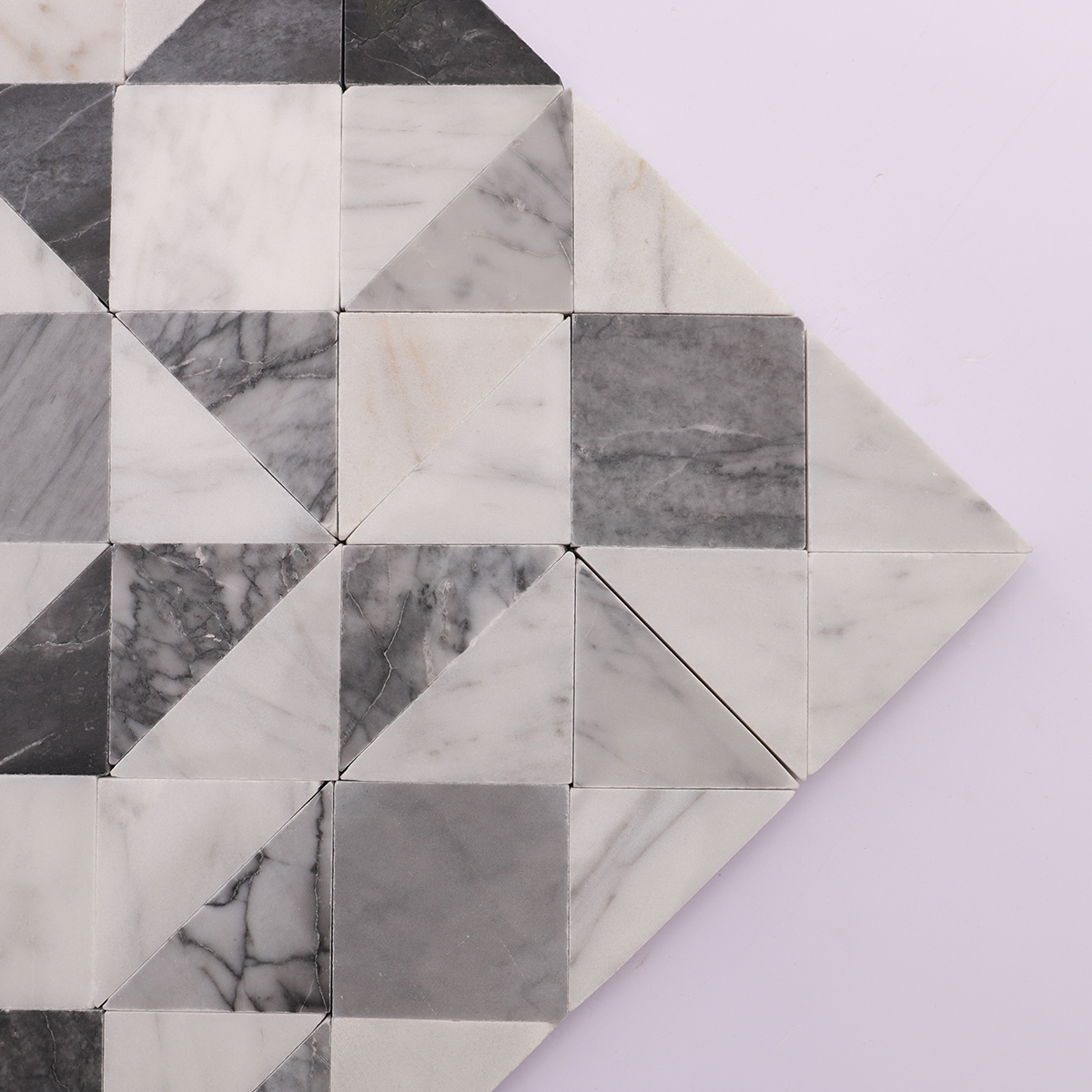
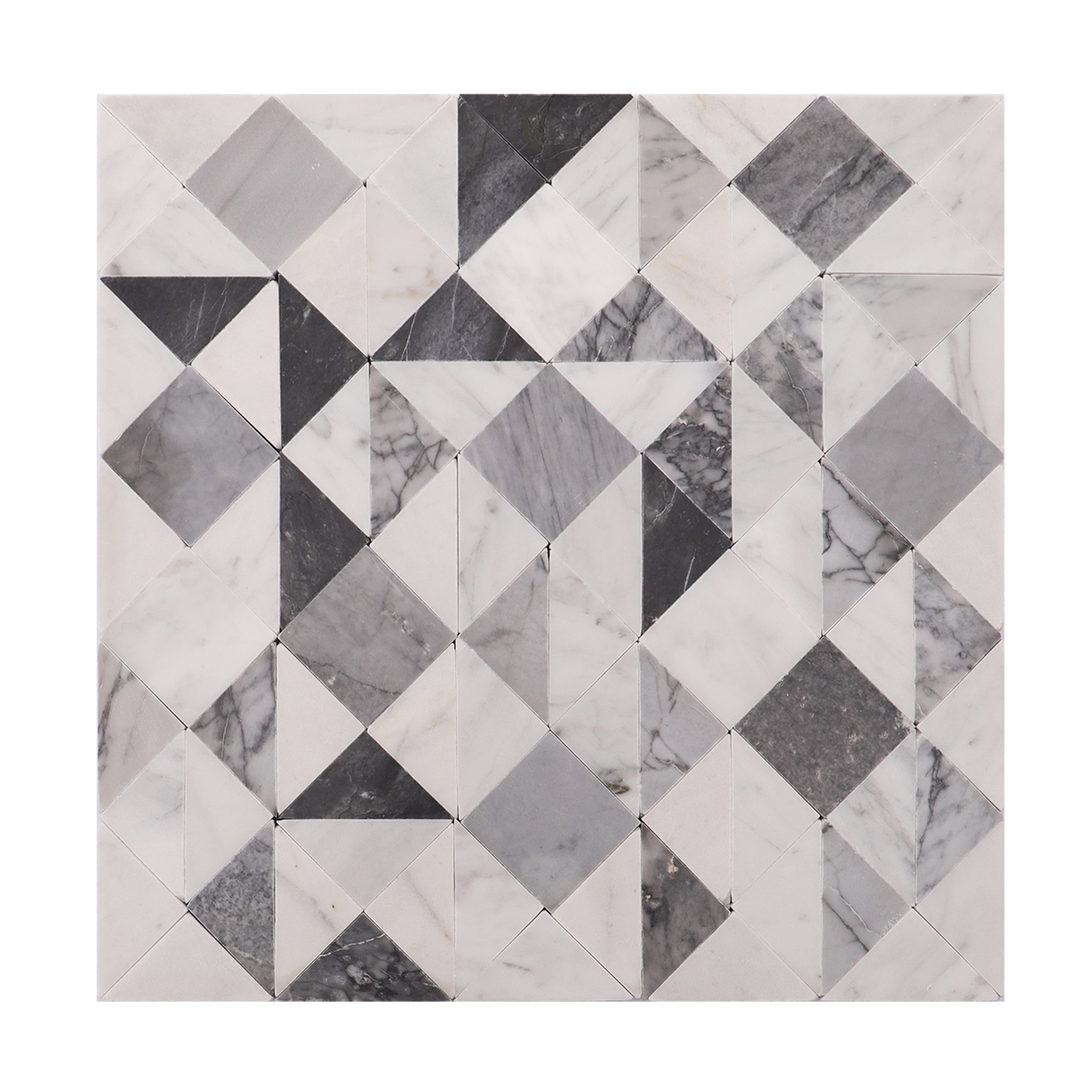
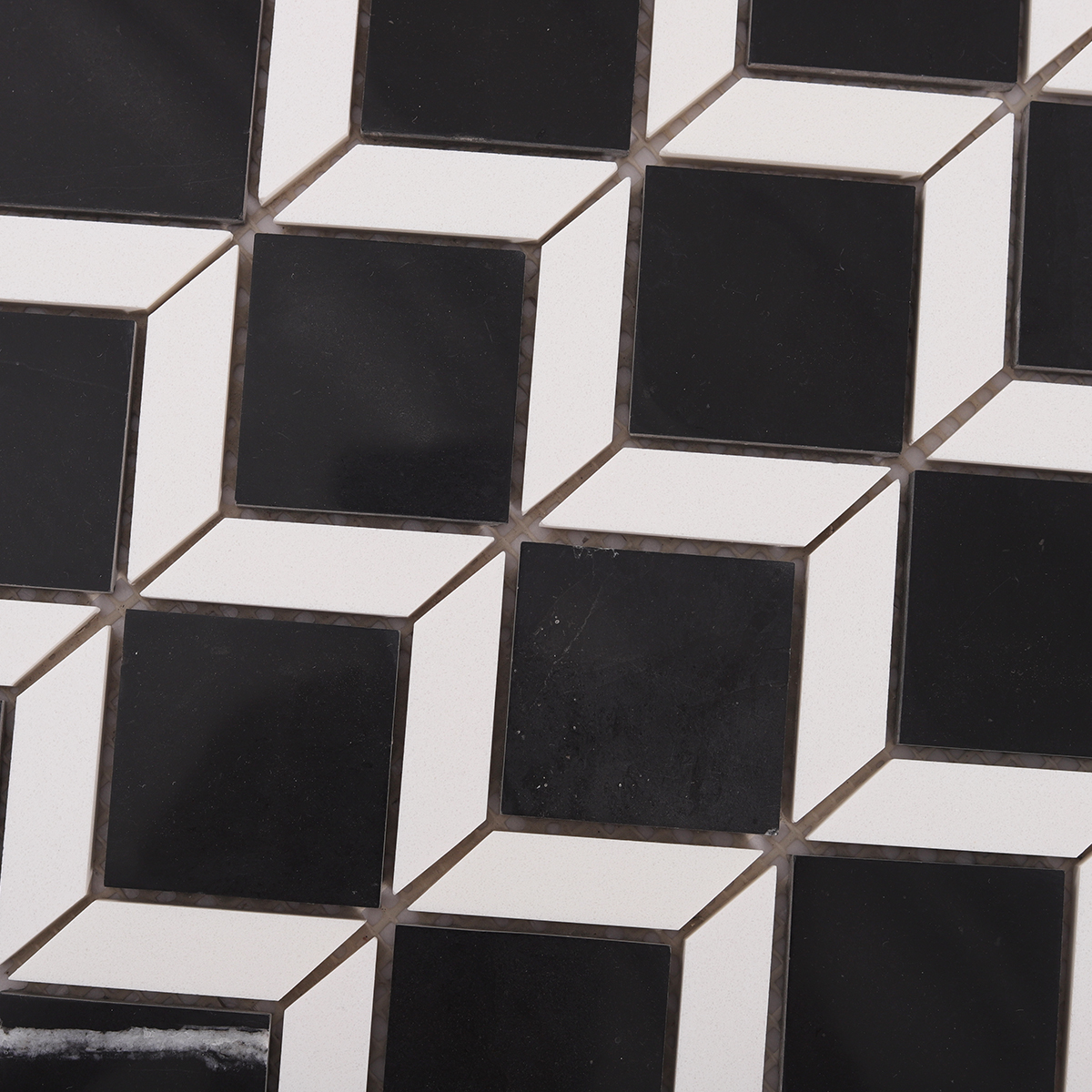
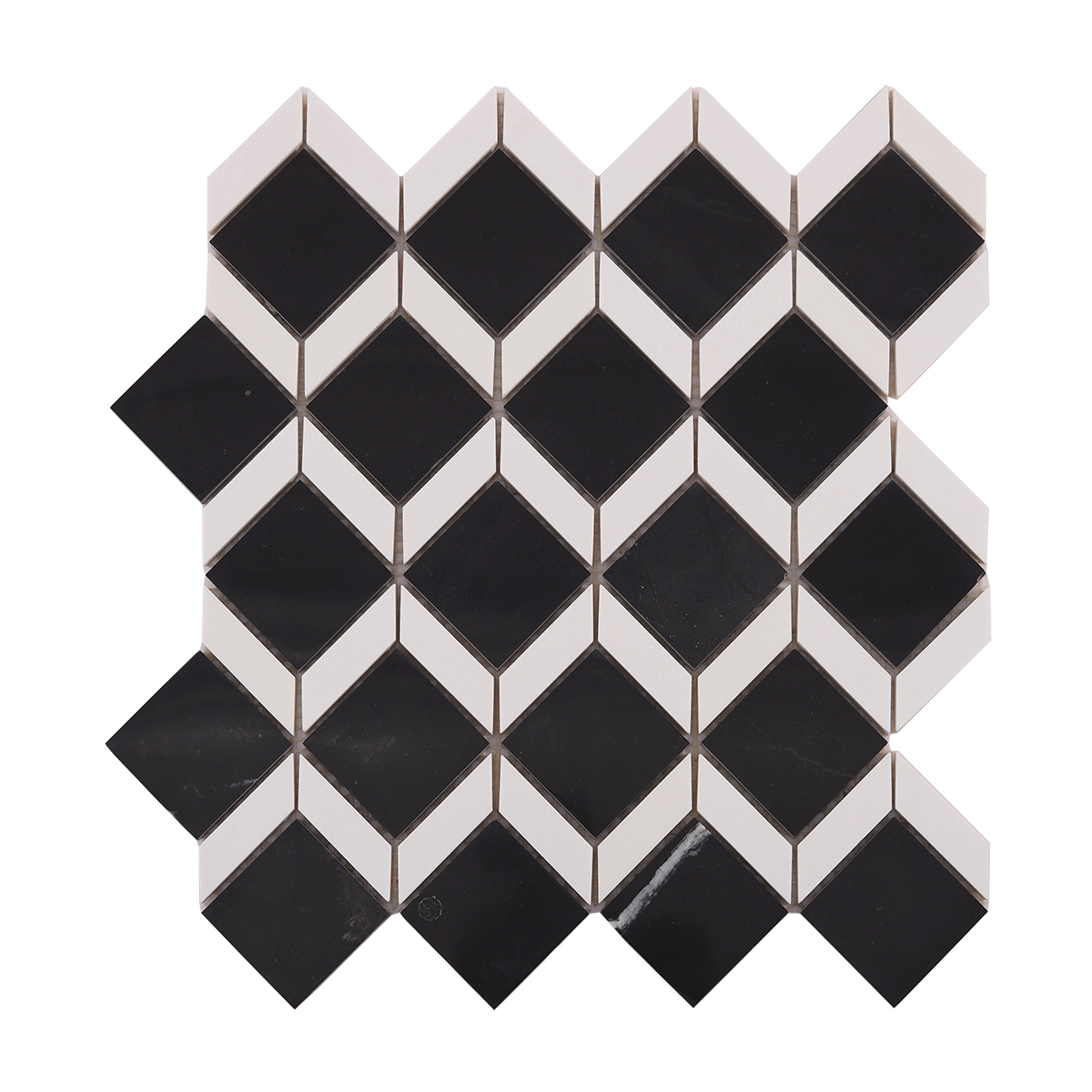
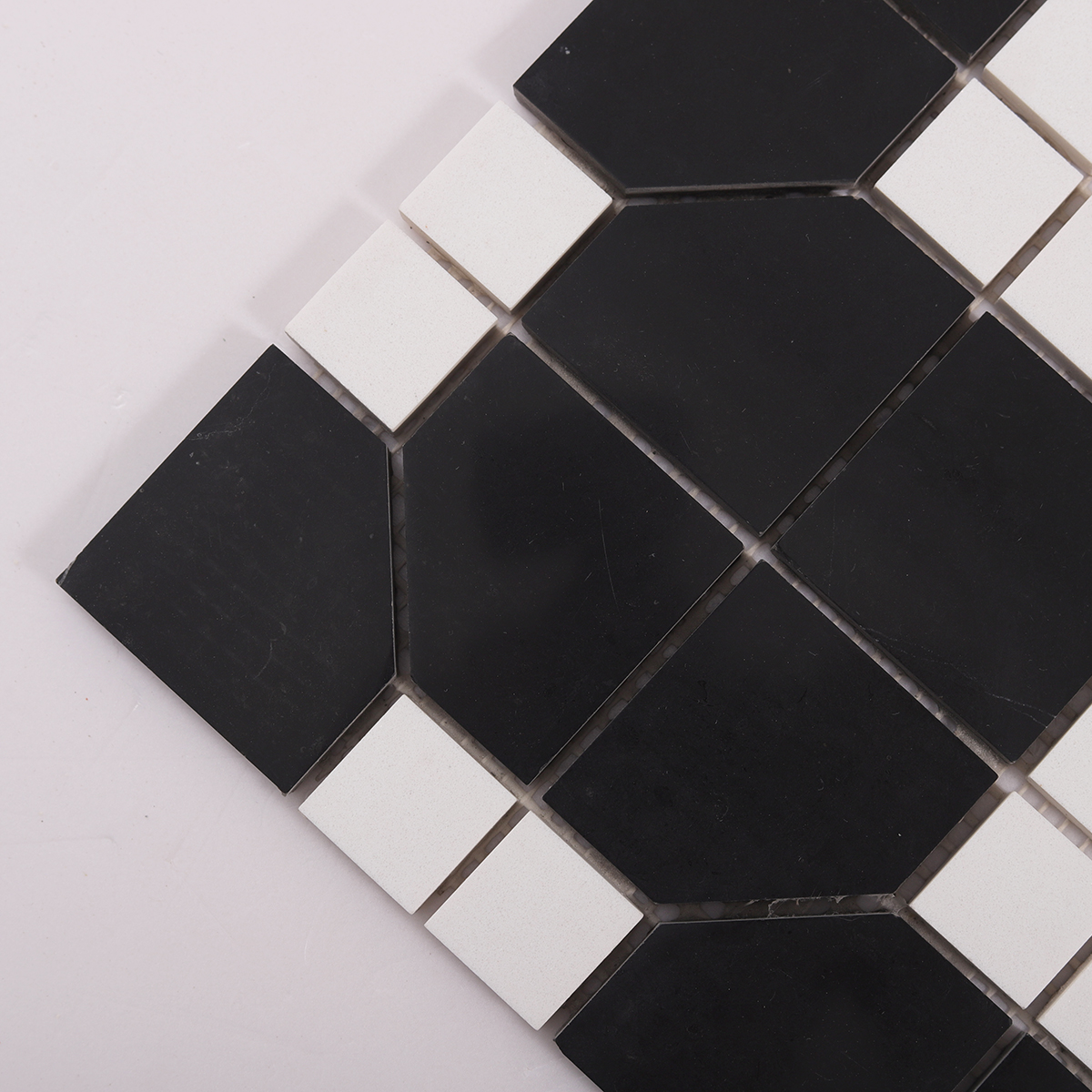
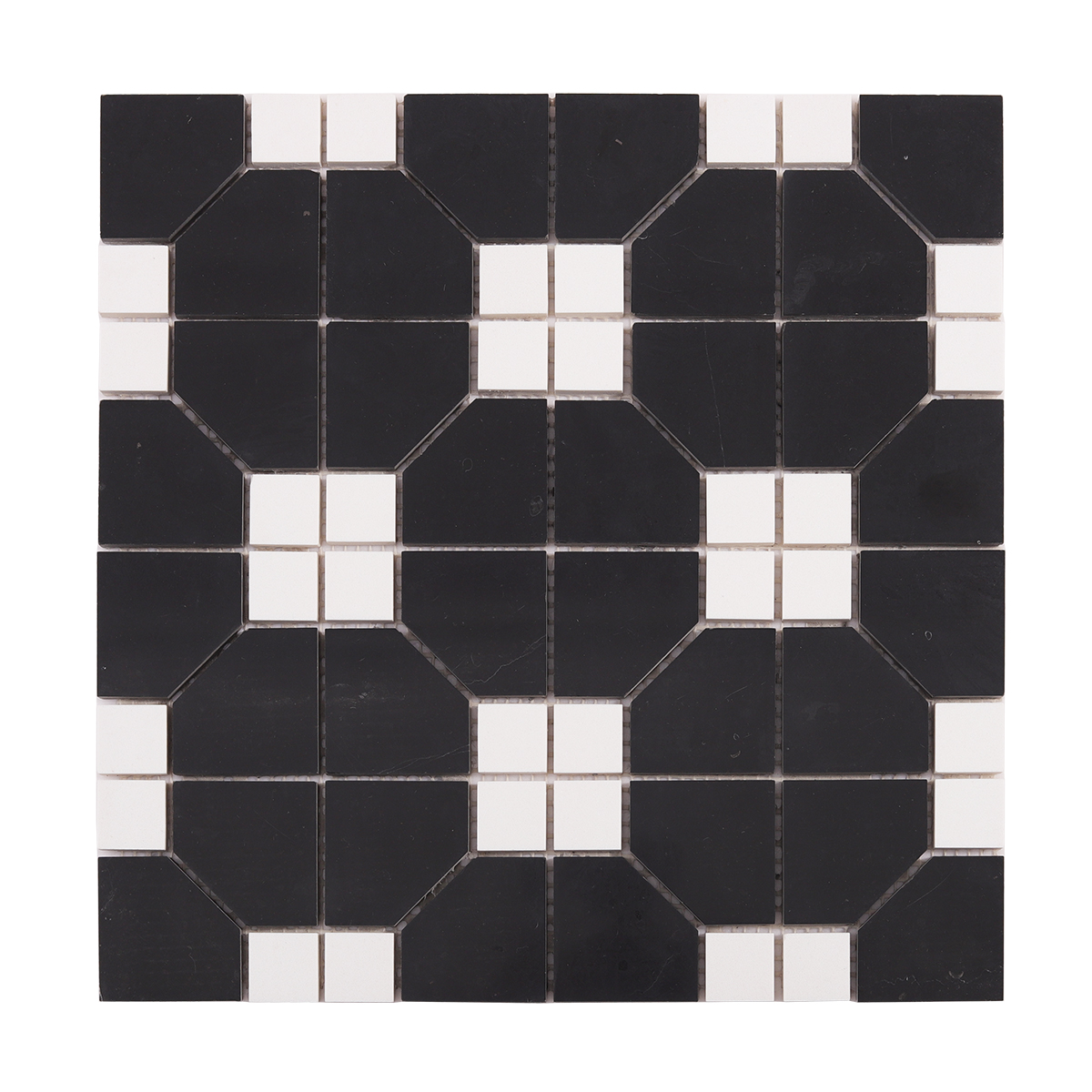
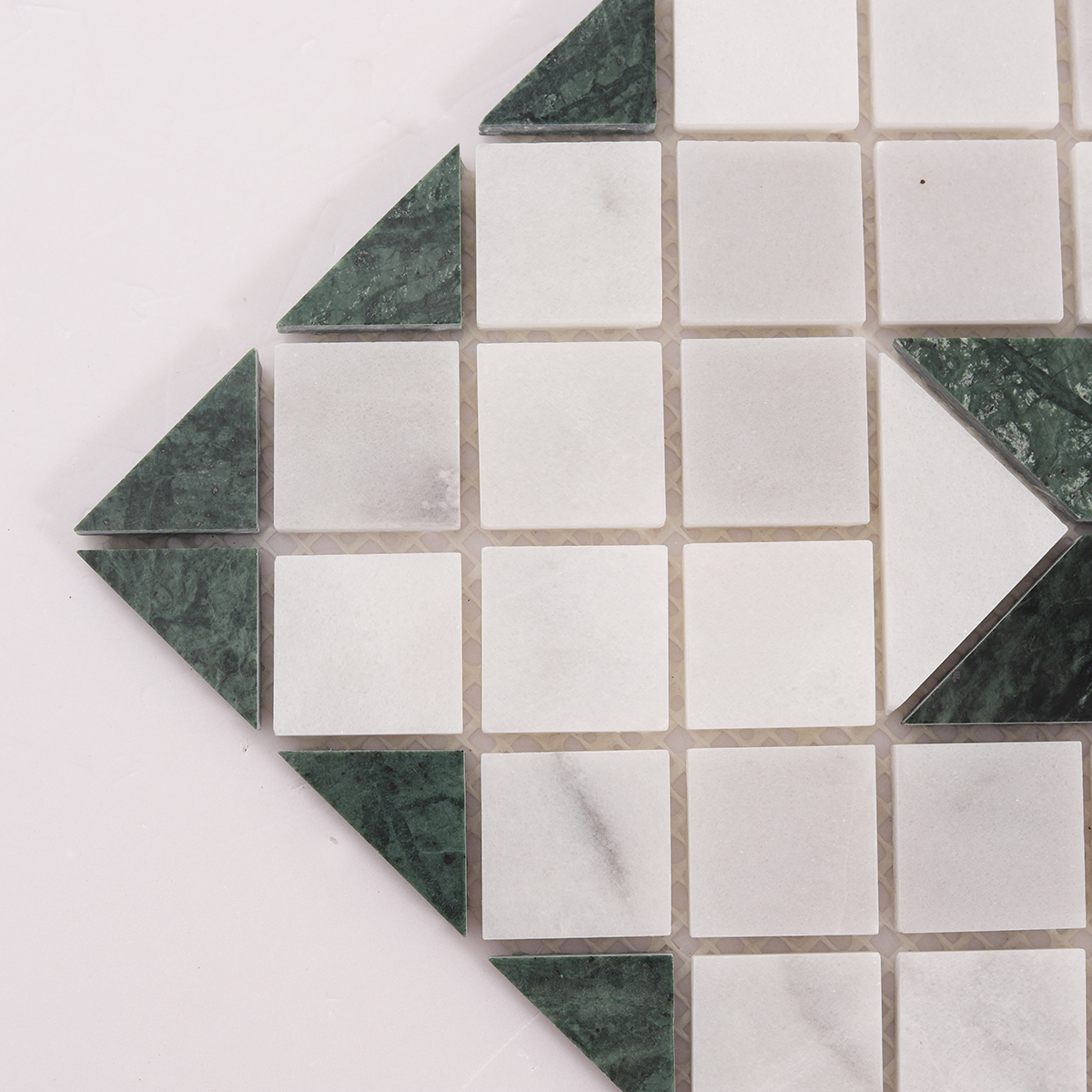
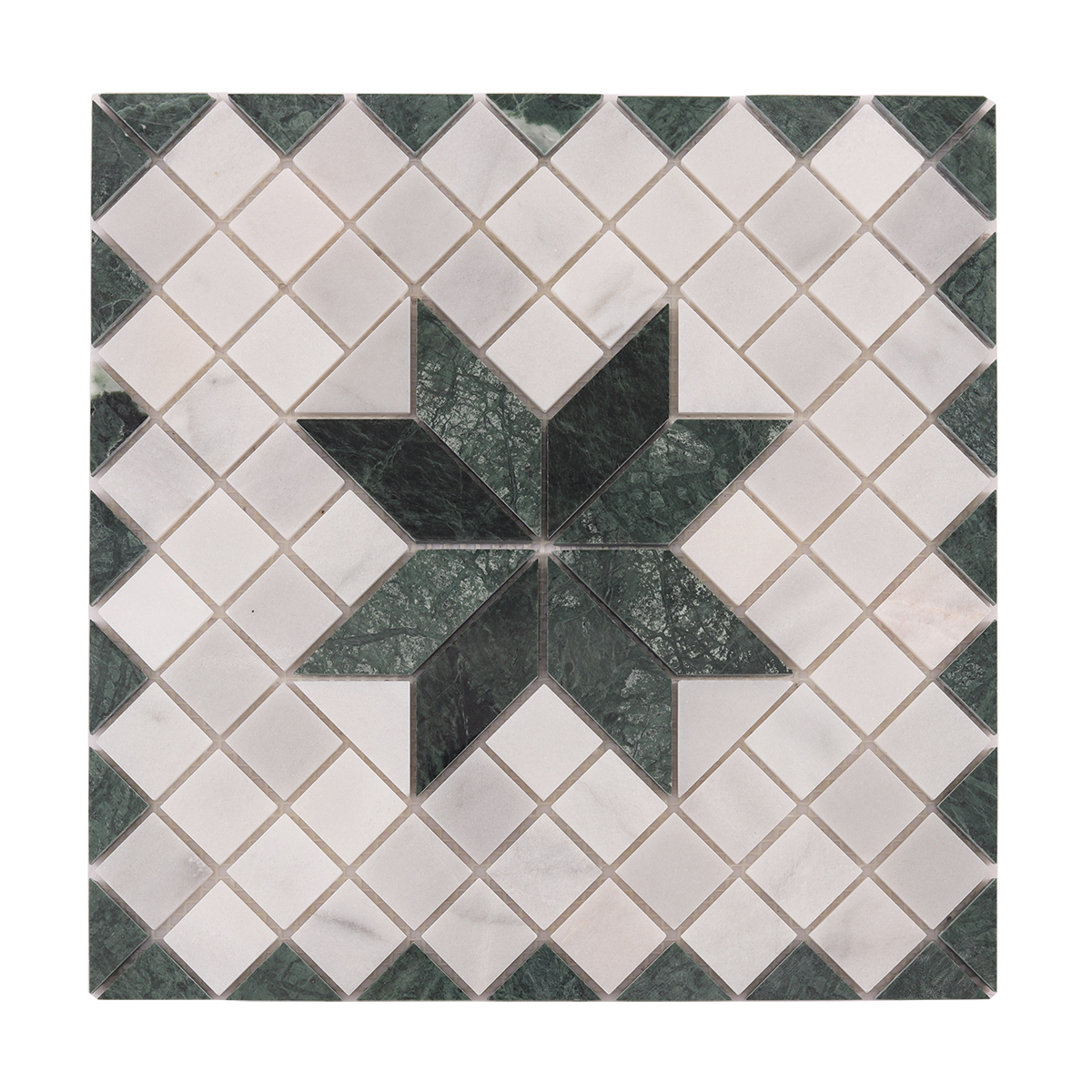
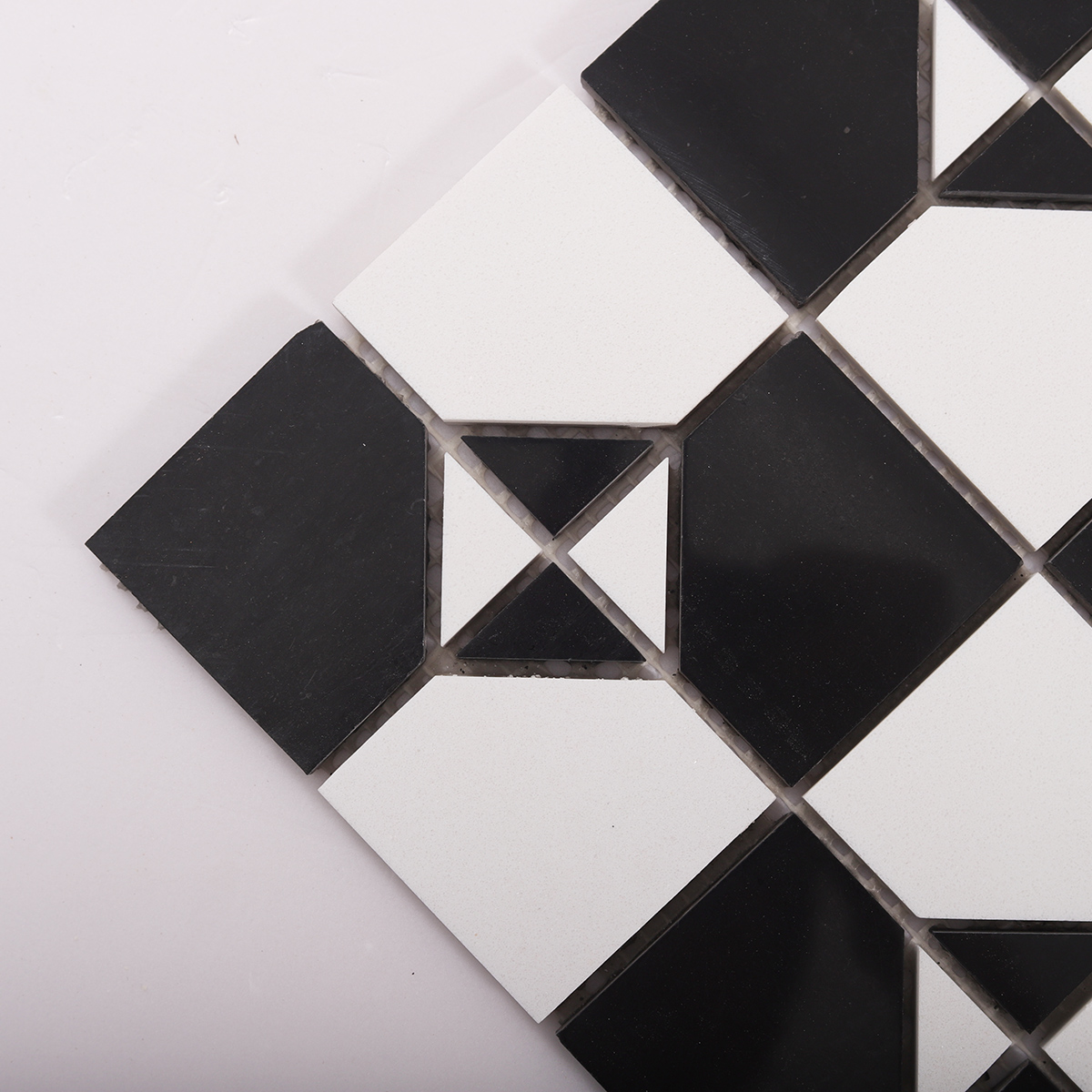
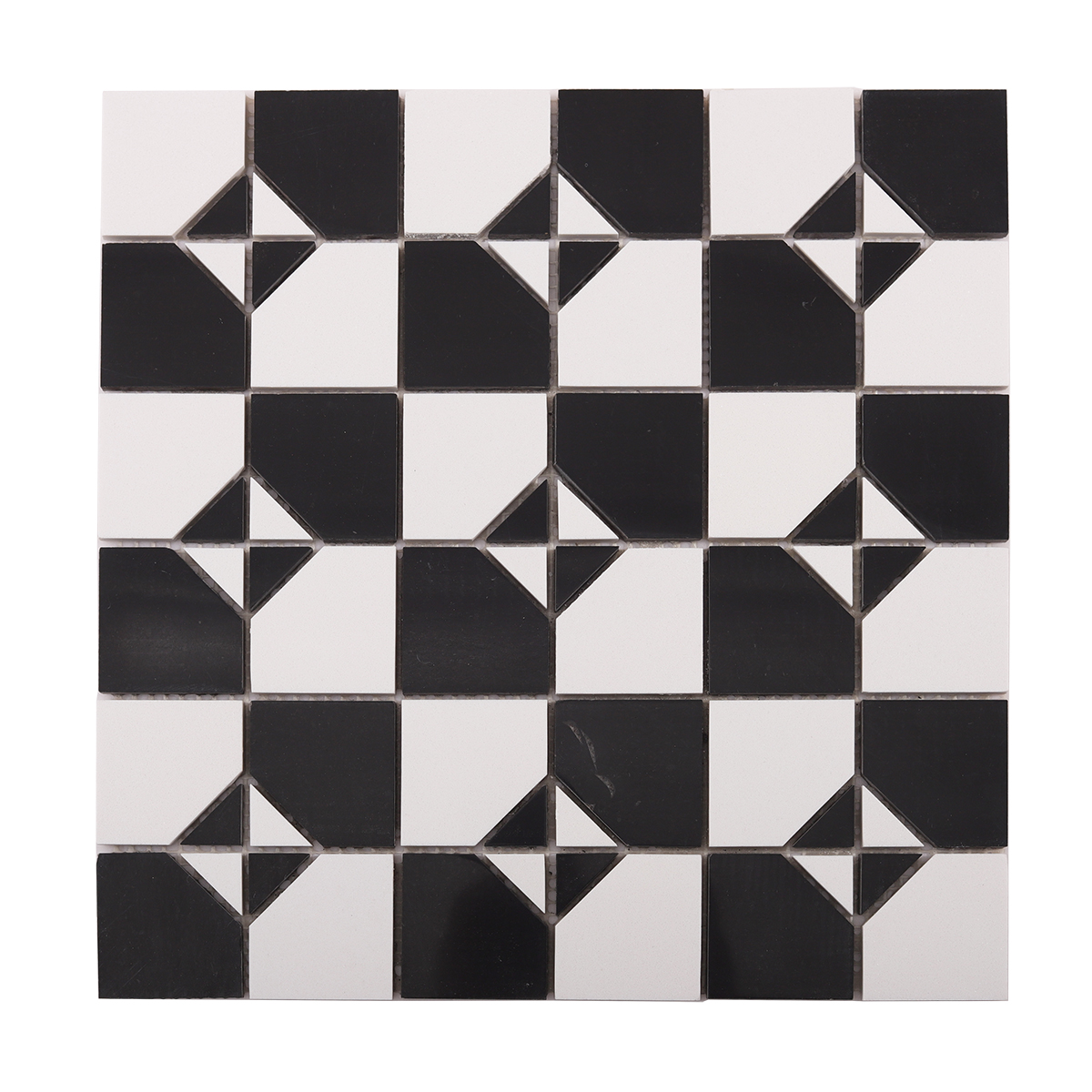
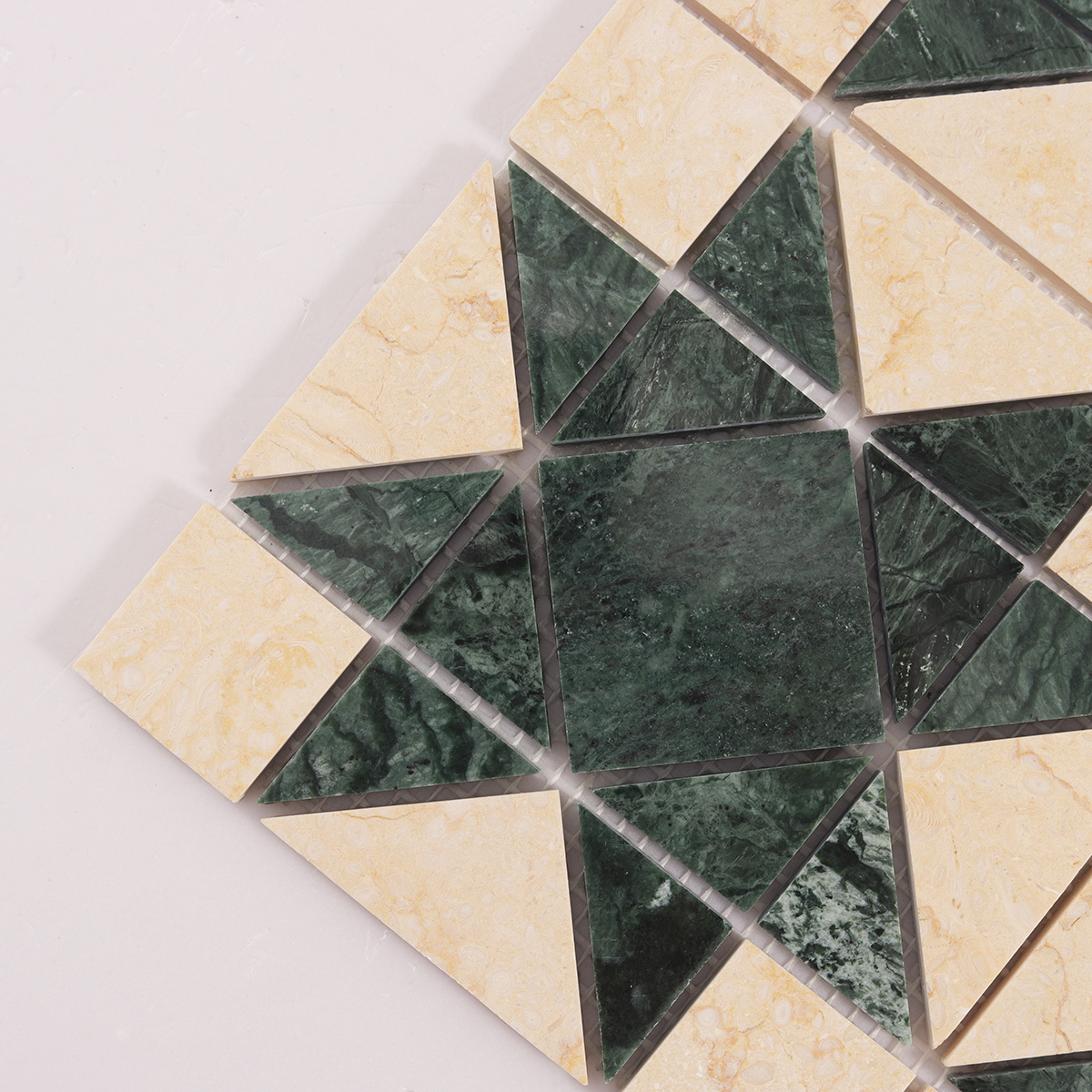
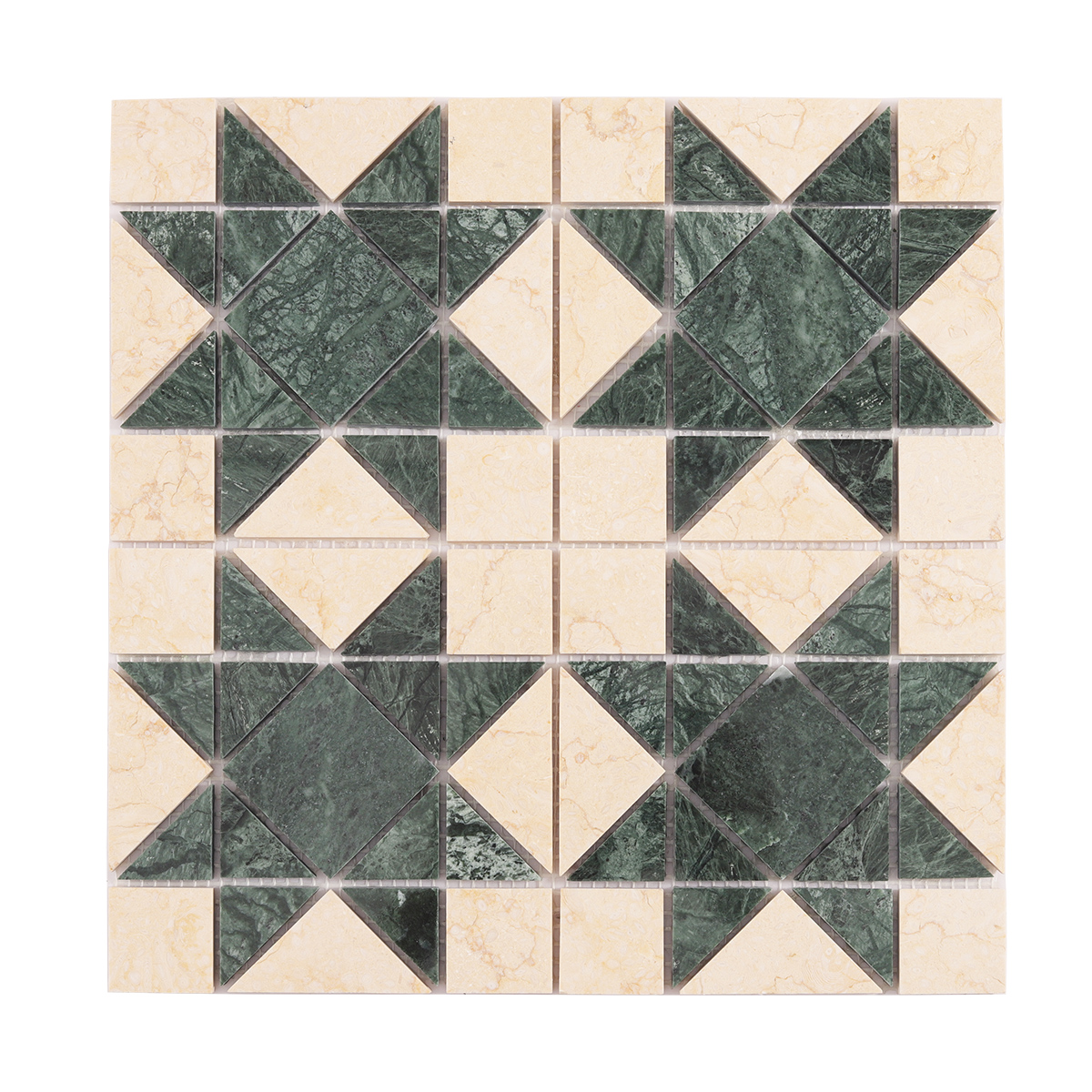
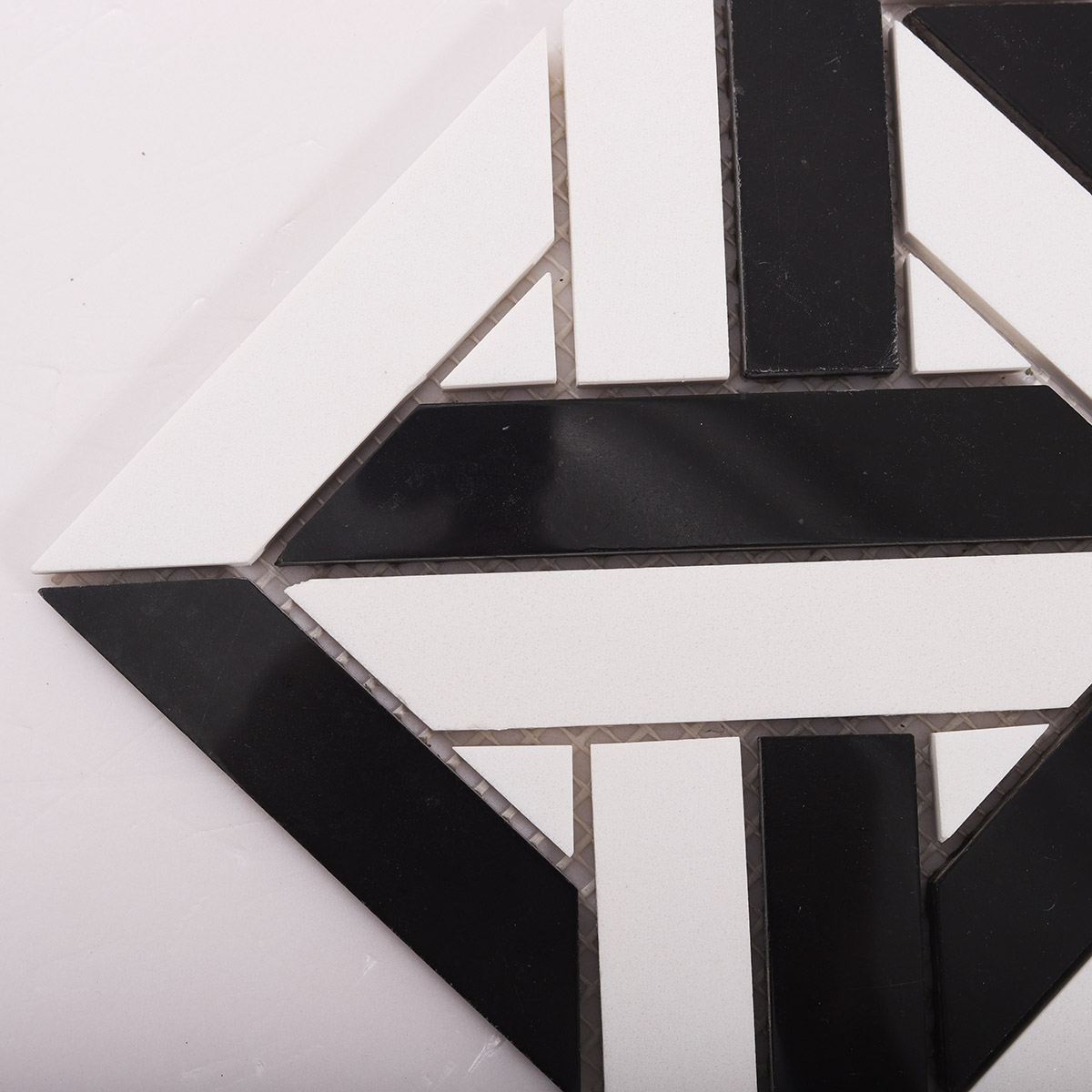
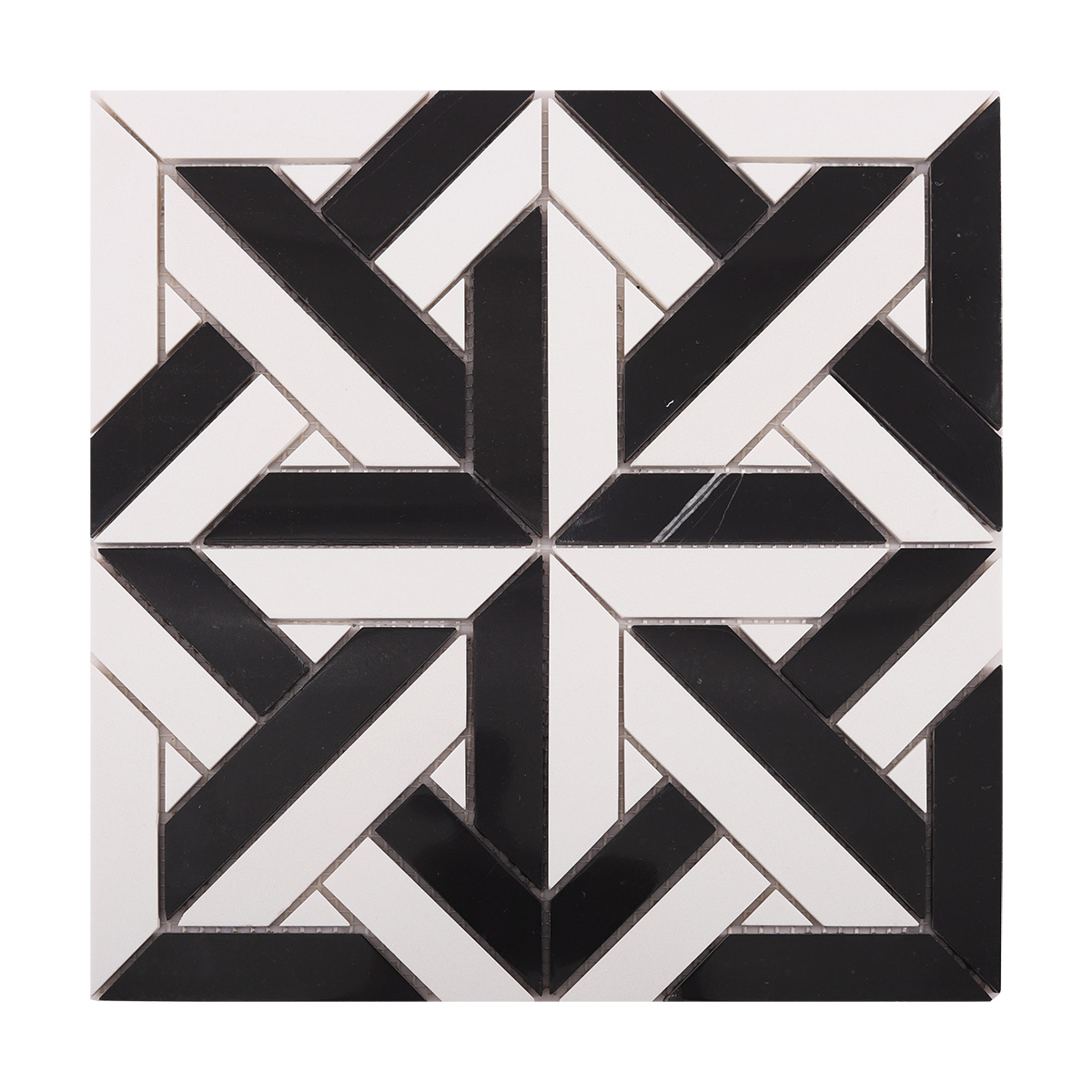
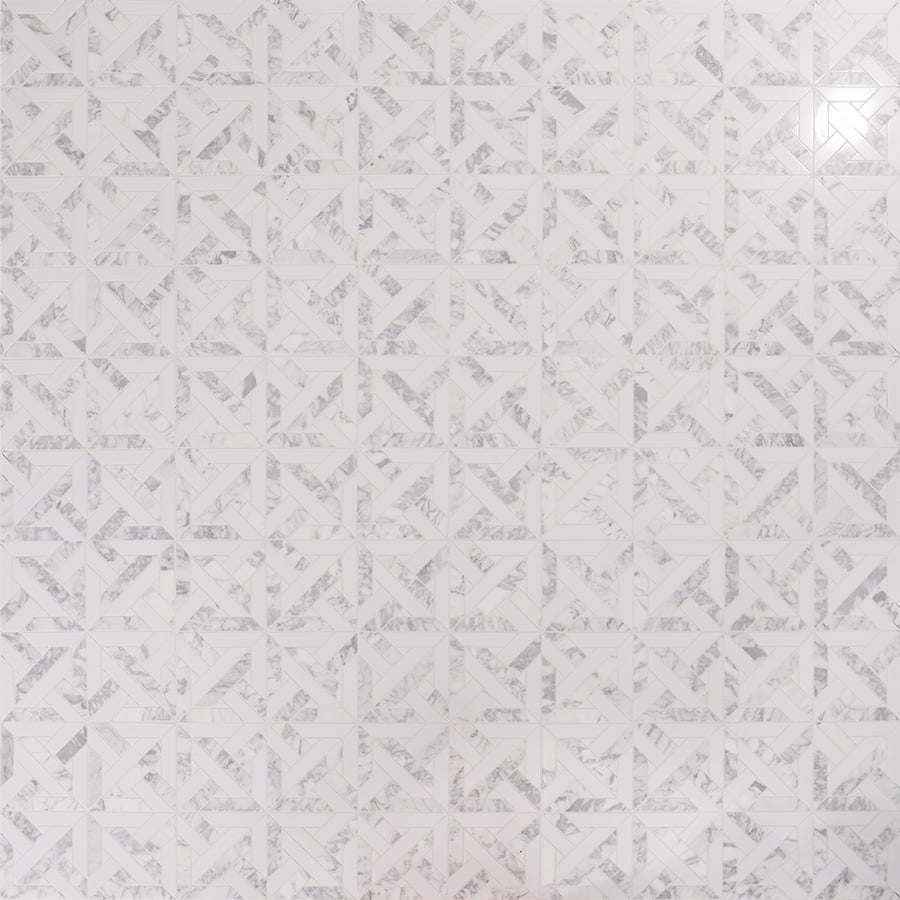
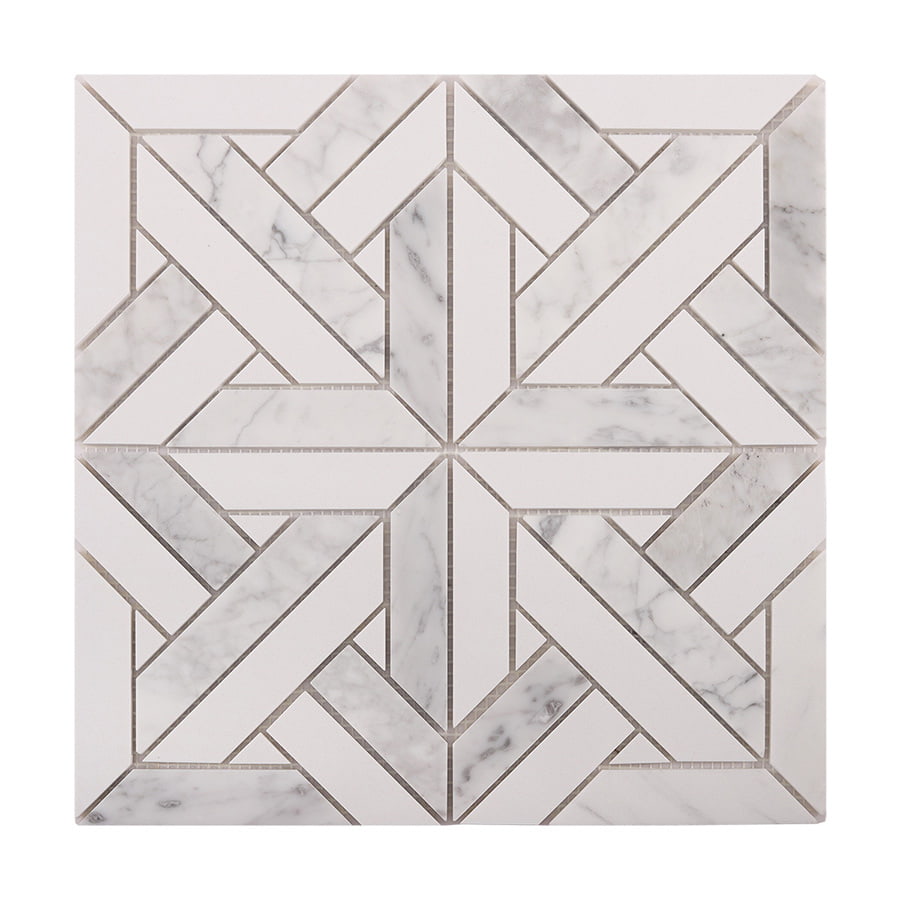
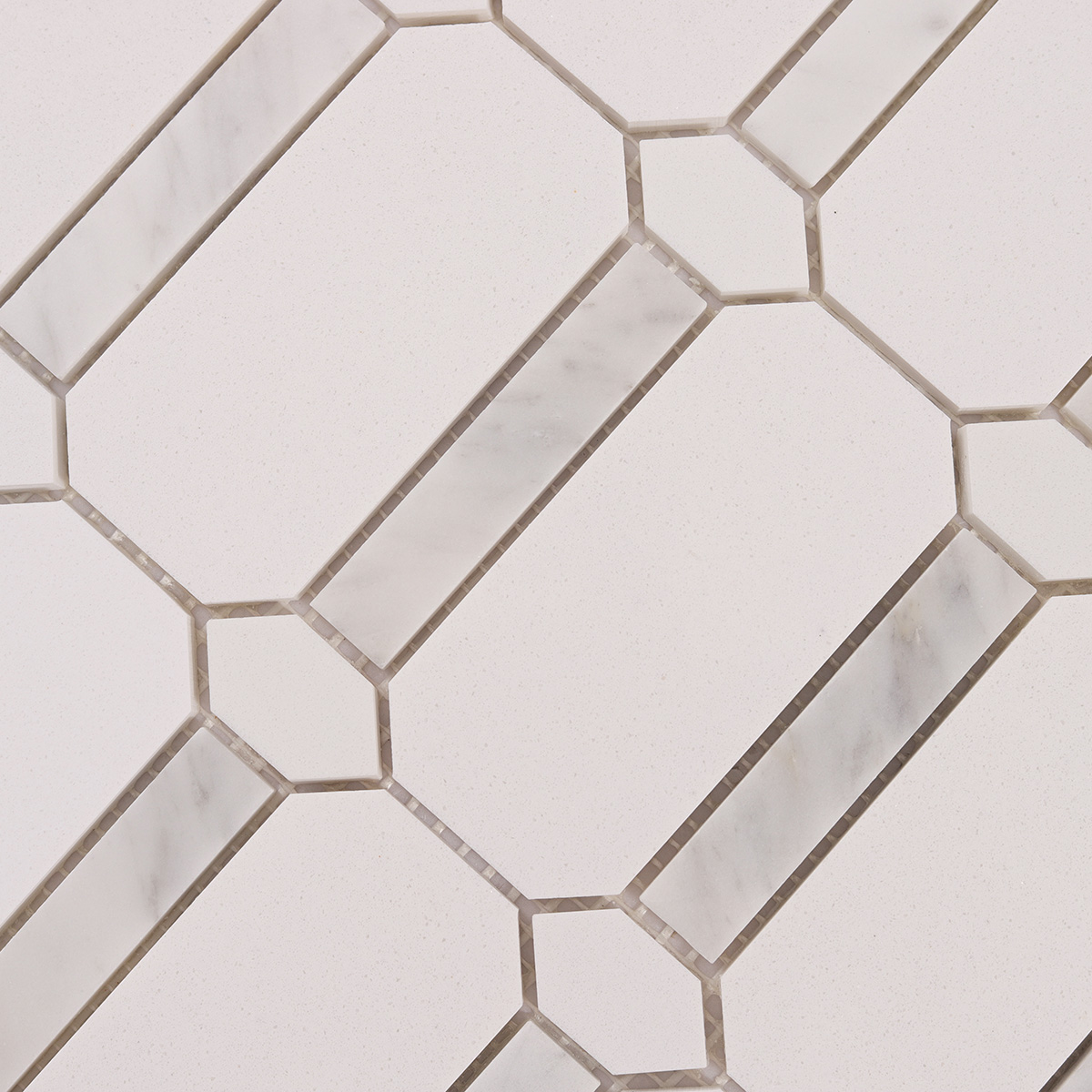
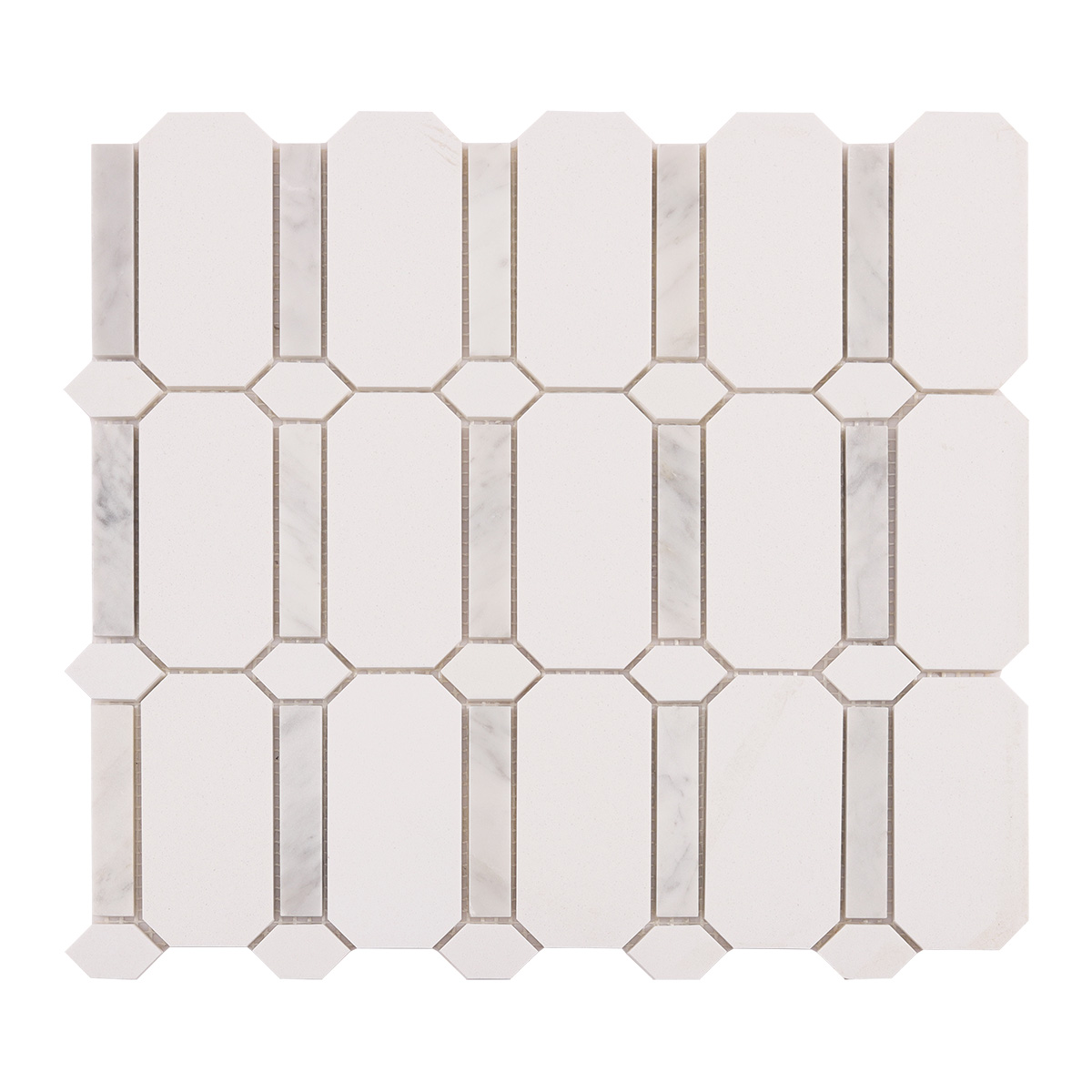
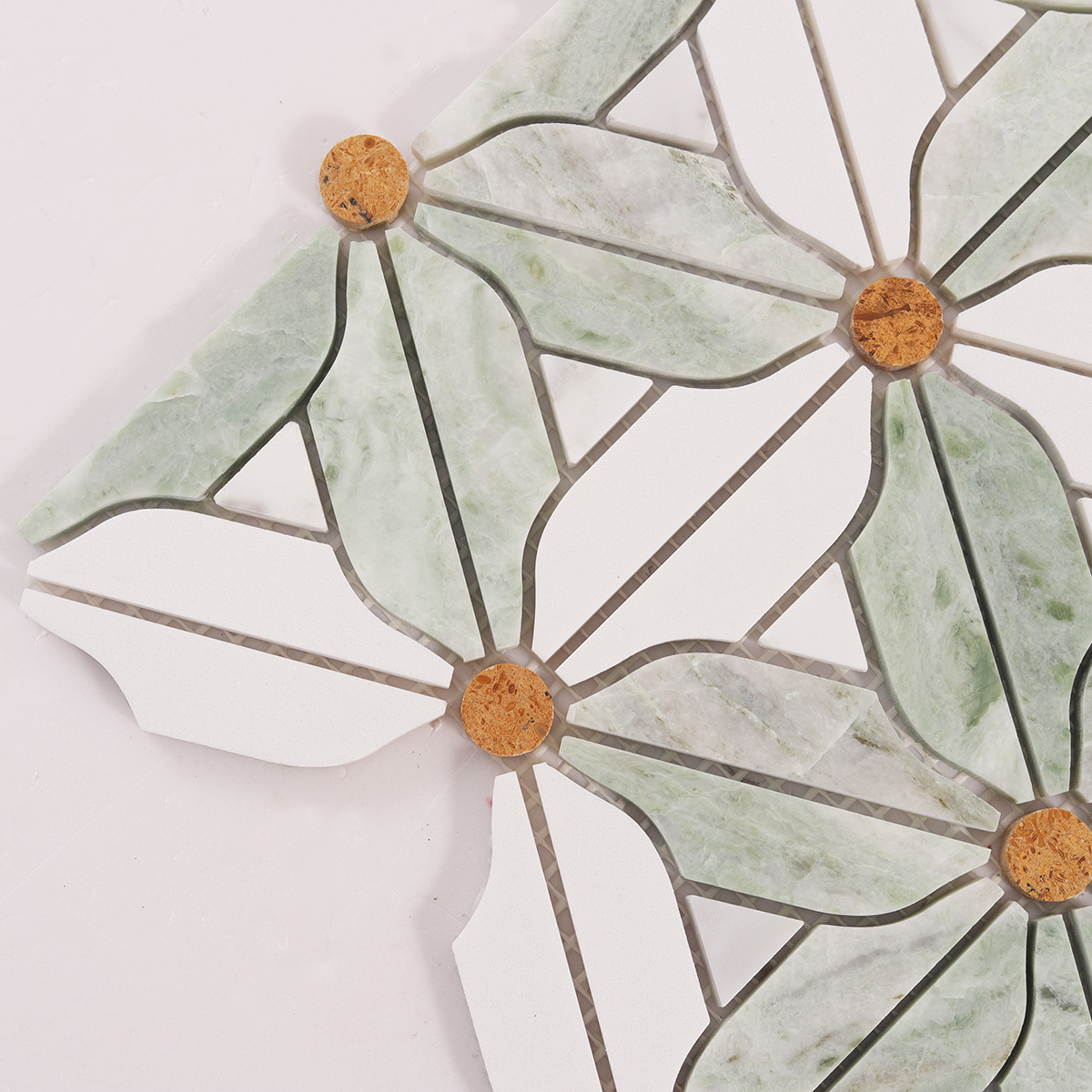
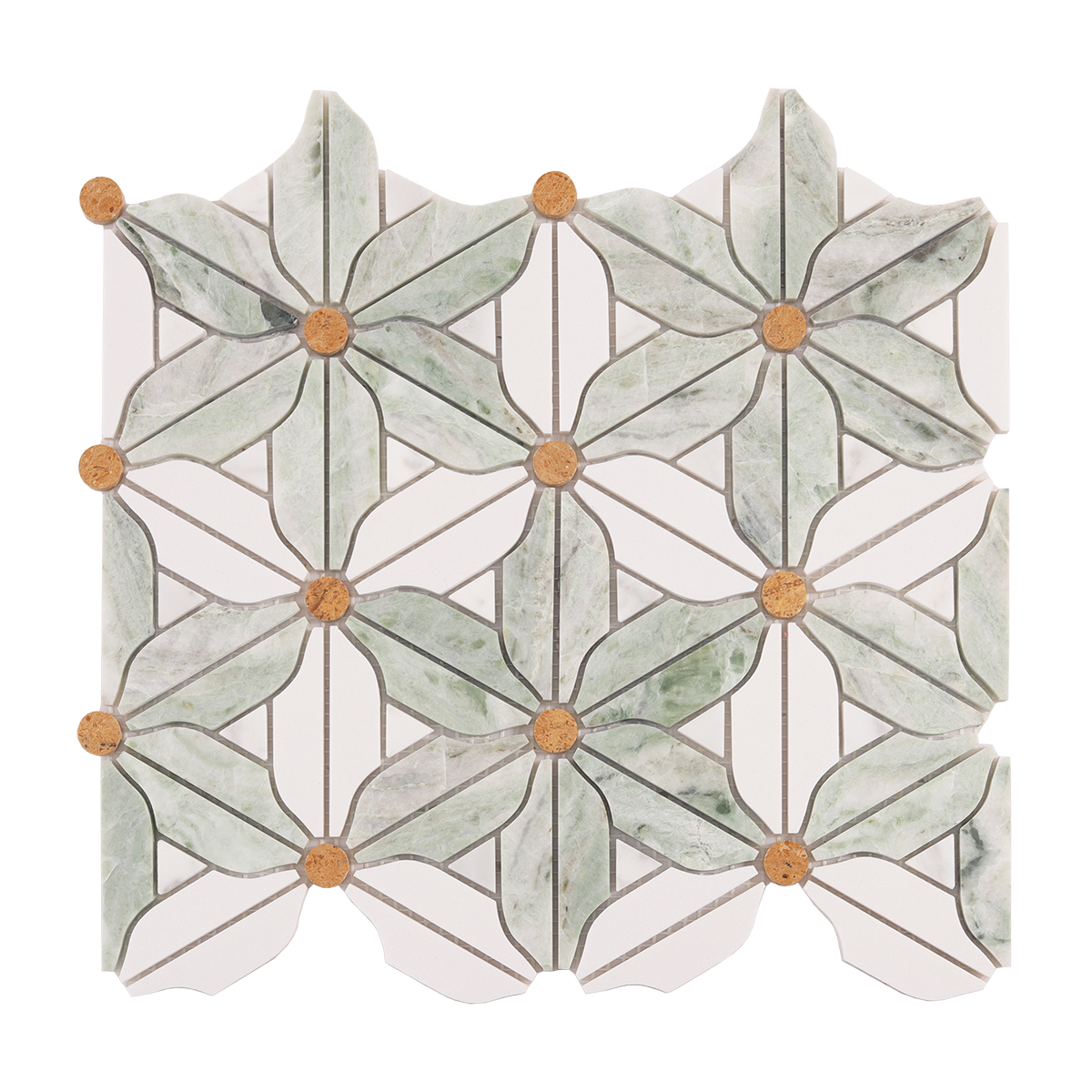
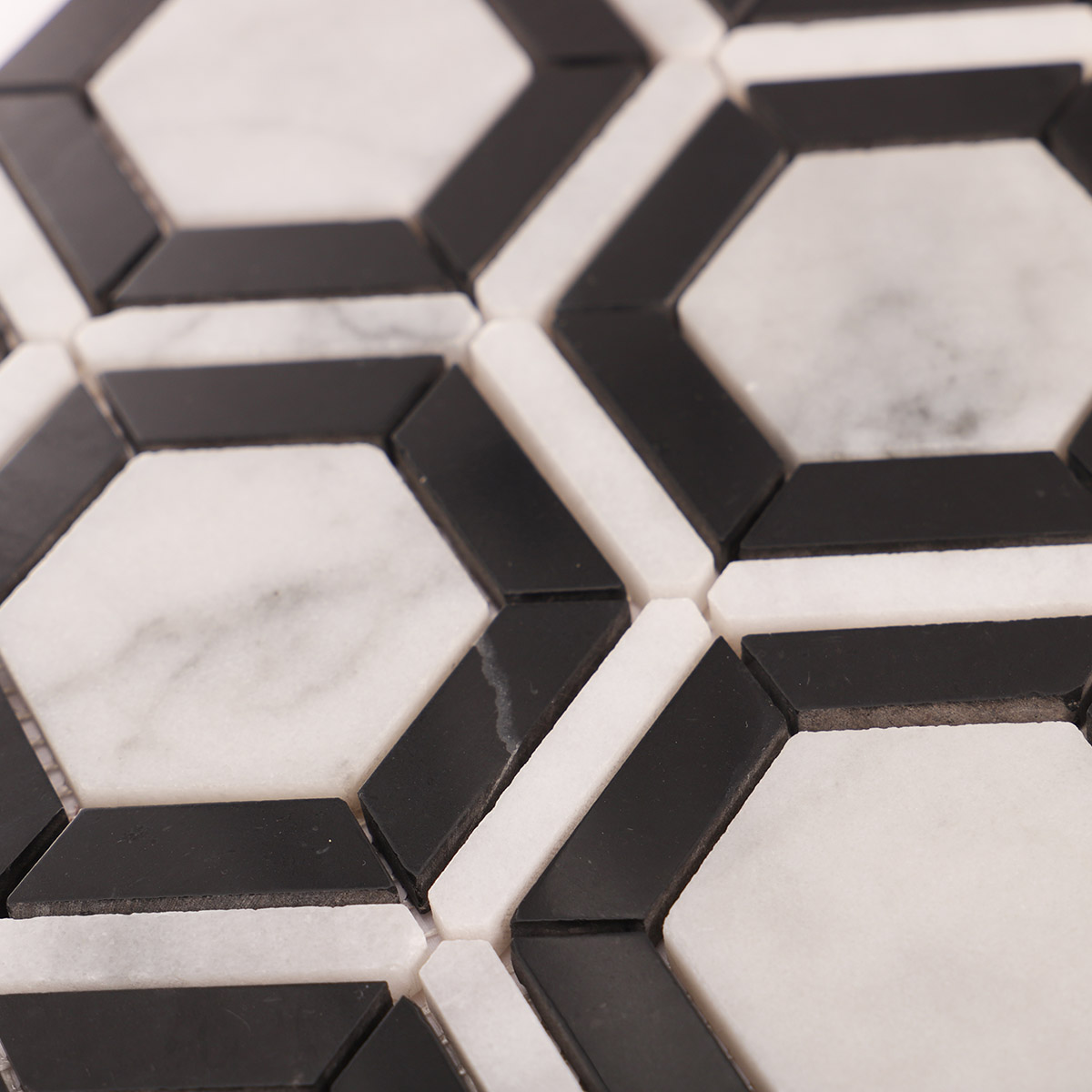
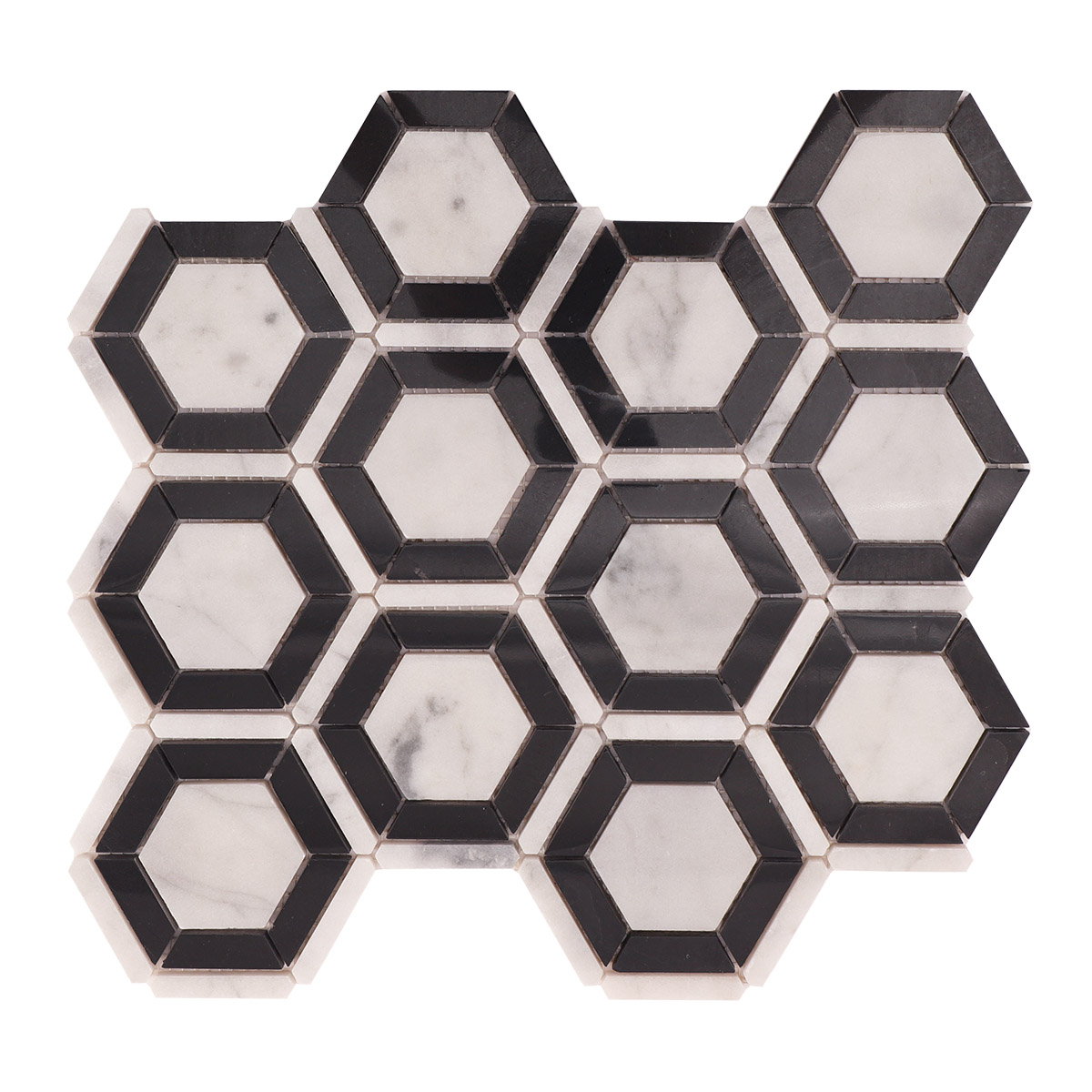

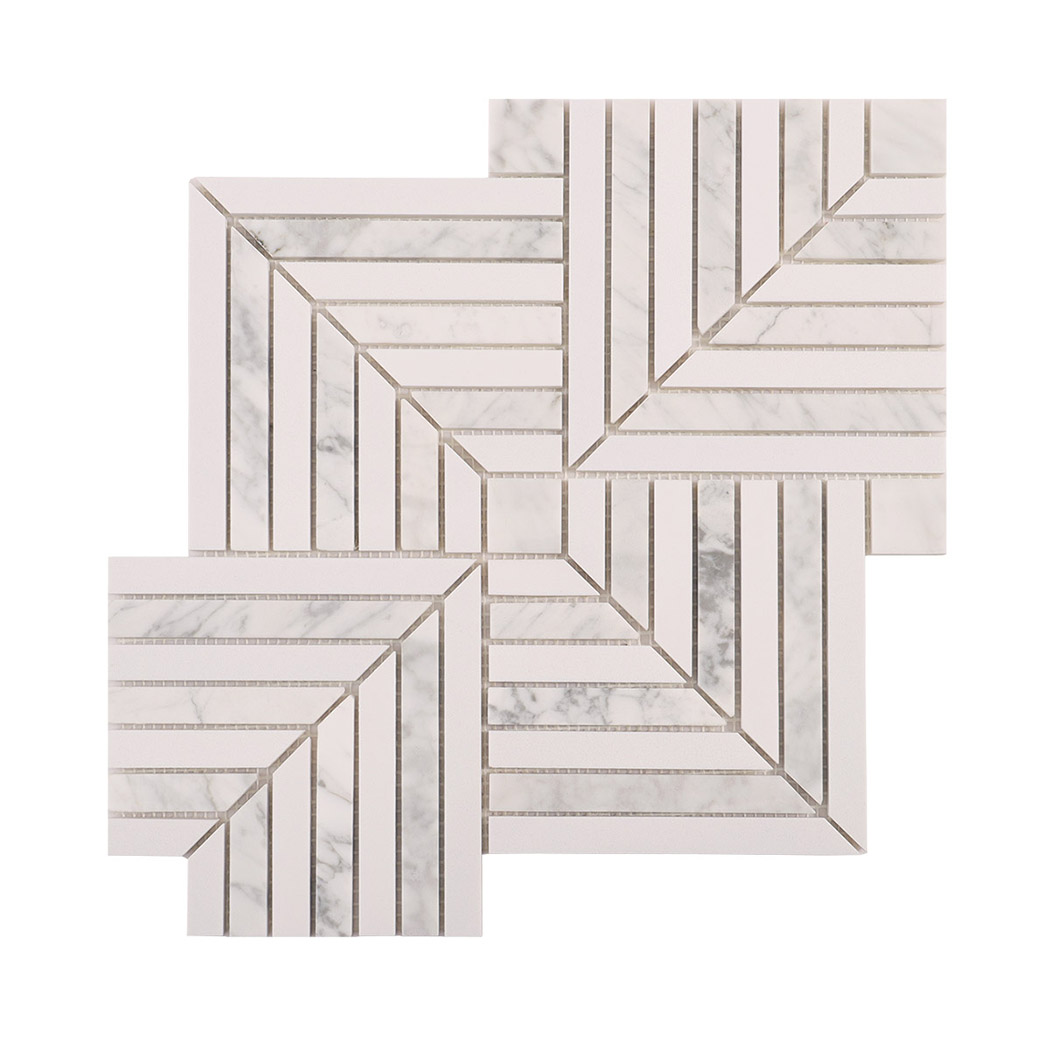
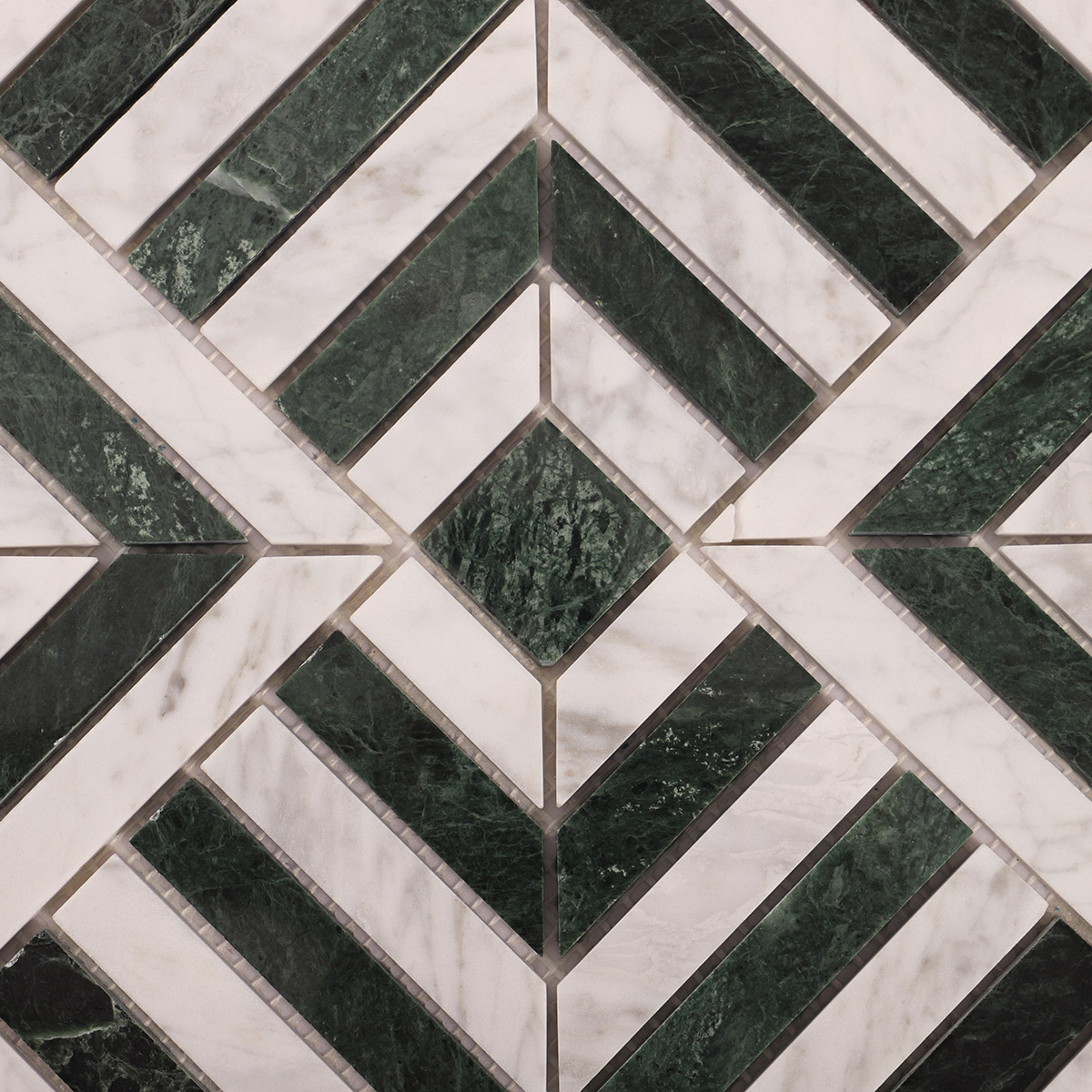
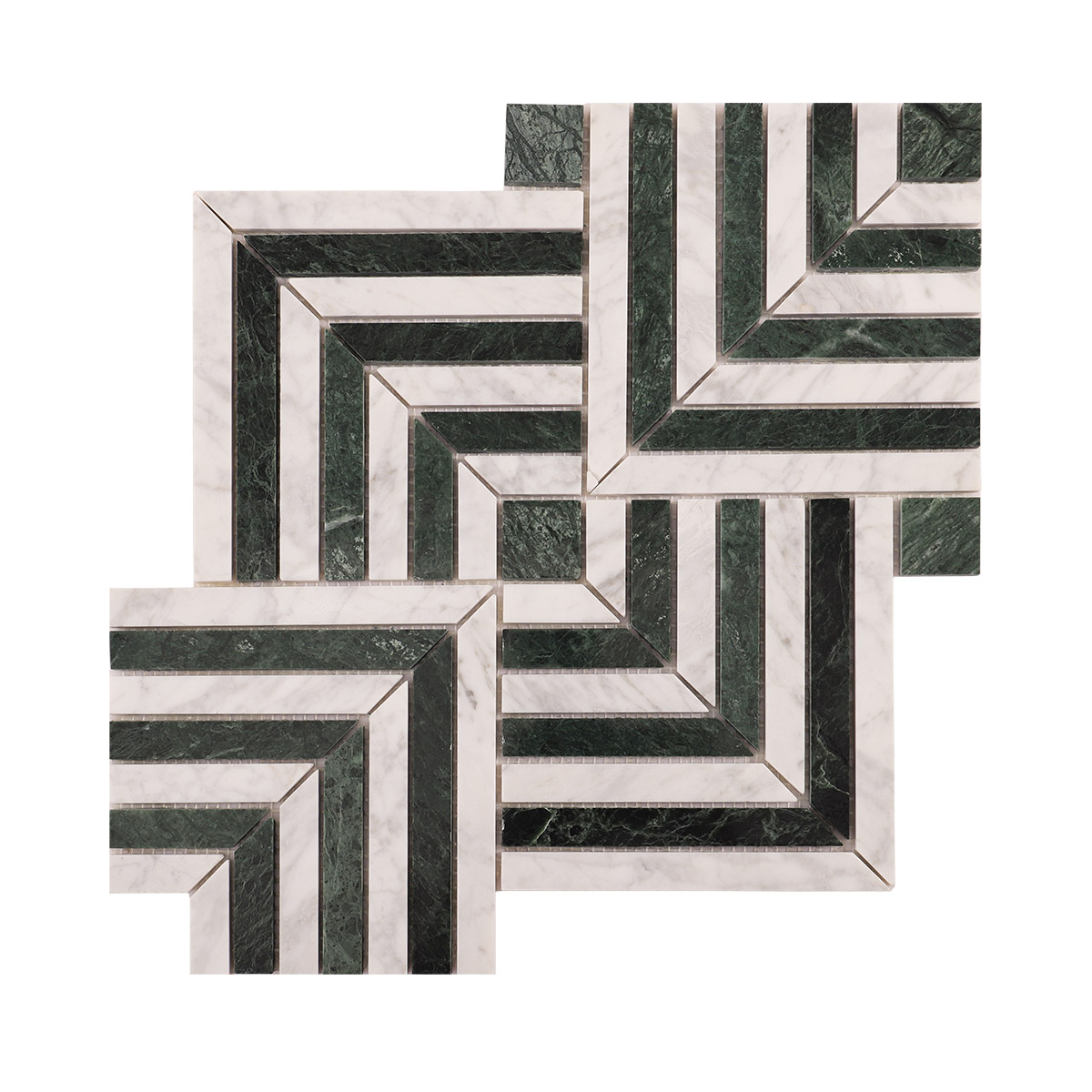
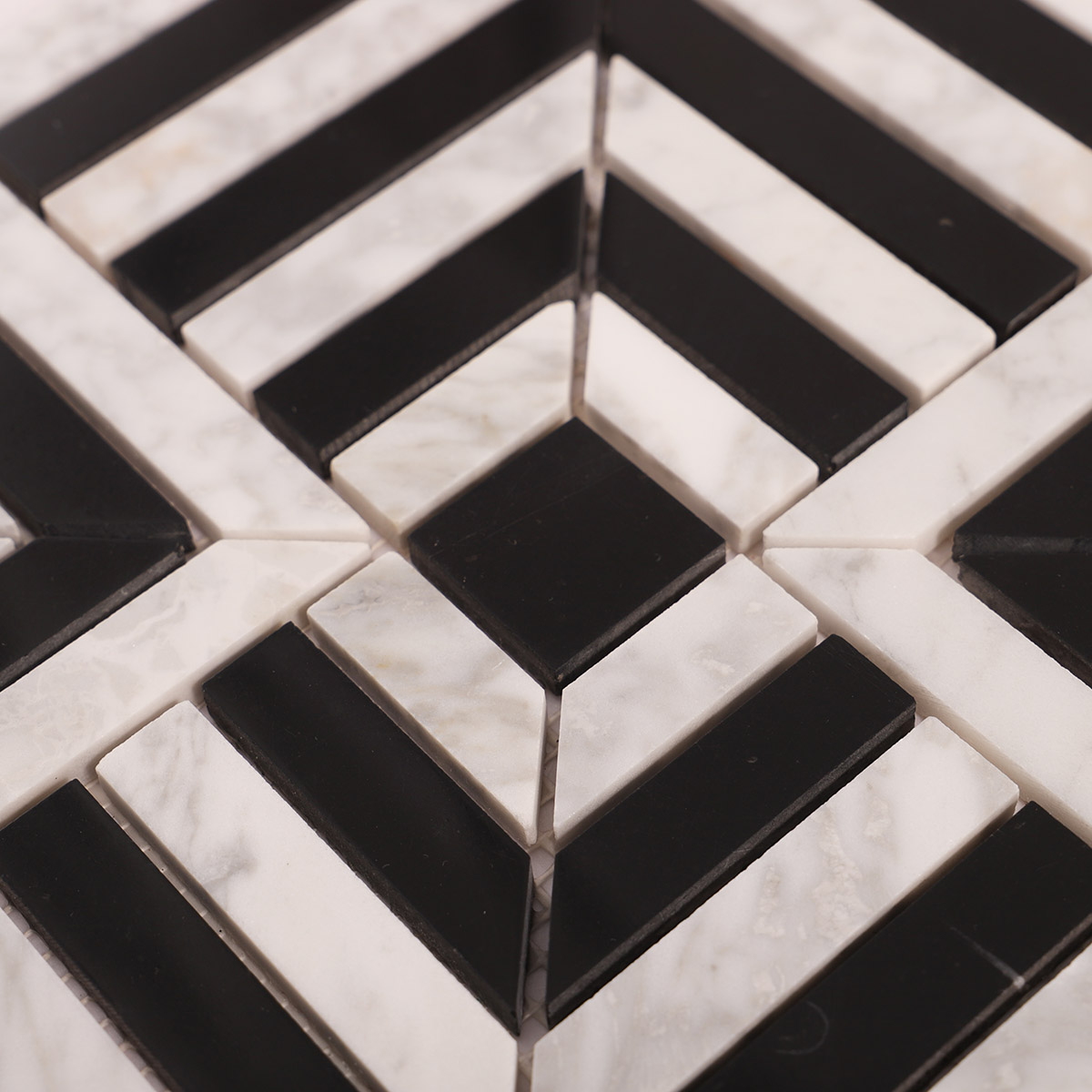
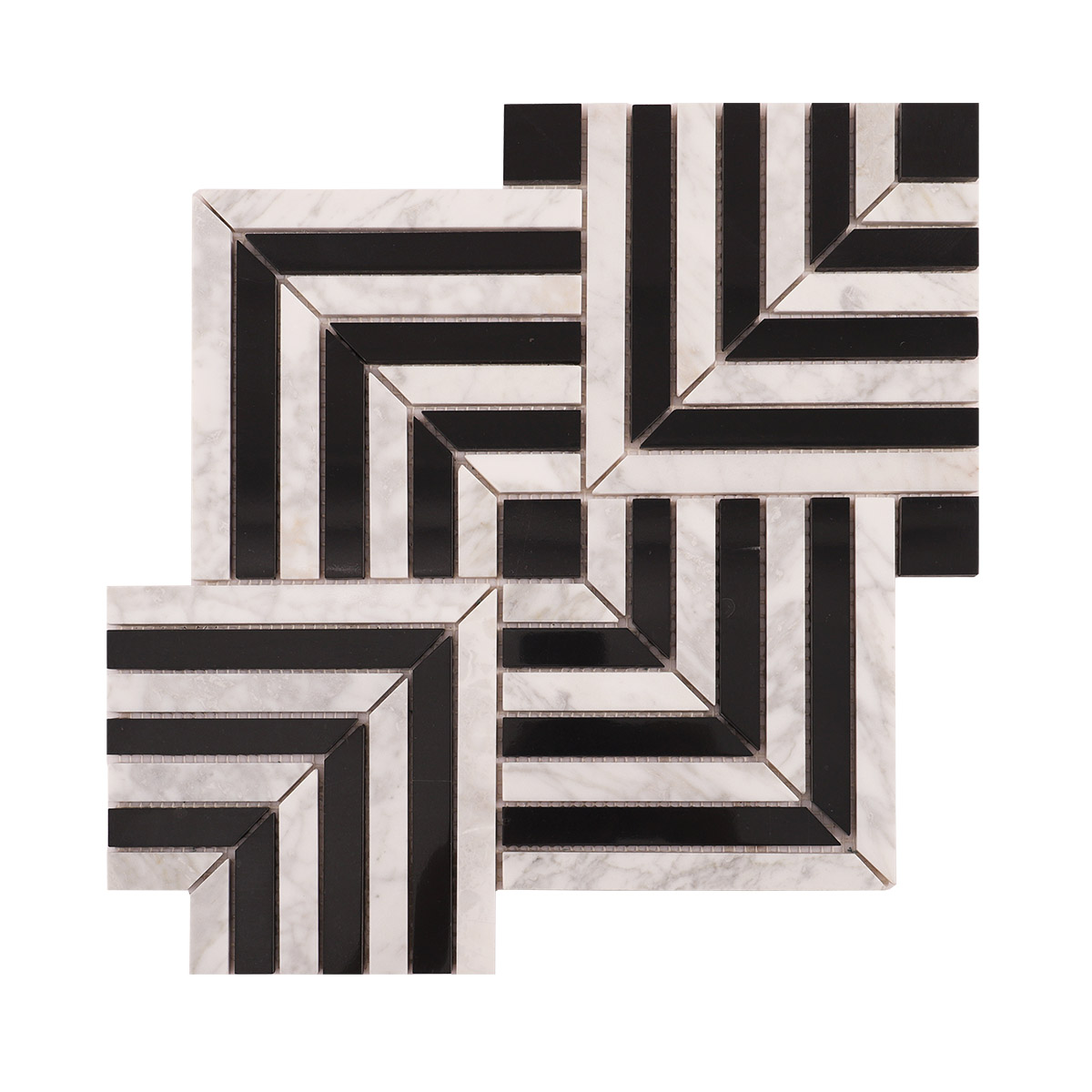
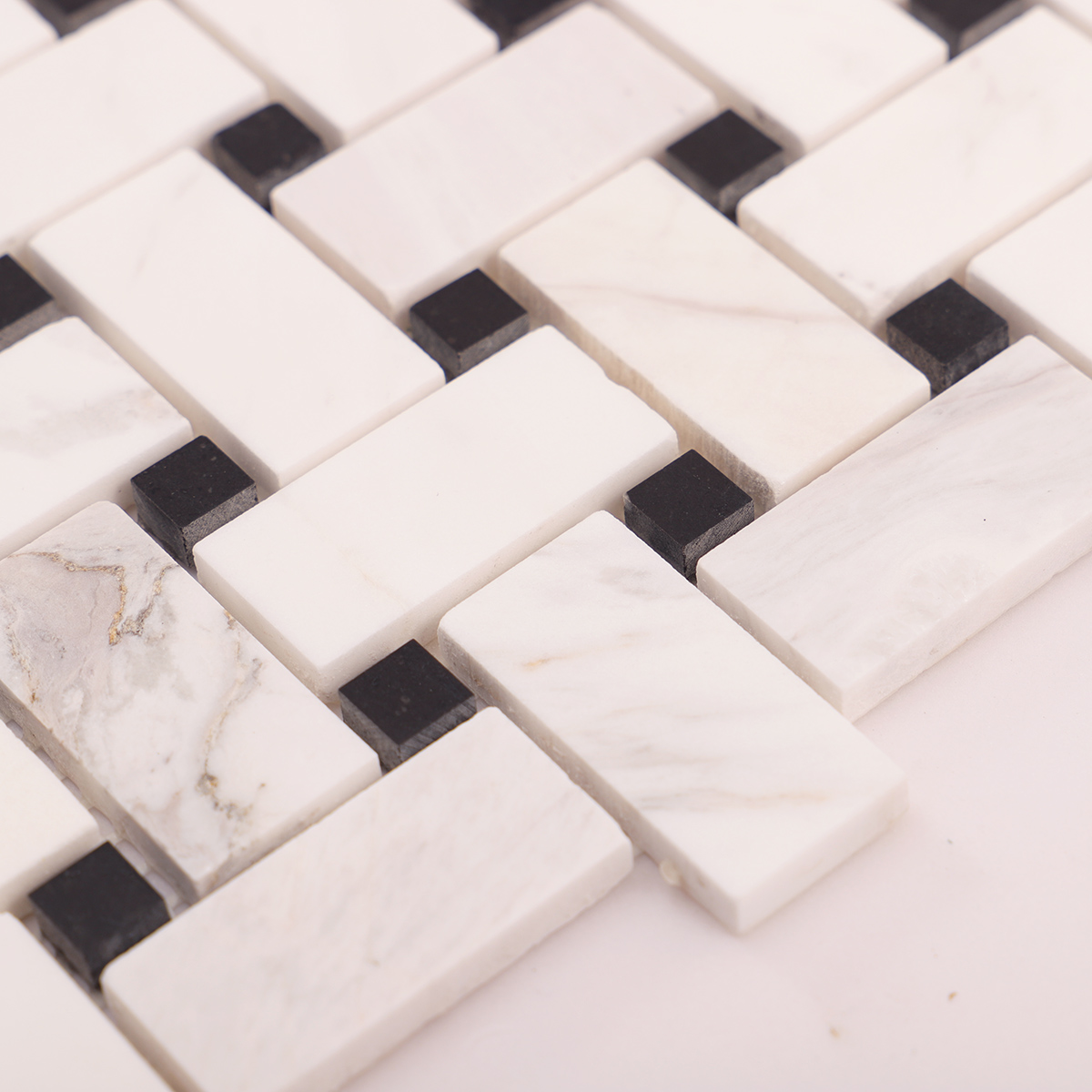
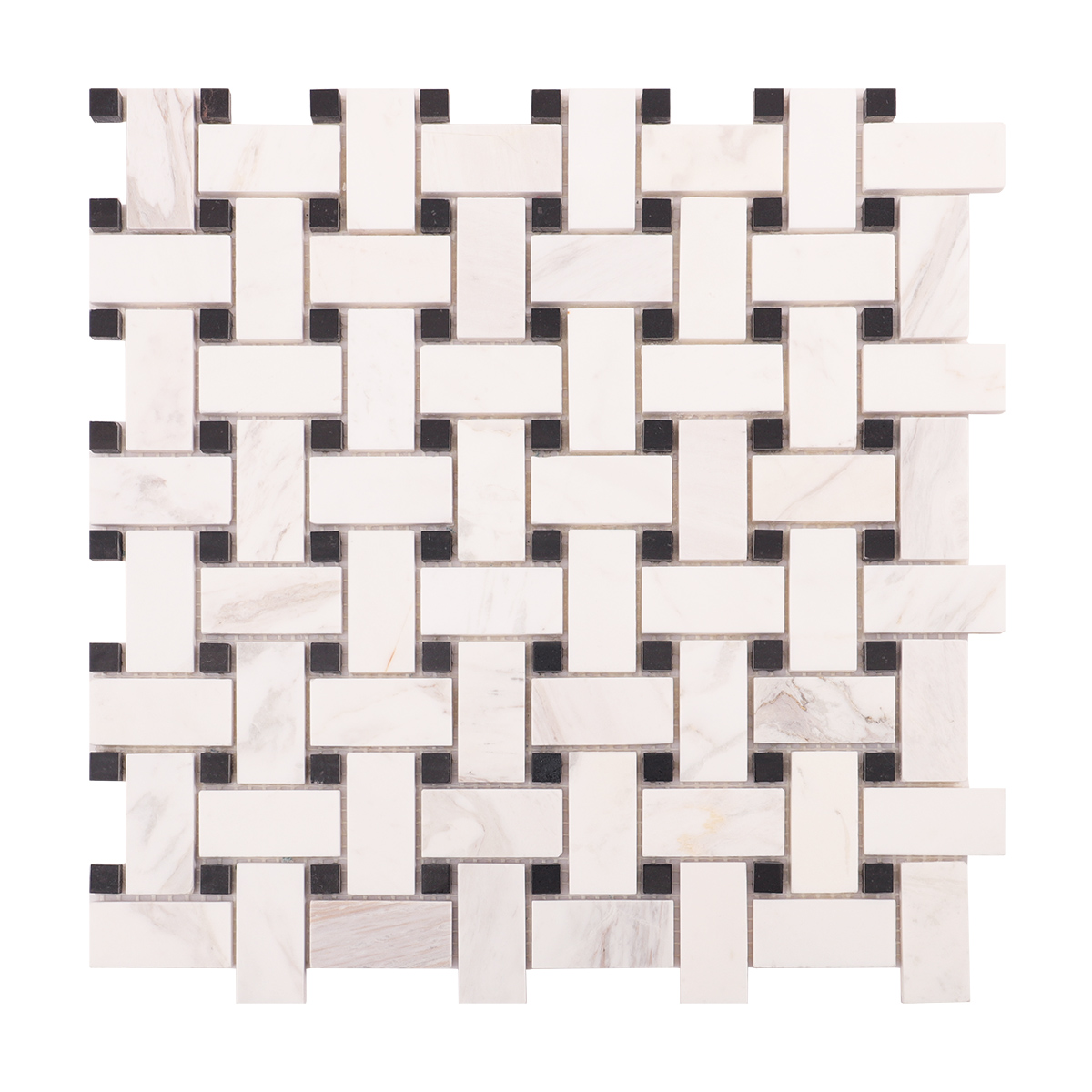
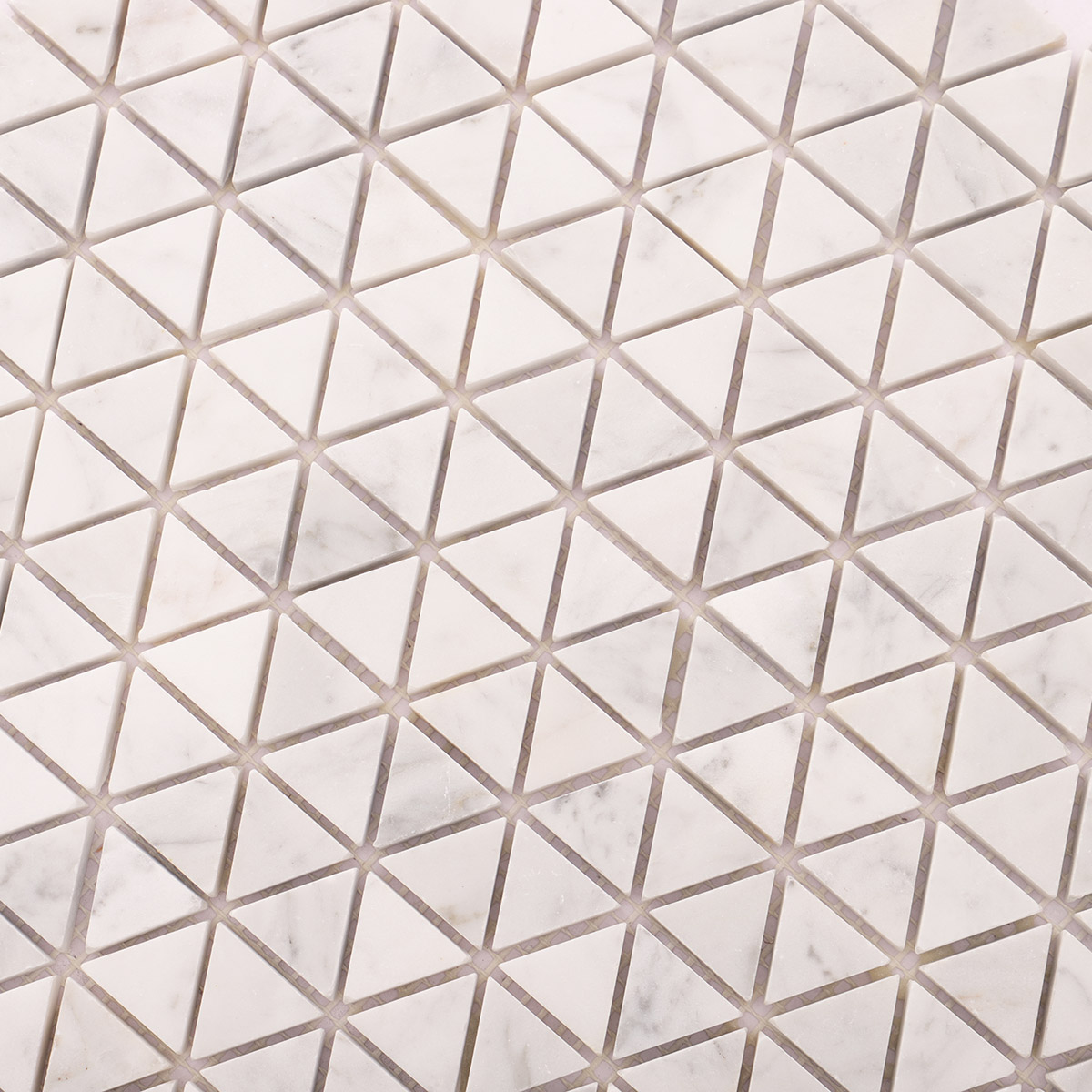
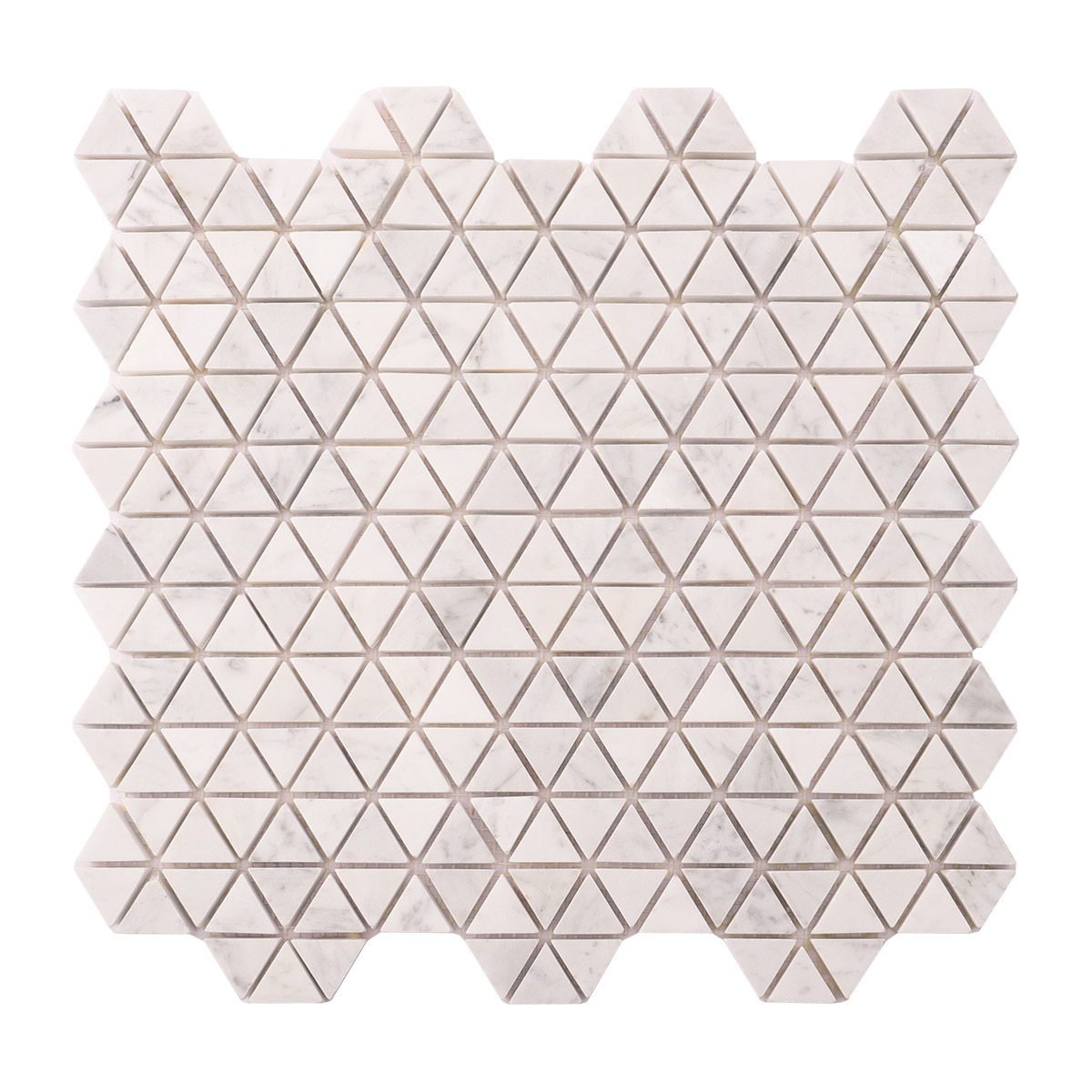
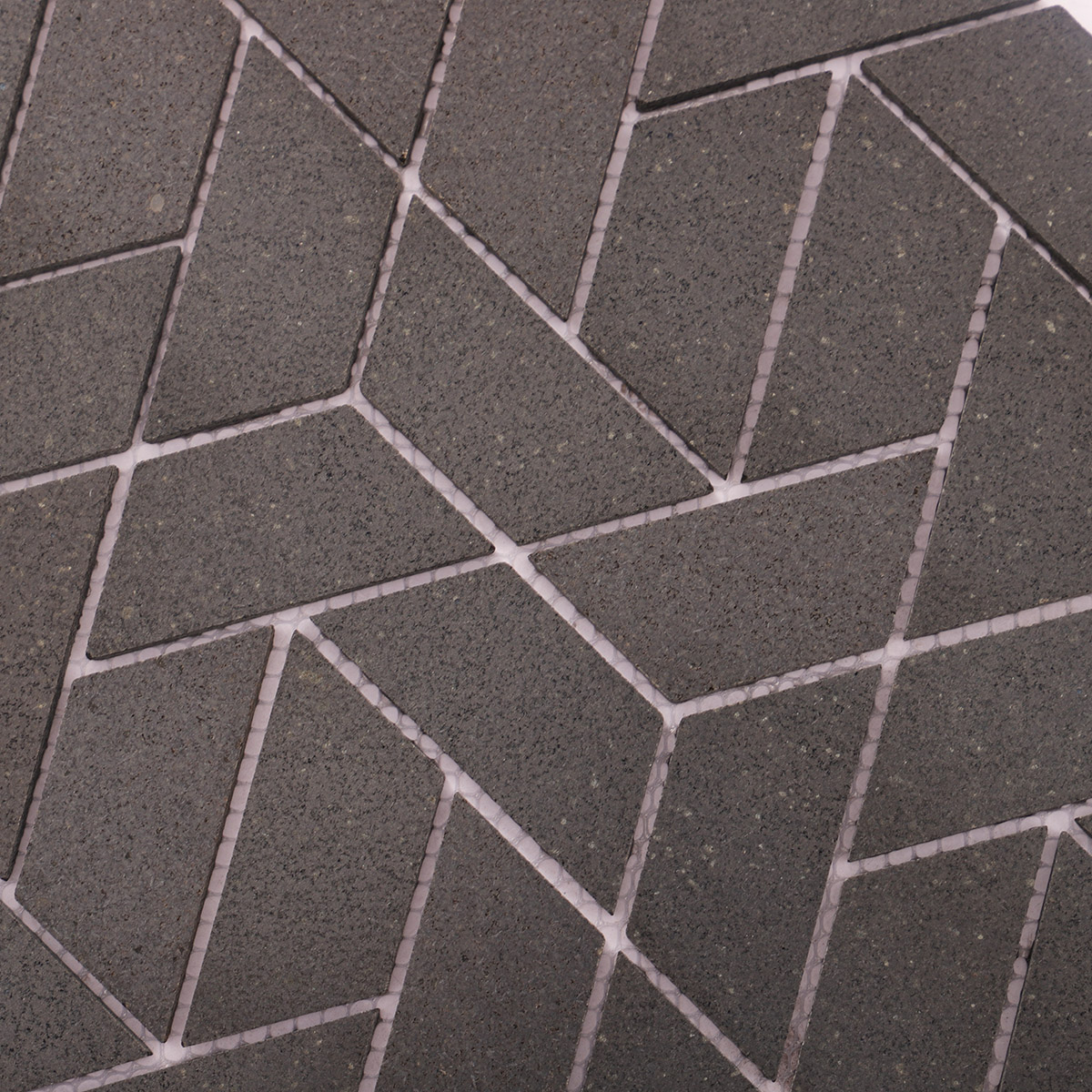
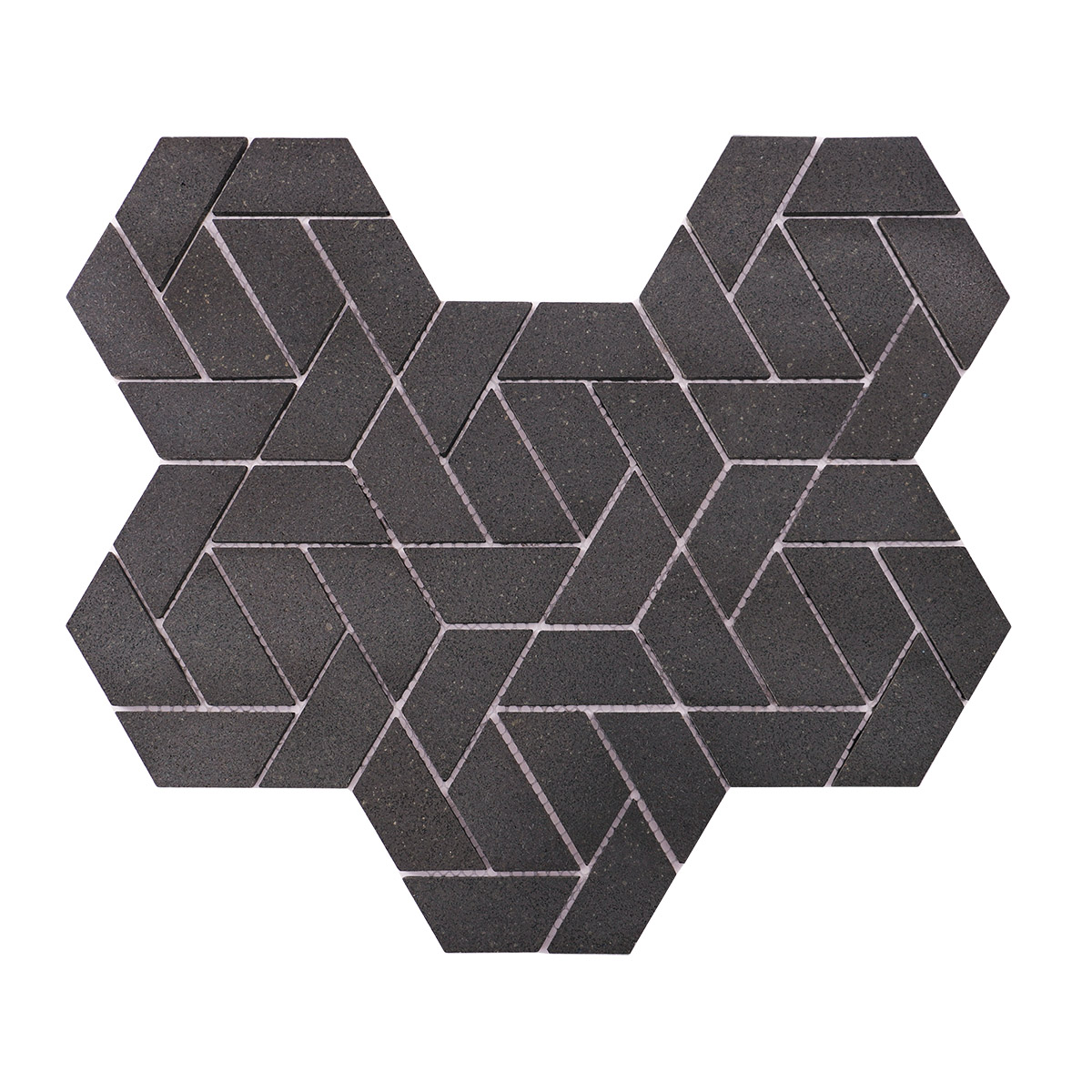
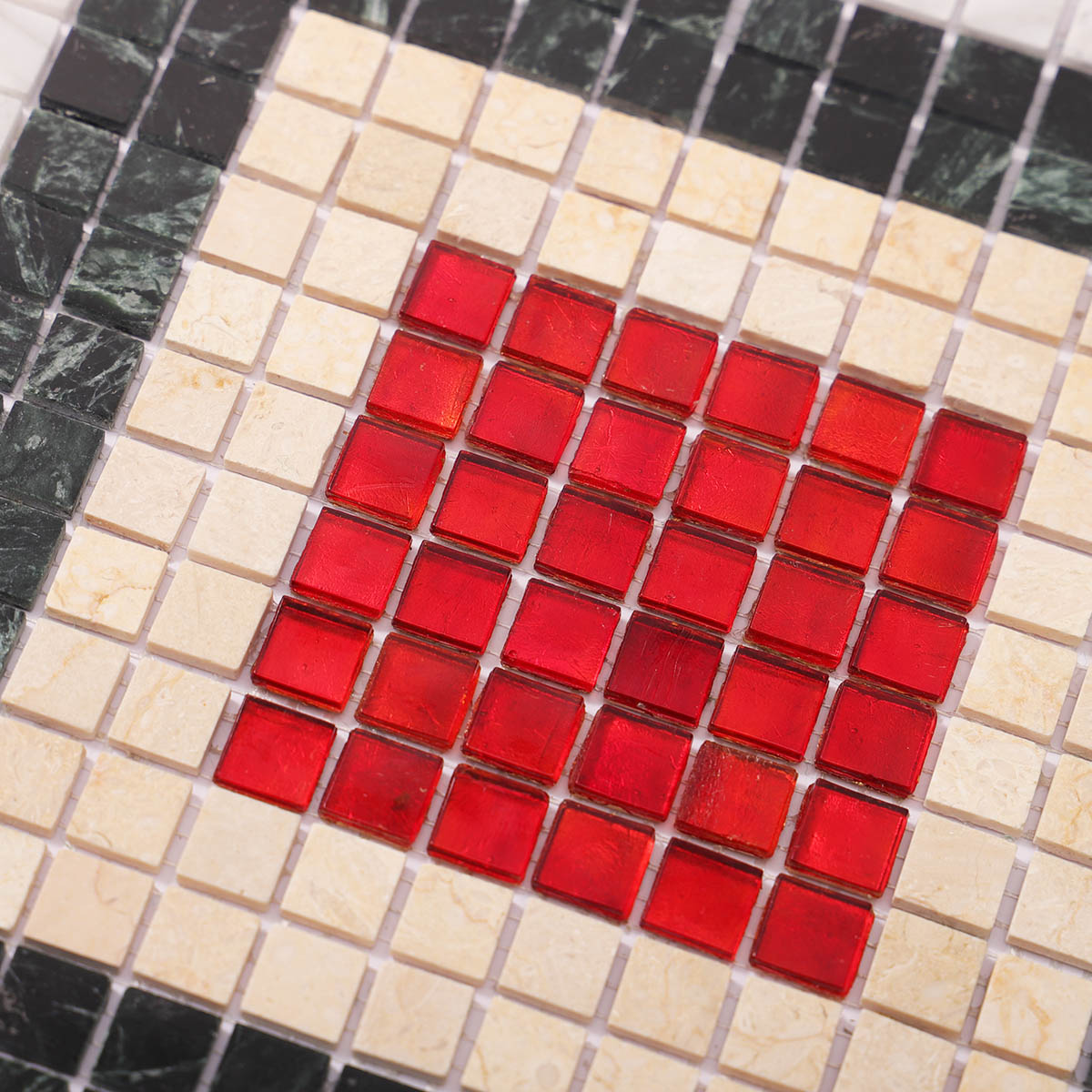
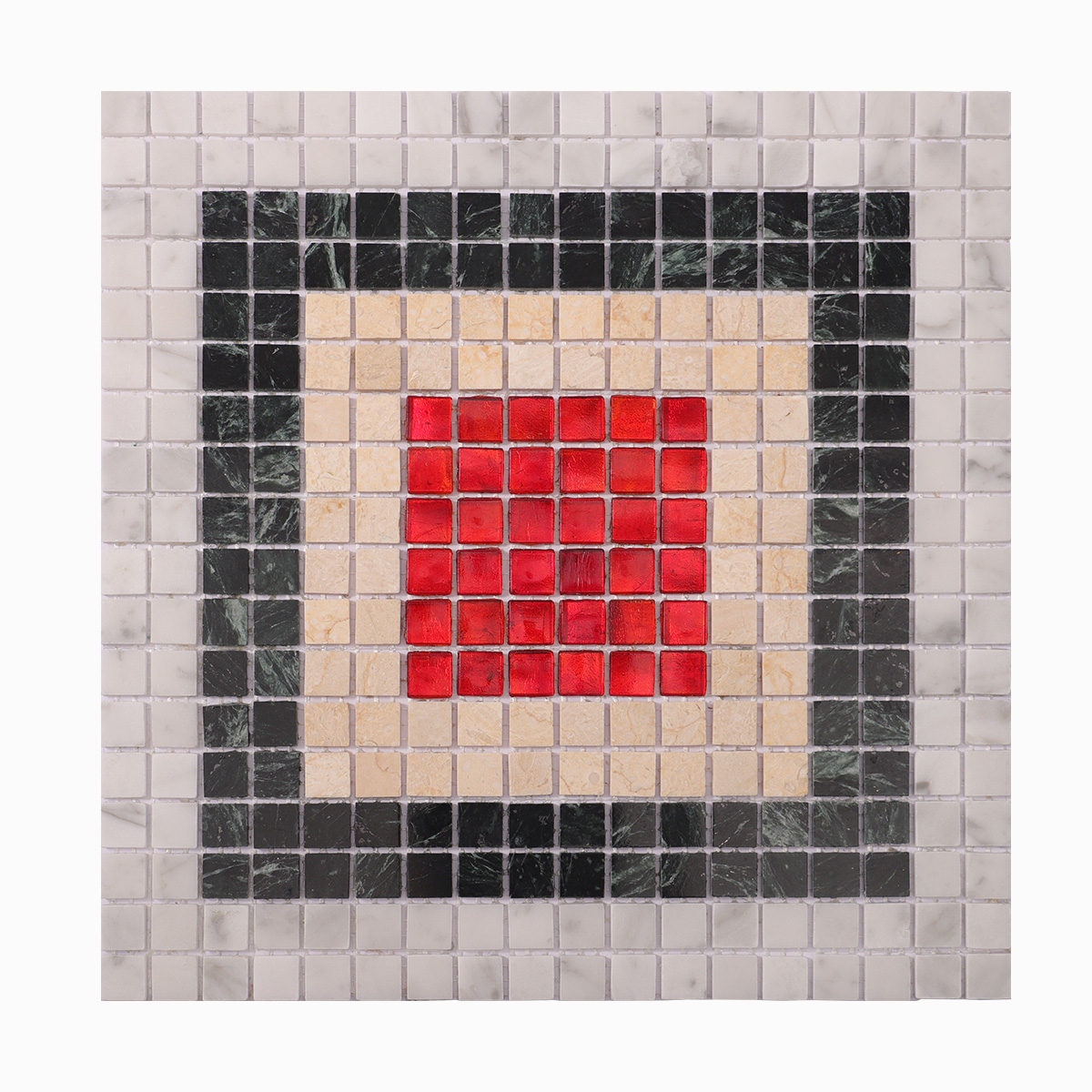
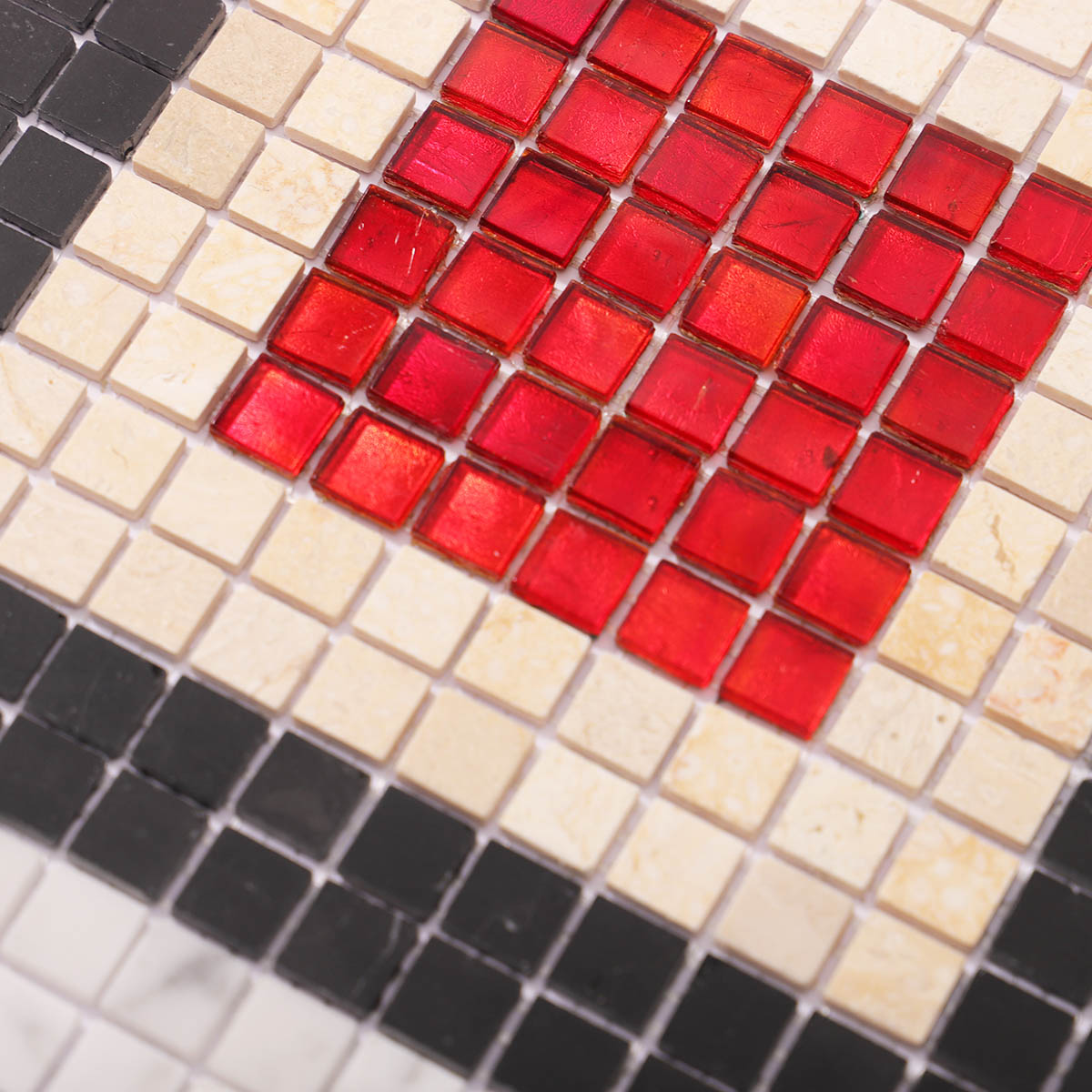
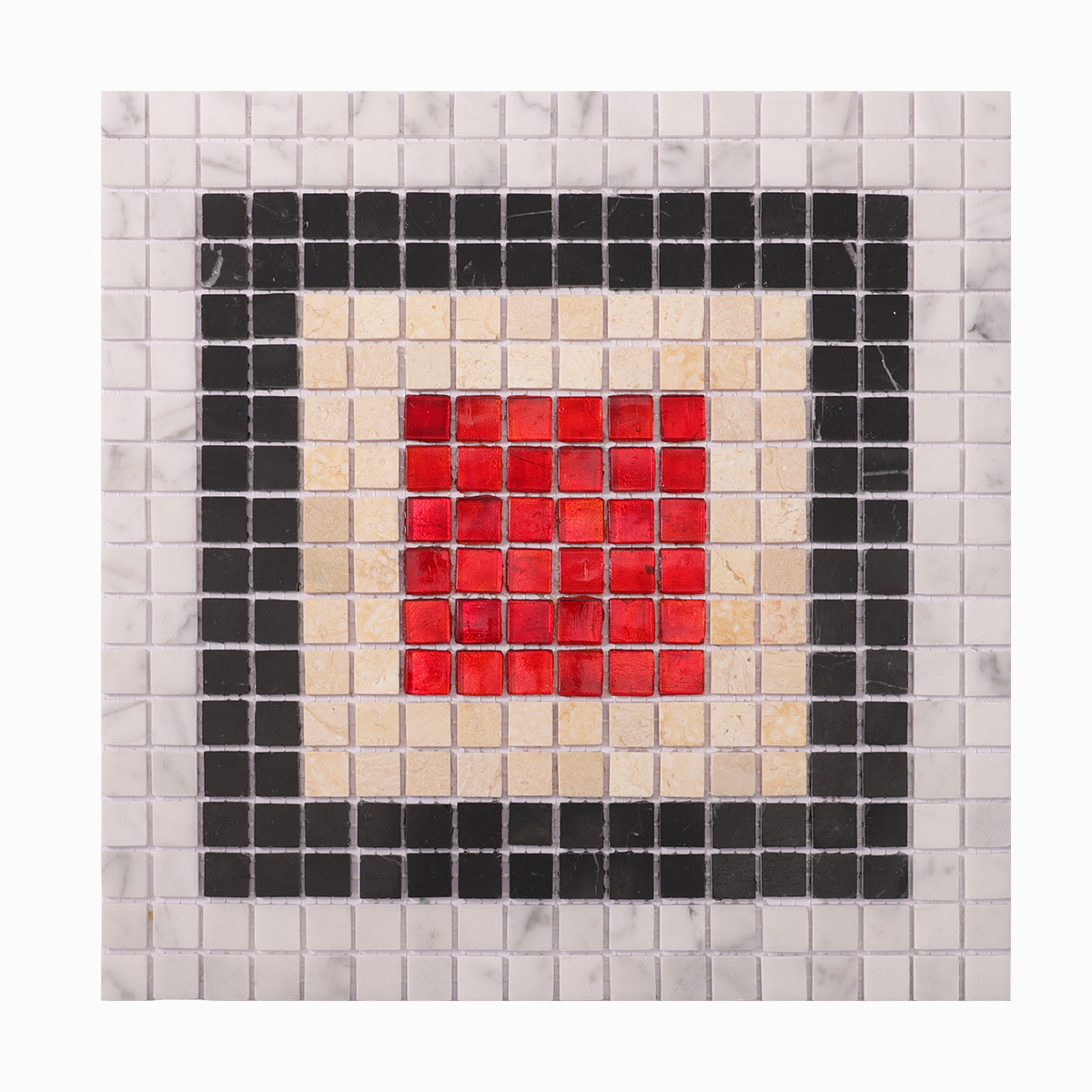
Modern geometric floor tiles transform genuine natural stone into structured patterns that feel artistic, architectural, and unmistakably luxurious. At SAICINA TILES, we combine carefully selected marble, limestone, travertine, granite, and optional brass details with precision cutting and refined finishing to create distinctive flooring for residential and commercial interiors.
Unlike printed stone-look surfaces, genuine natural stone carries its own veining, mineral movement, tonal variation, and depth. No two pieces are exactly alike. When these natural characteristics are arranged into hexagons, diamonds, chevrons, cubes, basketweaves, or custom waterjet patterns, the floor becomes a permanent design feature rather than a neutral background.
Explore the SAICINA TILES collection, request material samples, or contact our team to develop a custom geometric floor for your project.
Why Choose Natural Stone Geometric Floor Tiles?
Natural stone and geometric design complement each other perfectly. The precision of the pattern brings visual order, while the organic variation of the stone prevents the installation from looking flat or repetitive.
Authentic Natural Character
Our natural stone tiles are cut from genuine quarried material rather than printed with a simulated surface pattern. Veining, crystalline details, fossils, mineral marks, and tonal transitions are inherent characteristics of the stone.
These variations give the finished floor a sense of movement and individuality. Samples show the general character of a material, but the full installation will display a broader natural range.
Architectural Pattern and Visual Rhythm
Geometric layouts use repetition, symmetry, contrast, and directional lines to organize a room visually. A bold black-and-white pattern can define an entrance, while a soft beige marble mosaic can introduce subtle texture without overwhelming a minimalist interior.
Pattern scale can also influence how a room feels. Smaller mosaics create intricate detail and additional grout joints, while larger modules produce a cleaner and more expansive appearance.
Durable Material for Long-Term Interiors
Natural stone has been used in architectural flooring for centuries. When the stone type, thickness, finish, installation system, and maintenance plan are appropriate for the application, it can provide long-lasting performance in homes, hotels, restaurants, reception areas, and other refined interiors.
Because marble, limestone, travertine, and granite have different physical properties, SAICINA TILES recommends selecting each material according to the expected traffic level, moisture exposure, finish, and project requirements.
Design Flexibility
Modern geometric flooring can be understated or dramatic. Choose a single stone for a tone-on-tone pattern, combine contrasting marbles for stronger definition, or introduce brass lines for a refined metallic accent.
Available design options include:
-
Single-material natural stone patterns
-
Two-tone and multicolor marble combinations
-
Marble and brass inlay designs
-
Borders, corners, and transition pieces
-
Mesh-mounted mosaic sheets
-
Preassembled waterjet modules
-
Large custom floor compositions
-
Logos, monograms, and branded commercial designs
-
Custom sizes, colors, and pattern proportions
Explore Our Natural Stone Geometric Flooring Collection
Geometric Marble Floor Tiles
Marble is one of the most recognizable materials for luxury geometric flooring. Its natural veining and translucent mineral depth soften precise geometric lines, creating a surface that feels both structured and organic.
SAICINA TILES can develop patterns using white, gray, beige, brown, green, red, and black marble. Popular combinations include white and gray marble for quiet contemporary interiors, black and white marble for Art Deco contrast, and warm beige stone with brass details for modern luxury spaces.
Depending on the specific stone and finish, marble geometric tiles may be suitable for residential floors, bathroom floors, foyers, hotel interiors, restaurants, and selected commercial applications.
Limestone and Travertine Geometric Tiles
Limestone and travertine introduce warmer colors, softer movement, and a relaxed architectural character. Cream, sand, ivory, taupe, and earthy gray tones work particularly well in minimalist, Mediterranean, European-inspired, and contemporary interiors.
Travertine may feature natural pores and linear or cloudy movement. These characteristics can be filled, partially filled, or intentionally retained depending on the requested finish and application.
Granite Geometric Flooring
Granite is valued for its dense structure and distinctive mineral composition. Selected granite varieties can be considered for entrances, hospitality projects, retail spaces, and other areas where the design requires natural stone with robust performance.
The exact suitability depends on the granite variety, surface finish, thickness, installation method, and applicable project standards.
Waterjet Marble Mosaic Tiles
Precision waterjet cutting makes it possible to create curves, narrow lines, complex angles, and interlocking shapes that are difficult to achieve with conventional cutting methods.
Waterjet geometric flooring may include:
-
Interlocking marble shapes
-
Fine curved borders
-
Repeating Art Deco patterns
-
Contemporary line compositions
-
Floral geometry
-
Compass and medallion-inspired designs
-
Custom entryway panels
-
Marble floor rugs
-
Logos and brand symbols
Individual pieces can be assembled into numbered modules or mesh-mounted sheets to simplify layout and help installers maintain the intended pattern.
Marble and Brass Inlay Tiles
Brass introduces warm contrast against white, black, green, gray, or beige stone. It can be used as a narrow line, geometric connector, border, or focal detail.
As a living metal, untreated brass may gradually develop natural patina. Customers who prefer a more consistent appearance should discuss the desired metal finish, protection, cleaning method, and expected aging before production.
Custom Natural Stone Mosaic Floors
SAICINA TILES creates custom natural stone mosaics for projects that require more than a standard repeating pattern. Designs may be developed from architectural drawings, reference images, logos, artwork, or an original concept.
Custom possibilities include:
-
Geometric art floors
-
Abstract compositions
-
Floral and botanical motifs
-
Landscape-inspired mosaics
-
Hotel and restaurant branding
-
Retail logo floors
-
Villa entrance features
-
Decorative borders and corner sets
-
Custom color combinations
-
Coordinated wall and floor mosaics
Every composition is adapted to the required dimensions, material palette, pattern scale, installation area, and viewing distance.
Popular Modern Geometric Floor Tile Patterns
Hexagon Tiles
Hexagons create a balanced honeycomb structure that works in both traditional and contemporary interiors. Small marble hexagons add fine texture, while oversized hexagons produce a cleaner architectural effect.
Diamond and Rhombus Tiles
Diamonds and rhombuses establish diagonal movement across the floor. They can be installed as a simple repeating pattern or combined in multiple colors to form stars, cubes, or dimensional optical effects.
3D Cube and Tumbling Block Patterns
Tumbling block designs use three contrasting diamond shapes to create the illusion of dimensional cubes. Subtle tonal changes produce a calm effect, while high-contrast stone combinations make the optical pattern more pronounced.
Herringbone and Chevron Floors
Herringbone uses staggered rectangular pieces, while chevron tiles meet at aligned angles. Both patterns guide the eye through a room and are effective in corridors, kitchens, entryways, and open-plan interiors.
Basketweave and Pinwheel Mosaics
Basketweave and pinwheel patterns combine small rectangular and square pieces. They bring classic European character to bathrooms, powder rooms, foyers, and boutique hospitality interiors.
Square and Checkerboard Floors
Checkerboard flooring can feel classical, retro, or contemporary depending on the stone colors, tile size, and surrounding furnishings. Black and white create strong contrast, while cream and beige combinations offer a softer interpretation.
Triangles and Mixed Geometric Shapes
Triangles can be rotated to form diamonds, stars, hexagons, arrows, and abstract compositions. Mixed-shape patterns are ideal for original floors that cannot be achieved with a single tile format.
Custom Borders and Floor Medallions
A border can frame an entryway, define a dining zone, or separate two flooring materials. Custom medallions and central panels create a clear focal point in villas, hotel lobbies, private clubs, and formal reception areas.
Natural Stone Colors and Finishes
Popular Color Families
Our geometric stone floors can be developed in a wide range of natural palettes:
-
Pure and warm whites
-
Carrara-style white and gray
-
Cream and ivory
-
Beige and sand
-
Taupe and warm gray
-
Charcoal and black
-
Brown and deep espresso
-
Green marble tones
-
Red and burgundy stone
-
Multicolor custom combinations
-
Natural stone with brass accents
Screen images cannot reproduce every natural variation accurately. Physical samples are recommended before final approval.
Honed Finish
A honed finish has a smooth, low-sheen appearance. It supports modern and understated interiors and generally shows fewer reflections than polished stone.
Finish selection should still be evaluated for the intended traffic, cleaning requirements, and applicable slip-resistance standards.
Polished Finish
Polished stone reflects more light and emphasizes the color and mineral depth of marble. It is often selected for formal interiors and decorative areas.
Polished finishes may be less appropriate for wet or slip-sensitive floors. Confirm suitability with the architect, installer, and local project requirements.
Brushed, Tumbled, and Antiqued Finishes
These finishes create a softer, more aged appearance. They work well in Mediterranean, European, rustic luxury, and heritage-inspired interiors.
Textured and Slip-Conscious Finishes
For bathrooms, entrances, hospitality spaces, and other areas where traction is important, consider a honed or appropriately textured finish. Small-format mosaics may also introduce more grout joints, but the completed assembly must still meet the required project standard.
Where to Use Modern Geometric Floor Tiles
Luxury Residential Interiors
Natural stone geometric floors can create a refined foundation for:
-
Villa entrances
-
Apartment foyers
-
Living rooms
-
Dining rooms
-
Kitchens
-
Bathrooms
-
Powder rooms
-
Dressing rooms
-
Interior corridors
-
Home bars
-
Private indoor courtyards
Bathrooms and Wet Areas
Geometric mosaics are popular for bathroom floors because their smaller scale can accommodate slopes and detailed layouts. However, natural stone tile, grout, mortar, and sealer do not replace the waterproofing system beneath the installation.
Wet-area projects require suitable waterproofing, drainage, setting materials, movement accommodation, grout, sealing, and professional installation. Confirm that the selected stone and finish are approved for the exact wet-area application.
Kitchens and Dining Areas
A geometric stone floor can define an open kitchen or dining zone without adding a physical divider. Select a properly sealed material and clean food, oil, wine, citrus, and other spills promptly.
Entryways and Hallways
Entrances are ideal for graphic patterns, borders, and custom medallions. Because grit carried in from outside can scratch some stones, use entrance mats and maintain a regular dust-mopping routine.
Hotels and Hospitality Projects
Custom stone mosaics can strengthen the visual identity of:
-
Hotel lobbies
-
Reception areas
-
Restaurants
-
Cafés
-
Bars
-
Private clubs
-
Spa reception areas
-
Luxury guest bathrooms
Material selection should reflect the expected foot traffic and commercial maintenance plan.
Retail and Commercial Interiors
Branded mosaics, logo floors, and directional geometric patterns can help create a memorable customer experience in flagship stores, showrooms, galleries, offices, and high-end beauty spaces.
How to Choose Modern Geometric Floor Tiles
Match the Pattern Scale to the Room
Large patterns need enough open floor area to be seen clearly. They work well in lobbies, foyers, living rooms, and open commercial spaces.
Smaller mosaics suit bathrooms, powder rooms, niches, and detailed borders. In compact rooms, a continuous pattern can make the floor feel more unified, while too many unrelated colors may make it feel visually crowded.
Consider the Viewing Distance
Intricate mosaics are most effective where people can see them at close range. Larger geometric compositions are easier to understand from across a lobby, restaurant, or open-plan residence.
For custom projects, SAICINA TILES can adjust the size of individual pieces and the overall pattern repeat to suit the installation area.
Select Stone for the Application
Do not select natural stone by appearance alone. Consider:
-
Residential or commercial use
-
Expected traffic level
-
Wet or dry location
-
Interior or exterior placement
-
Required slip resistance
-
Stone thickness
-
Substrate and structural conditions
-
Cleaning and maintenance plan
-
Local building requirements
A stone that performs well on a residential powder room floor may not be the best choice for a high-traffic hotel entrance.
Choose the Right Level of Contrast
High-contrast combinations make the geometry more visible. Black and white marble, for example, creates a strong graphic statement.
Tone-on-tone combinations use related shades to create a quieter pattern. White and pale gray, beige and cream, or multiple shades of the same marble work well in refined minimalist interiors.
Coordinate the Grout Color
Grout has a major influence on the finished appearance. A contrasting grout emphasizes every shape and joint, while a coordinating grout allows the stone pattern to read more continuously.
Always test grout and sealer on sample material. Some natural stones can absorb pigment or react differently during grouting.
Order and Review Samples
A physical sample helps evaluate color, finish, scale, edge quality, and material compatibility. Because stone is naturally variable, a sample cannot represent every piece in the final order.
For custom patterns, a sample module or strike-off can be produced for approval before full production when required.
Custom Design and Manufacturing Process
1. Share Your Project Information
Provide the installation dimensions, drawings, reference images, required quantity, location, design style, and preferred materials. For irregular spaces, include an accurately dimensioned plan.
2. Select Materials and Finishes
Our team helps coordinate stone colors, pattern contrast, surface finish, grout direction, metal details, and module size. Material suitability is reviewed according to the information provided for the application.
3. Develop the Pattern
The design is converted into a production-ready layout. Custom waterjet projects may include shop drawings, pattern repeats, border sections, corner pieces, and numbered modules.
4. Produce a Sample
When required, SAICINA TILES can produce a sample for review of color, cutting, proportion, joint width, assembly, and overall appearance.
Natural material variation must still be expected between the sample and full production.
5. Precision Fabrication
Approved materials are cut, finished, sorted, and assembled according to the confirmed design. Depending on the pattern, pieces may be supplied as mesh-mounted sheets, loose tiles, or numbered modules.
6. Quality Inspection
The production team checks pattern alignment, dimensions, visible defects, color distribution, assembly, and packaging before shipment.
7. Protective Packaging and Delivery
Packaging is planned according to the product format, quantity, weight, and transportation method. Custom stone mosaics require careful handling, and the receiving team should inspect all cartons before installation.
Professional Installation Guidelines
Natural stone geometric flooring should be installed by an experienced tile or stone professional, particularly when the design includes waterjet pieces, multiple materials, borders, or metal inlays.
Inspect Before Installation
Check the material, dimensions, finish, quantity, color range, and pattern before installation begins. Installation normally indicates acceptance of the material.
Report transit damage or significant concerns before the tiles are installed.
Dry-Lay the Pattern
Lay out the tiles without adhesive to confirm the pattern, direction, border position, and distribution of natural variation. Open and mix material from multiple cartons to avoid visible blocks of similar shades.
For custom floors, confirm the centerline and main viewing direction before setting the first module.
Prepare a Stable Substrate
The substrate must be clean, flat, structurally suitable, and properly prepared for natural stone. Movement joints, deflection requirements, moisture conditions, and waterproofing must be addressed by the project professional.
Use Compatible Setting Materials
The installer should select mortar, grout, membranes, sealers, and other products compatible with the specific stone, backing, substrate, and application. Light-colored setting materials are often considered for pale or translucent stone, but the installer must confirm the correct system.
Test Before Grouting and Sealing
Perform a test on spare material before applying grout, enhancer, cleaner, or sealer across the installation. Some stones and metals may change appearance when exposed to these products.
Protect the Finished Floor
Allow the installation system to cure according to the manufacturers’ instructions. Protect the floor from construction traffic, dust, paint, metal debris, and abrasive materials until the project is complete.
How Much Tile Should You Order?
Begin with the measured installation area, then allow additional material for cuts, pattern alignment, breakage, future repair, and natural selection.
Many straightforward projects use approximately 10% additional material. Diagonal layouts, complex waterjet patterns, borders, irregular rooms, and highly selective stone layouts may require 15% or more.
The final quantity should be confirmed by the installer or project professional after reviewing the layout. Ordering enough material at one time is recommended because later production may come from a different stone lot.
Natural Stone Floor Care and Maintenance
Routine Cleaning
Sweep or dust-mop the floor regularly. Sand, dirt, and grit can act as abrasives and may dull or scratch some stone finishes.
Clean with a soft mop and a pH-neutral product formulated for natural stone. Rinse according to the cleaner manufacturer’s instructions and avoid leaving concentrated cleaner on the surface.
Clean Spills Promptly
Blot spills instead of spreading them across the floor. Wine, coffee, oils, citrus, vinegar, and other acidic or strongly pigmented substances should be removed promptly.
Marble, limestone, and travertine contain calcium-based minerals that may be etched by acidic products.
Avoid Harsh Products
Do not use vinegar, lemon-based cleaners, abrasive powders, strong bleach solutions, or unknown chemicals unless the product is specifically approved for the selected stone and sealer.
Seal When Required
Many natural stone floors benefit from a penetrating sealer. The correct product and reapplication schedule depend on the stone, finish, traffic, exposure, and sealer manufacturer.
Sealing improves resistance to staining but does not make stone completely stain-proof, waterproof, or maintenance-free.
Protect High-Traffic Areas
Use clean entrance mats in areas exposed to outdoor grit. Ensure the underside of each mat is suitable for the stone and does not trap damaging moisture or chemicals.
Deep scratches, chips, etching, or significant staining should be assessed by a professional stone restoration specialist.
Natural Stone vs. Other Flooring Materials
Natural Stone vs. Stone-Look Porcelain
Natural stone provides genuine mineral depth, organic variation, and a one-of-a-kind surface. Porcelain generally offers greater consistency and may require less routine maintenance.
Choose natural stone when authenticity and material character are central to the design. Choose porcelain when maximum consistency, low absorption, or simplified maintenance is the main priority.
Natural Stone vs. Wood Flooring
Natural stone offers a different visual and physical character from wood. It does not rely on a wood wear layer and can be considered for kitchens, entrances, and bathrooms when the complete installation system is properly designed.
Stone feels harder and cooler underfoot, while wood provides natural warmth. Both materials require suitable care and installation.
Geometric Mosaic vs. Large-Format Stone
Large-format stone creates broad, uninterrupted surfaces. Geometric mosaics provide more pattern, detail, and flexibility around curves, slopes, borders, and small spaces.
The two formats can also be combined. A mosaic border or central panel can be installed within a larger field of coordinated stone.
Why Choose SAICINA TILES?
SAICINA TILES specializes in natural stone mosaics, geometric tiles, waterjet patterns, and custom architectural surfaces for residential and commercial projects.
Our capabilities include:
-
Genuine natural marble and stone selection
-
Precision waterjet cutting
-
Standard and custom geometric patterns
-
Marble and brass combinations
-
Mesh-mounted and numbered modular assembly
-
Custom colors, dimensions, and finishes
-
Logo and artwork conversion
-
Samples and preproduction review
-
Residential and commercial project support
-
Quality inspection before shipment
-
Protective export packaging
-
International delivery coordination
Whether you are selecting a standard marble mosaic or developing a completely original floor, our team can help coordinate the pattern, materials, fabrication, and packaging around your project requirements.
Frequently Asked Questions
What Are Modern Geometric Floor Tiles?
Modern geometric floor tiles are shaped or patterned tiles that use repeated forms such as hexagons, diamonds, squares, triangles, circles, chevrons, or interlocking lines. They can be made from natural stone, porcelain, ceramic, terrazzo, metal, or mixed materials.
Are Natural Stone Geometric Tiles Suitable for Floors?
Many natural stone geometric tiles can be used on floors, but suitability depends on the stone variety, thickness, finish, traffic level, substrate, and installation system. Always review the specifications for the individual product and application.
Can Geometric Tiles Be Used on Bathroom Floors?
Yes, selected geometric tiles can be used on bathroom floors. Choose a suitable stone and finish, confirm slip-resistance requirements, install a proper waterproofing and drainage system, and use compatible setting and sealing products.
Are Polished Marble Tiles Slippery?
Polished marble can be more slippery when wet than honed or textured finishes. It may not be appropriate for every bathroom, shower, entrance, or commercial floor. Confirm local requirements and product suitability before specifying it.
Do Natural Stone Floor Tiles Need Sealing?
Many marble, limestone, travertine, and granite products benefit from sealing. Sealing requirements vary according to the material, finish, location, and chosen sealer. Test the product before full application.
Will Every Tile Look Exactly Like the Sample?
No. Natural stone varies in veining, shade, mineral markings, and texture. A sample represents the general material rather than the complete range of the final order.
What Pattern Is Best for a Small Room?
Small hexagons, fine basketweaves, diamonds, and simple tone-on-tone mosaics can work well in compact rooms. A continuous pattern and restrained color palette often create a more unified appearance.
What Pattern Works Best in a Large Entrance?
Large diamonds, bold checkerboards, waterjet compositions, framed borders, and custom medallions are effective in spacious entrances because the entire design can be viewed from a distance.
Can You Create a Custom Pattern or Logo?
Yes. SAICINA TILES can develop custom natural stone mosaics, geometric patterns, borders, logos, monograms, and decorative floor panels from drawings, images, or design concepts.
Can Brass Be Added to a Marble Floor?
Yes. Brass can be incorporated as lines, borders, connectors, and decorative details. Brass may develop patina over time, so the desired finish and maintenance expectations should be discussed before production.
Are Geometric Stone Tiles Compatible With Underfloor Heating?
Natural stone is commonly used with radiant floor-heating systems when the complete assembly is properly designed. The heating supplier, architect, and installer should confirm substrate preparation, movement joints, setting materials, and operating procedures.
How Should Natural Stone Tiles Be Cleaned?
Sweep or dust-mop regularly and clean with a pH-neutral natural stone cleaner. Remove spills promptly and avoid acidic or abrasive products unless specifically approved for the stone.
How Much Extra Tile Should I Order?
Many projects require approximately 10% extra material. Complex patterns, diagonal layouts, borders, natural variation, and irregular rooms may require 15% or more. Ask the installer to calculate the final quantity.
Should Geometric Stone Floors Be Professionally Installed?
Professional installation is strongly recommended. Natural stone and geometric patterns require careful substrate preparation, dry layout, material blending, accurate alignment, compatible setting products, and appropriate sealing.
Create Your Custom Geometric Stone Floor
Turn natural marble, limestone, travertine, granite, and brass into a floor designed specifically for your space. Choose an existing SAICINA TILES pattern or send us your dimensions, drawings, reference images, and preferred colors for a custom proposal.
Contact SAICINA TILES today to request samples, discuss material options, or begin your custom modern geometric floor tile project.