


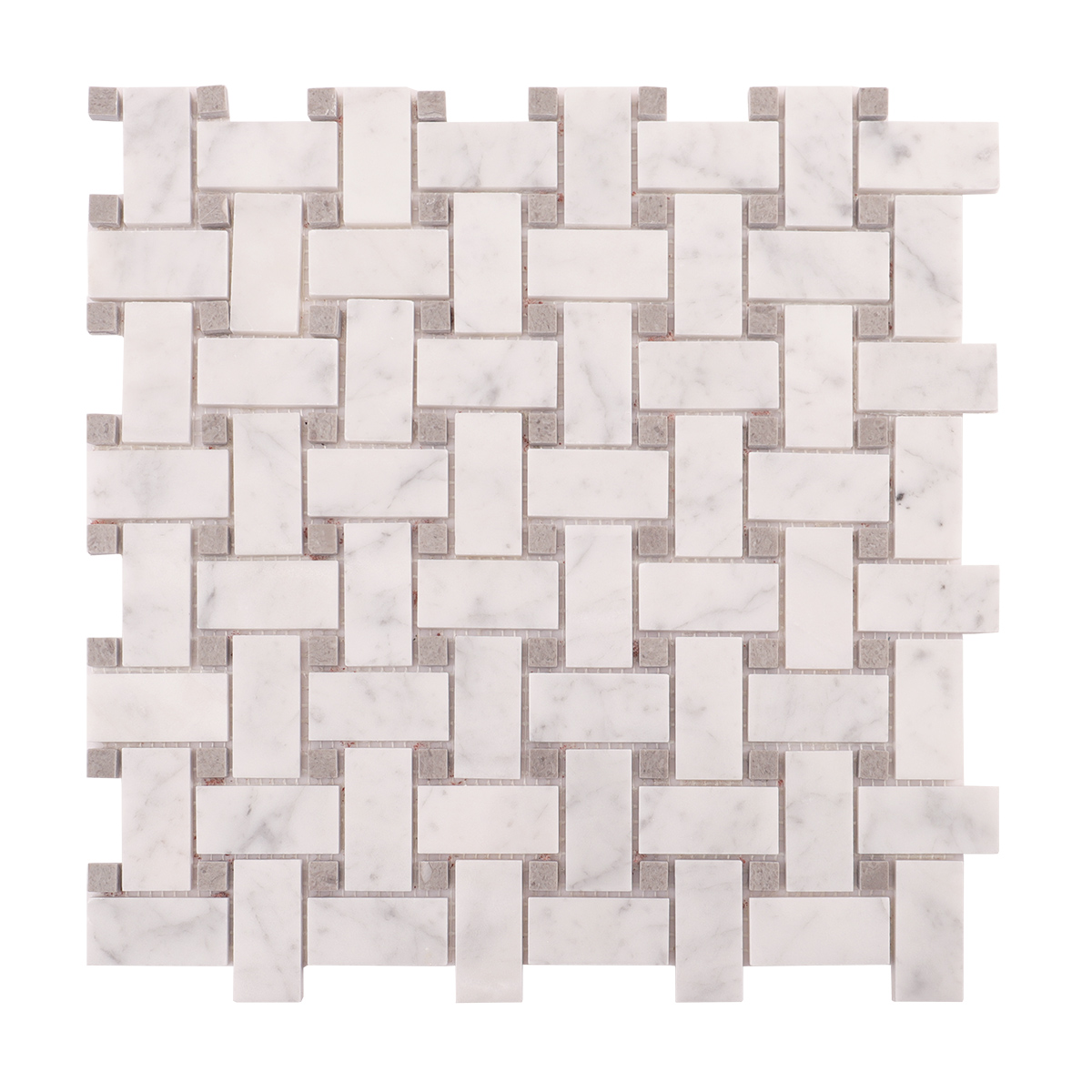
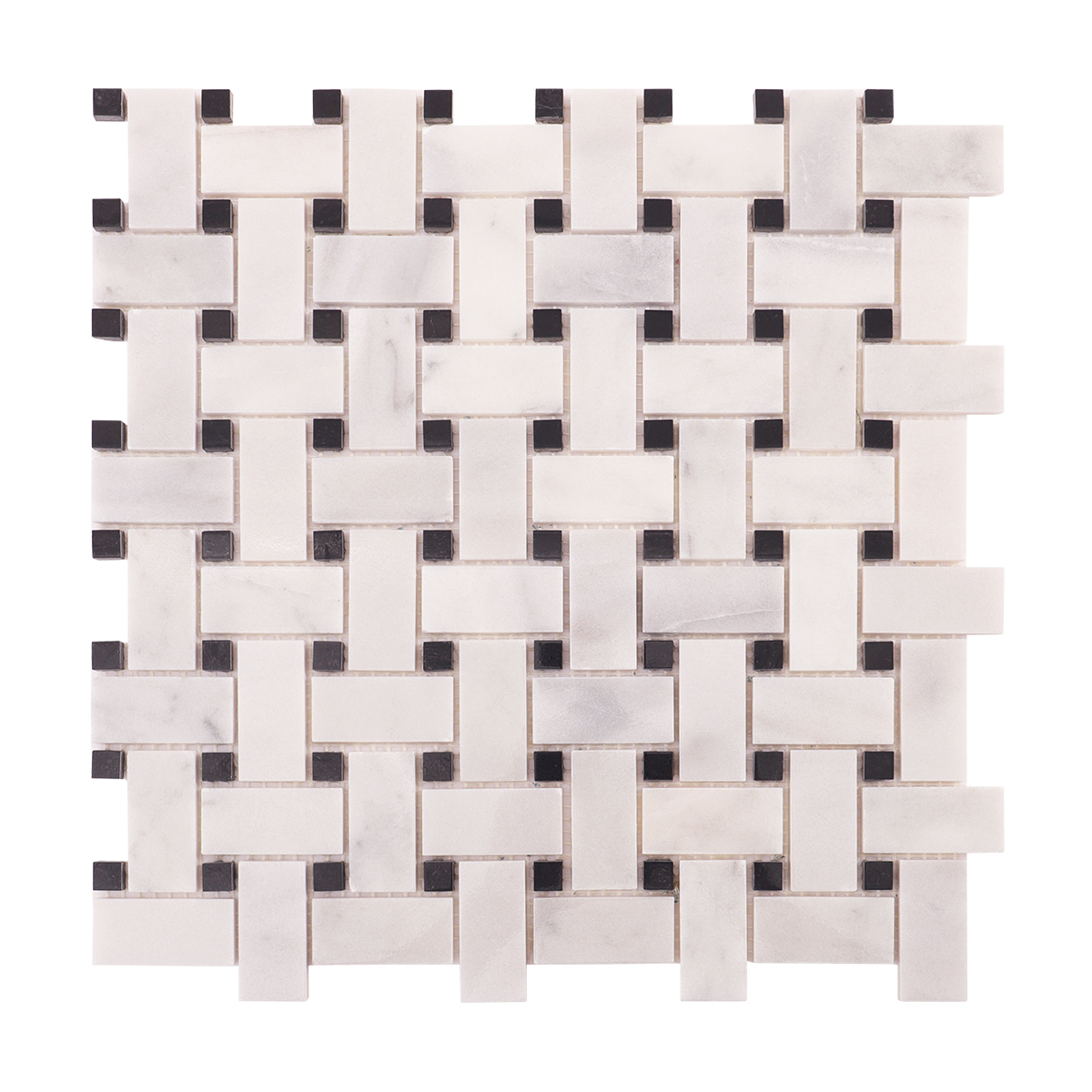
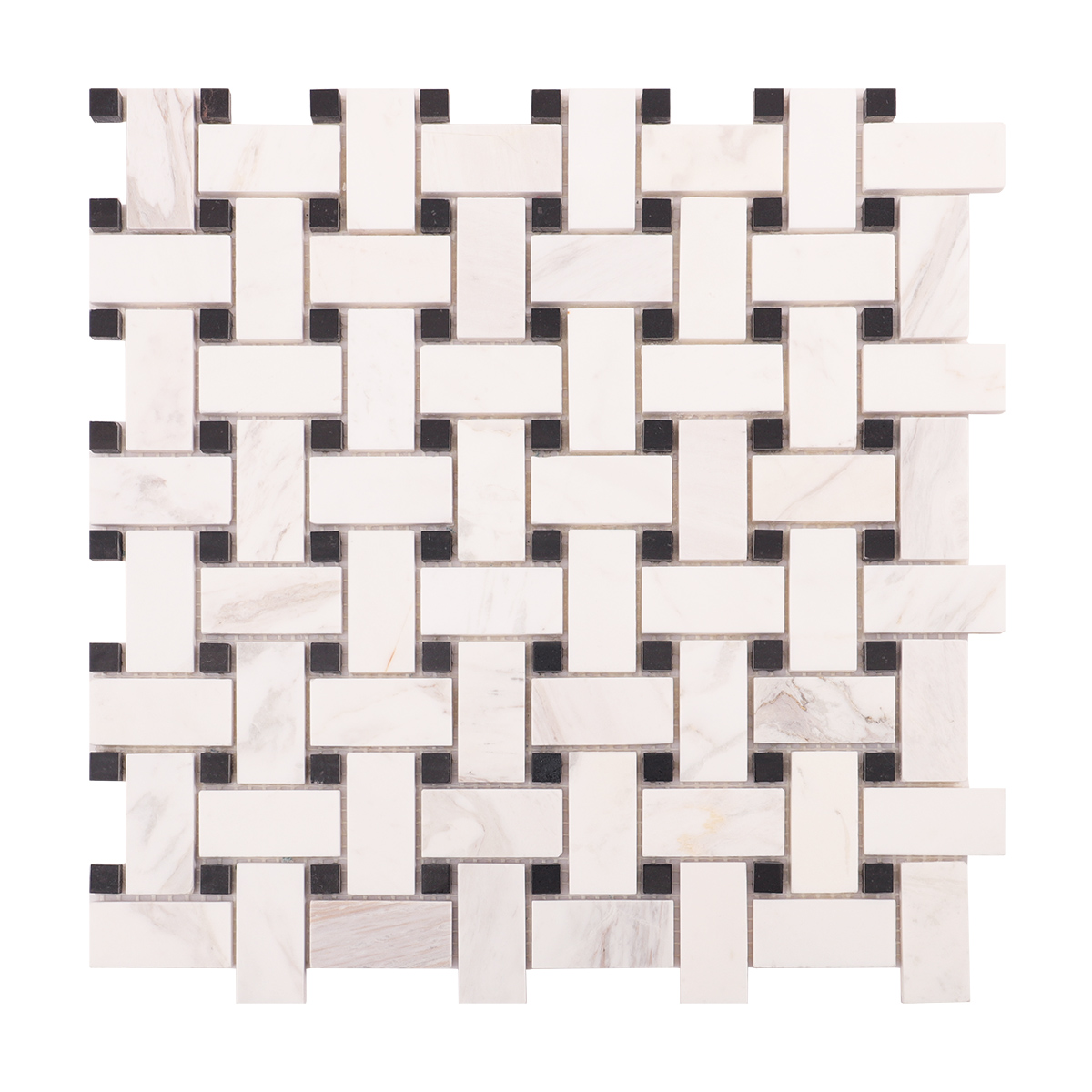
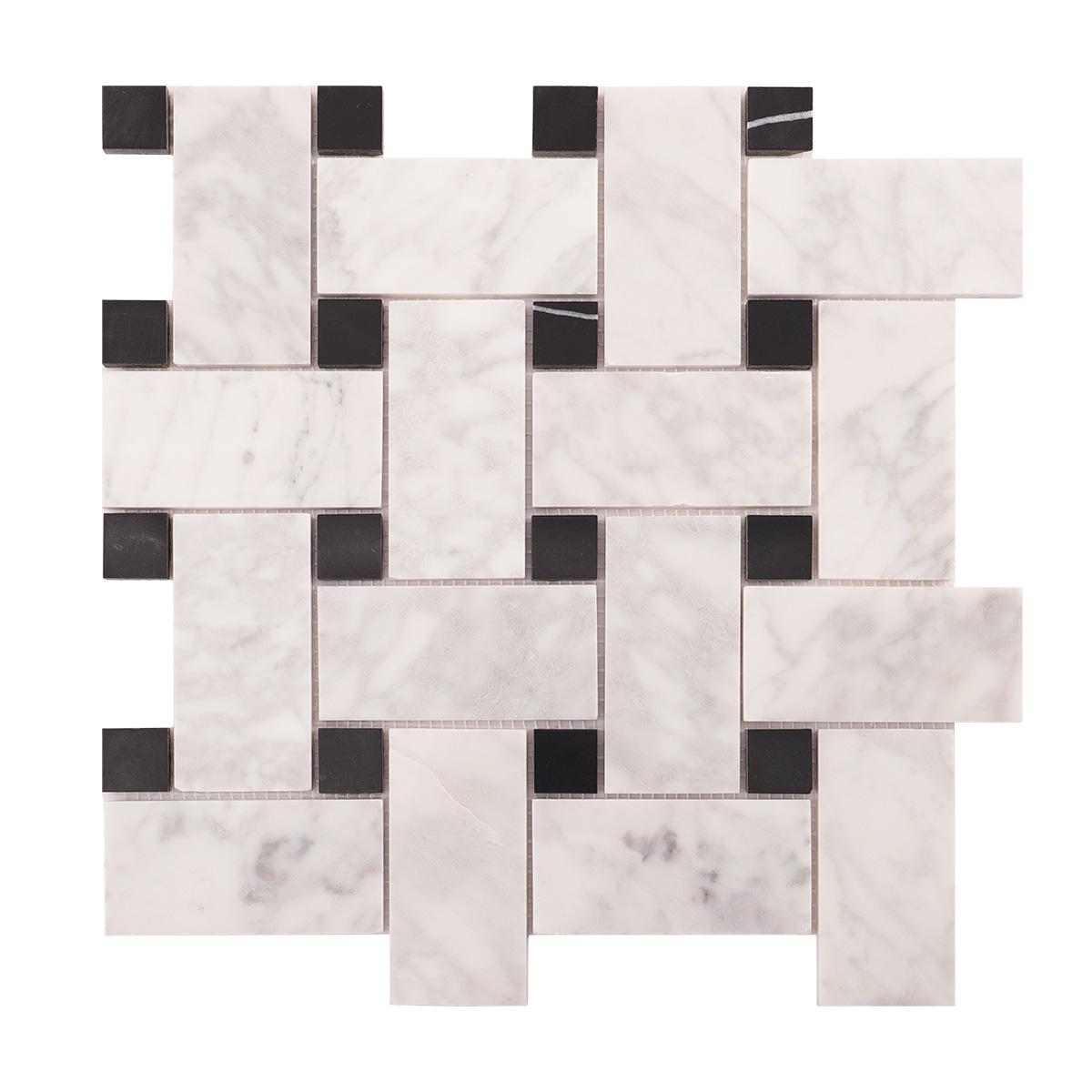

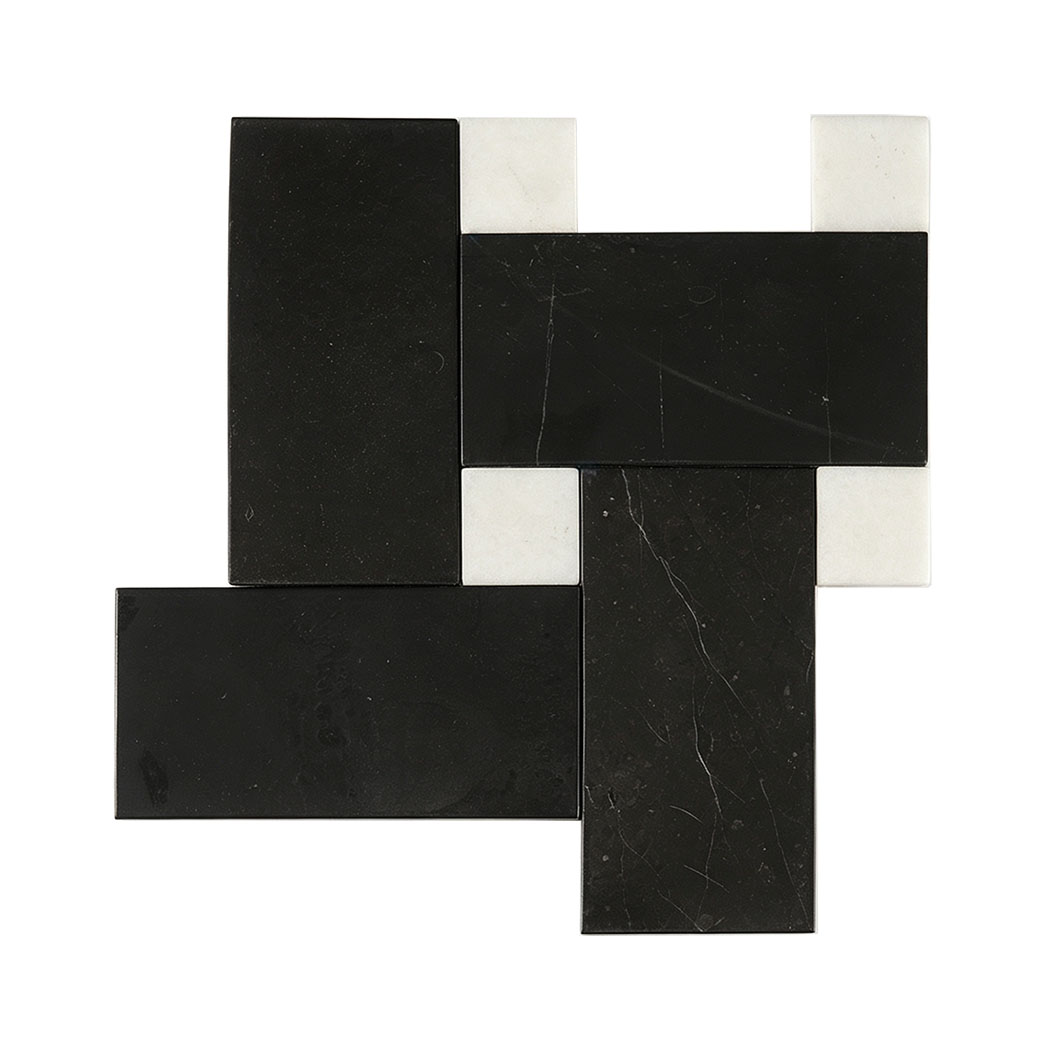
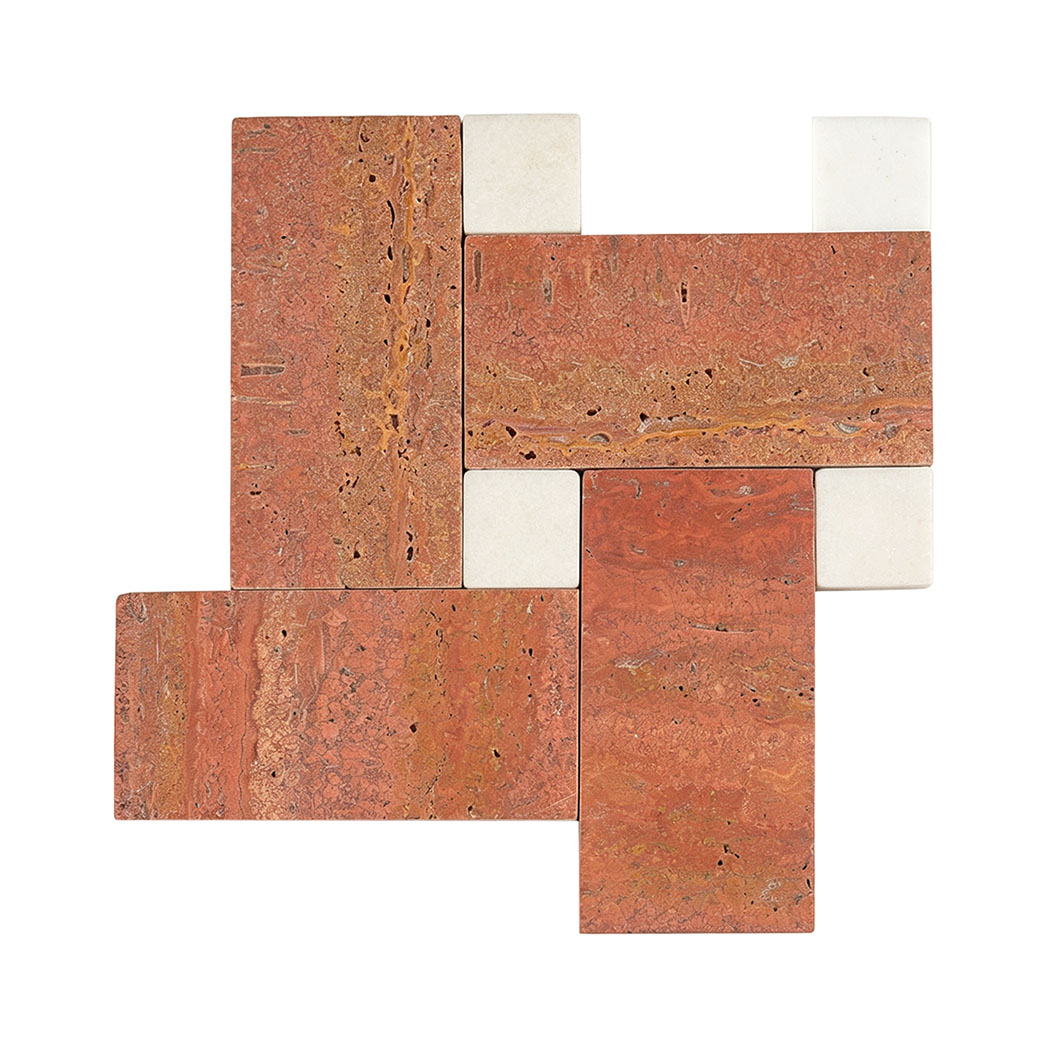

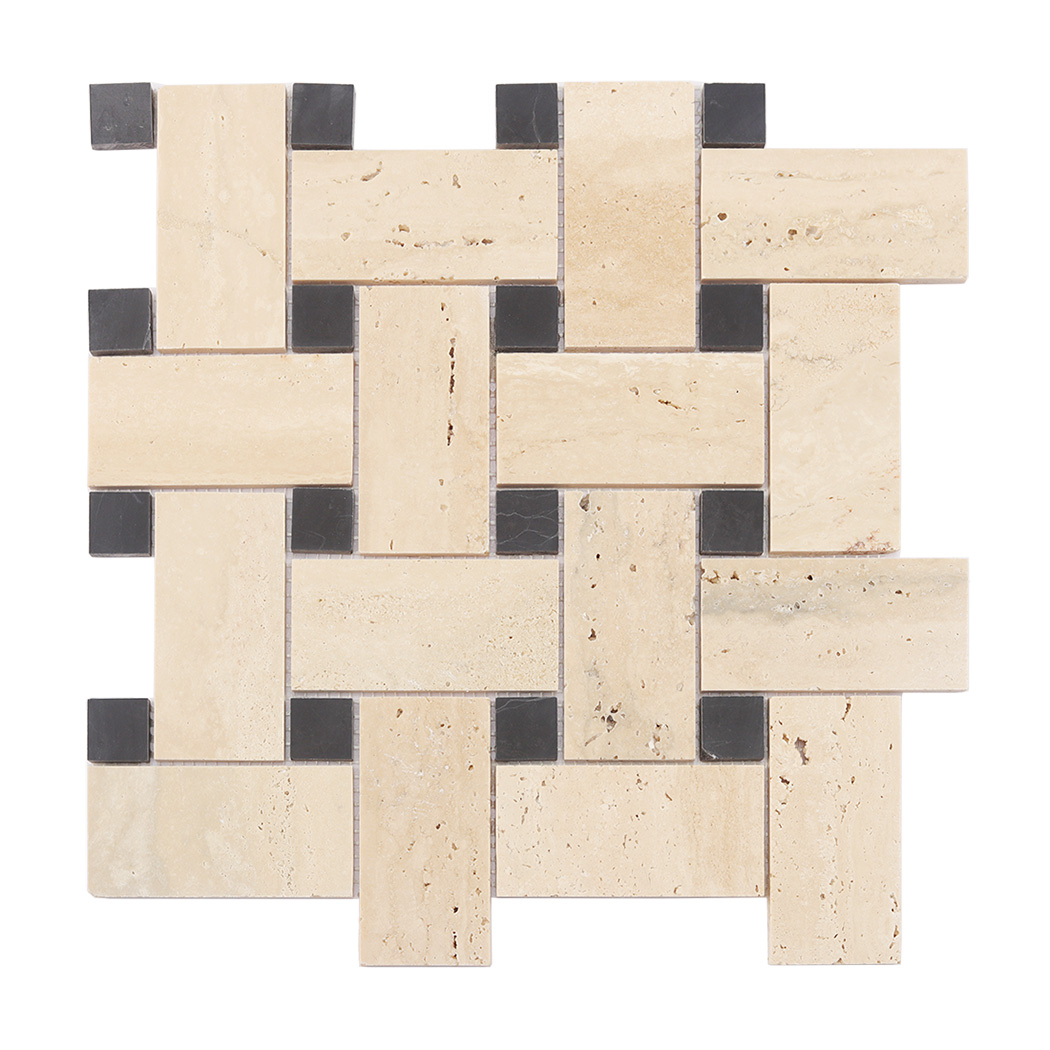
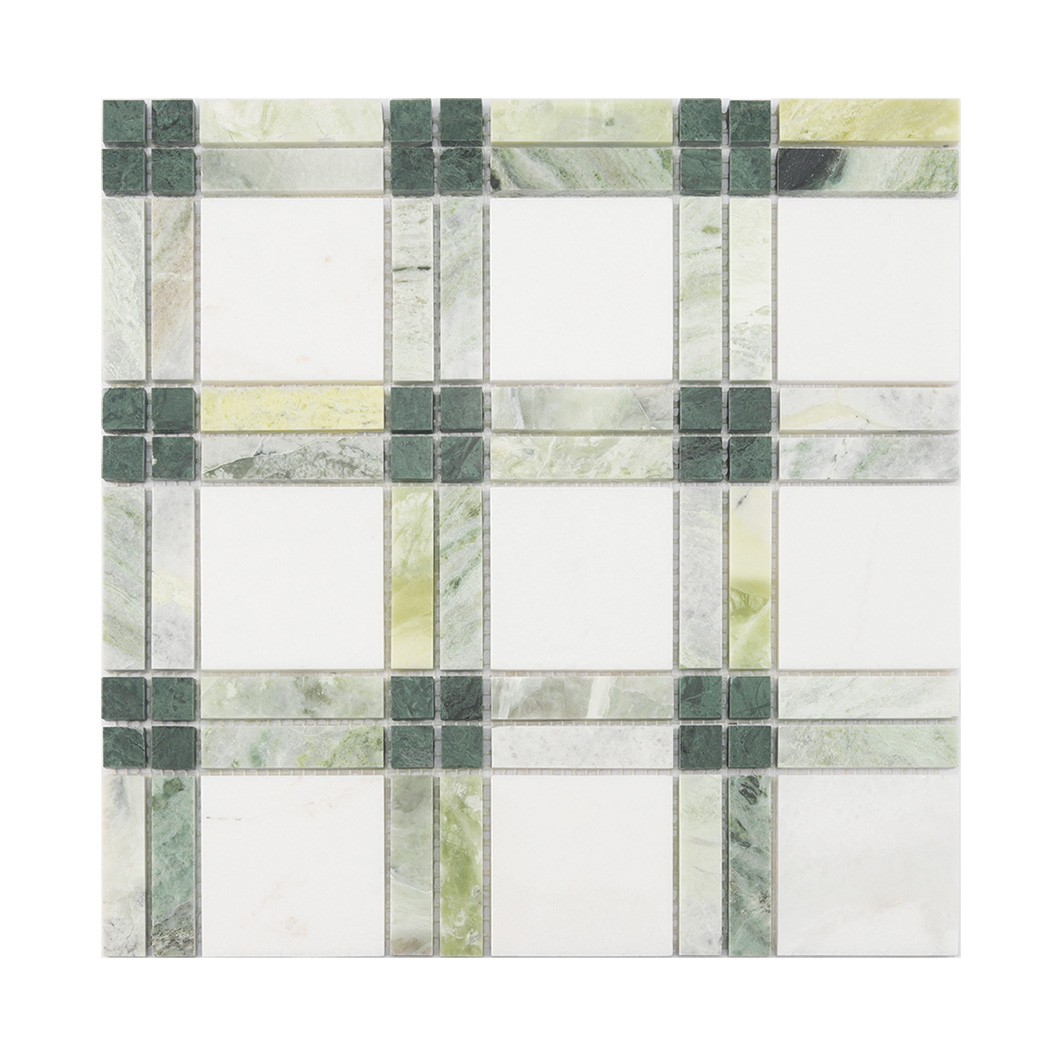
Basketweave floor tiles bring the timeless look of woven fabric to bathrooms, kitchens, entryways, powder rooms, and other carefully designed interiors. Alternating rectangular pieces and square accents create a detailed geometric rhythm that feels equally at home in vintage, traditional, transitional, and modern spaces.
Explore natural marble, travertine, and selected floor-rated glass basketweave mosaics in classic black and white, warm beige, deep green, blue, and other distinctive color combinations. Always check the individual product specifications before choosing tile for shower floors, wet areas, outdoor spaces, or commercial applications.
Natural Stone and Selected Floor-Rated Glass
Mesh-Mounted Mosaic Sheets
Samples Available
Residential and Commercial Project Support
What Are Basketweave Floor Tiles?
Basketweave describes a tile pattern rather than one specific material. Small rectangular pieces are arranged in alternating horizontal and vertical groups, often separated by contrasting square accents. The finished layout resembles the over-and-under structure of a woven basket.
From a distance, the pattern creates a continuous, fabric-like texture. Up close, the individual pieces reveal natural veining, color variation, surface reflection, and carefully arranged geometric detail.
Most basketweave mosaics are supplied on mesh-mounted sheets. This helps maintain the repeating pattern and makes the many small pieces easier to position during installation.
Why Choose a Basketweave Tile Floor?
Timeless Geometric Character
Basketweave has been used in traditional bathrooms and decorative floors for generations. Its orderly geometry gives vintage interiors an authentic foundation while adding texture and personality to contemporary rooms.
Detail Without Visual Clutter
The pattern creates movement, but its regular repetition keeps the floor balanced. It can make a compact powder room feel more considered or give a larger entryway a refined, custom-designed appearance.
More Grout Joints Underfoot
Small mosaic pieces create more grout joints than large-format tiles. These joints may contribute additional traction, but slip resistance still depends on the tile material, surface finish, grout, maintenance, drainage, and tested product rating. For wet floors, always select a product specifically approved for that application.
Natural Variation Becomes Part of the Design
With marble and travertine basketweave mosaics, variation in veining, pores, tone, and mineral markings adds depth to the repeating pattern. These differences are natural characteristics rather than defects.
Easy Coordination
Basketweave floors pair naturally with subway tile, large-format stone, painted cabinetry, wood vanities, brass fittings, black fixtures, and simple wall finishes. The floor supplies the detail, allowing the surrounding materials to remain restrained.
Choosing the Right Material
Marble Basketweave Floor Tiles
Marble is the most traditional material for a basketweave mosaic floor. Its natural veining gives every sheet individual character, while contrasting dots or strips make the woven pattern more visible.
Carrara-style white and gray marble creates a bright, classic look. Black and white marble feels more graphic, while green, beige, or multicolor stone adds a richer decorative quality.
Honed marble generally offers a softer, less reflective appearance and is often preferred where underfoot traction is a concern. Polished marble creates a brighter and more formal finish but requires more careful consideration in wet areas.
Marble is porous and can stain or etch. It should be sealed according to the stone and sealer manufacturers’ instructions and cleaned with a pH-neutral, stone-safe cleaner.
Travertine and Other Natural Stone
Travertine gives basketweave floors a warmer and more tactile character. Beige travertine works well in Mediterranean, rustic, spa-inspired, and warm minimalist interiors. Dark volcanic or textured stones can create a stronger industrial or contemporary appearance.
Natural pores, pits, mineral deposits, and tonal differences are normal. Confirm whether the chosen product is filled or unfilled, honed, polished, or tumbled before ordering.
Like marble, porous natural stone requires suitable sealing and ongoing stone-safe care.
Glass Basketweave Floor Tiles
Glass creates a brighter and more colorful interpretation of the basketweave pattern. Vitreous glass offers dense color and a clean surface, while crystal-style glass can introduce translucency and light reflection.
Glass does not absorb water in the same way porous natural stone does, but that does not mean every glass mosaic is suitable for floors. Some glass tiles are intended only for walls, while others are approved for residential floors, shower floors, pools, or submerged installations.
For any floor application, choose only a glass product specifically identified as floor-rated. Polished or highly reflective glass may also require additional slip-resistance consideration in wet areas.
Where Can Basketweave Floor Tiles Be Used?
Bathroom Floors
Basketweave bathroom floor tile creates a detailed surface that works particularly well in powder rooms, guest bathrooms, and primary bathrooms. Black and white marble produces a heritage-inspired look, while beige, green, and blue combinations introduce softer or more expressive color.
Shower Floors
A mesh-mounted basketweave mosaic can follow the slope of a properly constructed shower base more easily than many large tiles. However, the exact tile must be approved for shower-floor use.
The tile and grout are not the waterproofing system. A correctly designed waterproof membrane, drainage assembly, compatible mortar, grout, movement joints, and professional installation are essential.
Kitchen Floors
On a kitchen floor, basketweave adds pattern without relying on a printed surface. Natural stone works well with wood or painted cabinets, while selected floor-rated glass can provide stronger color. Confirm the product’s traffic rating and maintenance requirements before use in a busy kitchen.
Entryways and Hallways
Basketweave creates a memorable first impression in foyers, hallways, and transitional spaces. For areas exposed to shoes, sand, or frequent traffic, prioritize a durable floor-rated finish and use protective mats where appropriate.
Decorative Borders and Tile Rugs
Basketweave mosaic can be framed with field tile or stone borders to create a tile-rug effect. This is especially effective in entryways, bathrooms, dressing areas, and boutique commercial interiors.
Fireplace Hearth Areas
Selected natural-stone basketweave products may be suitable around fireplace hearths or surrounds. Confirm heat exposure, floor rating, substrate requirements, and local building regulations before installation. Do not assume that every glass or stone mosaic is approved for this application.
Pool and Outdoor Areas
Only products explicitly approved for outdoor, freeze-thaw, submerged, or pool-deck use should be selected. Pool interiors and pool surrounds have different technical requirements. For walking surfaces near water, slip resistance and drainage must be evaluated carefully.
Basketweave Colors and Design Styles
Black and White
Black and white basketweave tile is the most recognizable combination. Dark accents sharpen the woven geometry and complement vintage, Art Deco, traditional, and modern monochrome interiors.
White and Gray
White marble with soft gray veining produces a quieter floor that coordinates easily with chrome, nickel, black, or brass fixtures.
Beige and Cream
Warm beige basketweave mosaics feel softer and more relaxed. They work well with natural wood, cream cabinetry, limestone surfaces, and warm metallic hardware.
Green and White
Green marble introduces rich natural color while white stone keeps the overall pattern balanced. This combination suits boutique bathrooms, traditional interiors, and expressive modern spaces.
Blue and White
Blue and white basketweave mosaics can create a crisp, refreshing floor for bathrooms and Mediterranean-inspired interiors. Choose a muted blue for a calm effect or a deeper blue for stronger contrast.
Dark Stone
Black or deep gray stone paired with lighter grout creates a bold architectural surface suited to industrial, minimalist, and dramatic luxury interiors.
How Grout Color Changes the Pattern
Grout is a visible part of any basketweave floor because the pattern contains many small joints.
-
Matching grout softens the outlines and creates a quieter, more continuous surface.
-
Contrasting grout emphasizes each piece and makes the woven geometry more graphic.
-
Mid-tone grout can balance light and dark materials while hiding everyday discoloration more effectively.
-
Highly contrasting grout should be tested on a sample board because it may alter the appearance of porous stone or textured tile.
-
Confirm that the selected grout is compatible with glass, polished stone, and the joint width. Some abrasive grouts can scratch sensitive surfaces.
Always approve the grout color using the actual tile under the project lighting before completing the installation.
Honed or Polished Basketweave Tile?
A honed finish has a smooth, low-sheen appearance. It generally feels quieter, reveals natural stone softly, and is often preferred for bathroom floors and understated interiors.
A polished finish reflects more light and makes marble color and veining appear stronger. It creates a formal, luxurious look but may show scratches, etching, and water marks more readily. Polished surfaces also require careful evaluation for wet-floor applications.
Finish alone does not determine whether a tile is safe or suitable. Check the technical specifications of the exact product.
How to Order the Correct Quantity
Measure the length and width of each rectangular area and multiply them to calculate the floor area. Divide irregular rooms into smaller rectangles and add their areas together.
Order additional material for perimeter cuts, damaged pieces, pattern alignment, and future repairs. Ten percent extra is commonly used as a starting point, but rooms with many corners, borders, diagonal transitions, or complicated layouts may require more. Ask your installer to confirm the final quantity.
Order the full project quantity at one time whenever possible. Natural stone and manufactured tile can vary between production batches.
Before installation:
-
Request a sample to review the actual color, finish, scale, and material.
-
Confirm sheet dimensions and coverage per sheet.
-
Check the floor, wet-area, outdoor, pool, and commercial-use ratings.
-
Compare several sheets rather than judging natural stone from one small piece.
-
Inspect the full shipment before installation.
-
Keep unopened extra material for future repairs.
Basketweave Floor Tile Installation
Basketweave mosaic contains many small pieces and visible sheet transitions, so careful preparation is important. Professional installation is recommended, particularly for natural stone, glass, shower floors, borders, and large areas.
1. Inspect and Dry-Lay the Sheets
Open multiple cartons and compare the sheets before installation. Blend natural-stone sheets from different boxes to distribute color and veining evenly.
Dry-lay several sheets and check the repeating pattern. The space between sheets should visually match the joints within each sheet.
2. Prepare the Substrate
The substrate must be structurally sound, clean, stable, dry, and sufficiently flat. Small mosaic pieces can reveal surface irregularities that may be less visible beneath larger tile.
3. Complete Wet-Area Waterproofing
For showers and other wet areas, complete and test the required waterproofing and drainage system before installing the mosaic. Sealing natural stone does not replace waterproofing beneath the tile.
4. Select Compatible Mortar
Use a mortar approved for the tile material, substrate, and application. White mortar is commonly preferred behind light natural stone and translucent glass because dark adhesive may affect the finished color.
Wet areas require thorough mortar coverage with proper support beneath the tile edges. Follow the mortar, membrane, and tile manufacturers’ instructions.
5. Control Sheet Alignment
Press each sheet evenly into the mortar without allowing adhesive to fill the grout joints. Step back frequently and inspect the layout from different angles. Adjust individual pieces while the mortar remains workable to prevent visible sheet outlines.
6. Cut Carefully
Use tools appropriate for the material. Natural stone and glass often require different blades or cutting techniques. Protect the tile surface and smooth exposed edges where necessary.
7. Test and Apply Grout
Create a sample board before grouting the entire floor. Confirm that the grout does not scratch the surface, stain porous stone, or alter the tile color.
Use flexible sealant rather than rigid grout at changes of plane, perimeter joints, and other movement locations specified by the installation system.
8. Seal Natural Stone Correctly
Porous stone may need to be sealed before grouting and again after the grout has cured, depending on the chosen products. Follow the sealer manufacturer’s application and curing instructions. Test the sealer first because some products can change the stone’s color or sheen.
Cleaning and Maintenance
Natural Stone
-
Sweep or vacuum loose grit that could scratch the surface.
-
Clean with warm water or a pH-neutral stone cleaner.
-
Wipe up spills promptly.
-
Avoid vinegar, lemon, acidic bathroom cleaners, and harsh abrasive products.
-
Inspect the stone periodically and reseal when required by its condition and the sealer manufacturer’s guidance.
-
Use suitable mats in entryways to reduce tracked-in dirt.
Glass
-
Clean with a soft cloth, mop, or non-abrasive cleaner approved for glass tile.
-
Avoid steel wool, hard brushes, and abrasive powders.
-
Remove soap residue regularly in showers.
-
Maintain grout and flexible joints according to the grout manufacturer’s instructions.
Frequently Asked Questions
What is basketweave floor tile?
Basketweave floor tile is a mosaic pattern made from rectangular pieces arranged in alternating horizontal and vertical groups. Many designs also include small square accents between the rectangular sections, creating the appearance of an interwoven surface.
Is basketweave tile outdated?
No. Basketweave is a longstanding geometric pattern used in both heritage-inspired and contemporary interiors. Material, color, finish, grout, and surrounding furnishings determine whether the finished floor feels vintage, transitional, or modern.
Is basketweave tile suitable for bathroom floors?
Many basketweave mosaics are suitable for bathroom floors, but approval depends on the exact product. Check its floor-use rating, surface finish, traffic classification, and wet-area specifications before ordering.
Can basketweave tile be installed on a shower floor?
Selected floor-rated basketweave mosaics can be installed on properly constructed shower floors. The product must be approved for shower-floor use, and the installation requires a correctly sloped base, waterproofing system, compatible mortar and grout, drainage, and movement joints.
Is basketweave mosaic slip-resistant?
The additional grout joints in small mosaics may contribute to traction, but the pattern alone does not guarantee slip resistance. Tile material, surface finish, grout, drainage, maintenance, contaminants, and tested product performance must all be considered.
Are all glass basketweave tiles suitable for floors?
No. Some glass mosaics are wall-only products. Others may be approved for residential floors, shower floors, pools, or submerged areas. Always follow the application information listed for the individual product.
Is honed or polished marble better for a bathroom floor?
Honed marble has a lower-sheen surface and is commonly preferred where a softer appearance and underfoot traction are priorities. Polished marble is brighter and more formal but needs careful evaluation in wet areas. The exact product rating remains more important than the finish name alone.
Do marble basketweave floor tiles need sealing?
Most porous marble and natural-stone mosaics benefit from sealing for stain protection. Some installations require sealing before grouting and again after the grout cures. Follow the stone, grout, and sealer manufacturers’ instructions.
What grout color works best with basketweave tile?
Matching grout creates a subtle, continuous look. Contrasting grout emphasizes the woven pattern. A medium neutral can balance the design and simplify everyday maintenance. Always test the grout with the actual tile before installation.
How do I prevent visible lines between mosaic sheets?
Dry-lay several sheets, keep the spacing between sheets consistent with the joints inside the sheets, and adjust individual pieces before the mortar sets. Viewing the installation from a distance during the work makes sheet lines easier to identify.
How much extra tile should I order?
Ten percent extra is a common starting allowance for cuts, breakage, and future repairs. More may be necessary for complicated rooms, borders, unusual transitions, or layouts with extensive cutting. Confirm the final quantity with the installer.
Can basketweave floor tile be used with underfloor heating?
Many stone and glass mosaics can be installed over compatible radiant-heating systems, but the tile, mortar, membrane, substrate, and heating manufacturer must all approve the assembly. Movement accommodation and correct curing procedures are especially important.
Should I order a sample first?
Yes. A sample helps you evaluate color, scale, finish, reflectivity, and material under the actual lighting. Because natural stone varies, the final order will not be identical to one small sample, but sampling remains an important first step.
Find the Right Basketweave Floor Tile
Explore the SAICINA TILES collection of marble, travertine, and selected floor-rated glass basketweave mosaics. Compare colors, finishes, sheet sizes, and approved application areas, or request a sample before placing your full order.
Need help choosing tile for a bathroom, shower, kitchen, entryway, hotel, or commercial project? Contact SAICINA TILES for product specifications, quantity guidance, samples, and project support.