
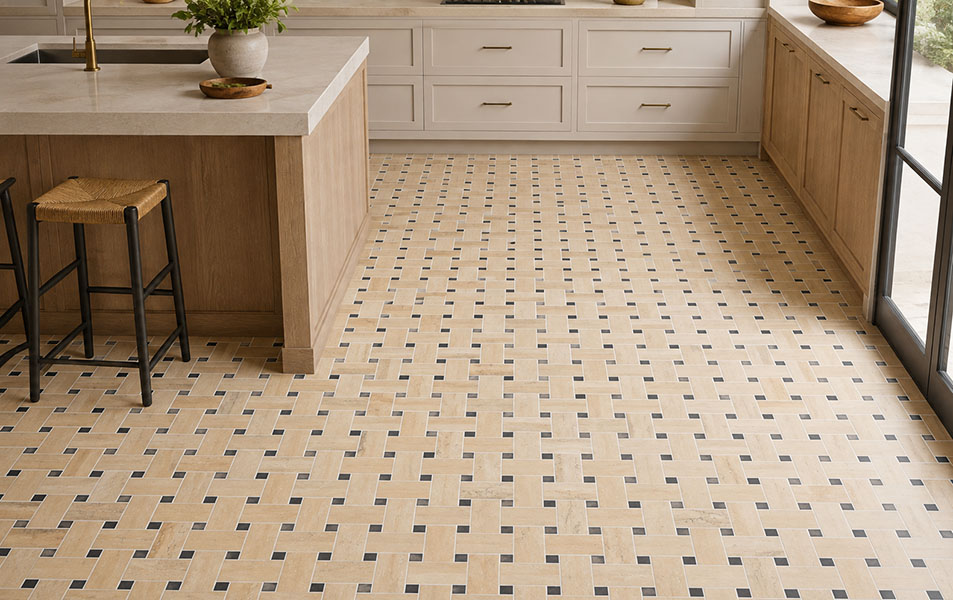
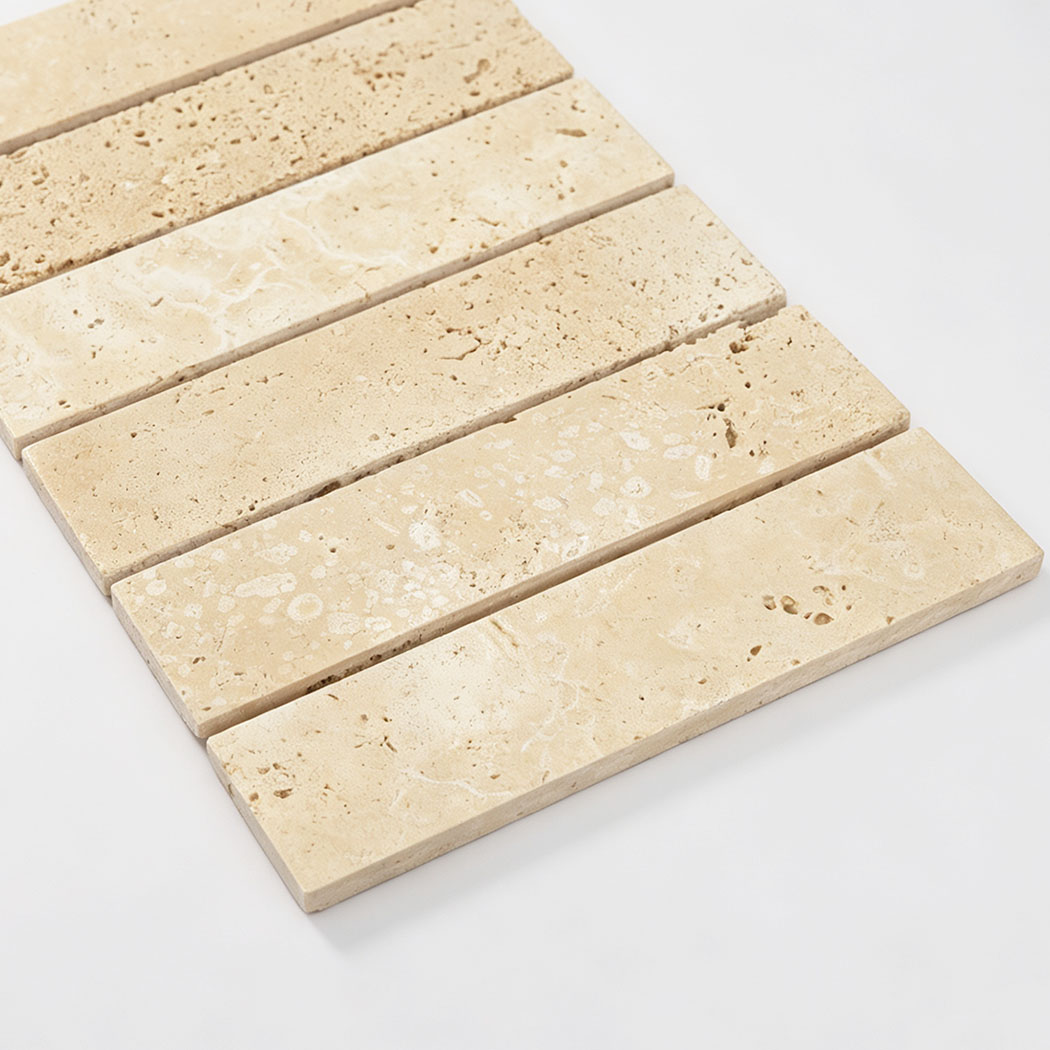
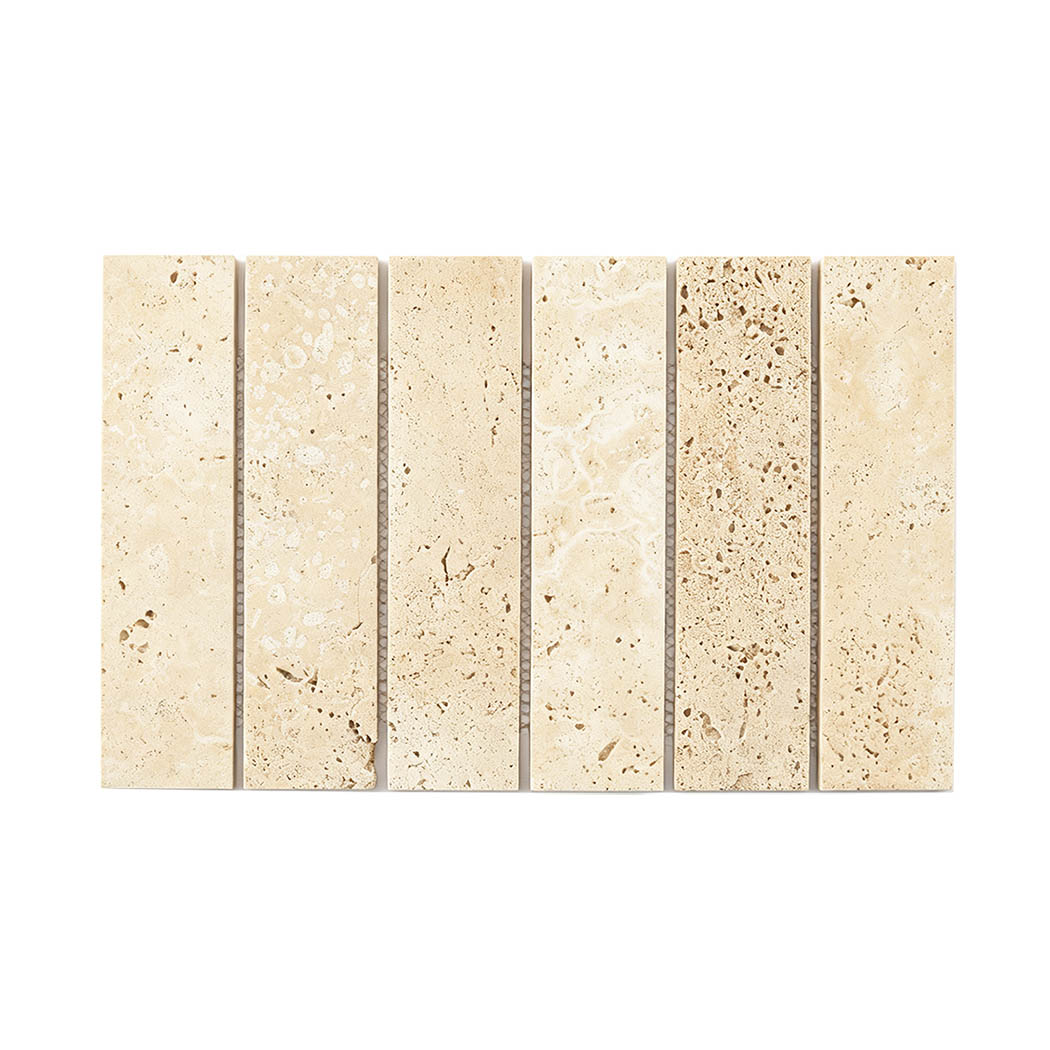


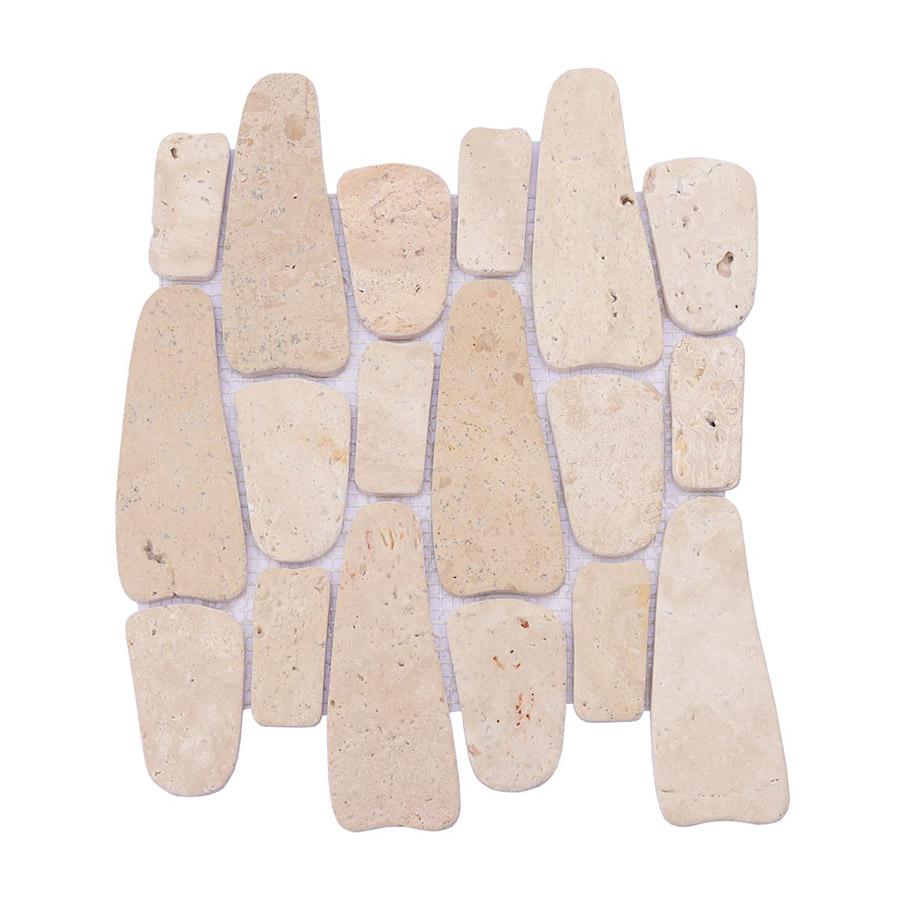
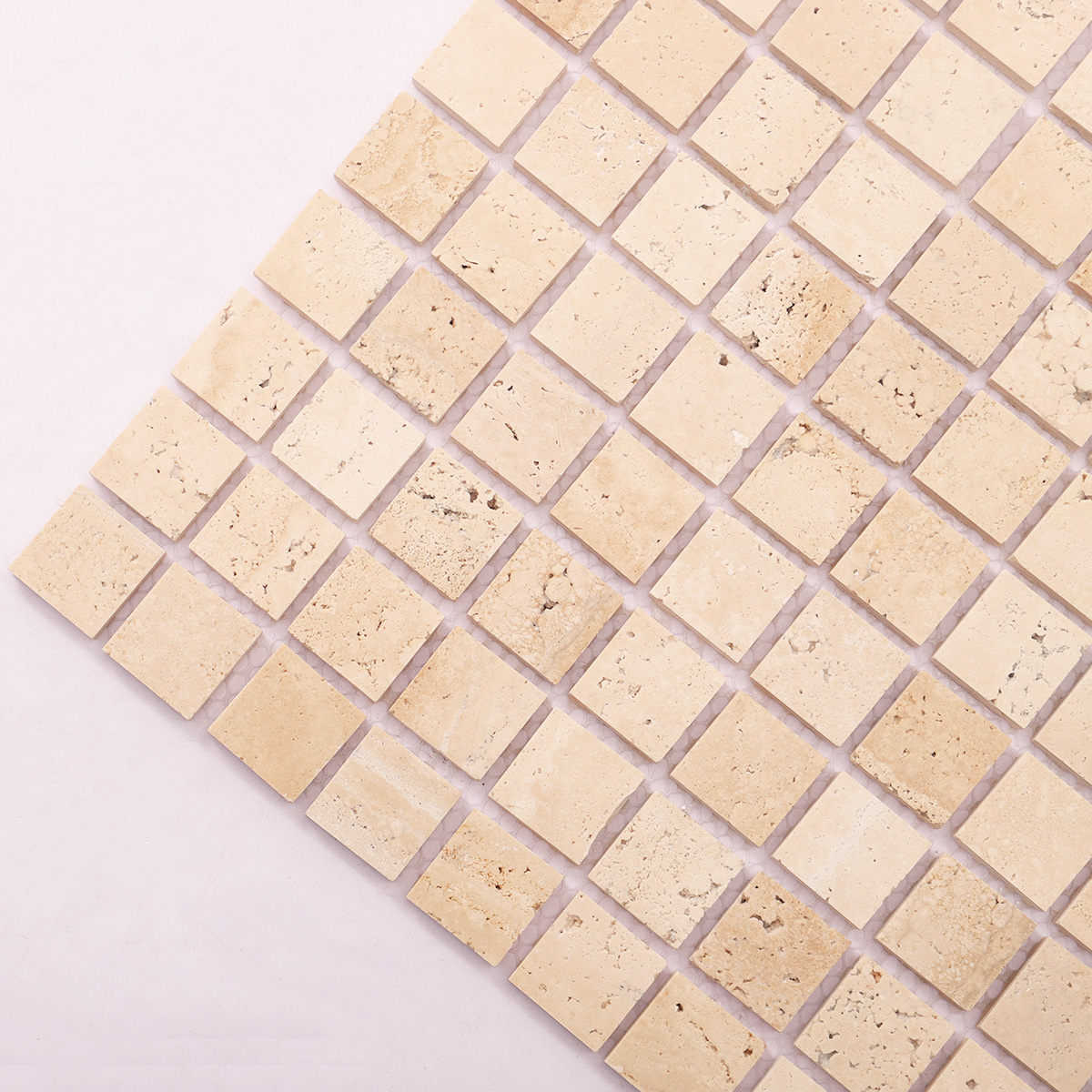
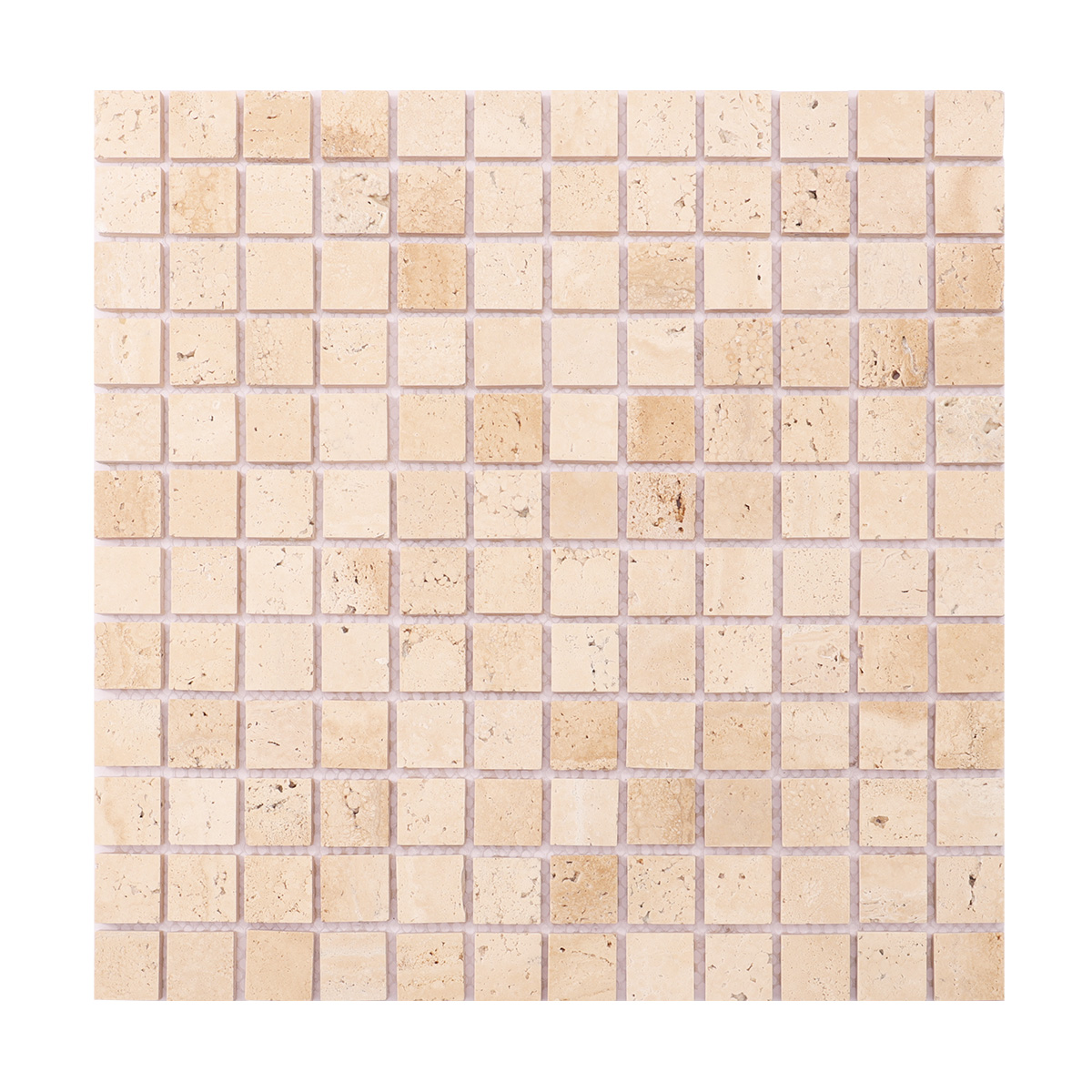
Travertine tile kitchen floor designs bring natural warmth, lasting character and timeless elegance to residential and commercial interiors. Formed from mineral deposits, genuine travertine features delicate pores, layered veining and naturally varied colors that make every tile unique.
Explore the Saicina Tiles collection of travertine kitchen floor tiles in beige, ivory, gray, brown, red and other natural stone tones. Choose from classic square and rectangular tiles, large-format flooring, geometric shapes and custom-cut designs for modern, farmhouse, Mediterranean and traditional kitchens.
Why Choose Travertine Kitchen Floor Tiles?
Travertine combines the authentic beauty of natural stone with the durability required for a busy kitchen. When properly installed, sealed and maintained, it can provide a long-lasting floor for cooking, dining and open-plan living areas.
Natural and Unique Appearance
Every piece of travertine contains individual pores, veins and tonal variations. Unlike printed ceramic or porcelain products, the pattern is not repeated, giving the finished kitchen floor a naturally layered appearance.
Timeless Colors
Travertine is available in soft ivory, cream, beige, gold, silver gray, walnut brown and red tones. Its neutral palette works with white cabinets, natural wood, dark cabinetry, stone countertops and metal hardware.
Durable Natural Stone
A professionally installed travertine floor can withstand regular household foot traffic for many years. Individual tiles can also be replaced or professionally refinished if they become damaged.
Compatible with Radiant Heating
Travertine conducts heat effectively and can be installed over compatible underfloor heating systems. The substrate, heating system, mortar and movement joints must be designed for a natural stone installation.
Best Travertine Finish for a Kitchen Floor
Choosing the right surface finish is essential for cleaning, appearance and everyday performance.
Filled and Honed Travertine
Filled and honed travertine is usually the most practical option for an indoor kitchen. Its natural cavities are filled, while the surface is ground to a smooth matte finish. The flatter surface is easier to sweep and mop and suits modern, transitional and classic kitchens.
Tumbled Travertine
Tumbled travertine has softened edges and a textured, aged appearance. It works especially well in farmhouse, Mediterranean and rustic kitchens. Its open pores and wider joints may require more detailed cleaning.
Brushed Travertine
A brushed surface offers subtle texture and a naturally weathered look. It adds depth and character but should be properly sealed for use in a kitchen.
Polished Travertine
Polished travertine has a smooth, reflective surface. Although visually luxurious, it can show scratches, etching and water marks more easily and may become slippery when contaminated by water or cooking oil.
Travertine Colors and Kitchen Styles
Beige and Ivory Travertine
Light beige and ivory tiles create a warm, open atmosphere. Pair them with white, cream or light oak cabinets for organic modern, farmhouse or Mediterranean kitchens.
Silver and Gray Travertine
Silver travertine brings cooler gray and taupe tones into the room. It complements black, white and natural wood cabinetry and is ideal for modern or minimalist kitchens.
Gold and Brown Travertine
Gold and walnut-colored stone creates a richer, more traditional appearance. These colors coordinate with dark wood cabinets, bronze hardware and warm-toned countertops.
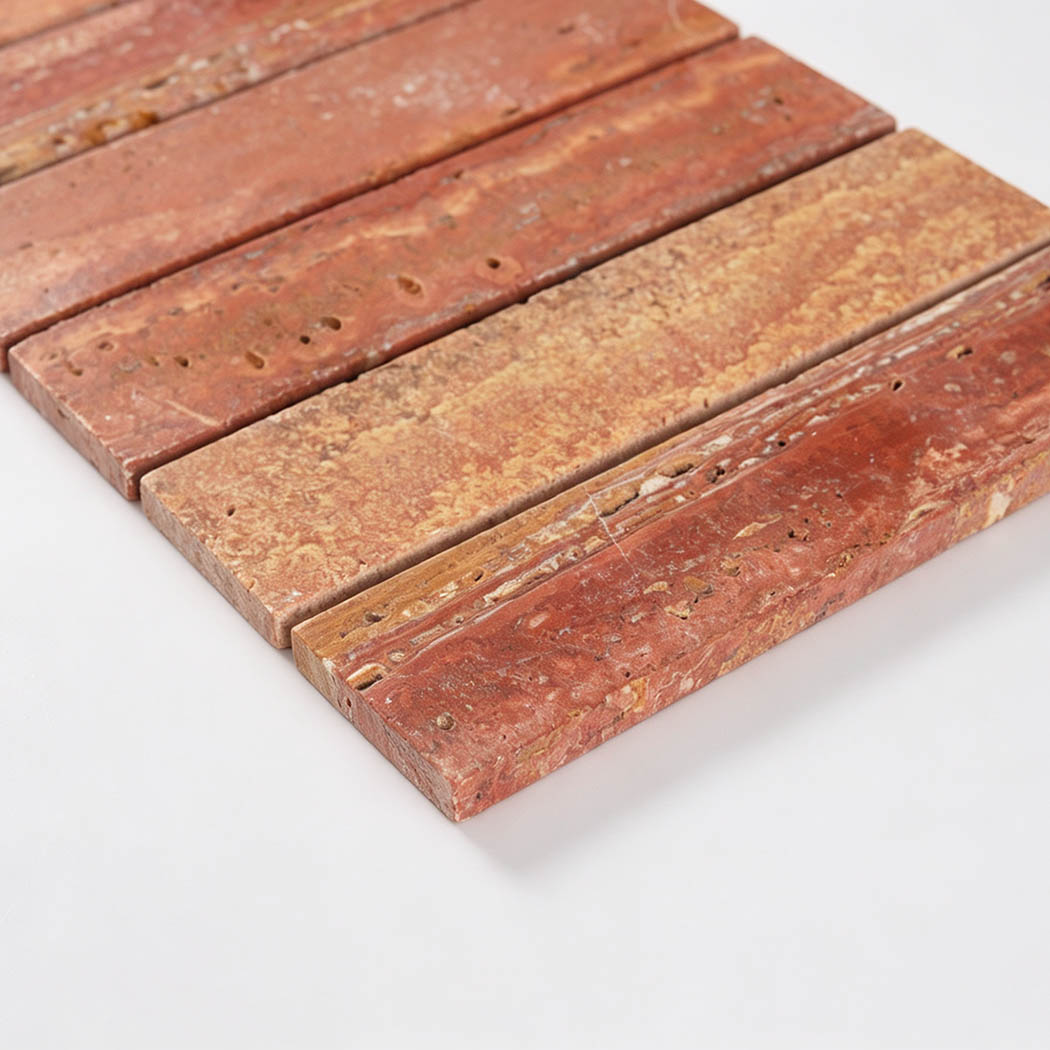
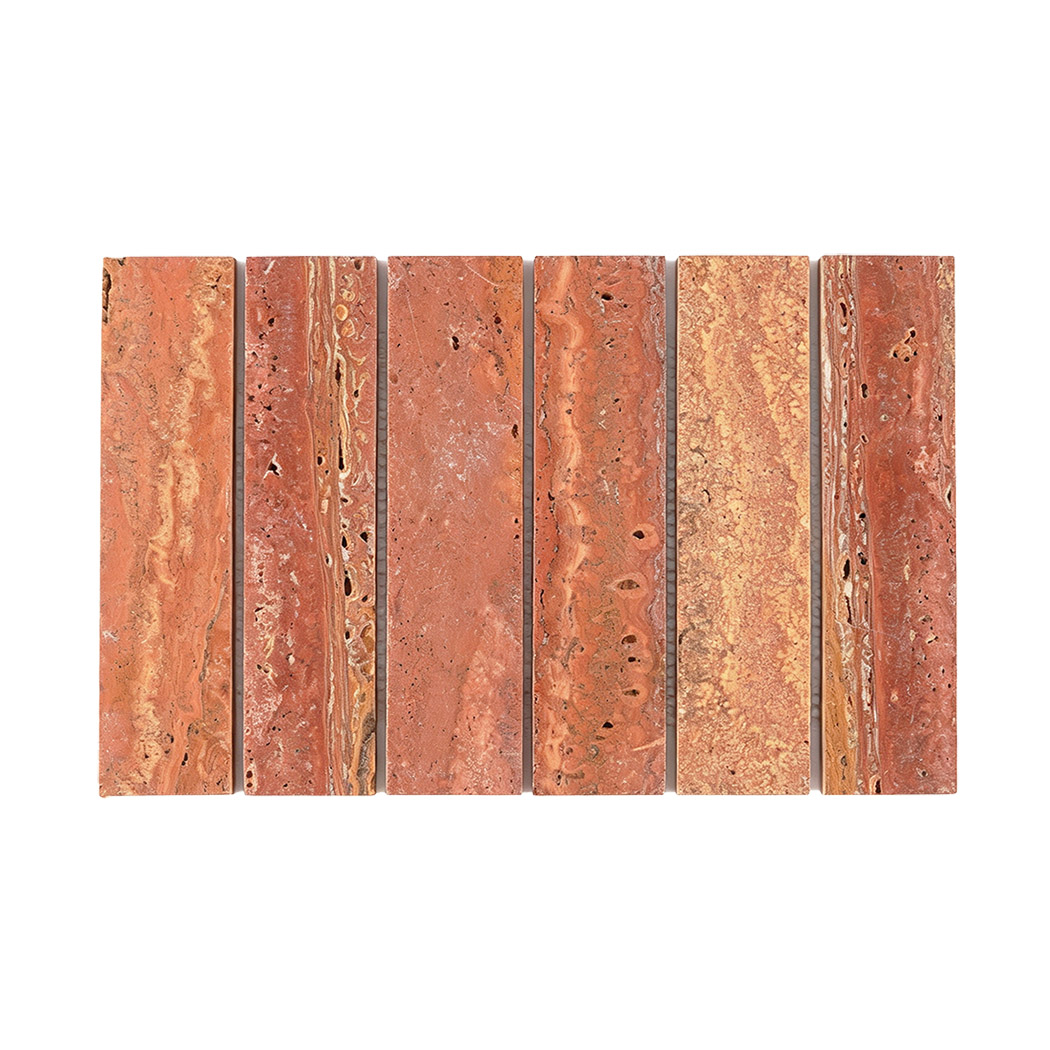
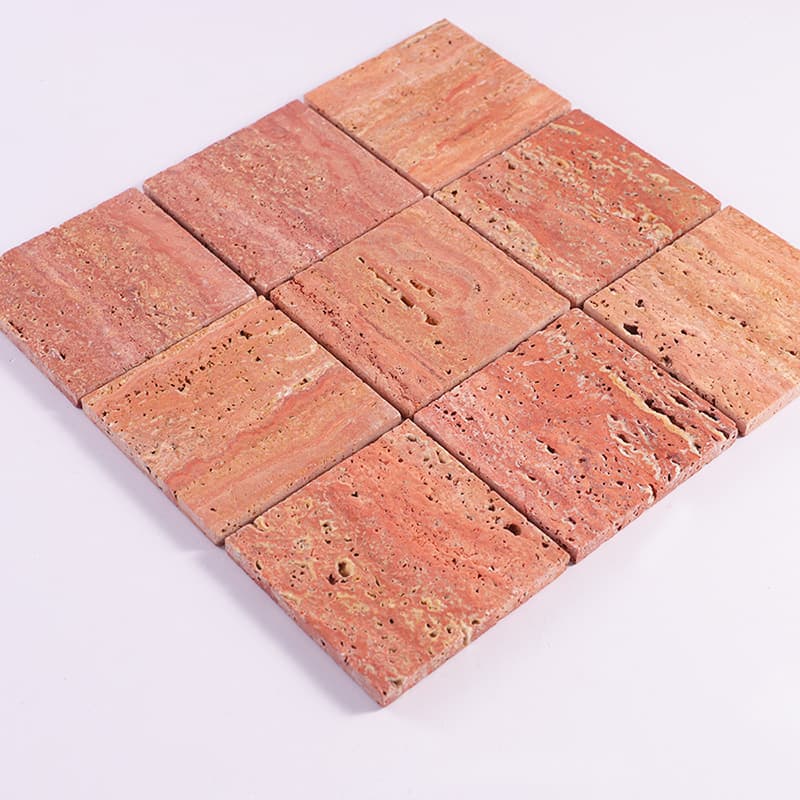
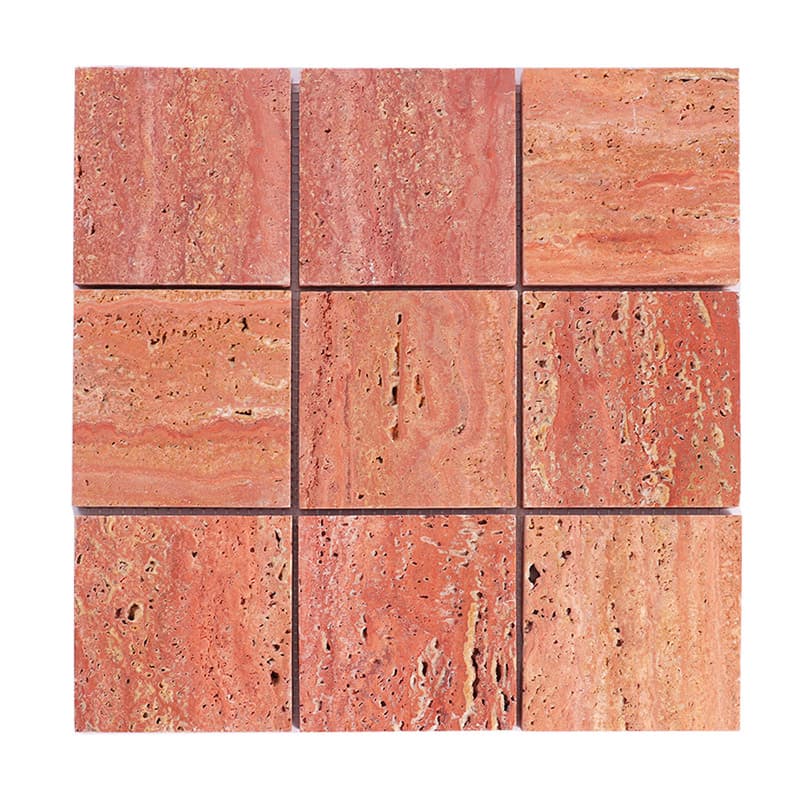
Red Travertine
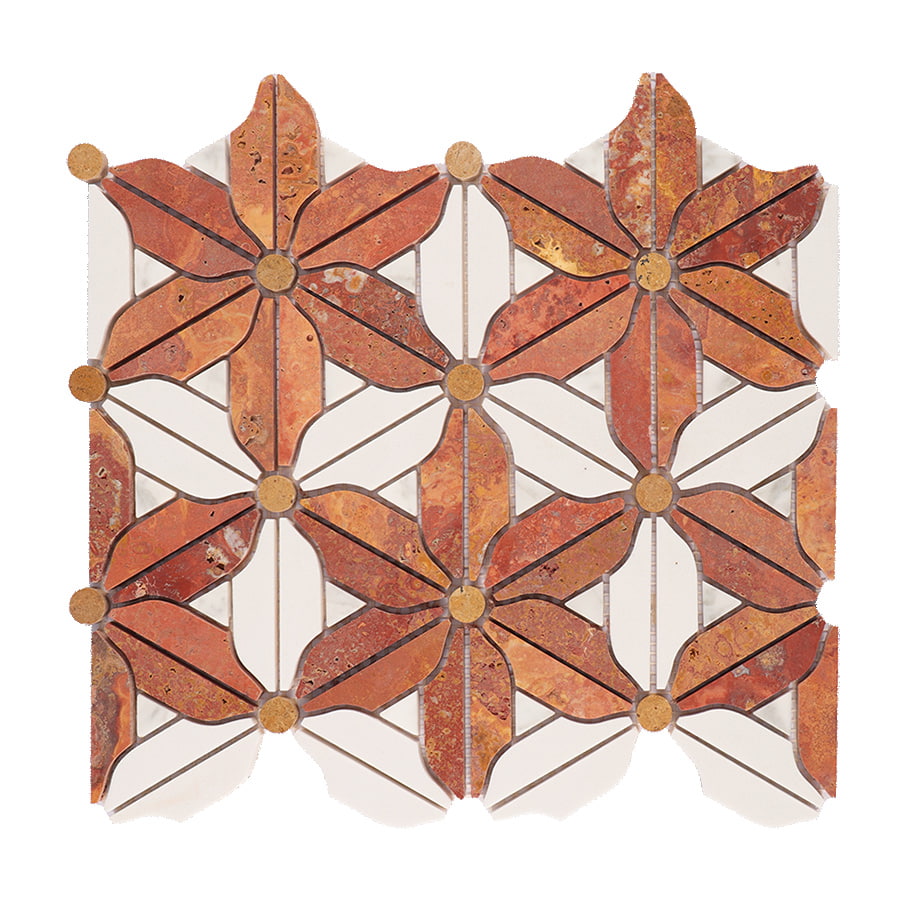
Red and rust-colored travertine can be used across the entire floor or introduced as a border, geometric accent or decorative feature.
Available Sizes, Shapes and Patterns
Saicina Tiles offers travertine in a variety of standard and custom formats.
-
Square tiles create a clean, balanced grid.
-
Rectangular tiles can be installed in stacked, running-bond or herringbone patterns.
-
Large-format tiles reduce the number of grout joints and help open-plan kitchens feel more spacious.
-
French or Versailles patterns combine several tile sizes for a traditional European appearance.
-
Hexagons, diamonds, fans and custom-cut pieces create decorative geometric floors.
-
Contrasting travertine colors can be combined into borders, checkerboard layouts and custom medallions.
Large-format filled and honed tiles are suitable for contemporary kitchens, while smaller tumbled pieces and mixed-size patterns create a more rustic effect.
Is Travertine Suitable for a Busy Kitchen?
Yes, but natural travertine is porous and requires more care than porcelain tile. A penetrating stone sealer helps reduce the absorption of cooking oil, coffee, wine and other liquids, but it does not make the stone completely stain-proof or protect it from acid etching.
Clean spills promptly and avoid vinegar, lemon juice, acidic cleaners, abrasive powders and harsh chemicals. For routine cleaning, sweep regularly and use warm water with a pH-neutral cleaner approved for natural stone.
Filled and honed travertine is generally easier to maintain than rough, tumbled or unfilled stone.
Installation and Ordering Tips
A professional natural stone installer is recommended for travertine kitchen flooring. The substrate must be clean, flat, dry, rigid and suitable for the weight of natural stone.
Before installation, open several boxes and blend the tiles to distribute natural color and pattern variation evenly. Light-colored stone should normally be installed with a compatible white mortar to reduce the risk of discoloration.
Order approximately 10% extra for a standard layout. Diagonal installations, French patterns and custom geometric designs may require a larger allowance. Keep several unused tiles from the original batch for future repairs.
Choose beige, ivory, sand, taupe or warm-gray grout to coordinate with the stone and make everyday kitchen traffic less visible.
Travertine Kitchen Floor Care
-
Sweep or vacuum regularly to remove abrasive dirt.
-
Wipe water, oil and food spills up promptly.
-
Clean with a pH-neutral natural stone cleaner.
-
Avoid acidic and abrasive household products.
-
Use protective pads beneath furniture and appliances.
-
Inspect the sealer periodically and reapply it when required.
-
Keep spare tiles for future replacement or repair.
Frequently Asked Questions
What is the best travertine finish for a kitchen?
Filled and honed travertine is usually the best option because its matte, relatively smooth surface is easier to clean than unfilled or heavily textured stone.
Does a travertine kitchen floor need sealing?
Most travertine kitchen floors benefit from a penetrating natural stone sealer. Follow the recommendations provided for the individual tile and sealing product.
Is travertine slippery?
Slip performance depends on the finish, water or grease on the surface, footwear and maintenance. Check the suitability and available test information for the specific tile before ordering.
Can travertine be used with underfloor heating?
Yes. Travertine can conduct radiant heat effectively when installed with a compatible heating and natural stone flooring system.
Will travertine kitchen flooring look dated?
Travertine is a longstanding architectural material rather than a short-term trend. Light colors, large formats, simple layouts and closely matched grout create a clean, contemporary appearance.
Shop Travertine Kitchen Floor Tiles
Discover natural travertine kitchen floor tiles in distinctive colors, finishes, sizes and geometric designs at Saicina Tiles. Whether you are creating a modern open-plan kitchen, a warm farmhouse interior or a custom patterned floor, our collection offers authentic stone surfaces for a unique and lasting result.
Browse the collection or contact Saicina Tiles with your kitchen dimensions and delivery address for product recommendations, quantity calculations, samples and a project quotation.