
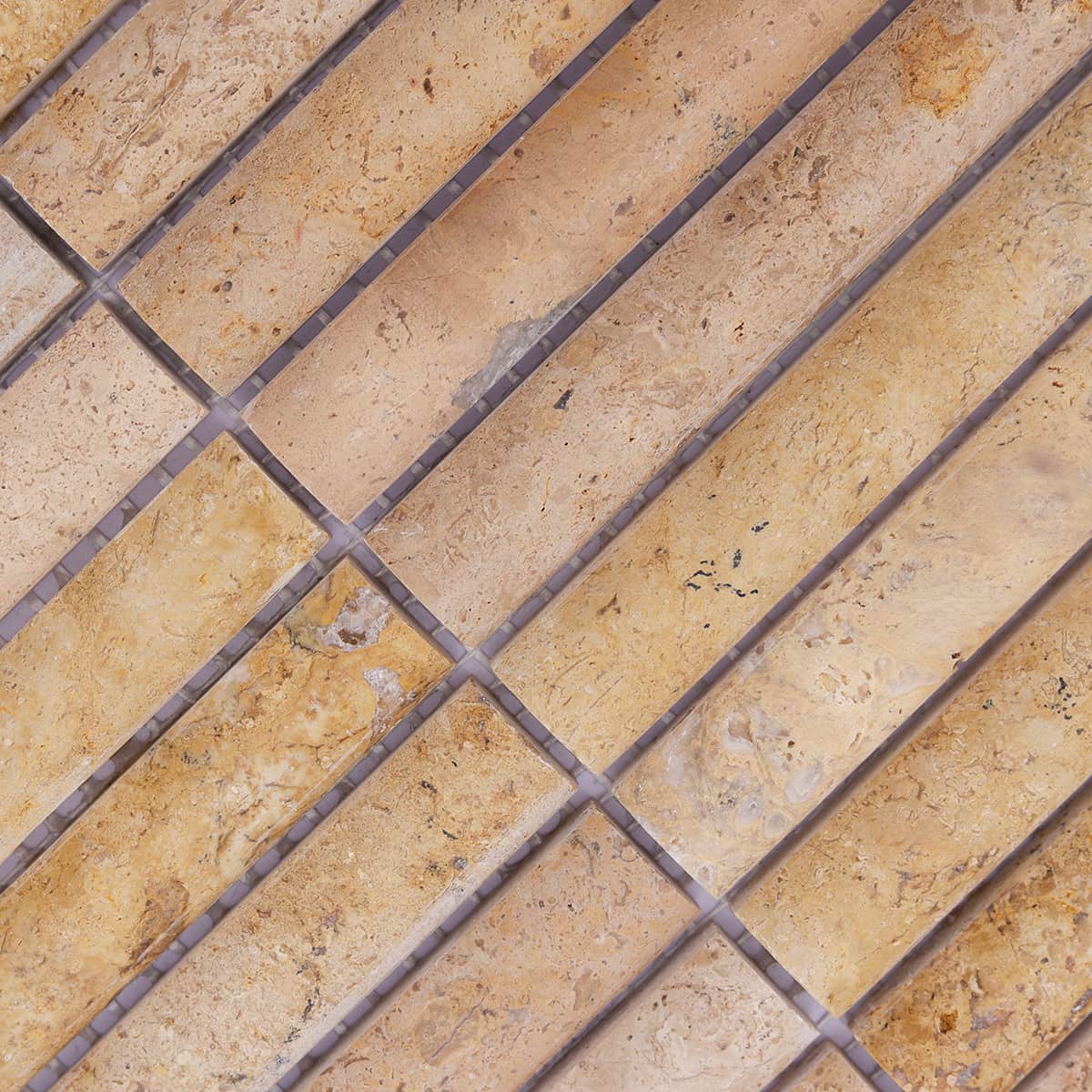
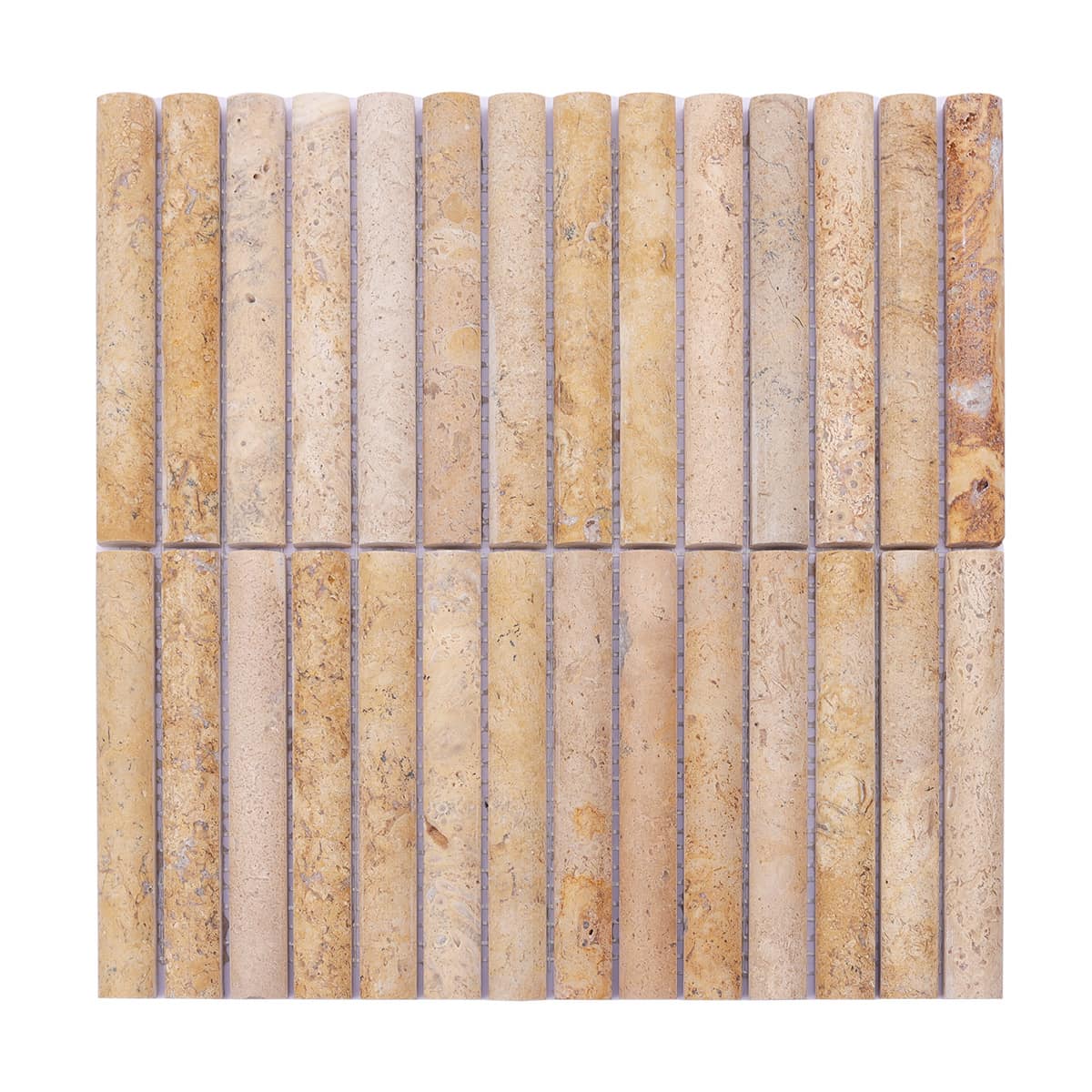

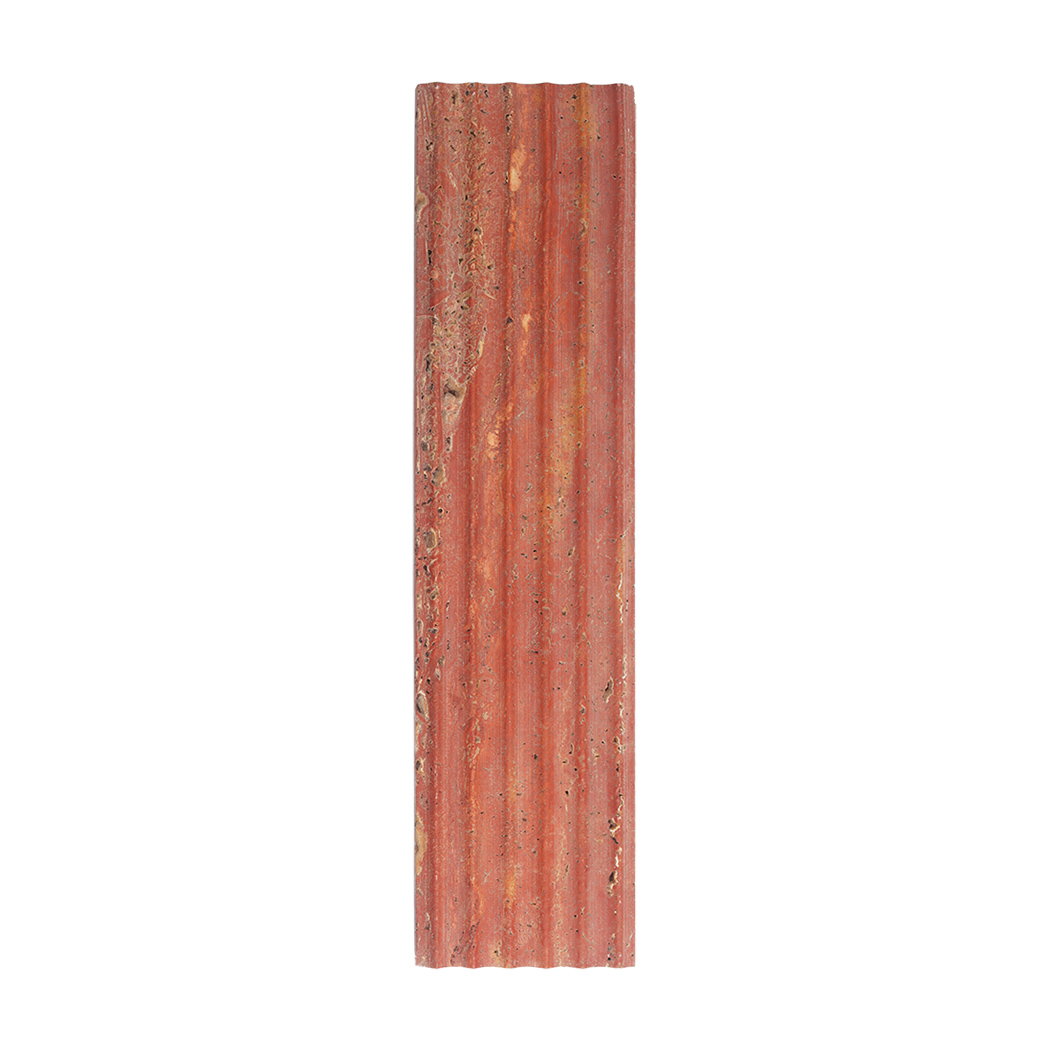
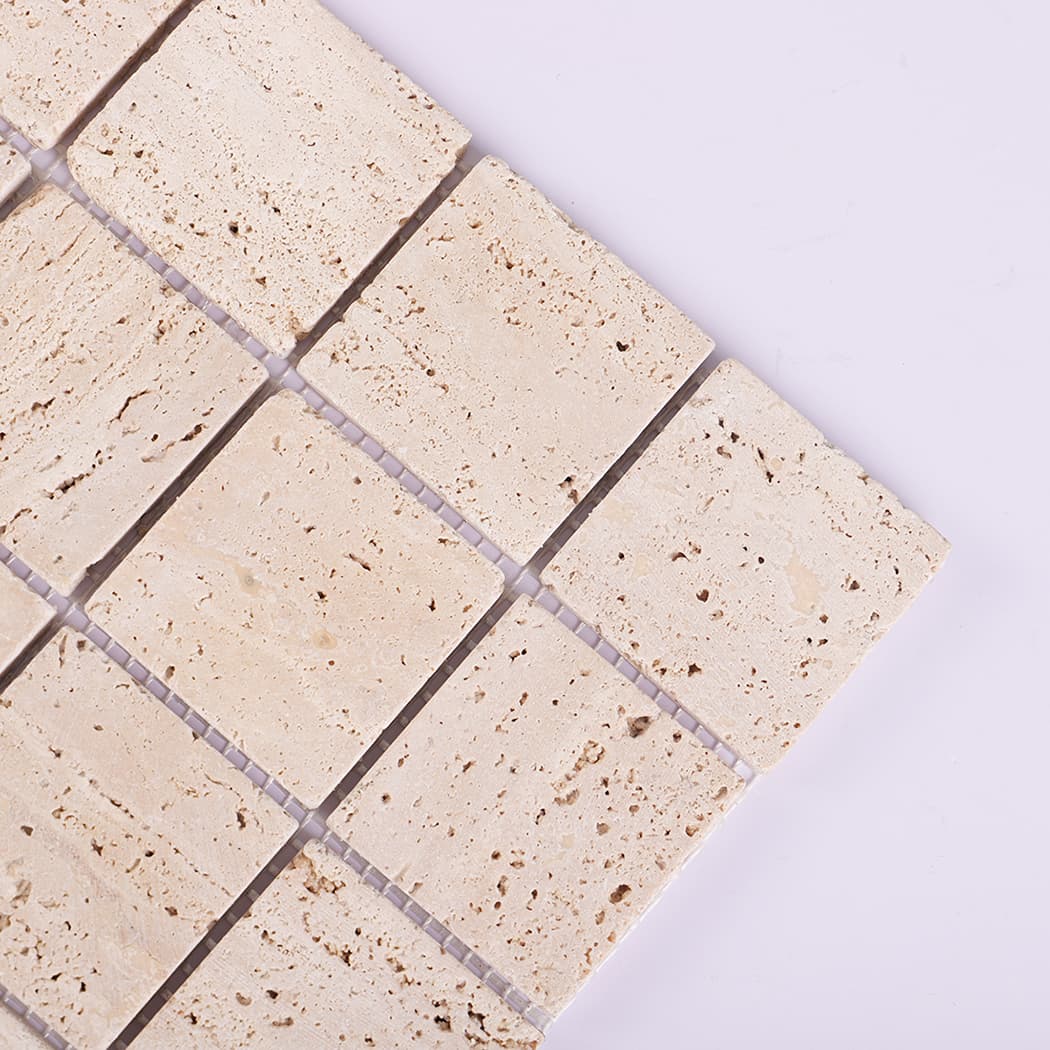


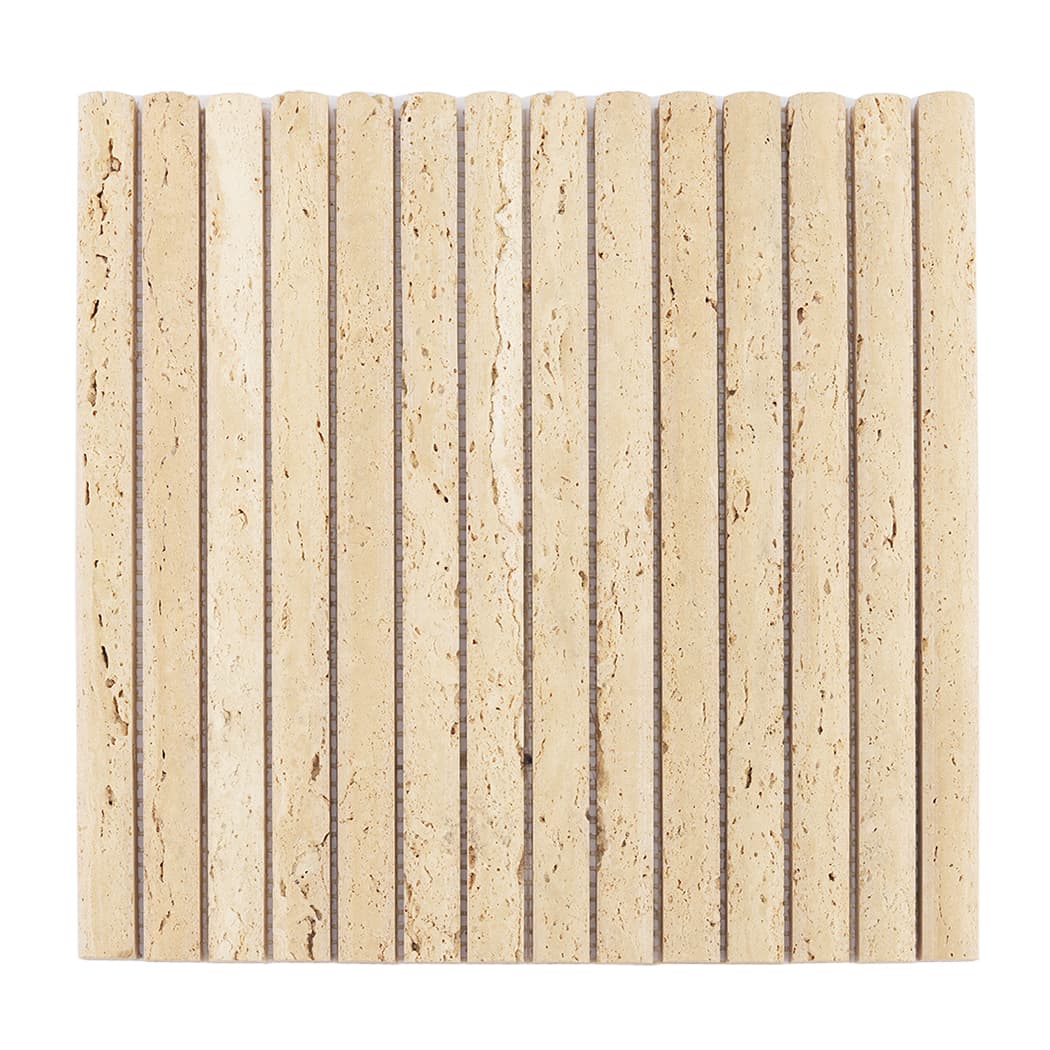
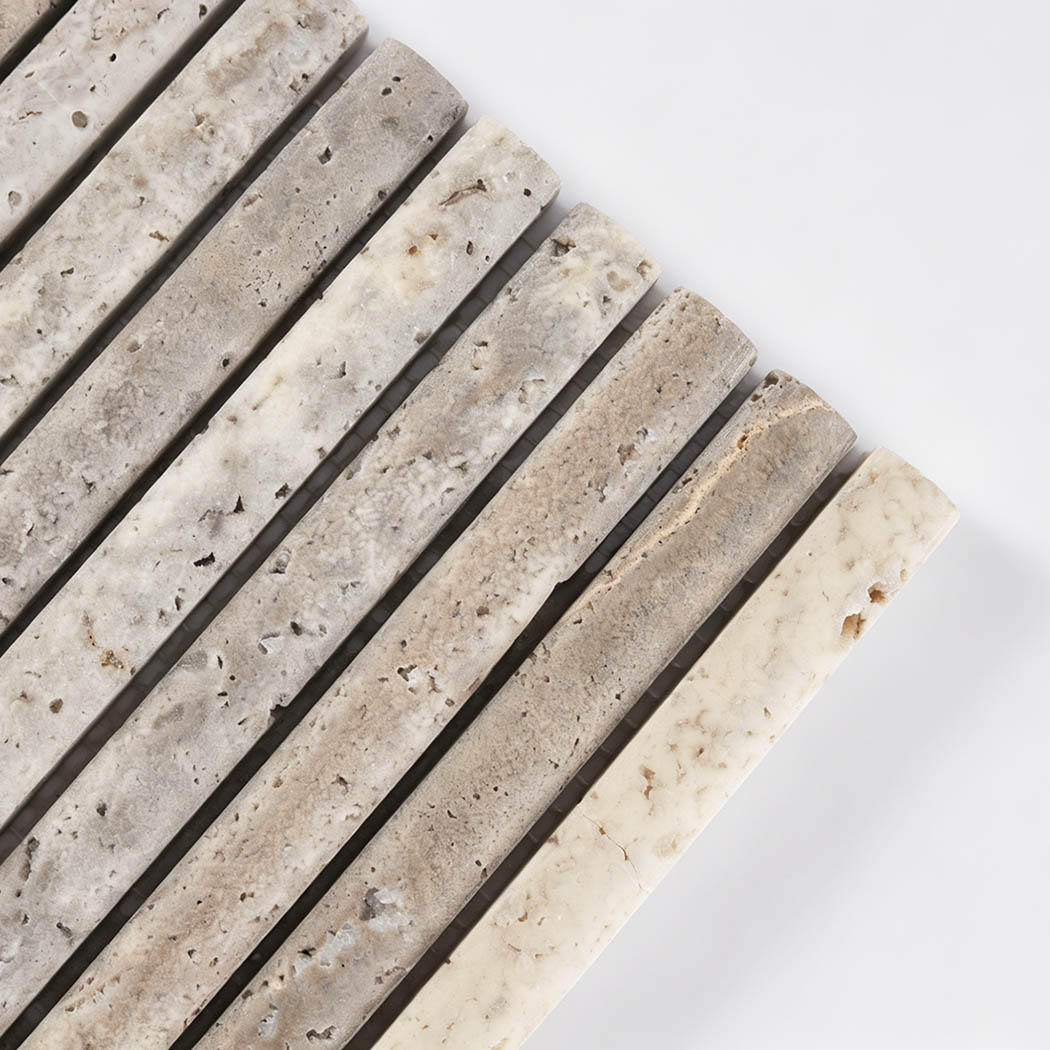
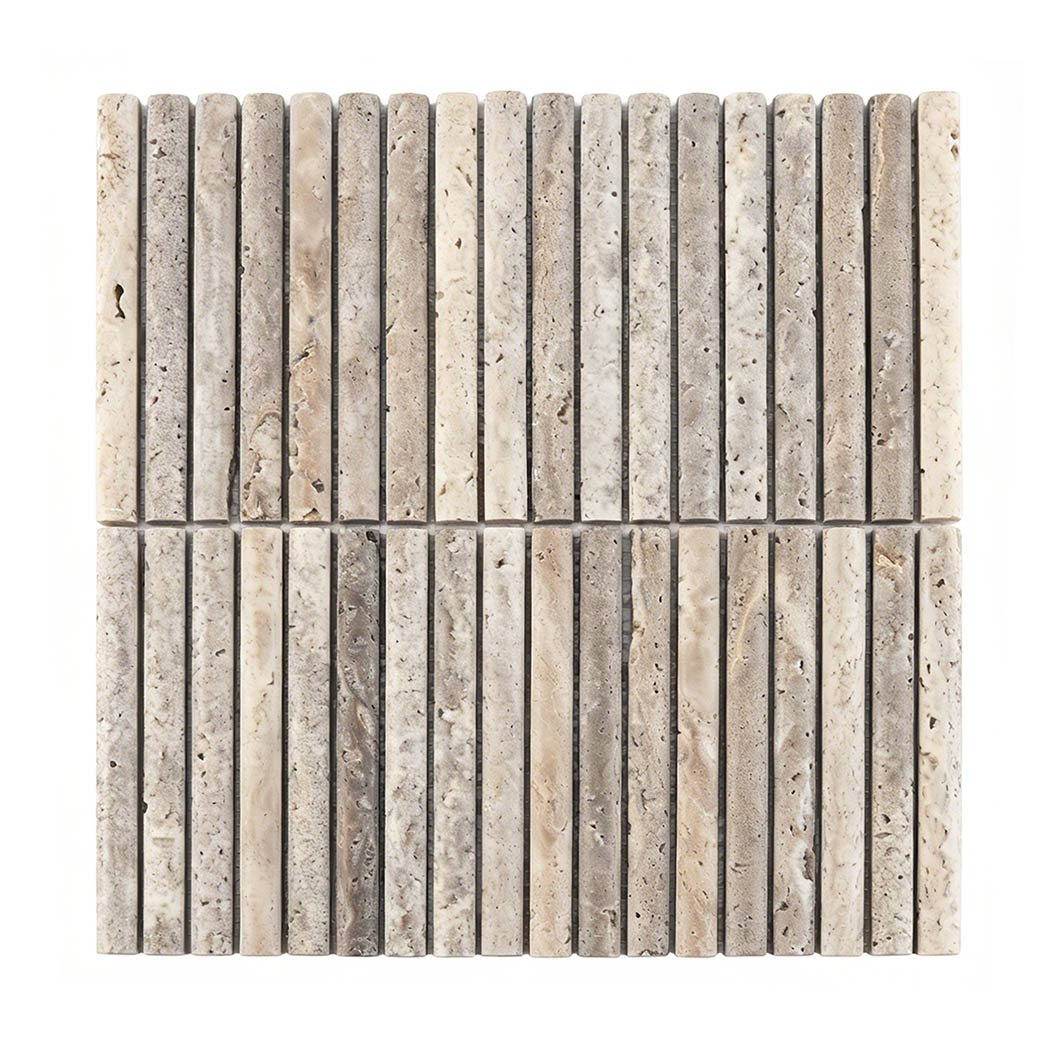

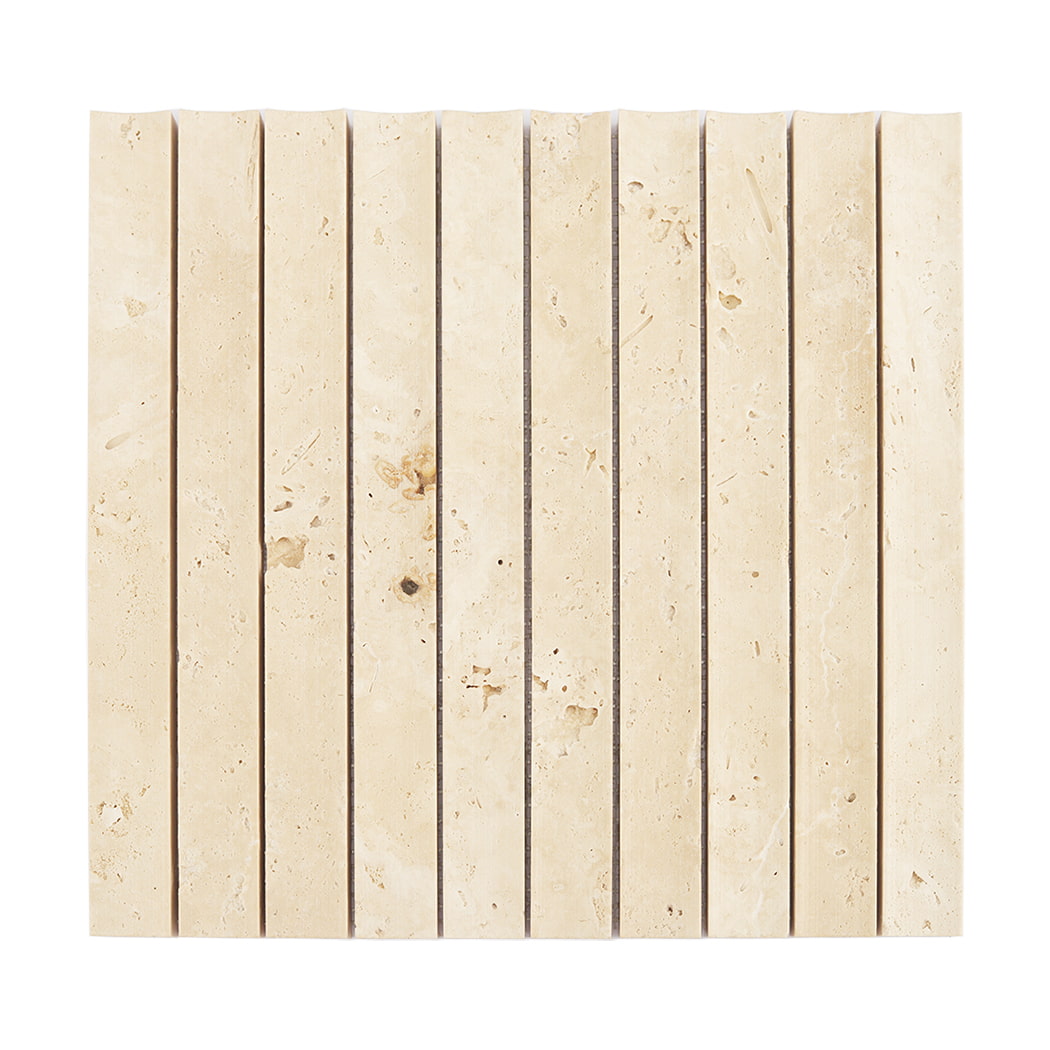
A travertine tile bathroom combines the quiet beauty of natural stone with a timeless, spa-inspired atmosphere. Formed by mineral deposits around springs, travertine is a type of limestone distinguished by subtle pores, layered movement and natural color variations. No two tiles are exactly alike, giving every bathroom an authentic appearance that cannot be duplicated by printed surfaces.
At SAICINA TILES, our natural travertine bathroom tiles are available in warm beige, contemporary gray, dramatic black and earthy red tones. Choose from honed, polished, tumbled, brushed, textured, fluted and mosaic designs for bathroom floors, shower walls, vanity backsplashes, recessed niches, bathtub surrounds and feature walls.
Explore our collection, compare samples under your bathroom lighting and contact SAICINA TILES for help selecting the right color, finish, format and quantity for your project.
Is Travertine Tile Good for a Bathroom?
Travertine can be an excellent bathroom material when the stone, surface finish and installation system are suitable for the intended area. It is durable, visually distinctive and versatile enough for traditional, Mediterranean, modern, minimalist and luxury bathroom interiors.
However, travertine is a porous natural stone rather than a completely waterproof surface. A successful travertine bathroom installation requires a properly constructed waterproof substrate, compatible setting materials, professional sealing and appropriate routine maintenance.
The main benefits of travertine bathroom tiles include:
-
Authentic natural colors, pores and veining
-
Unique variations without repetitive printed patterns
-
A calm, organic and spa-inspired appearance
-
Multiple colors, formats and surface finishes
-
Compatibility with floors, walls, showers and decorative features
-
Strong coordination with wood, glass, plaster, metal and other natural stones
-
Long-lasting performance when correctly installed and maintained
-
Compatibility with suitable underfloor heating systems
Natural stone also requires more care than standard porcelain tile. Travertine may stain or etch if it is exposed to unsuitable products, while polished surfaces can become slippery when wet. Maintenance requirements should therefore be considered as carefully as color, format and design.
Why Choose Travertine Tiles for a Bathroom?
Authentic Natural Stone Character
Travertine is formed through a natural geological process involving mineral-rich water. Its visible pores, soft veins and layered tonal movement are part of the stone rather than an artificial surface decoration.
Every tile has its own character. Variations in tone, pores and veining allow the completed bathroom to feel natural and individually designed. This authentic variation is one of the most important differences between natural travertine and travertine-look porcelain tile.
Timeless Neutral Colors
Travertine is best known for its ivory, cream and beige tones, but it is also available in gray, silver, brown, black, red and rust colors.
These natural shades work with a wide variety of bathroom styles and remain visually relevant as design trends change. Beige travertine can soften a modern bathroom, gray travertine creates a cooler architectural appearance, and black or red travertine can become a dramatic focal point.
Versatile Bathroom Applications
Travertine can be processed into large-format tiles, standard square tiles, rectangular wall tiles, narrow strips, mosaics, decorative patterns and carved dimensional panels.
This makes it suitable for:
-
Main bathroom floors
-
Shower walls
-
Selected shower floors
-
Vanity backsplashes
-
Bathtub surrounds
-
Recessed shower niches
-
Bathroom feature walls
-
Decorative borders
-
Thresholds and transitions
-
Custom wall panels
High-End Architectural Appearance
Natural travertine has visual depth that is difficult to reproduce with an artificial printed surface. Directional veins, mineral movement and subtle pores create a sophisticated architectural appearance suitable for private homes, hotels, spas, villas and luxury commercial projects.
Long-Term Performance
Properly selected and professionally installed travertine can provide many years of use. Damaged filler, surface wear and small chips may also be repaired by experienced natural-stone professionals.
The final performance depends on stone quality, substrate preparation, waterproofing, mortar coverage, drainage, maintenance and the suitability of the chosen finish.
Underfloor Heating Compatibility
Travertine is a natural stone and may feel cool in an unheated bathroom. It also conducts and retains heat effectively, making it compatible with many properly designed radiant floor-heating systems.
The heating system, mortar, movement joints and installation assembly must be selected and installed according to the relevant manufacturer’s instructions.
Where Can Travertine Be Used in a Bathroom?
The same travertine product is not necessarily suitable for every bathroom surface. Tile format, surface texture, fill, wet exposure and cleaning requirements must all be considered.
Travertine Bathroom Floors
Filled and honed travertine is a popular option for general bathroom floors because it provides a relatively smooth, natural-looking surface that is easier to clean than deeply pitted stone.
Choose a tile finish and size suitable for wet barefoot use. A matte appearance does not automatically guarantee slip resistance, so applicable product testing should be reviewed when wet-area performance is important.
Polished travertine is generally more suitable for walls and dry decorative areas unless the specific product has appropriate wet-floor performance information.
Travertine Shower Walls
Travertine shower walls can create a continuous, immersive spa atmosphere. Filled and honed surfaces are usually easier to maintain than unfilled or deeply split-face stone because soap residue and mineral deposits have fewer cavities in which to collect.
Large-format travertine tiles reduce the number of grout joints and create a calmer appearance. Small tiles and mosaics are useful around recessed niches, benches, corners and curved surfaces.
Regardless of tile size, a complete waterproofing system must be installed behind the travertine.
Travertine Shower Floors
Shower floors require careful planning because the surface must drain correctly while providing suitable wet-use performance.
Small-format travertine mosaics are often the most practical option. Small individual pieces can follow the shower-pan slope more easily than large tiles, while additional grout joints may contribute to underfoot traction.
Large polished travertine tiles are generally not recommended for shower floors. If larger pieces are required, the drain type, slope and tile layout must be designed and installed by an experienced professional.
Vanity Backsplashes
Travertine vanity backsplashes introduce natural texture without covering the entire bathroom. Honed, polished, tumbled and mosaic finishes can all be considered because vanity walls usually receive less direct water than shower surfaces.
The stone should still be protected from cosmetics, hair products, colored liquids, perfume and soap residue. Any spills should be cleaned promptly.
Bathtub Surrounds
Cladding a bathtub surround with travertine creates an integrated and luxurious focal point. Large-format tiles can produce a clean, contemporary result, while mosaics and tumbled pieces add traditional character.
Horizontal surfaces must be detailed to prevent standing water. Edges, corners and transitions should be finished with compatible trims, stone pieces or flexible sealants.
Recessed Shower Niches
Mosaic travertine is especially useful inside recessed niches because smaller pieces are easier to cut and adjust around corners.
The bottom of the niche should slope slightly toward the shower so that water does not collect. All internal corners, penetrations and transitions must be included in the waterproofing system.
Travertine Feature Walls
Fluted, chiseled and split-face travertine can create strong shadow lines and architectural depth behind a vanity or freestanding bathtub.
Deeply textured surfaces are more difficult to clean, so they are generally better suited to feature walls outside direct shower spray.
Choose the Right Travertine Color
Travertine color influences the brightness, atmosphere and perceived size of a bathroom. Because it is a natural material, samples should be viewed as an indication of the overall color range rather than an exact representation of every tile.
Beige and Ivory Travertine
Beige travertine is the most classic choice for a warm and peaceful bathroom. Cream, ivory, almond and golden-beige tones reflect soft light and coordinate easily with white bathroom fixtures, natural oak, walnut, brushed brass and matte black fittings.
Beige travertine can be used across both the floor and walls to create a monochromatic spa bathroom. It can also be combined with white plaster or painted walls for a lighter contemporary interior.
Its soft neutral appearance makes beige travertine suitable for:
-
Modern minimalist bathrooms
-
Luxury spa bathrooms
-
Mediterranean interiors
-
Traditional bathrooms
-
Farmhouse-inspired bathrooms
-
Natural wood bathroom designs
Gray and Silver Travertine
Gray and silver travertine have cooler undertones and a more architectural appearance. Natural bands may combine silver, gray, taupe, beige and off-white colors within the same tile.
Gray travertine pairs well with:
-
Chrome fixtures
-
Brushed nickel
-
Stainless steel
-
Black metal
-
Smoked glass
-
Light wood
-
Dark walnut
-
White bathroom fixtures
It is an excellent choice for contemporary bathrooms that need natural texture without a strong yellow or golden undertone.
Black Travertine
Black and charcoal travertine create a dramatic, sophisticated bathroom atmosphere. Lighter veins and natural pores remain visible against the dark background, giving the surface exceptional depth.
Black travertine can be used for:
-
Vanity feature walls
-
Luxury shower enclosures
-
Bathtub backgrounds
-
Powder-room floors
-
Decorative borders
-
Recessed niches
-
Custom wall panels
Balance dark travertine with carefully planned lighting, glass partitions, mirrors and lighter bathroom fixtures to prevent the room from feeling too heavy.
Red and Rust Travertine
Red travertine ranges from soft coral and terracotta to deeper rust and burgundy tones. It is particularly suitable for Mediterranean, eclectic, artistic and boutique-hotel bathroom interiors.
Red travertine can be used as a statement feature or combined with neutral stone. Warm metal fixtures, off-white plaster, dark wood and natural linen complement its earthy character.
Travertine Surface Finishes Explained
The finish changes the appearance, texture, cleaning requirements and practical suitability of travertine. Surface names alone should not be used as proof of slip resistance.
Honed Travertine
Honed travertine has a smooth, low-sheen or matte surface. Many honed products are also filled, meaning that the larger natural voids have been closed with a compatible cementitious or resin filler before the surface is ground.
Filled and honed travertine is popular for bathroom floors and walls because it retains the natural appearance of the stone while providing a relatively flat and easy-to-clean surface.
Its understated finish works especially well in modern, minimalist and spa-inspired bathrooms.
Tumbled Travertine
Tumbled travertine has softened edges and a naturally aged surface. The tile is mechanically processed to create a worn, rustic appearance.
This finish is suitable for:
-
Mediterranean bathrooms
-
Traditional interiors
-
Farmhouse designs
-
Decorative borders
-
Rustic feature walls
-
Selected bathroom floors
Its textured face and irregular edges require careful grouting and may need more cleaning than filled and honed travertine.
Brushed Travertine
Brushed travertine is treated with wire brushes to create a softly textured, matte surface. It is less distressed than heavily tumbled stone but more tactile than standard honed travertine.
Brushed finishes introduce natural character and may provide more texture underfoot. However, the suitability of an individual product for wet floors must still be verified.
Sandblasted Travertine
Sandblasting creates a more consistently textured surface by directing abrasive particles at the stone. This treatment can produce a contemporary matte appearance while emphasizing the natural structure of the material.
Sandblasted travertine may be considered for wet areas when the specific product has suitable performance characteristics.
Polished Travertine
Polishing creates a smooth, reflective surface and deepens the appearance of the color and veining. Polished travertine brings a refined, luxurious quality to bathroom walls.
Recommended applications include:
-
Vanity backsplashes
-
Feature walls
-
Decorative panels
-
Powder-room walls
-
Bathtub backgrounds
Polished travertine may become slippery when wet and can show etching more clearly. It is therefore generally not the first choice for shower floors.
Fluted Travertine
Fluted travertine has carved linear grooves that create a strong three-dimensional effect. Light and shadow move across the surface throughout the day, making fluted travertine especially effective on feature walls.
It is commonly used behind freestanding bathtubs, bathroom vanities and mirrors. Deep grooves can trap soap and mineral residue, so fluted tile should be used carefully inside frequently used showers.
Chiseled and Split-Face Travertine
Chiseled and split-face finishes preserve a rough, dimensional stone texture. These products bring depth and an organic architectural appearance to bathroom walls.
They are generally better suited to dry or low-splash feature walls because their irregular surfaces require more maintenance in direct-wet areas.
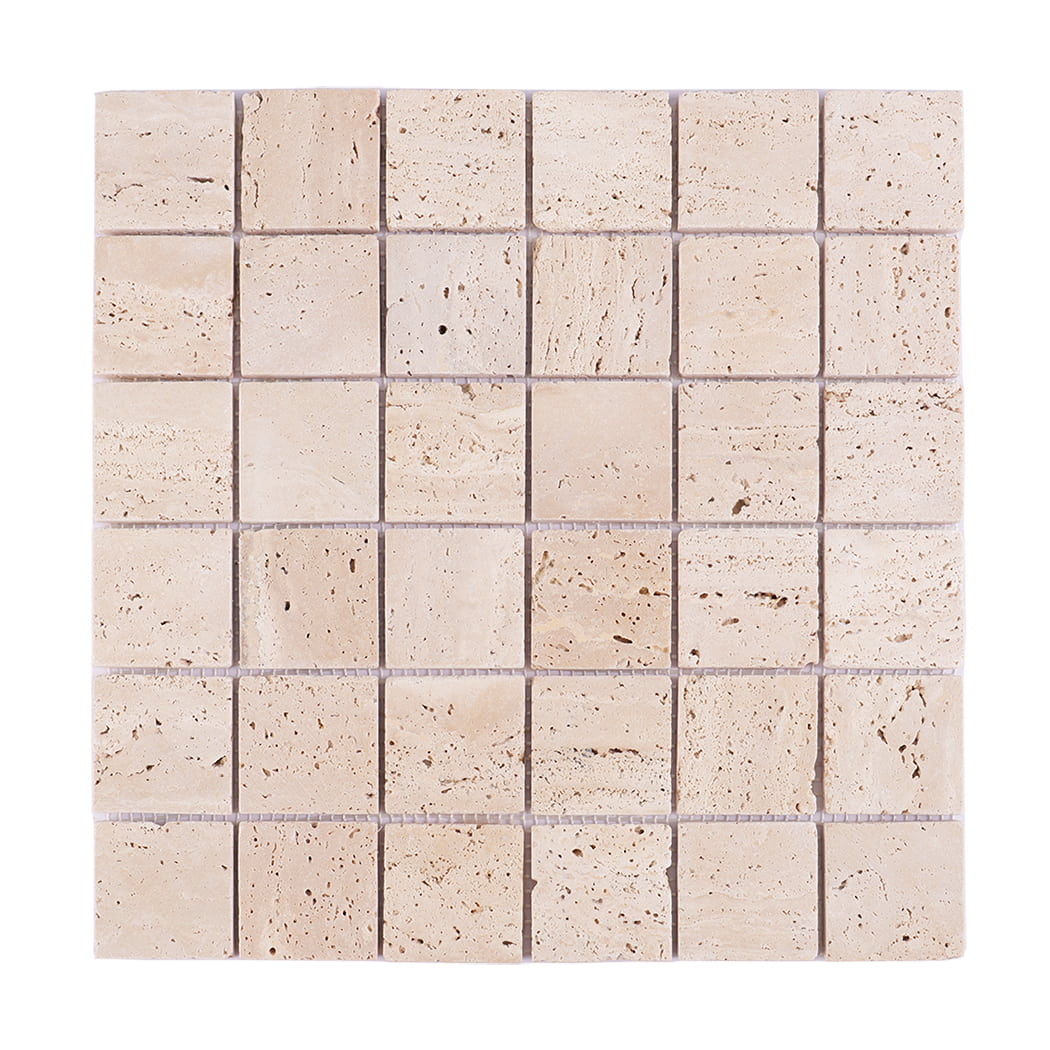
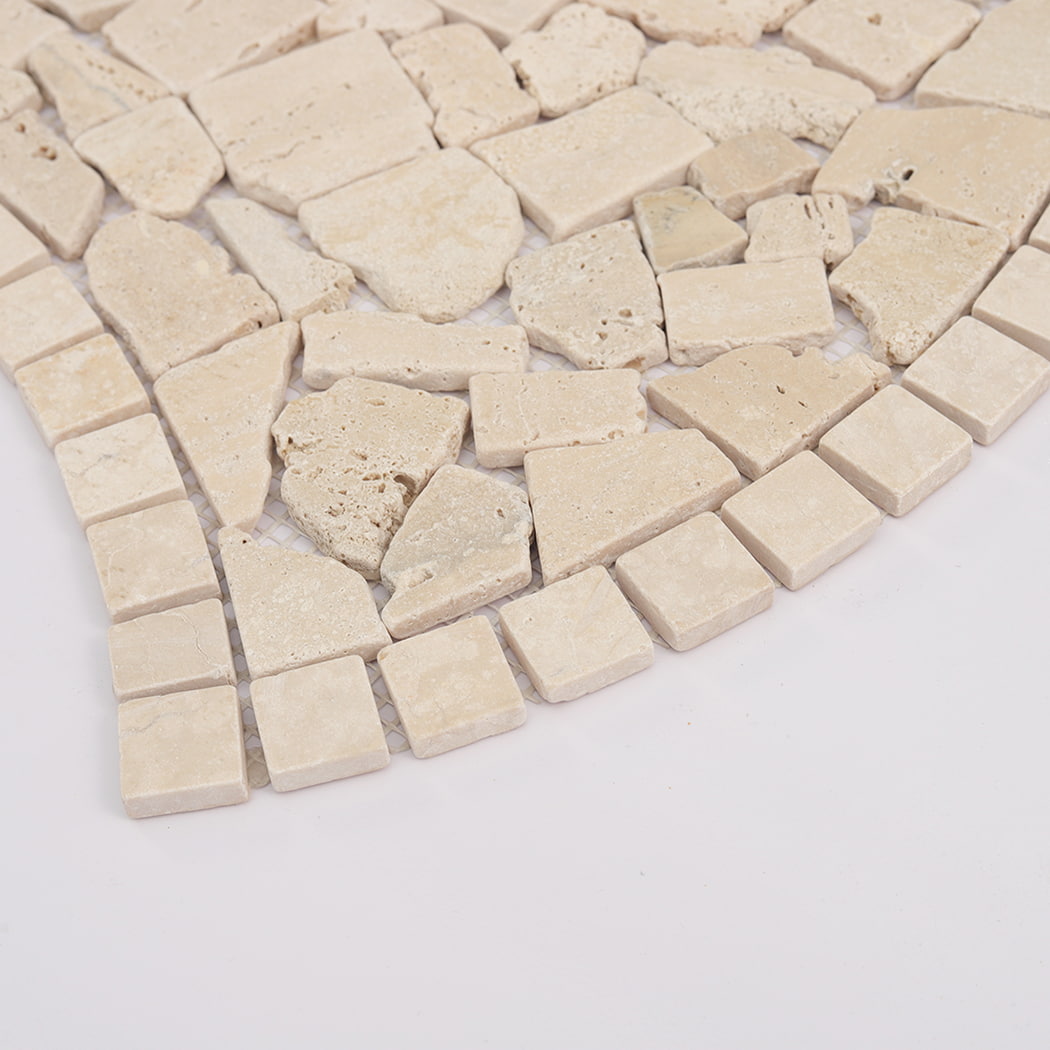
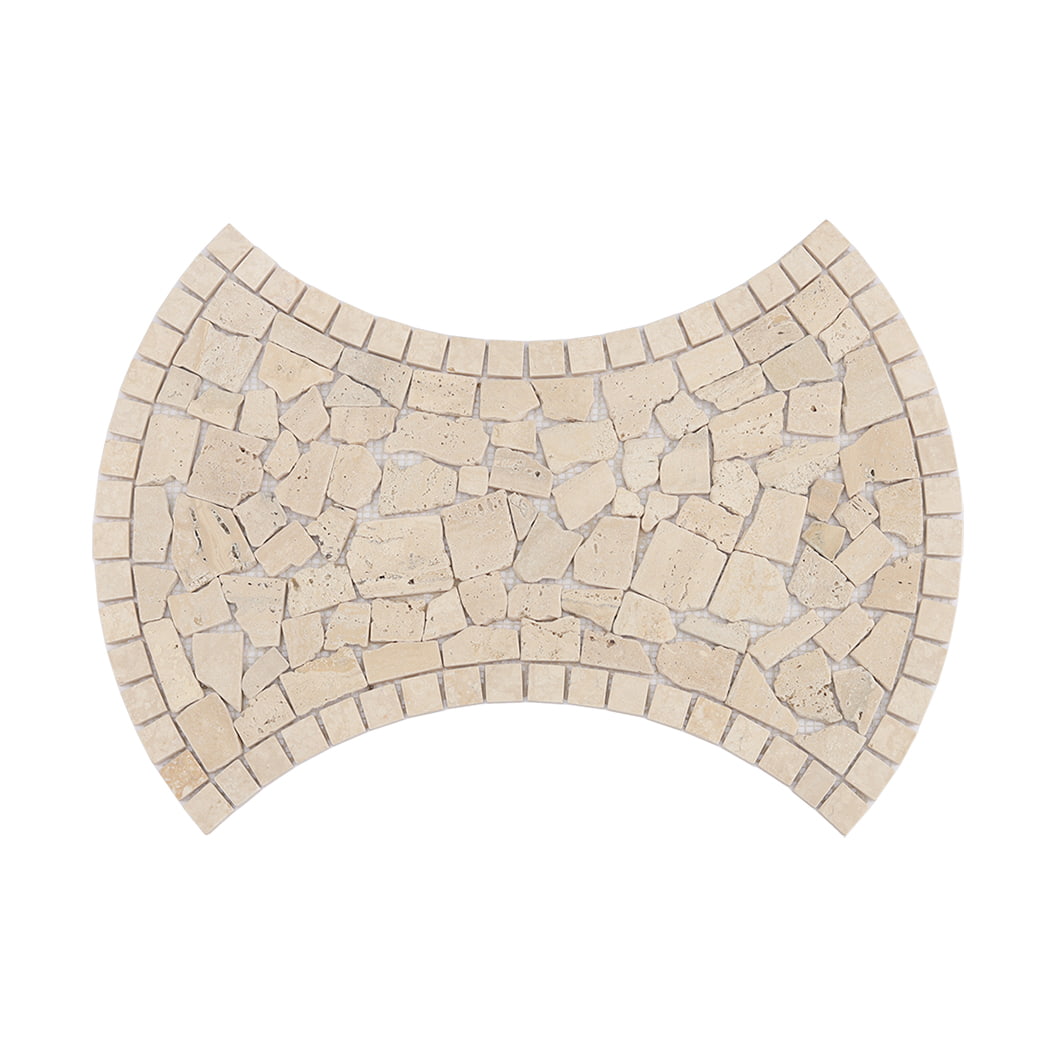
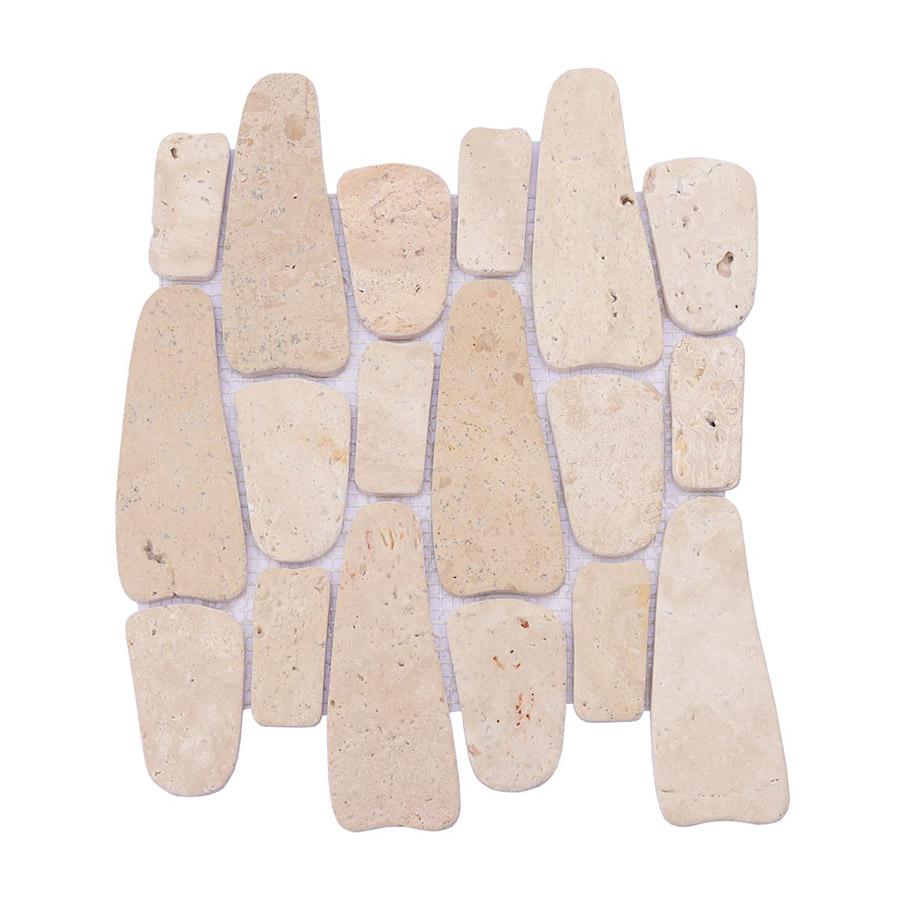
Travertine Mosaic Tiles
Travertine mosaics are available in:
-
Square patterns
-
Hexagons
-
Penny rounds
-
Herringbone patterns
-
Basketweave patterns
-
Subway shapes
-
Geometric combinations
-
Custom-cut designs
Their flexible mesh-mounted sheets make them useful for shower slopes, recessed niches, curved surfaces and detailed borders.
Additional grout joints may contribute to traction, although they also increase the amount of grout requiring cleaning and installation care.
Filled vs. Unfilled Travertine in Bathrooms
Travertine naturally contains holes and channels created during its geological formation.
Filled travertine has the larger surface voids closed with a compatible filler, creating a flatter and more easily cleaned surface. Unfilled travertine leaves the holes visible for a more rustic and organic appearance.
Filled Travertine
Filled travertine is generally more practical for:
-
Main bathroom floors
-
Shower walls
-
Selected shower floors
-
Vanity backsplashes
-
Bathtub surrounds
-
Frequently cleaned surfaces
The flatter surface reduces the number of cavities in which soap, cosmetics and mineral residue can collect.
Unfilled Travertine
Unfilled travertine emphasizes the natural porous structure of the stone. It may be suitable for:
-
Dry bathroom feature walls
-
Decorative panels
-
Low-splash vanity walls
-
Rustic design elements
-
Selected vertical applications
Open pits can collect residue and may be difficult to dry or clean. Unfilled travertine should therefore be used carefully in direct-wet areas.
Filling and Sealing Are Different
Filling closes visible holes in the stone. An impregnating sealer enters the surface and helps reduce the absorption of liquids and staining agents.
Neither filling nor sealing replaces a properly designed bathroom waterproofing system.
Travertine Tile Sizes for Bathrooms
Tile size influences drainage, grout quantity, installation complexity and the perceived scale of the room.
Mosaic and Small-Format Tiles
Small travertine mosaics are ideal for:
-
Shower floors
-
Recessed niches
-
Curved surfaces
-
Decorative borders
-
Small bathroom details
Their individual pieces can follow changes in slope more easily than large tiles.
3 × 6 and 4 × 4-Inch Tiles
These traditional formats work well in compact bathrooms, shower walls and decorative patterns. They are especially suitable for Mediterranean and rustic designs.
12 × 12-Inch Tiles
Twelve-inch square tiles are a versatile choice for standard bathroom floors and walls. They create a balanced appearance without requiring the highly precise substrate preparation associated with very large formats.
12 × 24-Inch Tiles
Rectangular 12 × 24-inch travertine tiles create a contemporary appearance and reduce the number of grout joints. They can be installed horizontally to make a narrow room feel wider or vertically to emphasize ceiling height.
Large-Format Travertine Tiles
Large-format tiles produce a quieter, more continuous stone surface. They are suitable for expansive bathroom walls, walk-in showers and luxury floors.
Because large natural-stone tiles require a flatter substrate, precise mortar coverage and careful handling, professional installation is particularly important.
Travertine Planks and Strips
Long strips emphasize the direction of vein-cut travertine. They can create linear feature walls, fluted compositions and contemporary stacked layouts.
French or Versailles Patterns
French patterns combine multiple tile sizes to create an informal old-world arrangement. They are especially suitable for Mediterranean, traditional and rustic bathroom floors.
Popular Travertine Bathroom Layouts
Straight Stack
A straight, aligned grid emphasizes clean architectural lines. It works especially well with rectangular vein-cut travertine and narrow, coordinated grout joints.
Running Bond
Running-bond installation adds gentle movement to rectangular tiles. For long-format pieces, the installer should evaluate tile flatness and choose an offset that follows the product and installation guidelines.
Herringbone
Herringbone patterns transform neutral travertine into a decorative feature. They are ideal for vanity backsplashes, shower accent walls, recessed niches and selected floor areas.
Chevron
Chevron tiles meet at angled points to create a continuous directional pattern. This layout produces a more precise and contemporary result than traditional herringbone.
Vertical Stack
Vertical installation emphasizes ceiling height and is particularly effective in compact showers or behind bathroom vanities.
Vein-Matched Layout
Vein-cut travertine can be arranged so that natural bands continue across adjacent pieces. Dry-lay and number the tiles before installation to maintain the intended direction.
Mixed-Format Layout
Combining large wall tiles with coordinated mosaics creates visual interest without introducing another material. The same stone can be used in different formats on the main floor, shower floor, walls and niches.
Travertine Bathroom Design Ideas
Monochromatic Spa Bathroom
Use warm beige honed travertine across the main bathroom floor and walls. Repeat the same stone in a smaller mosaic on the shower floor.
Pair it with:
-
White bathroom fixtures
-
Natural oak cabinetry
-
Frameless glass
-
Brushed brass fittings
-
Soft indirect lighting
-
Neutral towels and accessories
Changing the tile format instead of the color adds detail while preserving a calm, unified atmosphere.
Modern Gray Travertine Bathroom
Choose silver or gray travertine in a large rectangular format and install it in a straight stacked pattern.
Combine it with:
-
A floating vanity
-
Matte black or brushed nickel fixtures
-
Frameless shower glass
-
A wall-mounted mirror
-
Concealed LED lighting
-
Minimal decorative accessories
Directional lighting will highlight the natural bands without making the room feel overly ornate.
Light and Dark Contrast
Combine ivory travertine floors and walls with a charcoal or black travertine vanity wall, niche or bathtub surround.
Repeat the dark color in smaller details such as faucets, mirror frames and cabinet handles. This creates depth while keeping most of the bathroom bright.
Mediterranean Bathroom
Use tumbled beige, gold or rust travertine with softly aged edges. Add arched details, warm plaster walls, antique-brass fixtures, natural linen and restrained terracotta accessories.
The stone should remain the main decorative material so that the design does not become visually crowded.
Freestanding Bathtub Feature Wall
Install vein-cut or fluted travertine behind a freestanding bathtub. Directional wall lighting will emphasize the stone relief and layered movement.
Keep heavily textured materials outside the main water-splash zone when easy maintenance is a priority.
Small Travertine Bathroom
Choose a light-colored honed travertine and use the same tile across the floor and selected walls to reduce visual breaks.
Large wall tiles can make the room feel calmer, while a coordinated mosaic can be used on the shower floor. Frameless glass and well-planned lighting help maintain an open appearance.
Luxury Black Travertine Bathroom
Use black travertine on a vanity wall, shower wall or bathtub background. Combine it with pale floors, white fixtures, smoked glass and warm metallic accents.
Layered lighting is essential for revealing the natural texture and preventing the room from appearing too dark.
Travertine Mosaic Details
Use travertine mosaics to:
-
Frame a bathroom mirror
-
Line a recessed niche
-
Create a shower border
-
Define a vanity backsplash
-
Highlight a bathtub
-
Introduce a contrasting stone color
Mosaics are an effective way to use red, black or gray travertine without applying the stronger color throughout the entire room.
Professional Installation Guide
Natural stone installation in a bathroom is specialist work. Product selection should be coordinated with a qualified tile installer and the manufacturers of the waterproofing, mortar, grout, sealant and sealer systems.
Inspect and Blend the Tiles
Open several cartons and inspect the complete color and vein range before installation begins.
Blend tiles from different boxes to distribute natural variations evenly. Dry-lay important areas so that the finished pattern appears balanced and intentional.
Check:
-
Tile dimensions
-
Stone thickness
-
Surface finish
-
Fill quality
-
Edge condition
-
Natural color range
-
Vein direction
-
Visible damage
Natural variations are expected, but damaged or unsuitable pieces should be separated before installation.
Prepare a Stable and Flat Substrate
The wall or floor must be clean, sound and sufficiently flat for the selected tile size.
Large-format natural stone generally requires tighter substrate tolerances than small tile. The building structure must also support the weight and rigidity of natural stone.
Major surface irregularities should be corrected before tiling rather than compensated for with random thick spots of mortar.
Install the Waterproofing System
Travertine tile, grout and stone sealer are not the bathroom’s waterproofing layer.
Shower walls, floors, niches, benches, penetrations and transitions require a complete waterproofing system installed according to local building codes and the manufacturer’s instructions.
Where required, the shower waterproofing should be flood-tested before tile installation begins.
Use Compatible Setting Materials
Use a mortar specifically approved for:
-
Natural stone
-
The selected substrate
-
The tile format
-
Wet-area installation
-
The waterproofing system
White mortar is commonly used behind light-colored natural stone to reduce the risk of visible discoloration.
Some moisture-sensitive or resin-backed stones require specialty setting materials. Compatibility must always be confirmed instead of assuming that one mortar is suitable for every travertine product.
Achieve Proper Mortar Coverage
Wet-area stone installations require very high mortar contact, commonly at least 95%, with full support around tile edges and corners.
The installer should periodically lift tiles during installation to verify coverage. Back-buttering may be required, especially with large-format stone.
Empty areas behind the stone can contribute to poor support, trapped moisture and installation failure.
Plan Grout Joints
Grout-joint width depends on:
-
Tile calibration
-
Edge finish
-
Tile format
-
Layout
-
Dimensional variation
-
Installer recommendations
Natural stone should not be forced into a grout joint narrower than its size variation allows.
Choose a grout compatible with travertine and test it on a sample before installation, particularly with porous, textured or light-colored stone.
Include Movement Joints
Changes of plane, room perimeters and designated movement joints require a compatible flexible sealant rather than rigid grout.
Movement accommodation helps reduce the risk of cracking caused by structural movement, moisture changes and temperature variation.
Seal at the Correct Stage
Some travertine benefits from a pre-grout application of penetrating sealer or grout release. This can reduce grout staining and simplify surface cleanup.
Final sealing may take place after the mortar and grout have cured and the installation is dry. Follow the instructions provided by the stone supplier and sealer manufacturer.
Always test the sealer first and remove excess product before it dries on the surface.
Sealing Travertine Bathroom Tiles
An impregnating sealer enters the stone and helps repel water- and oil-based staining agents.
Sealing does not:
-
Make travertine completely waterproof
-
Replace the waterproofing membrane
-
Guarantee that the stone will never stain
-
Eliminate routine cleaning
-
Prevent all acid etching
-
Make every finish suitable for a wet floor
The best sealer and application schedule depend on the absorption of the stone, surface finish, bathroom location, cleaning routine and product instructions.
Before sealing:
-
Confirm that the product is suitable for travertine and the intended bathroom application.
-
Test the sealer on a spare tile or inconspicuous area.
-
Check whether it changes the color or sheen.
-
Allow the mortar and grout to cure as directed.
-
Make sure the surface is clean and sufficiently dry.
-
Apply the sealer evenly.
-
Allow the recommended penetration time.
-
Remove all excess sealer before it dries.
Do not reseal travertine solely because a fixed calendar date has arrived. Inspect the surface and follow the sealer manufacturer’s recommendations.
A frequently used shower may require evaluation sooner than a dry powder-room wall. If water quickly darkens the stone rather than remaining on the surface, consult a stone-care professional about cleaning and resealing.
How to Clean Travertine in a Bathroom
Consistent and gentle maintenance is more effective than occasional aggressive cleaning.
Daily and Weekly Cleaning
-
Wipe or squeegee shower surfaces after use.
-
Remove standing water where practical.
-
Clean with a soft cloth or nonabrasive mop.
-
Use a soft-bristle brush for textured areas.
-
Choose a pH-neutral cleaner labeled for natural stone.
-
Rinse away cleaner residue.
-
Dry the surface with a soft cloth when needed.
-
Clean grout and corners regularly.
-
Maintain adequate bathroom ventilation.
Clean Spills Promptly
Blot cosmetics, hair dye, oils, colored toiletries and perfumes as soon as possible. Do not spread the spill across the stone.
Prompt cleaning reduces the possibility of stains entering the porous surface.
Products to Avoid
Do not use:
-
Vinegar
-
Lemon juice
-
Acidic bathroom cleaners
-
Acidic toilet-bowl cleaner
-
Abrasive cleaning powders
-
Metal scouring pads
-
Hard wire brushes
-
Unapproved mold removers
-
Strong chemicals not intended for natural stone
Travertine is calcium carbonate-based and can be etched by acidic substances.
Bleach and strong alkaline cleaners may also affect the stone, filler, grout or sealer. Only use them if the relevant manufacturers specifically approve the application.
Treating Stains
Identify the source of a stain before attempting to remove it. Different stains require different treatments.
Applying random strong chemicals may spread the stain or permanently alter the surface finish. Deep staining, damaged filler, etching and uneven sheen should be assessed by a natural-stone restoration professional.
Advantages of Travertine Bathroom Tiles
-
Every tile has authentic natural color and texture variations.
-
The stone provides a high-end architectural appearance.
-
Beige, gray, black and red colors support multiple design styles.
-
Tiles, mosaics and dimensional panels can cover many bathroom surfaces.
-
Neutral earthy tones remain visually timeless.
-
Correctly installed travertine offers long-term durability.
-
Natural-stone professionals can repair many forms of surface wear.
-
Travertine works with compatible radiant floor-heating systems.
-
It coordinates easily with glass, metal, wood and plaster.
-
Custom sizes, shapes and surface treatments are available.
Considerations Before Choosing Travertine
-
Travertine is porous and may require sealing.
-
Acidic products can etch the surface.
-
Natural variation requires blending and careful layout.
-
Some finishes are unsuitable for wet floors.
-
Textured and unfilled surfaces can trap residue.
-
Natural stone is heavier than many ceramic products.
-
Professional installation is strongly recommended.
-
Material and installation costs are usually higher than standard porcelain.
-
Maintenance requirements are greater than for many artificial tiles.
-
Samples cannot show every possible natural variation.
Travertine vs. Travertine-Look Porcelain
Natural travertine offers genuine pores, mineral layers, tonal movement and unique variation. Every piece is different, creating greater visual depth and authenticity.
Travertine-look porcelain uses printed graphics to reproduce the appearance of natural stone. It usually offers lower maintenance, consistent dimensions and broader wet-area options.
Choose natural travertine when:
-
Authentic stone is central to the design
-
Unique variation is desirable
-
Natural texture is a priority
-
Periodic maintenance is acceptable
-
A premium architectural appearance is required
Choose travertine-look porcelain when:
-
Lower maintenance is the main priority
-
Consistent color is preferred
-
Predictable technical performance is required
-
The project has a more limited budget
-
Natural variation is not important
Travertine vs. Marble in Bathrooms
Travertine has visible pores, layered bands and warmer earthy colors. It generally creates a softer, more organic and relaxed bathroom atmosphere.
Marble usually has a denser crystalline appearance with more formal veining. It is often selected for polished, classical and highly refined interiors.
Both materials are natural calcium-based stones and can be affected by acidic products. Both may require sealing, professional installation and pH-neutral care.
Choose travertine for a warm, tactile and spa-inspired design. Choose marble for a more formal, polished and strongly veined appearance.
How to Order Travertine Bathroom Tiles
Prepare the following information before requesting a quotation:
Application Area
Identify whether the stone will be used on:
-
Main bathroom floors
-
Shower floors
-
Shower walls
-
Vanity backsplashes
-
Recessed niches
-
Bathtub surrounds
-
Decorative feature walls
Water Exposure
Confirm whether the surface receives:
-
Direct shower spray
-
Occasional splashes
-
High humidity
-
Little or no direct water
Project Measurements
Measure the length and height of every surface. Include niches, benches, returns, corners and bathtub surrounds.
Doors and windows should only be deducted when recommended by the estimator or installer.
Waste Allowance
Order additional material for:
-
Tile cuts
-
Natural selection
-
Breakage
-
Pattern matching
-
Complex layouts
-
Future repairs
The required percentage depends on the room geometry, pattern, tile size and natural variation.
Finish and Fill
Confirm whether the product is:
-
Honed
-
Polished
-
Tumbled
-
Brushed
-
Sandblasted
-
Fluted
-
Chiseled
-
Filled
-
Unfilled
Performance Information
Ask for relevant wet-use, slip-performance and installation information for the intended application.
A visually matte surface should not automatically be assumed to be suitable for every wet floor.
Variation Range
Review multiple samples or current-lot photographs rather than selecting the material from one tile.
Natural stone may contain significant differences in color, veins, pores and mineral movement.
Edges and Transitions
Plan all:
-
Exposed tile edges
-
External corners
-
Recessed niches
-
Thresholds
-
Floor transitions
-
Wall endings
-
Changes between materials
Installation Products
Coordinate the following products as compatible systems:
-
Waterproofing membrane
-
Natural-stone mortar
-
Grout
-
Flexible sealant
-
Penetrating sealer
-
Underfloor heating system
Maintenance Expectations
Make sure the required cleaning and resealing routine is suitable for the household, hotel or commercial project.
SAICINA TILES can help you compare natural colors, surface finishes, tile formats and mosaics for residential and commercial bathroom projects.
Request a sample before placing a full order and review the material under both daylight and evening bathroom lighting.
Frequently Asked Questions About Travertine Bathroom Tiles
Can Travertine Tile Be Used in a Shower?
Yes. Travertine can be used on shower walls and, with the correct finish and format, on shower floors.
The shower still requires a complete waterproofing and drainage system behind the tile. Filled surfaces are generally easier to clean in direct-wet areas, while large polished tiles are normally avoided on shower floors.
Does Sealing Make Travertine Waterproof?
No. A penetrating sealer improves resistance to liquid absorption and staining, but it does not waterproof the installation.
Waterproofing must be provided by the correctly constructed shower pan, substrate and membrane system.
How Often Should Bathroom Travertine Be Sealed?
There is no universal resealing interval. Frequency depends on:
-
Stone absorption
-
Surface finish
-
Water exposure
-
Bathroom ventilation
-
Cleaning products
-
Sealer type
-
Manufacturer instructions
Frequently used showers may need to be evaluated more often than dry bathroom walls.
What Is the Best Travertine Finish for a Bathroom Floor?
Filled and honed travertine is a common choice for general bathroom floors because it is easier to clean than open or deeply textured stone.
However, wet-use safety must be based on the performance of the specific product and installation rather than the finish name alone.
What Size Travertine Tile Is Best for a Shower Floor?
Small tiles and mosaics are generally easier to fit to the shower slope and provide more grout joints.
The exact size should be coordinated with the drain type, shower-pan geometry and installer. Large-format tiles require carefully designed slopes and specialized workmanship.
Is Filled or Unfilled Travertine Better for a Bathroom?
Filled travertine is usually more practical for bathroom floors, shower walls and frequently used wet areas because its flatter surface is easier to clean.
Unfilled travertine can be used on decorative walls where visible pores and natural texture are desired and direct water exposure is limited.
Is Travertine Slippery When Wet?
Travertine can become slippery when wet. Performance depends on:
-
Surface finish
-
Texture
-
Tile size
-
Grout joints
-
Soap residue
-
Cleaning
-
Installation quality
Polished travertine is generally less suitable for wet floors. Select a product with appropriate performance information for the intended application.
Will Travertine Stain in a Bathroom?
Travertine can stain because it is porous. Suitable sealing, prompt cleaning and pH-neutral maintenance reduce the risk but do not make the stone completely stain-proof.
Hair dye, cosmetics, oils and strongly colored products should be cleaned immediately.
Can Vinegar Be Used to Clean Travertine?
No. Vinegar is acidic and can etch the travertine surface, resulting in dull, pale or rough areas.
Use a pH-neutral cleaner specifically labeled for natural stone.
Can Bleach Be Used on Travertine?
Bleach and strong bathroom chemicals may damage the stone, filler, grout or sealer.
Do not use them unless the relevant stone-care and installation-product manufacturers specifically approve the application.
Is Travertine Cold Underfoot?
Travertine can feel cool in an unheated bathroom because it is a natural stone.
It also conducts heat effectively and can be used with many compatible radiant floor-heating systems.
Does Travertine Increase Home Value?
A professionally designed natural-stone bathroom may strengthen the premium appearance of a property. However, no single material can guarantee an increase in resale value.
Installation quality, design, condition, local buyer preferences and the overall quality of the property all affect value.
Is Travertine Difficult to Maintain?
Travertine requires more care than many porcelain tiles, but routine maintenance is manageable when the correct products are used.
Regular cleaning with a pH-neutral stone cleaner, prompt removal of spills, good bathroom ventilation and periodic assessment of the sealer will help preserve the stone.
Create Your Travertine Bathroom with SAICINA TILES
From serene beige shower walls to dramatic black feature panels and detailed natural-stone mosaics, SAICINA TILES offers travertine options for bathrooms of every scale.
Tell us:
-
Where the tile will be installed
-
Your preferred color
-
Your preferred surface finish
-
The project dimensions
-
The required tile format
-
Your delivery destination
Our team can help you narrow the collection, estimate the required quantity and arrange a sample so you can evaluate the natural stone before ordering.
Explore our travertine bathroom tiles and contact SAICINA TILES to begin your project.