
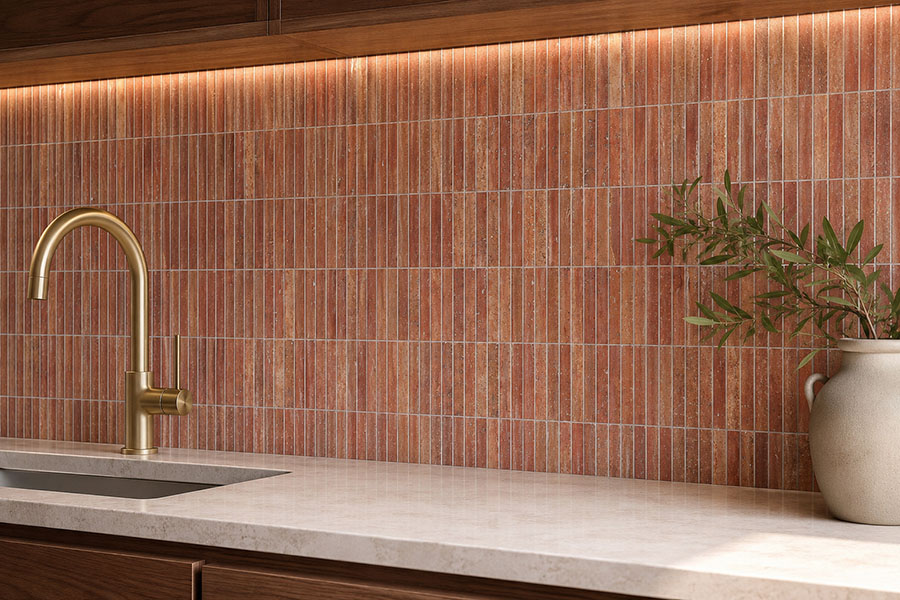
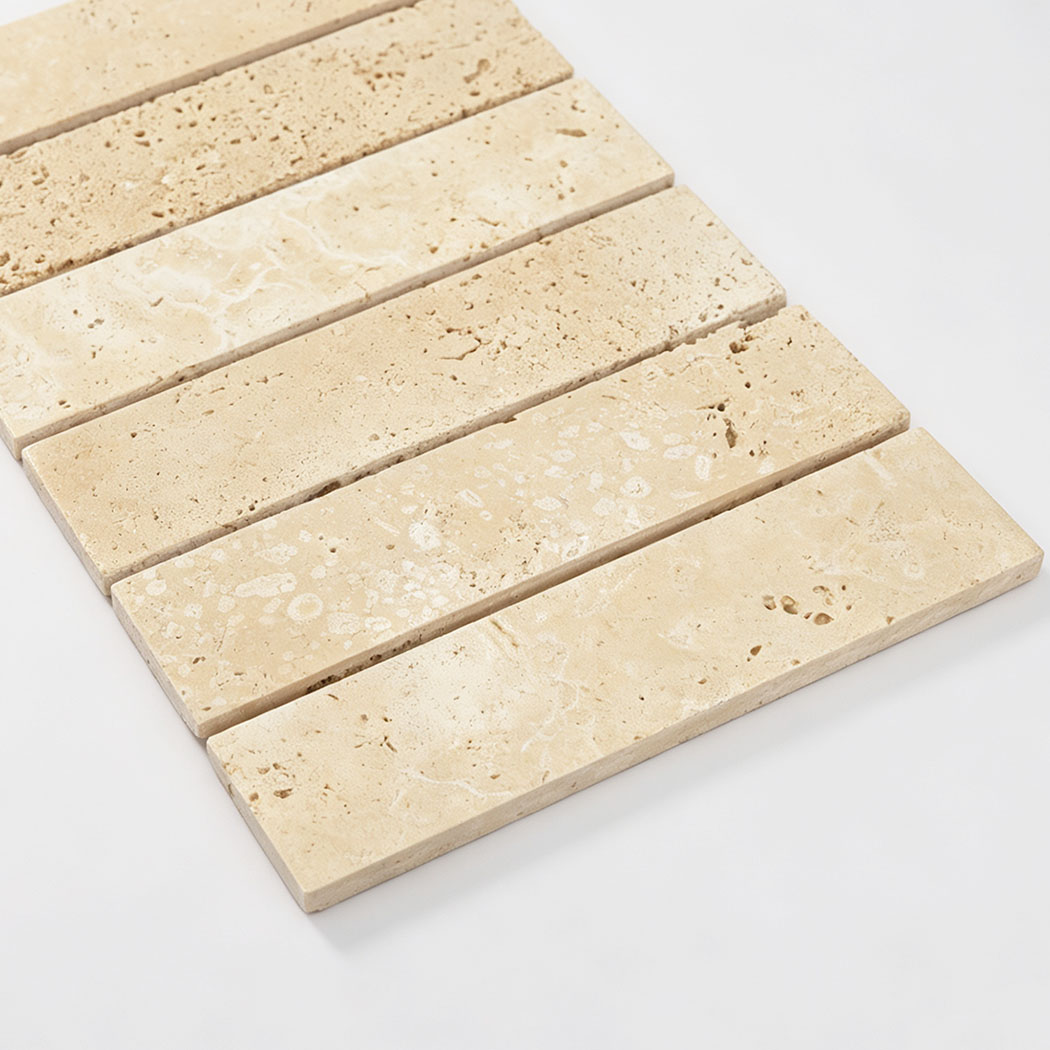
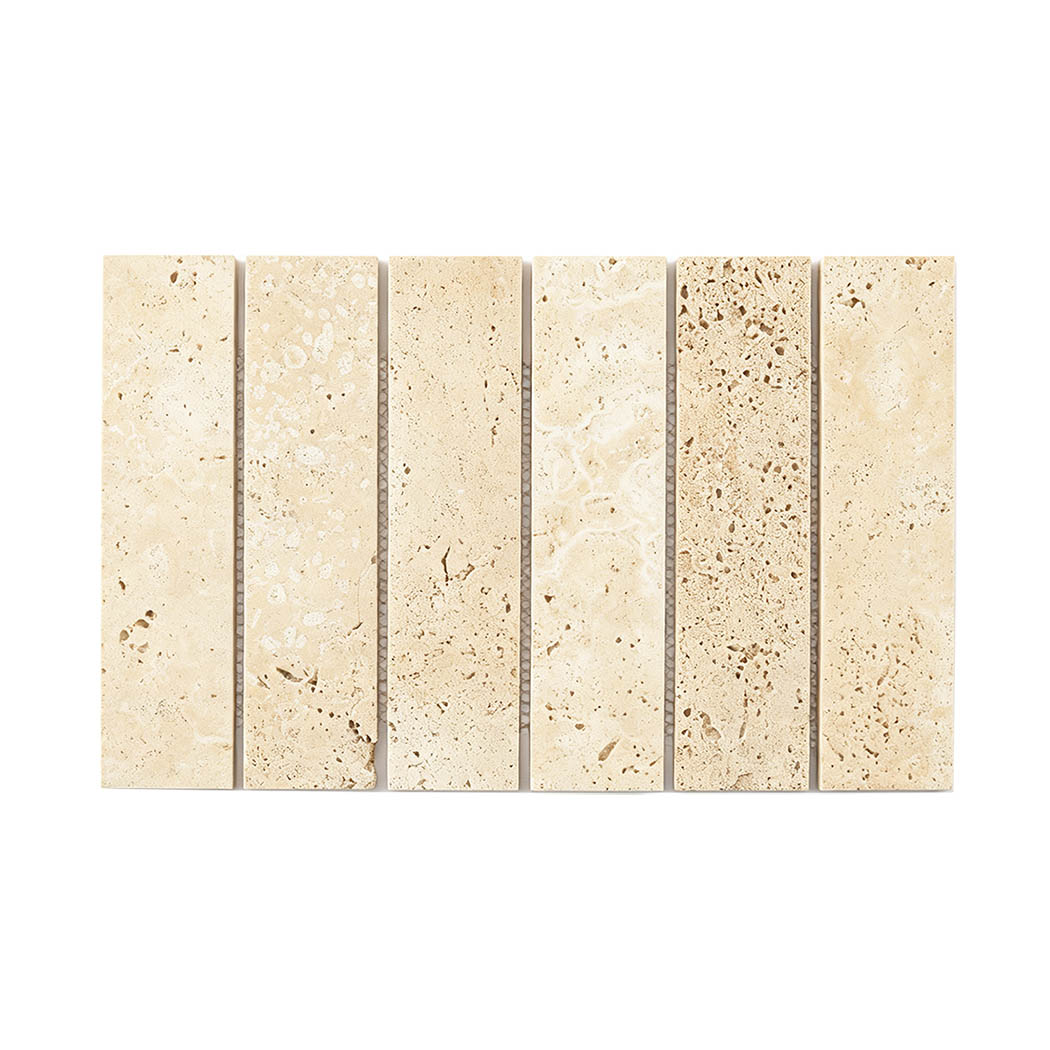

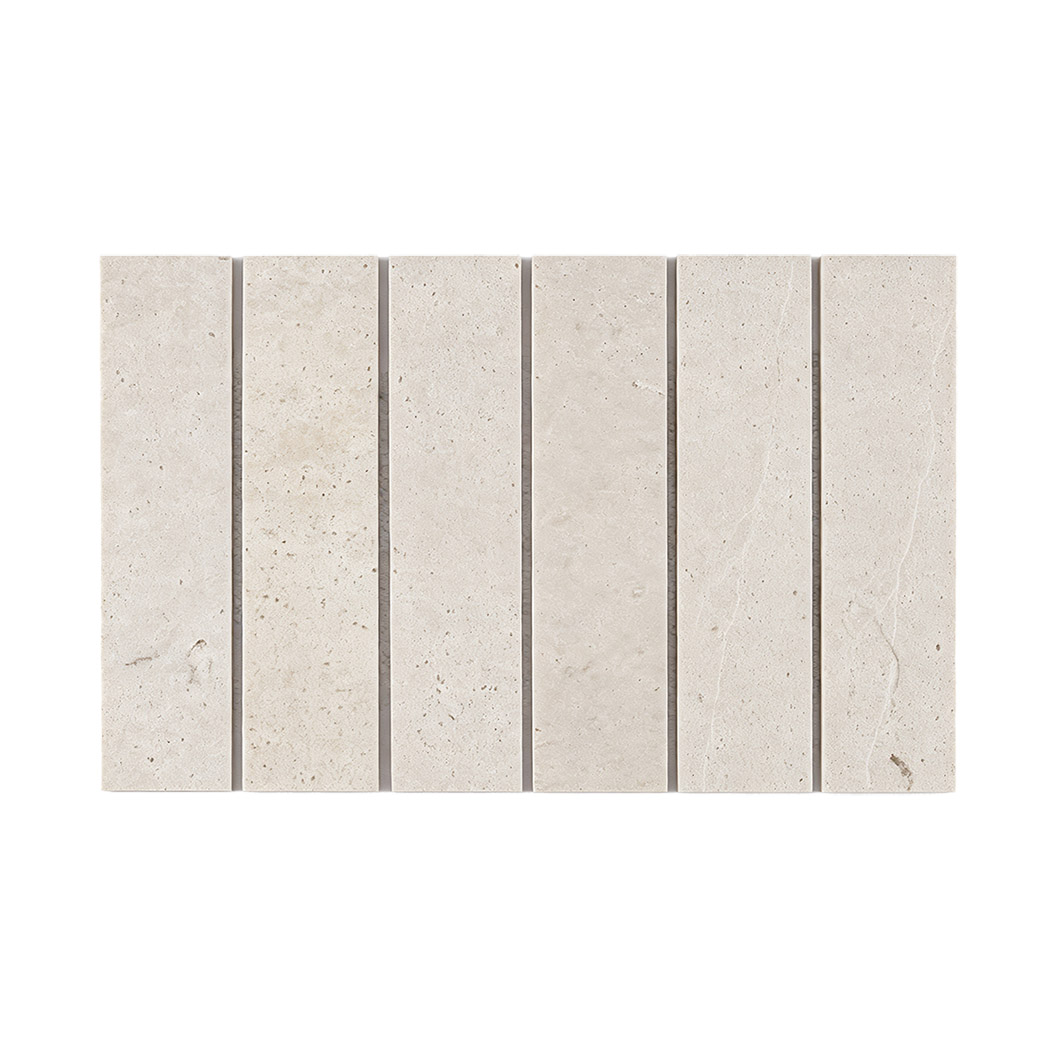
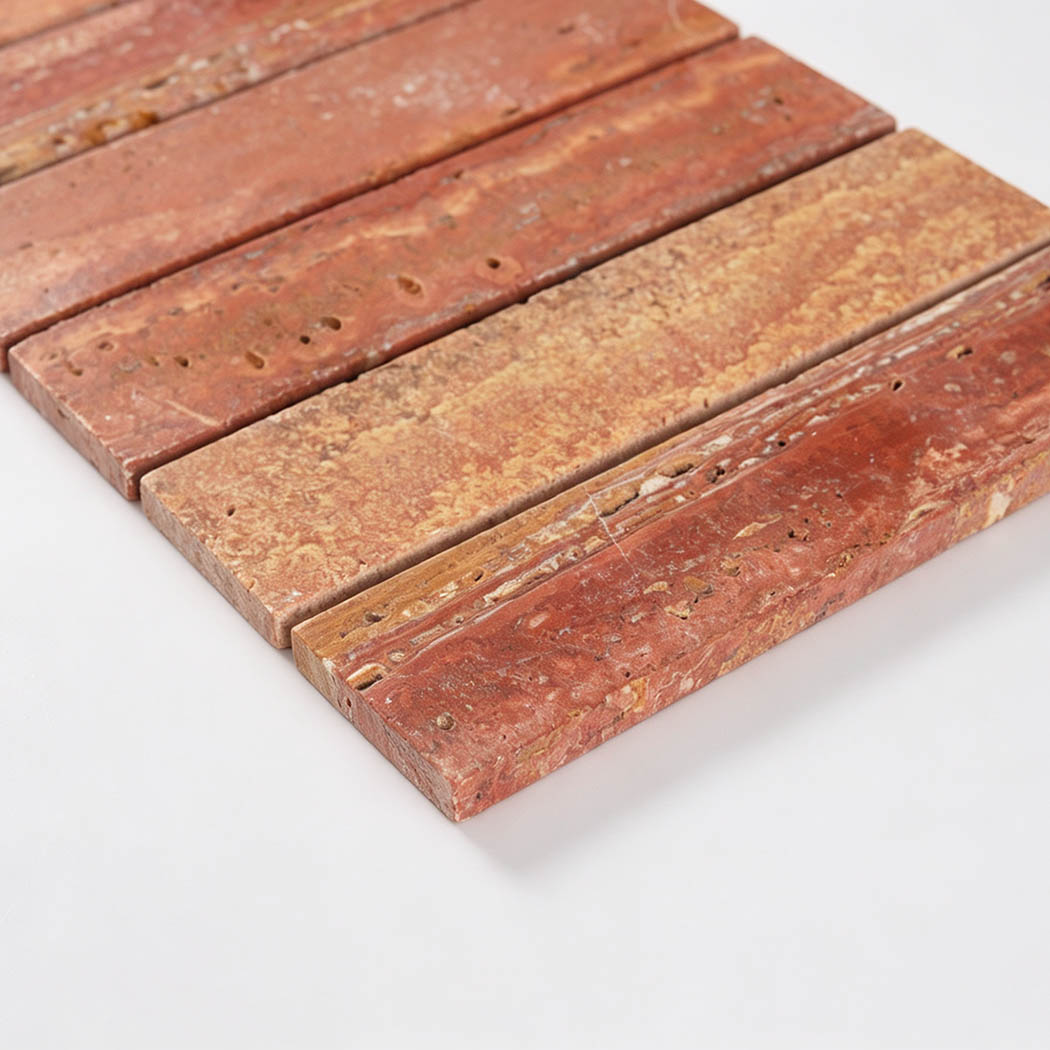
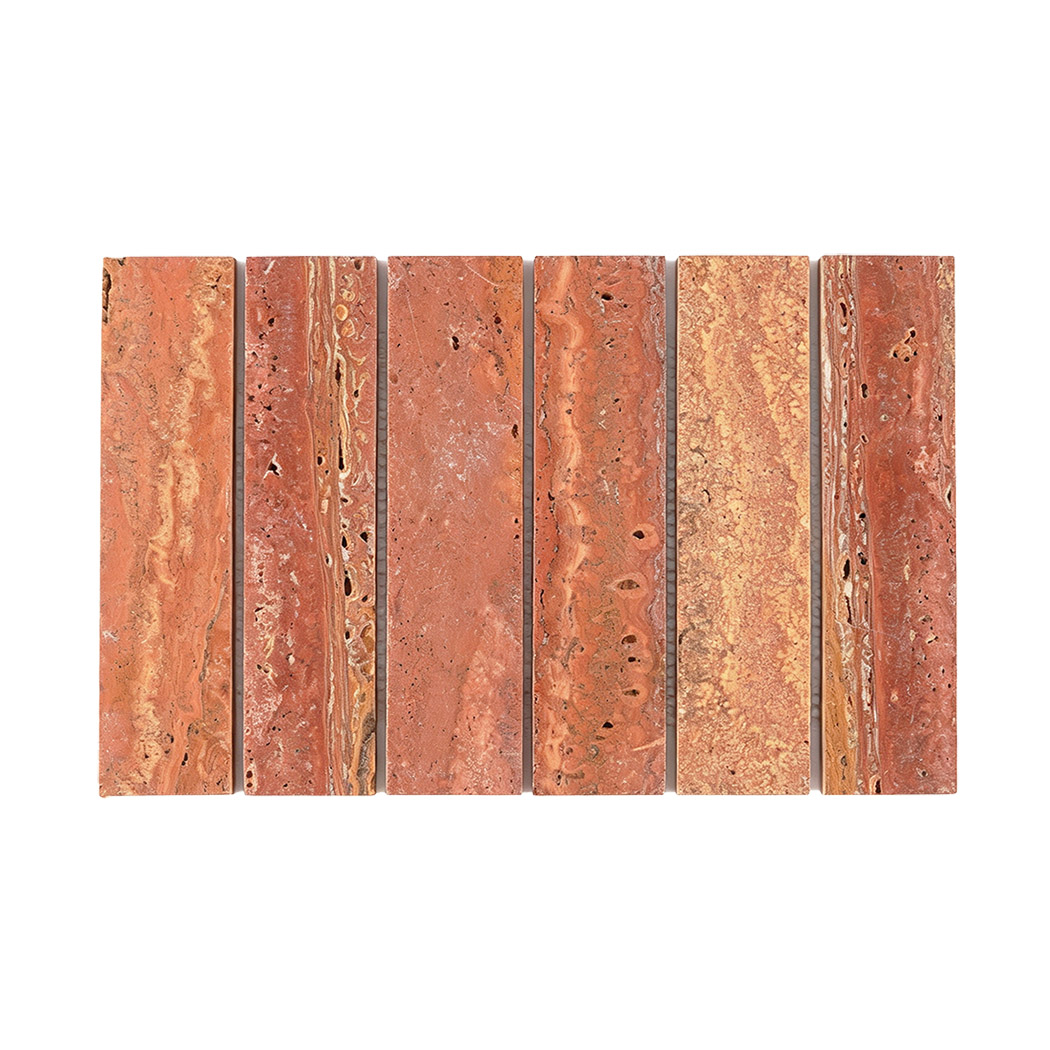
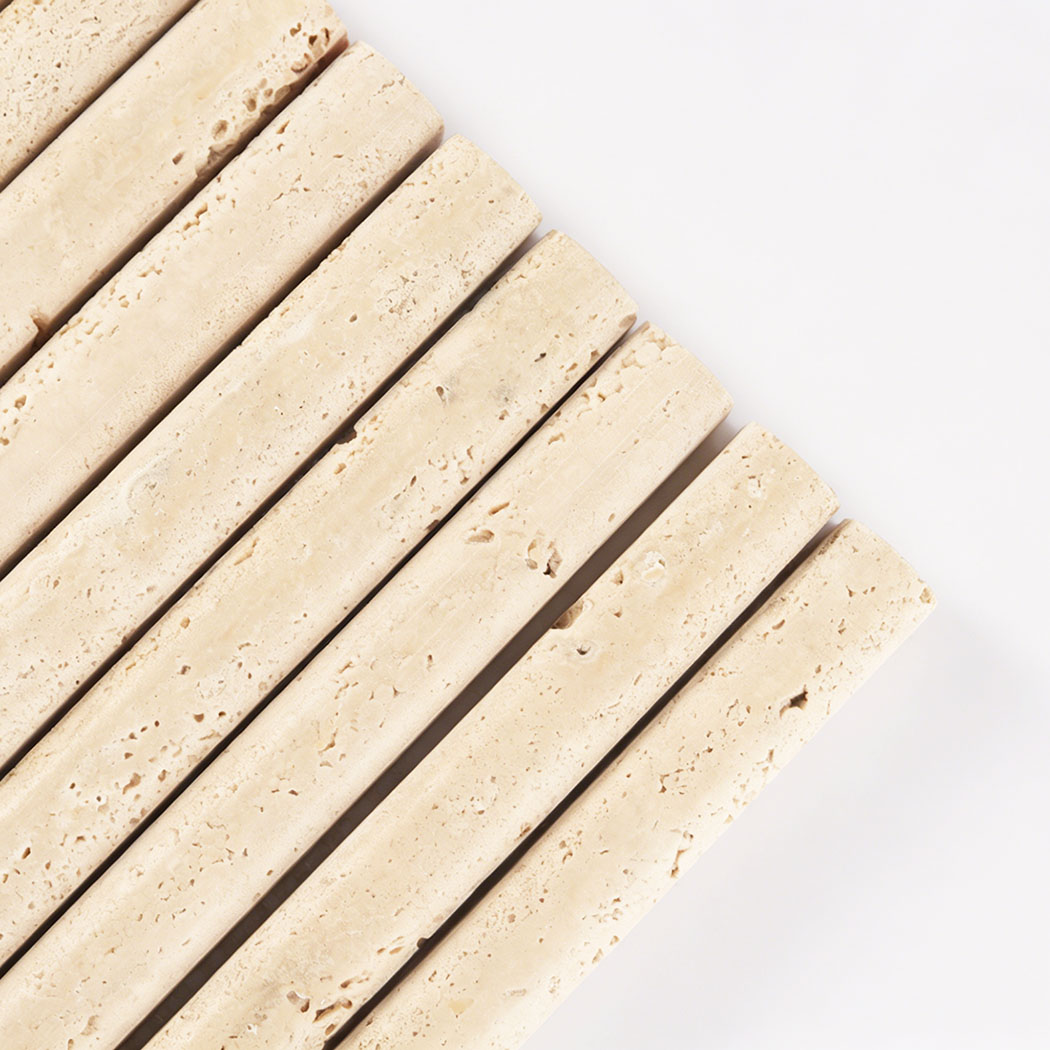
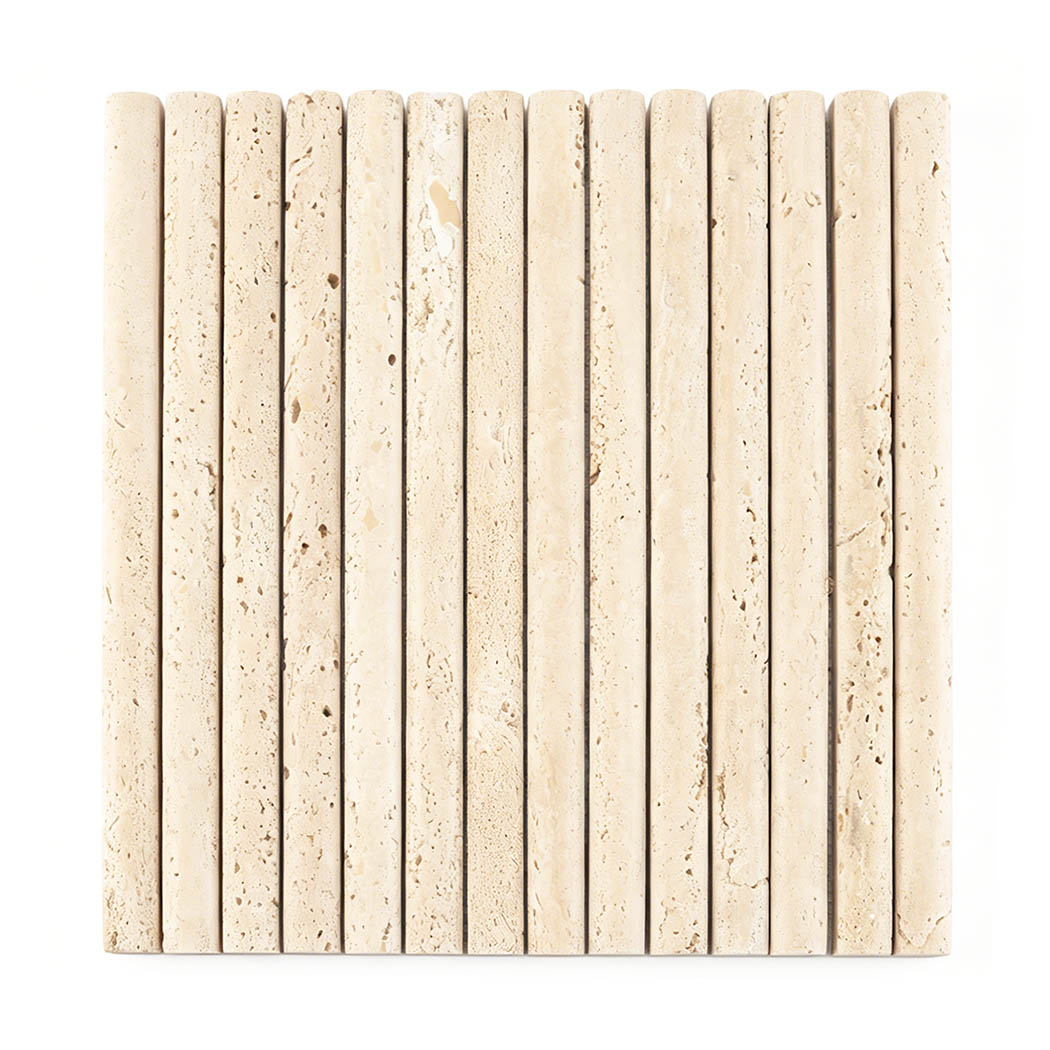

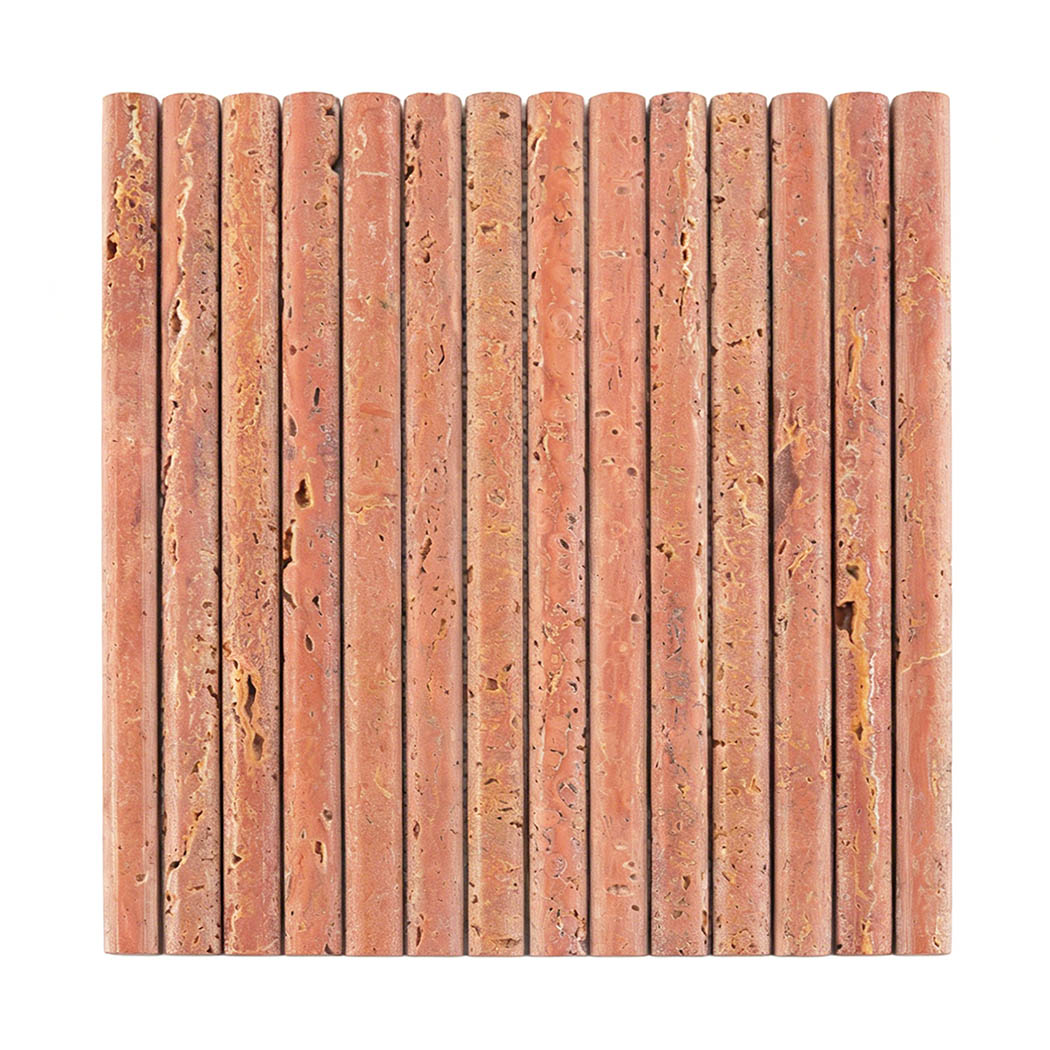

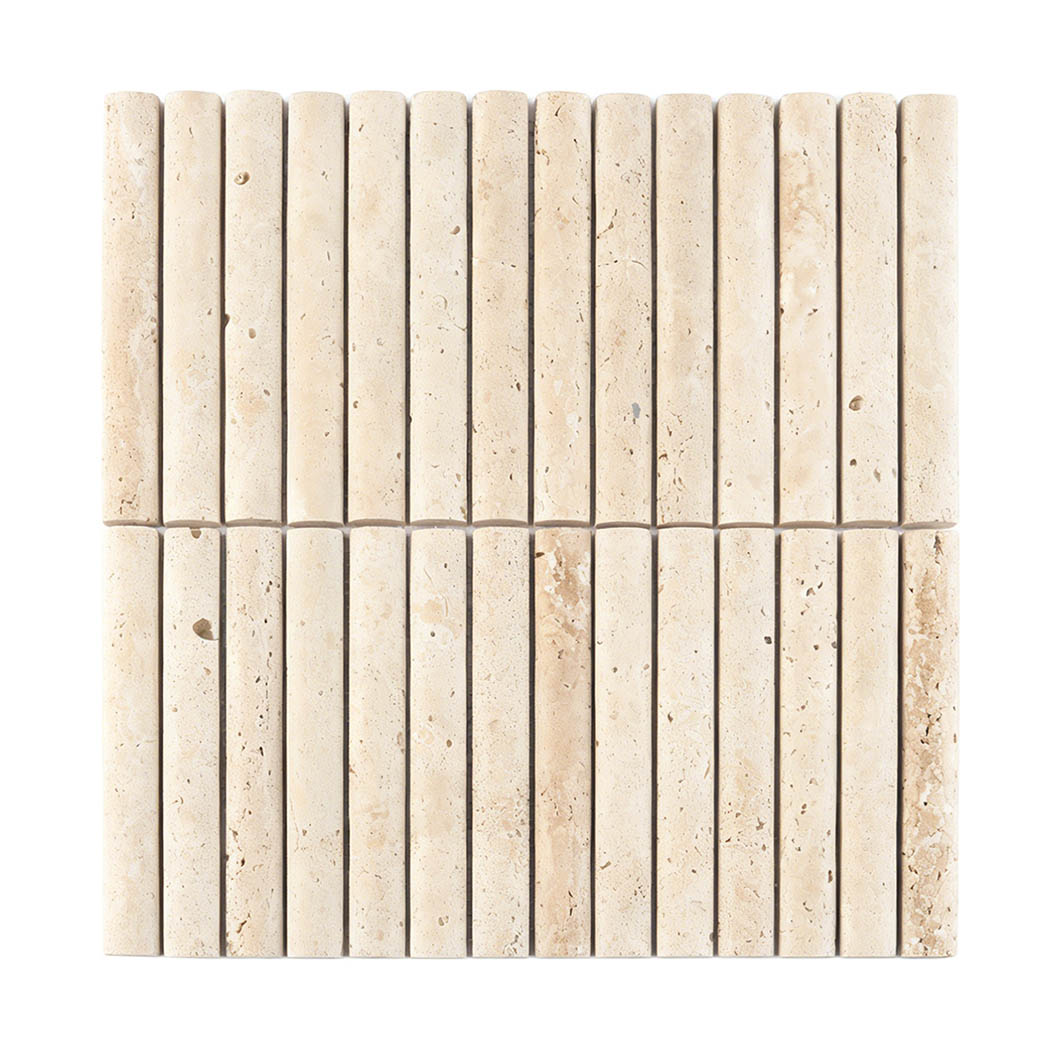

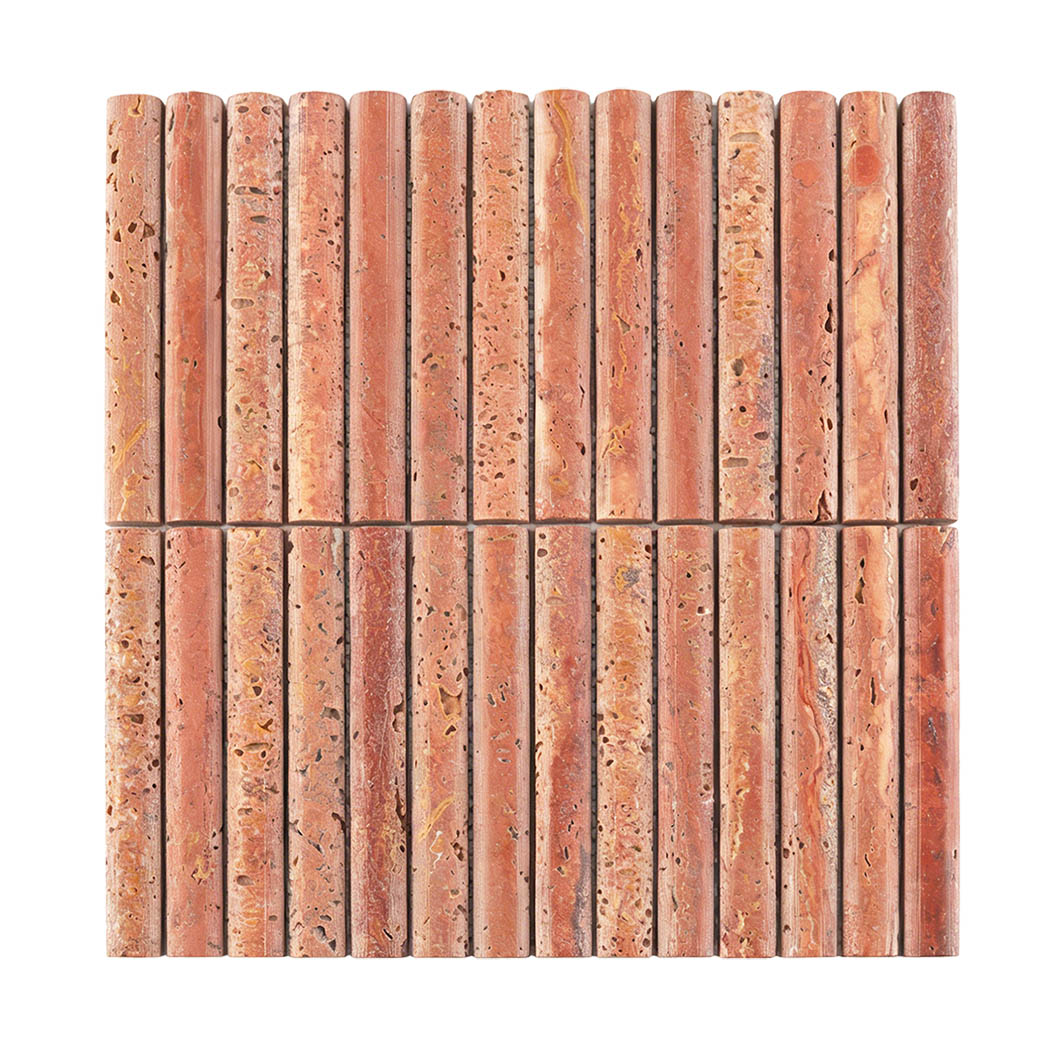
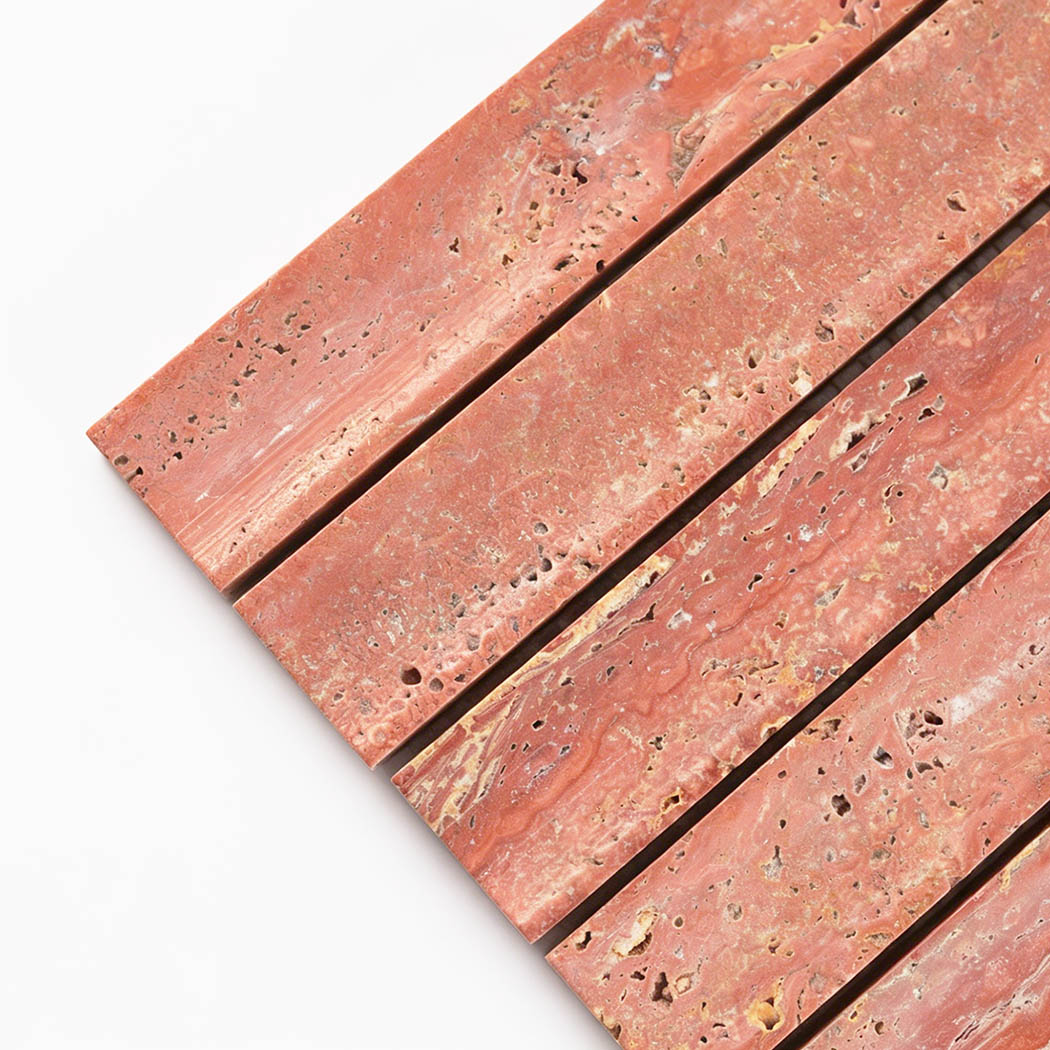
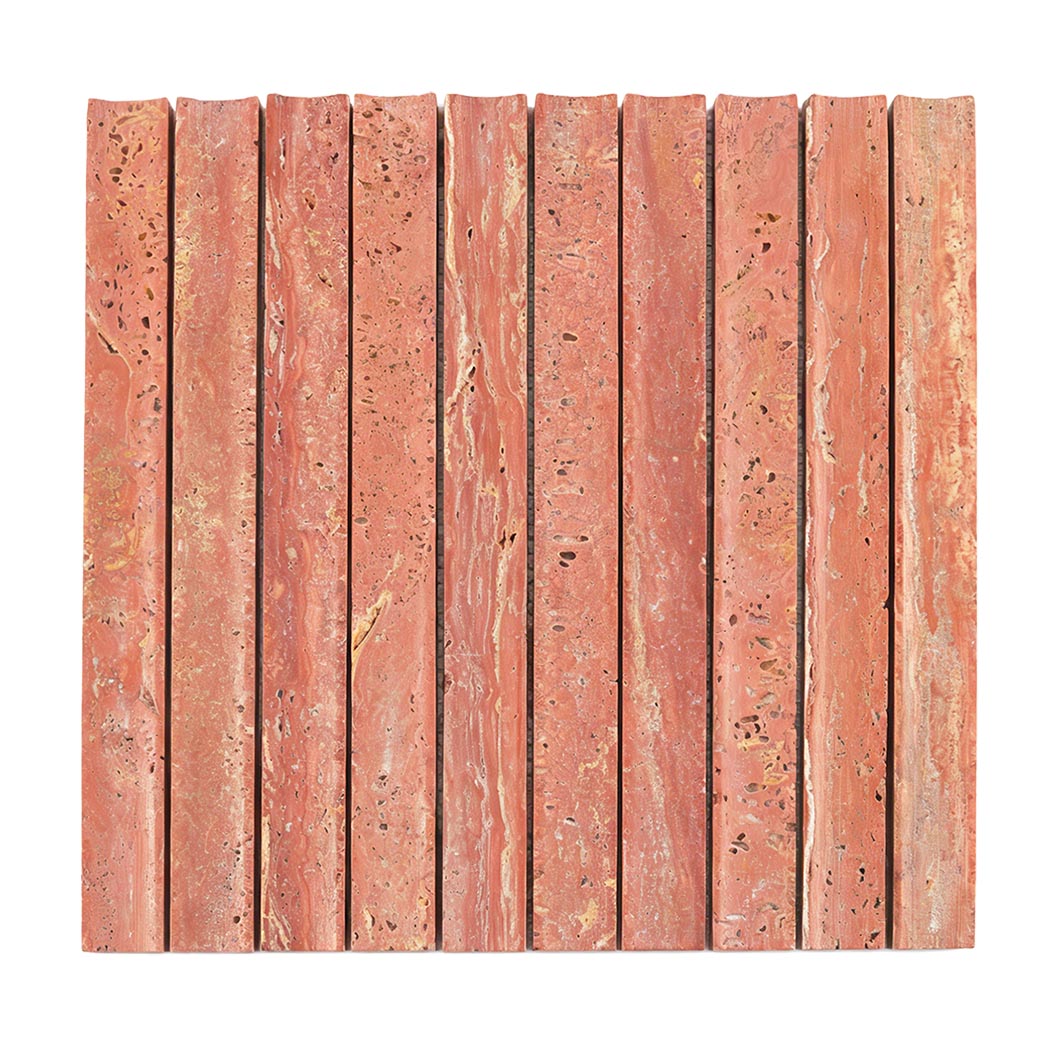
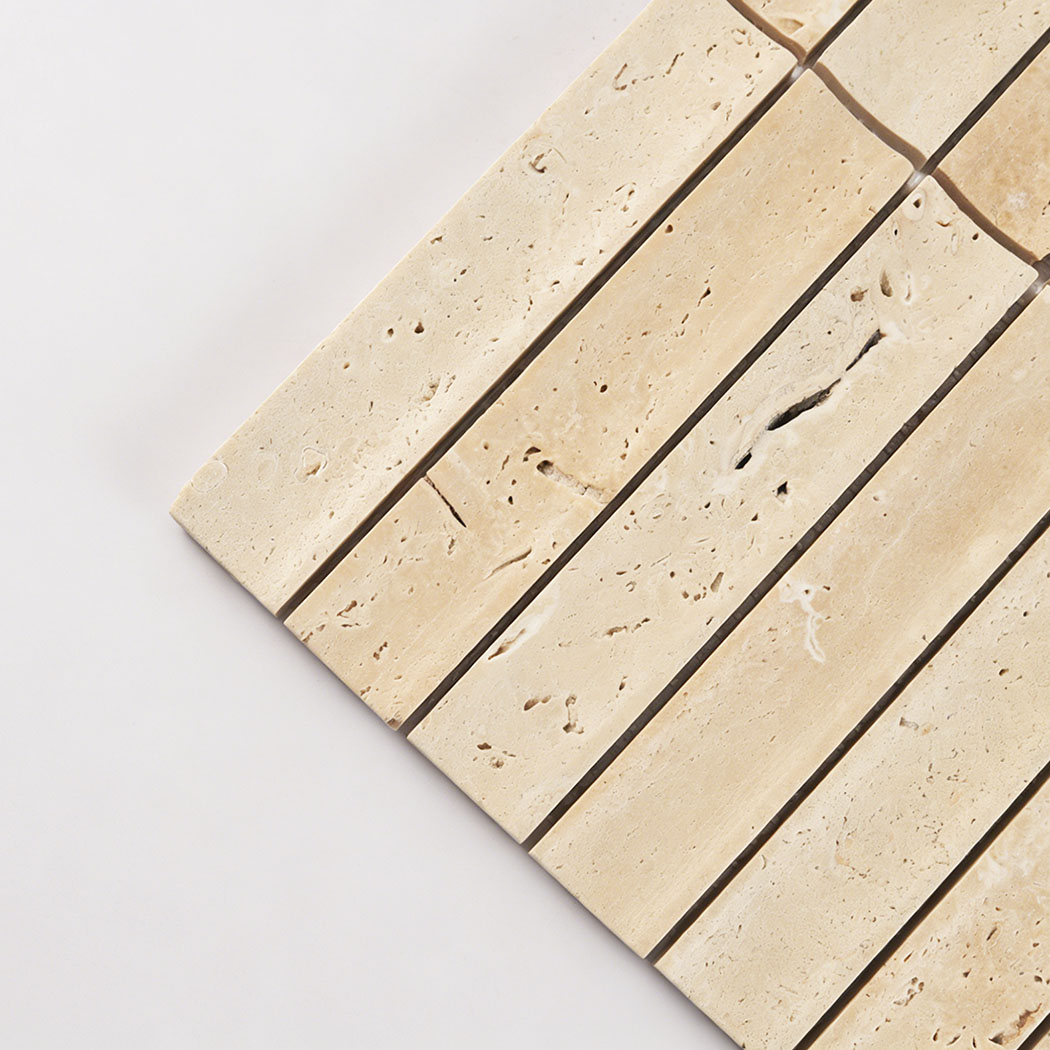
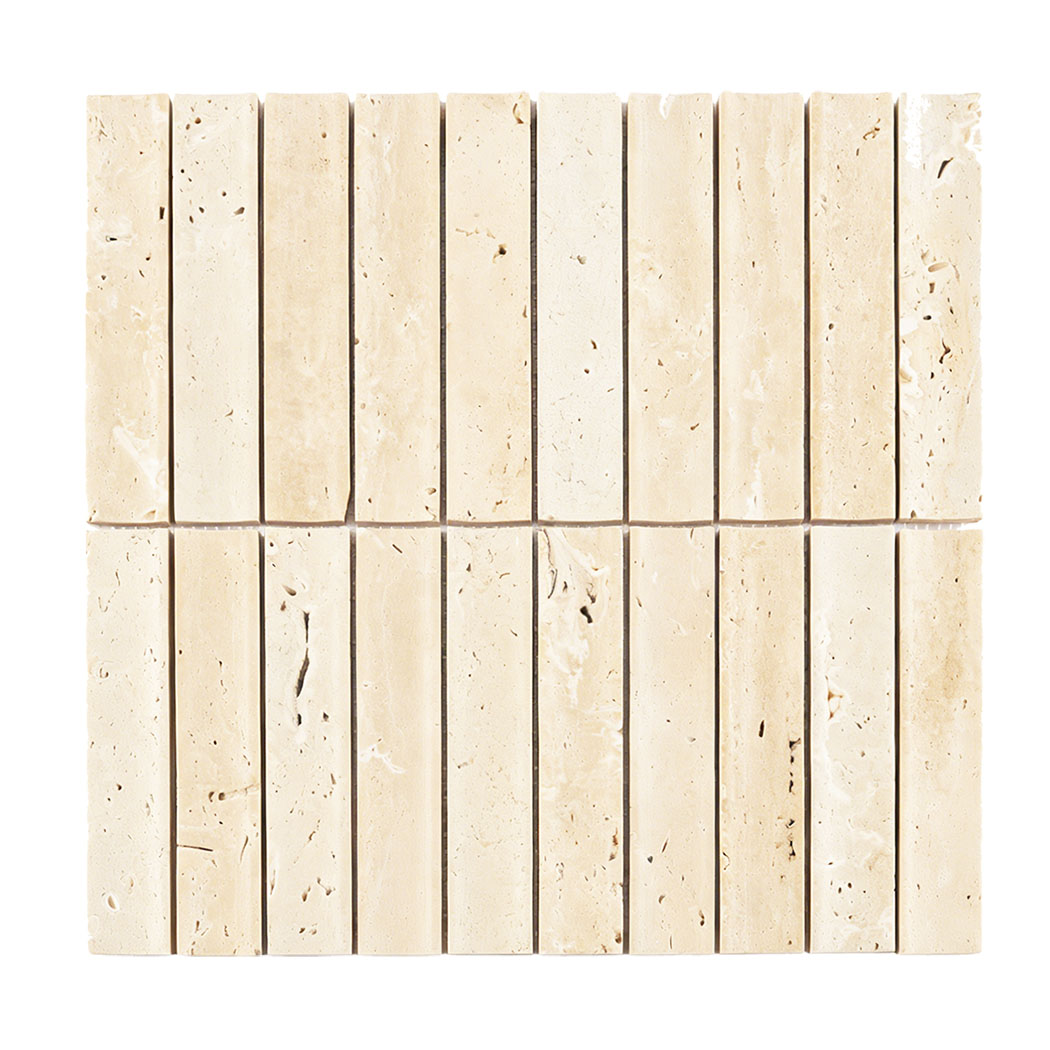
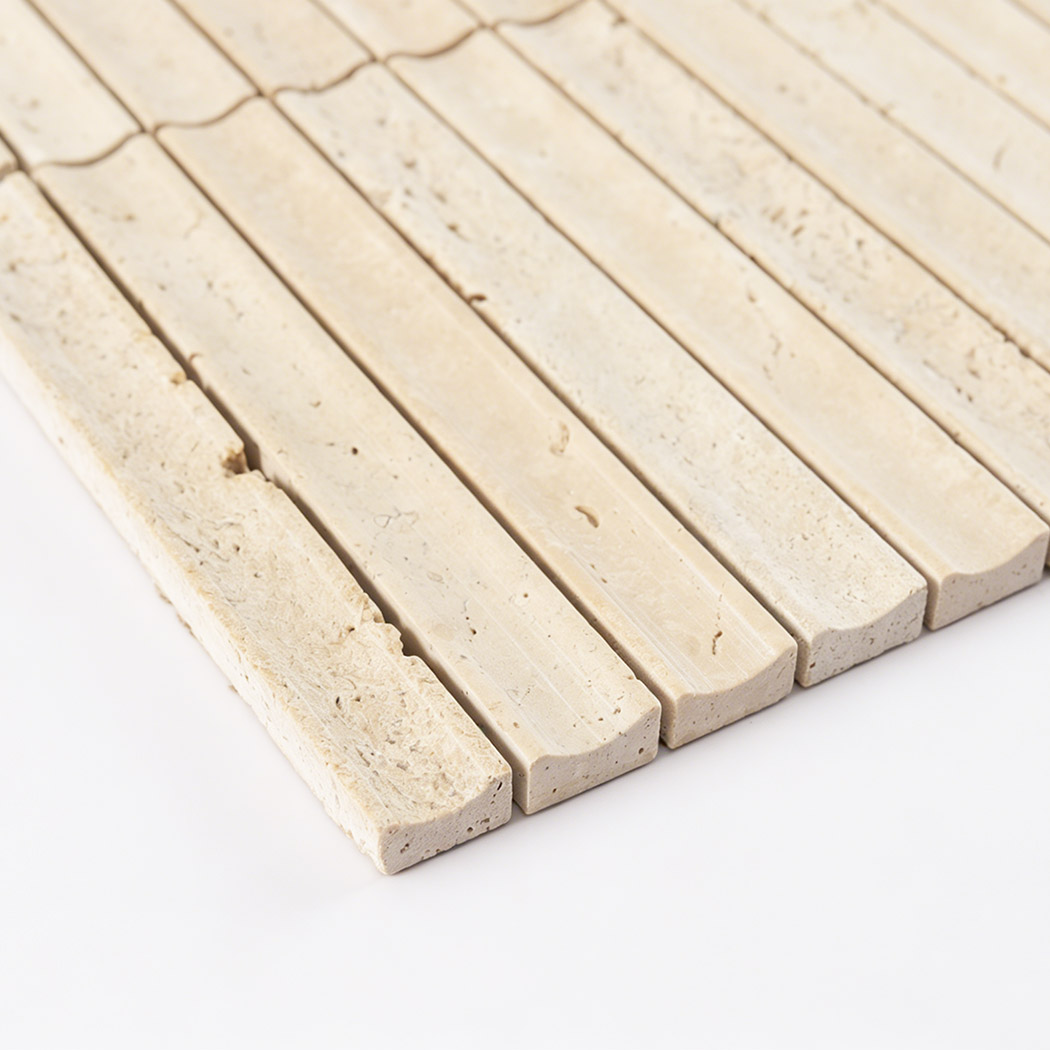
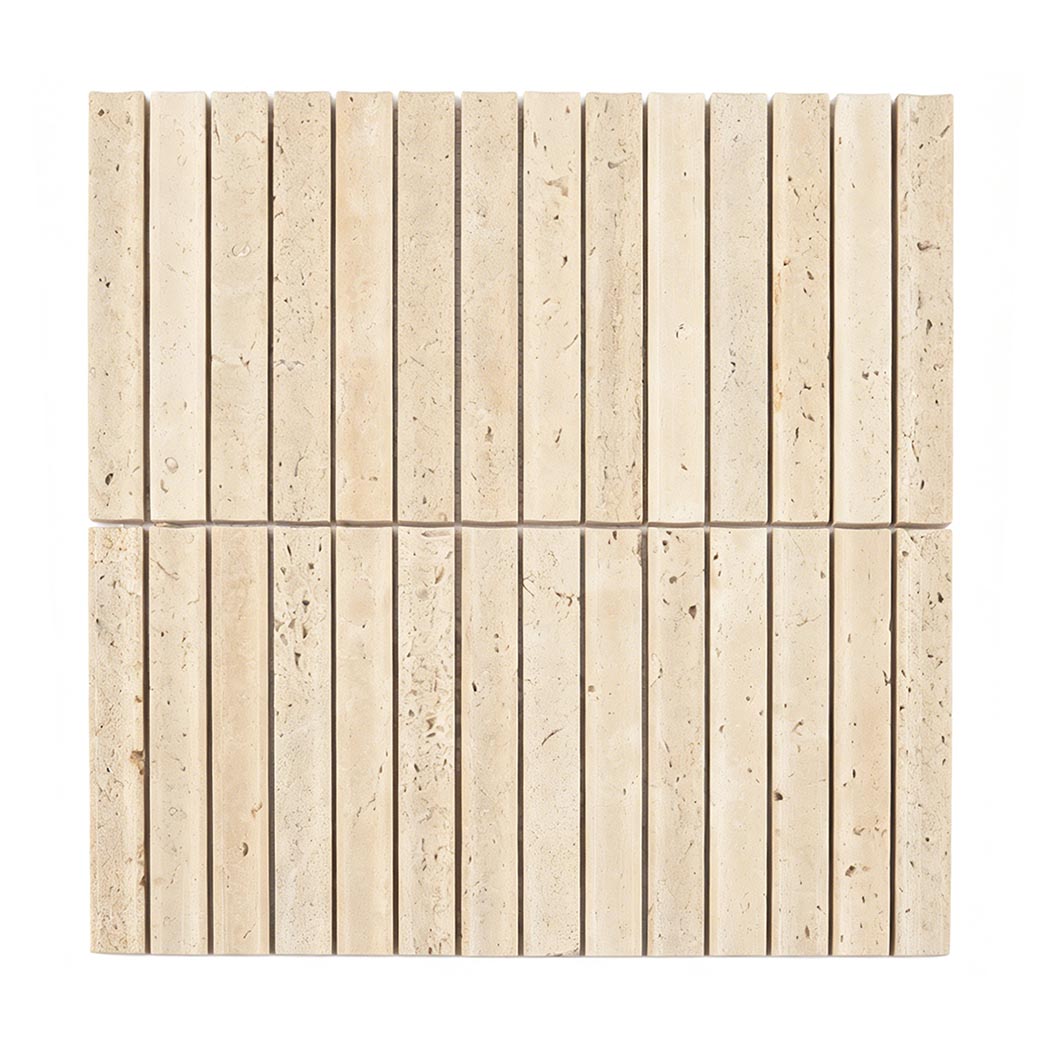
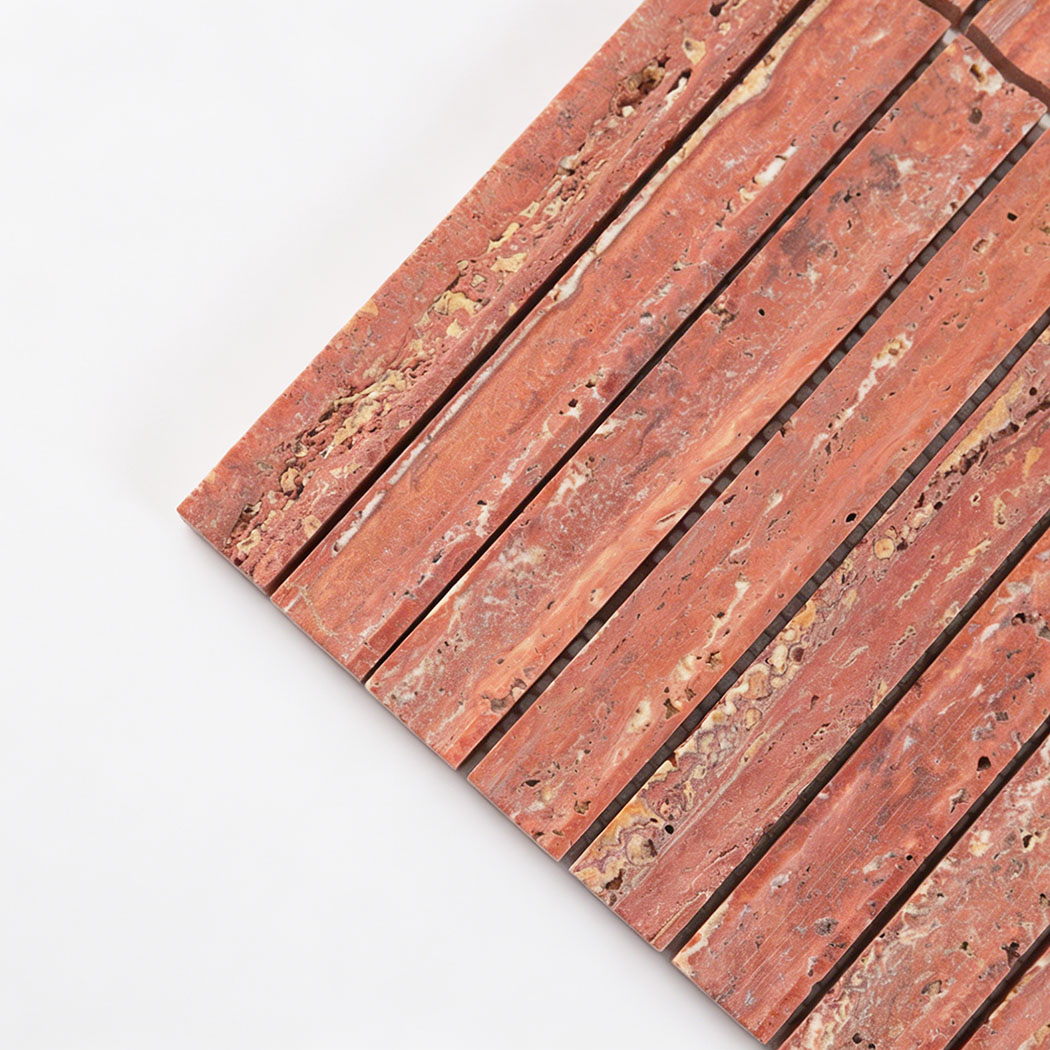
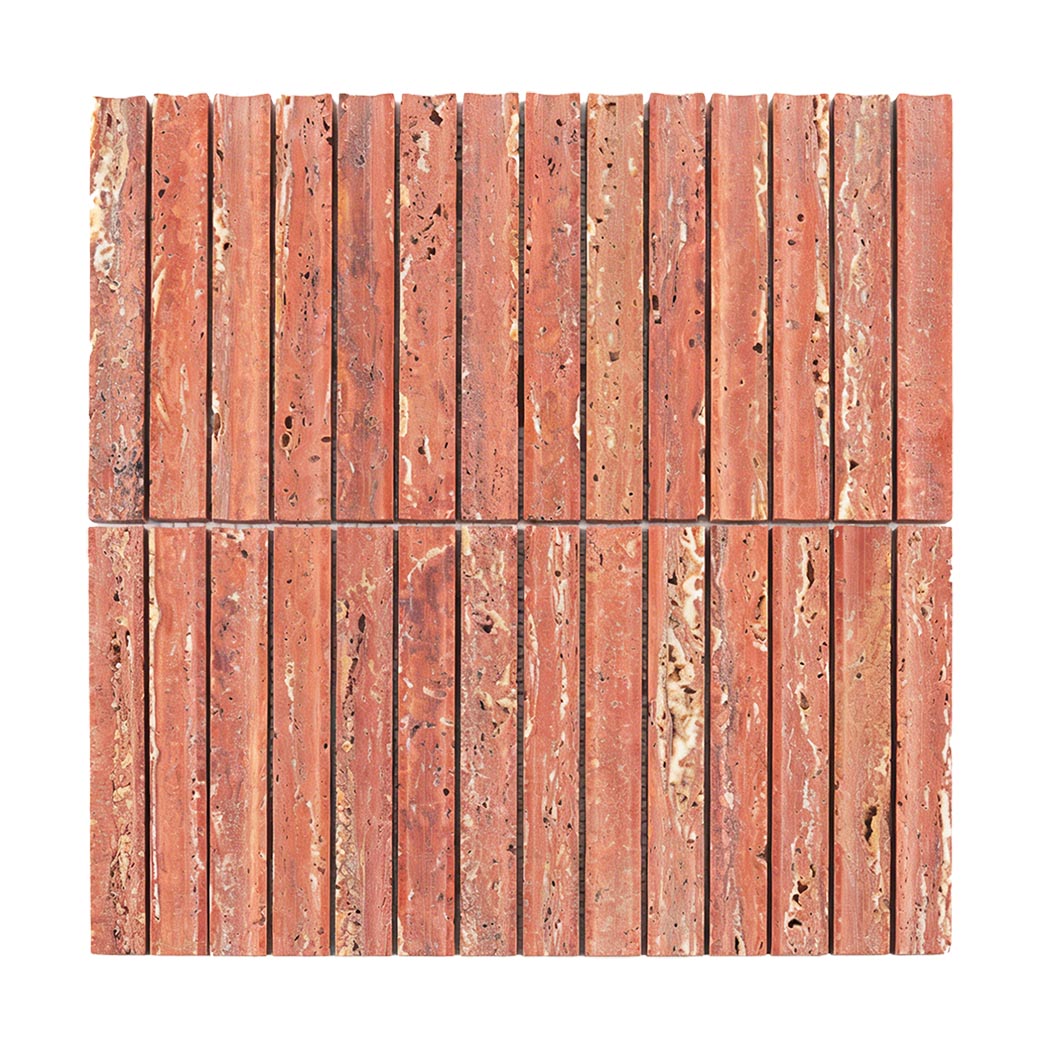
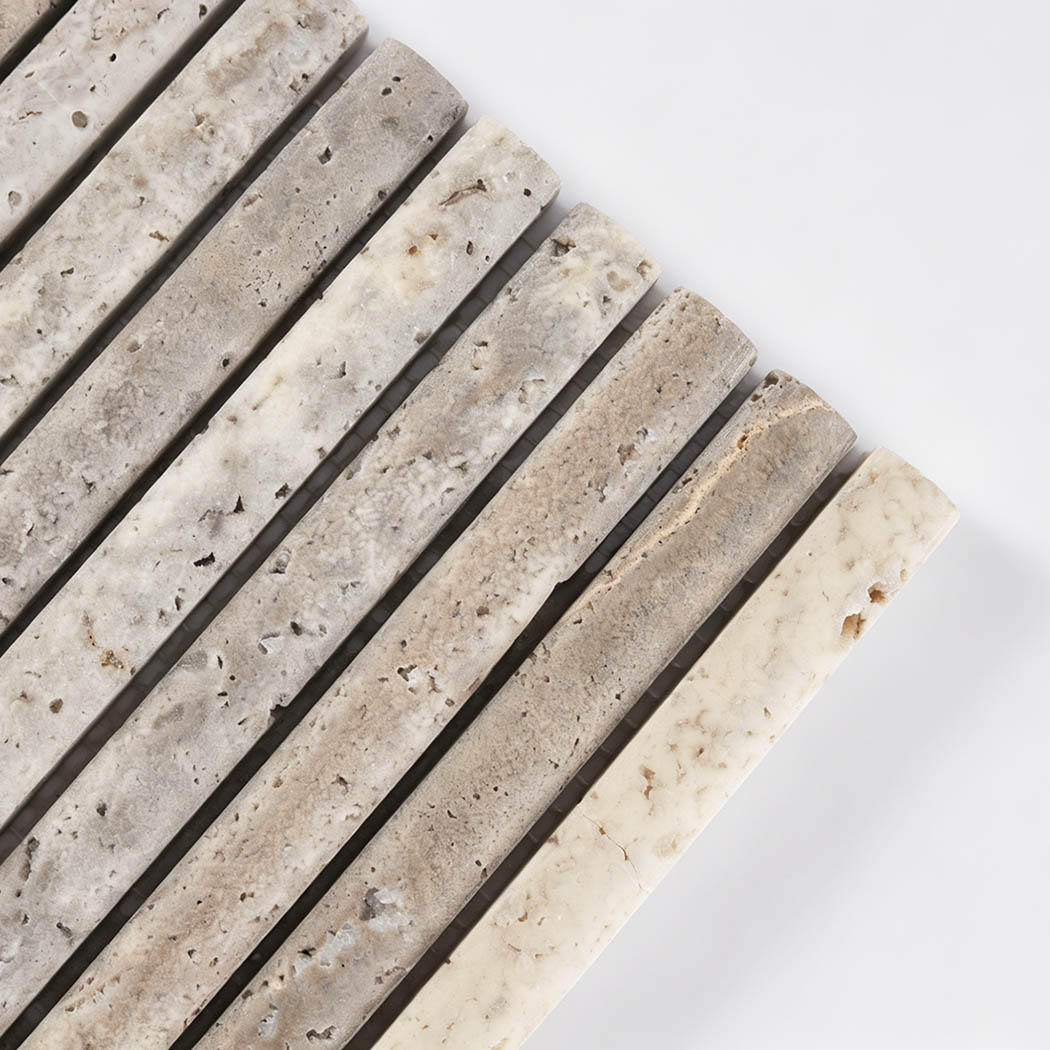
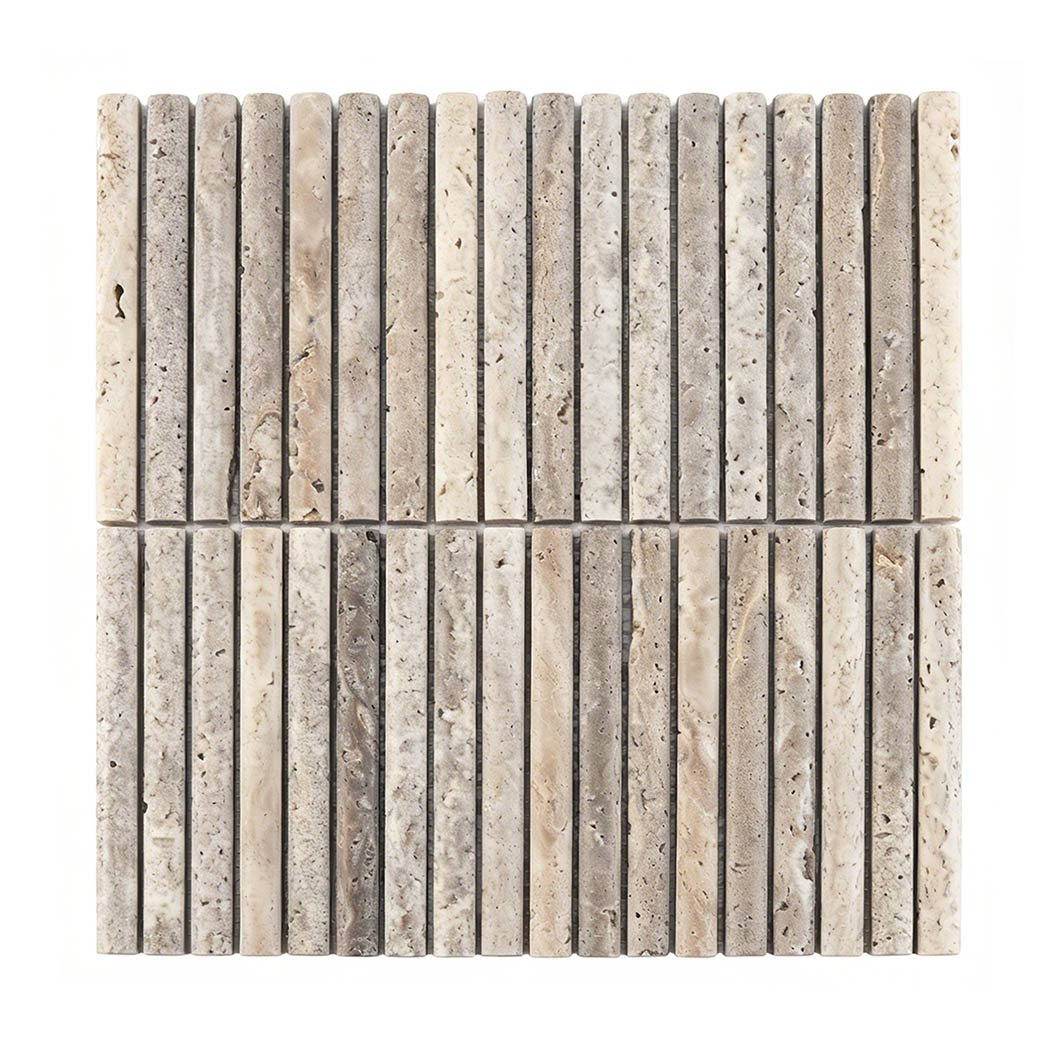

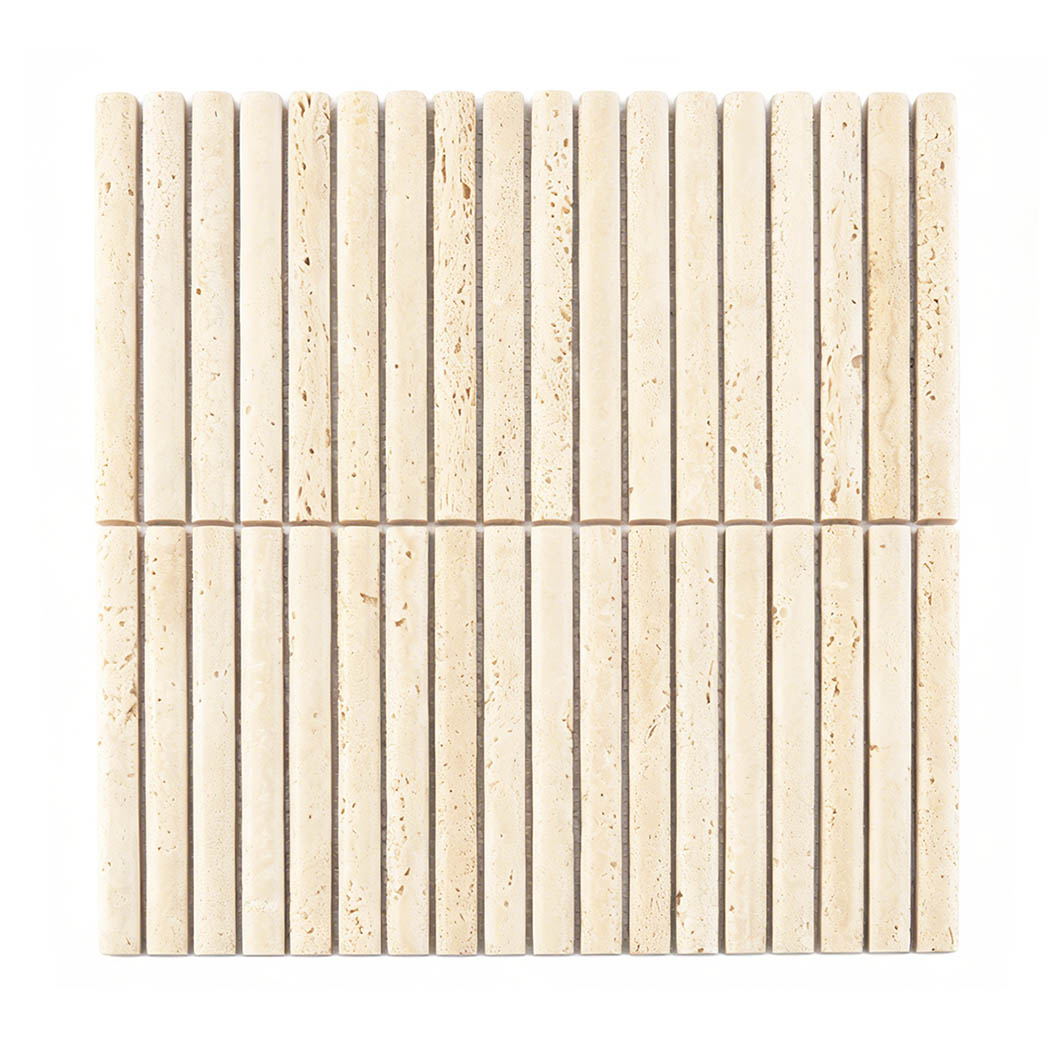
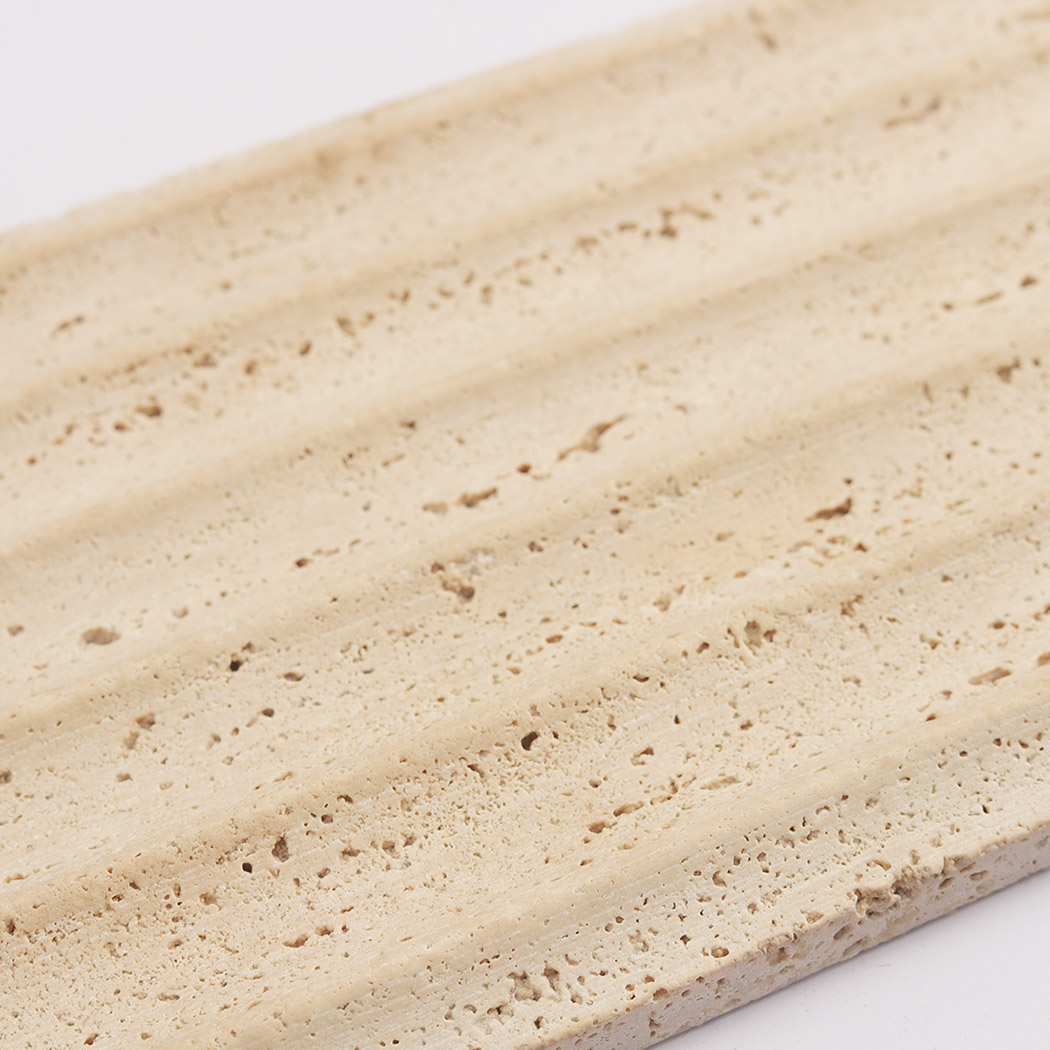
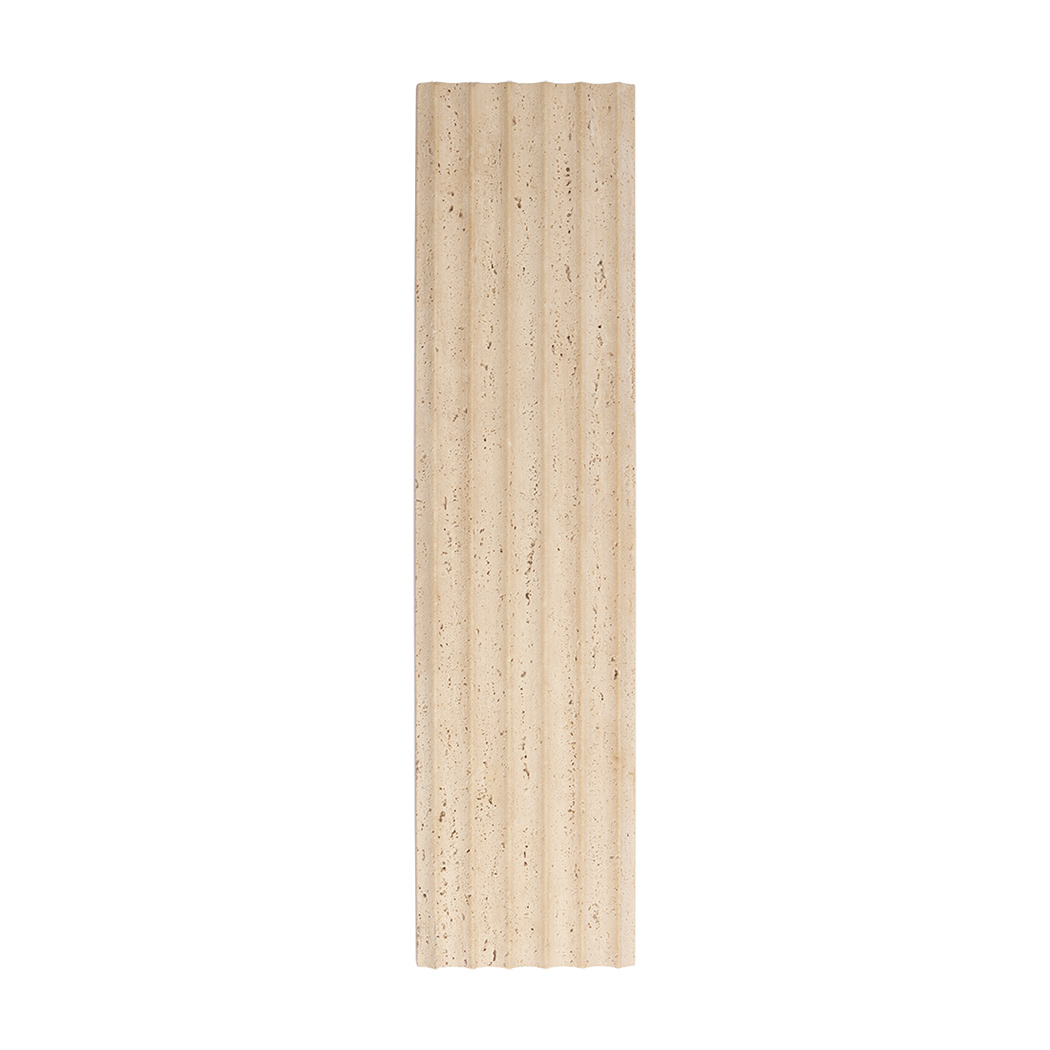

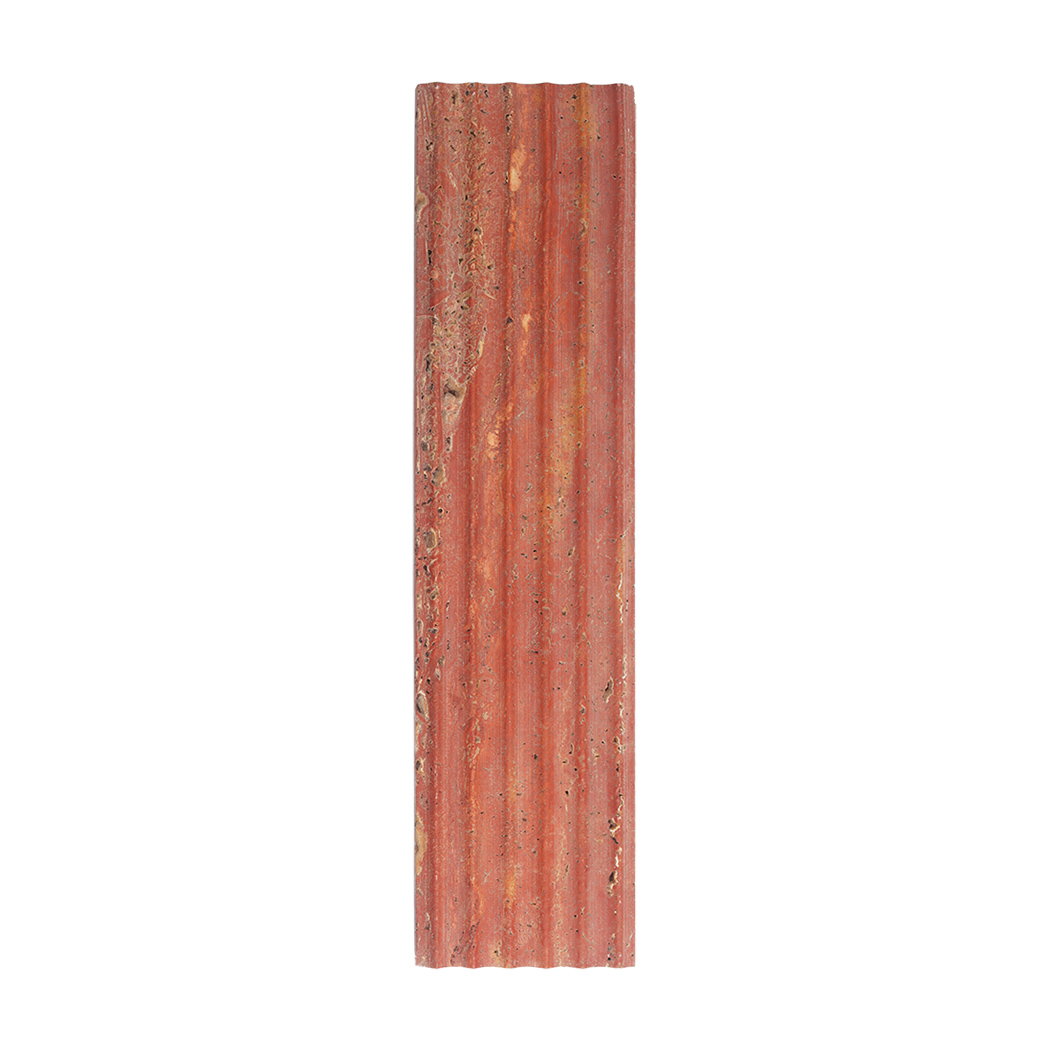
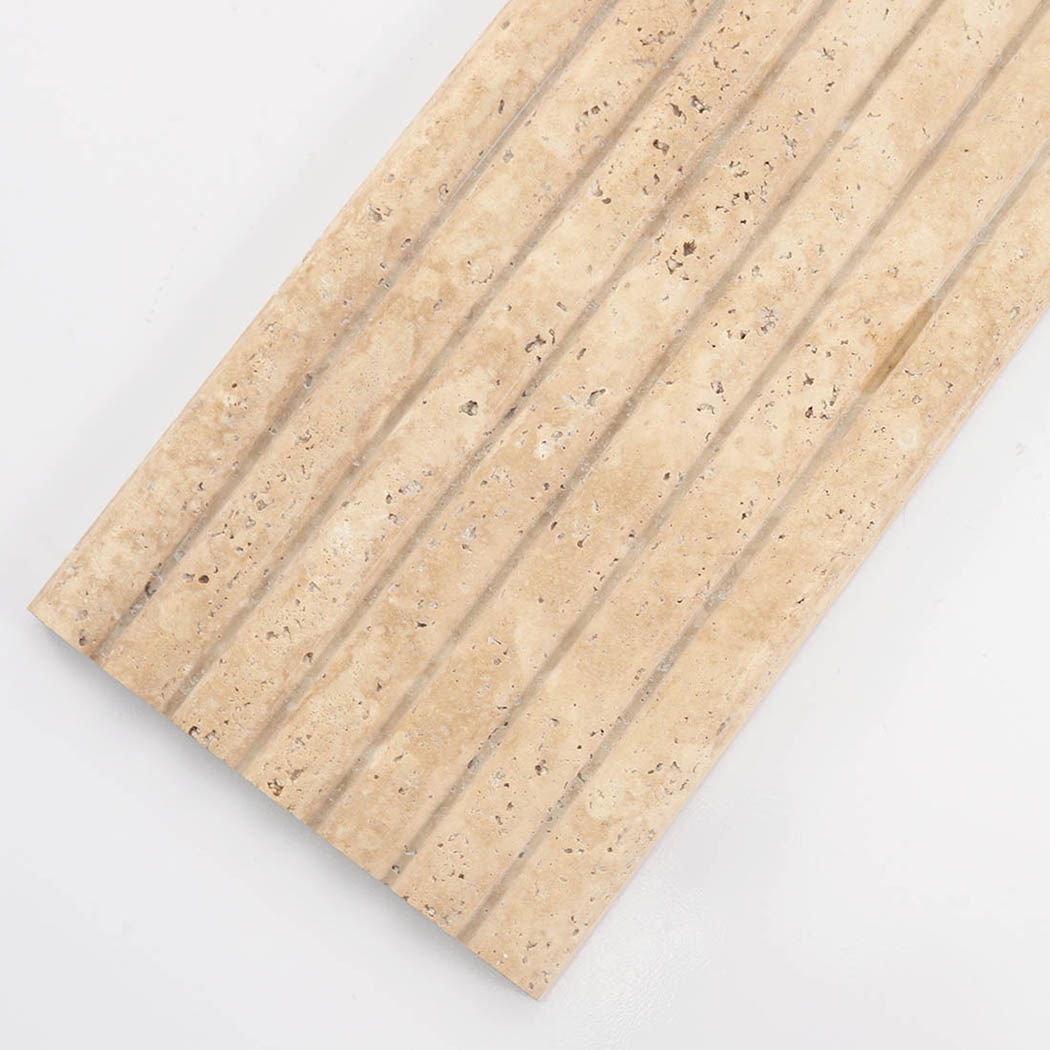
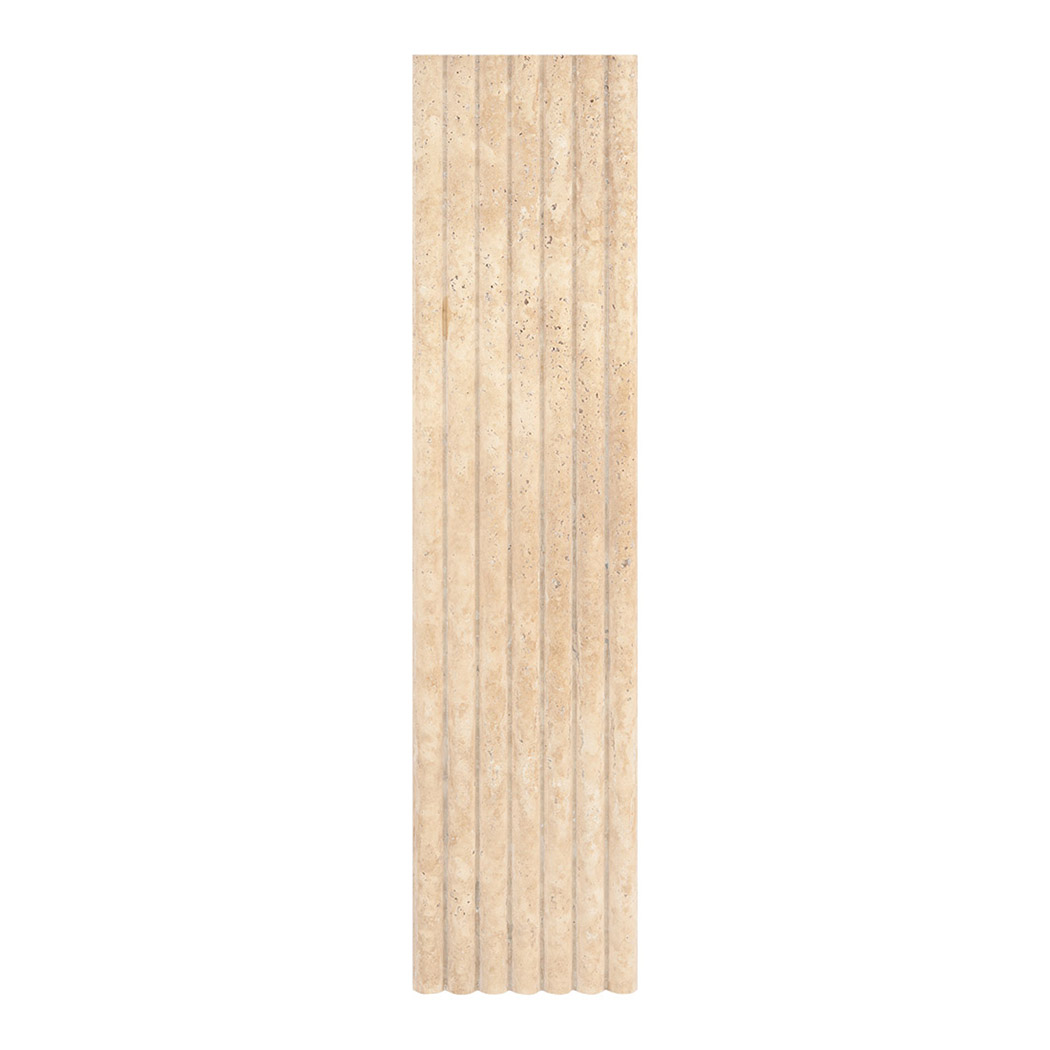

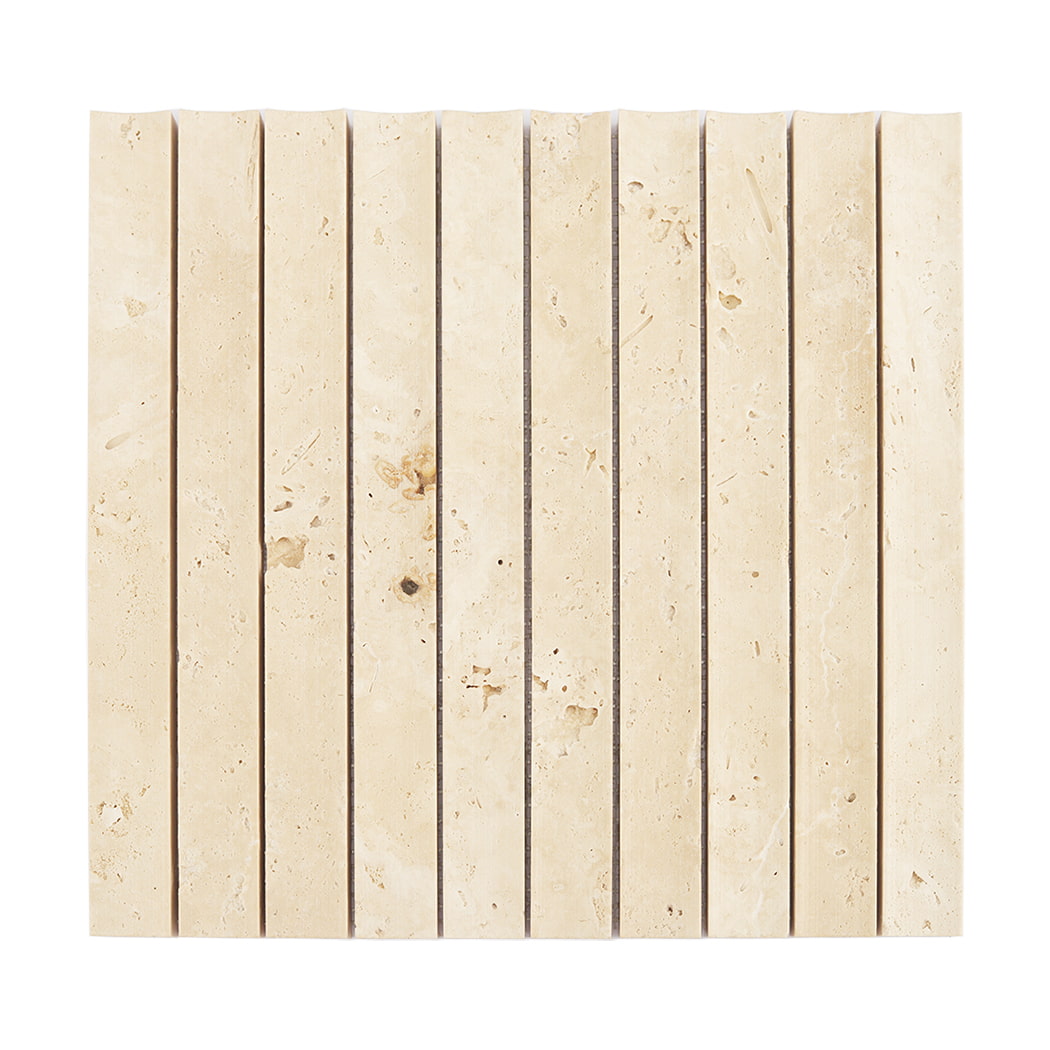

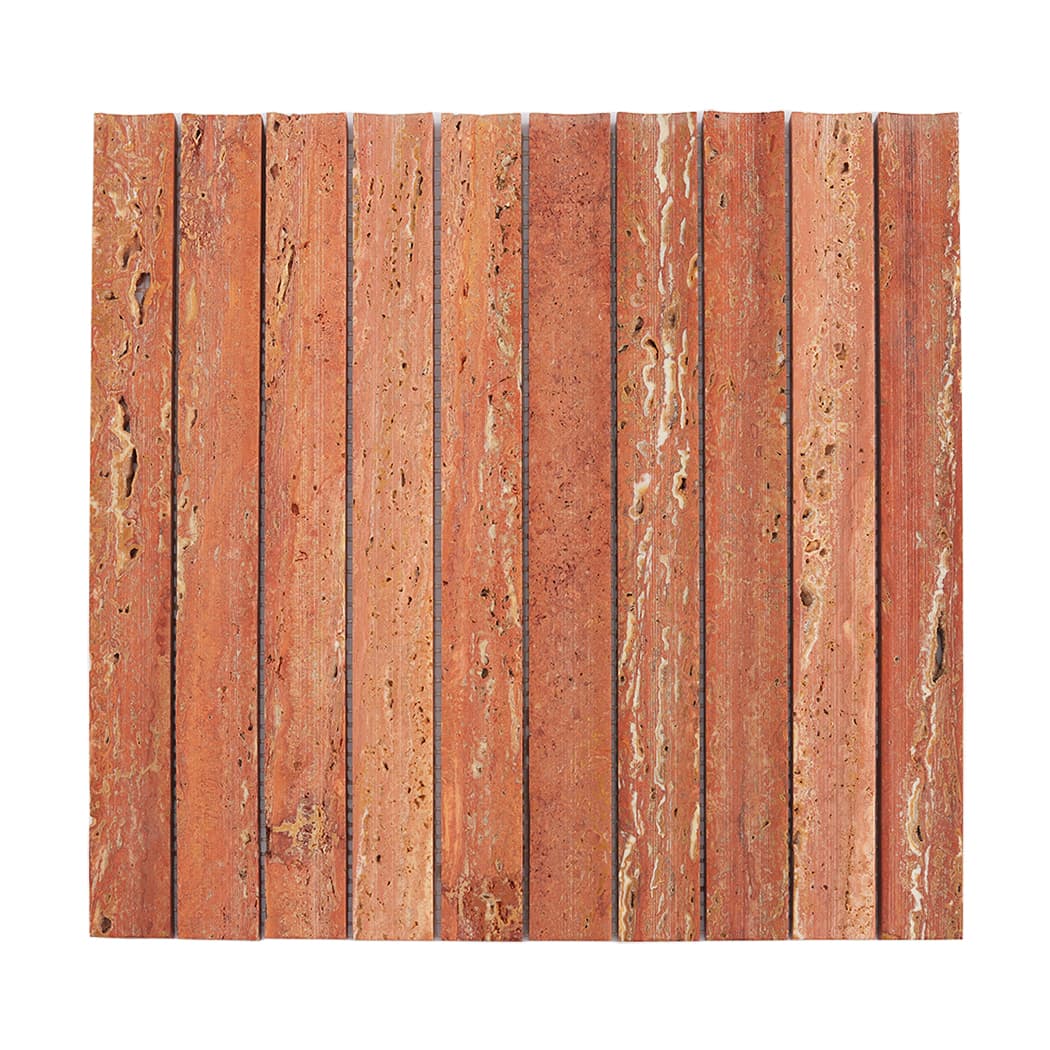

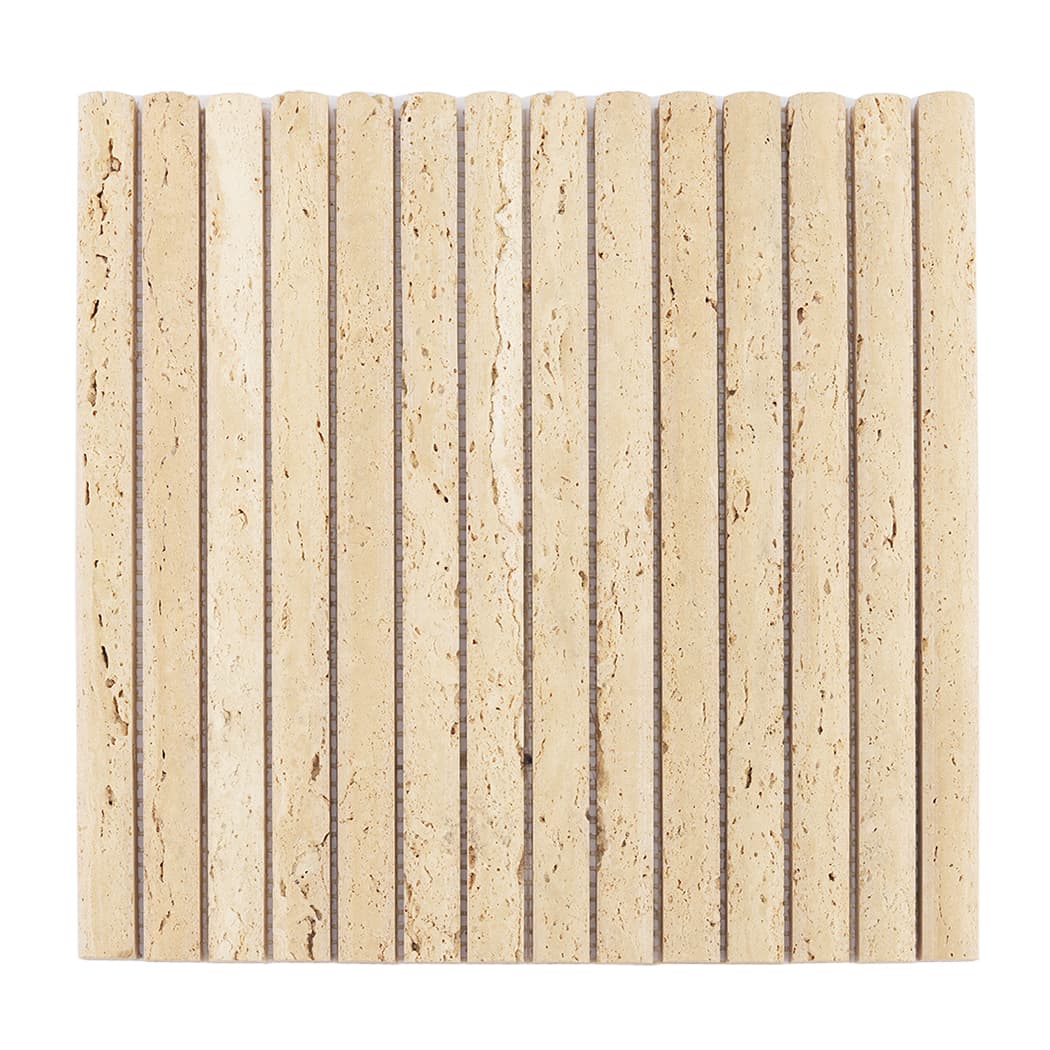

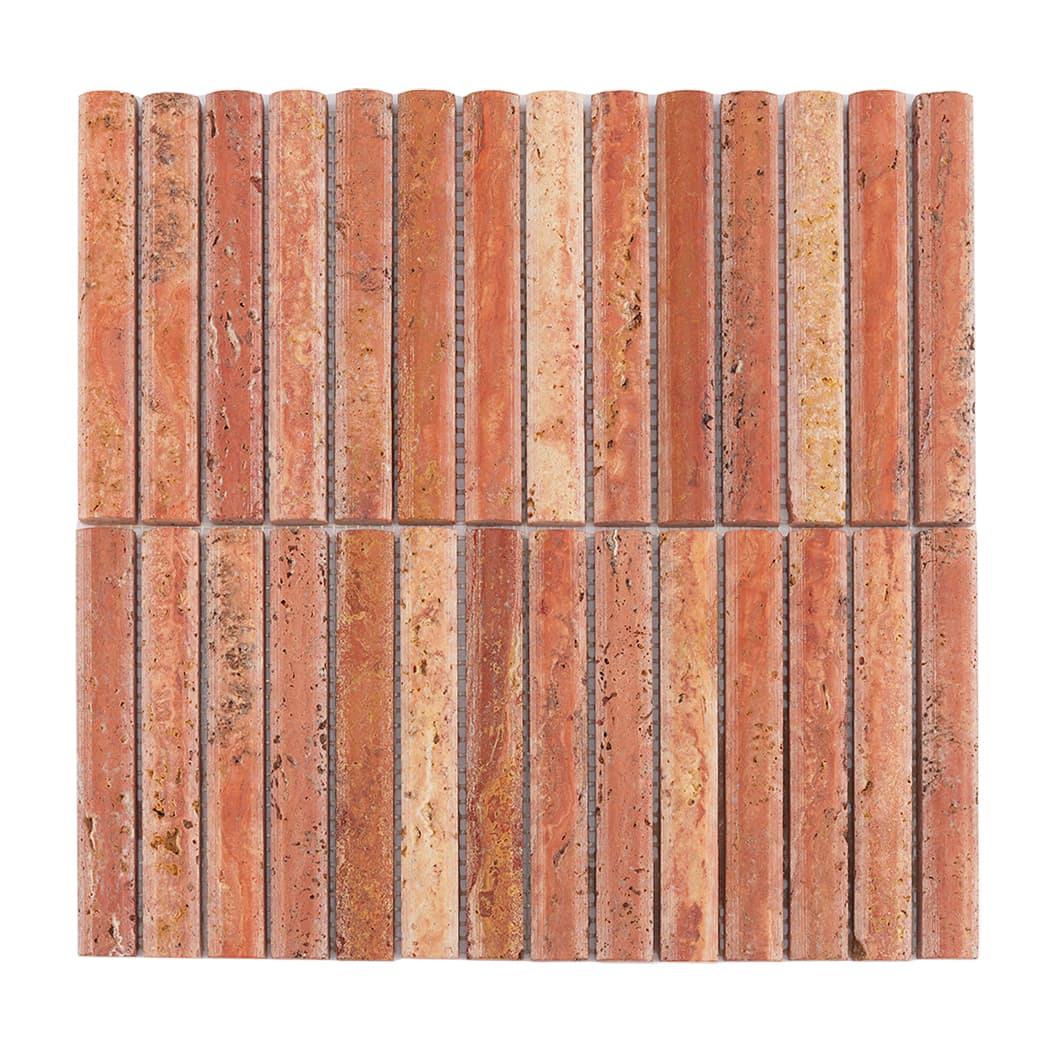
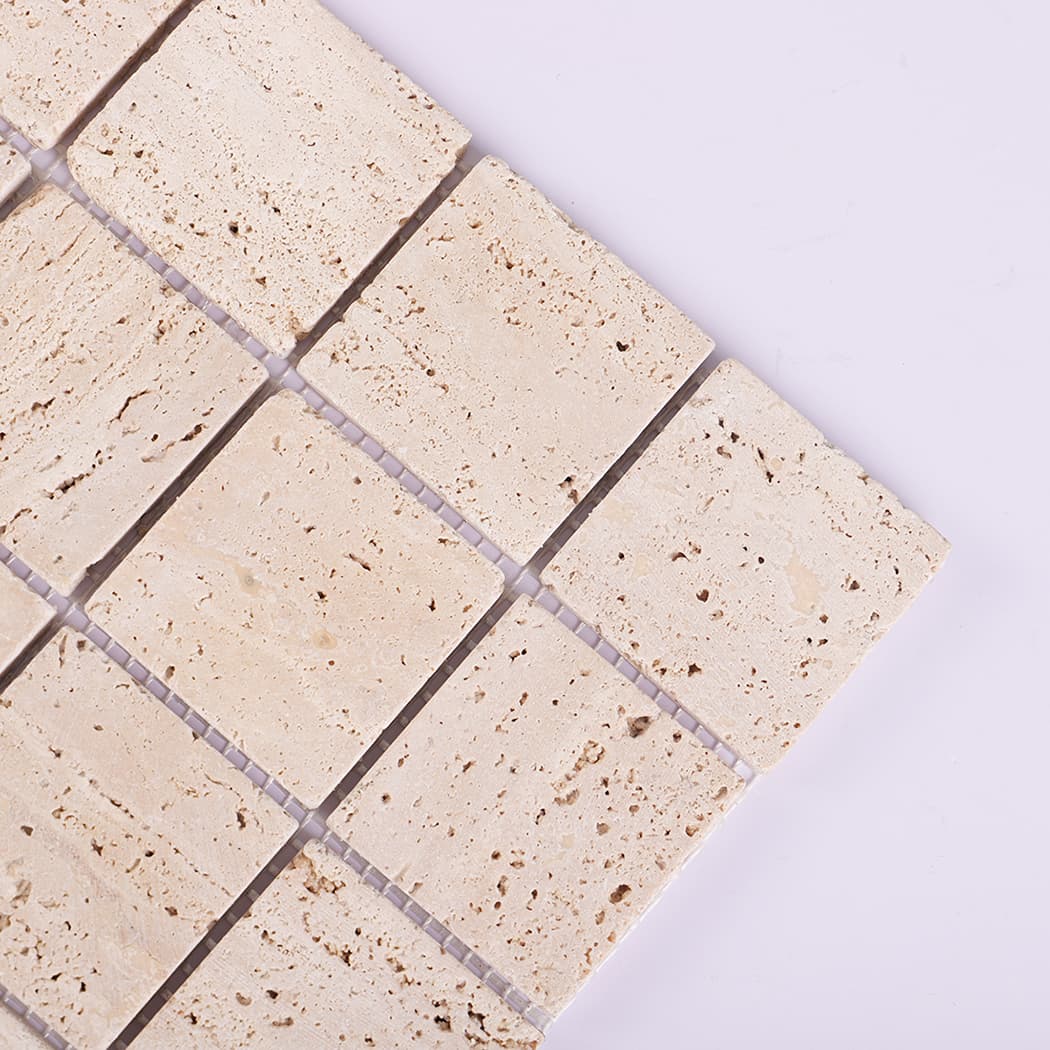
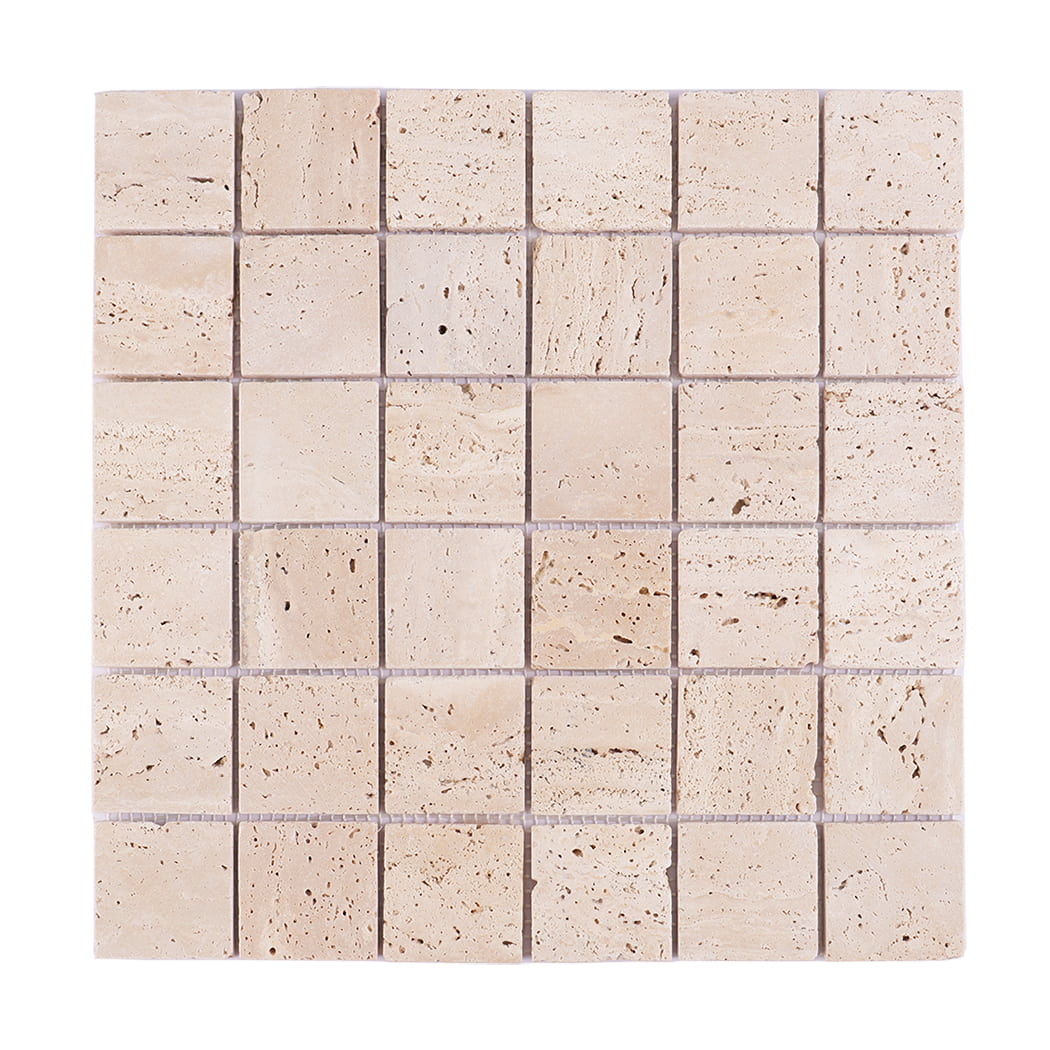

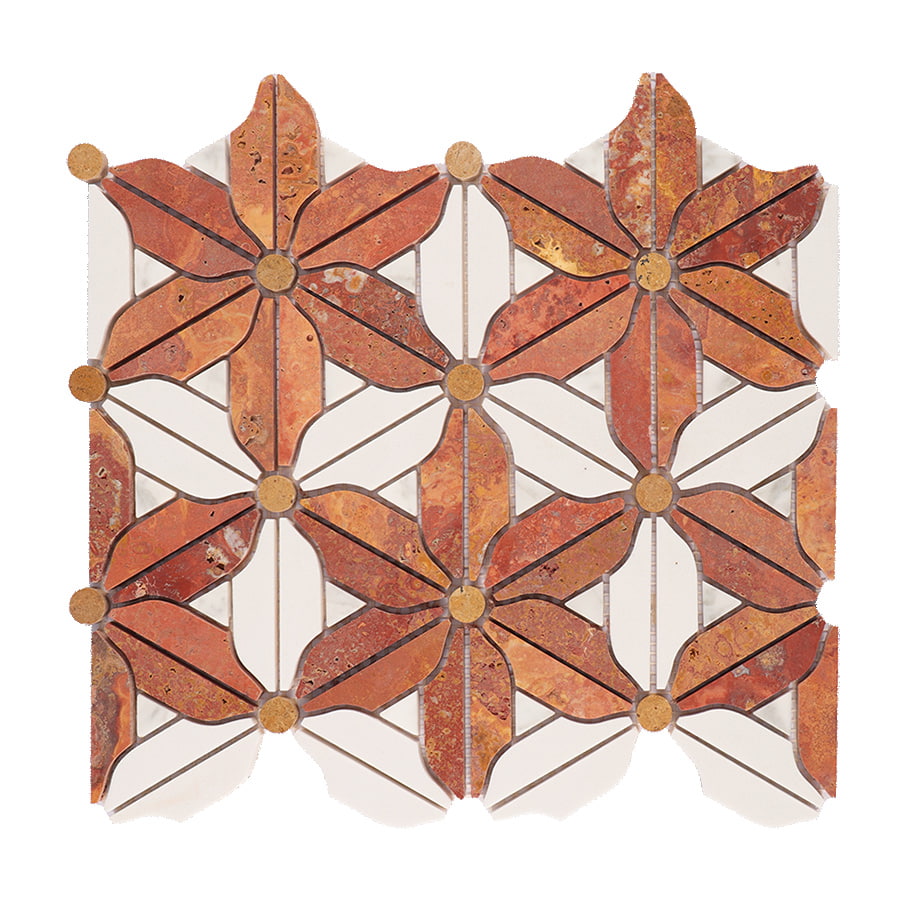

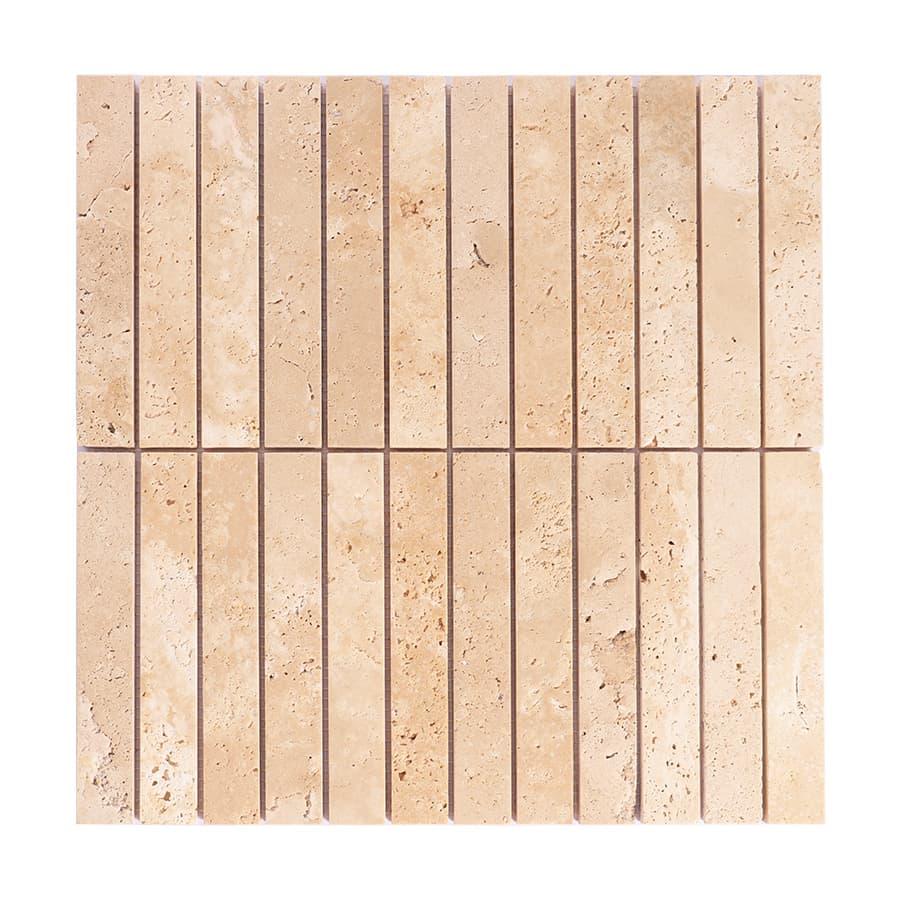
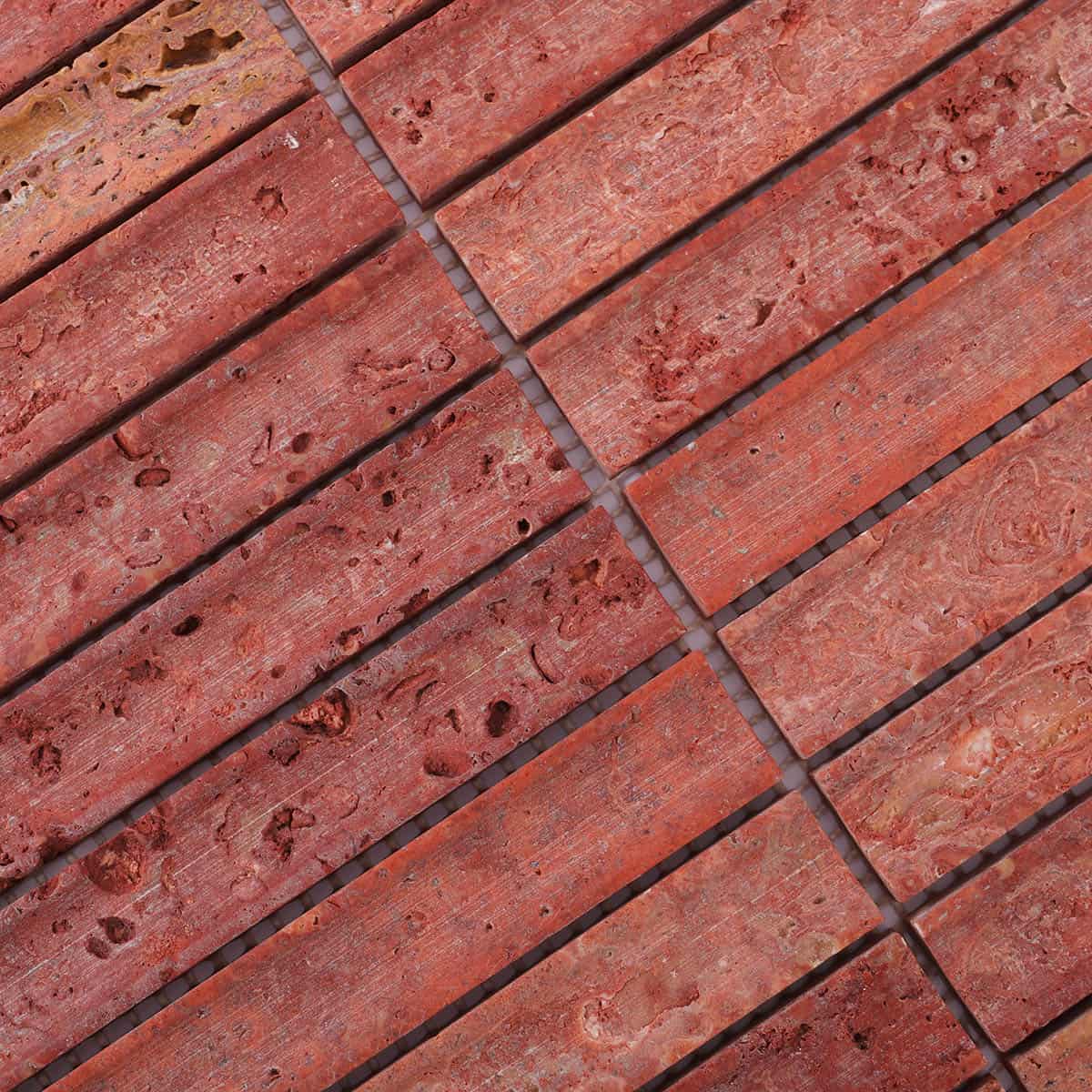
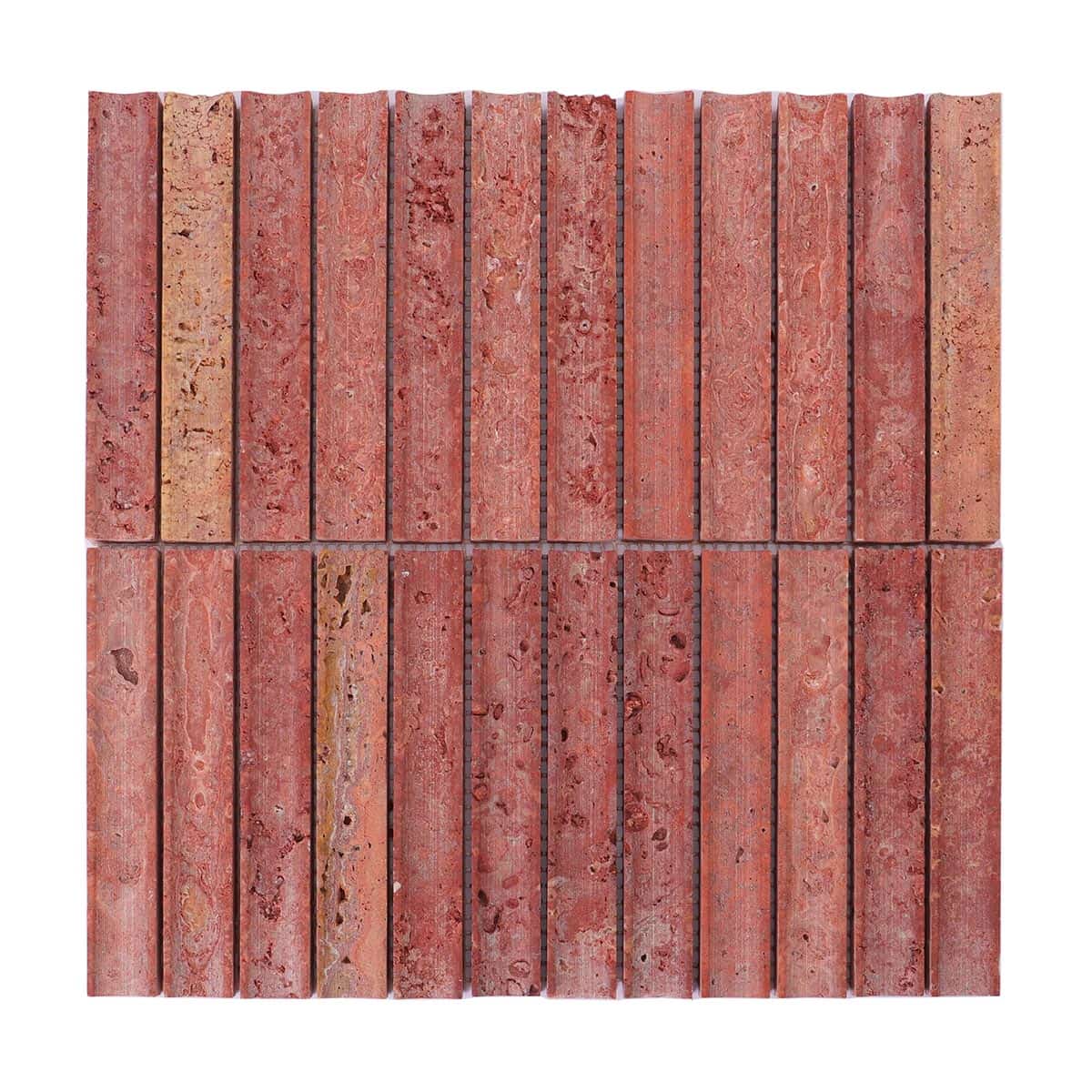
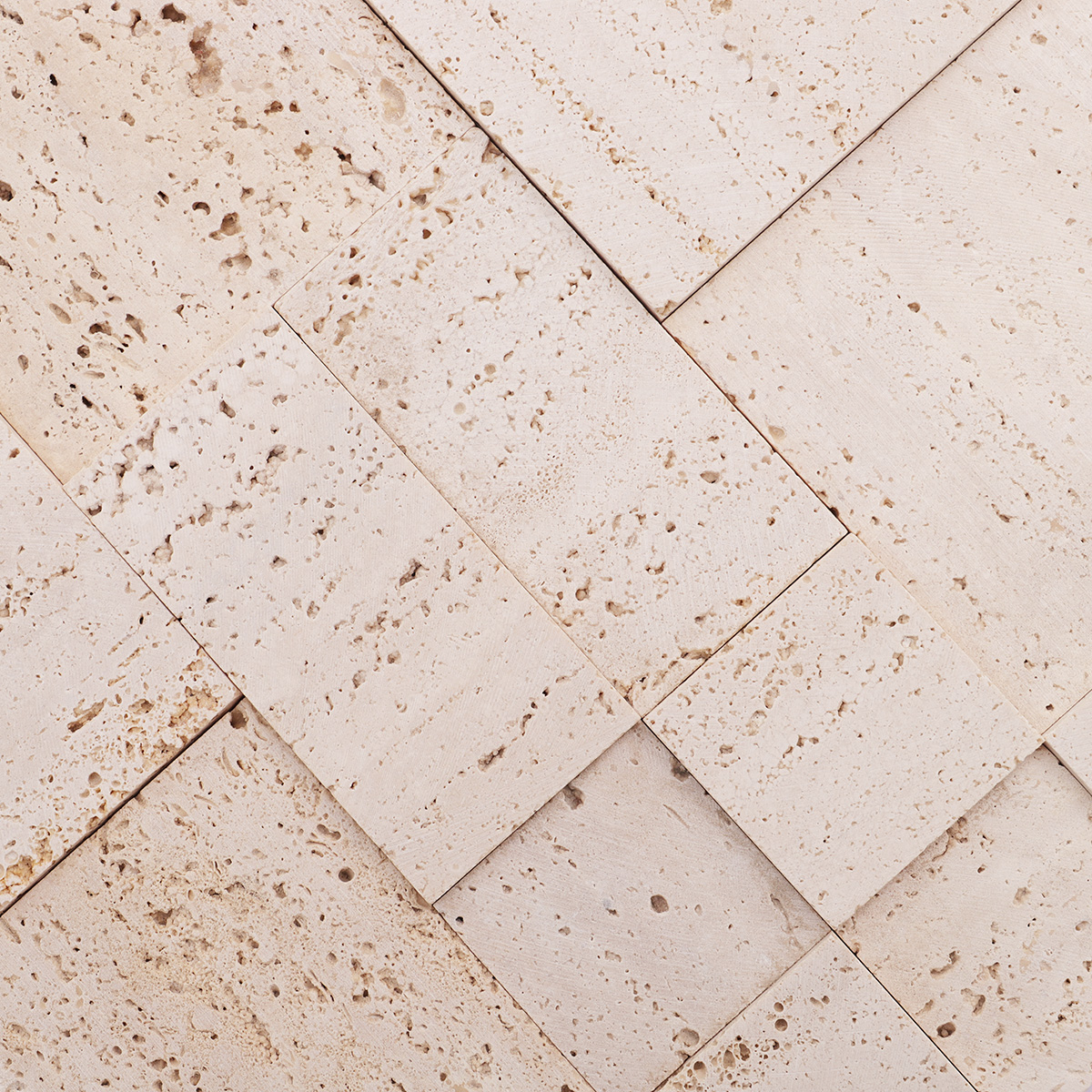
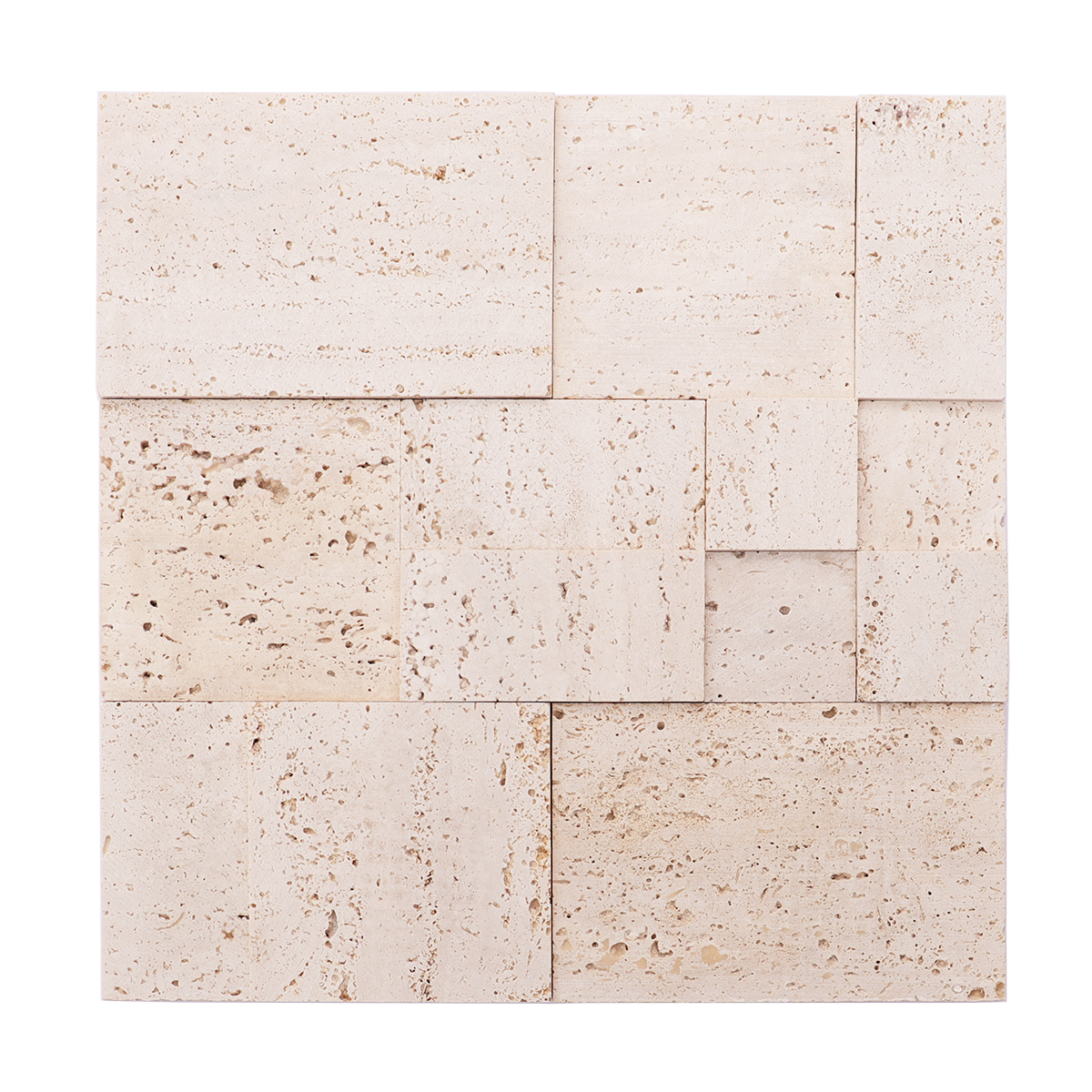
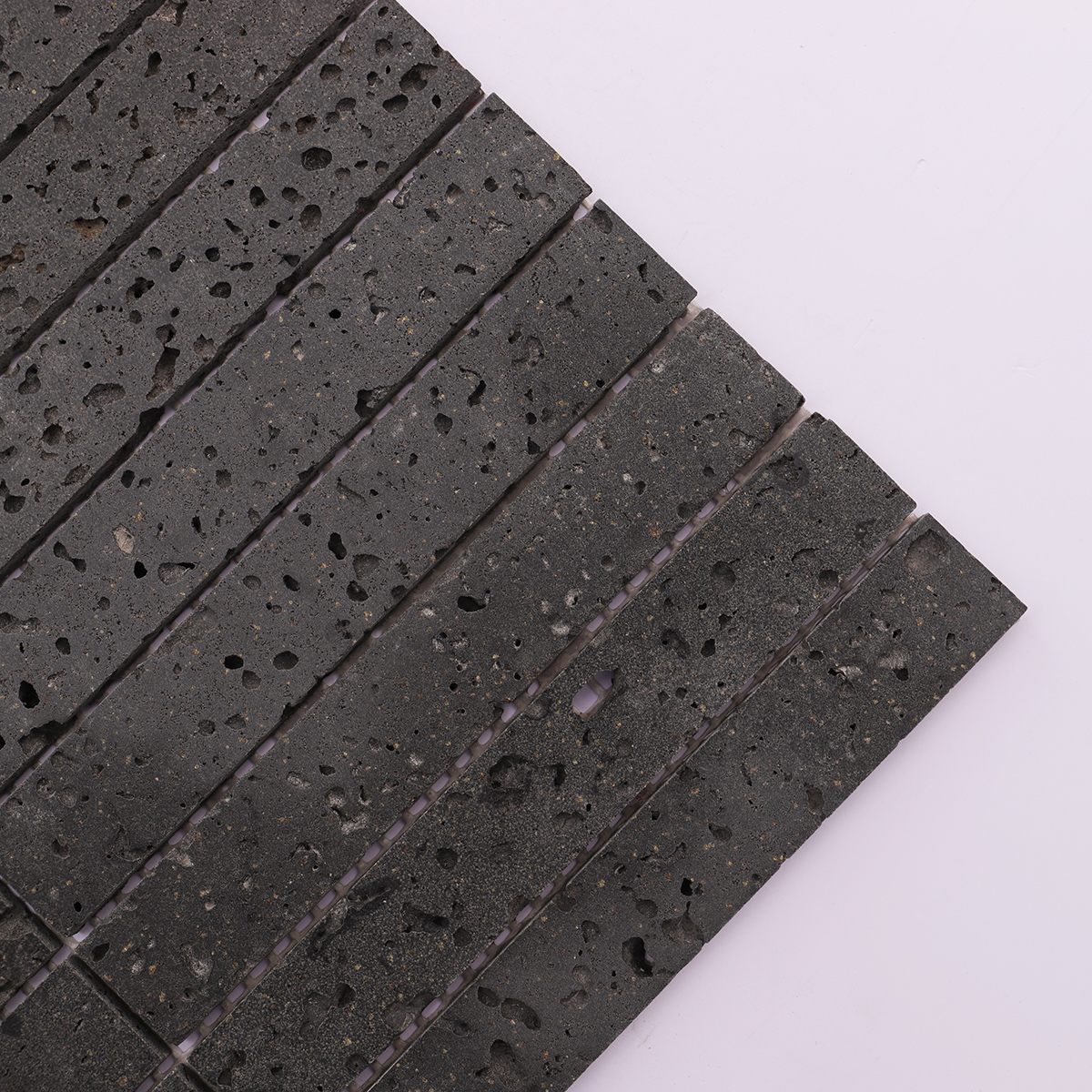
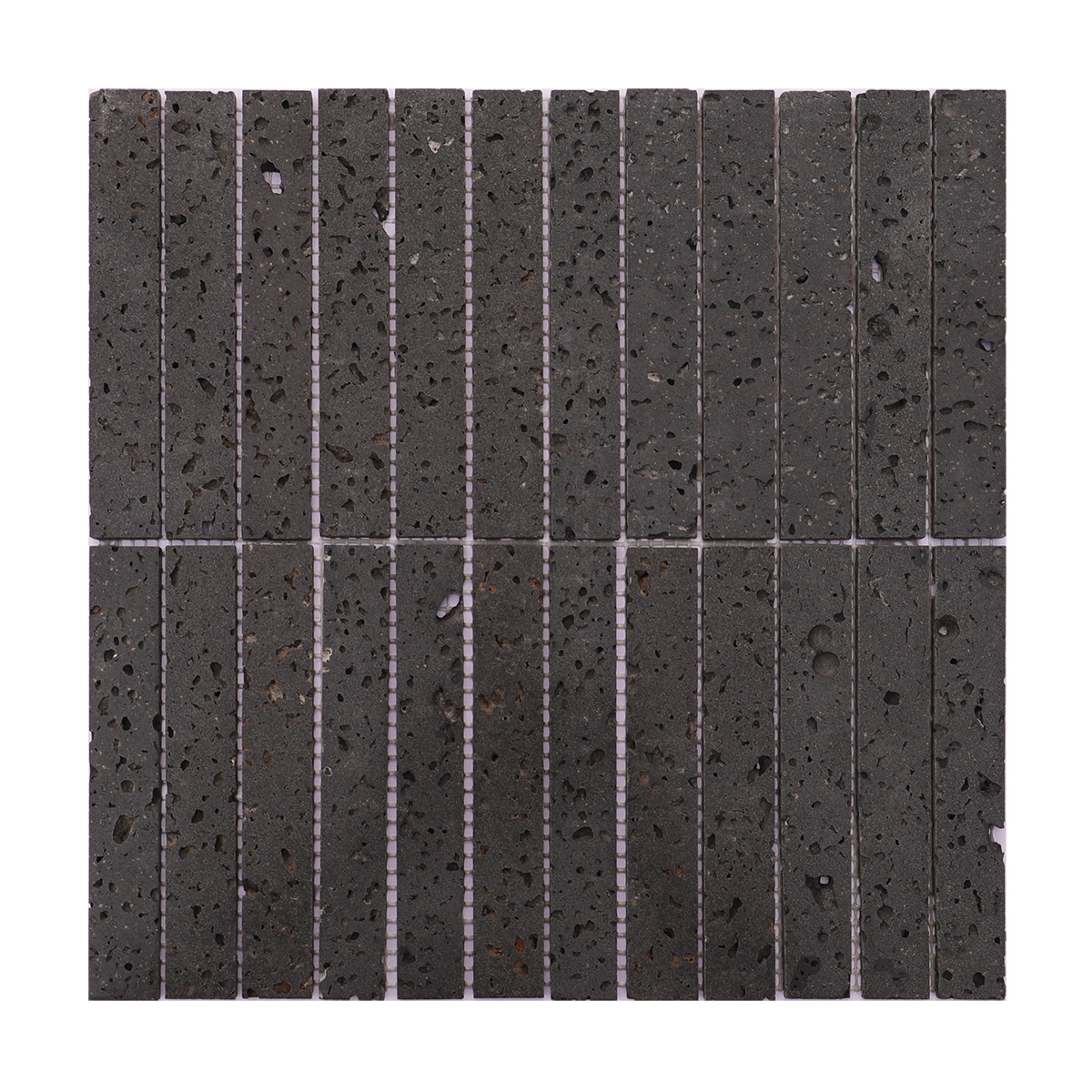
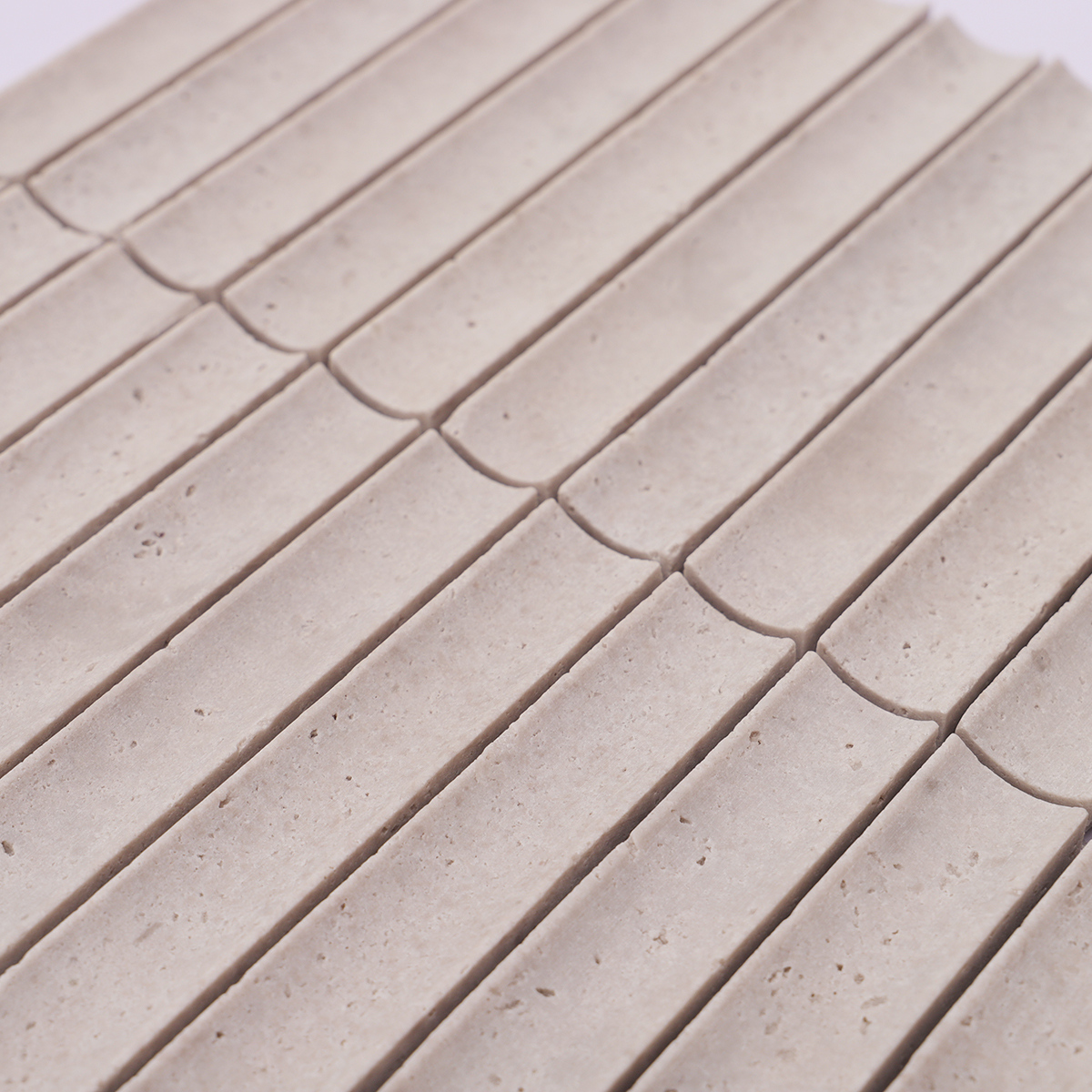
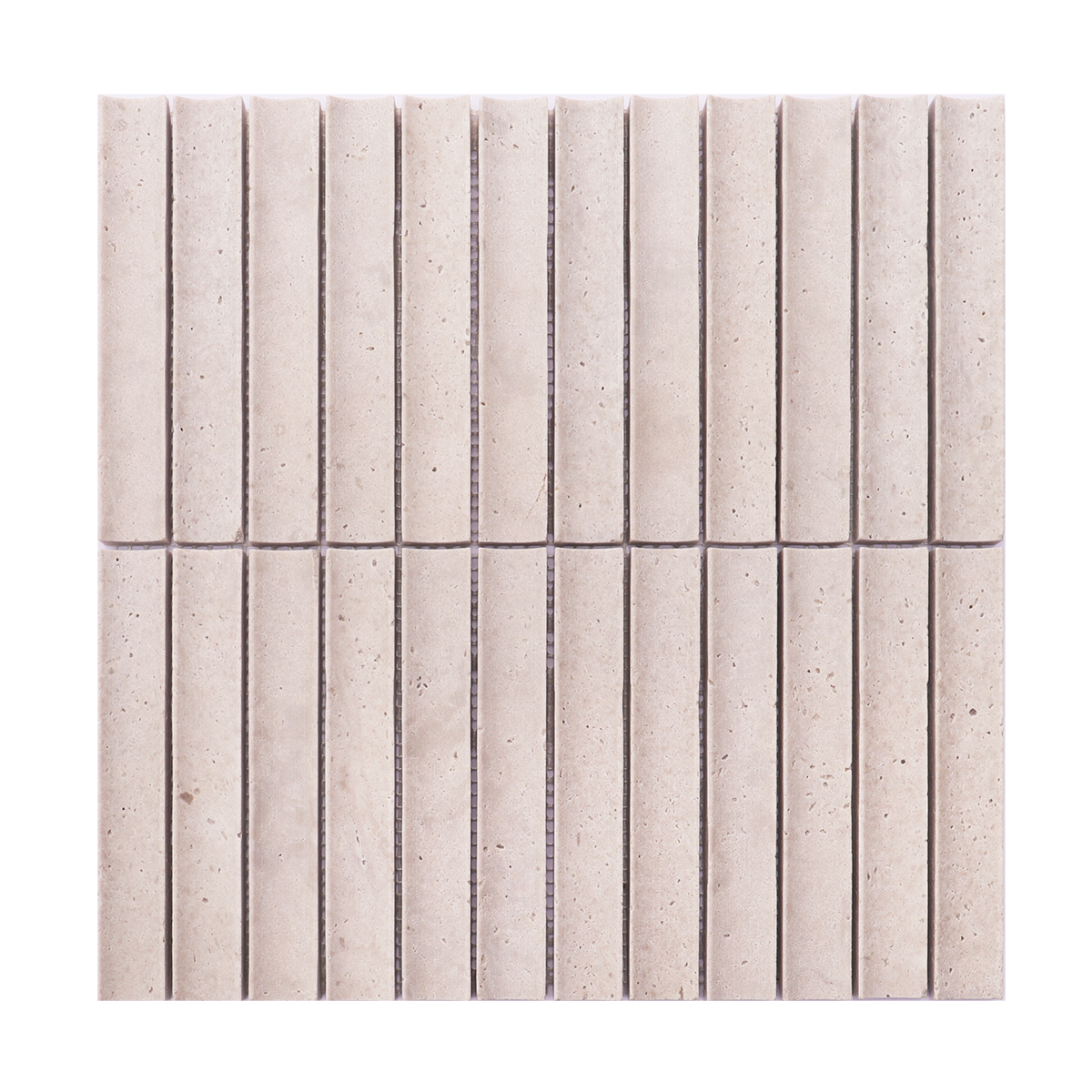
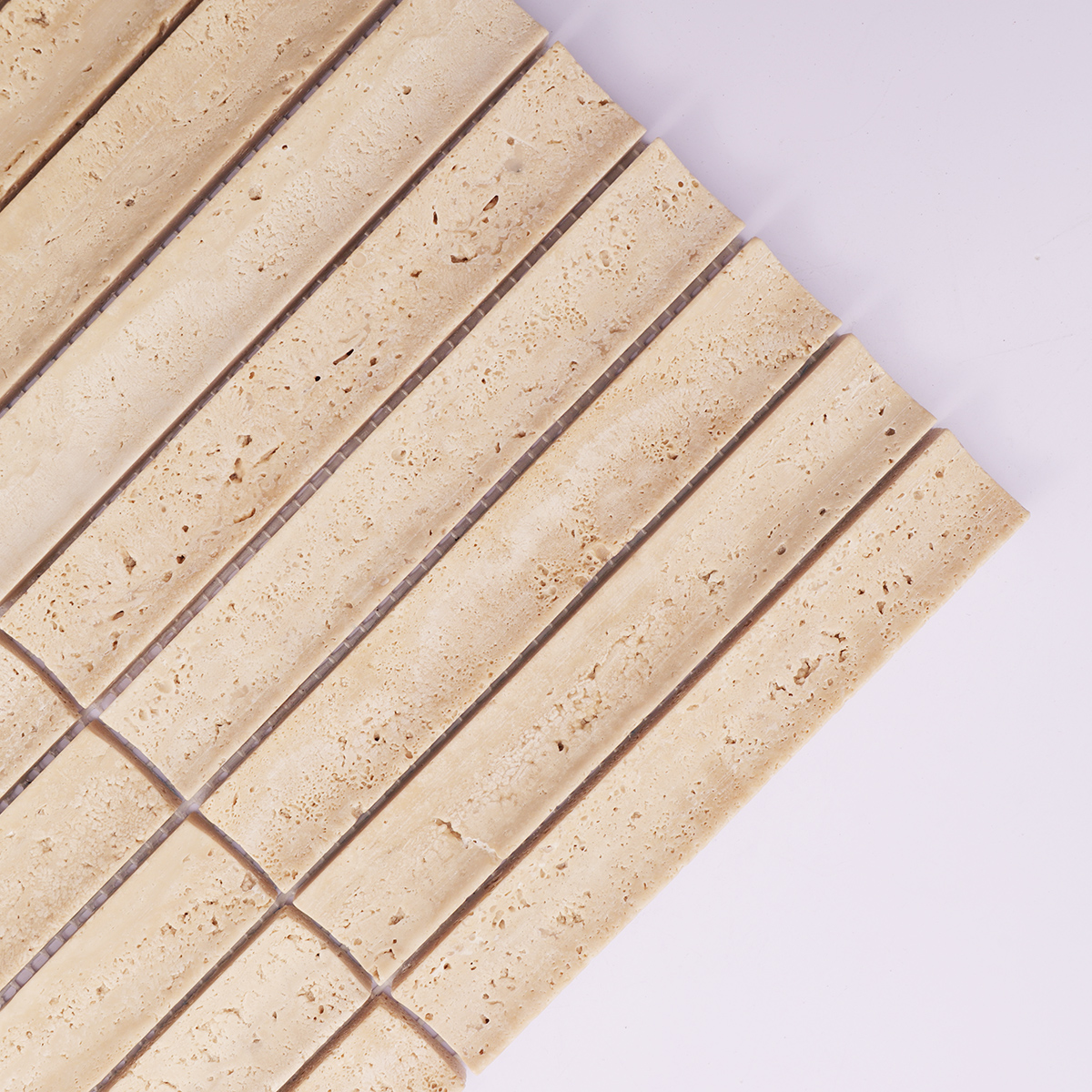
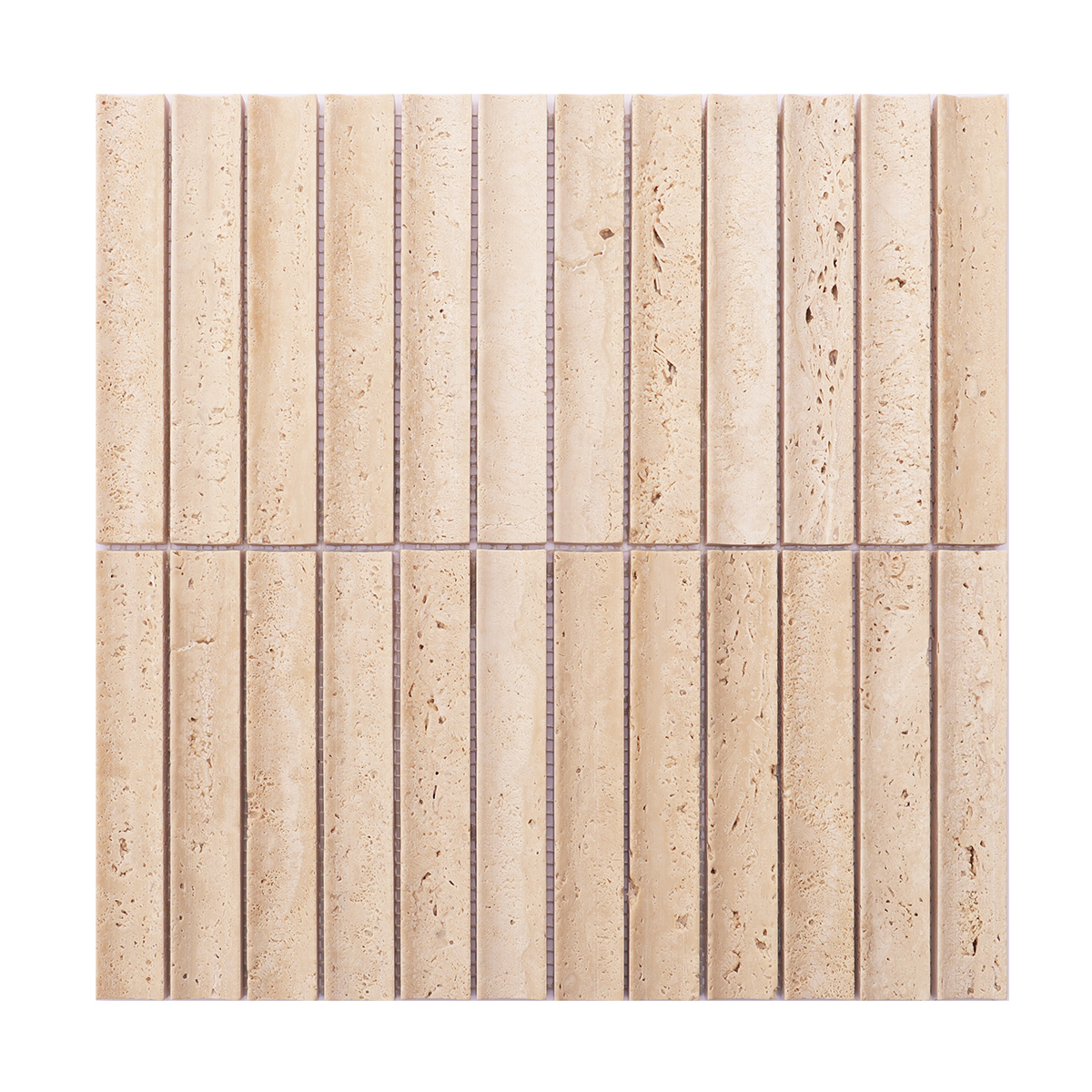
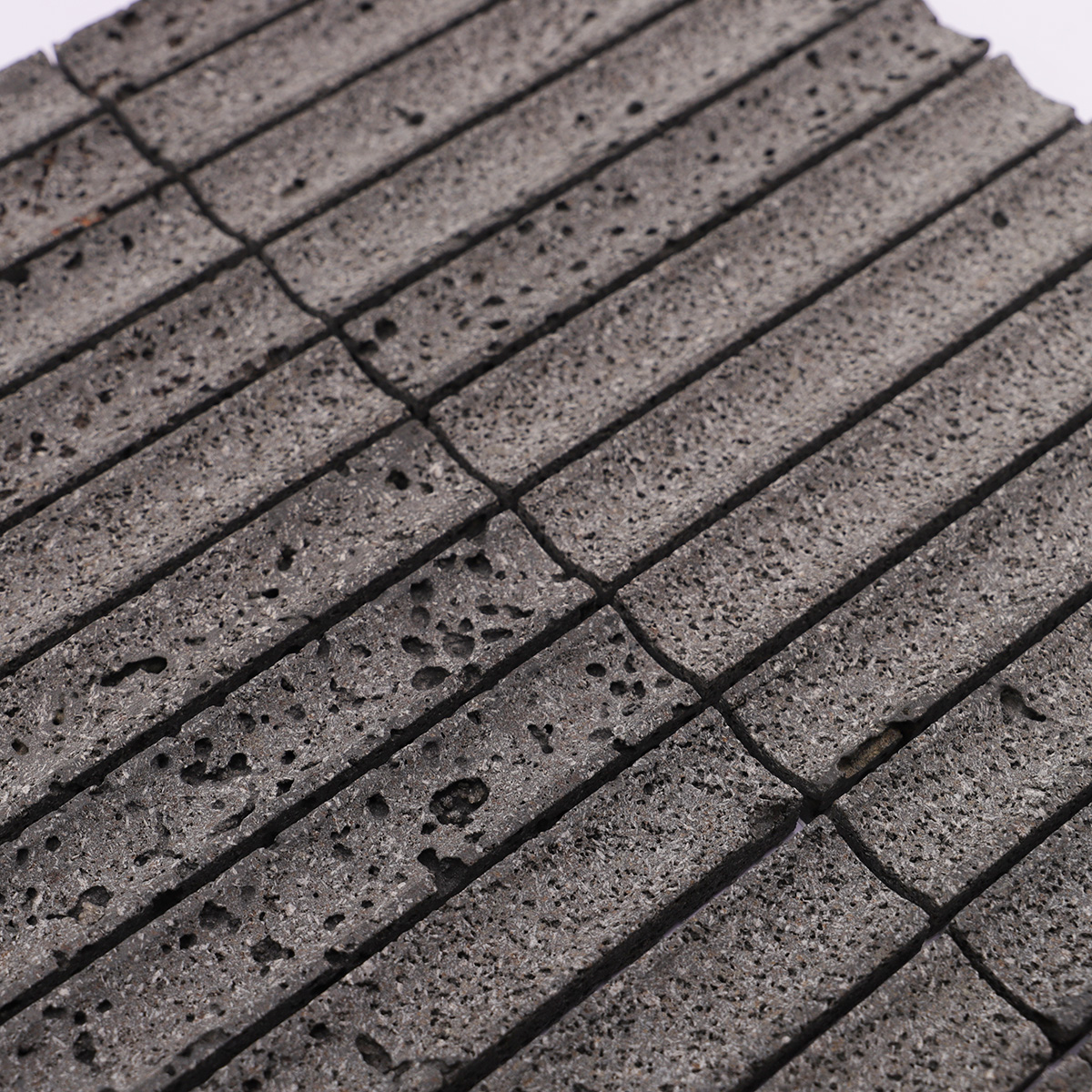
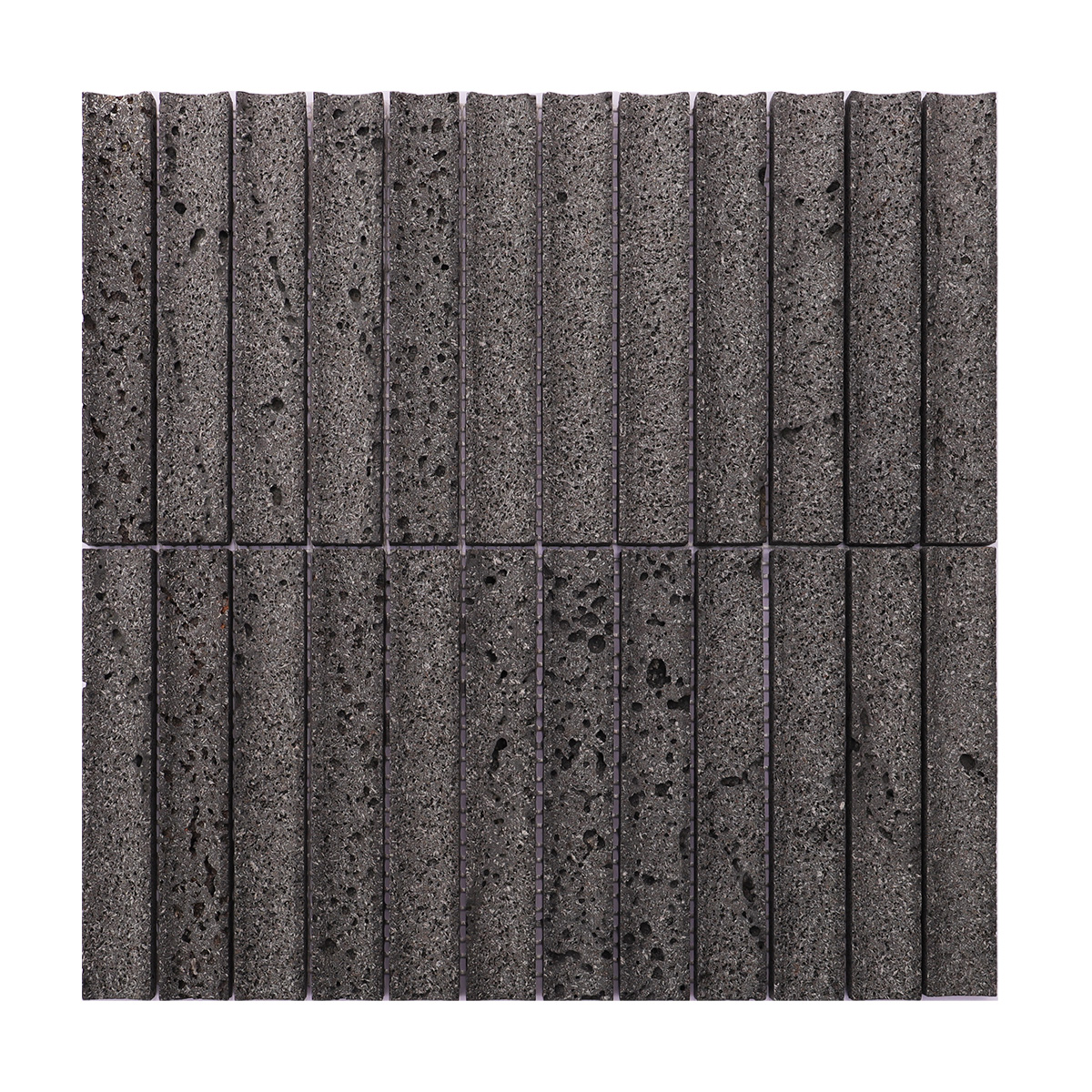
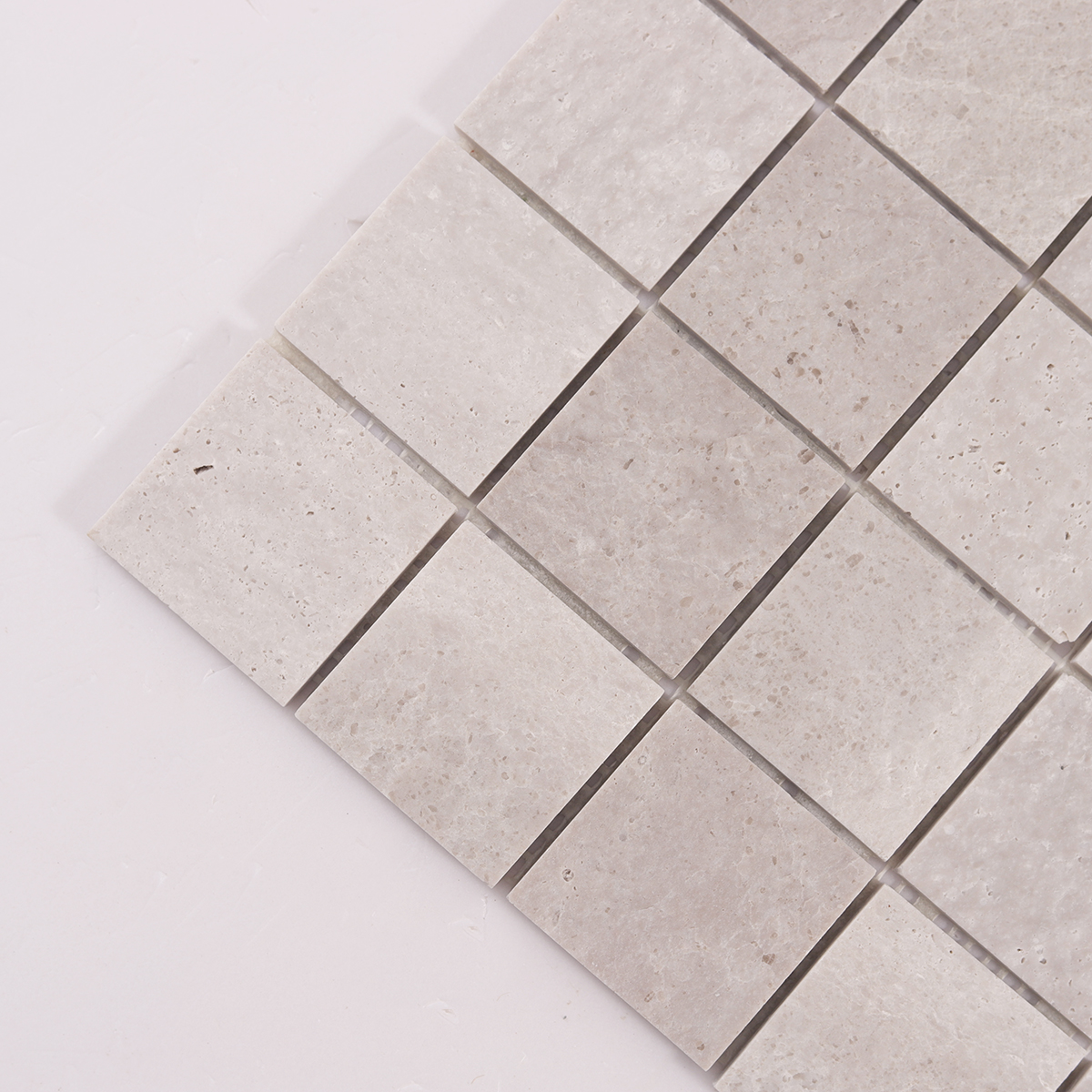
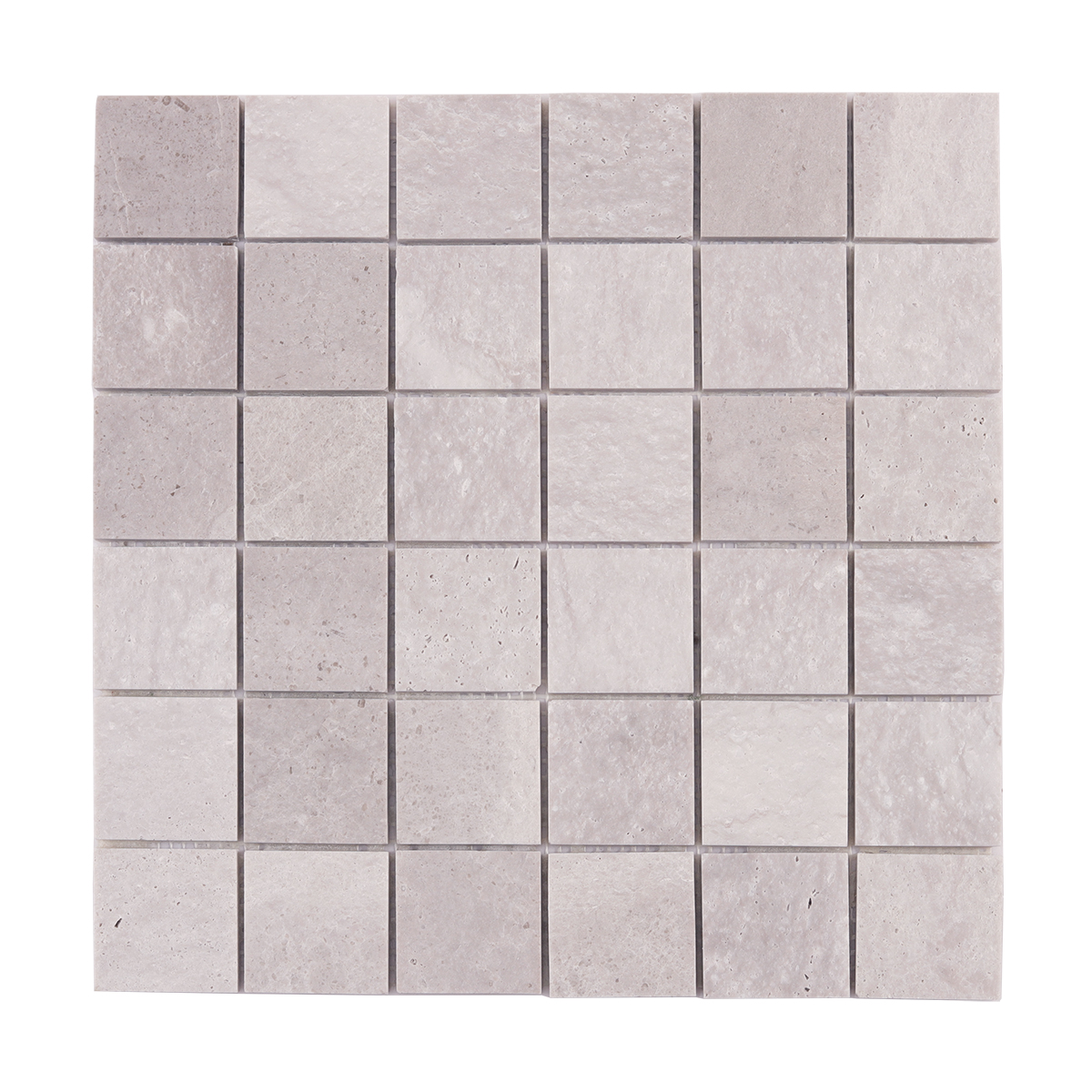
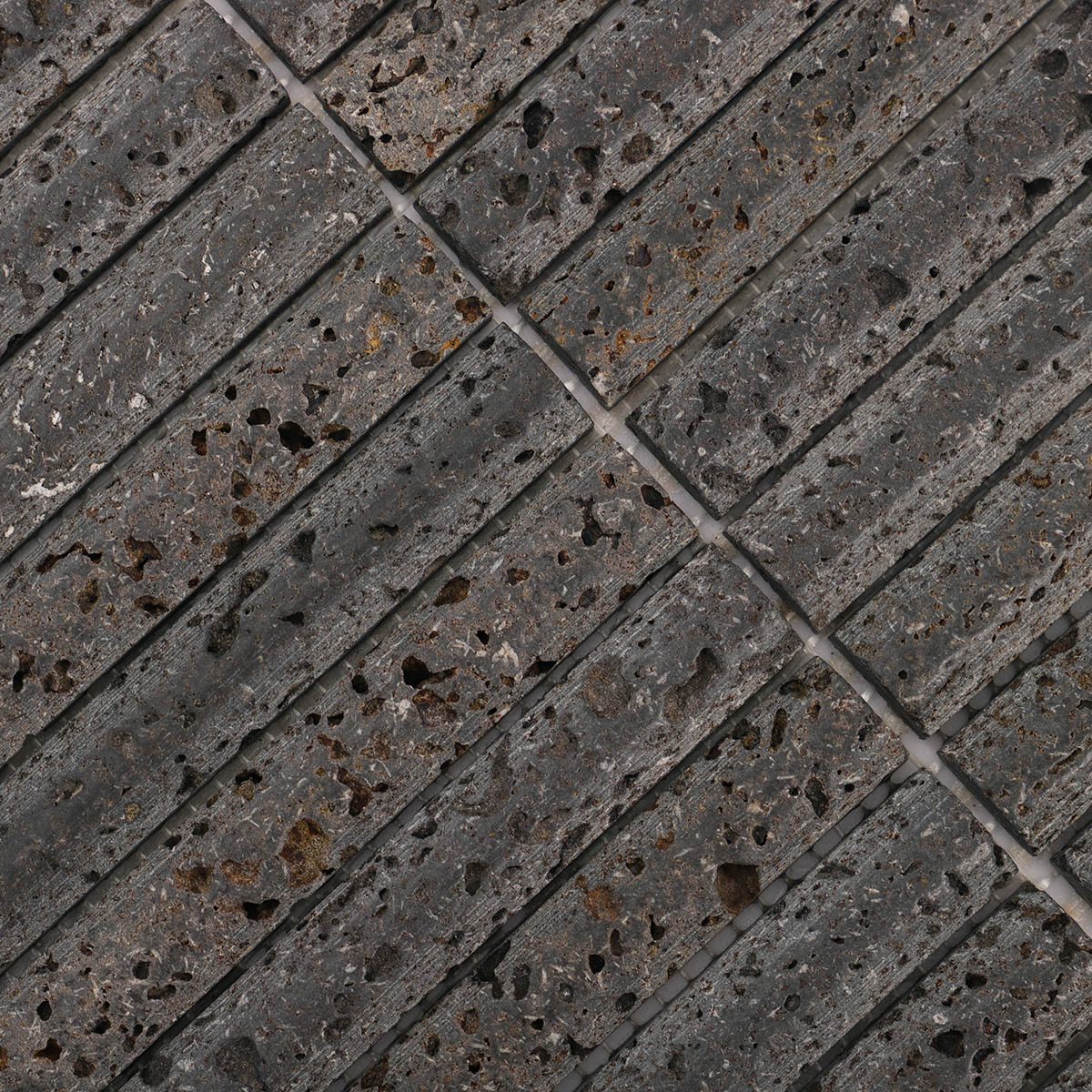
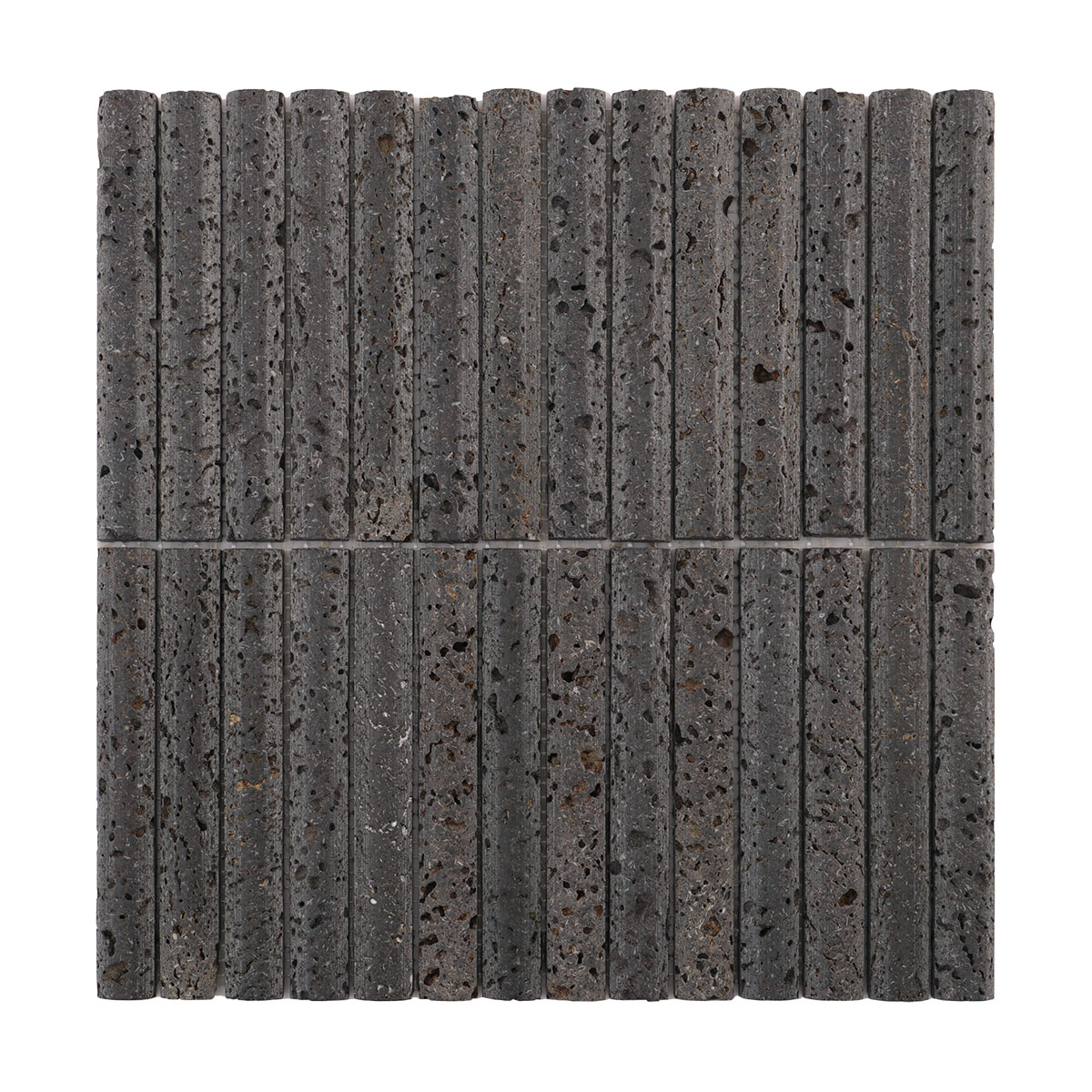
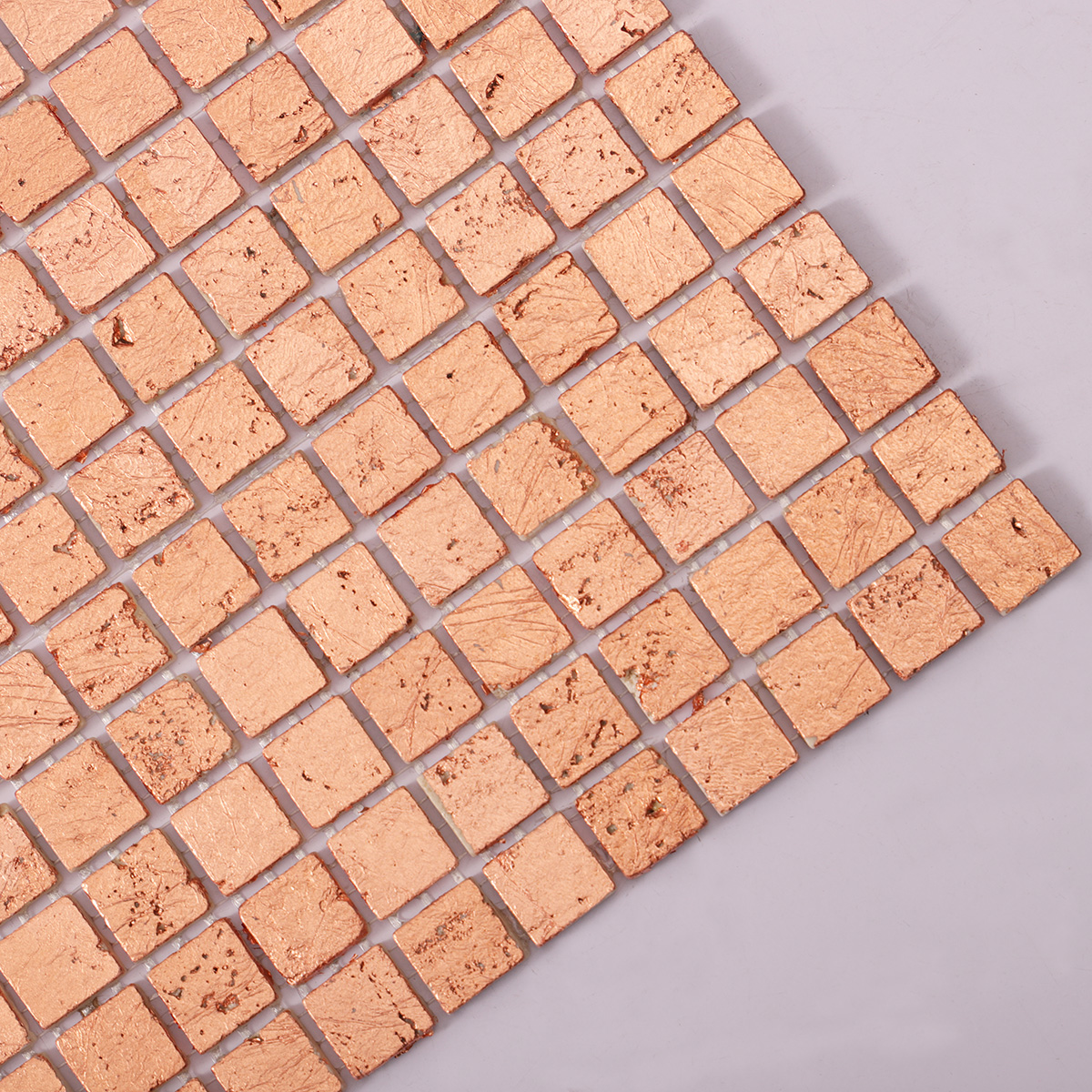
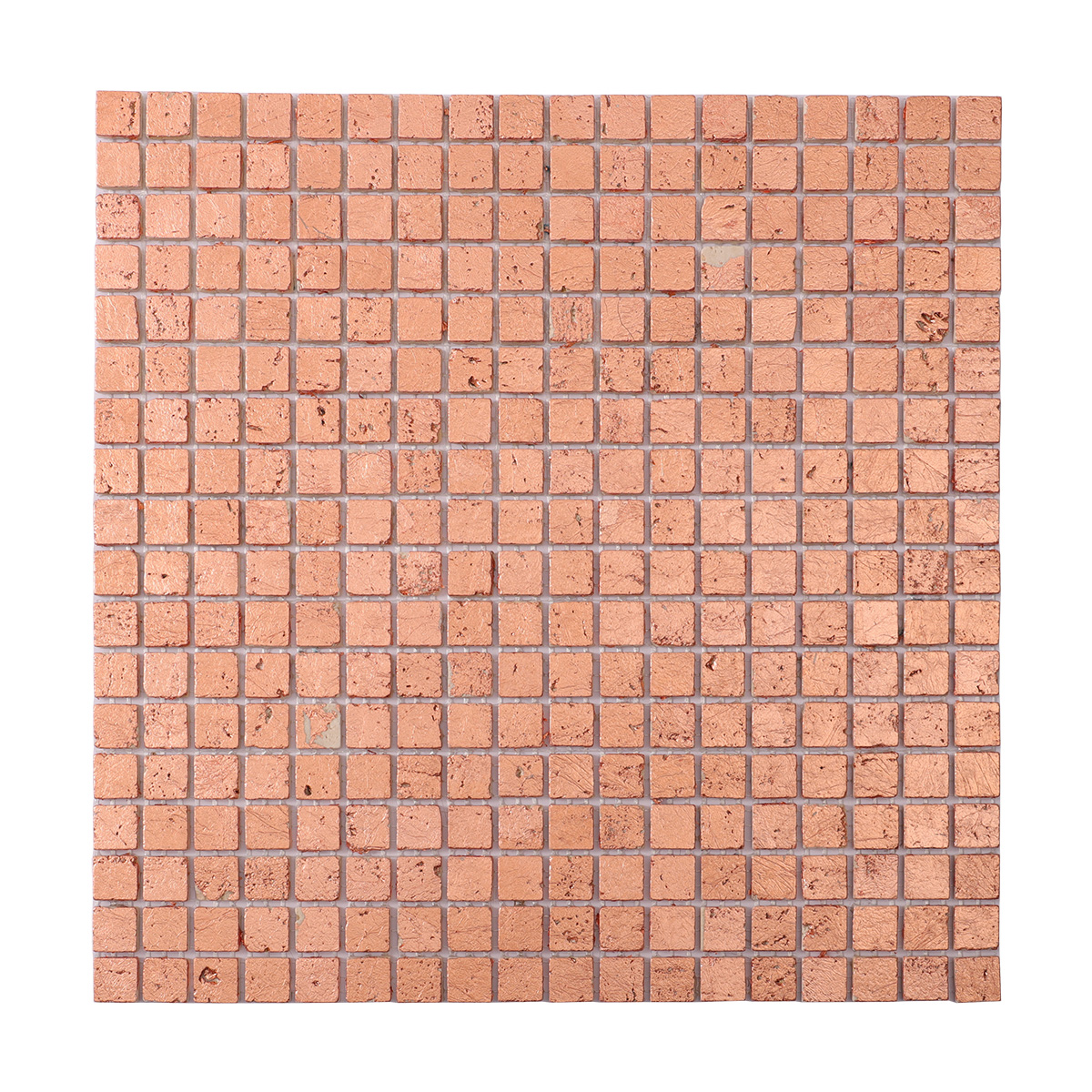
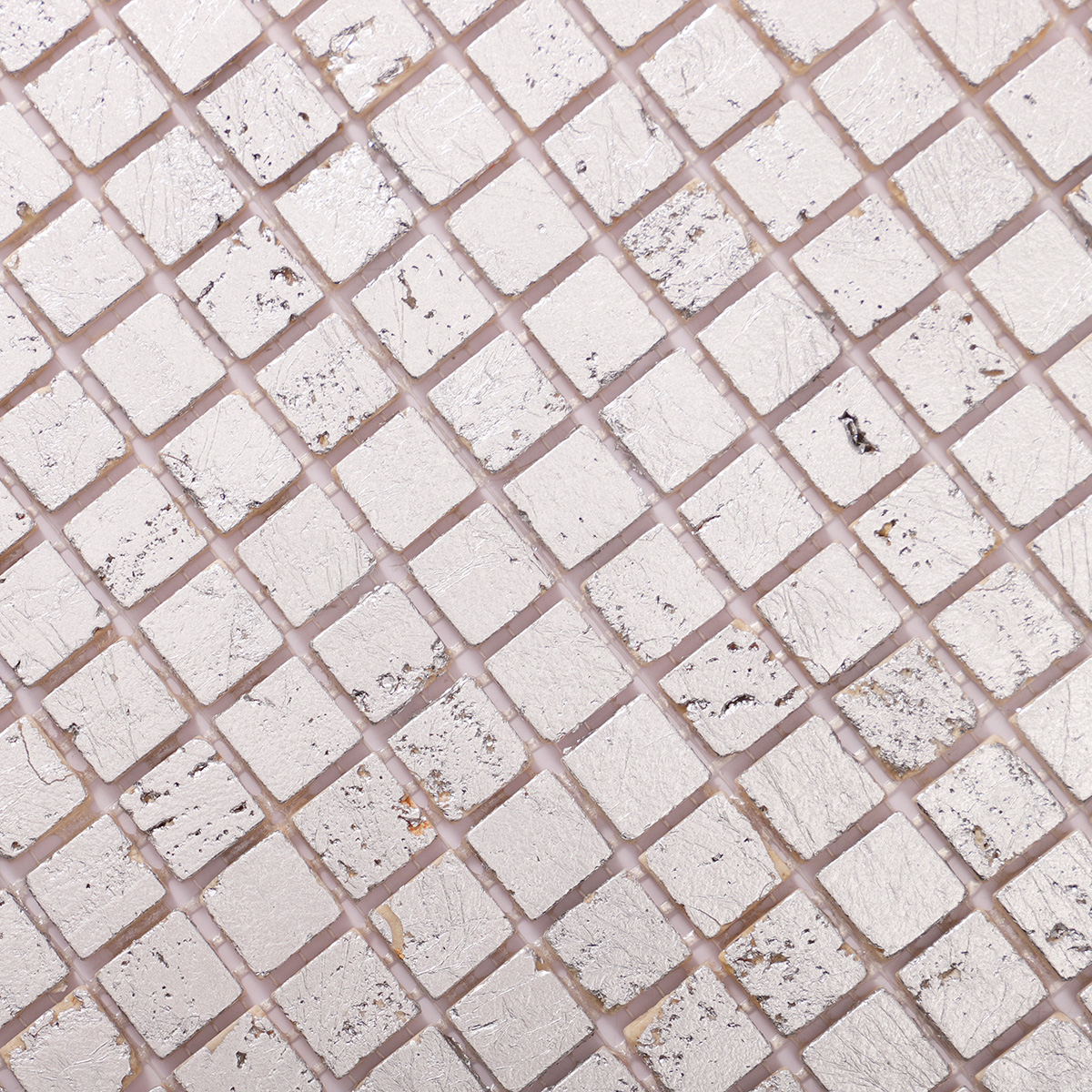
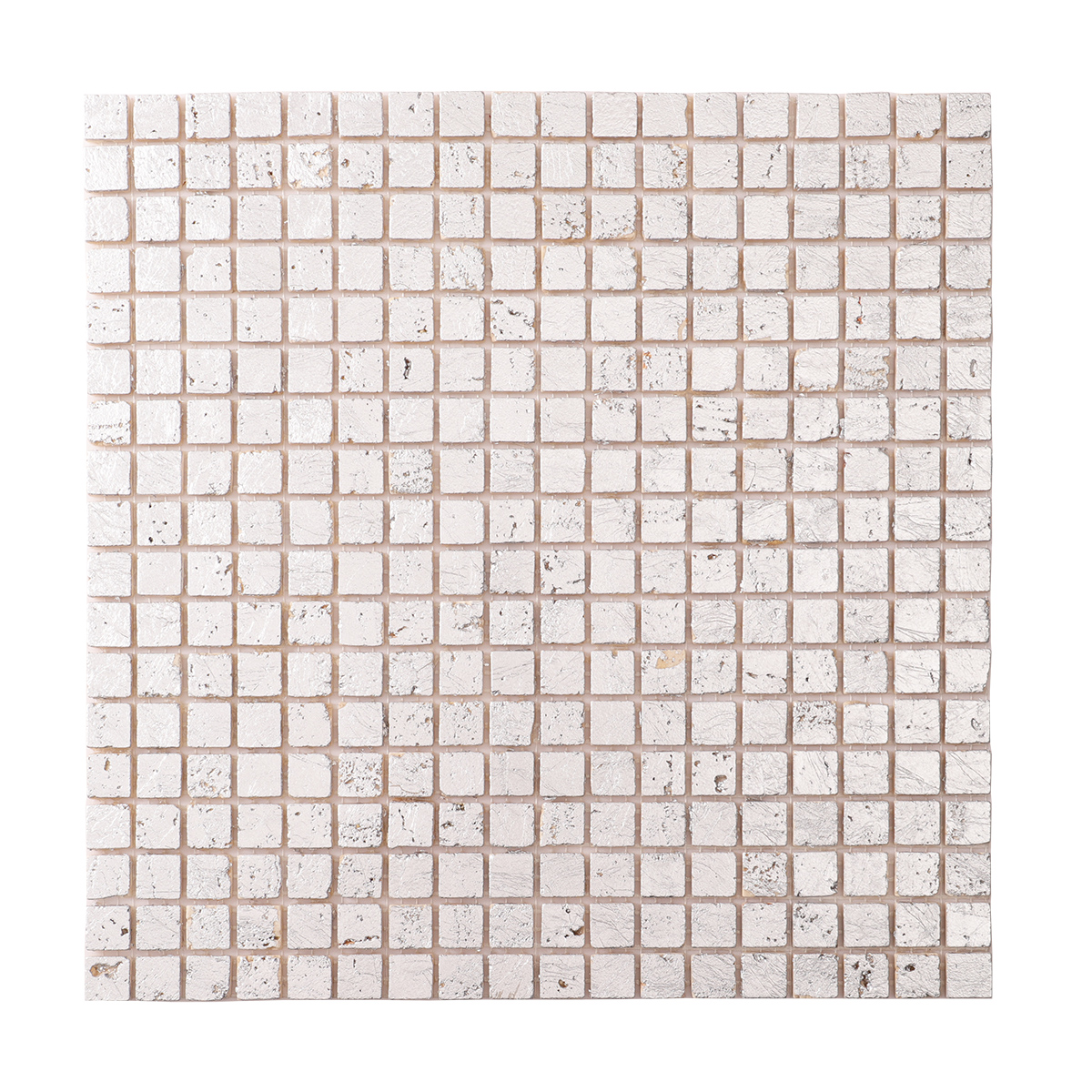
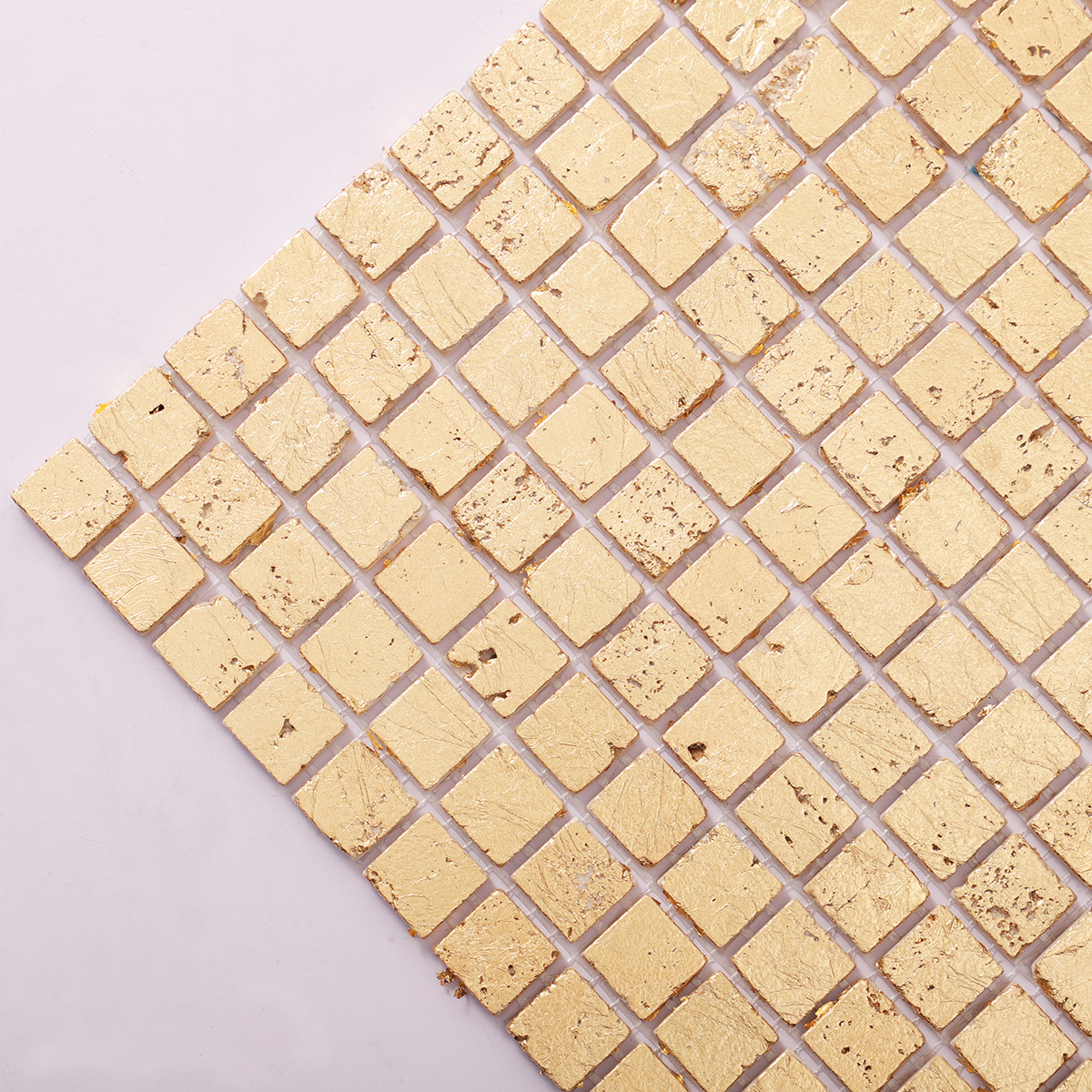
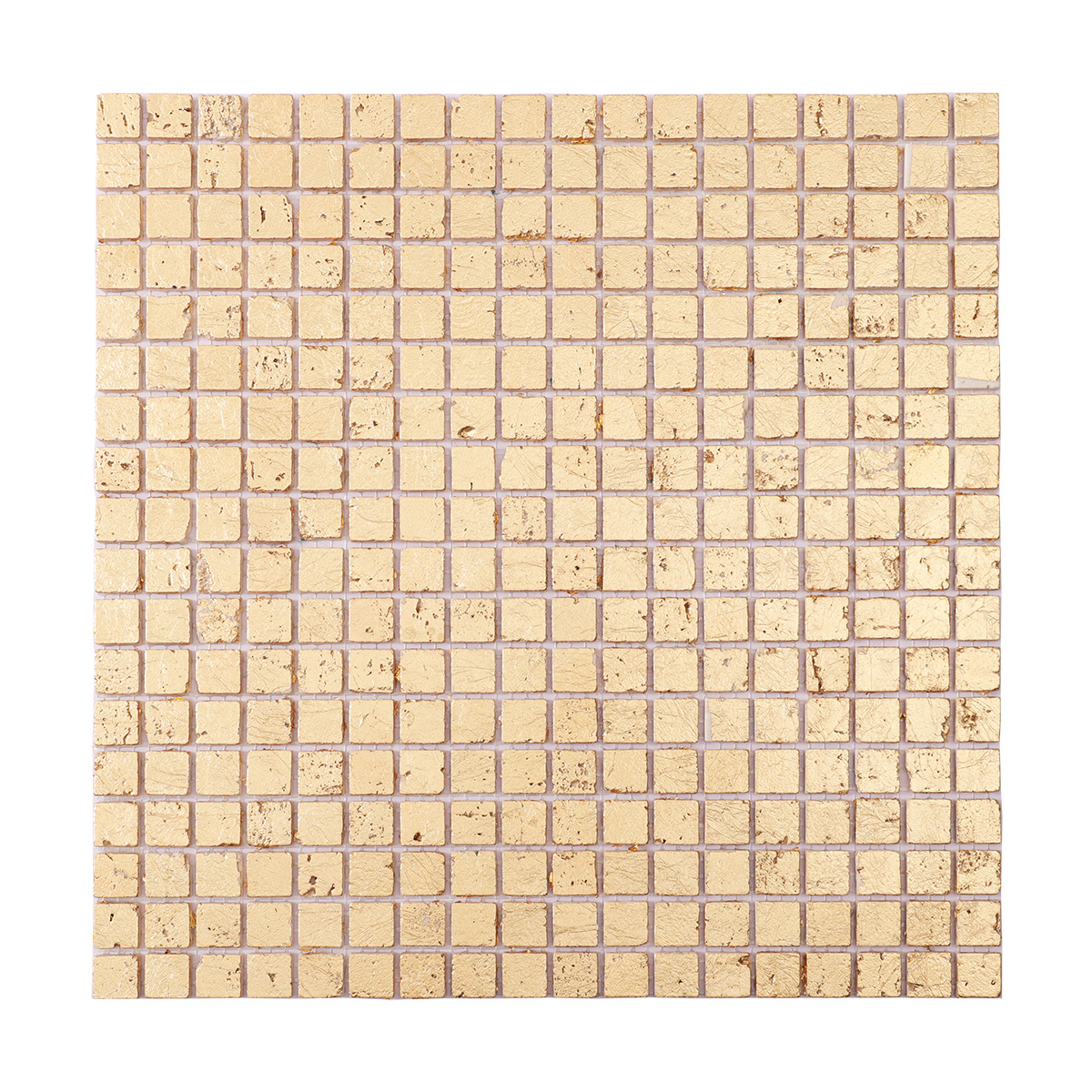
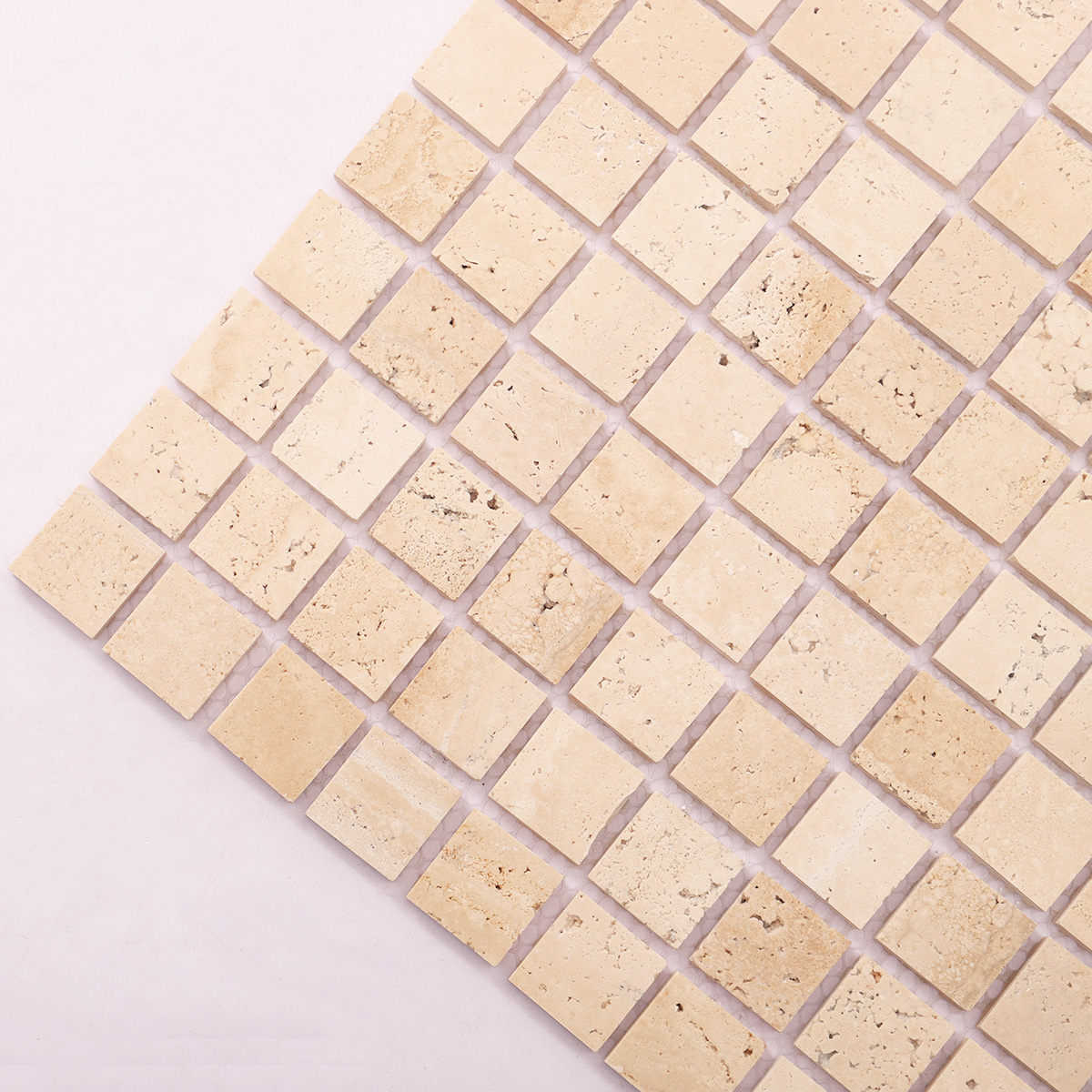
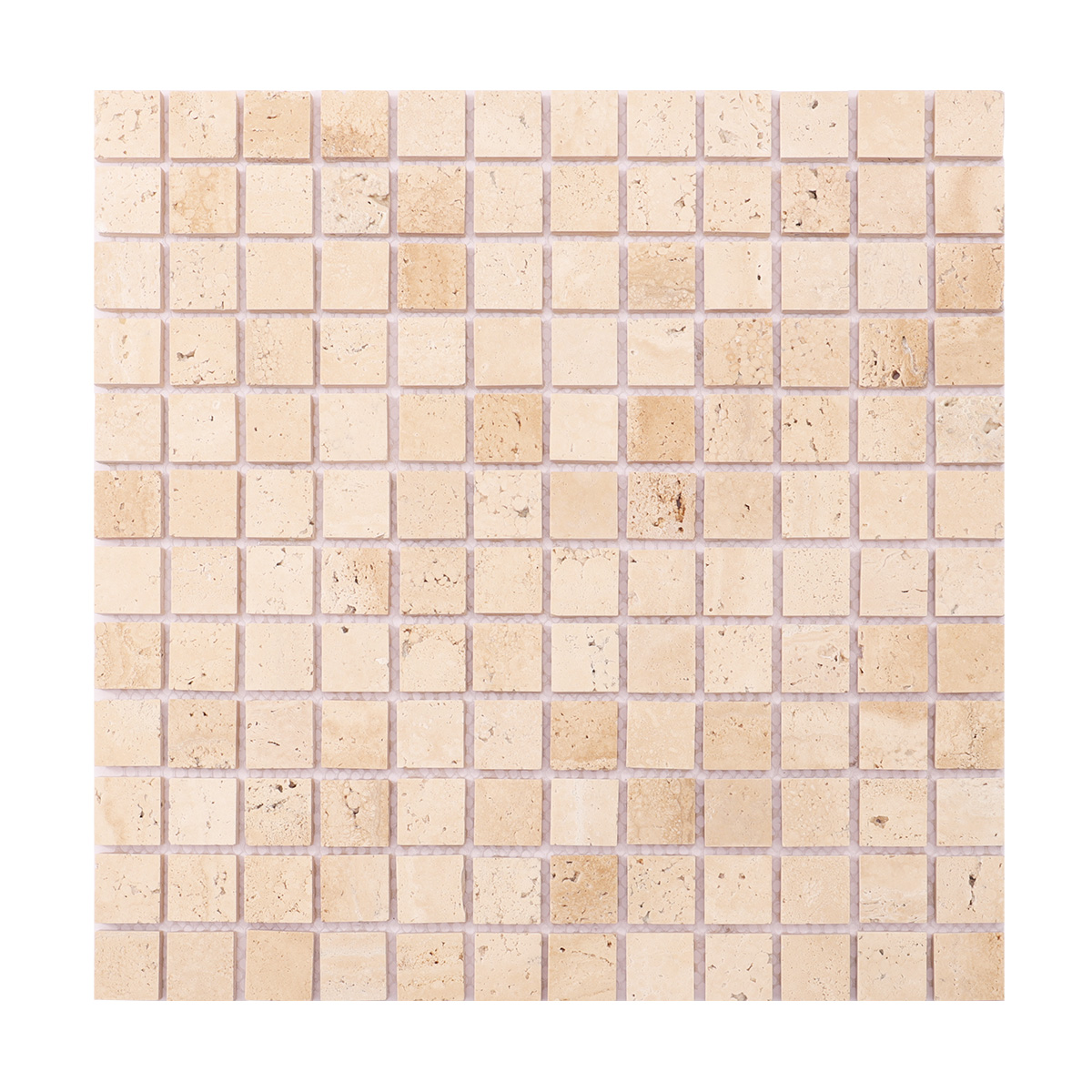
Bring natural warmth, subtle movement and lasting character to your space with a travertine tile backsplash from SAICINA TILES. Formed by mineral deposits and distinguished by layered veining, tonal variation and naturally occurring pores, genuine travertine gives every kitchen, bathroom and feature wall an individual appearance.
Explore beige, ivory, red, gray, silver and black travertine wall tiles in subway, mosaic, stacked, large-format and three-dimensional designs. Choose from honed, polished, brushed, tumbled and textured finishes, or contact SAICINA TILES for custom sizes, precision cutting and fluted surface options.
Browse the collection and request a sample to compare the stone with your cabinets, countertops, lighting and grout before ordering.
Why Choose a Travertine Tile Backsplash?
Travertine is a natural form of limestone valued for its soft earth tones, distinctive pores and organic linear movement. Unlike manufactured tiles with repeated printed patterns, genuine travertine varies naturally from piece to piece. These variations create a backsplash with greater visual depth and a more individual appearance.
A travertine backsplash can work as a quiet neutral surface or as the focal point of a room. Light-colored stone can brighten a compact kitchen, while gray, red or black travertine can create a more dramatic feature wall.
Important benefits include:
-
Genuine natural stone with individual color and veining
-
Warm, understated tones that are easy to coordinate
-
Subway tiles, mosaics, slabs and three-dimensional formats
-
Honed, polished, brushed, tumbled and textured finishes
-
Suitable options for residential and commercial wall projects
-
Custom sizes, edge details and fluted surfaces available
-
Individual damaged tiles can usually be replaced without removing the entire wall
-
A timeless appearance that works beyond short-term design trends
Because travertine is porous and acid-sensitive, it should be specified, installed, sealed and maintained as natural stone. Proper care improves stain resistance while preserving the material’s original character.
Travertine Backsplash Colors
Natural travertine is best known for warm neutral colors, but different stone selections can create very different interior styles. SAICINA TILES offers four main color families as well as lighter ivory and silver variations.
Beige and Ivory Travertine Backsplash
Beige travertine is the most versatile choice for kitchens and bathrooms. Its cream, sand, light-gold and soft taupe tones add warmth without overpowering cabinets or countertops.
Use beige or ivory travertine with:
-
White, cream or greige cabinets
-
Natural oak, walnut or other wood finishes
-
Beige quartz or lightly veined countertops
-
Brushed brass, bronze or black hardware
-
Farmhouse, Mediterranean, transitional or minimalist interiors
Cross-cut beige travertine usually displays cloud-like movement, while vein-cut stone creates more directional lines. The choice can make the backsplash feel either softer and more organic or cleaner and more architectural.
Red Travertine Backsplash
Red travertine features warm brick, rust, terracotta and reddish-brown tones. It creates a distinctive focal point and is particularly effective around fireplaces, bar areas, entry walls and statement kitchen backsplashes.
Red travertine pairs well with:
-
Dark wood cabinetry
-
Cream plaster walls
-
Bronze and aged-brass fixtures
-
Warm neutral countertops
-
Mediterranean, vintage, eclectic and luxury interiors
Because color movement can be pronounced, review several samples or production photographs before confirming a red travertine order.
Gray and Silver Travertine Backsplash
Gray travertine offers a cooler, more contemporary alternative to traditional beige stone. Depending on the selection, it may include silver, taupe, charcoal, cream or warm-brown movement.
Gray travertine is well suited to:
-
Contemporary kitchens
-
Minimalist bathrooms
-
Stainless steel appliances
-
Black, white or gray cabinets
-
Concrete-look and lightly veined countertops
-
Modern commercial interiors
A honed gray finish creates a restrained matte surface, while split-face or fluted gray travertine produces stronger shadows and texture.
Black Travertine Backsplash
Black travertine generally combines charcoal, deep gray and near-black shades with visible natural pores or contrasting mineral movement. It can create a sophisticated backdrop in a kitchen or a dramatic feature wall in a bathroom, lobby, restaurant or retail space.
Pair black travertine with:
-
Light oak or white cabinetry for contrast
-
Black cabinets for a monochromatic design
-
Brushed metal or brass details
-
Warm integrated lighting
-
Pale countertops to balance the darker wall
Lighting is especially important with black travertine. Wall washers, under-cabinet lighting and indirect lighting can reveal the surface texture without making the room feel too dark.
Popular Travertine Backsplash Styles
Travertine Subway Tile
Travertine subway tile combines a familiar rectangular format with the variation of natural stone. Common layouts include horizontal running bond, vertical stack, horizontal stack and herringbone.
Small subway tiles introduce more grout lines and visual rhythm. Longer rectangular tiles create a cleaner, more contemporary wall. Choose a honed and filled surface for easier cleaning or a tumbled finish for a softer, aged appearance.
Travertine Mosaic Tile
Travertine mosaics use smaller pieces arranged on mesh-mounted sheets. They are useful for kitchen backsplashes, niches, borders, curved details and walls with multiple outlets or corners.
Popular patterns include:
-
Square mosaic
-
Mini brick
-
Linear mosaic
-
Herringbone
-
Chevron
-
Hexagon
-
Diamond
-
Basketweave
-
Arabesque
-
Mixed-size geometric patterns
Mesh mounting simplifies alignment, but the installer should still check sheet spacing carefully. The joints between sheets should match the joints within each sheet so that the finished wall does not reveal a visible grid.
Stacked Stone and Split-Face Travertine
Stacked and split-face travertine creates pronounced relief and shadow. It is especially effective on fireplace walls, reception areas, bar fronts, living-room features and other dry decorative walls.
Deep-textured stone is less convenient directly behind a heavily used cooktop because grease can collect in the uneven surface. For that location, consider a smoother honed product or a removable protective panel.
Large-Format Travertine Wall Tile
Large-format tiles reduce the number of grout joints and allow the stone’s movement to become the main design feature. They work well in modern kitchens, bathrooms, hotel interiors and full-height feature walls.
Large pieces require a flat, stable substrate and experienced handling. The wall structure, tile weight, fixing system and installation materials must all be suitable for the selected product.
Fluted and Three-Dimensional Travertine
Fluted travertine features precisely carved channels that create changing shadows throughout the day. Straight grooves, rounded concave channels, ribbed surfaces and custom geometric relief can turn a natural stone backsplash into an architectural feature.
These surfaces are ideal for:
-
Kitchen feature walls away from heavy grease
-
Bathroom vanity walls
-
Fireplace surrounds
-
Reception areas
-
Hotel and restaurant interiors
-
Retail display walls
SAICINA TILES can produce custom groove widths, depths, directions and panel sizes for project-based designs. Final technical drawings and stone samples should be approved before production.
Travertine Finishes Explained
Honed and Filled Travertine
Honed travertine has a smooth, matte or low-sheen surface. Natural voids are commonly filled before the surface is ground to an even finish.
This is one of the most practical options for a kitchen backsplash because the smoother surface is easier to wipe than deeply textured stone. It also works well in contemporary and transitional interiors.
Tumbled Travertine
Tumbled travertine has softened edges, visible texture and an aged appearance. It is commonly used in farmhouse, Mediterranean, Tuscan and rustic interiors.
The open pores and irregular edges may be filled during grouting or intentionally left partially visible, depending on the product and desired appearance. Discuss the result with the installer before work begins.
Polished Travertine
Polished travertine has a smoother, more reflective surface that emphasizes color and veining. It can give a backsplash or fireplace wall a more formal appearance.
Reflections, fingerprints and water spots may be more visible on polished dark stone, so consider the lighting and maintenance expectations before selecting this finish.
Brushed or Chiseled Travertine
Brushed travertine retains natural texture while feeling less rugged than split-face stone. Chiseled edges create a more traditional, handcrafted appearance. Both finishes suit feature walls where texture is an important part of the design.
Filled Versus Unfilled Travertine
Filled travertine has many of its natural pores closed with a compatible filler, producing a more uniform surface. Unfilled travertine retains more open voids and emphasizes the material’s original character.
For a frequently cleaned kitchen backsplash, filled stone is generally more convenient. Unfilled stone can be effective on decorative walls, but the treatment of the pores and grout must be agreed upon before installation.
Vein-Cut Versus Cross-Cut Travertine
The direction in which a travertine block is cut changes the appearance of the tile.
Vein-cut travertine is cut parallel to the stone’s natural bedding. It produces linear bands and directional movement. It works particularly well in vertically stacked tiles, long subway formats and fluted panels.
Cross-cut travertine is cut across the bedding. It reveals softer, cloud-like patterns and circular movement. This appearance is useful when a less directional, more organic surface is preferred.
Neither cut is universally better. Select the cut according to the desired pattern, tile dimensions and installation direction.
Where Can Travertine Backsplash Tile Be Used?
Kitchen Backsplashes
A properly specified travertine kitchen backsplash protects the wall surface while introducing natural warmth. It can be installed between the countertop and upper cabinets or extended to the ceiling for a more continuous architectural effect.
Areas near sinks and cooktops are exposed to water, grease, tomato sauce, citrus and other staining or acidic substances. Choose a practical finish, apply an appropriate impregnating sealer when recommended and clean splashes promptly.
Behind a Stove or Cooktop
Travertine can be considered for the wall behind many stoves and cooktops, but the full assembly must be suitable—not only the stone. Confirm the appliance manufacturer’s required clearances, local building rules, substrate, adhesive, grout and sealer.
A filled and honed finish is usually easier to clean in this location than split-face or deeply fluted stone. The backsplash should never cover required ventilation openings or conflict with heat-protection requirements.
Bathroom and Vanity Walls
Travertine can create a calm, spa-like vanity backsplash, bathtub surround or bathroom feature wall. Beige and ivory selections feel warm and light, while gray or black stone creates a more dramatic atmosphere.
For wet areas, the tile and grout are decorative surface materials rather than the waterproofing system. Shower walls require a properly designed waterproof substrate or membrane behind the stone.
Shower Walls
Some travertine products can be used on shower walls when approved for the application. The stone selection, filling, sealer, adhesive and grout must be compatible with wet-area use.
Use a qualified installer, provide proper waterproofing and ventilation, and follow the product-specific maintenance instructions. Not every decorative or mesh-backed product is suitable for continuous water exposure, so check the recommended application before ordering.
Fireplace Surrounds
Travertine’s natural variation works well around fireplaces, from simple honed panels to heavily textured stacked-stone walls. The selected stone, setting materials and substrate must be rated for the temperatures and construction requirements of the fireplace.
Commercial Feature Walls
Travertine can also be used on hotel, restaurant, showroom, retail and reception walls. Custom-cut panels and three-dimensional surfaces can coordinate with branding, lighting and architectural details.
Commercial projects should be reviewed for substrate, fixing method, maintenance access and applicable building requirements.
How to Coordinate Travertine with Cabinets and Countertops
White Cabinets
Beige, ivory, silver and light-gray travertine soften the crisp appearance of white cabinetry. Use warm-white grout for a blended result or a slightly darker neutral grout to define the pattern.
Wood Cabinets
Travertine naturally complements oak, walnut and other wood finishes. Compare the undertones carefully: golden stone works well with warm wood, while silver or gray travertine can balance cabinets with red or orange undertones.
Dark Cabinets
Ivory and beige travertine provide contrast against espresso, navy, charcoal or black cabinets. For a darker monochromatic design, combine black or gray travertine with integrated lighting and a lighter countertop.
Granite Countertops
When the countertop has strong movement, select quieter travertine with more consistent coloring. If the granite is visually simple, a mosaic, fluted surface or stone with stronger banding can become the focal point.
Quartz Countertops
Plain or lightly veined quartz gives natural travertine room to stand out. Cream travertine works with warm-white quartz, while gray and silver travertine pair well with cooler white or concrete-look surfaces.
Butcher Block Countertops
Beige and tumbled travertine enhance the natural character of butcher block. This combination is especially suitable for farmhouse, rustic and Mediterranean-inspired kitchens.
Choosing the Right Grout Color
Grout changes how strongly the tile shape and pattern appear.
-
Matching grout creates a quieter, more continuous surface.
-
Light neutral grout keeps beige and ivory stone feeling open and bright.
-
Medium taupe or gray grout defines subway and mosaic patterns.
-
Dark grout creates contrast but may visually overpower light travertine.
-
Unsanded or other stone-compatible grout may be required for narrow joints or sensitive finishes.
Always test grout and sealer on spare tiles. Grout can enter open pores and may change the overall appearance of unfilled or tumbled travertine. Confirm whether the natural holes should be filled or remain visible before installation starts.
How to Select and Order Travertine Backsplash Tile
Request Samples
Screen colors cannot fully represent natural stone. Order physical samples and view them beside the actual cabinets, countertop, flooring, hardware and lighting.
Look at samples during the day and at night. Warm and cool lighting can significantly change the appearance of beige, red, gray and black travertine.
Expect Natural Variation
Variation is part of genuine travertine rather than a product defect. The installed wall may contain changes in tone, pore size, veining and mineral movement.
Review the product’s variation level and blend tiles from several boxes before installation. Do not complete one box at a time, as this may create visible color sections on the wall.
Calculate the Required Quantity
Measure the total wall area and subtract large openings only when appropriate. Add material for cuts, pattern alignment, breakage and future repairs.
Many projects allow approximately 10% extra material, while diagonal layouts, intricate mosaics, vein matching and walls with numerous corners may require more. Ask the installer to confirm the final quantity.
Check Product Specifications
Before ordering, review:
-
Tile or sheet dimensions
-
Individual chip dimensions
-
Thickness
-
Finish
-
Filled or unfilled surface
-
Vein-cut or cross-cut appearance
-
Mesh-mounted or loose-piece construction
-
Recommended wall and wet-area applications
-
Coverage per sheet or carton
-
Weight per sheet or carton
-
Shade and variation information
-
Recommended adhesive, grout and sealer
Travertine Backsplash Installation Guide
Natural stone installation should follow the product instructions, setting-material manufacturer’s requirements and applicable construction standards. A professional tile installer is recommended for large-format, vein-matched, fluted or wet-area projects.
1. Inspect the Material
Open and inspect the cartons before installation. Confirm the product, dimensions, finish and color range. Blend pieces from multiple cartons and arrange them on a clean surface to plan the final composition.
Do not install material that has an unresolved product, shade or quality concern.
2. Prepare the Wall
The substrate must be clean, dry, stable, flat and suitable for the tile weight and installation location. Repair loose material, major irregularities and moisture problems before tiling.
Wet areas require an approved waterproofing system behind the tile. Travertine, grout and sealer do not replace this system.
3. Establish the Layout
Mark level reference lines and plan the position of cuts, corners, outlets and focal points. Avoid leaving very narrow pieces at visible edges.
For fluted or vein-cut stone, check that the direction of every piece follows the approved design.
4. Select Compatible Setting Materials
A white, high-quality mortar formulated for natural stone is often preferred because darker adhesive may affect the appearance of some light or porous stones. However, the final product must be selected according to the tile, substrate, location and manufacturer’s instructions.
Do not assume that an adhesive intended for ceramic tile is automatically appropriate for natural stone.
5. Set and Align the Tiles
Apply the mortar using the recommended trowel and coverage method. Keep joints consistent and remove adhesive from the tile face and joints before it hardens.
Large tiles may require additional mortar application techniques and coverage checks. Heavy or dimensional pieces may need a specialized fixing method.
6. Seal Before Grouting When Required
Some porous, honed, tumbled or unfilled travertine benefits from a compatible impregnating sealer or grout-release treatment before grouting. This can reduce grout absorption and make cleanup easier.
Test the treatment first because an enhancing sealer may darken the stone. Follow the stone supplier’s and sealer manufacturer’s instructions rather than applying a universal schedule.
7. Grout and Finish
Use grout compatible with natural stone, the joint width and the installation area. Work carefully to avoid scratching polished or sensitive finishes.
Determine in advance whether the grout should fill the stone’s natural pores. After curing and final cleaning, apply additional sealer only when recommended.
How to Clean and Maintain a Travertine Backsplash
Travertine is a calcium-based natural stone and can be etched by acidic products. Consistent, gentle care is more effective than aggressive periodic cleaning.
For routine maintenance:
-
Wipe cooking splashes and spills promptly.
-
Use warm water, a soft cloth or a pH-neutral cleaner made for natural stone.
-
Rinse cleaner residue and dry the surface with a soft cloth.
-
Avoid vinegar, lemon cleaners and other acidic products.
-
Avoid abrasive pads and scouring powders that may scratch the finish.
-
Do not allow grease, coffee, wine or tomato-based products to remain on the stone.
-
Keep the joints and changes of plane in good condition.
-
Follow the sealer manufacturer’s instructions for testing and reapplication.
An impregnating sealer can improve stain resistance, but it does not make travertine completely stainproof or waterproof. Reseal according to actual absorption, product instructions and professional recommendations rather than relying only on a fixed calendar interval.
A simple absorption test may help indicate whether treatment should be evaluated: place a few drops of water on an inconspicuous clean area and observe whether the stone darkens quickly.
Consult the stone or sealer supplier before applying a new product, particularly if the original treatment is unknown.
Natural Travertine Versus Travertine-Look Porcelain
Natural travertine and travertine-look porcelain serve different priorities.
Natural travertine offers authentic mineral variation, real depth and the tactile character of stone. Every piece is different, and custom carving or fluting can create highly distinctive architectural surfaces. It requires natural-stone-compatible installation and maintenance.
Travertine-look porcelain offers more consistent coloring, lower absorption and simpler maintenance. However, its appearance is created through manufacturing and printed graphics, so the pattern may repeat and the surface does not have the same natural depth.
Choose natural travertine when authenticity, variation and custom fabrication are priorities. Consider porcelain when low maintenance, tight color control or a demanding application is more important.
Why Choose SAICINA TILES?
SAICINA TILES supplies natural travertine wall tiles for residential, hospitality, retail and commercial projects. Our collection combines classic stone colors with modern production options, allowing designers and homeowners to select a surface that fits both the architecture and practical needs of the space.
Available options include:
-
Beige, ivory, red, gray, silver and black travertine
-
Subway, mosaic, stacked and large-format wall tiles
-
Honed, polished, brushed, tumbled and textured finishes
-
Filled and unfilled surfaces
-
Vein-cut and cross-cut appearances
-
Custom dimensions and precision cutting
-
Straight, rounded and custom fluted grooves
-
Project-based packing and quantity support
-
Samples for color, texture and finish approval
Because natural stone varies, we recommend approving samples and confirming technical requirements before placing a project order.
Contact SAICINA TILES with your wall dimensions, preferred color, finish, installation location and design drawings. Our team can help you identify suitable products and calculate the approximate quantity required.
Travertine Tile Backsplash FAQs
Is Travertine Still a Good Choice for a Kitchen Backsplash?
Yes. Travertine remains suitable for homeowners and designers who want authentic natural stone, warm colors and individual variation. It is especially effective in organic modern, Mediterranean, farmhouse, transitional and minimalist interiors.
Buyers should be comfortable with natural variation and natural-stone maintenance.
Does a Travertine Backsplash Need to Be Sealed?
Many porous travertine products benefit from an impregnating sealer, particularly around sinks and cooktops. However, not every stone or finish has the same absorption.
Follow the product supplier’s and sealer manufacturer’s recommendations.
How Often Should Travertine Be Resealed?
There is no single schedule suitable for every installation. Frequency depends on the stone, finish, sealer, cleaning products and level of exposure.
Monitor absorption and follow the sealer manufacturer’s instructions.
Can Travertine Be Installed Behind a Stove?
It may be used behind many stoves and cooktops when the entire installation meets appliance clearances, building requirements and material specifications.
A smooth, filled finish is generally easier to clean than a deeply textured finish.
Can Travertine Be Used on Shower Walls?
Some travertine tiles are suitable for shower walls. The shower still requires approved waterproofing behind the tile, compatible setting materials, proper ventilation and regular natural-stone care.
Confirm that the specific product is recommended for wet areas.
What Is the Best Travertine Finish for a Kitchen Backsplash?
Honed and filled travertine is often the most practical choice because it provides a smooth, low-sheen surface that is easier to wipe.
Tumbled stone offers a more rustic appearance, while polished stone creates a more formal look.
Does Travertine Stain Easily?
Untreated porous travertine can absorb grease and colored liquids. Appropriate sealing improves stain resistance but cannot make the stone completely stainproof.
Prompt cleaning remains important.
Can Vinegar Be Used to Clean Travertine?
No. Vinegar and other acidic cleaners can etch calcium-based stone. Use a pH-neutral cleaner formulated for natural stone or follow the stone supplier’s cleaning instructions.
What Grout Color Works Best with Beige Travertine?
Warm white, cream, beige and light taupe create a blended appearance. Medium taupe or gray defines the pattern more clearly.
Test the grout with the actual stone before installation because it may affect the appearance of porous or unfilled surfaces.
Does Travertine Work with White Cabinets?
Yes. Beige and ivory travertine add warmth to white cabinets, while silver or gray travertine creates a cooler, more contemporary contrast.
The countertop undertone and room lighting should guide the final selection.
Should Travertine Holes Be Filled with Grout?
That depends on the product and intended finish. Open pores in tumbled or unfilled travertine are often filled during grouting for easier cleaning, but some decorative installations retain part of the natural texture.
Decide before installation and test the proposed grout treatment.
How Much Extra Tile Should I Order?
Approximately 10% extra is common for a straightforward layout, but mosaics, diagonal patterns, custom cuts, vein matching and complicated walls may require more.
Ask the installer to calculate the final allowance.
Can Travertine Backsplash Tiles Be Customized?
Yes. SAICINA TILES can provide custom cutting, non-standard dimensions and three-dimensional groove options for qualifying orders.
Supply drawings, dimensions and reference images so the design can be evaluated before production.
Is Every Travertine Tile Identical?
No. Natural changes in color, pores, mineral deposits and veining are expected. Blend tiles from multiple cartons during installation to distribute the variation naturally.
Should I Order a Sample Before Purchasing?
Yes. A physical sample helps you evaluate the real color, texture, thickness and finish under the lighting in your space.
For larger projects, request production or range samples when available.
Find the Right Travertine Backsplash for Your Project
Whether you prefer a warm beige subway tile, a refined silver mosaic, a dramatic black feature wall or a custom fluted panel, SAICINA TILES can help you create a natural stone surface suited to your space.
Browse our travertine tile backsplash collection or contact us with your project dimensions, desired color, finish, installation area and target quantity. Request a sample today and experience the natural texture and variation before making your final selection.