
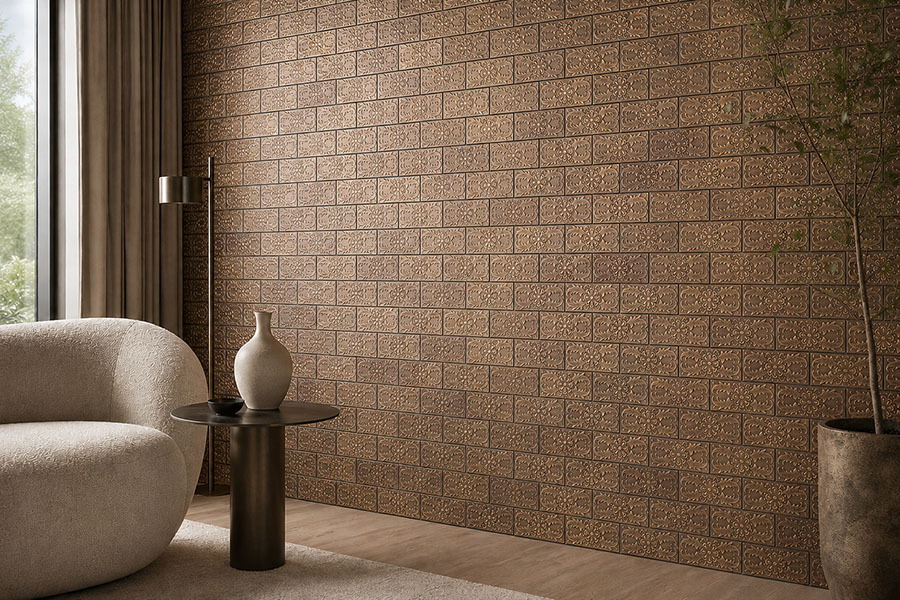
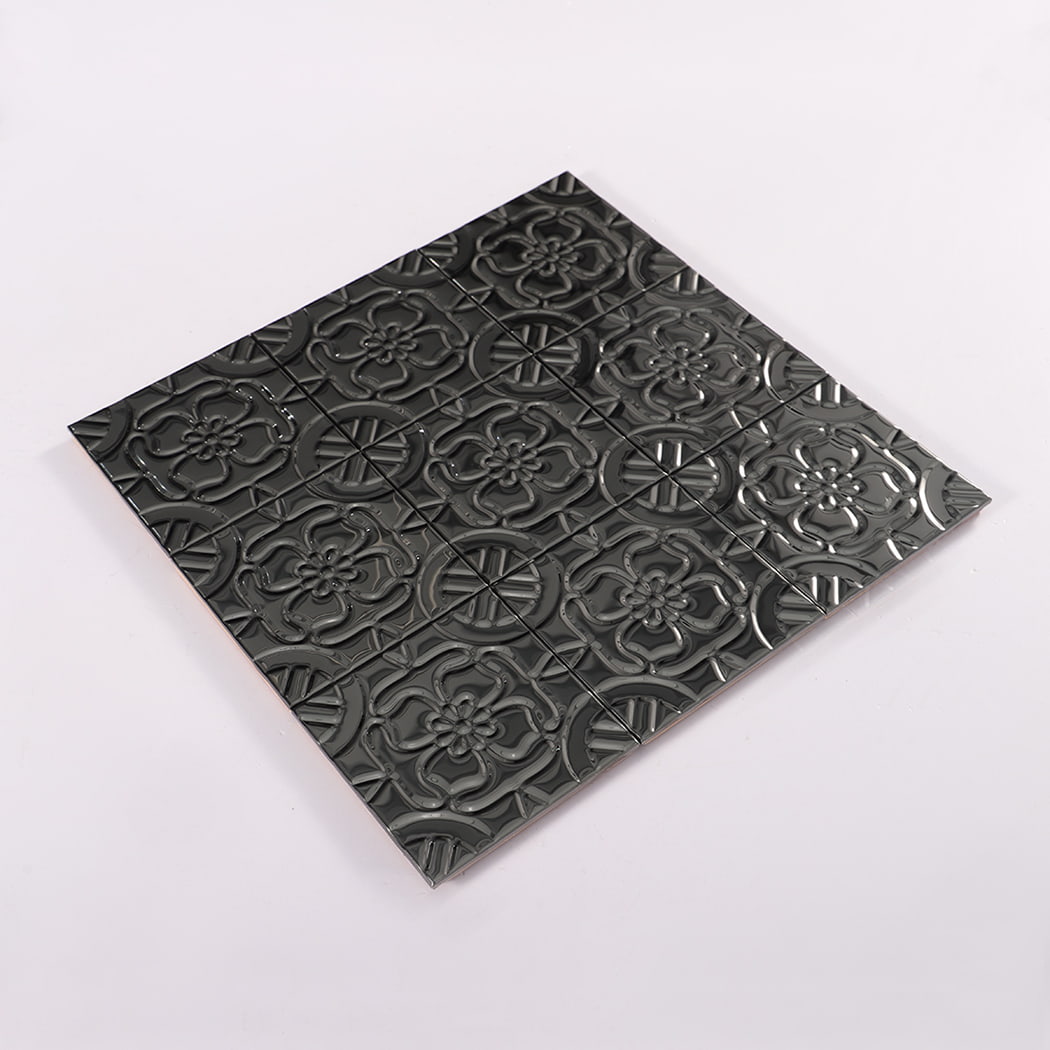
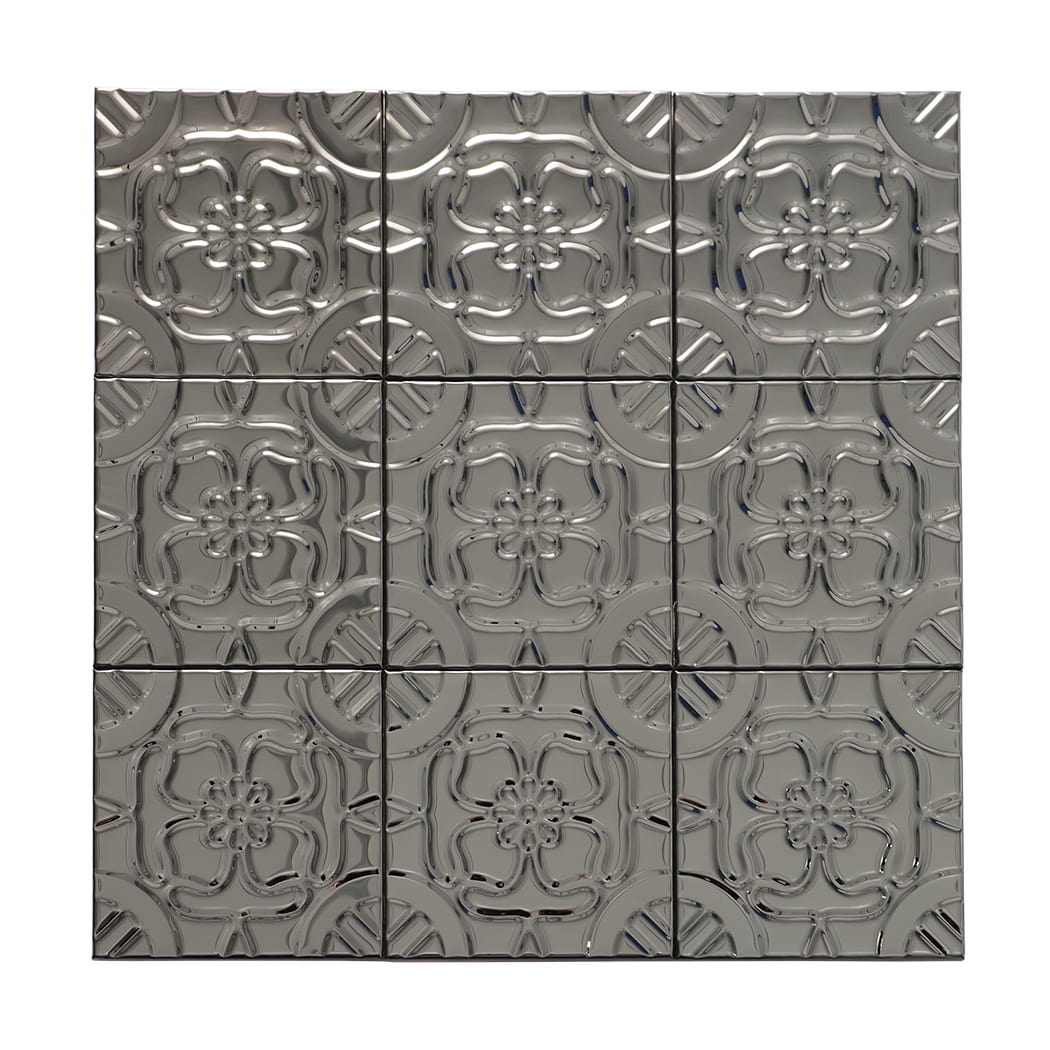
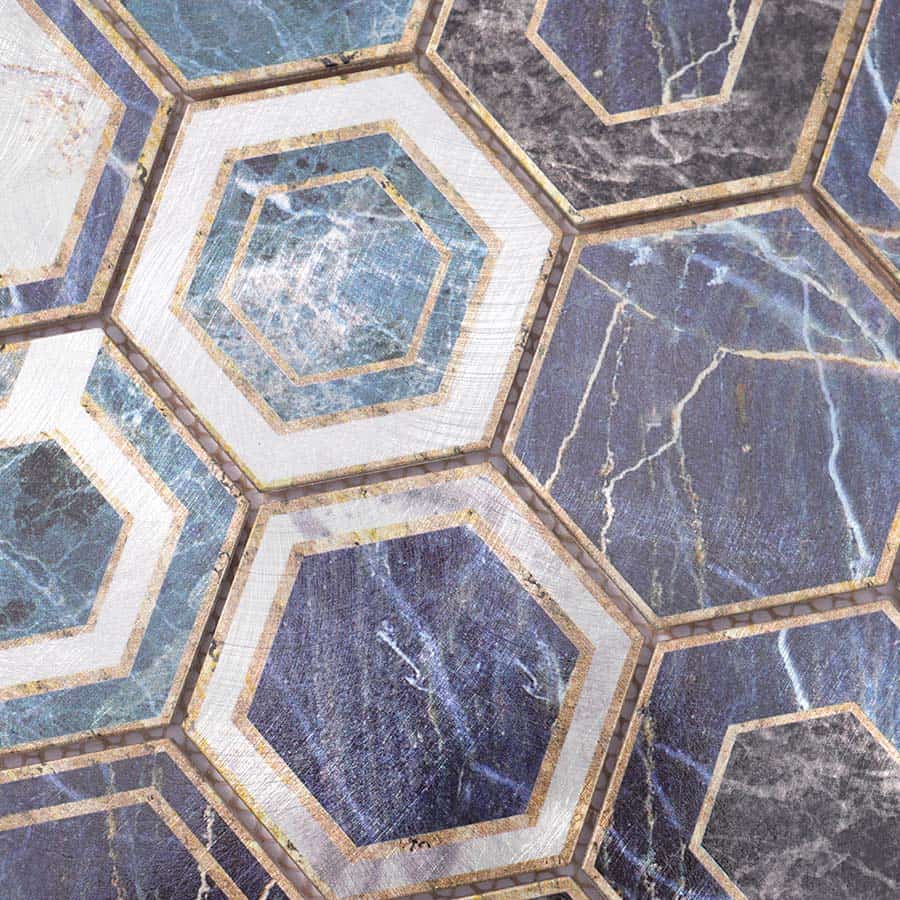
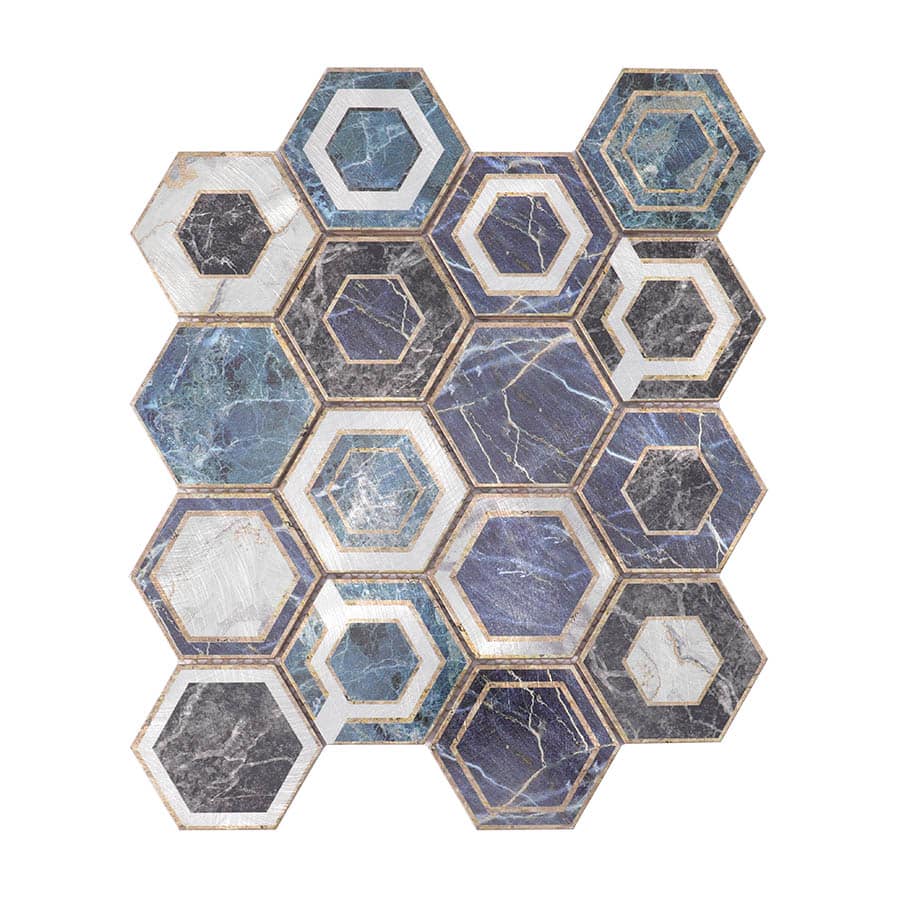
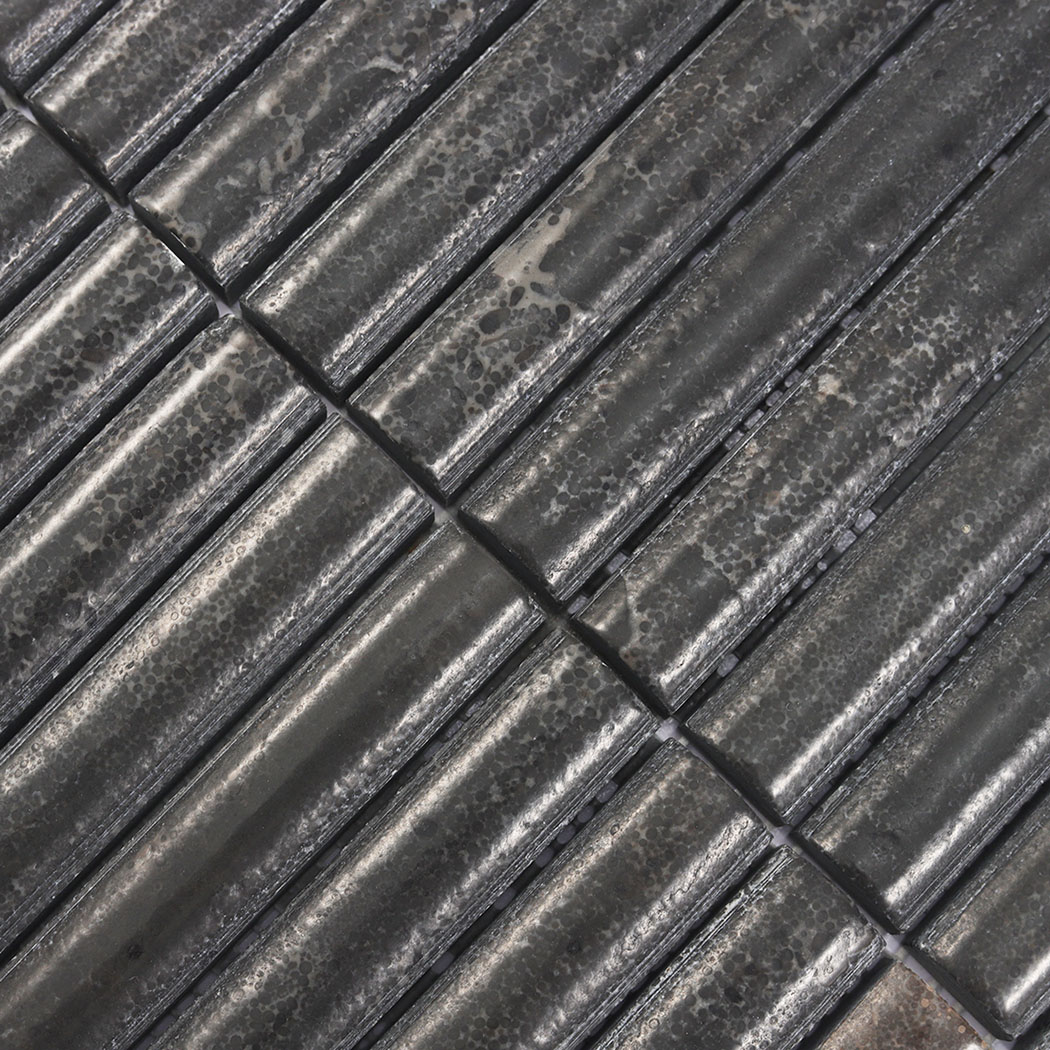
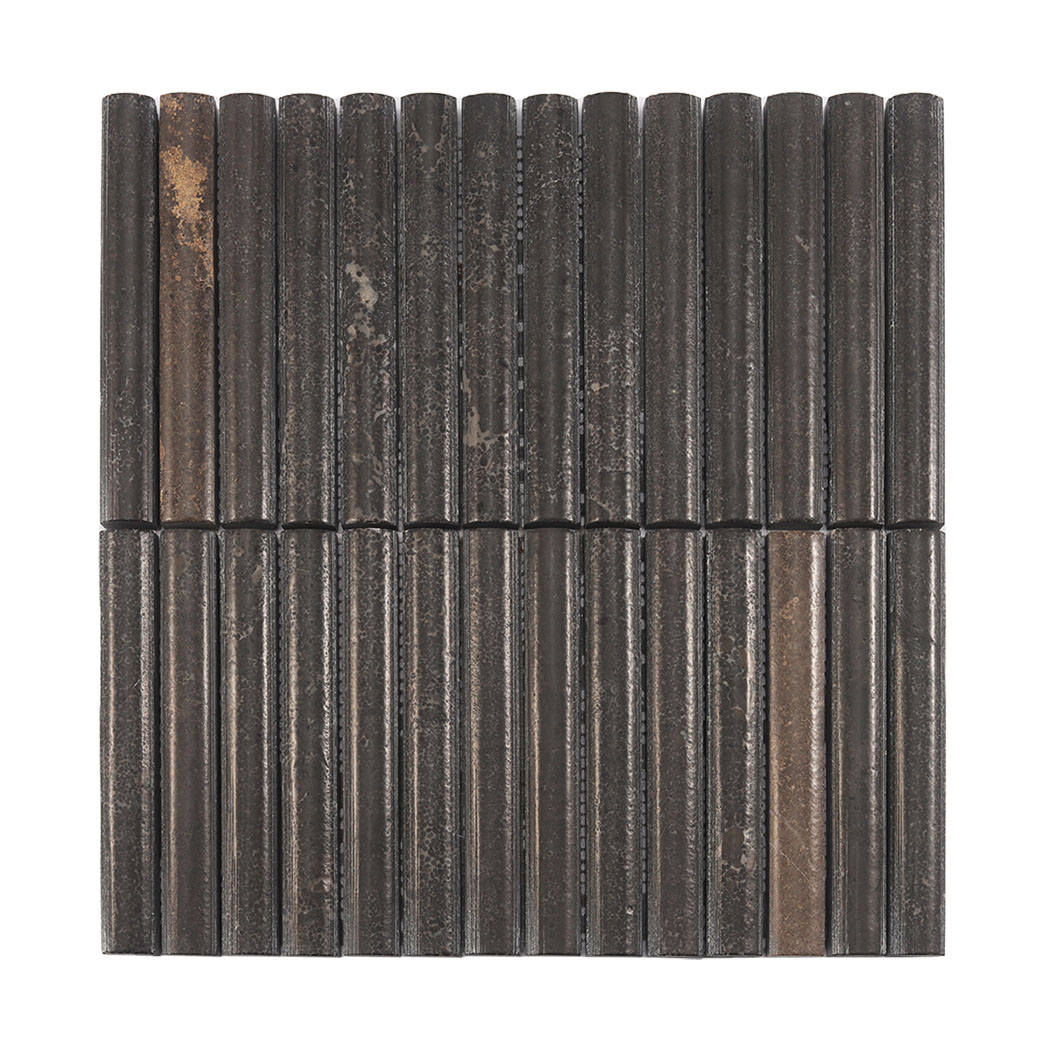

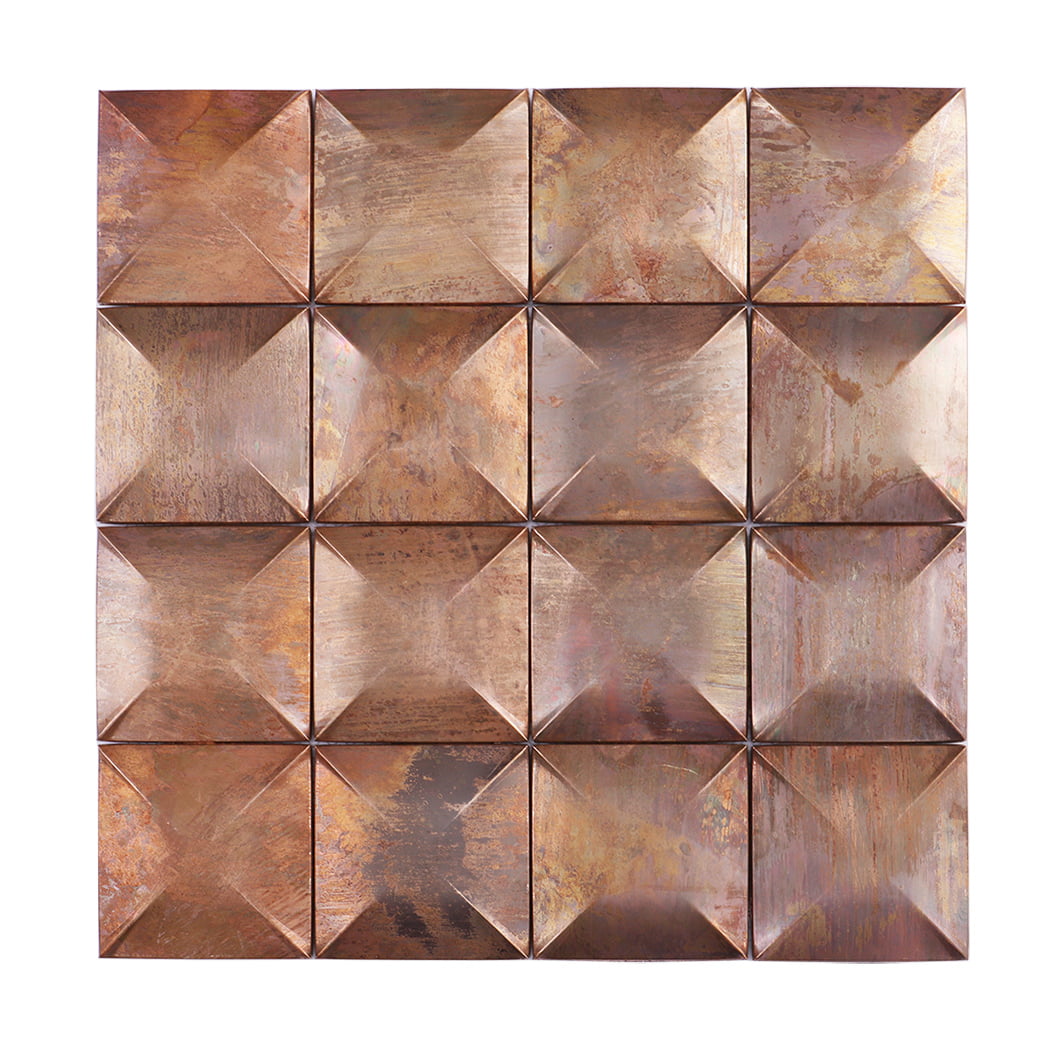
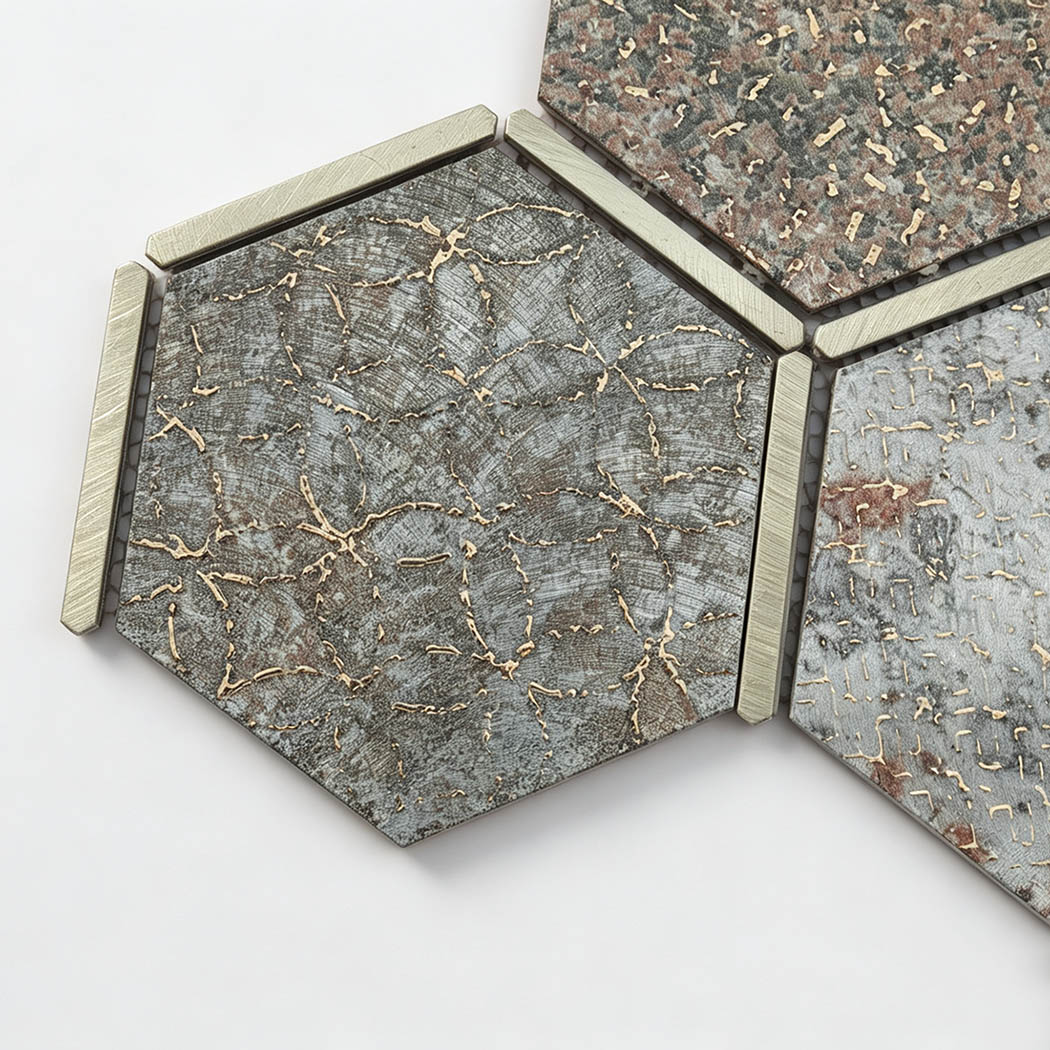
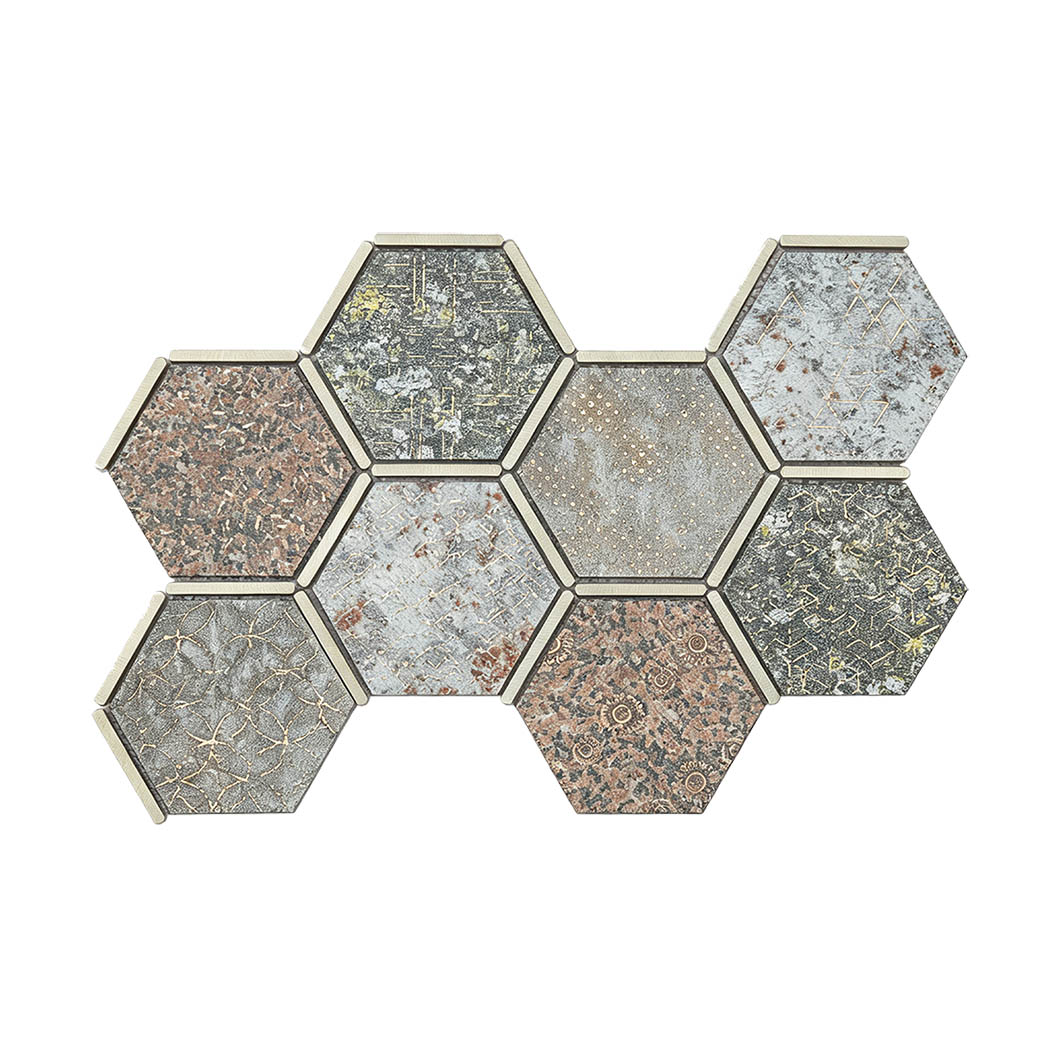
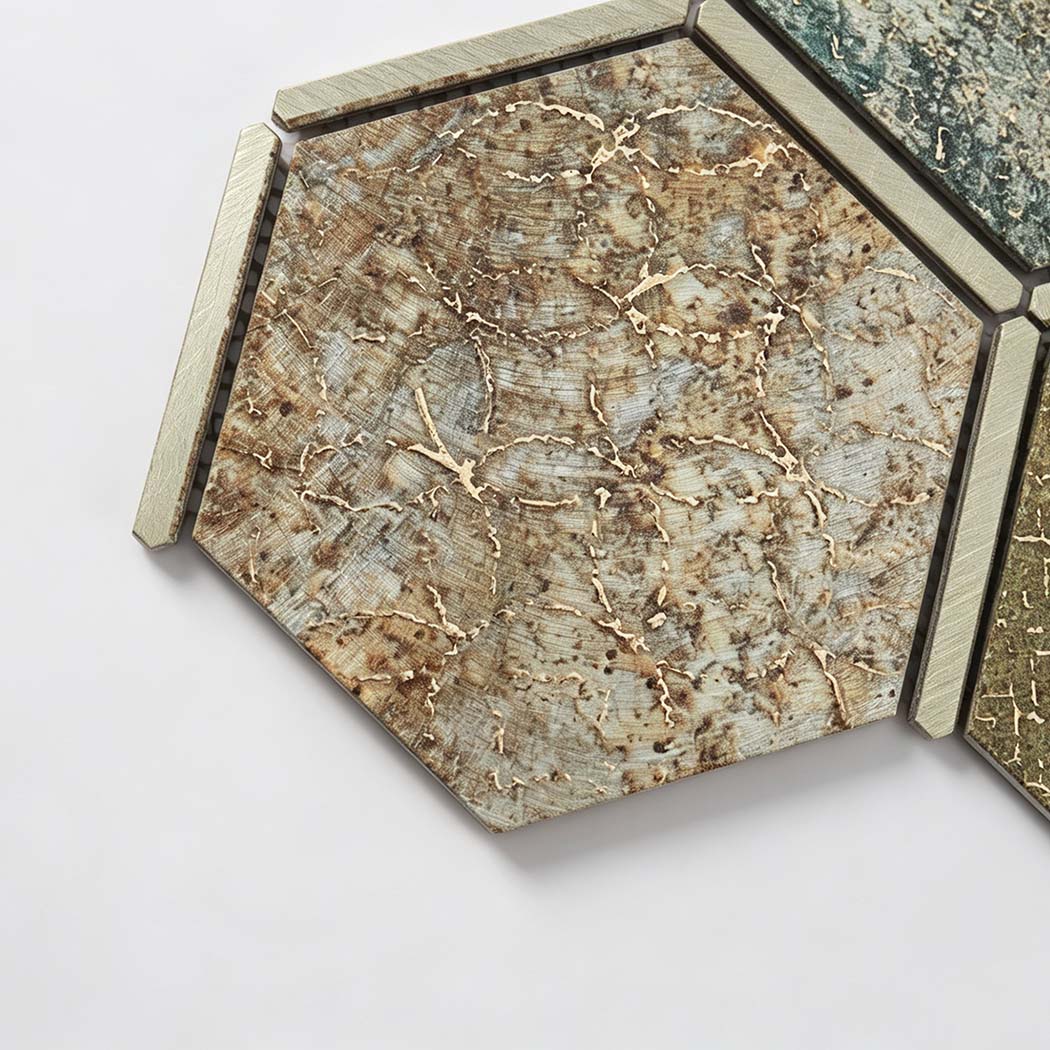
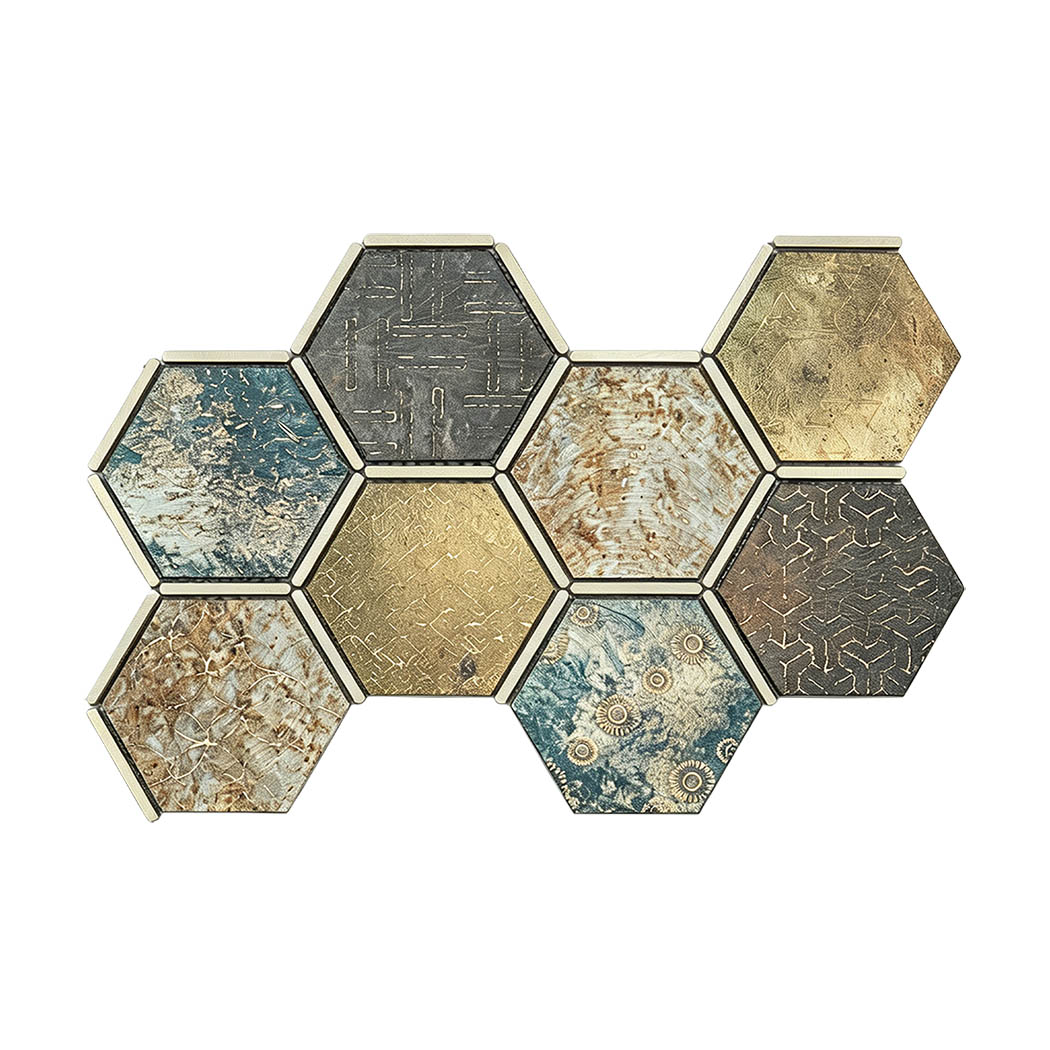
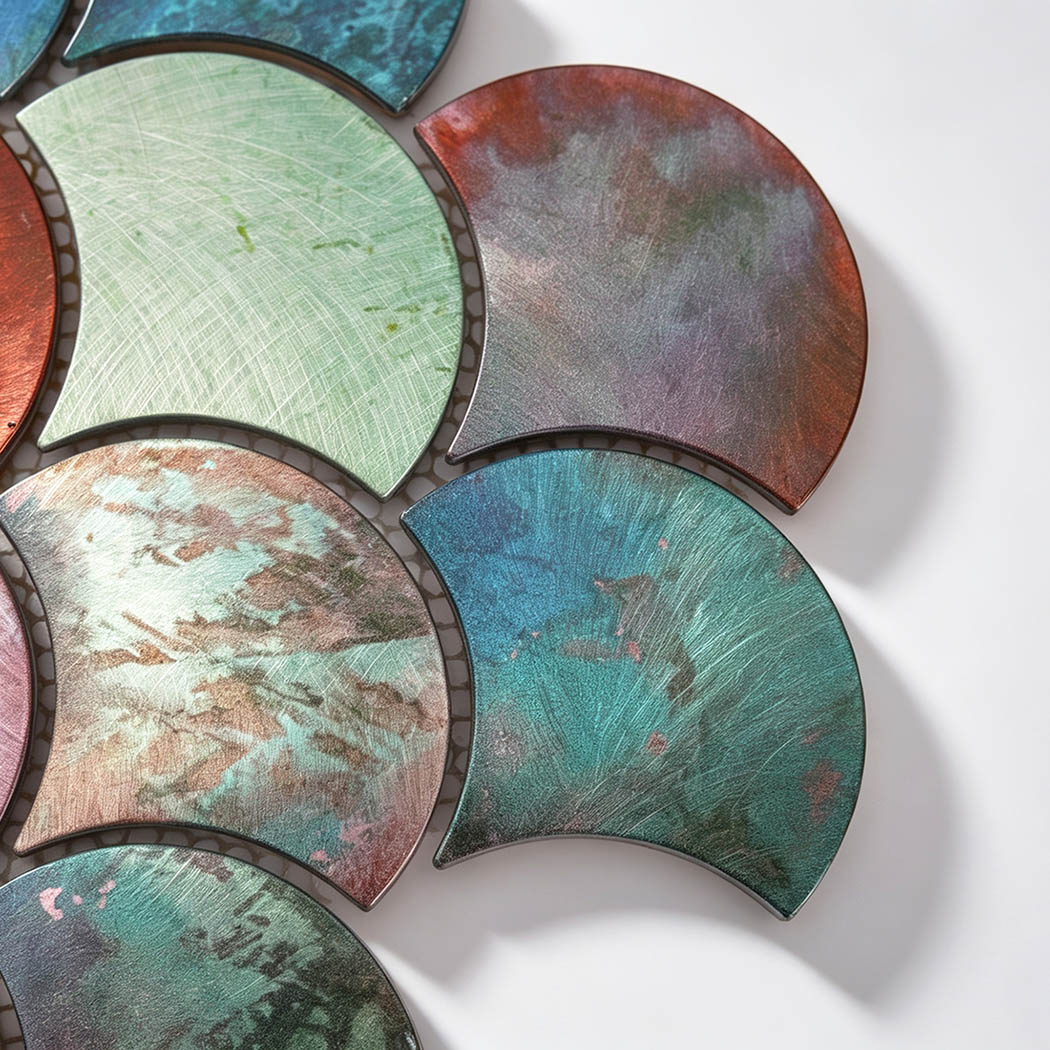

Retro wall tiles bring the color, texture and craftsmanship of earlier design eras into contemporary interiors. From softly aged glass mosaics and hand-patinated copper to tumbled natural stone and warm wood surfaces, the Saicina Tiles collection offers character-rich materials for kitchens, bathrooms, feature walls and commercial interiors.
Explore muted solid colors, geometric mosaics, decorative patterns, small-format shapes and custom-made designs. Each collection balances vintage visual character with the installation and performance requirements of modern projects.
What Are Retro Wall Tiles?
Retro wall tiles are newly produced wall coverings inspired by the colors, patterns, proportions and surface finishes associated with earlier design periods. Unlike reclaimed vintage tiles, they can be produced in coordinated quantities and specified for current residential or commercial projects.
The retro look may be expressed through:
-
Soft, low-saturation colors
-
Distressed, oxidized or tumbled surfaces
-
Penny rounds, squares, subway tiles and geometric mosaics
-
Floral, Art Deco and Mediterranean-inspired patterns
-
Visible tonal variation between individual pieces
-
Matte, frosted, iridescent, metallic or softly polished finishes
-
Irregular edges and details that suggest hand craftsmanship
Some designs make a bold historical statement, while others introduce only a subtle sense of age and warmth. This makes retro wall tiles suitable for traditional interiors as well as modern, minimalist and transitional spaces.
Explore Retro Wall Tiles by Style
Solid-Color Retro Wall Tiles
Solid-color tiles create a calm vintage backdrop without overwhelming the room. Cream, warm white, sage green, dusty blue, faded pink, ochre, earthy brown and vintage gray work especially well with timber cabinetry, natural stone, aged brass and painted furniture.
Choose subtle tonal variation when you want the wall to feel handmade. A more consistent color produces a cleaner mid-century or minimalist effect.
Geometric Retro Wall Tiles
Geometric tiles introduce rhythm and structure through repeated shapes. Popular options include:
-
Penny rounds
-
Squares and checkerboard patterns
-
Hexagons and octagons
-
Diamonds
-
Strips and stacked mosaics
-
Fish-scale and fan shapes
-
Basketweave patterns
-
Interlocking geometric designs
Small-format geometry is particularly effective on bathroom walls, kitchen backsplashes, bar fronts, fireplace surrounds and compact feature areas.
Decorative and Patterned Retro Tiles
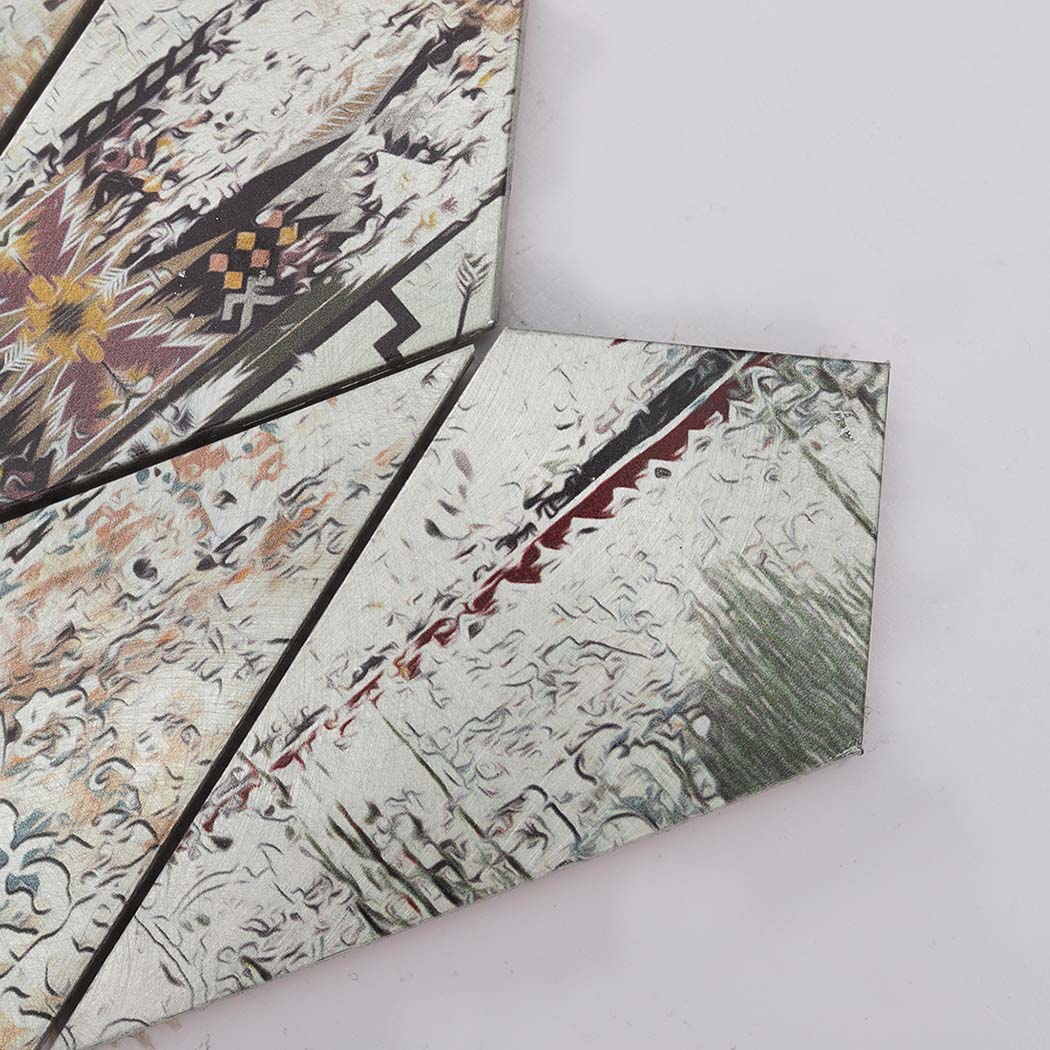
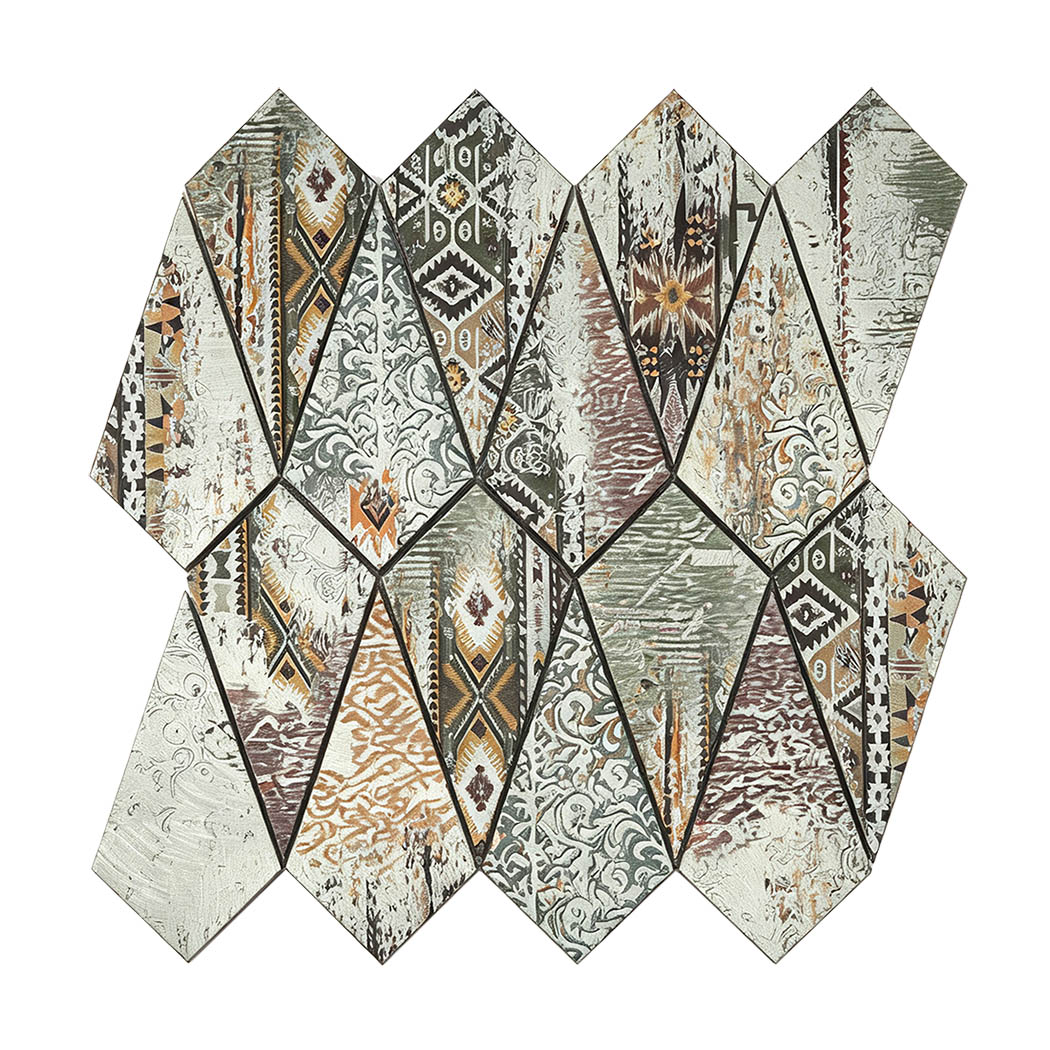
Decorative retro tiles use floral motifs, symmetrical linework, Mediterranean ornament, Art Deco geometry and old-world patterns to create a focal point.
Use them across an entire wall for an immersive interior, or combine them with quieter solid tiles as a framed panel, backsplash insert, niche lining or decorative border.
Retro Mosaic Wall Tiles
Small mosaic pieces create more grout lines and stronger visual texture than large-format wall tiles. They are useful for curved walls, columns, niches, detailed edges and areas where larger tiles would require extensive cutting.
Mesh-mounted and face-mounted formats can make complex patterns easier to install, but sheets should always be dry-laid first to confirm alignment and prevent visible sheet boundaries.
Textured and Three-Dimensional Wall Tiles
Fluted, embossed, beveled and relief-patterned tiles interact with light throughout the day. They can produce a refined retro effect even when used in a single color.
Textured surfaces are best placed where their shadows and contours remain visible, such as reception walls, fireplace surrounds, bar fronts and illuminated feature walls.
Retro Wall Tile Materials
Material affects appearance, installation, cleaning and application suitability. Always check the individual product specifications instead of assuming that every tile in the collection performs in the same way.
Retro Glass Wall Tiles
Saicina Tiles offers retro glass designs in vitreous glass, recycled glass, water-glass mosaics and stained glass.
Vitreous Glass
Vitreous glass has a dense appearance, saturated color and a refined glass surface. Depending on the finish, it can appear softly luminous, matte, glossy or iridescent.
Recycled Glass
Recycled glass can contain subtle tonal and textural variation that supports a softer, less industrial appearance. It is a suitable option for projects that value material reuse alongside decorative character.
Water Glass
Water-glass mosaics have a fluid, luminous appearance with gentle movement across the surface. Muted blues, greens, creams and smoky neutrals work especially well in bathrooms, spa-inspired interiors and artistic feature walls.
Stained Glass
Stained glass provides rich color in shades such as emerald green, amber, burgundy, cobalt blue and warm brown. It can be arranged as geometric mosaics, decorative patterns or fully customized artwork.
Glass tiles are generally easy to wipe clean, but suitability for showers, steam rooms, pools or exterior walls must be confirmed on the individual product page.
Antique Copper Wall Tiles
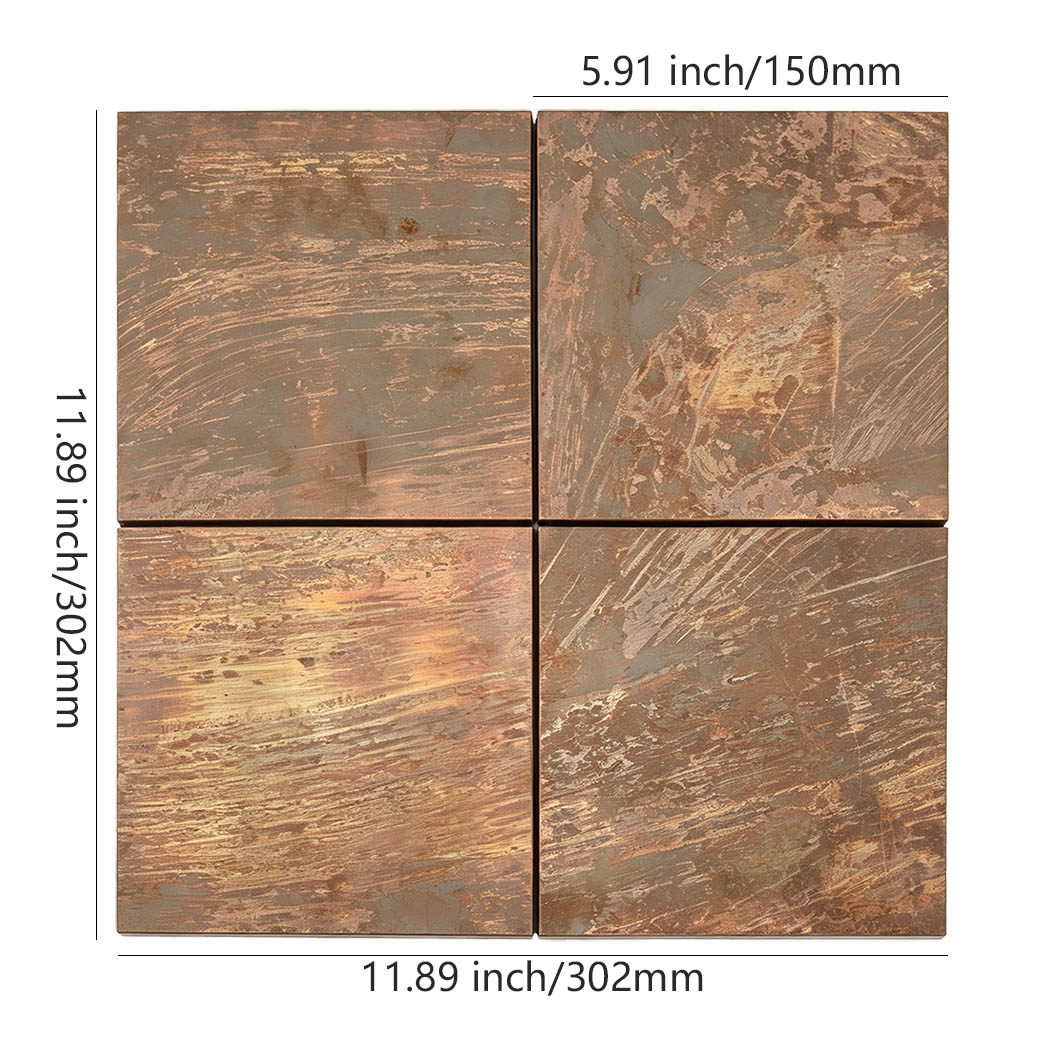
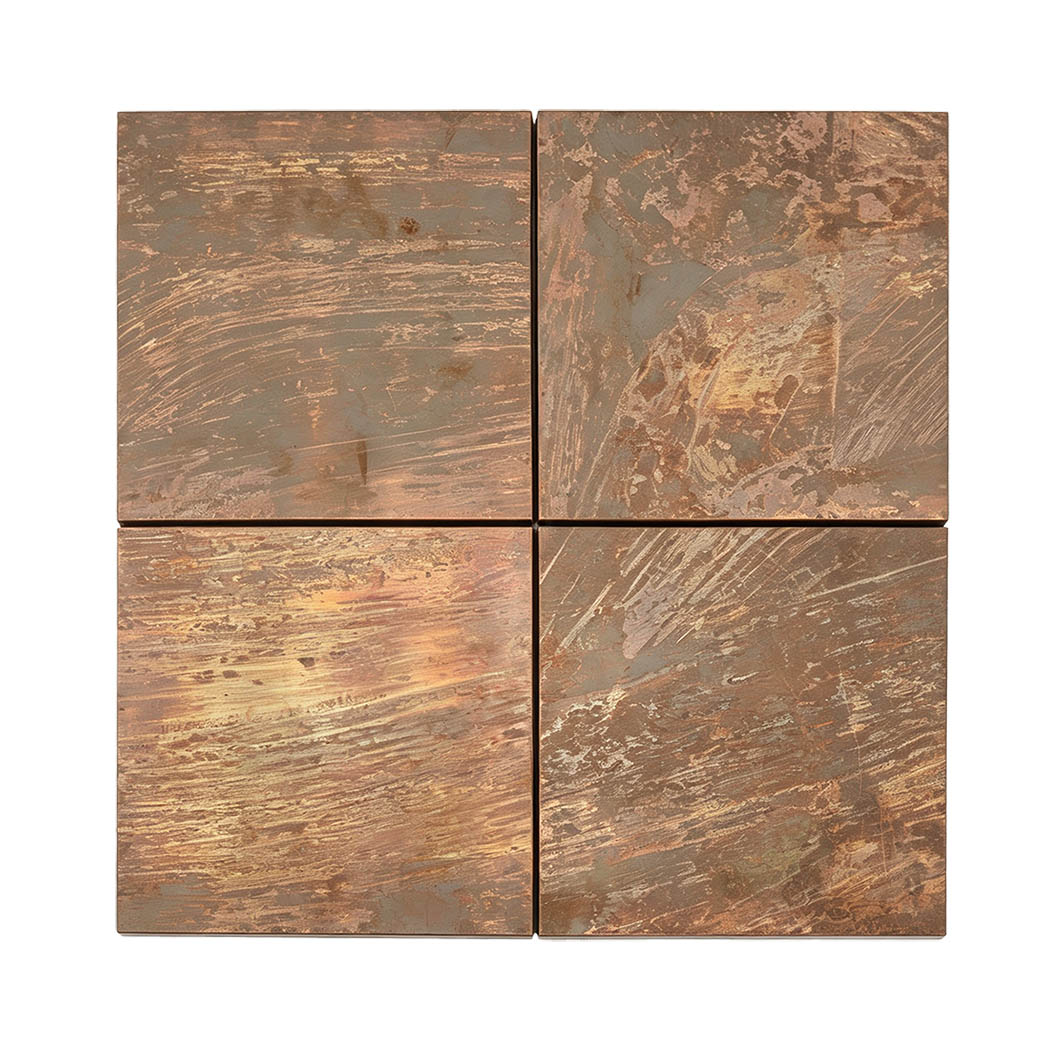
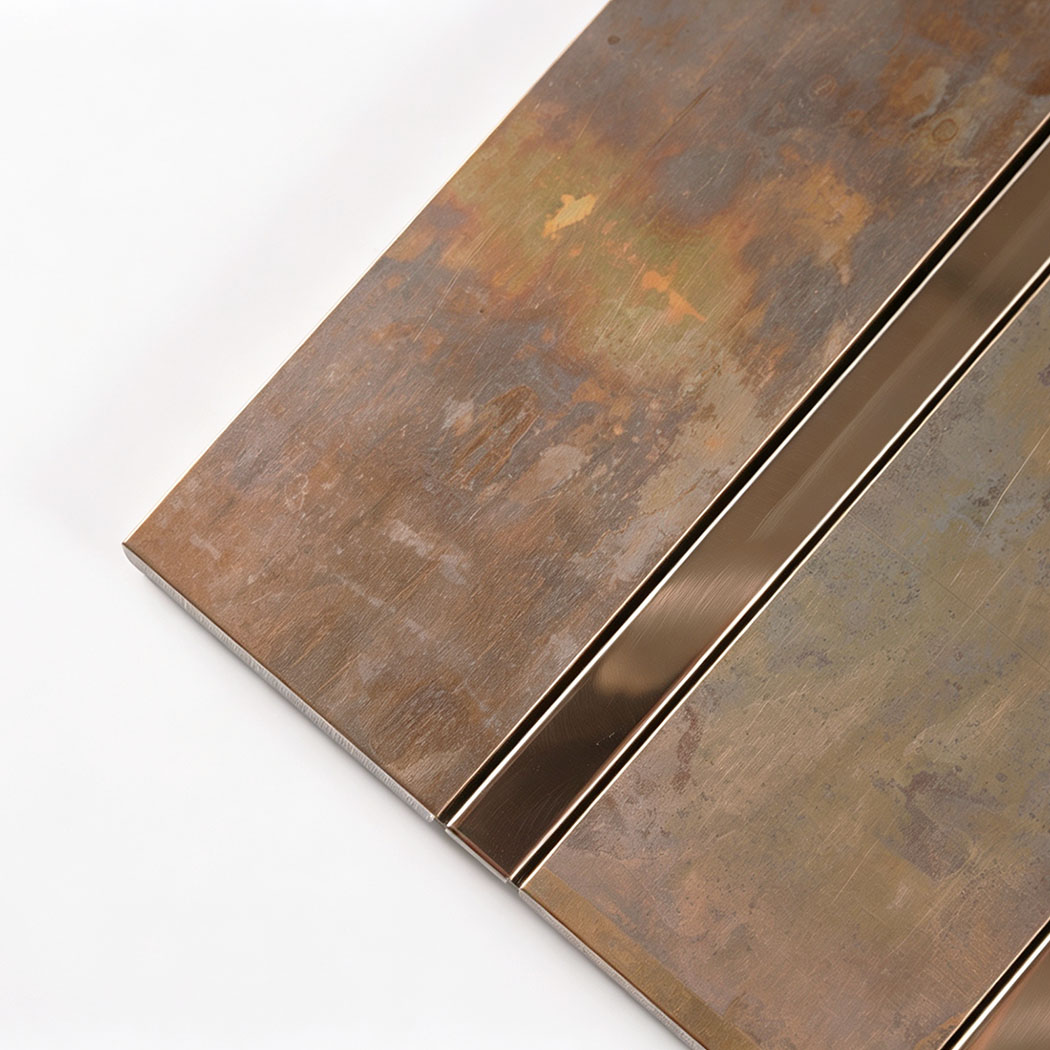
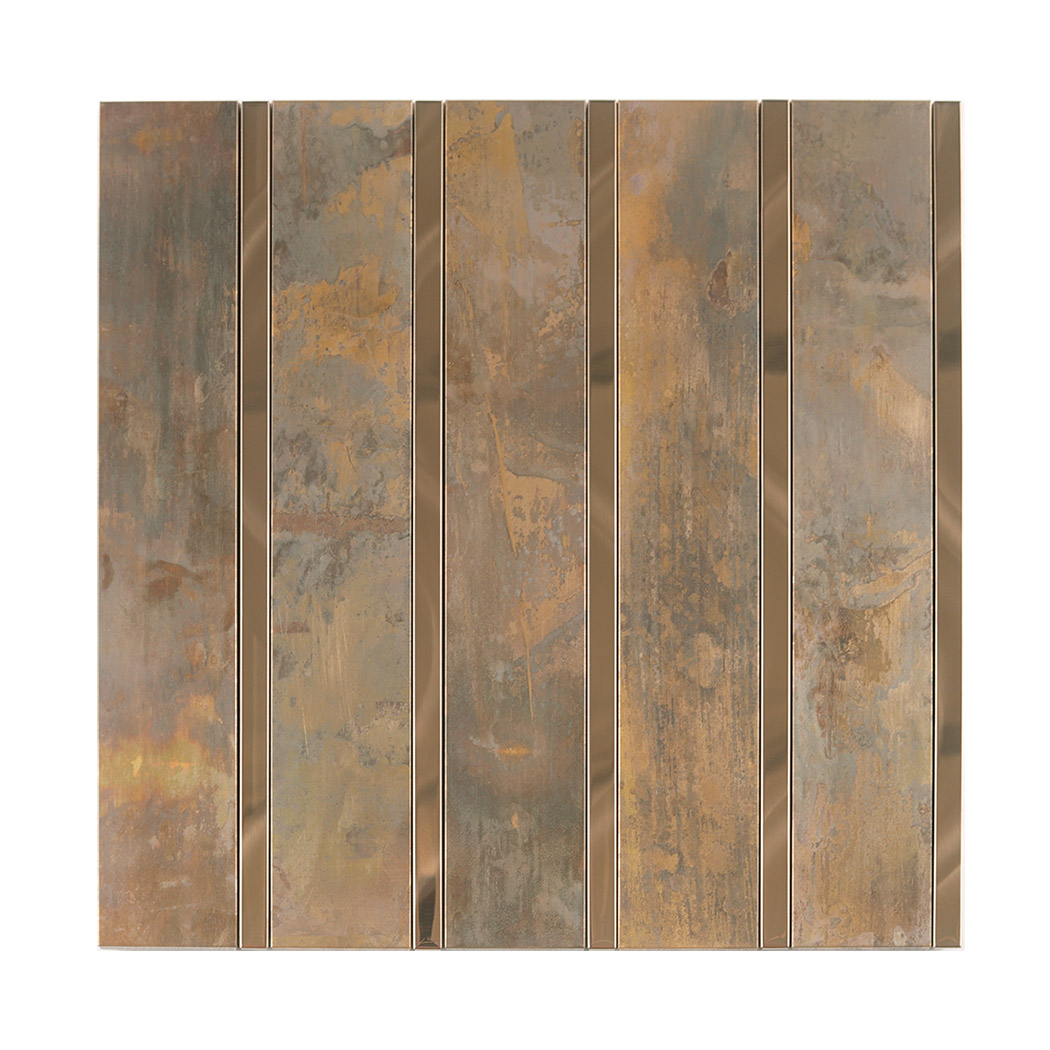
Saicina antique copper wall tiles are made from copper or copper-alloy surfaces and developed through controlled heating, oxidation, patination and hand finishing.
These processes create layered bronze, brown, black, gold, blue-green or burnt copper tones. Variation between pieces is intentional and gives the finished wall the depth of naturally aged metal.
Copper tiles work particularly well in:
-
Restaurant and bar interiors
-
Boutique retail walls
-
Hotel reception areas
-
Kitchen accent walls
-
Living-room feature walls
-
Industrial-style commercial spaces
-
Art and product display areas
Some copper finishes are sensitive to acidic, alkaline, abrasive or salt-based cleaners. Use only the recommended cleaning method and verify suitability before installing metal tile in a wet area, behind a cooktop or around a fireplace.
Natural Stone Retro Wall Tiles
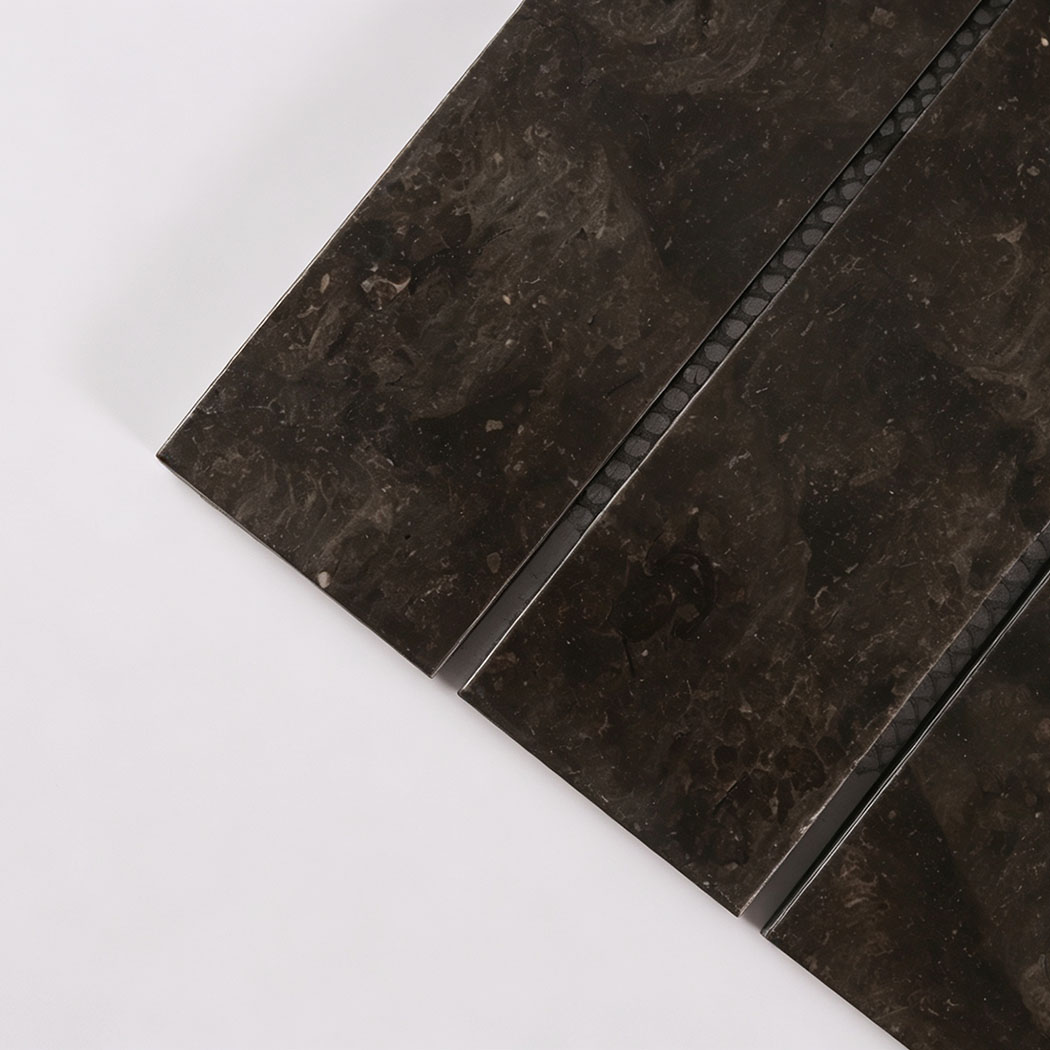
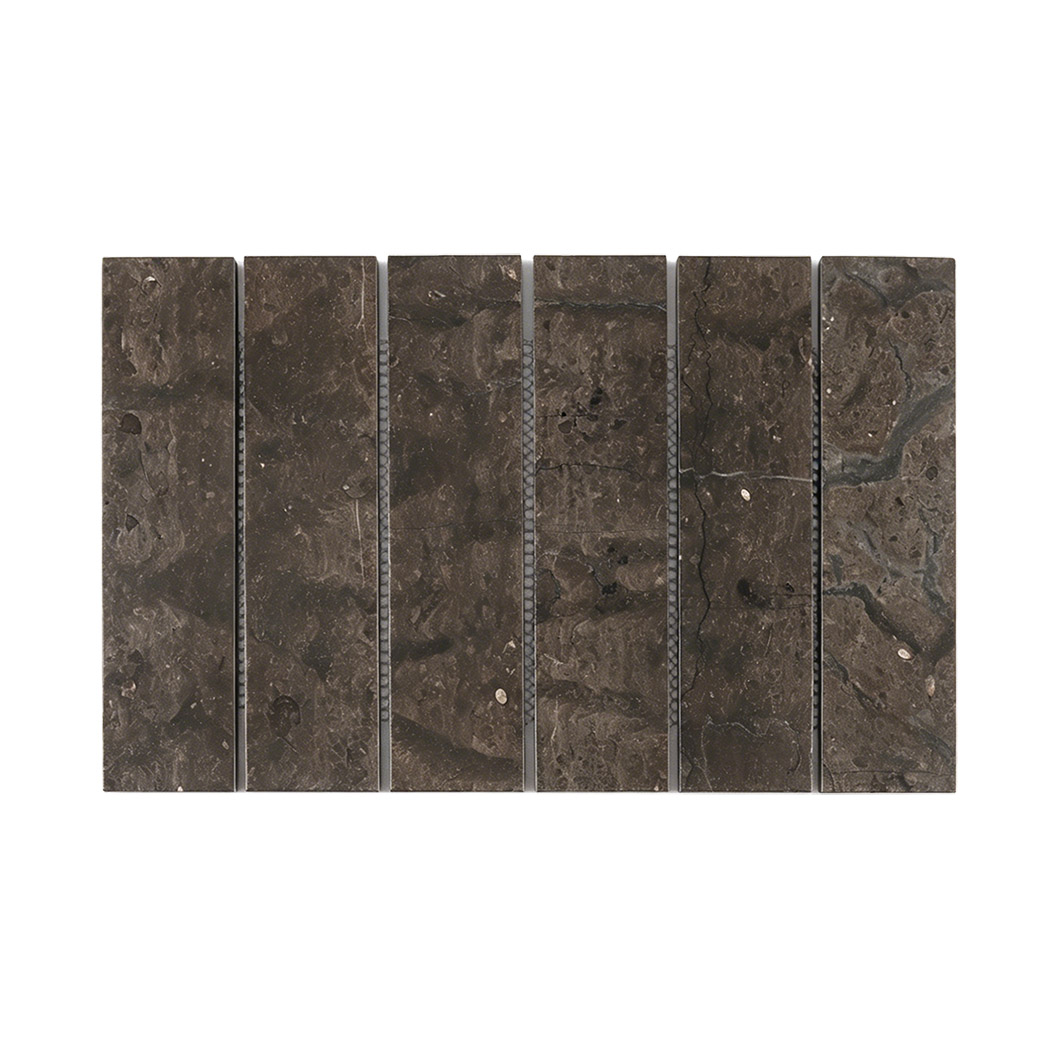
Our natural stone collection includes marble, travertine and limestone. Each material contains naturally formed veining, pores, mineral marks and tonal variation.
Marble
Marble introduces elegant veining and layered color. Tumbled, honed or hand-cut marble can create a softer vintage appearance than highly polished stone.
Travertine
Travertine is recognized for its natural pores, warm neutral colors and architectural character. Tumbled edges and unfilled textures are especially effective in Mediterranean, farmhouse and old-world interiors.
Limestone
Limestone offers a quieter surface with soft fossil markings and warm, understated color. It suits minimalist vintage spaces, hospitality interiors and large feature walls.
Natural stone may require sealing before grouting and periodic resealing after installation. Acidic cleaners can damage calcium-based stones such as marble, travertine and limestone.
Natural Wood Retro Wall Tiles
Natural wood wall tiles retain real grain, knots and tonal movement. Brushed, carbonized, distressed or reclaimed-look finishes can add warmth to bedrooms, dining rooms, tea rooms, boutique hotels and dry commercial interiors.
Natural wood should generally be reserved for dry interior walls unless the product has been specifically engineered and rated for another environment. It should not automatically be specified for shower walls, wet backsplashes or fireplace surrounds.
Popular Shapes and Layouts
Subway and Brick Tiles
Subway tiles are one of the easiest ways to introduce vintage style. Use a traditional horizontal running bond for a familiar look, a vertical stack for a cleaner contemporary result, or herringbone for more movement.
Penny Round Tiles
Penny rounds recall early bathroom mosaics and mid-century interiors. A matching grout softens the pattern, while contrasting grout emphasizes every circle.
Square Tiles
Small squares can create checkerboards, borders, pixel-style patterns and color-blocked walls. Soft blue, green, cream, brown and pink squares are particularly effective in retro kitchens and bathrooms.
Hexagon and Octagon Tiles
Hexagons and octagons create a classic geometric surface without relying on printed decoration. Black-and-white combinations feel traditional, while warm neutral or mixed-color layouts feel more relaxed and contemporary.
Strips, Kit Kat and Fluted Tiles
Narrow strip mosaics and three-dimensional fluted tiles make walls appear taller when installed vertically. Horizontal installation visually widens a backsplash, bar front or feature wall.
Irregular and Hand-Cut Mosaics
Irregular stone, glass or metal mosaics create an artisanal finish. Their natural variation works well in old-world, rustic, wabi-sabi and organic modern interiors.
Retro Tile Styles by Design Era
Art Deco-Inspired Tiles
Art Deco interiors favor symmetry, repeated geometry, dark colors, metallic accents and refined contrast. Consider black glass, antique copper, fan shapes, diamonds and geometric borders.
1950s-Inspired Wall Tiles
For a 1950s influence, use compact squares, penny rounds and simple geometry in black, white, pale blue, pink, mint or warm neutral shades. Pair them with clean cabinetry and restrained fixtures to prevent the room from feeling overly themed.
1960s-Inspired Tiles
1960s-inspired designs use optical patterns, interlocking shapes and stronger color contrast. They are effective on kitchen backsplashes, powder-room walls and commercial feature areas.
1970s-Inspired Wall Tiles
Earthy brown, burnt orange, avocado green, ochre, terracotta and amber glass recall the warmer palettes of the 1970s. Pair these colors with wood, aged brass and warm lighting.
European and Mediterranean Vintage Style
Tumbled stone, decorative florals, faded blue-and-white patterns and irregular edges can suggest the character of older European and Mediterranean interiors. These materials work well in farmhouse kitchens, wine bars, restaurants and boutique hotels.
Choosing Retro Wall Tiles by Color and Finish
Muted Neutral Colors
Cream, beige, taupe, limestone gray and warm white create an understated background. They are suitable for full-wall installation and smaller rooms where bold patterns may feel too intense.
Green and Blue
Sage, olive, teal, dusty blue and cobalt can bring historical character without making the space feel dated. Pair them with warm timber, white plaster, marble or antique brass.
Brown, Copper and Terracotta
Earth tones create warmth and work naturally with metal, travertine and wood. They are especially effective in restaurants, fireplaces, cafés and hospitality interiors.
Matte and Frosted Finishes
Matte surfaces diffuse light and make color feel softer. They support rustic, farmhouse, mid-century and minimalist retro interiors.
Glossy and Iridescent Finishes
Glossy glass reflects light and can make a compact backsplash or bathroom feel more open. Iridescent finishes introduce subtle color shifts, but should be balanced with simpler surrounding materials.
Patinated and Distressed Finishes
Patinated copper, tumbled stone and aged-looking glass create visible variation. These finishes should be previewed through physical samples because screen images cannot fully represent their color movement or reflectivity.
Where to Use Retro Wall Tiles
Retro Kitchen Wall Tiles
A retro backsplash can transform a kitchen without requiring a complete renovation. Subway tiles, penny rounds, patterned glass and small geometric mosaics are practical choices for areas between countertops and cabinets.
Before choosing a material, confirm resistance to water, grease, heat and the cleaning products used in the kitchen. Copper and natural stone require more careful maintenance than many glass surfaces.
Retro Bathroom Wall Tiles
Retro bathroom wall tiles can be used behind a vanity, around a bathtub, inside a niche or across a full feature wall. Penny rounds, muted glass mosaics and small geometric patterns create a strong vintage reference.
For shower installations, confirm that the selected tile, adhesive, grout and waterproofing system are approved for continuous wet use.
Fireplace Surrounds
Copper, stone and glass can create striking fireplace surrounds, but visual suitability does not automatically mean heat suitability. Check the product’s temperature limitations, maintain the clearances required by the fireplace manufacturer and use noncombustible installation materials where required.
Natural wood tiles should not be installed close to a heat source unless the complete wall system has been specifically approved for that application.
Living and Dining Areas
Use retro wall tiles behind shelving, around a fireplace, on a dining-room feature wall or as a decorative panel. Textured stone, wood, antique copper and relief mosaics can add architectural depth to otherwise simple rooms.
Commercial Interiors
Retro tiles can give cafés, restaurants, bars, hotels, boutiques and salons a memorable visual identity. For commercial projects, consider cleaning frequency, lighting, edge protection, fire requirements and access to replacement material before confirming the specification.
Material Suitability Guide
| Material | Dry Interior Wall | Kitchen Backsplash | Shower Wall | Fireplace Surround |
|---|---|---|---|---|
| Glass | Yes | Usually suitable | Only when product-rated | Only when product-rated |
| Antique copper | Yes | Confirm finish and care | Usually not recommended | Only when heat-rated |
| Marble | Yes | Suitable with proper care | Product-dependent; sealing may be required | Product-dependent |
| Travertine | Yes | Suitable when sealed | Product-dependent; sealing required | Product-dependent |
| Limestone | Yes | Suitable with proper sealing | Product-dependent | Product-dependent |
| Natural wood | Yes, in dry areas | Usually not recommended | No | No, unless specifically approved |
Always follow the individual product specification and local building requirements.
How to Select the Right Retro Wall Tile
Confirm the Application First
Decide whether the tile will be used on a dry wall, backsplash, shower wall, steam-room wall, exterior wall or fireplace. This will immediately narrow the suitable materials.
Consider Tile Scale
Small mosaics add detail and adapt to curves, niches and irregular surfaces. Larger formats create fewer grout lines and a calmer wall. In compact rooms, a small repeat can add character without dominating the space.
Review Natural Variation
Copper, stone, wood and handmade glass may vary from piece to piece. Order a sample and review several pieces together instead of evaluating one tile in isolation.
Choose Grout Carefully
-
Matching grout creates a quieter, more continuous surface.
-
Contrasting grout emphasizes individual shapes and patterns.
-
Dark grout gives penny rounds and geometric mosaics stronger definition.
-
Light grout brightens the wall but can require more frequent cleaning.
-
Test grout on a spare tile before installation, especially with porous stone or textured metal.
Coordinate Edge Details
Confirm how exposed edges, corners and transitions will be finished. Depending on the design, options may include matching trim, bullnose pieces, metal profiles, stone edging or mitered corners.
Measuring and Ordering
Measure the full height and width of each tiled section and calculate the total surface area. Include separate wall sections, niches and returns.
Add extra material for cutting, breakage, pattern alignment and future repairs:
-
Approximately 10% for simple straight layouts
-
Approximately 15% for mosaics or installations with several corners
-
Approximately 15–20% for herringbone, diagonal layouts or complex patterns
Natural variation can make later batch matching difficult, so order the full project quantity at the same time whenever possible.
Installation Recommendations
Order Samples
Review the material under the project’s actual natural and artificial lighting. Glass, metal and iridescent finishes can look different depending on the viewing angle.
Create a Dry Layout
Arrange several sheets or tiles before installation. Blend tonal variation across the wall and check the alignment of repeating patterns.
Prepare the Substrate
The wall should be clean, flat, stable and suitable for the installation environment. Wet areas require a complete waterproofing system behind the tile.
Use the Correct Adhesive
Adhesive selection depends on the tile material, backing, substrate and application. Glass, stone, metal and wood should not automatically be installed with the same adhesive. Follow the tile and setting-material manufacturers’ recommendations.
Test Grout and Sealer
Porous stone may need to be sealed before grouting. Textured metal and handmade surfaces should be tested to ensure that grout residue can be removed without damaging the finish.
Inspect Before Installation
Variation is part of many retro collections, but damaged or incorrect pieces should be identified before they are permanently installed. Installation is normally considered acceptance of the material.
Cleaning and Maintenance
Glass Tiles
Use a soft cloth or nonabrasive sponge with clean water or a pH-neutral cleaner. Avoid abrasive pads that may scratch special finishes.
Copper and Metal Tiles
Remove dust with a soft cloth. Use only the cleaning products approved for the specific finish. Avoid acidic cleaners, alkaline chemicals, bleach, abrasive powders and metal brushes unless the product instructions state otherwise.
Natural Stone Tiles
Use a pH-neutral stone cleaner. Do not use vinegar, lemon-based products or acidic bathroom cleaners on marble, travertine or limestone. Reseal the stone when water no longer beads on the surface.
Natural Wood Tiles
Dust regularly and wipe only as recommended for the finish. Avoid soaking the surface or allowing water to remain in joints and edges.
Custom Retro Wall Tiles by Saicina Tiles
Saicina Tiles develops custom mosaic and decorative wall-tile solutions for residential, hospitality and commercial projects.
Customization options may include:
-
Tile size and shape
-
Glass, copper, natural stone or wood material
-
Color combinations
-
Matte, glossy, iridescent, tumbled or patinated finishes
-
Geometric and decorative patterns
-
Sheet-mounted layouts
-
Custom borders and feature panels
-
Handmade mosaic murals
-
Project-specific dimensions
Contact our team with your wall dimensions, preferred material, reference images, delivery location and estimated quantity. We can help review material suitability and prepare an appropriate sample or quotation.
Why Choose Saicina Tiles?
-
Extensive experience in custom mosaics and decorative wall materials
-
Glass, metal, natural stone and wood options in one collection
-
Small-format, irregular, geometric and three-dimensional designs
-
Custom color, size, pattern and surface development
-
Sample support before full production
-
Solutions for residential, hospitality and commercial projects
-
Special packaging based on order quantity and material
-
International shipping options
Explore the Saicina Tiles retro wall tile collection or contact us to discuss a custom wall design.
Frequently Asked Questions
What is the difference between retro wall tiles and genuine vintage tiles?
Retro wall tiles are newly manufactured products inspired by historical colors, shapes and finishes. Genuine vintage tiles were produced in an earlier period and may have limited quantities, discontinued trims or signs of age.
Can retro tiles work in a modern interior?
Yes. Use one vintage-inspired color, pattern or texture as the focal point and keep cabinetry, furniture and lighting more restrained. This balance adds character without making the room feel themed.
Are all retro wall tiles suitable for showers?
No. Shower suitability depends on the material, backing, water absorption, adhesive and installation system. Check the individual product specifications before ordering.
Can wall tiles be installed on the floor?
Only if the product is specifically rated for floor use. Wall tiles may not have the strength, wear resistance or slip performance required for flooring.
Which retro wall tiles are easiest to clean?
Smooth glass surfaces are generally easy to wipe clean. Textured stone, patinated copper and natural wood require more material-specific care.
Do natural stone tiles need sealing?
Many marble, limestone and travertine products benefit from sealing before grouting and after installation. The exact requirement depends on the stone and surface finish.
Will copper tiles change color over time?
Some unsealed copper surfaces continue to develop a natural patina. Coated products may retain their original appearance longer. Check the finish description before ordering.
What grout color should I use?
Matching grout creates a subtle, continuous surface. Contrasting grout makes penny rounds, squares, hexagons and geometric patterns more prominent. Always test the combination first.
How much extra tile should I order?
Allow approximately 10–15% extra for most wall projects. Complex patterns, diagonal layouts, multiple corners and fragile materials may require 15–20%.
Can Saicina Tiles customize a retro wall-tile design?
Yes. Depending on the material and project, we can customize shapes, sizes, colors, finishes, layouts, decorative panels and handmade mosaic murals.
Should I order a sample before purchasing?
Yes. A physical sample is the best way to evaluate color, scale, texture, reflectivity and natural variation under the lighting used in your project.