
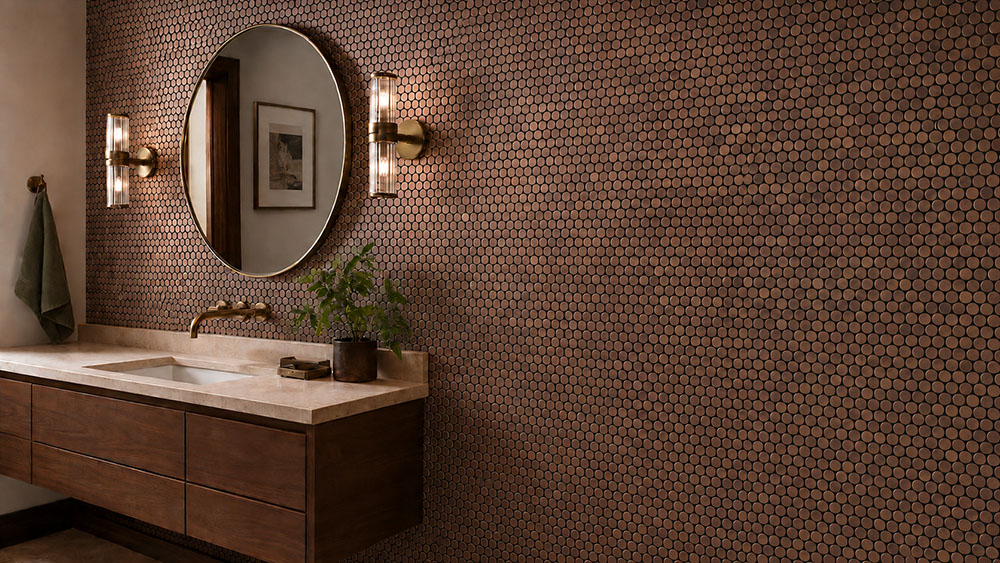
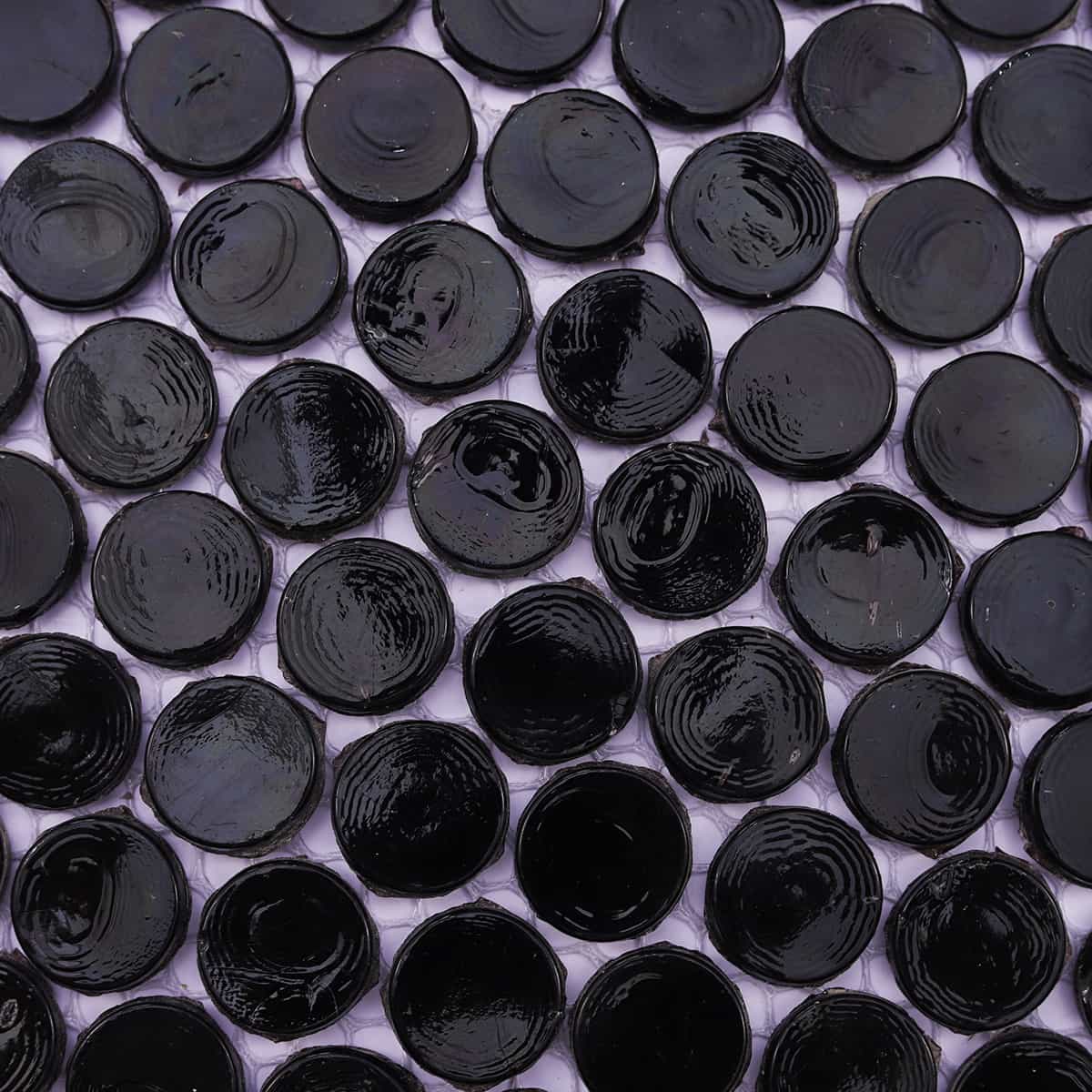
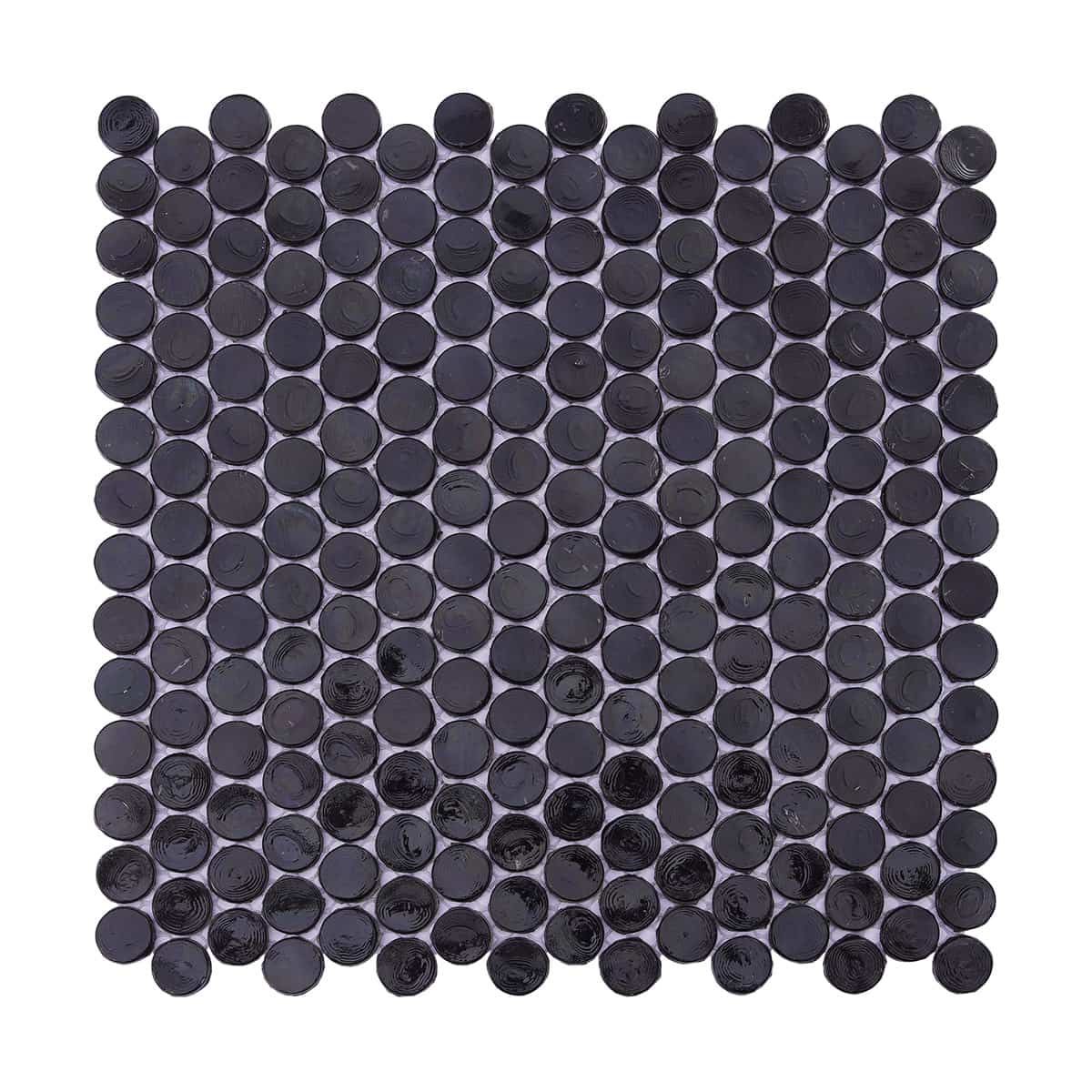
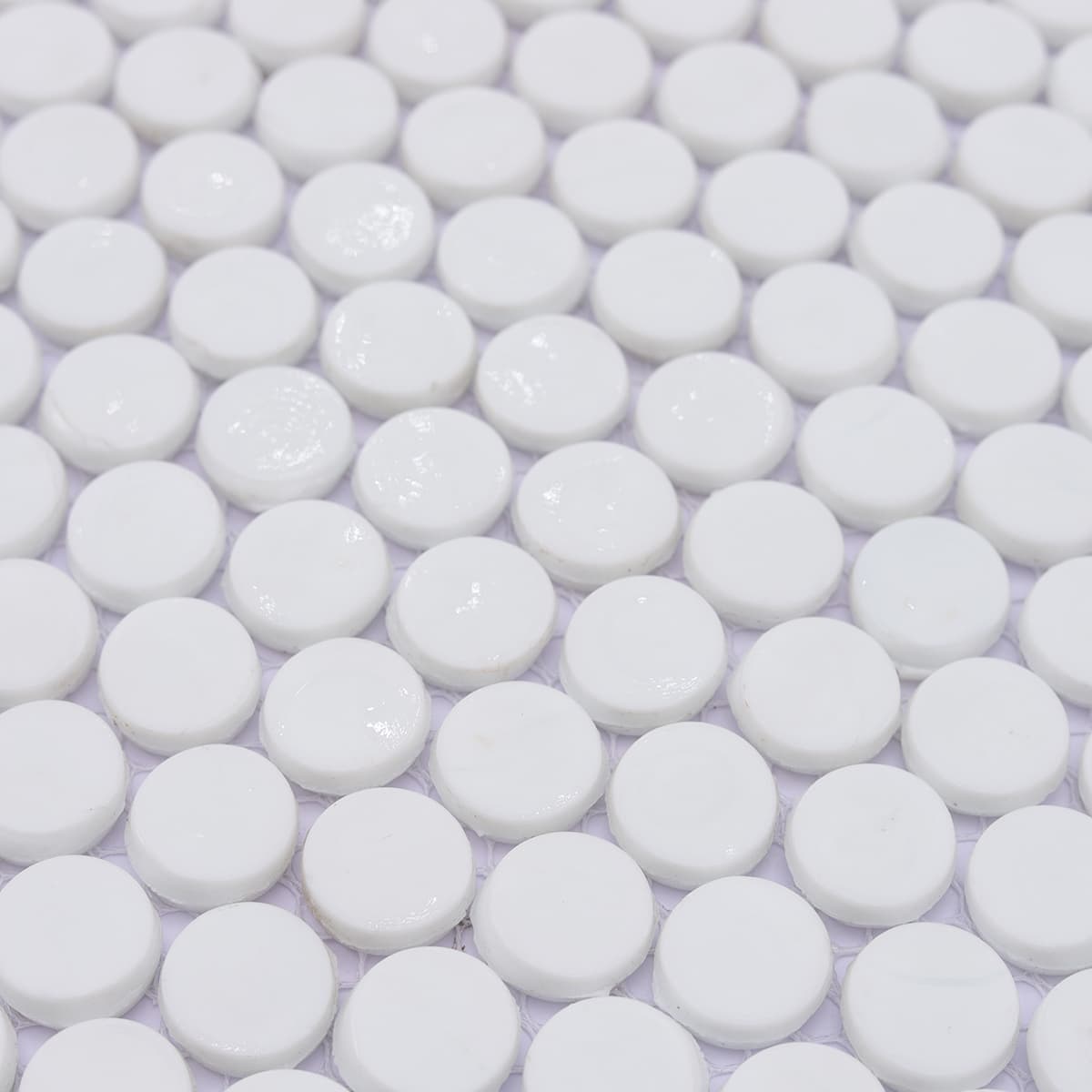
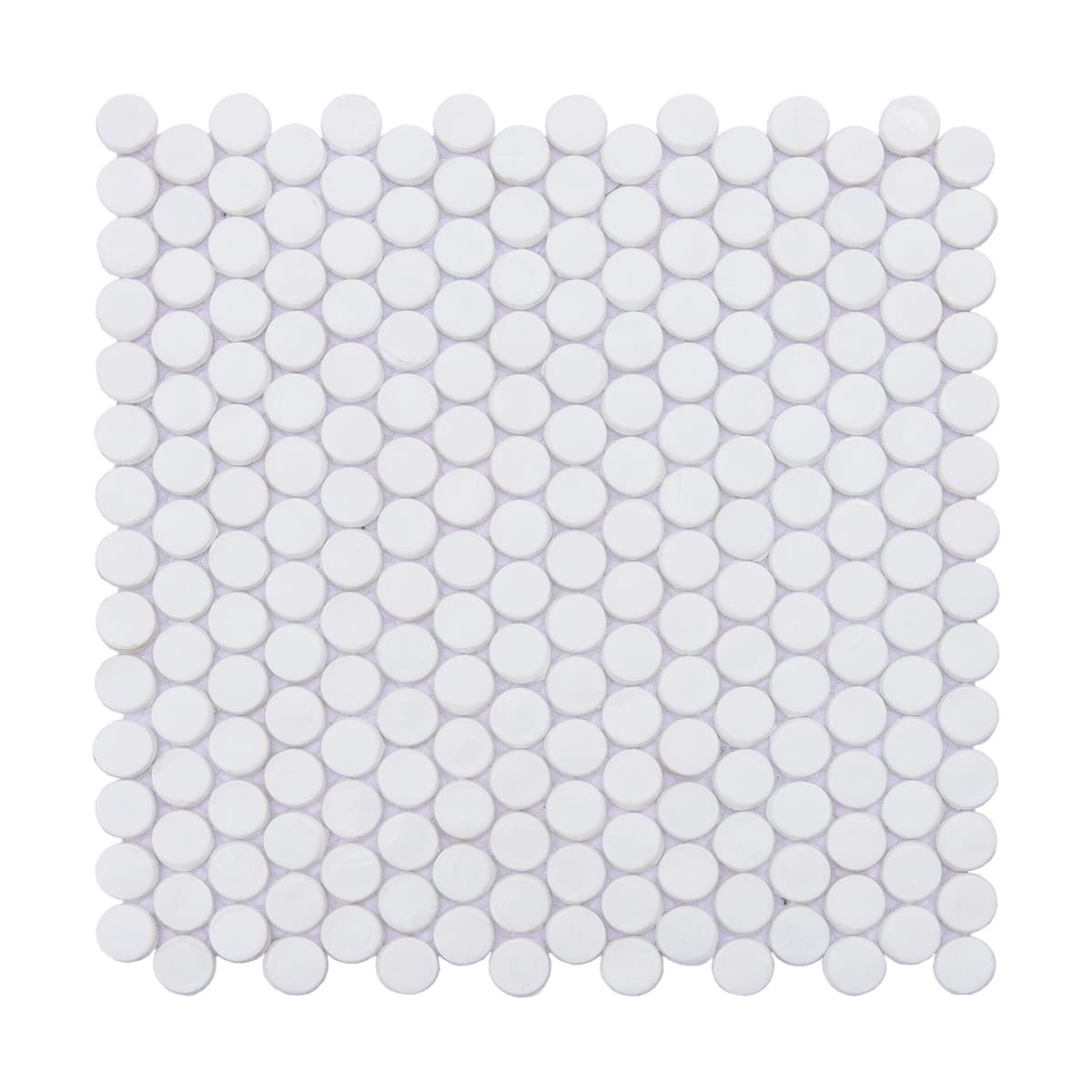
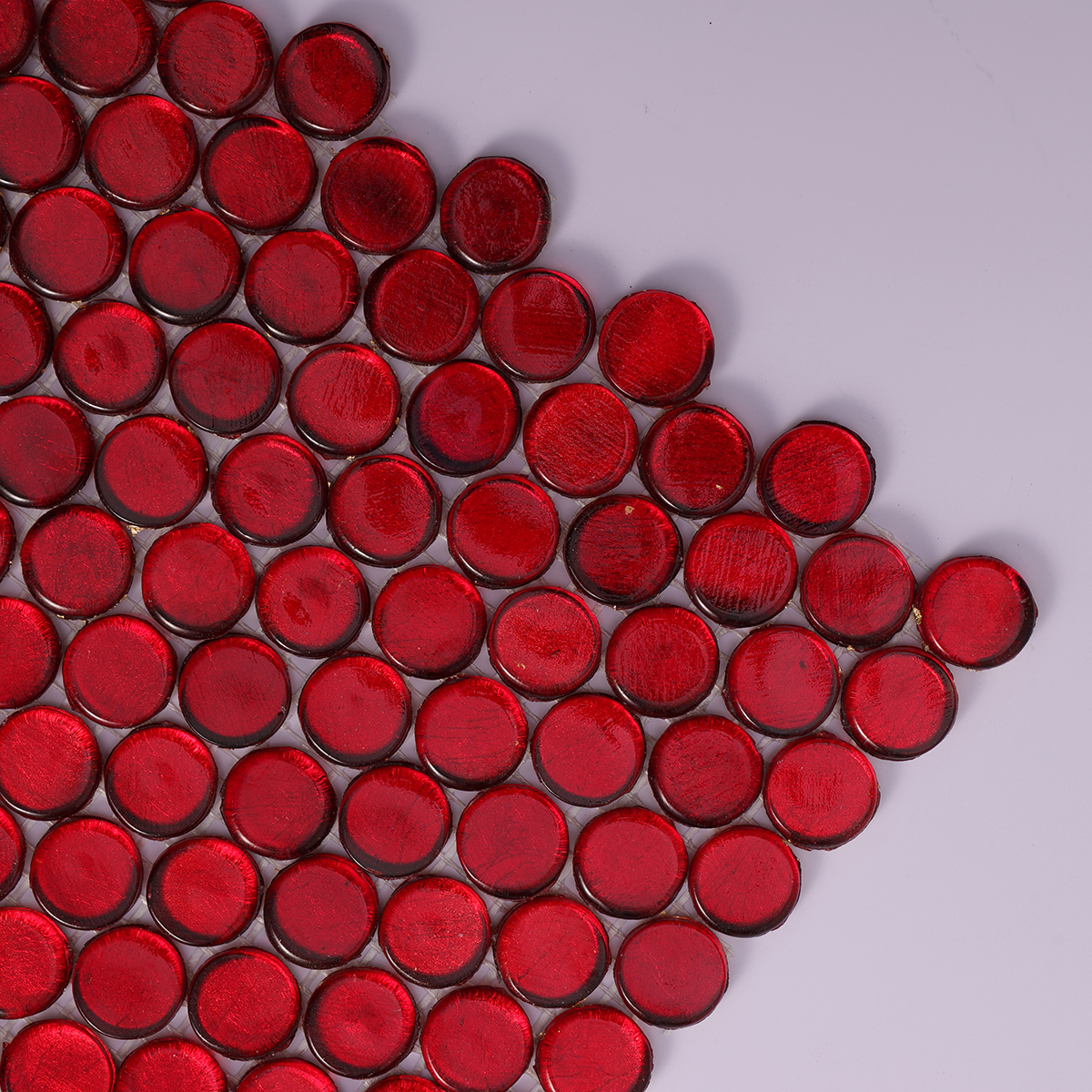
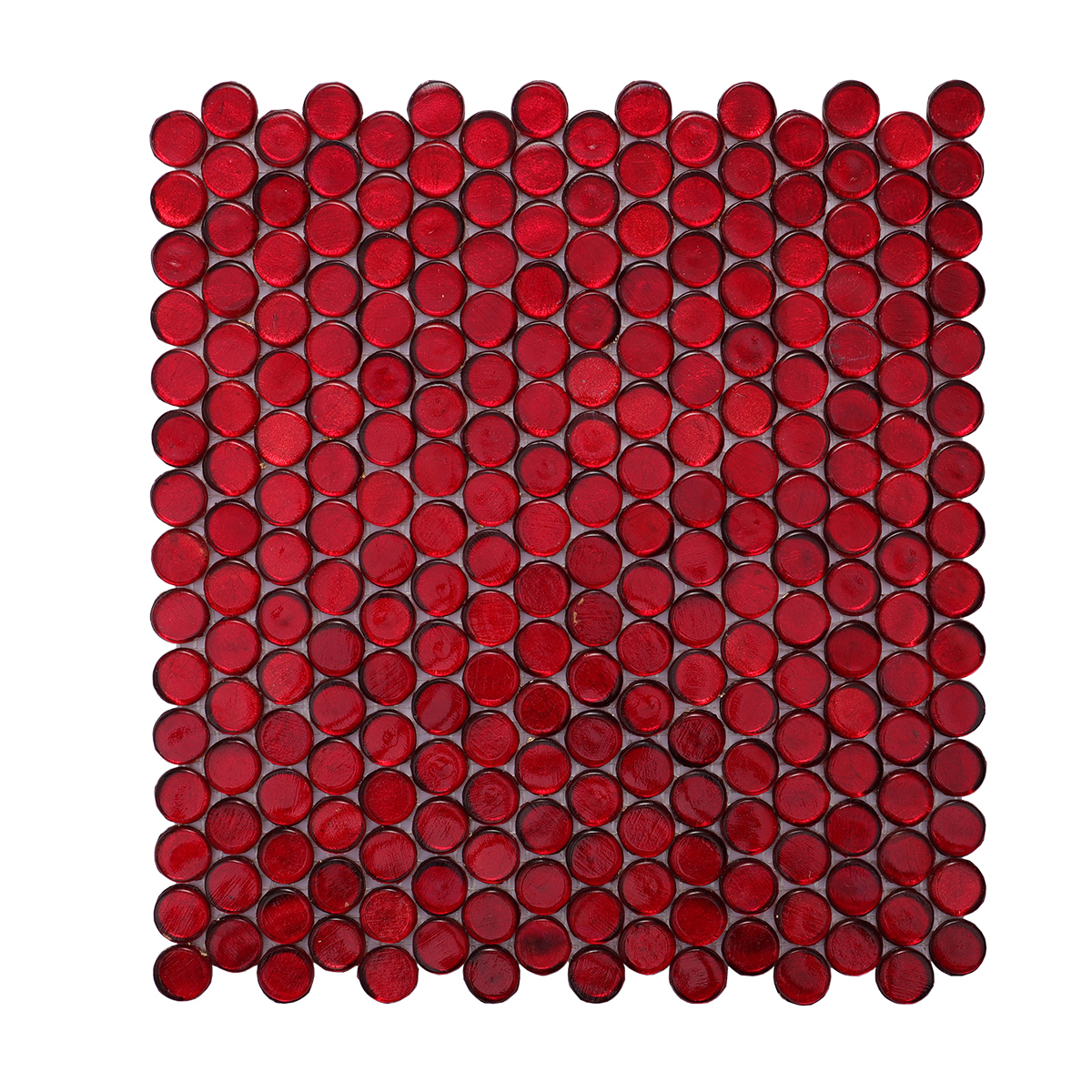
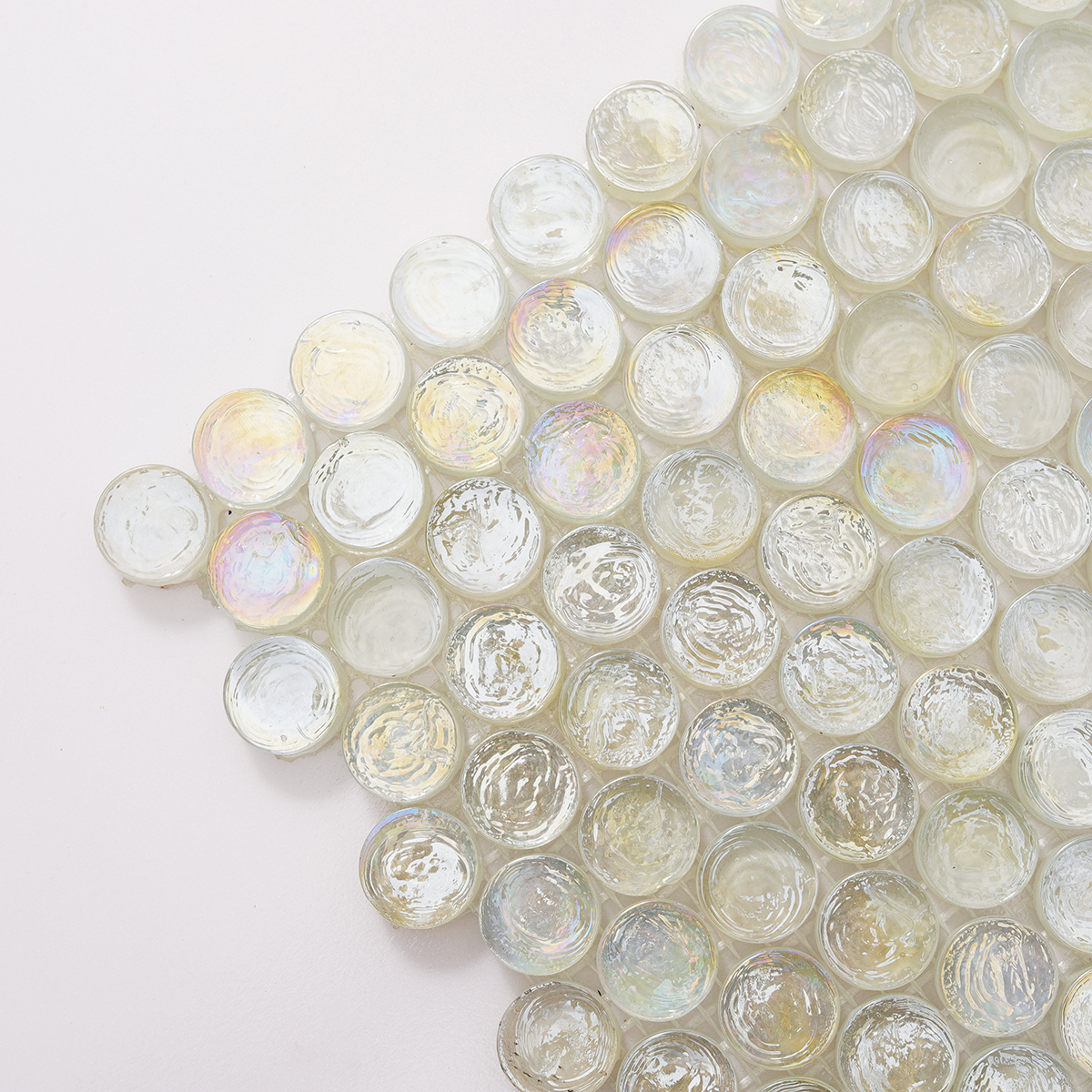
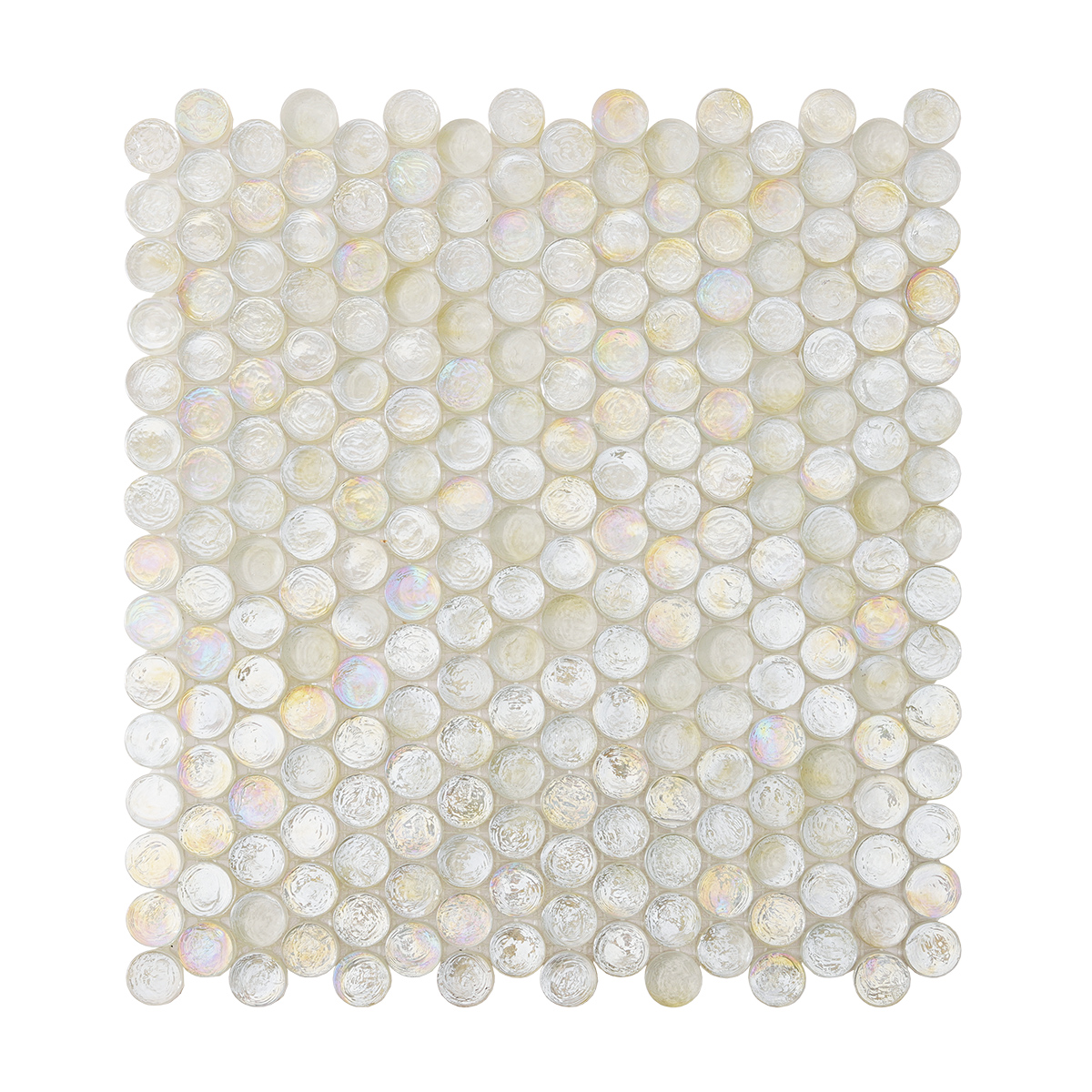
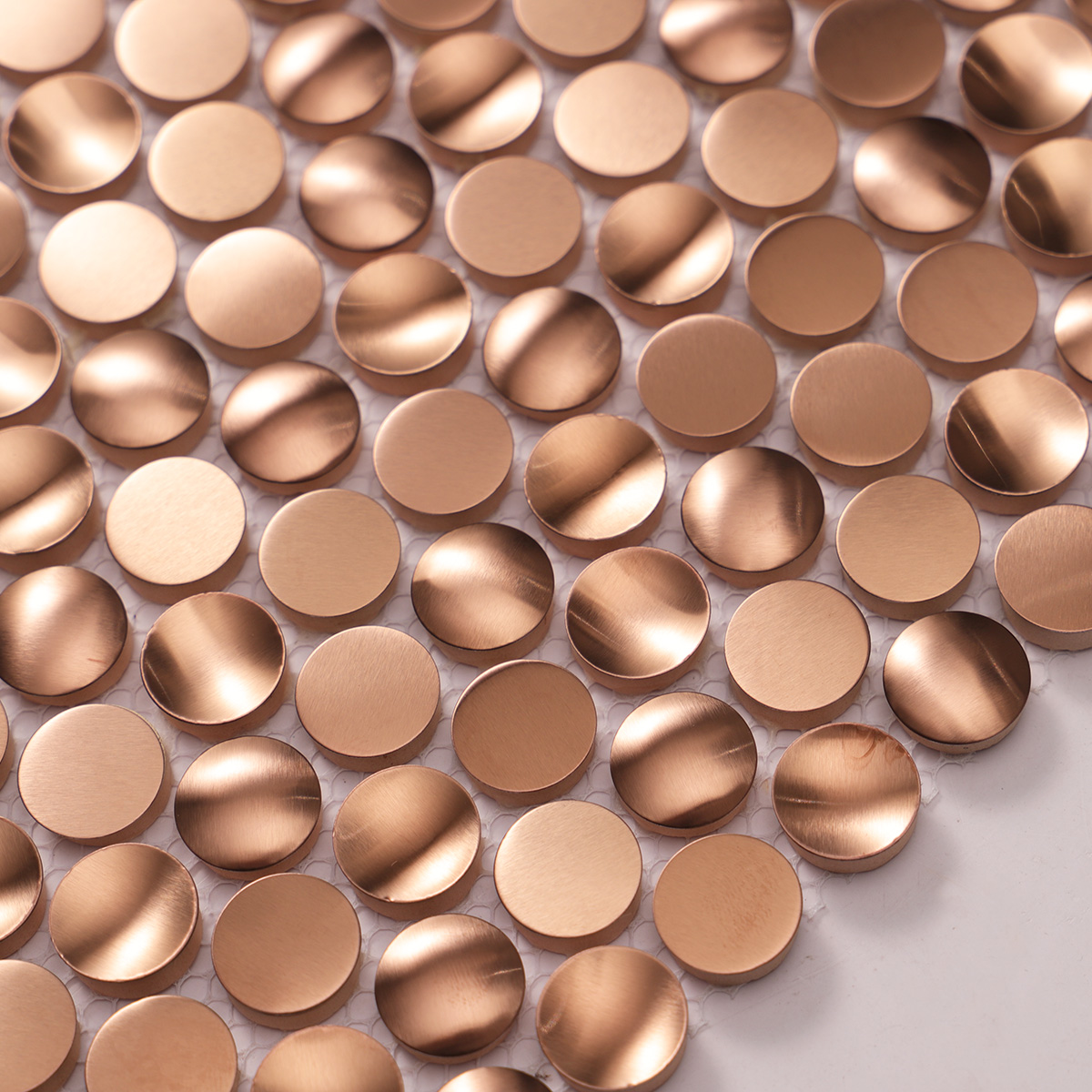
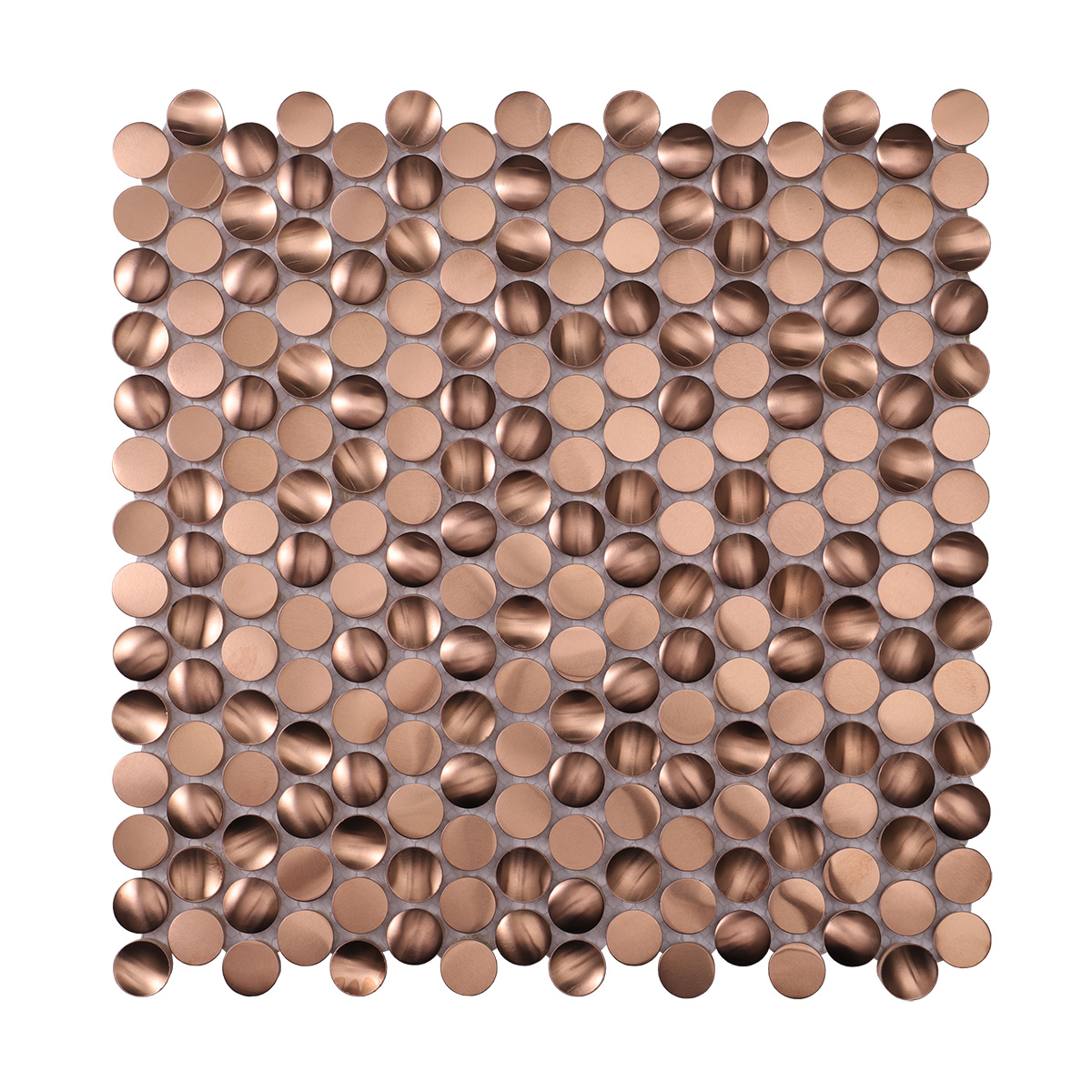
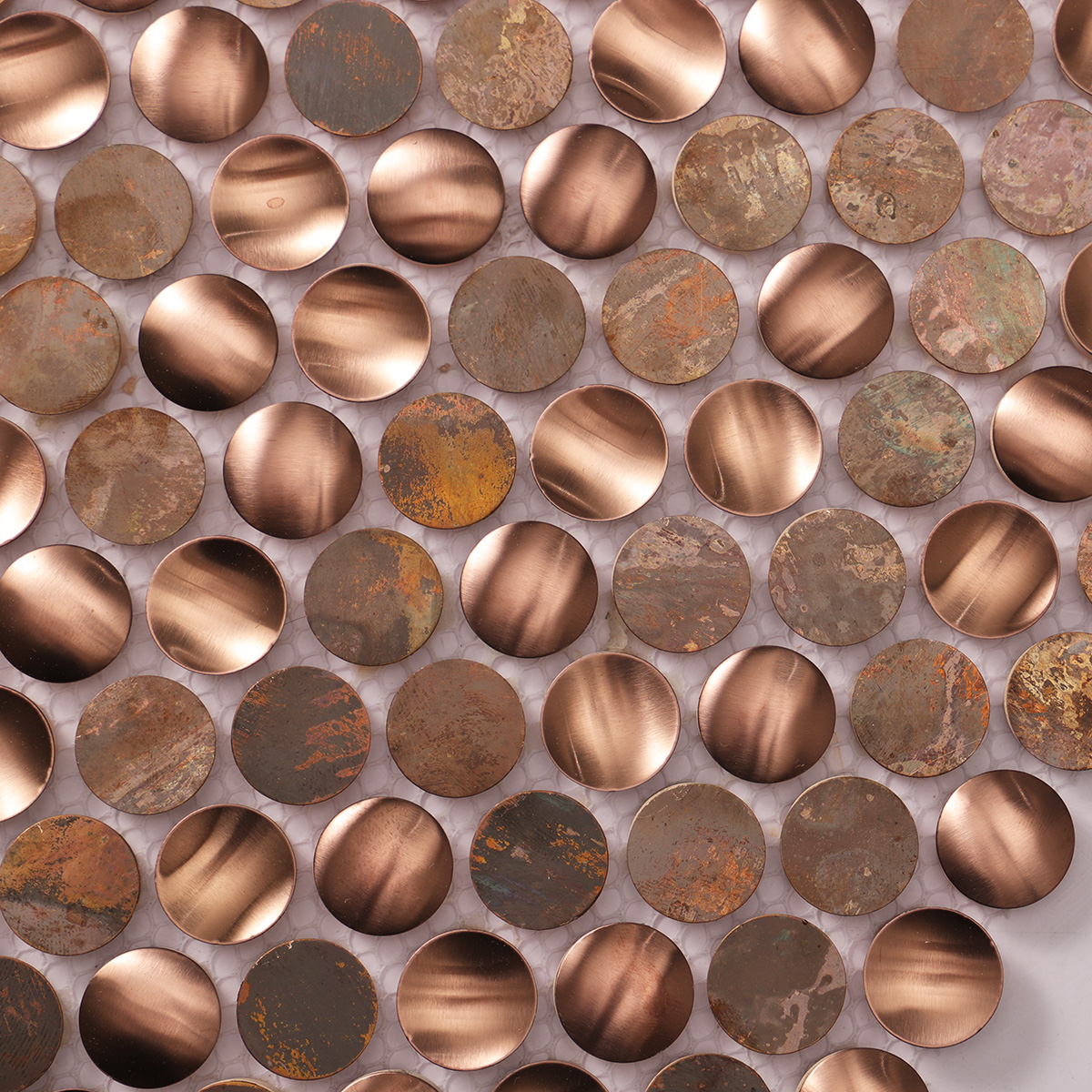
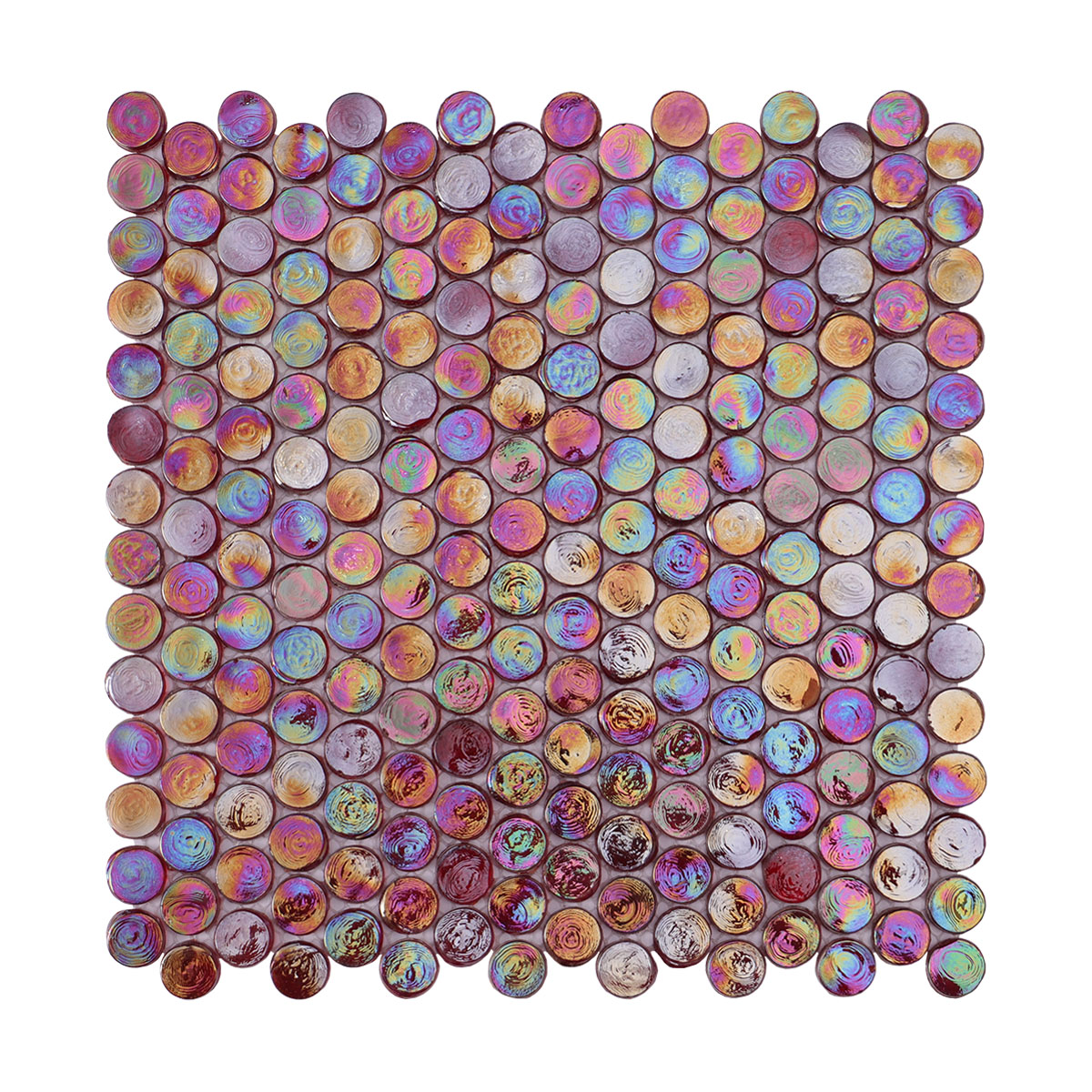
Retro Penny Tiles bring the unmistakable rhythm of coin-sized round mosaics to bathrooms, kitchens, entryways and commercial interiors. First popularized in early twentieth-century bathrooms, penny round tiles remain a favorite because their compact scale, repeating circular pattern and extensive color options work equally well in vintage and contemporary spaces.
Explore the Saicina Tiles collection in porcelain, ceramic, glass, natural stone and antique copper metal. Choose from classic white and black, soft neutral shades, muted vintage colors, rich blends and custom patterns. Most styles are supplied in convenient mosaic sheets for faster installation, while individual chip sizes, finishes and approved applications vary by product.
Always check the specifications on each product page before selecting tiles for shower floors, swimming pools, exterior areas or high-traffic commercial floors.
What Are Retro Penny Tiles?
Retro penny tiles are small circular mosaic tiles named for their resemblance to a coin. Traditional designs usually feature rounds measuring approximately 3/4 to 1 inch, or about 19 to 25 mm, in diameter. The individual pieces are normally arranged in close, repeating rows and supplied as mesh-mounted or face-mounted sheets.
White porcelain penny rounds became especially associated with early twentieth-century bathrooms, public buildings and vintage storefronts. Black accents, borders and geometric motifs were often added to create custom mosaic floors. Today, the same familiar format is available in a much broader selection of materials, colors and surface effects.
Modern penny round tiles may be matte, glossy, honed, iridescent, crackled, softly shaded or intentionally aged. This allows the format to support French vintage, Art Deco, mid-century, cottage, industrial, coastal and minimalist interiors without losing its historic character.
Why Choose Penny Round Mosaic Tiles?
Timeless Circular Pattern
The repeated round shape creates a detailed surface without relying on an overly complicated printed pattern. It adds movement and texture while remaining visually balanced, making it suitable for both small accents and complete wall or floor installations.
Flexible Design Scale
Small mosaic pieces can follow shower slopes, columns, curved walls, niches and other surfaces that are difficult to cover with large-format tile. Suitability for a specific curve or substrate must still be confirmed with the installer.
Extensive Color and Material Options
Penny tiles are available in neutral porcelain, colorful glazed ceramic, reflective glass, naturally varied stone and aged metal. A single color produces a calm, continuous surface, while mixed colors, borders and custom motifs create a stronger focal point.
Convenient Mosaic Sheets
Most penny rounds are prearranged on sheets, reducing the need to position each circle separately. Careful layout is still important because inconsistent sheet spacing can make sheet outlines visible after grouting.
Suitable for Many Residential and Commercial Projects
Depending on the material and product rating, penny mosaics can be used on backsplashes, bathroom walls, shower walls, vanity surrounds, fireplace surrounds, entry floors and commercial feature walls. Floor, pool, steam-room and outdoor suitability must be verified for each product.
Shop Retro Penny Tiles by Material
Porcelain Penny Tiles
Porcelain penny round tiles are a practical choice for projects requiring low water absorption, strong wear resistance and easy routine maintenance. Matte, unglazed and glazed finishes are available in classic white, black, gray, blue, green and blended colors.
Floor-rated porcelain penny tiles are commonly considered for bathroom floors, shower floors, entryways and commercial interiors. For exterior or freeze-thaw environments, choose a product specifically rated for outdoor installation.
Best considered for:
-
Bathroom walls and floors
-
Shower walls
-
Shower floors when wet-area and floor rated
-
Kitchen backsplashes
-
Laundry rooms
-
Entryways
-
Commercial floors when traffic rated
Ceramic Penny Tiles
Ceramic penny tiles offer rich glaze variation, softer colors and an authentic handcrafted appearance. Glossy glazes reflect light and are easy to wipe on walls, while matte and crackled finishes create a more aged or artisanal character.
Many ceramic mosaics are designed primarily for walls. Before using ceramic penny tiles on a floor, in a shower or outdoors, confirm the product’s water absorption, wear rating and approved applications.
Best considered for:
-
Kitchen backsplashes
-
Bathroom walls
-
Vanity backsplashes
-
Shower niches
-
Fireplace surrounds
-
Café and retail feature walls
Glass Penny Tiles
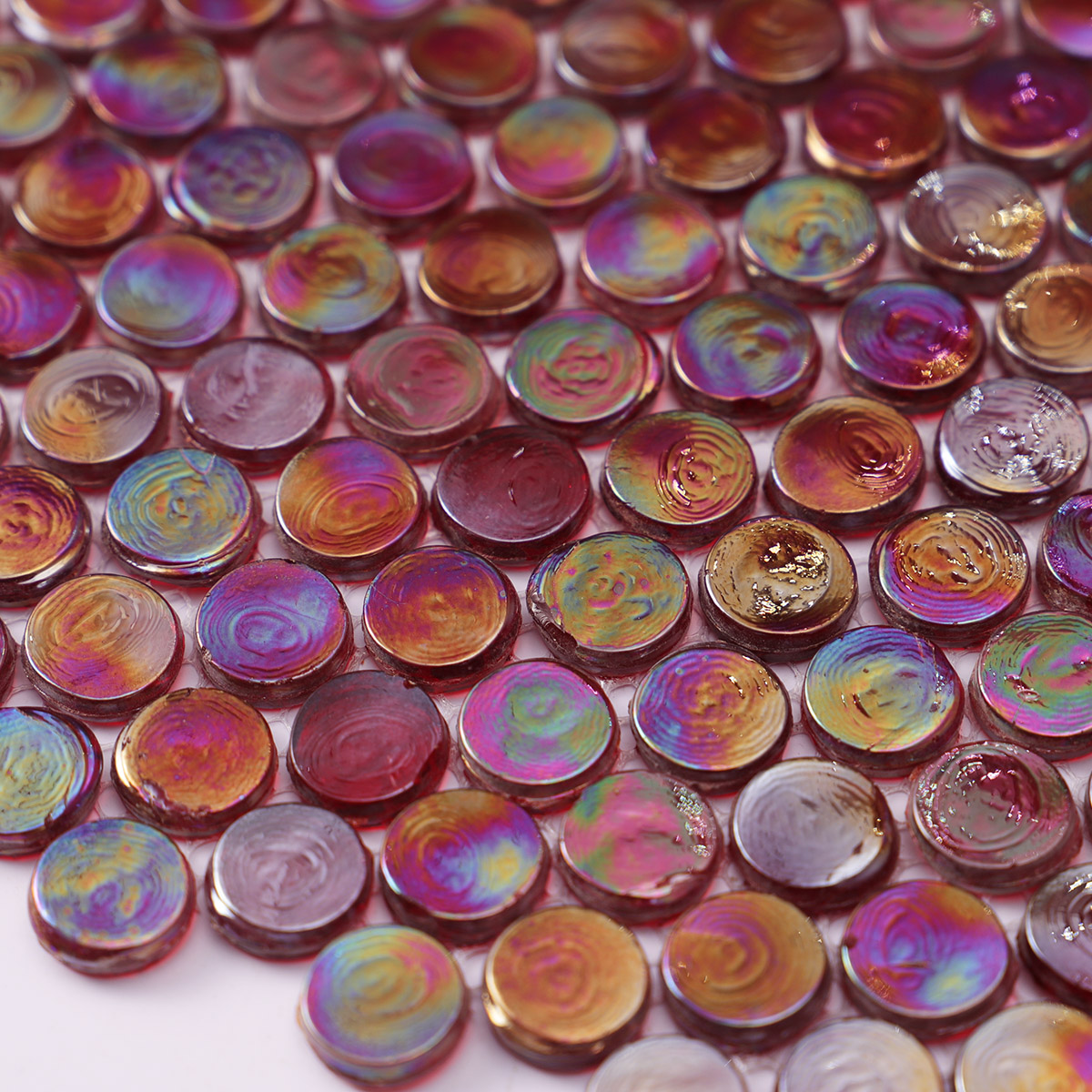
Glass penny round tiles introduce clarity, reflective depth and subtle color movement. Options can include glossy, frosted, iridescent, recycled-glass and metallic-effect finishes. Their ability to interact with natural and artificial light makes them especially effective on smaller feature surfaces.
Use a compatible, usually white, glass-tile mortar where required so the adhesive does not negatively affect translucent colors. Pool, shower-floor and exterior use should only be specified when the individual glass mosaic is rated for that environment.
Best considered for:
-
Shower walls
-
Bathroom feature walls
-
Kitchen backsplashes
-
Bar fronts
-
Reception walls
-
Pool and spa surfaces when specifically pool rated
Natural Stone Penny Tiles
Natural stone penny tiles are cut from materials such as marble, limestone and travertine. Each piece may display unique veining, pores, mineral marks and tonal variation. These differences are part of the material’s character rather than manufacturing defects.
Most natural stone requires sealing during installation and periodic maintenance afterward. Acidic cleaners can etch calcite-based stones such as marble, limestone and travertine. Always confirm floor, shower and exterior suitability for the particular stone.
Best considered for:
-
Bathroom walls and selected floors
-
Vanity surrounds
-
Powder room feature walls
-
Fireplace surrounds
-
Entryway details
-
Hotel and restaurant interiors
Terrazzo-Style Penny Tiles
Terrazzo is an engineered composite rather than a solid natural stone. Terrazzo-style penny rounds can combine mineral fragments with cementitious or resin-based binders, creating a speckled vintage appearance with more controlled color options.
Care requirements depend on the binder and finish, so sealing and wet-area suitability should be confirmed from the product specifications.
Antique Copper Metal Penny Tiles
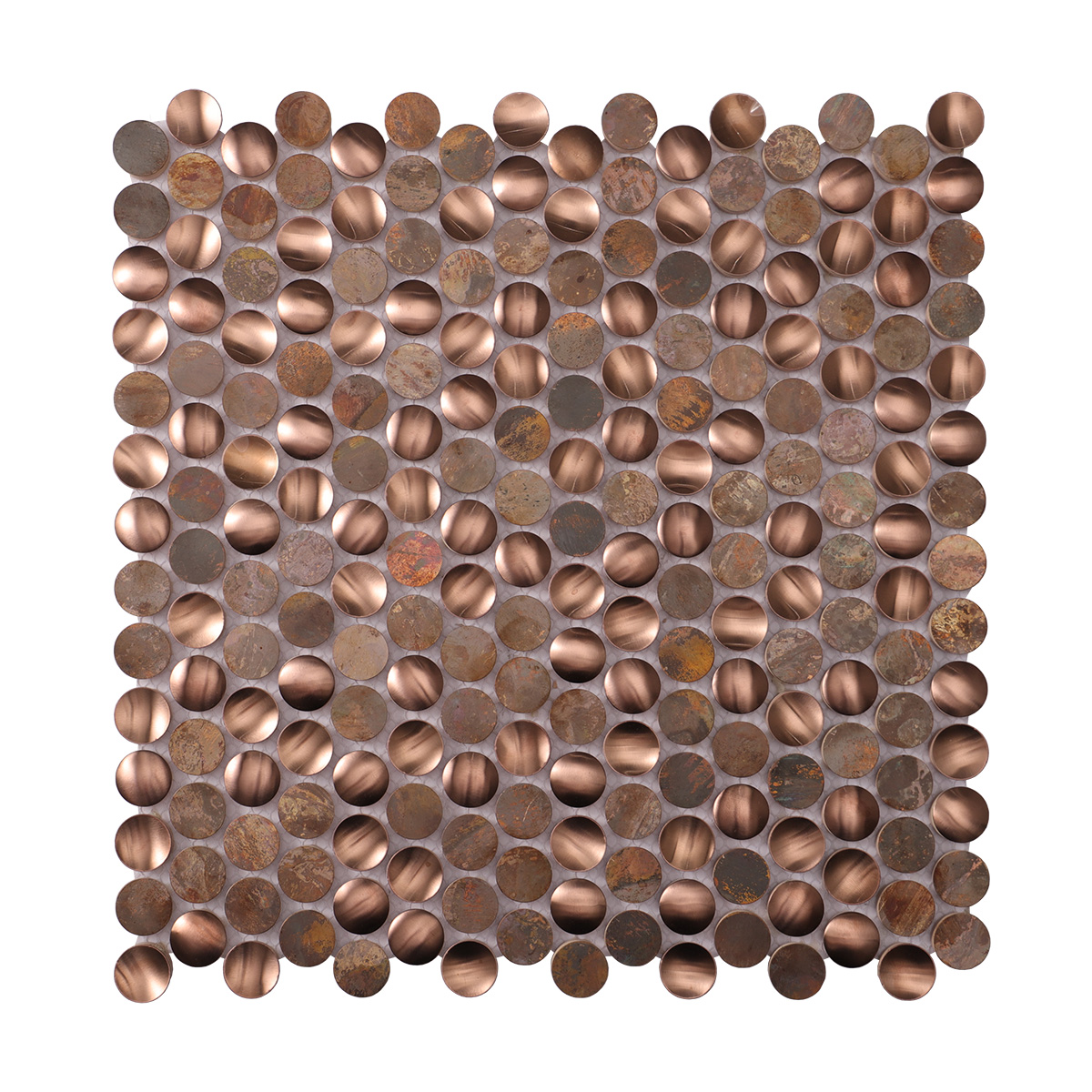
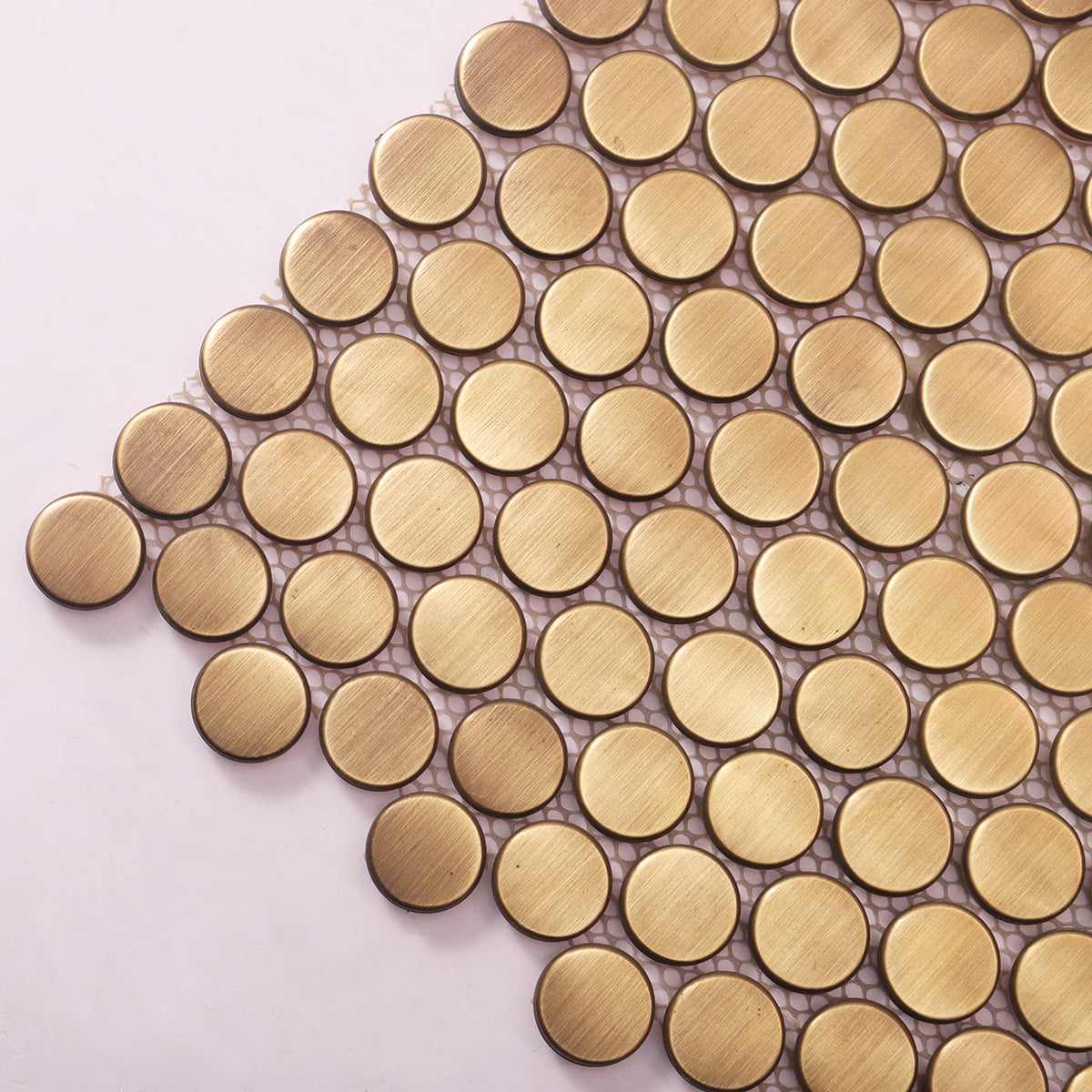
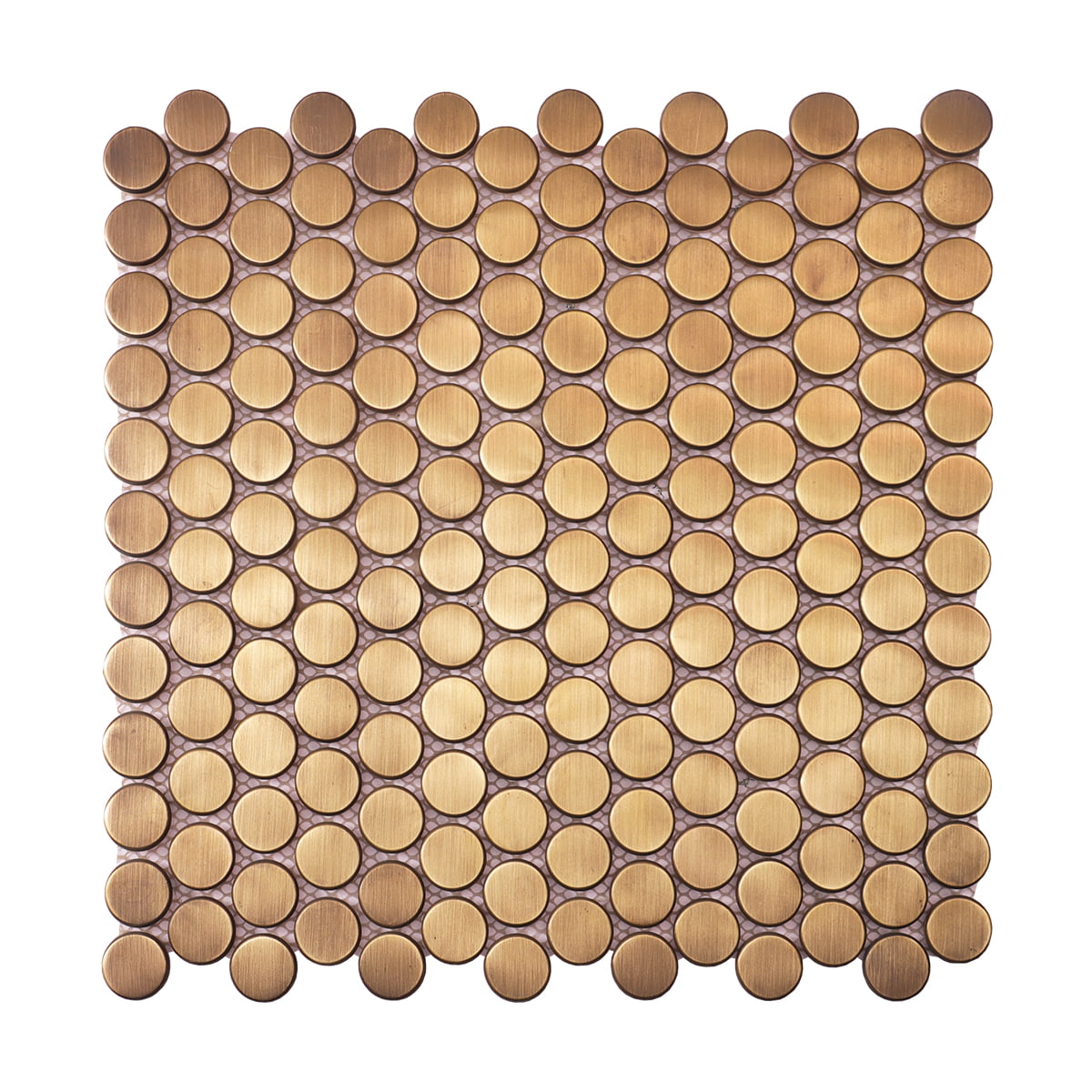
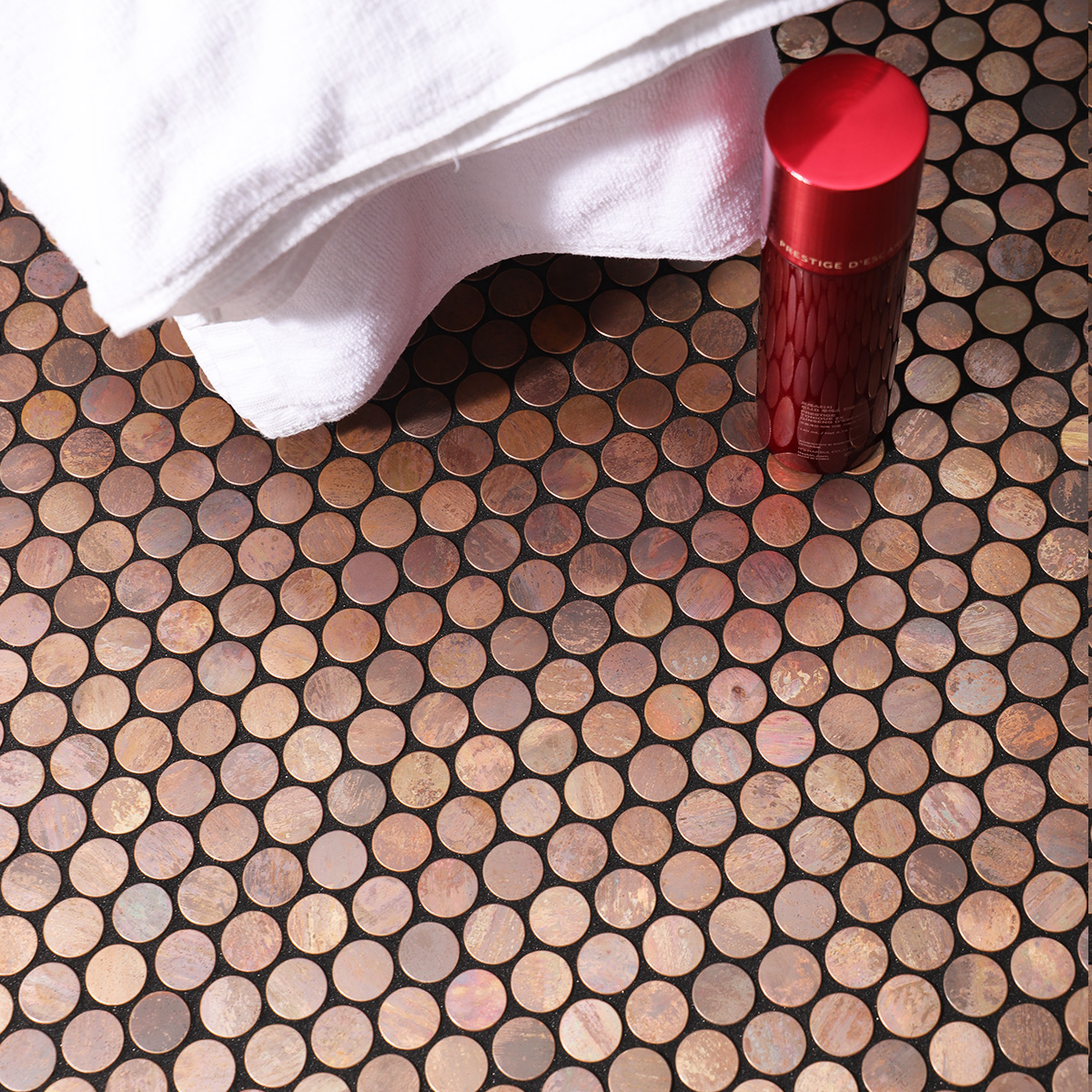
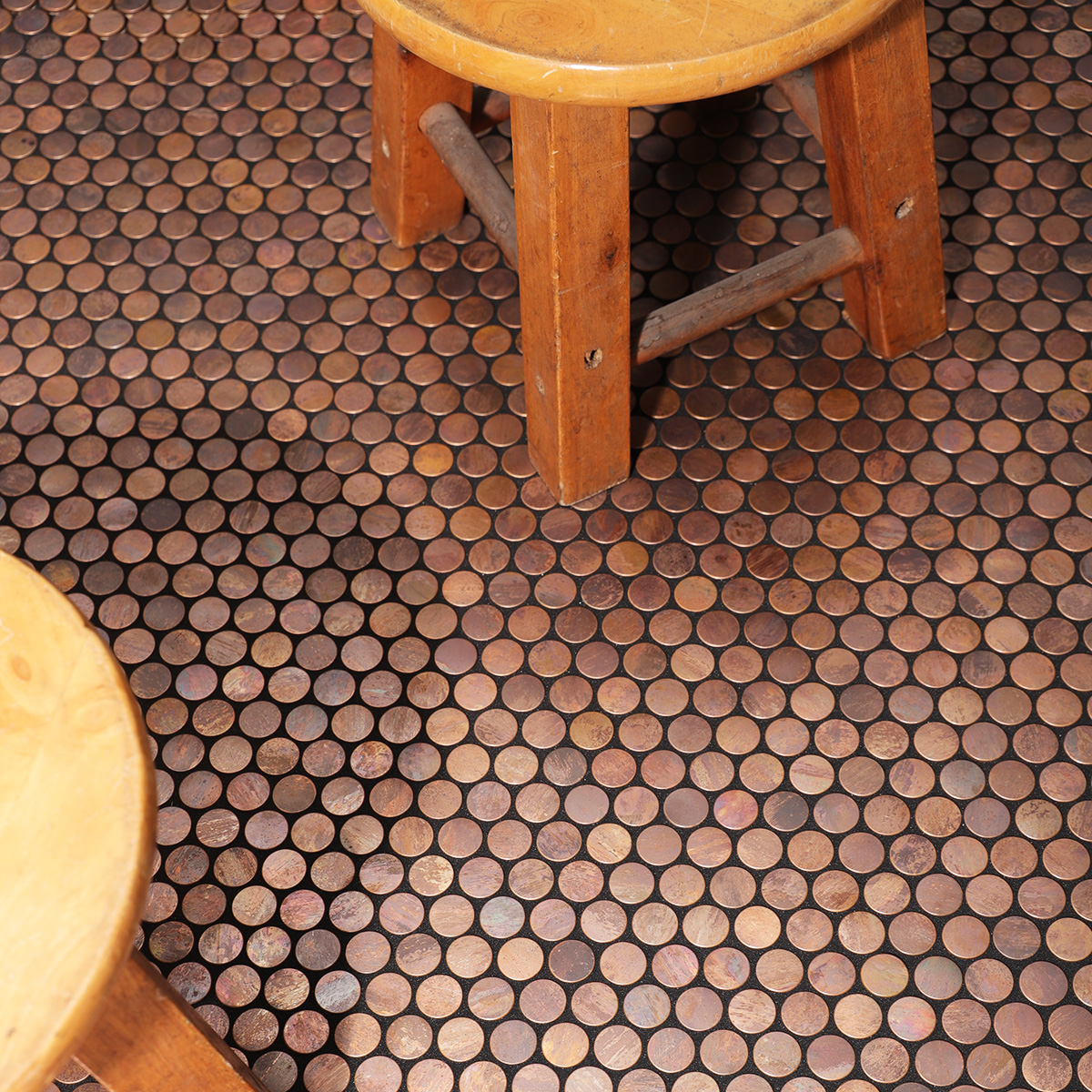
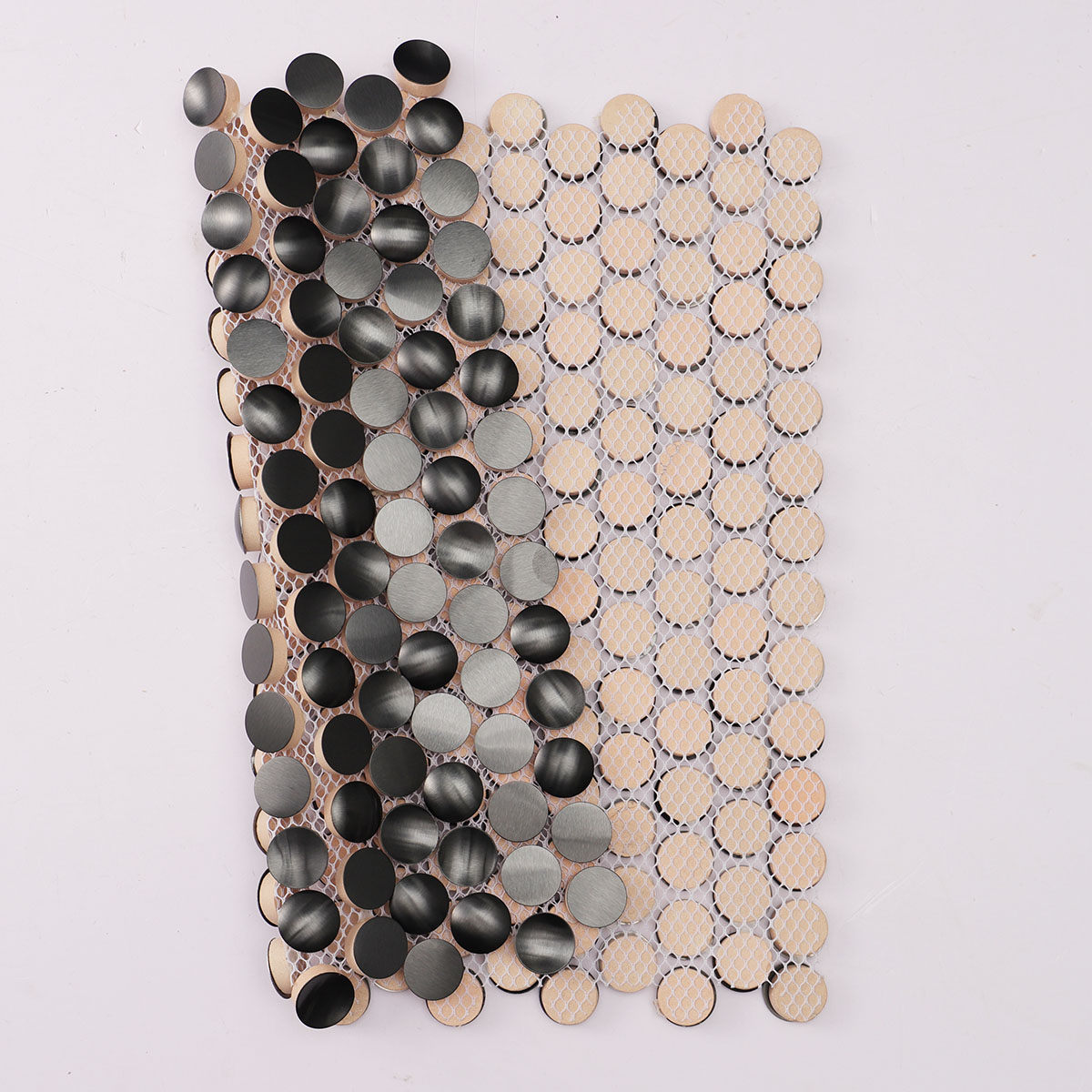
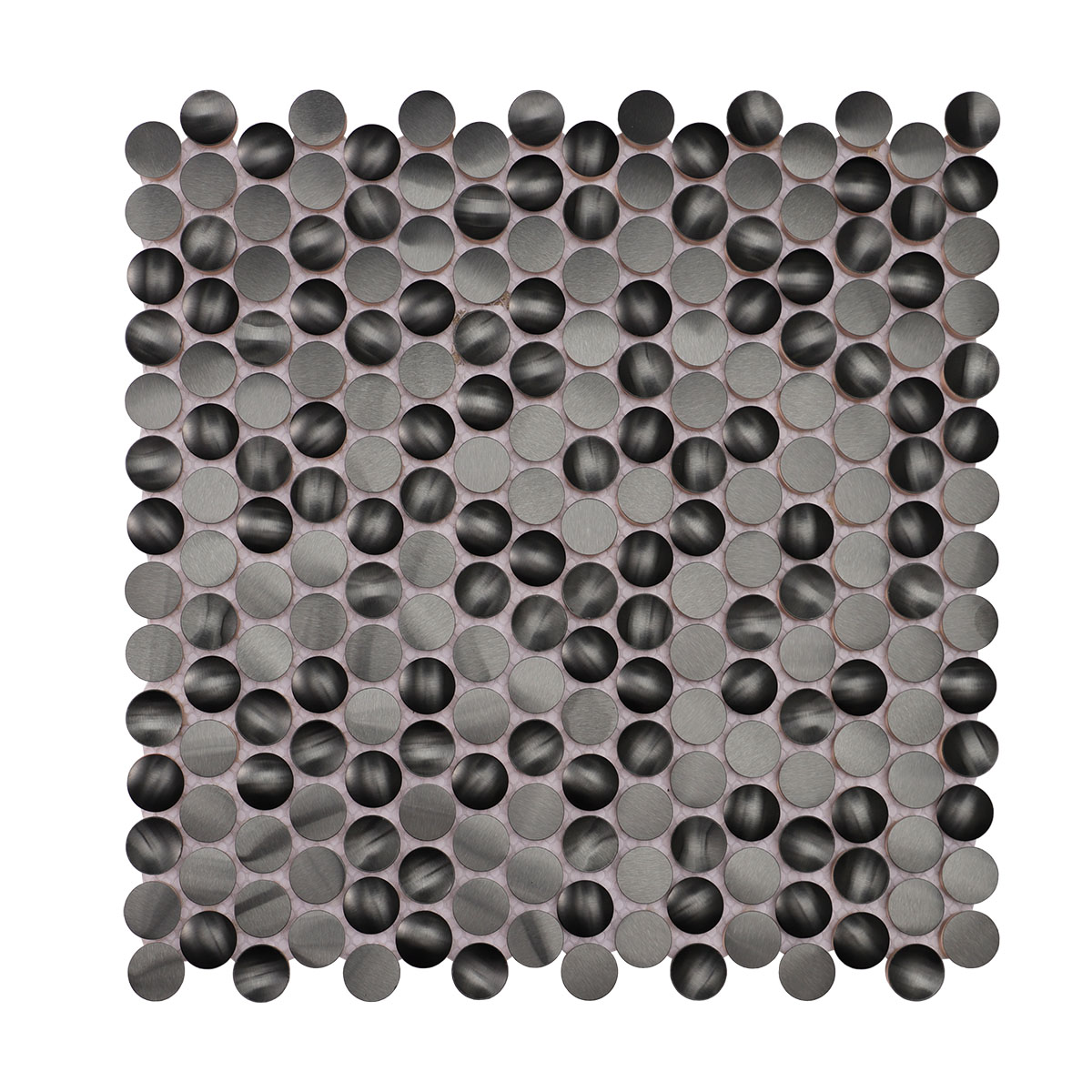
Antique copper penny tiles create a distinctive industrial and aged-metal appearance. Brushed copper, dark bronze, oxidized brown and green patina effects can give a wall the depth of naturally weathered metal while retaining a subtle reflective quality.
Metal penny tiles are best treated as decorative accent materials. Unless a product is specifically approved for the application, avoid submerged installations, shower floors, steam rooms and areas exposed to harsh cleaning chemicals. Natural copper and some copper finishes may continue to develop patina over time.
Best considered for:
-
Bar fronts
-
Kitchen accent walls
-
Fireplace surrounds
-
Entry feature walls
-
Retail displays
-
Restaurant and hotel interiors
-
Industrial-style commercial walls
Available Colors and Vintage Finishes
Classic Neutral Colors
White, ivory, cream, beige, gray and black penny tiles are easy to coordinate with wood, marble, concrete and painted cabinetry. White with dark grout creates a graphic early twentieth-century look, while matching grout produces a softer and more continuous surface.
Muted Vintage Colors
Sage green, olive, dusty blue, caramel, taupe, warm beige and faded pink bring a relaxed vintage character to bathrooms, kitchens and hospitality interiors. These colors pair naturally with unlacquered brass, aged bronze, walnut and warm plaster finishes.
Mixed and Variegated Colors
Mixed-color and shaded penny tiles introduce controlled variation across the surface. They are useful for creating depth without adding a separate decorative pattern. Because blended products can vary between production lots, order the full required quantity at one time.
Matte and Honed Finishes
Matte porcelain and honed stone create a quieter, more tactile appearance. They work particularly well in organic, cottage, vintage and minimalist interiors. Floor use still depends on the specific product rating rather than the word “matte” alone.
Glossy and Iridescent Finishes
Glossy ceramic and reflective glass help brighten compact rooms and create stronger color depth. They are especially effective on backsplashes, shower walls and feature walls. Highly polished finishes may require more frequent cleaning to remove water spots and fingerprints.
Aged, Crackled and Patina Effects
Distressed glazes, tonal speckling, crackle effects and antique metal finishes create the impression of a surface that has developed character over time. Crackled ceramic may require sealing, while metal finishes need care products approved for the specific coating.
Where Can Retro Penny Tiles Be Used?
| Application | Recommended Options | Important Considerations |
|---|---|---|
| Bathroom wall | Porcelain, ceramic, glass or stone | Confirm wet-area suitability near showers and tubs |
| Bathroom floor | Floor-rated porcelain or stone | Check wet-use classification and maintenance requirements |
| Shower wall | Wet-area-rated porcelain, ceramic, glass or stone | Use a complete waterproofing and installation system |
| Shower floor | Floor- and shower-rated mosaics | Do not assume every penny tile is slip resistant |
| Kitchen backsplash | Porcelain, ceramic, glass, stone or approved metal | Consider stain resistance and ease of cleaning |
| Kitchen floor | Floor-rated porcelain or stone | Select appropriate wear and traffic ratings |
| Fireplace surround | Porcelain, ceramic, stone or approved metal | Confirm heat and adhesive limitations; not automatically firebox rated |
| Swimming pool | Pool-rated glass or porcelain | Confirm mounting, mortar, grout and immersion compatibility |
| Outdoor wall or floor | Exterior-rated, freeze-thaw-compatible products | Climate and substrate conditions must be considered |
| Commercial area | Commercially rated porcelain, stone or other approved material | Confirm traffic, cleaning and slip requirements |
Bathroom and Shower Applications
Penny tile is particularly well suited to bathroom design because its small scale can cover walls, niches, vanity backsplashes and properly prepared sloped shower floors. White and black combinations create a traditional look, while blue, green or warm neutral mosaics offer a more contemporary interpretation.
For shower floors, select a product specifically approved for wet flooring. The numerous grout joints may add underfoot texture, but the final slip performance also depends on the tile finish, grout, drainage, maintenance and contaminants such as soap.
Kitchen Backsplashes
The circular format provides a soft contrast to rectangular cabinets, countertops and appliances. Glossy ceramic and glass are easy to wipe, while matte porcelain, natural stone and aged copper create a more tactile feature.
For areas behind a range, confirm heat resistance and use a grout or sealer appropriate for oil and food stains.
Entryways and Powder Rooms
A small penny tile floor can make an entryway or powder room feel custom without overwhelming the room. Classic borders, initials, rosettes and contrasting dots can recreate the look of historic mosaic floors.
Use only floor-rated materials and consider how the grout color will respond to dirt and regular foot traffic.
Fireplace Surrounds and Feature Walls
Penny rounds can follow the proportions of fireplace surrounds, columns and curved architectural details. Natural stone creates a quieter surface, glossy ceramic adds reflected light, and antique copper introduces an industrial focal point.
Confirm the permitted temperature range and installation method. Decorative wall tile should not be installed inside a firebox unless it is specifically rated for that use.
Commercial Interiors
Restaurants, cafés, hotels, boutiques and reception areas can use penny mosaics to create memorable bar fronts, service counters, feature columns and branded floor patterns. Commercial floors require products rated for the expected traffic, cleaning process and wet conditions.
How to Choose the Right Grout Color
Grout is a major part of the finished appearance because penny mosaics contain more joint area than large-format tiles.
Matching Grout
A grout color close to the tile color reduces contrast and creates a calmer, more continuous surface. This approach works well with softly shaded stone, glass and muted ceramic tiles.
Contrasting Grout
Dark grout around white penny rounds or light grout around black circles highlights every tile and creates a bold graphic pattern. Contrasting grout can also make sheet-spacing errors more noticeable, so accurate installation is essential.
Dark Gray and Charcoal Grout
Dark grout reinforces a vintage or industrial look and may make some surface staining less visible. However, dark pigments can affect pale natural stone, crackled ceramic or textured tile. Always test the complete tile-and-grout combination first.
Stain-Resistant Grout
High-performance cementitious and epoxy grouts may improve stain resistance in kitchens, showers and commercial areas. Compatibility must be checked because some grout types or aggregates can scratch glass, polished stone and metal surfaces.
Penny Tile Installation Guide
Penny round mosaic installation requires careful layout even when the tiles are supplied on sheets. Professional installation is recommended for shower floors, pools, exterior areas, curved surfaces and custom patterns.
1. Confirm the Application
Review the product’s approved uses, mounting method, required adhesive, grout compatibility and sealing instructions before installation.
2. Prepare a Flat and Stable Surface
Small mosaics can reveal depressions and irregularities in the substrate. Walls and floors should be properly prepared, structurally stable and sufficiently flat. Wet areas also require a complete waterproofing and drainage system.
3. Dry-Lay the Sheets
Arrange several sheets before spreading mortar. Check color variation, sheet orientation and spacing between sheets. Blend pieces from different cartons when the product has intentional tonal variation.
4. Avoid Visible Sheet Lines
The gap between two mosaic sheets should match the spacing between individual rounds. Interlock sheets where possible or reposition individual pieces along the seams to break up visible grid lines.
5. Use the Correct Mortar
Choose mortar approved for the tile material and substrate. White mortar is often preferred behind translucent glass and pale stone. Avoid allowing excessive mortar to rise into the grout joints.
Some uncoupling membranes have minimum tile-size requirements that are larger than penny rounds, so confirm compatibility with the complete installation system before work begins.
6. Set the Sheets Evenly
Press sheets into the mortar using a grout float or beating block to create a flat, consistent surface. Do not press so heavily that adhesive fills the joints or creates uneven areas.
7. Cut and Finish Edges Carefully
Small round pieces may require a wet saw, mosaic cutting support or material-specific tools. Plan exposed borders in advance and consider trim, stone edging or metal profiles where appropriate.
8. Grout, Clean and Cure
Use grout approved for the tile surface and joint width. Test first on polished stone, glass, crackled glazes and metal. Follow the grout manufacturer’s curing and cleaning instructions before exposing the installation to water or traffic.
Sealing and Maintenance
Porcelain and most glazed ceramic tiles generally do not require surface sealing, although cement-based grout may benefit from an appropriate grout sealer.
Natural stone typically requires sealing during installation and periodic resealing based on the stone, sealer and exposure. Crackled ceramic and some cementitious terrazzo products may also require protection.
Clean penny tile with a soft cloth or non-abrasive brush and a pH-neutral cleaner. Avoid acidic cleaners on marble, limestone, travertine, cement-based materials and sensitive metal finishes. Do not use harsh abrasive pads that could scratch glass, glaze or copper.
Because penny tile contains more grout than large-format tile, regular cleaning and good ventilation are especially important in showers and other humid spaces.
How Much Penny Tile Should You Order?
Measure the length and width of each surface and calculate the total area. Add approximately 10% for ordinary layouts and at least 15% for curved areas, borders, complex cuts or custom patterns.
Sheet dimensions and coverage vary, so calculate using the coverage shown on the individual product page rather than assuming every sheet covers one square foot.
Order the complete quantity from the same production lot whenever possible. Keep several spare sheets after installation for future repairs, especially when using naturally varied stone, handmade glazes or custom colors.
Custom Retro Penny Tiles from Saicina Tiles
Saicina Tiles supplies standard and custom penny round mosaics for residential, hospitality, retail and commercial projects. Custom options may include:
-
Bespoke color blends
-
Light-to-dark gradients
-
Black-and-white vintage patterns
-
Borders and medallions
-
Custom initials and logos
-
Original mosaic artwork
-
Special sheet layouts
-
Project-specific sizes and finishes
For an accurate recommendation, send us the installation area, project dimensions, preferred material, tile diameter, finish, grout color and whether the surface is dry, wet, submerged, interior or exterior.
We recommend reviewing a physical sample before ordering. Color, gloss, natural stone veining and antique metal effects may appear different under various lighting conditions and display settings.
Frequently Asked Questions About Retro Penny Tiles
What size are penny tiles?
Classic penny rounds are commonly approximately 3/4 to 1 inch, or 19 to 25 mm, in diameter. Larger two-inch rounds and custom sizes are also available. Always check the chip and sheet dimensions on the product page.
Are penny tiles still in style?
Yes. Their early twentieth-century character makes them suitable for historic and vintage interiors, while modern colors, natural stone, glass and metal finishes allow them to work in contemporary spaces.
Can penny tiles be used on bathroom floors?
Floor-rated penny tiles can be used on bathroom floors. Product suitability depends on the material, finish, wear rating, wet-use classification and installation system.
Are penny tiles suitable for shower floors?
Only products specifically approved for shower floors should be used. More grout joints can contribute texture, but small size alone does not guarantee slip resistance.
Can penny round tiles be used on shower walls?
Many porcelain, ceramic, glass and natural stone penny mosaics can be used on shower walls when they are wet-area rated and installed over a suitable waterproofing system.
Do penny tiles use more grout?
Yes. Small round pieces leave more joint area per square foot than large rectangular tiles. This affects grout quantity, installation time and long-term cleaning.
Does penny tile need to be sealed?
Porcelain, glazed ceramic and most glass usually do not require surface sealing. Natural stone, crackled ceramic and some terrazzo products may require sealing. Cement-based grout may also benefit from a compatible sealer.
Is penny tile difficult to install?
Mesh or face mounting makes the process faster, but accurate sheet alignment takes care. Common problems include visible sheet lines, uneven spacing, excessive mortar in the joints and poorly planned border cuts.
Can penny tiles be installed over curved walls?
Their small scale allows many penny mosaics to follow gentle curves and columns. The achievable radius depends on chip size, thickness, mounting and substrate preparation.
Can penny tiles be used in swimming pools?
Only pool-rated products should be submerged. Confirm that the tile body, decorative coating, mounting material, mortar and grout are all approved for continuous immersion and the pool’s chemical conditions.
Can antique copper penny tiles be used in showers?
Metal penny tiles should not automatically be considered shower suitable. Use them in wet or humid locations only when the individual product is approved for that environment. Avoid submerged areas and harsh chemical cleaners unless the manufacturer specifically permits them.
What grout color looks best with penny tile?
Matching grout creates a quiet, unified surface. Contrasting grout outlines each circle and produces a more graphic vintage pattern. Always test the grout with the tile before final installation.
How should penny tiles be cleaned?
Use a pH-neutral cleaner and a non-abrasive cloth or brush. Avoid acidic or aggressive cleaners on natural stone, cement-based products, metal and sensitive glazes.
Can Saicina Tiles produce custom penny tile patterns?
Yes. Saicina Tiles can assist with custom blends, gradients, borders, logos and mosaic patterns based on project dimensions and material requirements. Contact our team with your reference image or design brief to begin.
Find the Right Retro Penny Tile for Your Project
Whether you are restoring a vintage bathroom, designing a colorful kitchen backsplash or creating a custom commercial feature, Saicina Tiles can help you compare materials, finishes and application requirements.
Browse the Retro Penny Tiles collection, request a sample or contact us for a custom mosaic design and project quotation.