


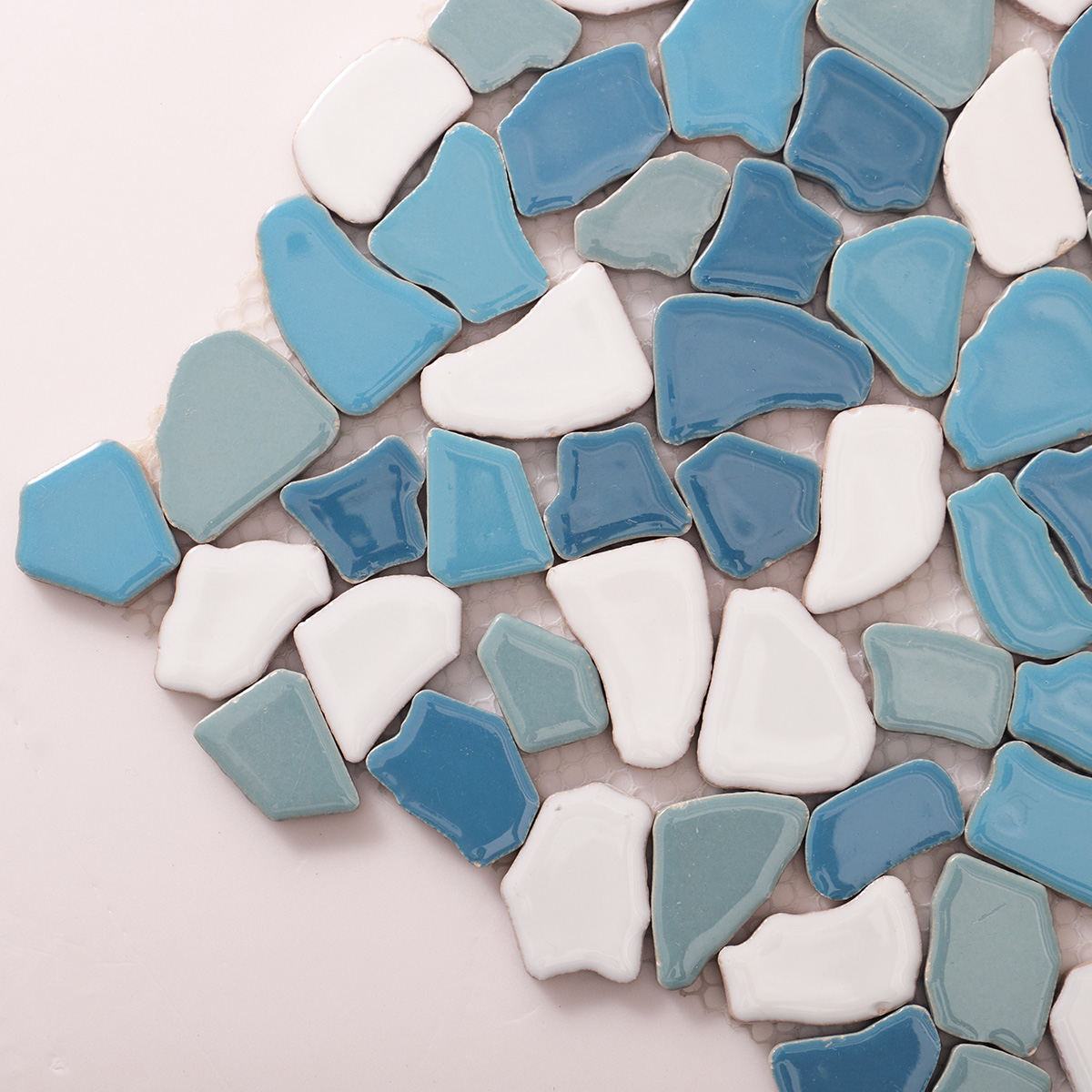
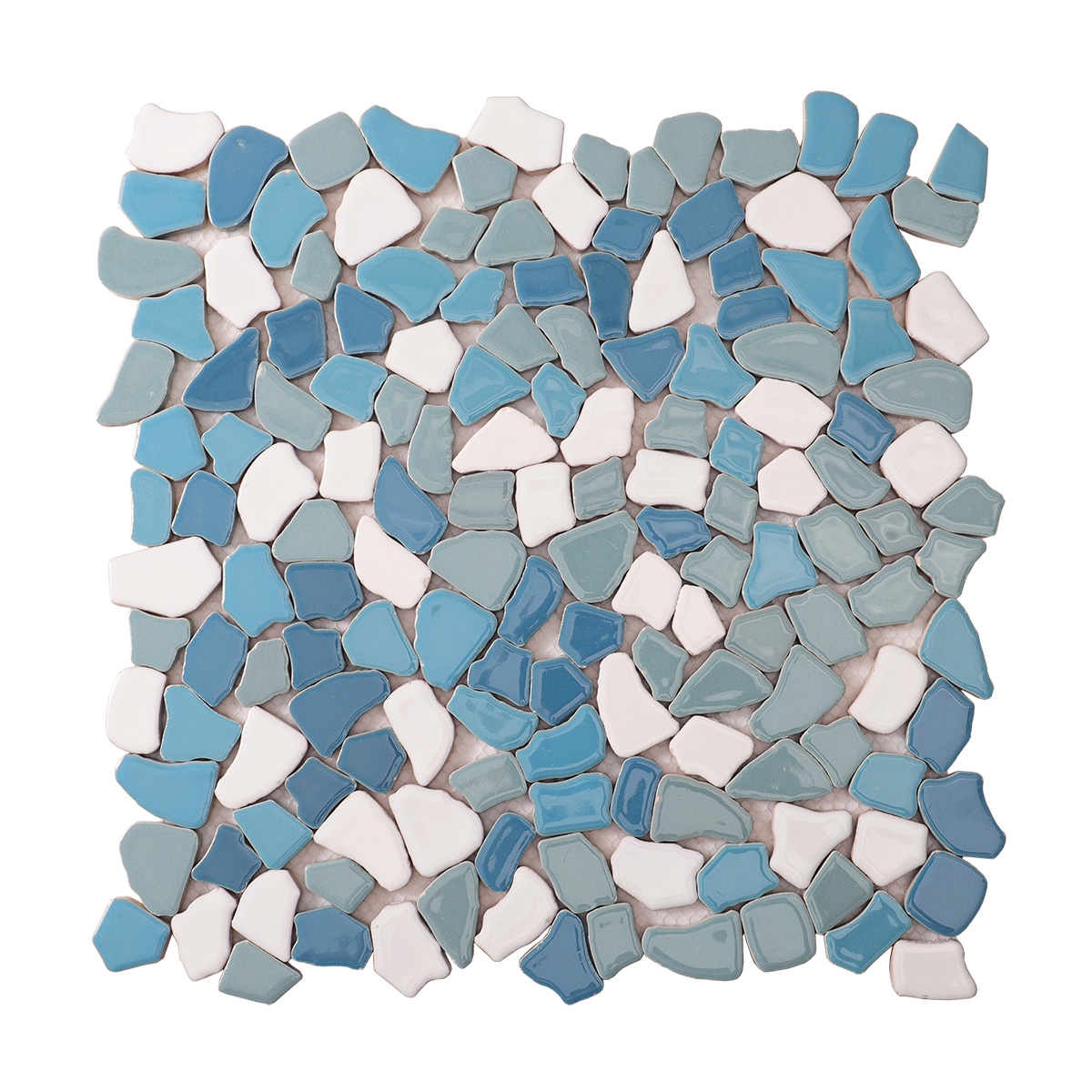


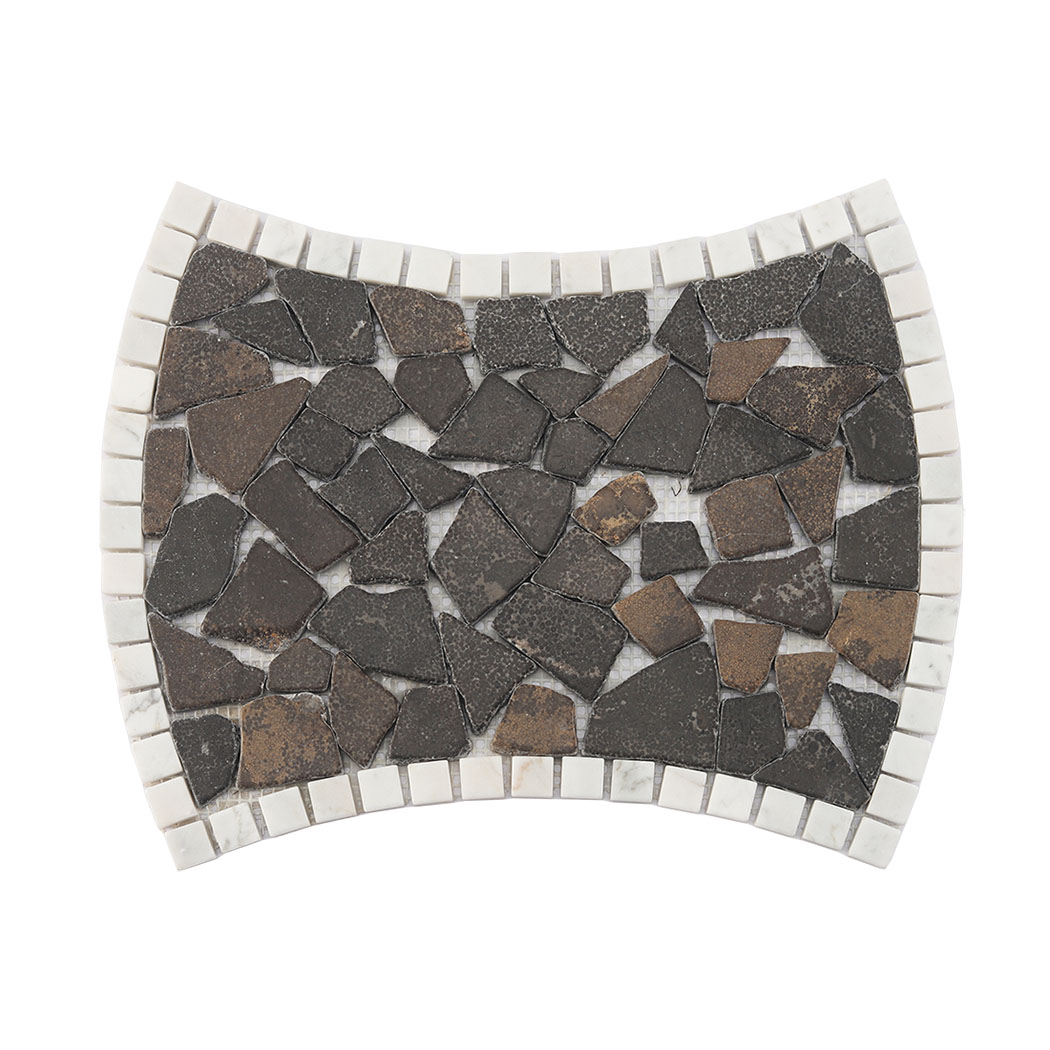
Break away from predictable grids with Broken Mosaic Tiles from SAICINA TILES. Made with deliberately shaped irregular pieces, these mesh-mounted mosaics create organic patterns with natural movement and one-of-a-kind character. Explore ceramic, glass, natural stone and mother-of-pearl designs for kitchen backsplashes, bathrooms, feature walls and approved floor applications.
Explore Broken Mosaic Tiles
Request a Sample
What Are Broken Mosaic Tiles?
Broken mosaic tiles are made from intentionally cut, shaped or tumbled pieces arranged in irregular patterns. Unlike square mosaics, subway tiles and other repeating geometric layouts, the individual pieces vary in size, outline and orientation. The result is a surface that feels spontaneous and handcrafted while remaining visually balanced.
These products may also be described as:
-
Broken tile mosaics
-
Random mosaic tiles
-
Mosaic shard tiles
-
Fragment mosaic tiles
-
Crazy paving mosaics
-
Palladiana-style mosaics
Although the arrangement appears free and random, SAICINA TILES carefully controls the spacing, color distribution and transition between sheets. Most designs are prearranged on mesh-mounted sheets, making them easier to install than loose fragments placed individually on site.
The fragmented appearance is inspired by traditional broken-tile and trencadís techniques. However, our products are manufactured as finished architectural surfaces rather than supplied as random bags of broken craft materials.
Why Choose Broken Mosaic Tiles?
Naturally Irregular Patterns
Each fragment has a different outline, size and direction. The pattern avoids the rigid repetition of conventional tiles and adds visual movement without relying on printed graphics.
Distinctive Material Character
Irregular shapes emphasize the natural characteristics of every material. They reveal the veining of marble, depth of glass, glaze variation of ceramic and shifting iridescence of mother of pearl.
Flexible Design Applications
Broken mosaic tiles can cover an entire wall or form a smaller decorative feature. They work particularly well on kitchen backsplashes, shower walls, niches, vanity walls, reception desks, columns and approved floor applications.
Convenient Mesh-Mounted Sheets
Prearranged sheets help maintain the intended spacing and color balance. The mesh can be trimmed around corners, fixtures and curved surfaces without cutting every individual piece.
Customizable Designs
For residential, hospitality and commercial projects, SAICINA TILES can customize selected designs by material, color ratio, fragment size and overall pattern.
Explore Broken Mosaic Tiles by Material
Ceramic Broken Mosaic Tiles
Ceramic fragments provide rich glaze colors and a warm, handcrafted appearance. Glossy finishes reflect light and are easy to wipe clean, while matte finishes create a softer and more understated surface.
Ceramic broken mosaic tiles can be considered for:
-
Kitchen backsplashes
-
Bathroom walls
-
Approved shower walls
-
Vanity backsplashes
-
Decorative wall panels
-
Restaurant and café interiors
Floor, exterior and submerged-water suitability must be confirmed for each individual product.
Glass Broken Mosaic Tiles
Glass broken mosaic tiles bring transparency, color depth and reflective movement to a surface. Depending on the collection, available finishes may include glossy, frosted, textured, cracked and iridescent effects.
Popular applications include:
-
Bathroom walls
-
Shower surrounds
-
Kitchen backsplashes
-
Decorative niches
-
Spa walls
-
Feature walls
-
Approved swimming pools
Transparent and translucent glass should generally be installed with an appropriate white glass-tile adhesive so that the mortar does not alter the finished color.
Natural Stone Broken Mosaic Tiles
Marble, travertine, limestone and other natural stones give irregular mosaic patterns an organic and architectural character. Every sheet contains natural changes in veining, mineral markings and tone, making each completed installation unique.
Natural stone broken mosaics can be used for:
-
Bathroom feature walls
-
Shower niches
-
Approved bathroom floors
-
Entryway floors
-
Powder-room walls
-
Kitchen backsplashes
-
Commercial accent walls
-
Approved exterior walls
Many natural stones require sealing. Marble and limestone should be cleaned with pH-neutral products because acidic cleaners may etch their surfaces.
Mother-of-Pearl Broken Mosaic Tiles
Mother-of-pearl mosaics reflect soft pink, green, silver and gold tones as the viewing angle changes. Their thin, naturally luminous surfaces are particularly suitable for detailed decorative installations.
Recommended applications include:
-
Vanity walls
-
Powder rooms
-
Decorative borders
-
Furniture inlays
-
Boutique walls
-
Hotel feature walls
Mother-of-pearl products are generally intended for walls and light decorative applications. Floor, exterior, shower and submerged applications must be confirmed on the individual product page.
Colors and Surface Finishes
Broken mosaic tiles are available in neutral, natural and expressive color combinations.
White, Cream and Beige
White, cream, beige and ivory mosaics create a bright, quiet surface with subtle texture. These colors work well in minimalist, contemporary, natural and Mediterranean-style interiors.
Gray and Black
Gray, charcoal and black mosaics produce a stronger architectural appearance. Matching grout softens the pattern, while contrasting grout makes every individual fragment more visible.
Blue and Green
Aqua, turquoise, teal, navy, sage and forest green complement bathrooms, spas and pool-inspired interiors. Always confirm that the selected product is approved before using it inside a swimming pool.
Brown and Earth Tones
Brown, rust, tan and mixed stone colors bring warmth and natural character to rustic, organic modern and vintage-inspired spaces.
Multicolor and Gradient Designs
Mixed-color broken mosaics can create artistic walls, commercial features and customized decorative panels. For qualifying projects, the proportions of individual colors can be adjusted.
Available surface effects may include:
-
Glossy
-
Matte
-
Polished
-
Honed
-
Tumbled
-
Textured
-
Cracked
-
Iridescent
-
Natural shell luster
Where Can Broken Mosaic Tiles Be Used?
Kitchen Backsplashes
An irregular mosaic backsplash introduces texture between cabinets and countertops without requiring a printed pattern. Glass and glazed ceramic are especially practical for areas that require regular cleaning.
Neutral stone creates a natural appearance, while colorful ceramic or glass fragments can turn the backsplash into the main visual feature of the kitchen.
Bathroom Walls
Broken mosaic tiles can transform vanity walls, bathtub surrounds and recessed niches into decorative focal points. Smaller irregular pieces also make it easier to cover certain curved or detailed surfaces.
Shower Walls and Niches
Approved glass, ceramic and natural stone products can be used to create expressive shower walls and niches. A tiled surface is not itself a waterproofing layer, so the substrate must have a suitable waterproofing system before installation.
Feature Walls
Use broken mosaic tiles on a full-height wall, behind a vanity, around a reception desk or as a framed decorative panel. Natural stone creates an earthy appearance, glass reflects light and mother of pearl provides a more refined shimmer.
Residential Floors
Only products specifically marked as floor-rated should be installed on floors. Suitability depends on the material, finish, thickness, mounting system, traffic level and wet-use classification.
The additional grout joints created by small fragments may add surface texture, but they do not automatically make every broken mosaic tile slip-resistant.
Commercial Interiors
Broken mosaic tiles can create recognizable surfaces in hotels, restaurants, cafés, boutiques, galleries and reception areas. For commercial floors, confirm the traffic rating, maintenance requirements and wet-use suitability before ordering.
Exterior Walls and Swimming Pools
Exterior and swimming-pool suitability varies by material, backing and installation system. Water absorption, freeze-thaw exposure, chemicals, UV exposure and continuous immersion must all be considered.
Use only products specifically approved for the intended exterior or submerged application.
Broken Mosaic Tiles vs. Other Irregular Tiles
| Tile type | Main characteristic | Finished appearance |
|---|---|---|
| Broken mosaic tiles | Angular, fragment-like pieces | Artistic and handcrafted |
| Pebble mosaic tiles | Rounded or sliced stones | Natural and spa-like |
| Palladiana mosaics | Larger irregular stone pieces | Architectural and terrazzo-inspired |
| Random strip mosaics | Rectangular pieces in mixed lengths | Linear and contemporary |
| Loose mosaic pieces | Individually supplied fragments | Fully customizable but labor-intensive |
| Mesh-mounted irregular mosaics | Prearranged irregular pieces | Faster installation and controlled spacing |
“Irregular tile” is a broad category. Not every asymmetrical or randomly arranged tile is a true broken-piece mosaic.
How to Choose Broken Mosaic Tiles
Start With the Application
First determine whether the tile will be installed on an interior wall, wet wall, residential floor, commercial floor, exterior surface or inside a swimming pool.
Never assume that all materials or colors within the collection have the same application rating. Check the specifications of each individual product.
Select the Material
Choose the material according to the appearance and maintenance requirements of the project:
-
Ceramic for rich glaze colors
-
Glass for transparency and reflected light
-
Natural stone for authentic veining
-
Mother of pearl for delicate iridescence
Consider the Fragment Size
Smaller fragments produce denser visual movement and can follow curved surfaces more easily. Larger pieces reveal more of the material’s natural pattern and create a stronger graphic effect.
Selected SAICINA TILES designs can be produced with irregular pieces commonly ranging from approximately 10–50 mm.
Compare Surface Finishes
Glossy and polished finishes reflect more light. Matte, honed and tumbled finishes create a quieter, more natural appearance and may be more appropriate for selected floor applications.
The finish alone does not determine whether a product is suitable for wet floors.
Order a Sample
Glass transparency, stone veining, ceramic glaze and mother-of-pearl iridescence may appear different under natural and artificial light.
Review a physical sample with the intended grout, lighting, cabinetry and surrounding materials before placing the full order.
How Grout Changes the Finished Pattern
Grout plays an important visual role because broken mosaics contain many visible joints.
Matching Grout
A grout color close to the tile produces a softer and more continuous surface. It allows the color and material texture to remain the main focus.
Contrasting Grout
Contrasting grout outlines every fragment and creates a stronger graphic pattern. This is particularly effective when the irregular shapes are intended to become the main design feature.
White or Light Grout
White and light-colored grout can keep pale glass, white ceramic and mother-of-pearl mosaics looking bright. However, maintenance requirements should be considered in kitchens and high-use areas.
Gray Grout
Gray grout provides visible definition without creating an overly strong contrast. It is a versatile choice for many ceramic, glass and stone combinations.
Dark Grout
Dark grout can create dramatic outlines around light fragments. It should be tested before installation because grout pigments may affect porous natural stone, shell or textured surfaces.
Always test the proposed grout on a sample. Some materials may require a suitable sealer or grout-release product before grouting.
Specifications and Custom Options
Specifications vary between products. Always review the individual product page before ordering.
Typical options include:
-
Materials: Ceramic, glass, natural stone and mother of pearl
-
Fragment sizes: Approximately 10–50 mm, depending on the design
-
Mounting: Mesh-mounted or another product-specific mounting system
-
Finishes: Glossy, matte, polished, honed, tumbled, textured or iridescent
-
Colors: Solid, blended, gradient or custom combinations
-
Applications: Determined by the individual product
-
Pricing: Usually priced and sold by sheet
-
Customization: Material, color ratio, fragment size and pattern development
For a custom project, send SAICINA TILES the following information:
-
Installation area
-
Required quantity
-
Intended application
-
Preferred material
-
Target colors
-
Fragment size
-
Reference images
-
Delivery destination
Our team can review the requirements and prepare a customized quotation.
How to Install Broken Mosaic Tile Sheets
Professional installation is recommended for wet areas, floors, swimming pools and large commercial projects.
Inspect and Dry-Lay the Sheets
Open several boxes and arrange the mosaic sheets before applying adhesive. Blend natural color variation and check that adjoining sheet edges do not create visible square outlines.
Prepare the Substrate
The substrate should be clean, flat, stable and suitable for the installation environment. Shower, pool and exterior installations require correctly designed waterproofing, drainage and movement accommodation.
Select the Correct Adhesive
Use an adhesive compatible with the tile material, backing and substrate. White polymer-modified mortar is commonly used for glass mosaics, but the final product must follow the recommendations of the tile and installation-material manufacturers.
Install and Blend the Sheets
Press each sheet evenly into the adhesive without allowing excessive mortar to fill the grout joints. Adjust individual pieces along adjoining sheets when necessary so that the pattern flows continuously across the surface.
Avoid installing the sheets in a way that leaves visible square outlines between them.
Cut Around Corners and Fixtures
The mesh can usually be cut with a utility knife. Individual ceramic, glass or stone pieces may require professional tile nippers or a suitable wet-cutting tool.
Apply the Grout
Choose grout that is compatible with the tile material, surface finish and joint width. Test the grout on polished, porous, textured, iridescent and easily scratched surfaces before completing the full installation.
Clean and Seal
Remove grout haze using products approved for the tile material. Natural stone and some porous surfaces may require sealing before grouting, after installation and periodically during use.
Measuring and Ordering
Measure the length and width of each installation area, then calculate the total square footage or square meters.
Additional material should be included for cutting, sheet blending, accidental damage and possible future repairs.
A practical starting point is:
-
Add approximately 10% for straightforward installations
-
Add approximately 15% for niches, curves, corners or complex layouts
-
Allow more for custom pattern matching or extensive cutting
Coverage varies by product. Calculate the final quantity according to the sheet coverage shown on the individual product page.
Keep several unused sheets from the same production batch for possible future repairs. Natural stone, ceramic glaze, shell and mixed-color mosaics may vary between different production batches.
Cleaning and Maintenance
Ceramic Broken Mosaics
Clean ceramic surfaces with warm water, a soft cloth and a non-abrasive cleaner. Avoid abrasive pads that may scratch glossy or decorative glazes.
Glass Broken Mosaics
Use a soft cloth or sponge with a pH-neutral cleaner. Avoid metal tools, harsh abrasives and aggressive chemicals that may damage iridescent or textured finishes.
Natural Stone Broken Mosaics
Use a stone-safe, pH-neutral cleaner. Avoid vinegar, lemon-based cleaners and acidic bathroom products, especially on marble and limestone.
Sealing requirements depend on the stone variety, finish, grout and installation environment.
Mother-of-Pearl Mosaics
Clean mother of pearl with a soft cloth and mild pH-neutral cleaner. Avoid acidic and abrasive products that may dull or damage the natural shell surface.
Grout Joints
Clean grout regularly using a product compatible with both the grout and the surrounding mosaic material. Whether the grout needs sealing depends on the type of grout selected.
Why Choose SAICINA TILES?
SAICINA TILES is a mosaic tile manufacturer based in Foshan, China. We create decorative mosaic surfaces for residential, hospitality and commercial projects.
Our broken mosaic tile services include:
-
Ceramic, glass, natural stone and mother-of-pearl materials
-
Controlled fragment sizing
-
Refined edge processing
-
Balanced color distribution
-
Mesh-mounted sheet production
-
Custom colors and material combinations
-
Samples for material evaluation
-
Quantity calculation assistance
-
Protective packaging based on order quantity
-
International DDP shipping options
-
Support for designers, contractors and project buyers
Whether you need a small kitchen backsplash or a customized commercial installation, our team can help you select an appropriate product for the required surface and environment.
Shop Broken Mosaic Tiles
Request a Sample or Custom Quote
Broken Mosaic Tiles FAQs
Are broken mosaic tiles made from damaged tiles?
Not necessarily. Architectural broken mosaic tiles are generally made from deliberately cut, shaped or tumbled pieces. The fragments are selected and arranged to produce controlled spacing, balanced colors and a consistent finished surface.
Are the edges of broken mosaic tiles sharp?
Finished decorative mosaics should have processed edges appropriate for their intended use. Edge treatment varies by material and design, so review a physical sample when the tile will be installed in an area where it may come into contact with bare skin.
Are broken mosaic tiles supplied loose or on sheets?
Most SAICINA TILES broken mosaic products are supplied as prearranged mesh-mounted sheets. Selected custom mosaics may use a different mounting system depending on the material and intended application.
What is the difference between broken mosaic tiles and pebble tiles?
Broken mosaic tiles normally have angular, fragment-like outlines. Pebble tiles have naturally rounded or sliced shapes. Broken mosaics create a more graphic, artistic surface, while pebble mosaics usually produce a softer and more organic appearance.
Can broken mosaic tiles be installed on floors?
Only products specifically identified as floor-rated should be installed on floors. Wall-only glass, ceramic and mother-of-pearl mosaics should not be treated as floor tiles simply because their pieces are small.
Are broken mosaic tiles suitable for shower floors?
Some approved products may be suitable, but not every broken mosaic is designed for shower floors. The material, surface texture, grout joints, drainage, slope, waterproofing and barefoot-use requirements must all be considered.
Can broken mosaic tiles be used on shower walls?
Many ceramic, glass and natural stone broken mosaics can be installed on shower walls when approved. The wall assembly must include an appropriate waterproofing system because tiles and grout alone do not waterproof the substrate.
Can they be installed in swimming pools?
Only products specifically approved for continuous water immersion should be installed in swimming pools. The tile, backing, mesh adhesive, setting mortar, grout and waterproofing must form a compatible submerged-installation system.
Can broken mosaic tiles be used outdoors?
Some products are suitable for exterior walls or floors, but exterior approval varies by material. Local climate, freeze-thaw exposure, water absorption, UV exposure and the installation system must be considered.
Do natural stone broken mosaics need sealing?
Many natural stones benefit from sealing, but the requirements depend on the stone type, finish and installation environment. Test the selected sealer on a sample before treating the entire surface.
What grout color should I choose?
Matching grout creates a softer, more unified surface. Contrasting grout highlights the outline of every fragment. Test the proposed grout beside the physical tile sample before installation.
How do installers hide the edges of mesh-mounted sheets?
Dry-lay the sheets before installation and adjust individual fragments along the boundaries. Avoid lining up every sheet in a rigid grid, as this may leave visible square outlines in the finished pattern.
How much extra tile should I order?
Approximately 10% extra is normally suitable for straightforward installations. Consider about 15% or more when the project includes niches, curves, complicated corners, extensive cutting or pattern adjustment.
Can SAICINA TILES customize the colors and fragment sizes?
Yes. Selected broken mosaic designs can be customized by material, color ratio, fragment size and overall pattern. Send the project dimensions, intended application, quantity and reference images for evaluation.
Can I order a sample before purchasing?
Yes. Ordering a sample is recommended because glass transparency, stone veining, ceramic glaze and mother-of-pearl iridescence may look different under various lighting conditions.