
































Black and White Tile Materials and Patterns
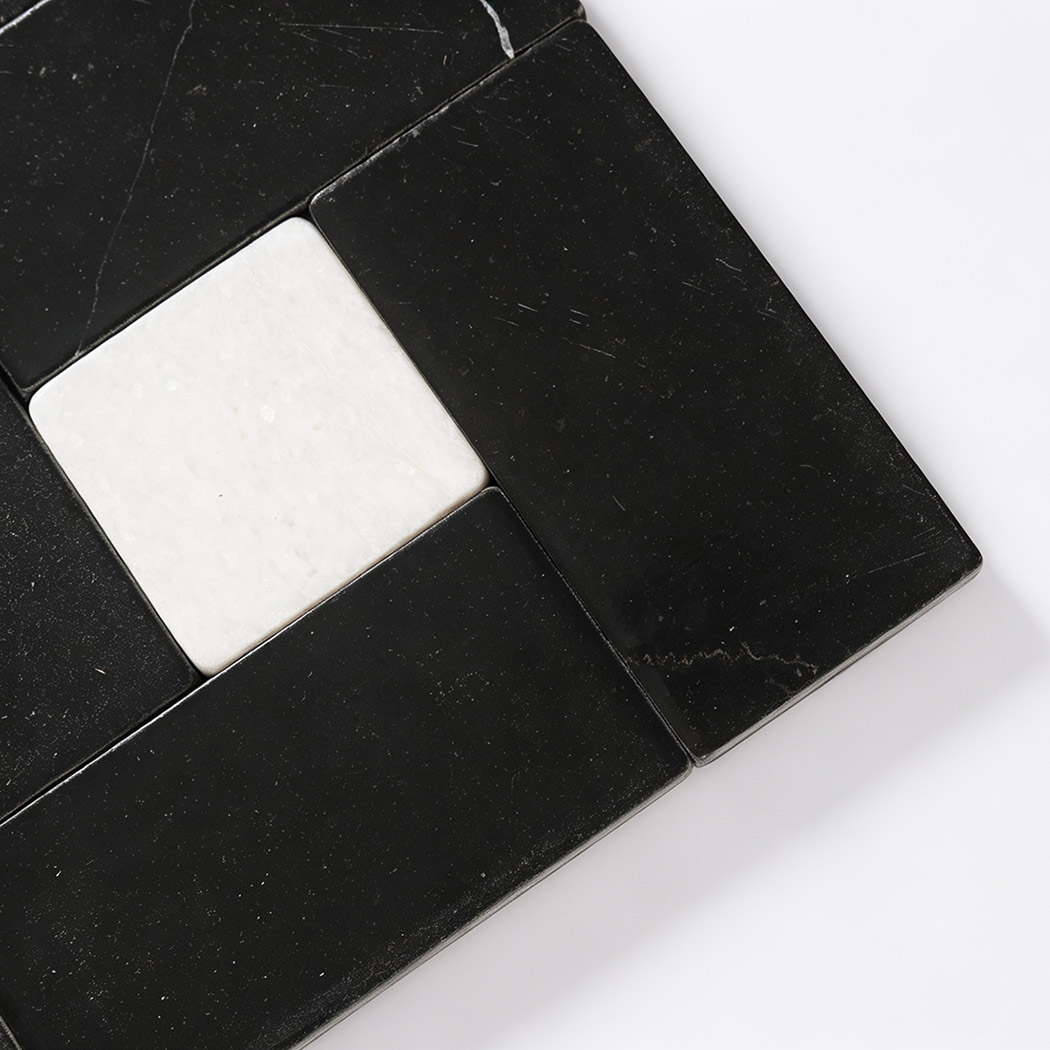
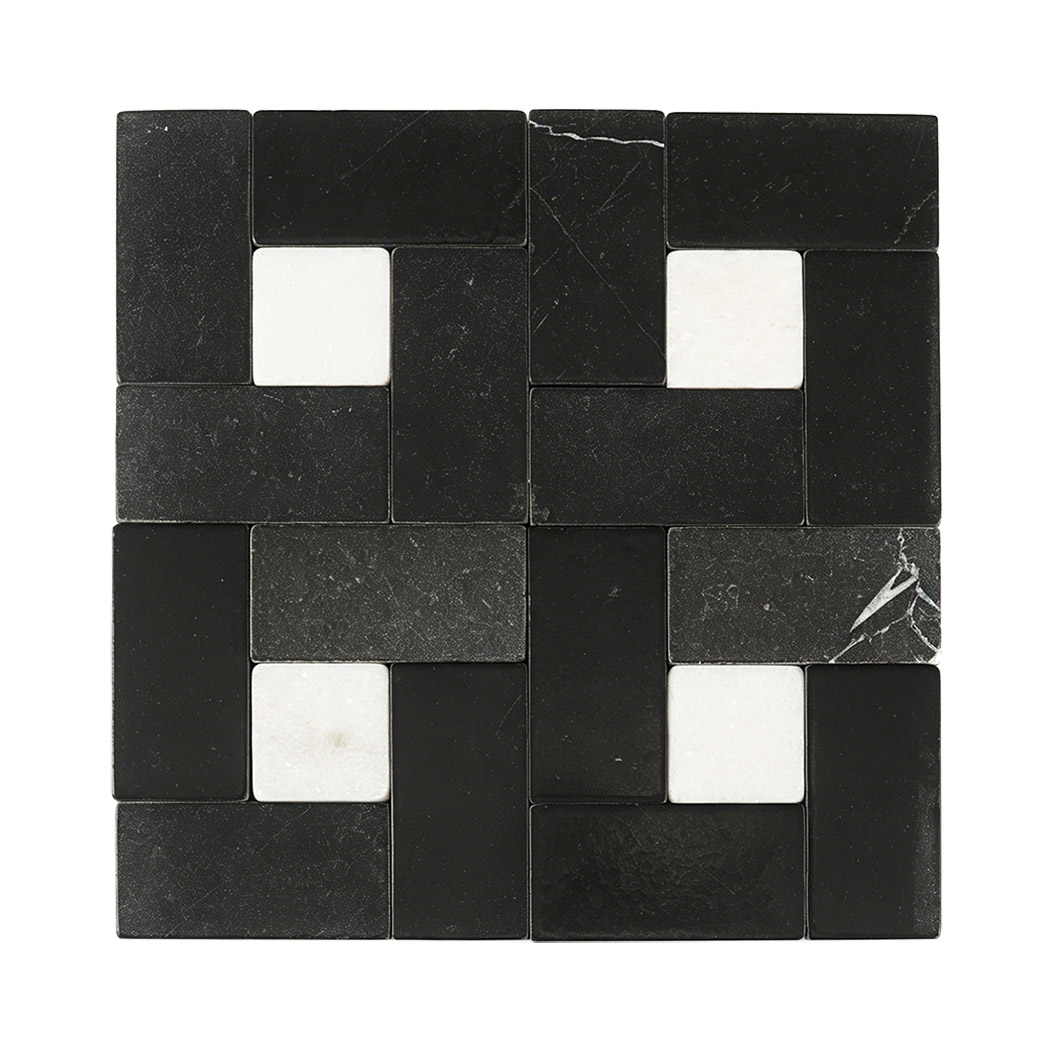
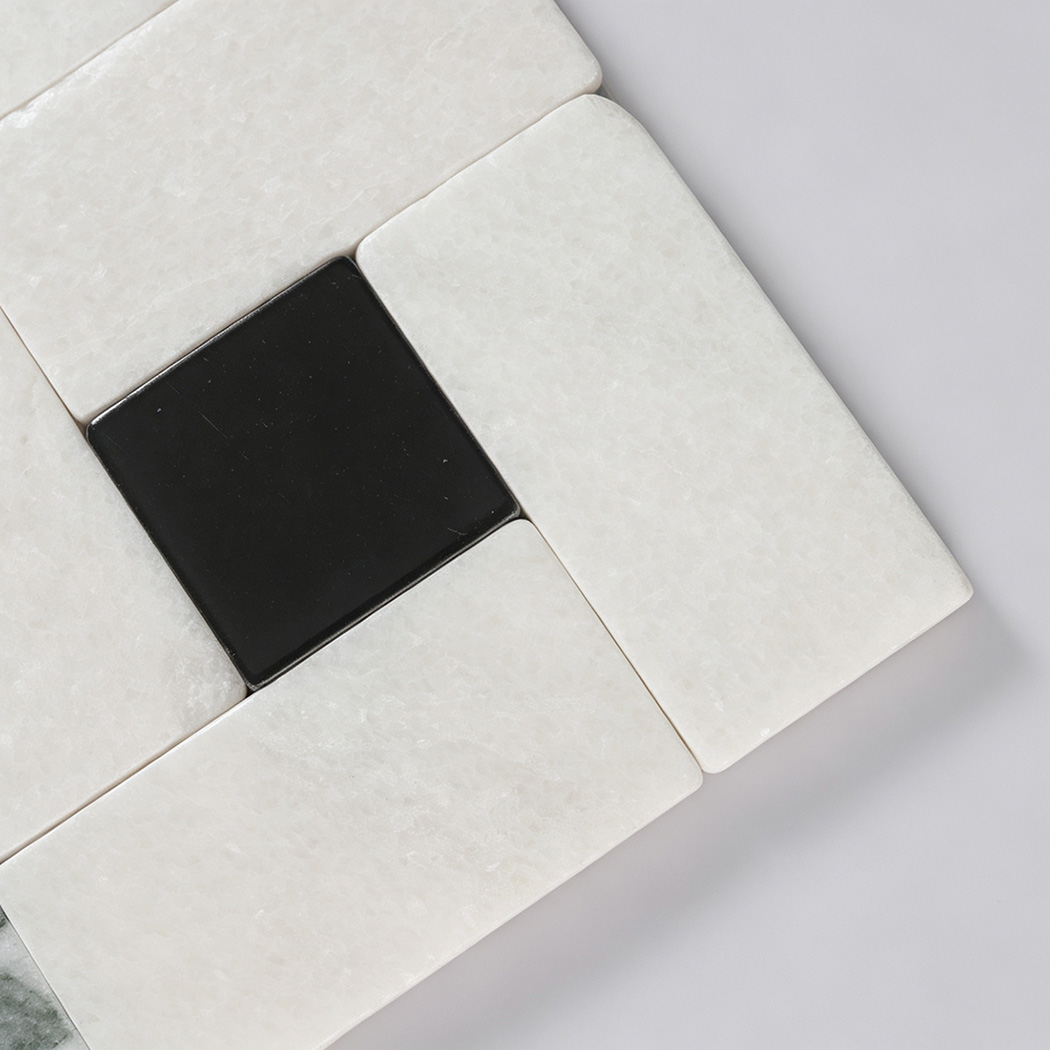
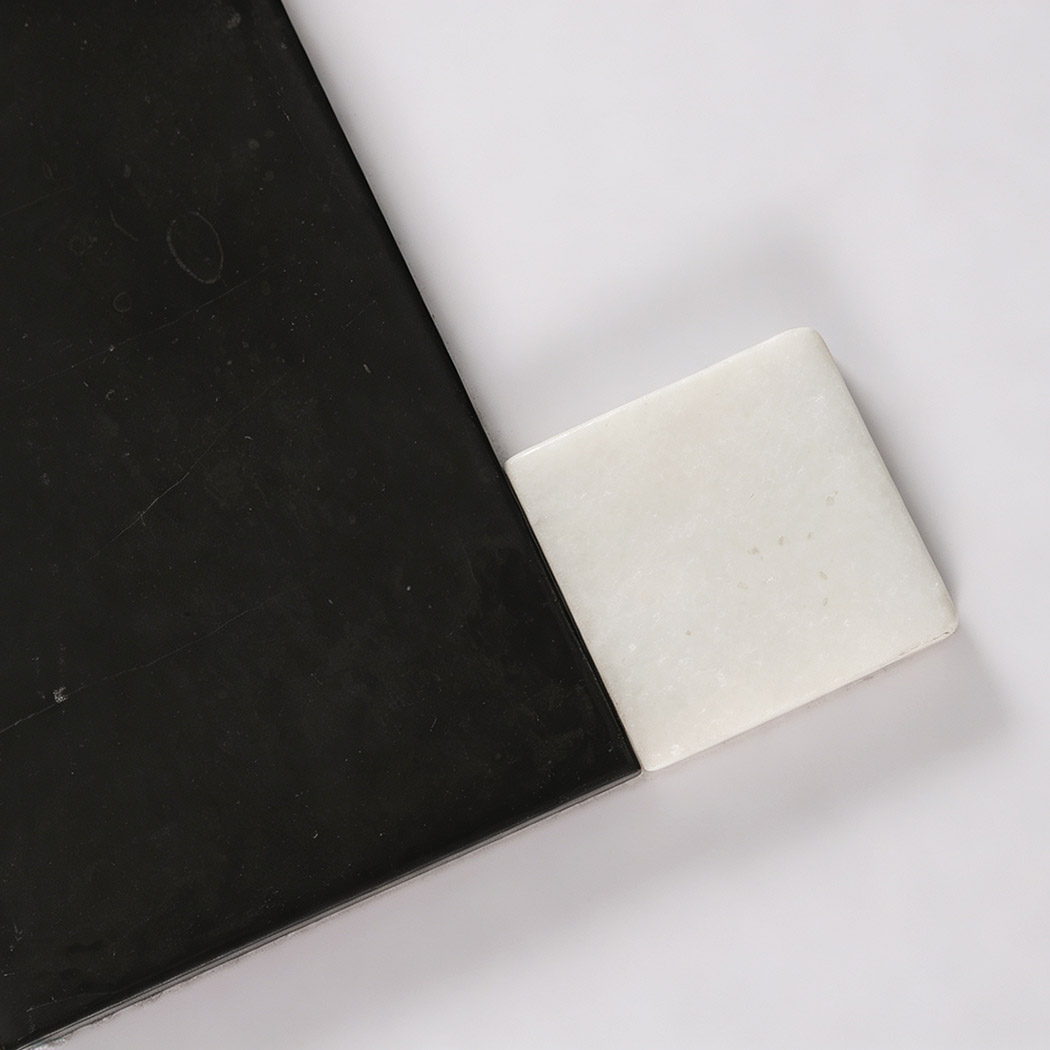
Black and white tiles combine two contrasting colors with a wide range of materials, shapes and layouts. Natural marble introduces unique veining and tonal variation, while glass creates cleaner color definition and glossy or textured surface effects.
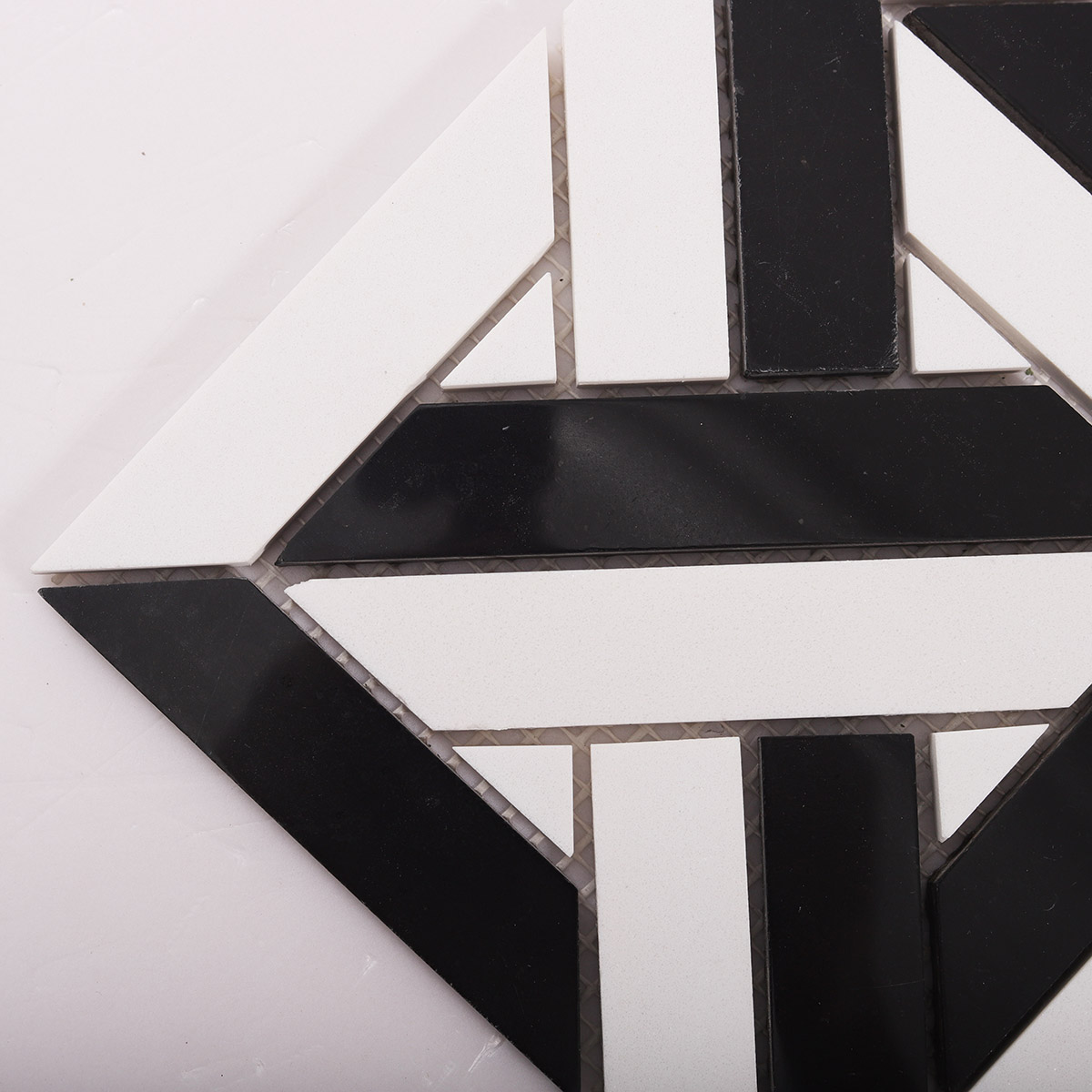
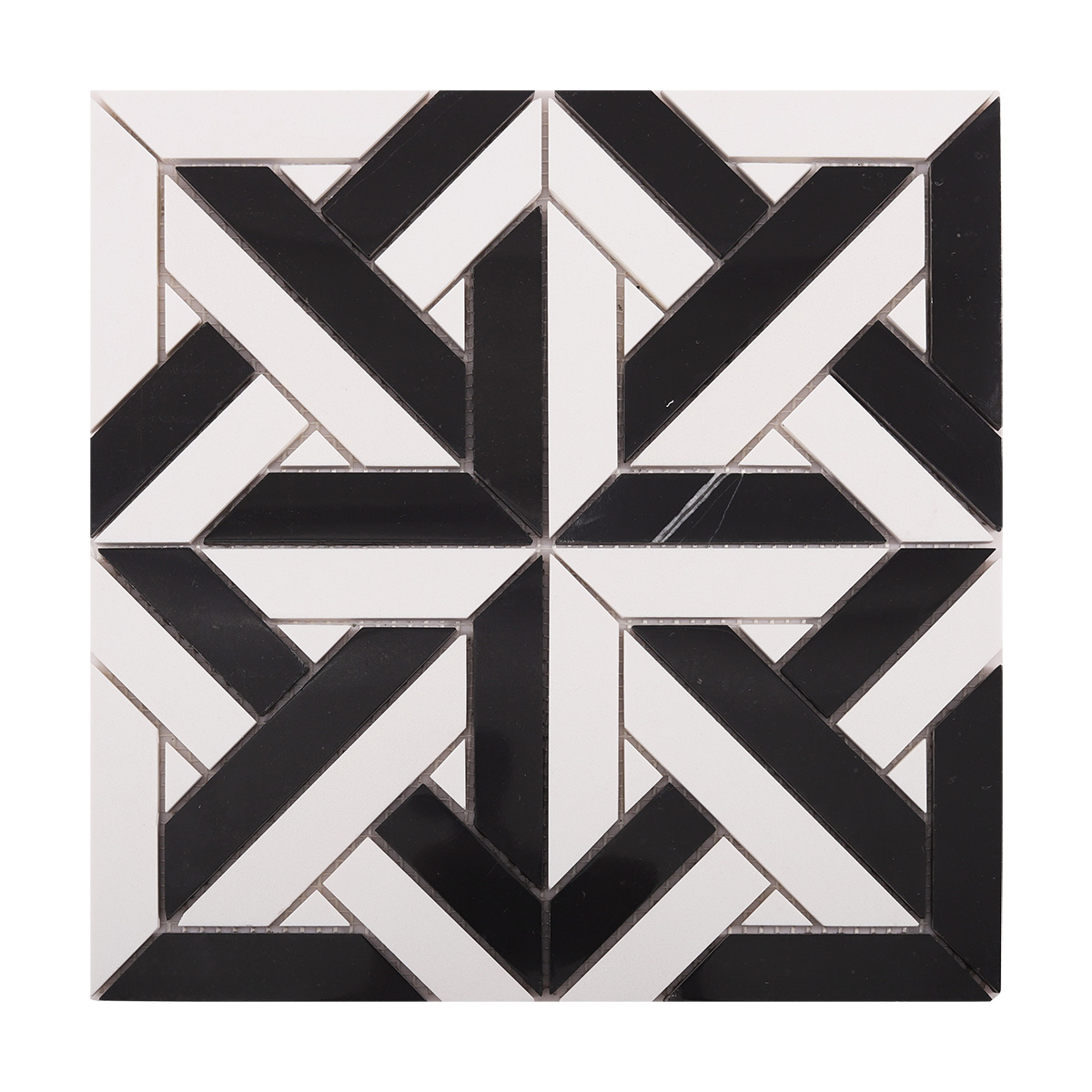
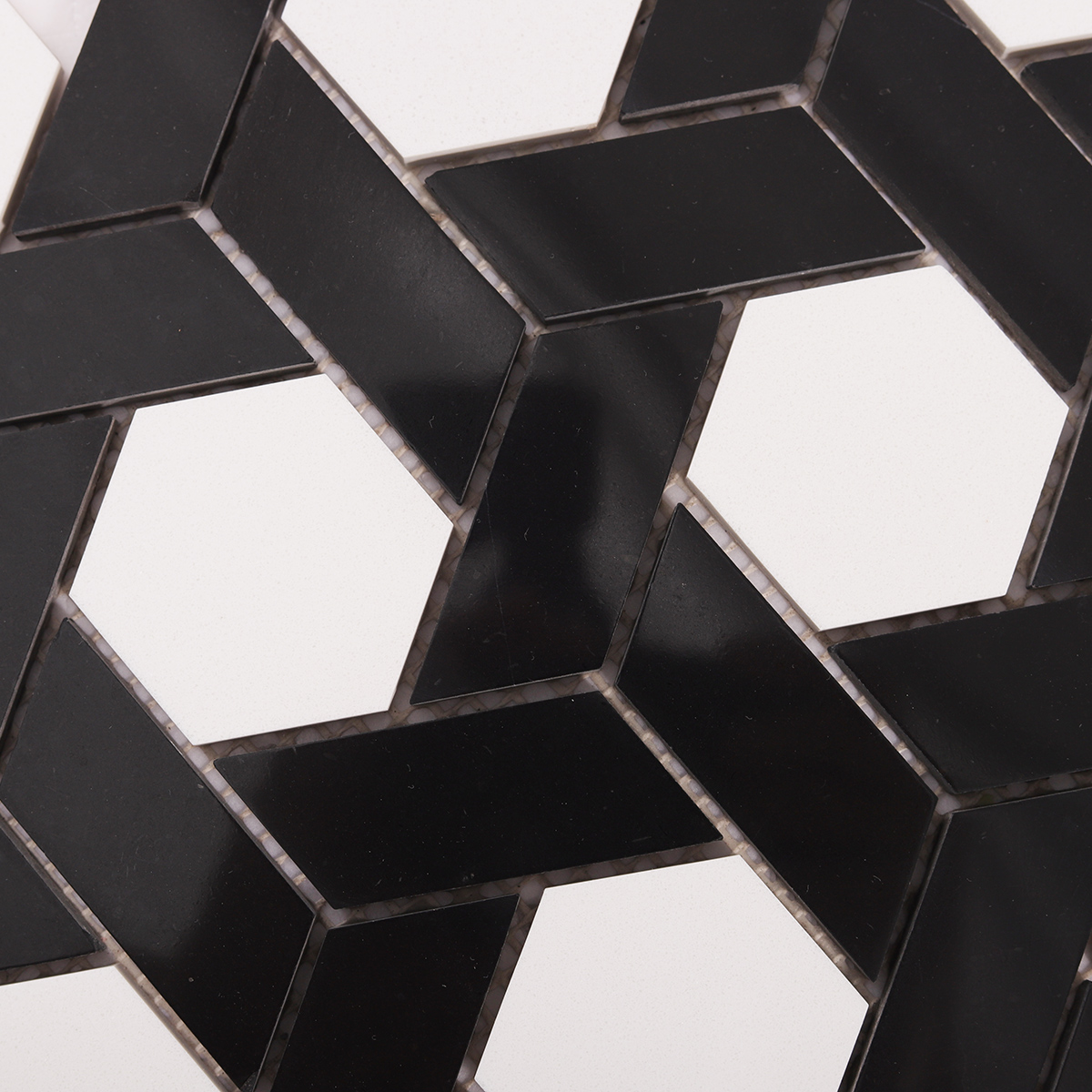
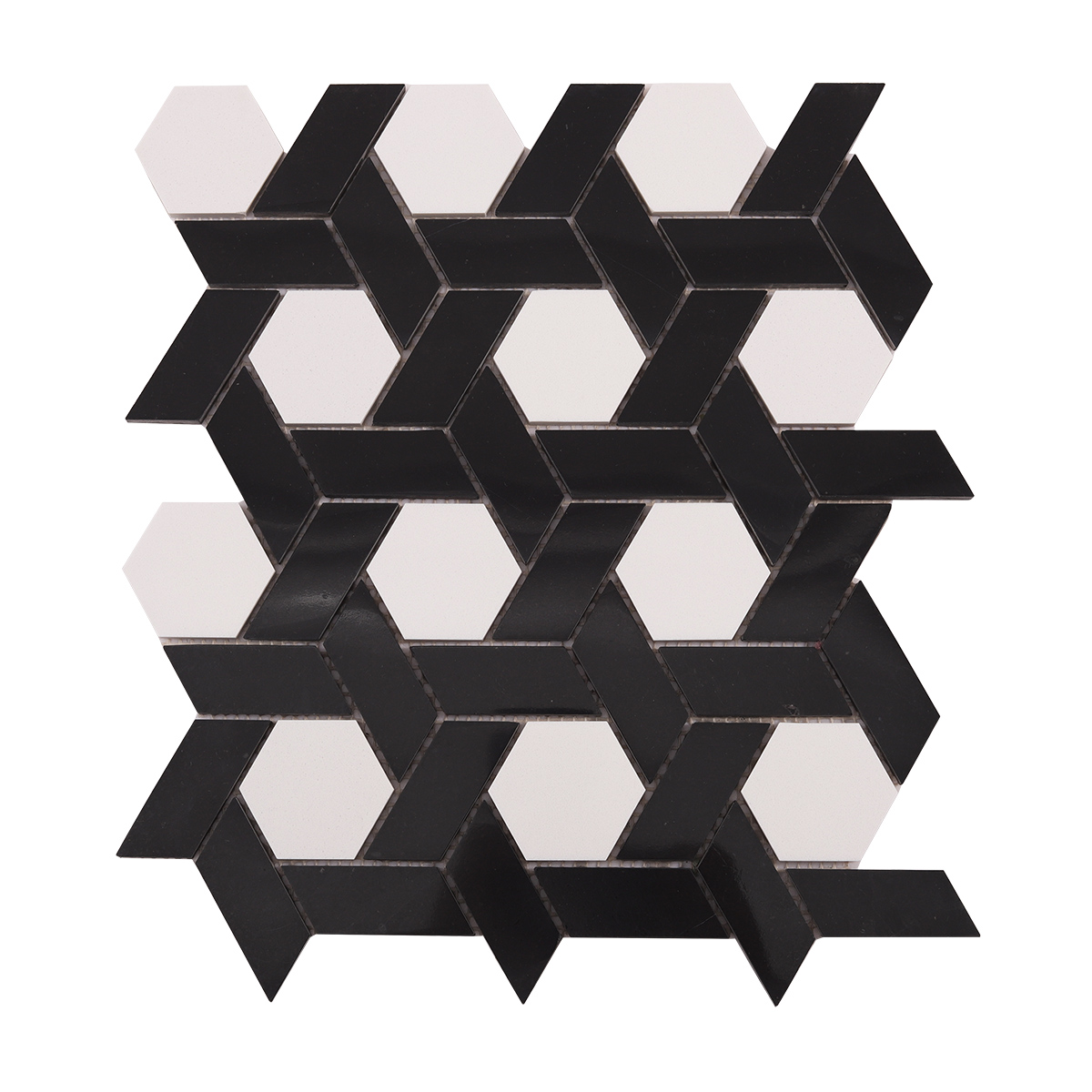
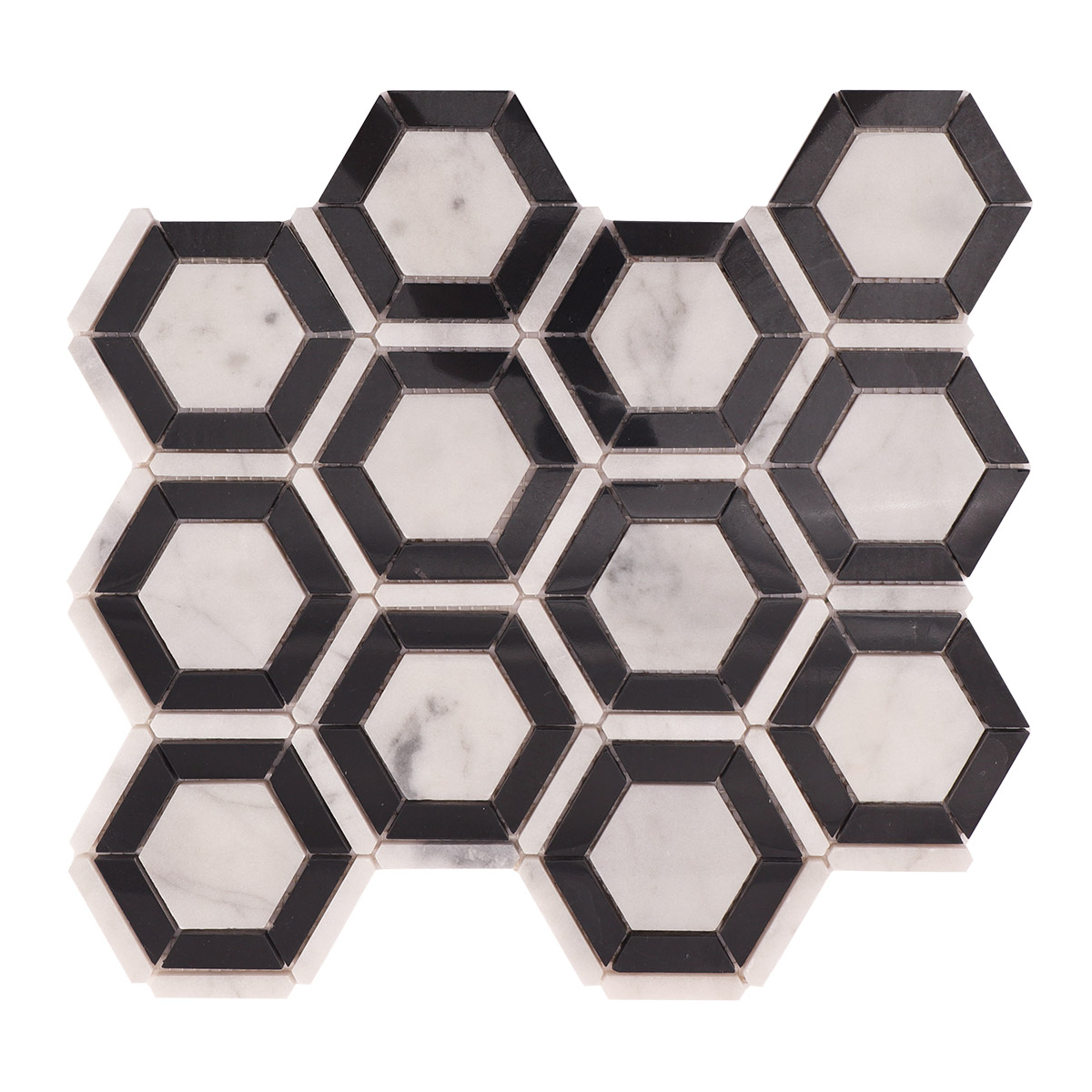
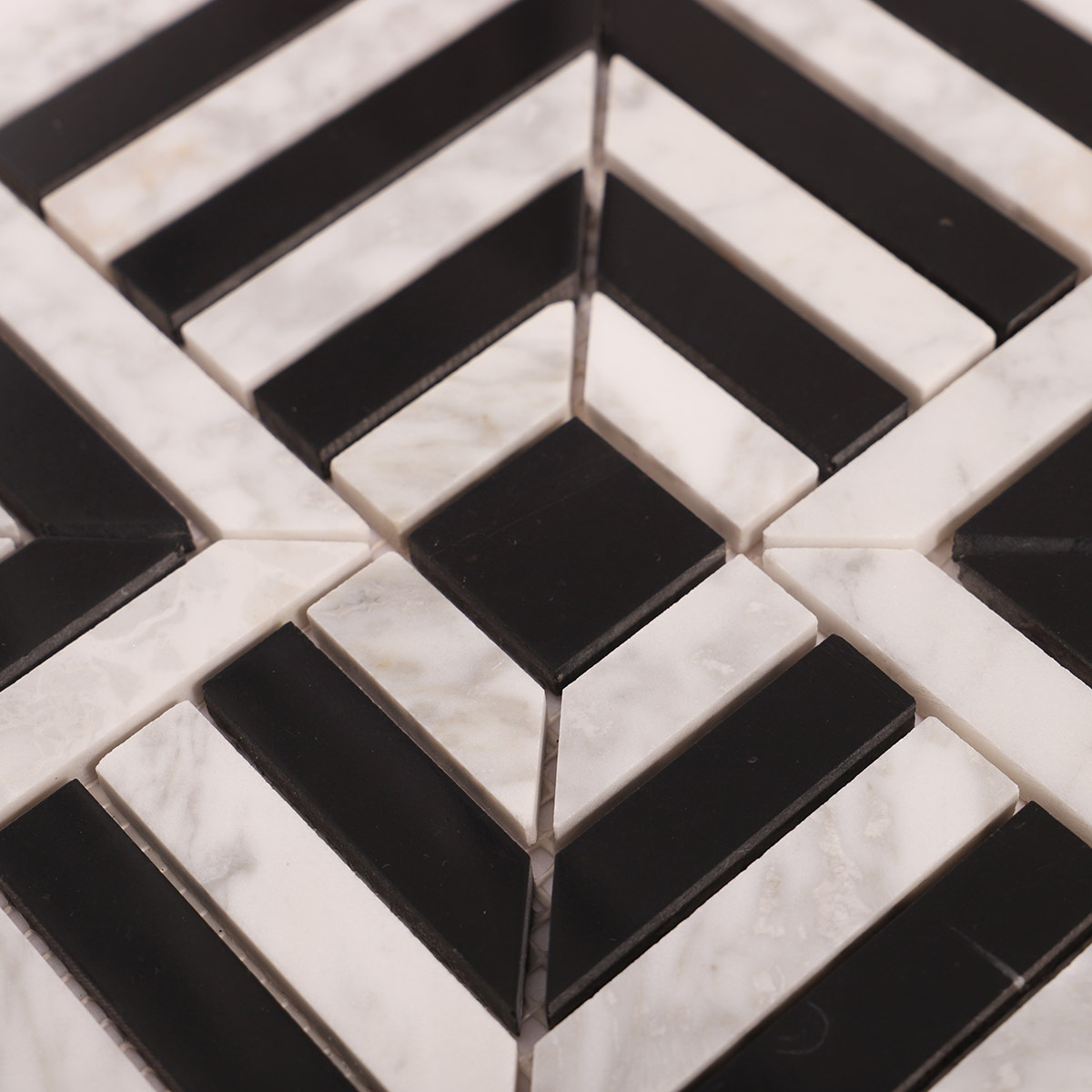
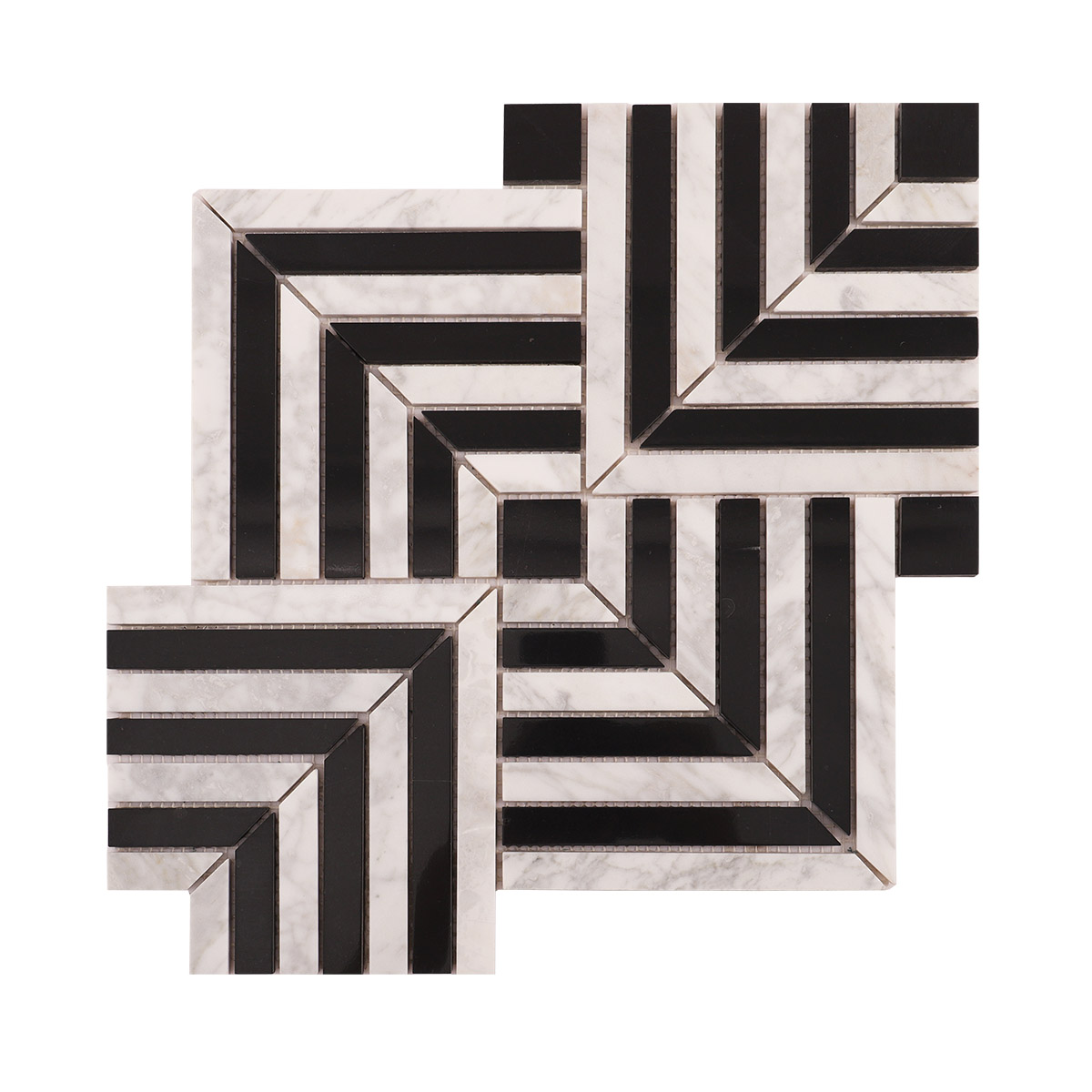
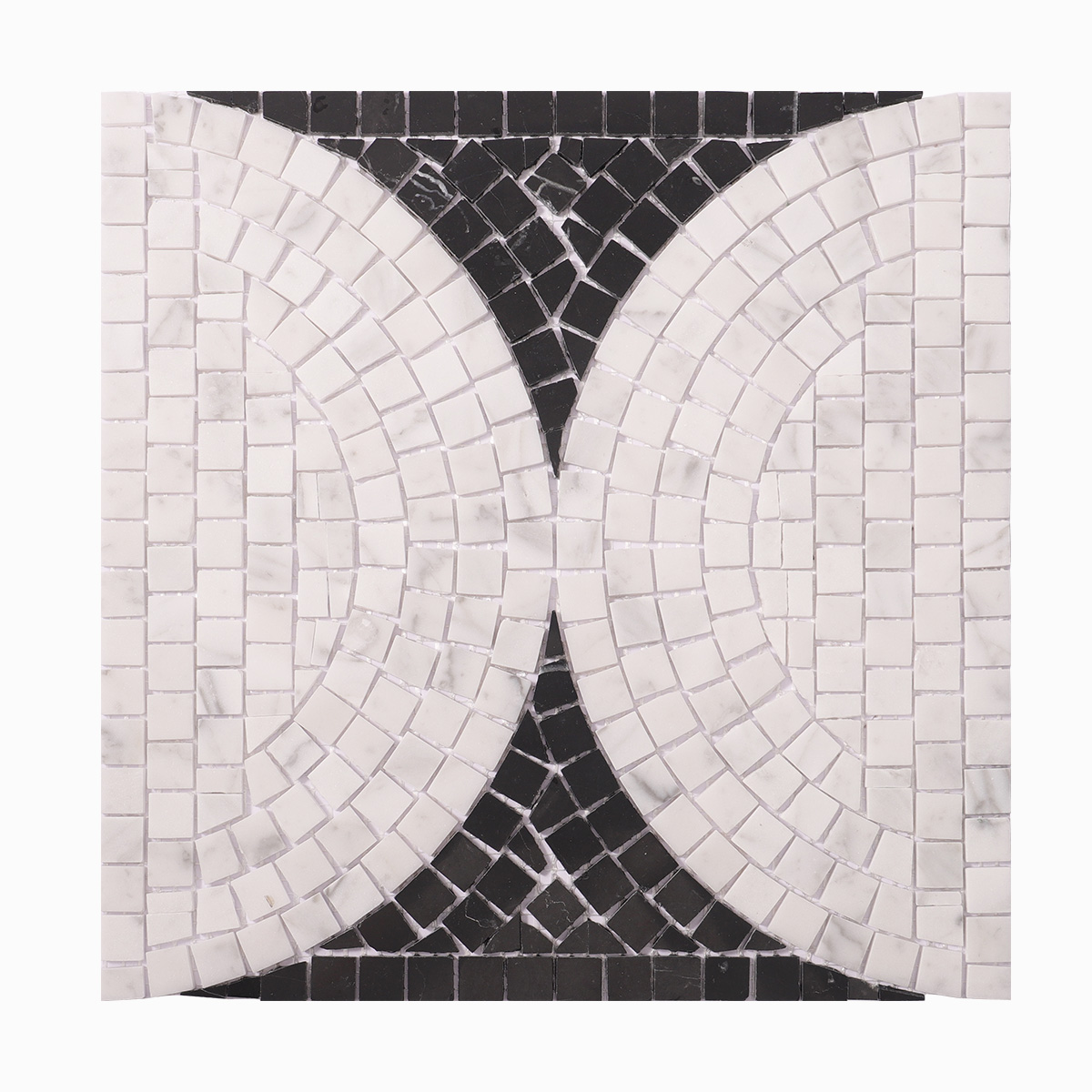
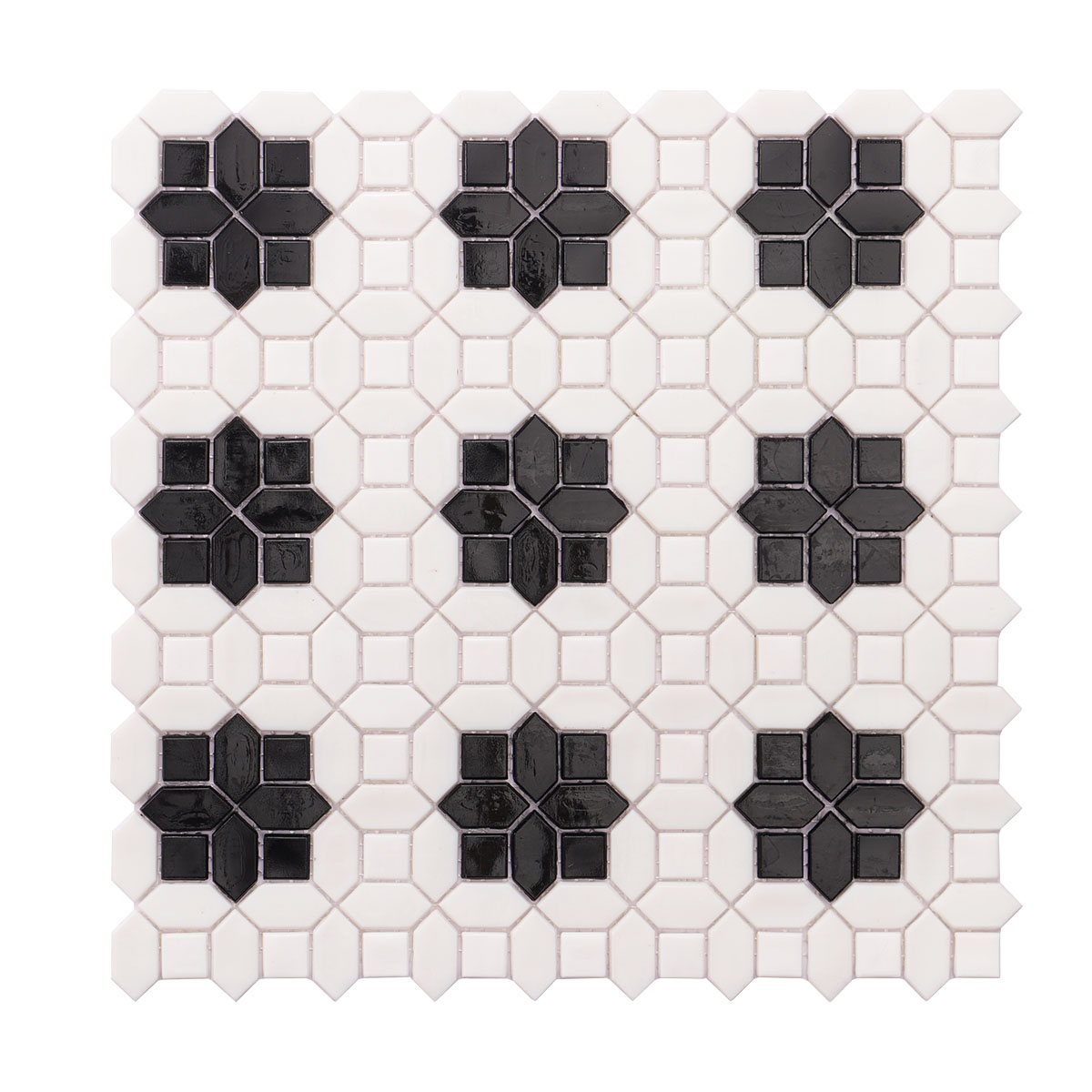
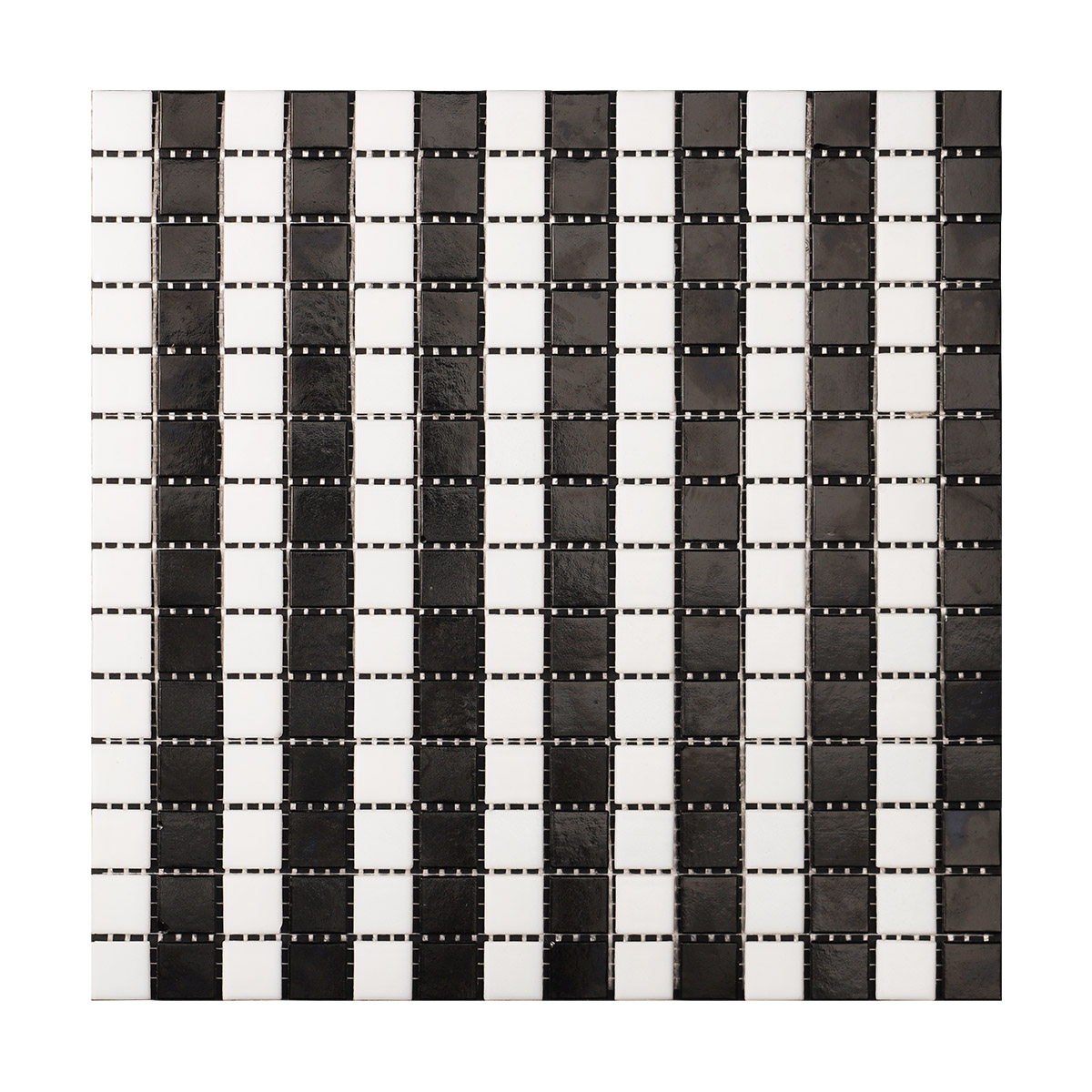
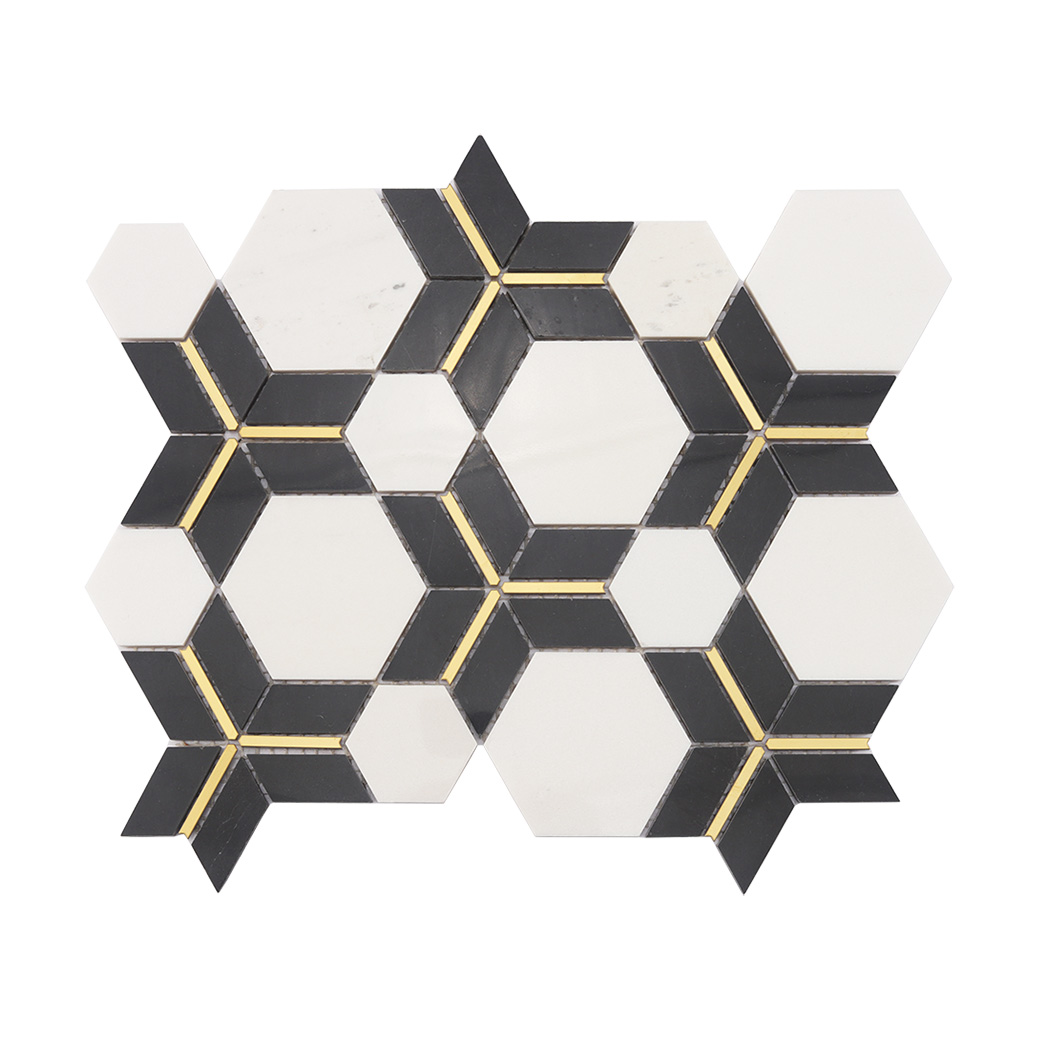
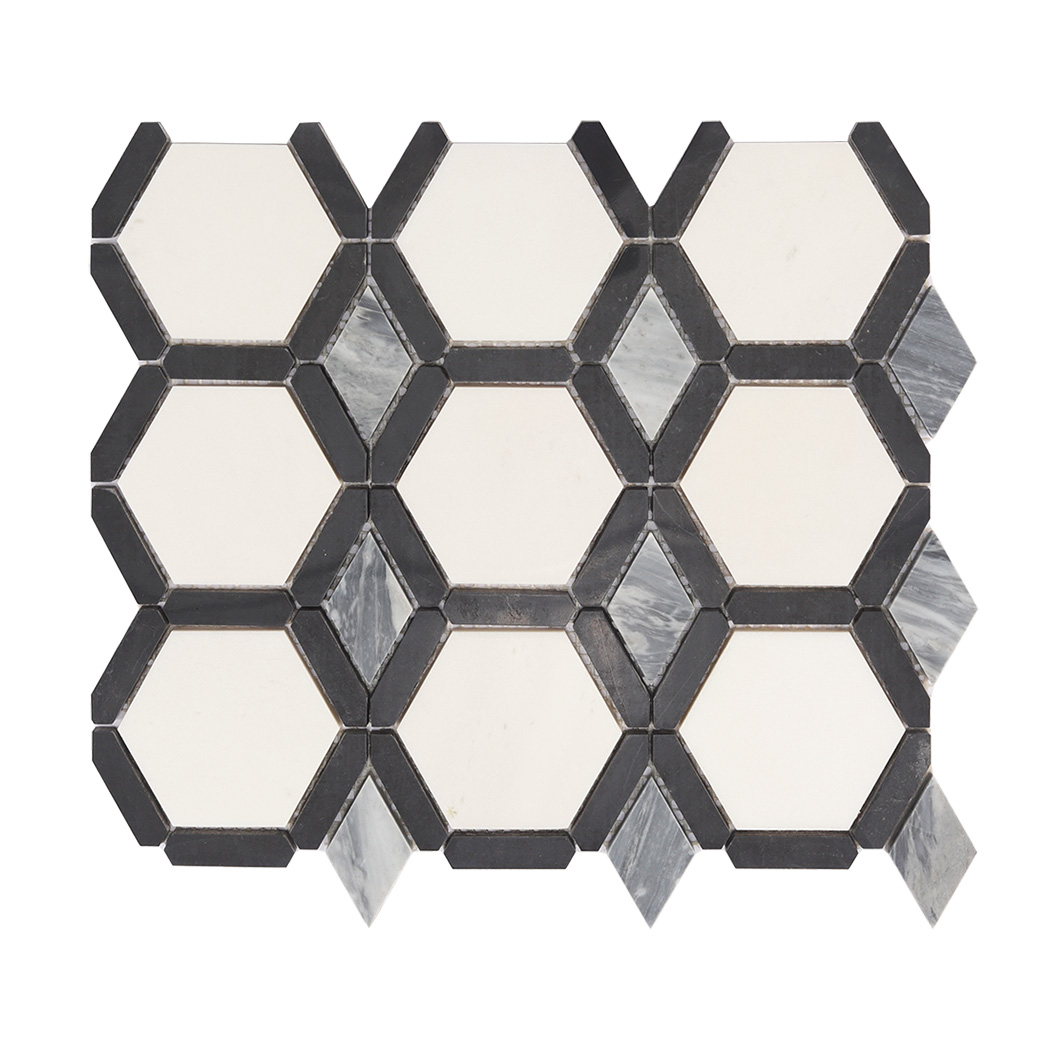
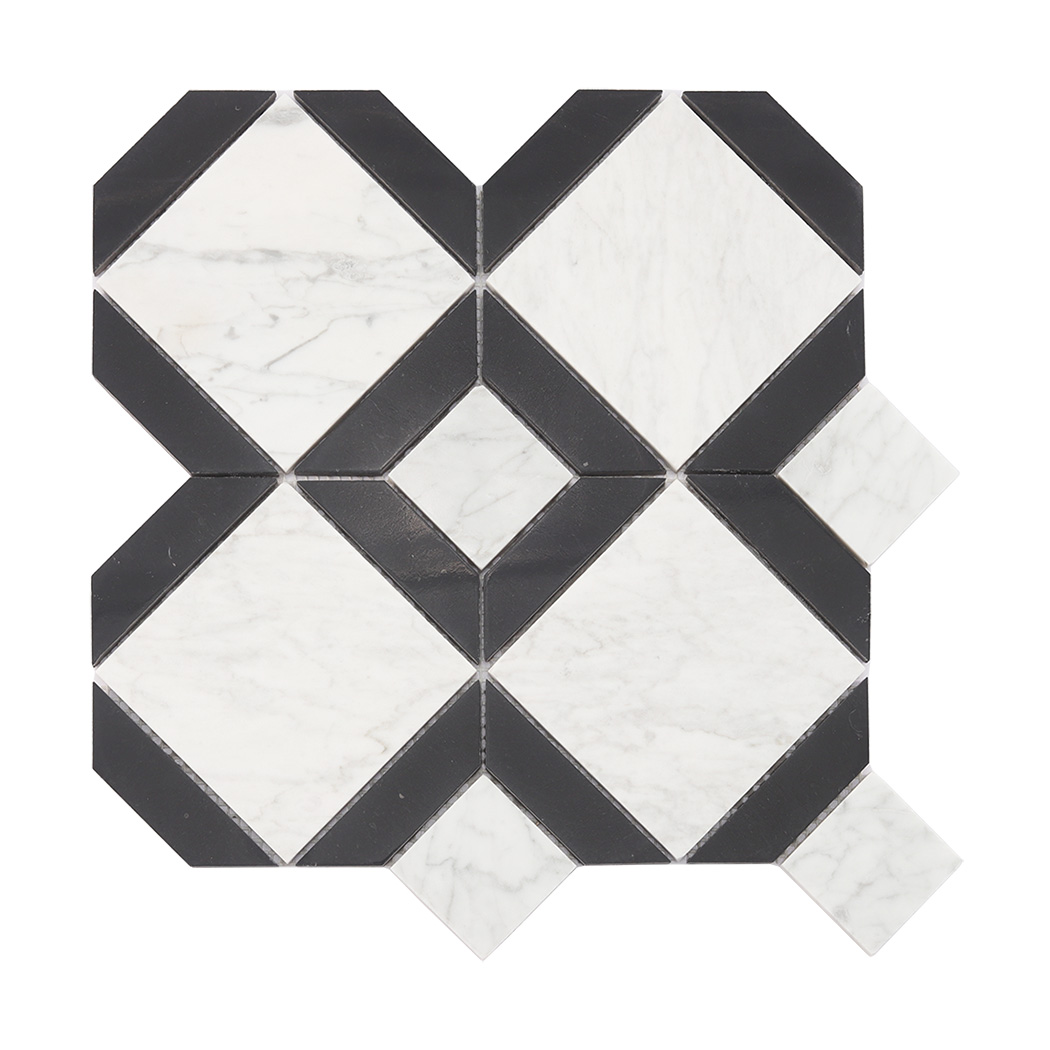
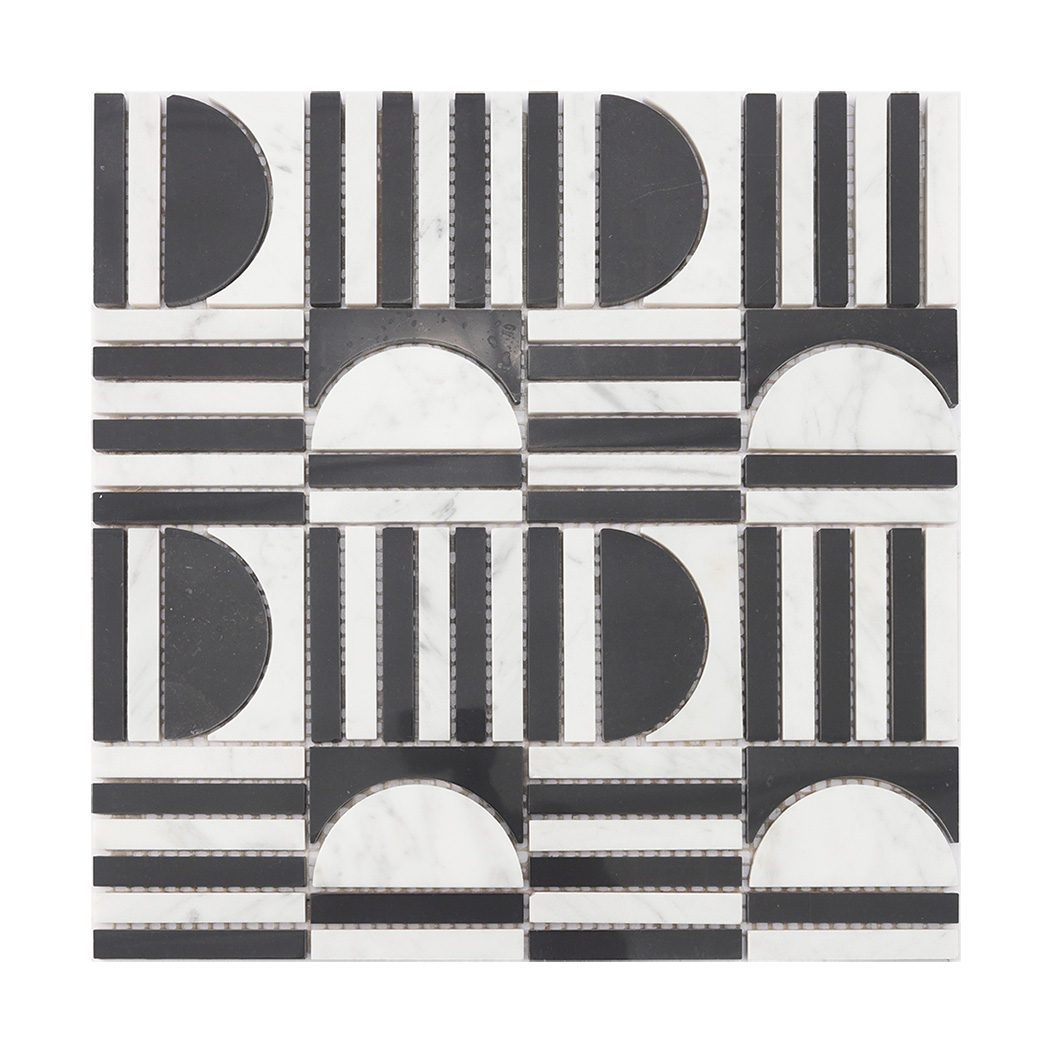
The collection includes squares, hexagons, triangles, pickets, scales, strips, basketweave patterns, floral mosaics and geometric waterjet designs. Because every product differs in material and finish, select the tile according to both its appearance and approved application.
Popular Black and White Tile Patterns
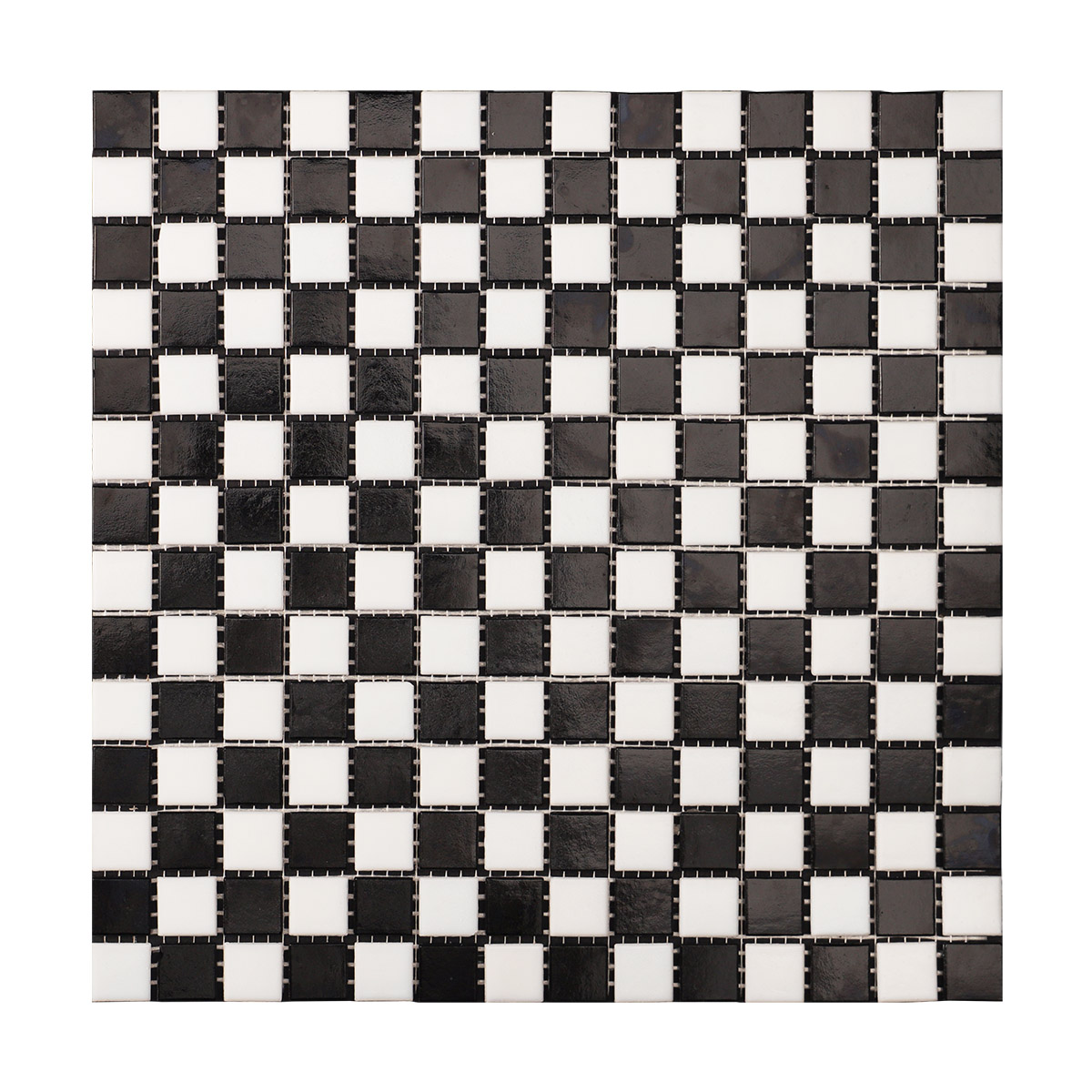
Checkerboard Tiles
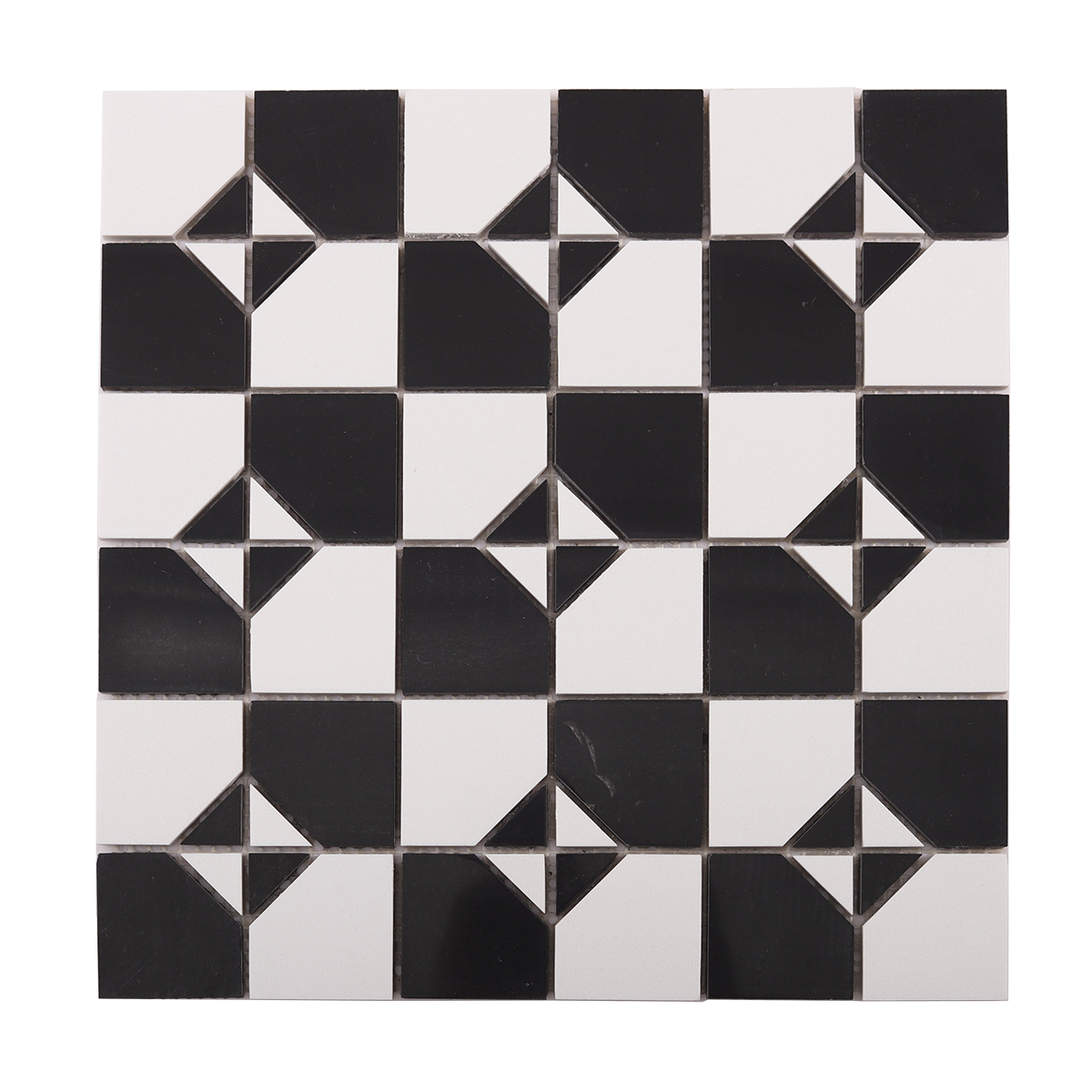
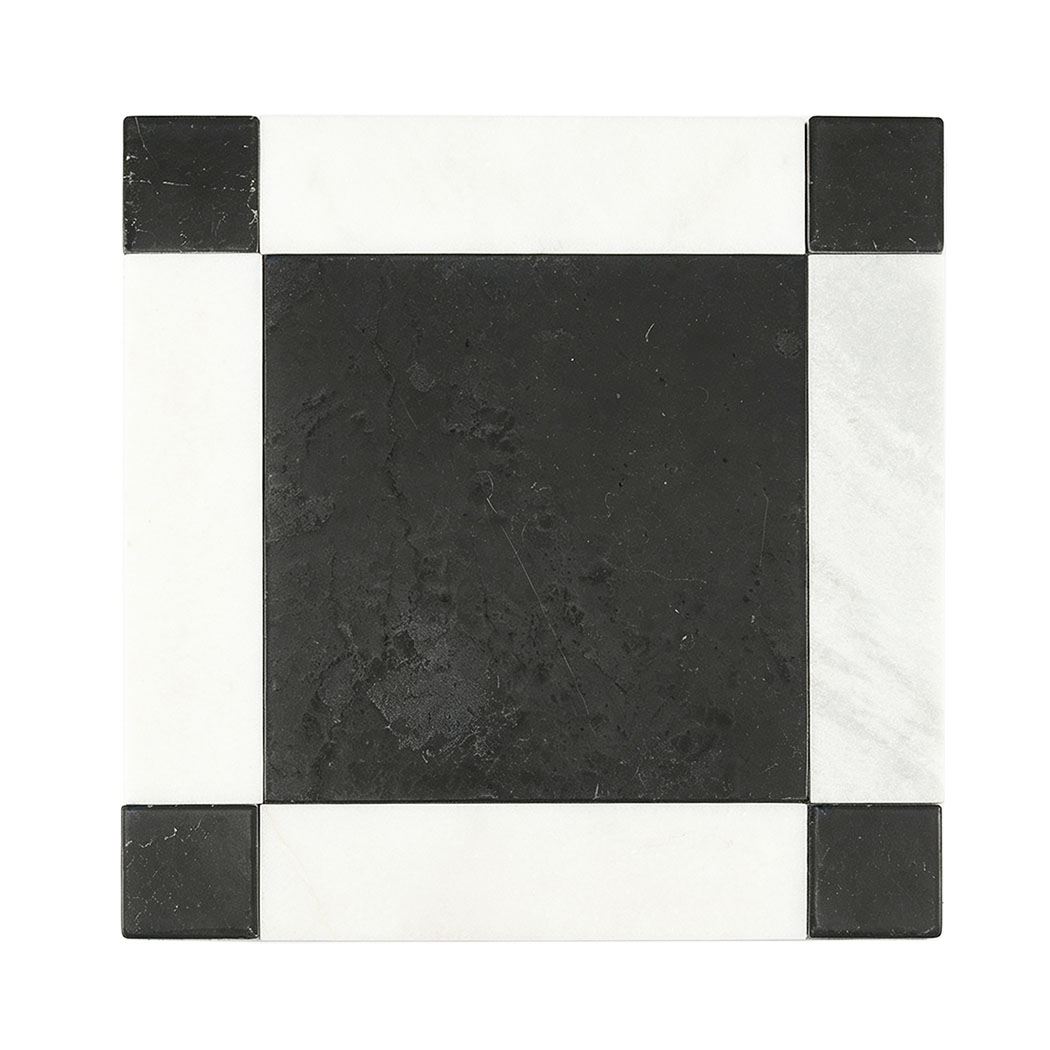
Checkerboard tiles create a structured alternating pattern associated with vintage kitchens, entryways and classic interiors. Glass and marble versions offer different levels of shine, texture and natural variation.
Geometric Tiles
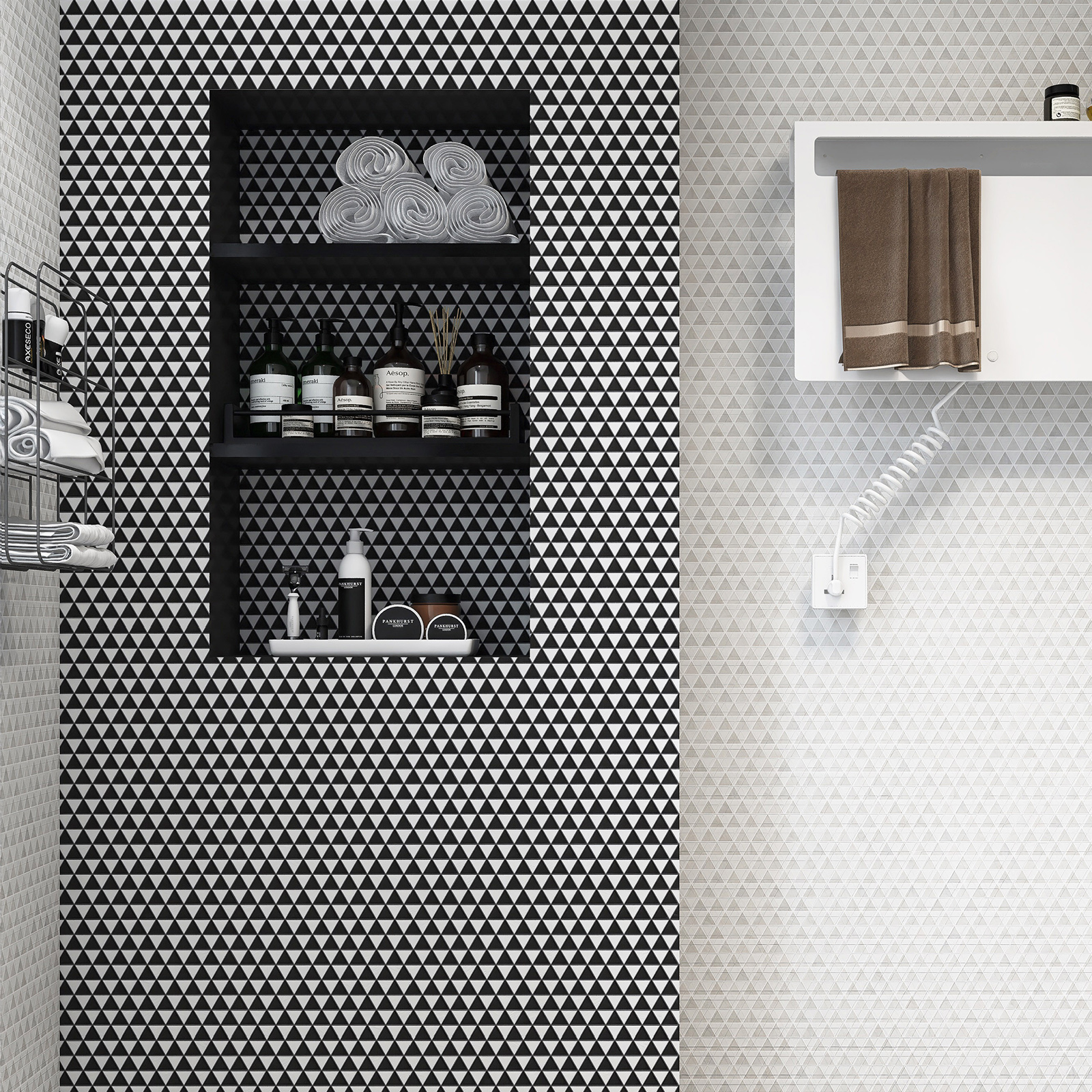
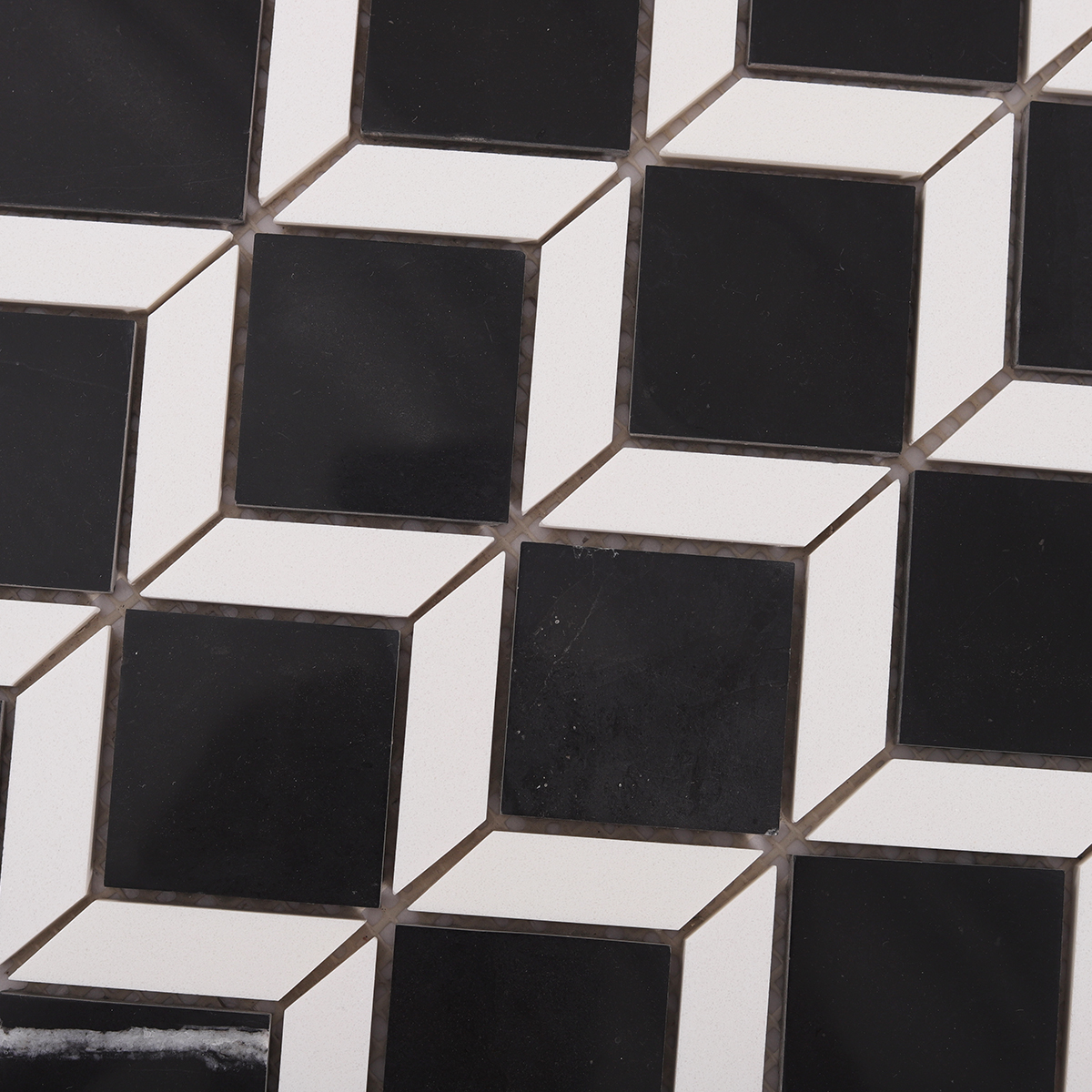
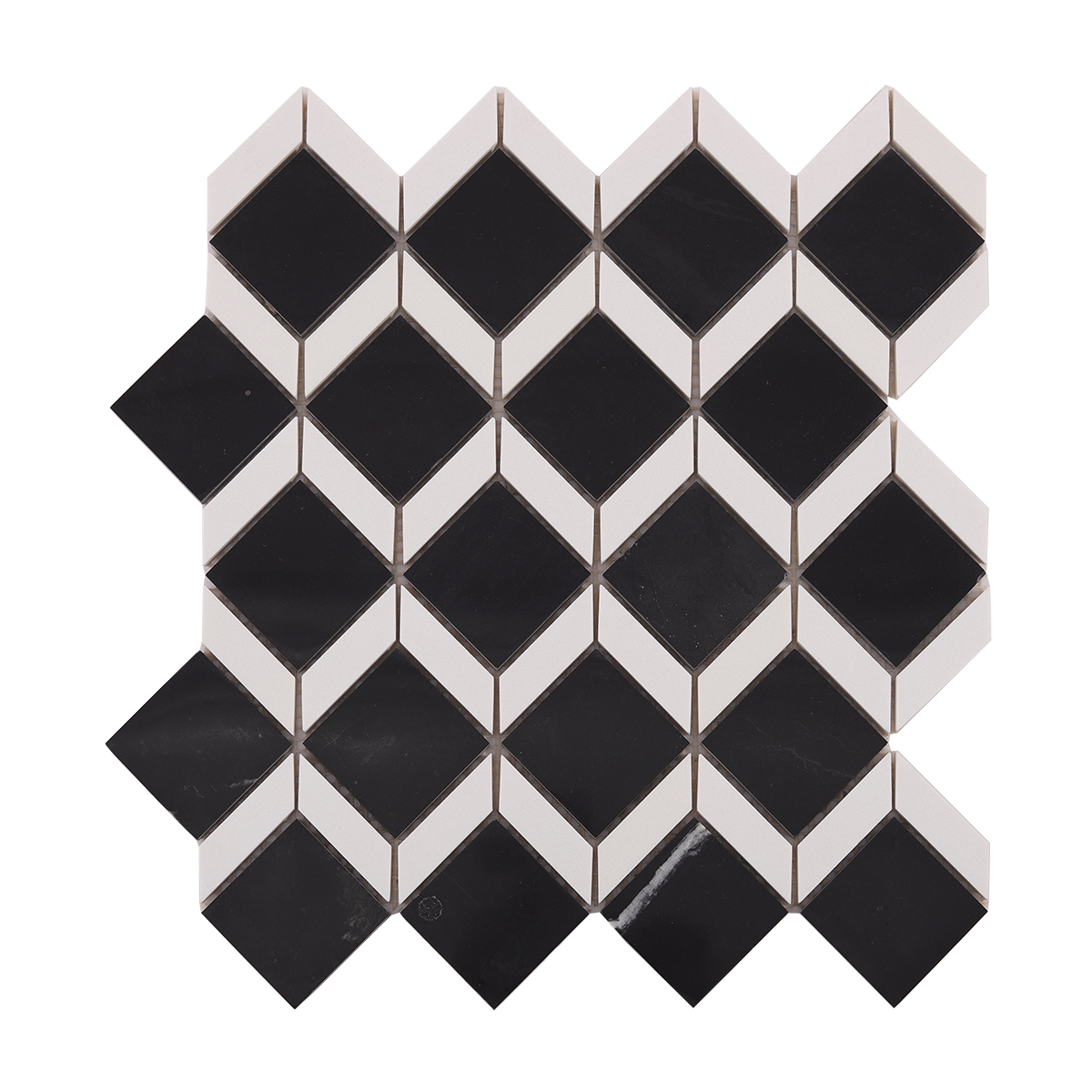
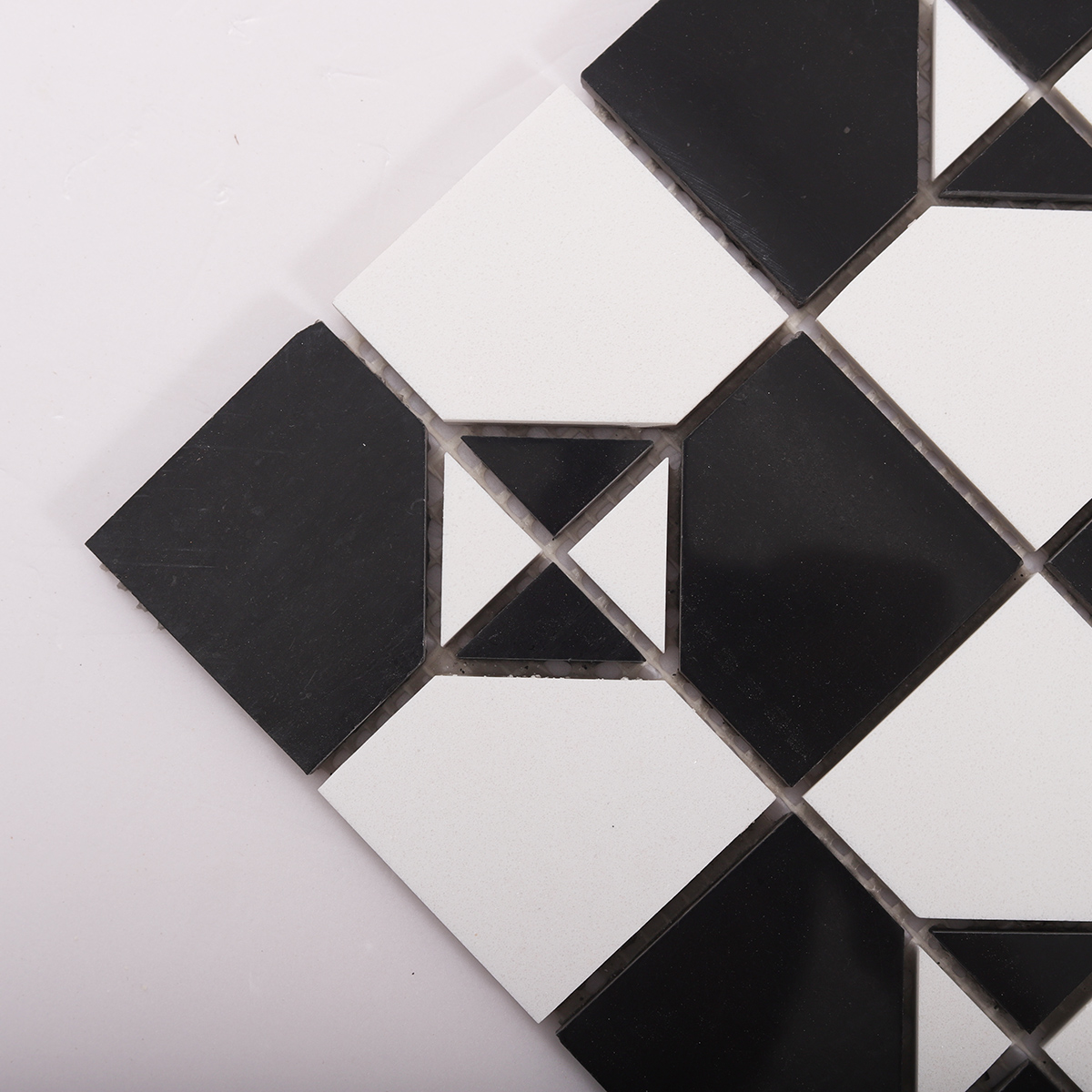
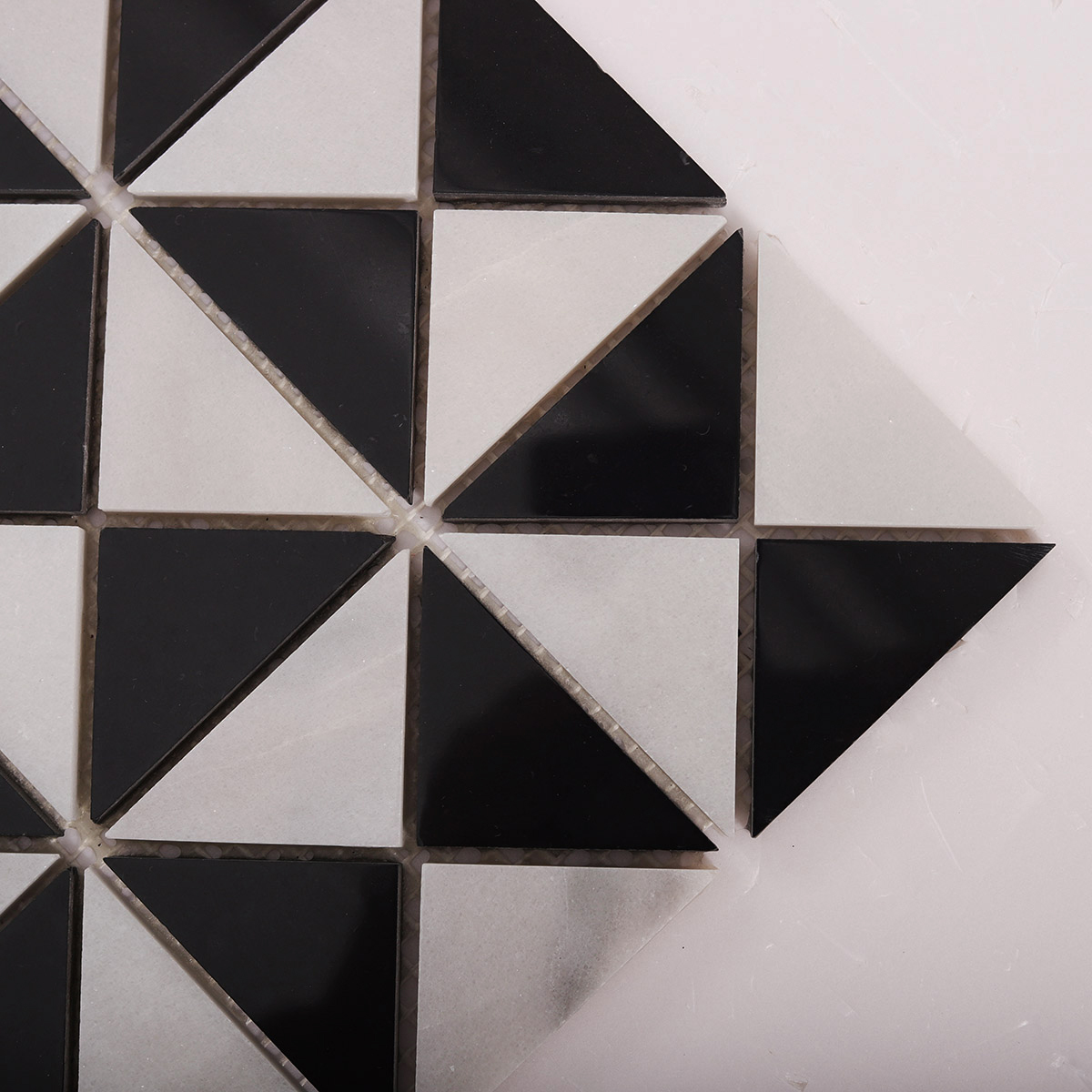
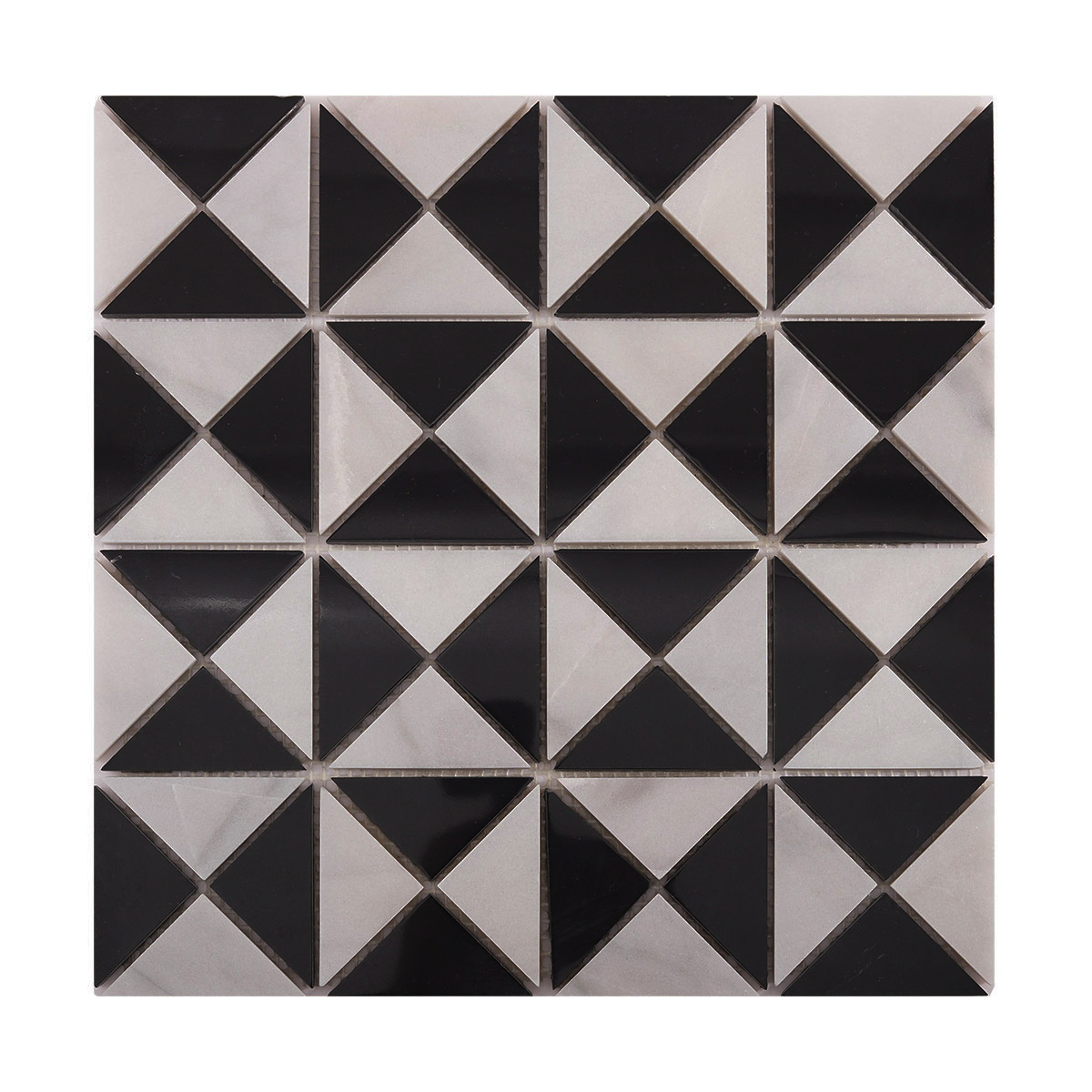
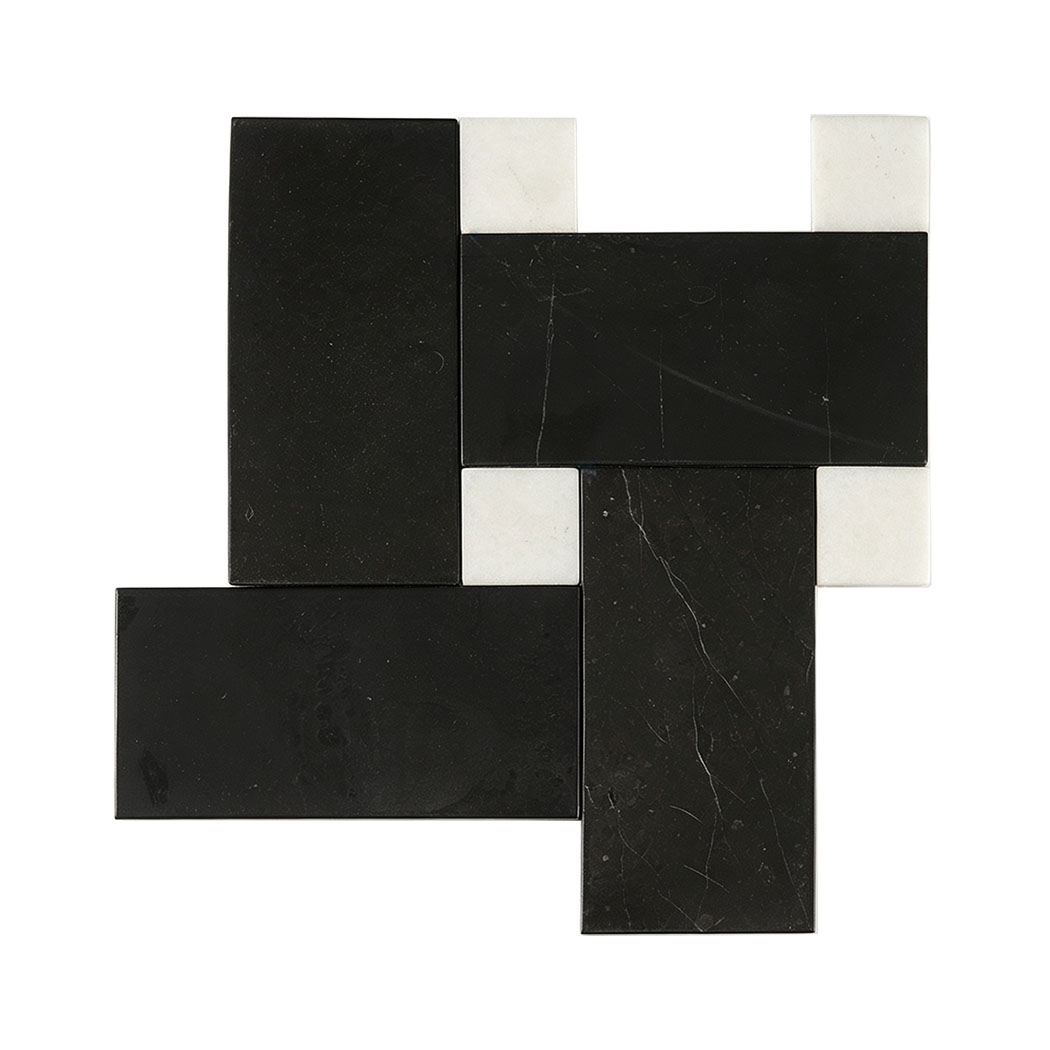
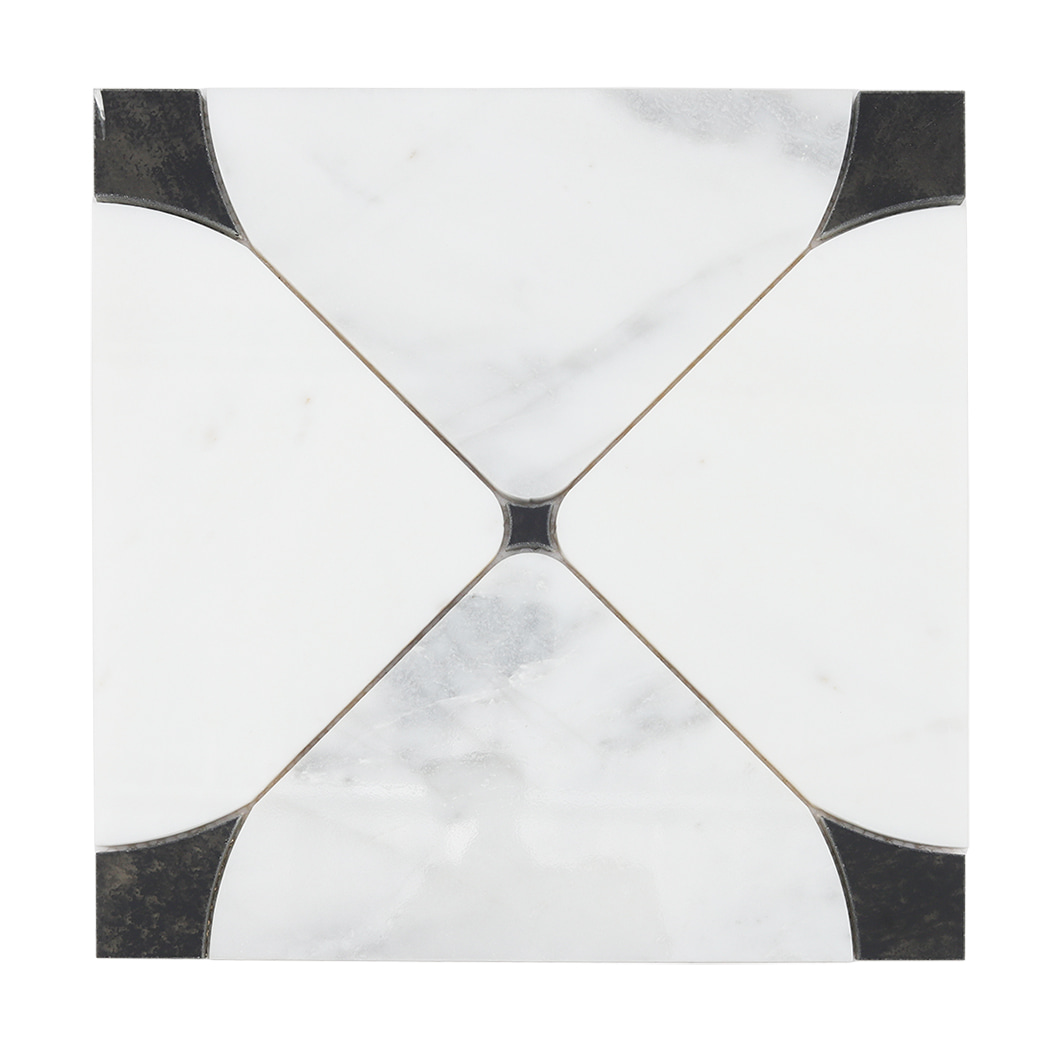
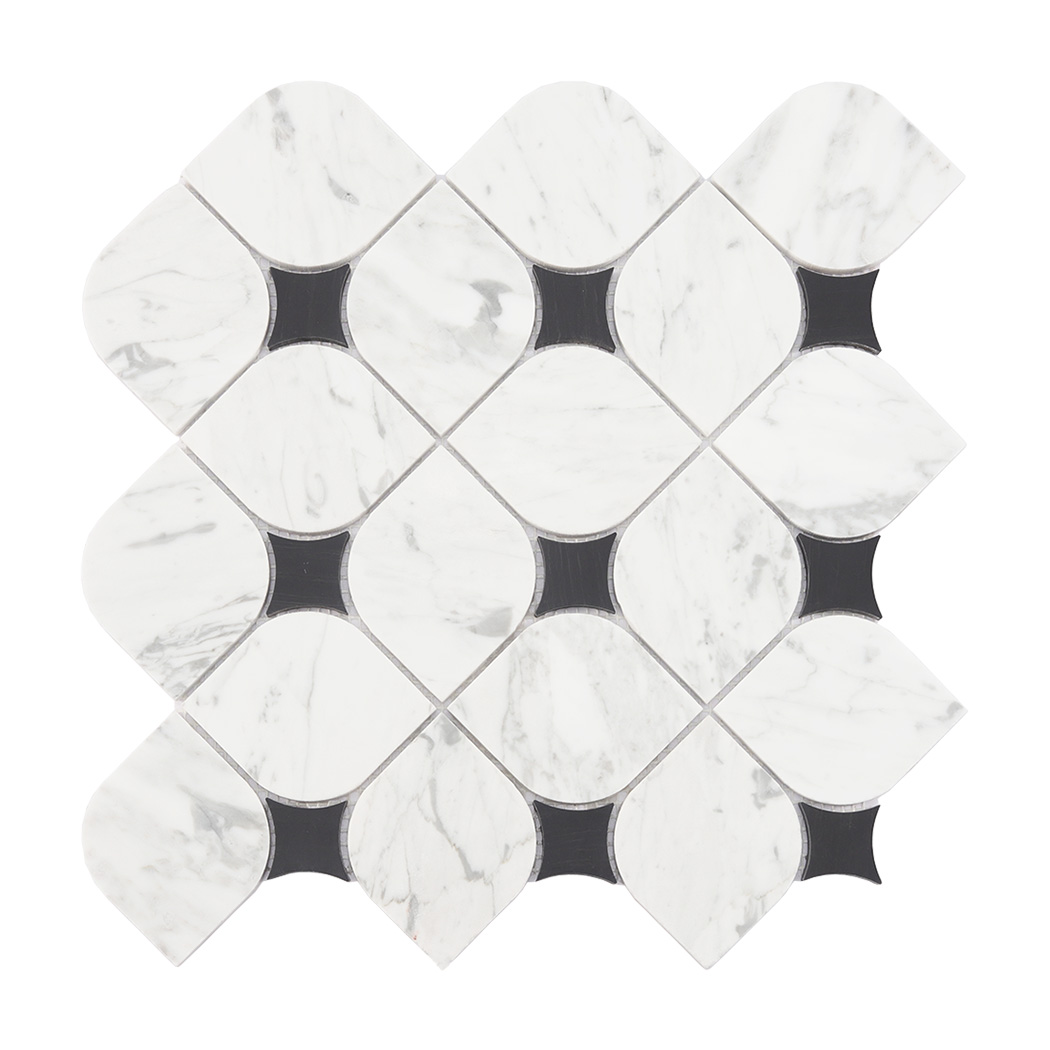
Triangles, diamonds, squares and interlocking shapes transform the black and white palette into bold directional patterns for walls and approved floors.
Hexagon and Octagon Tiles
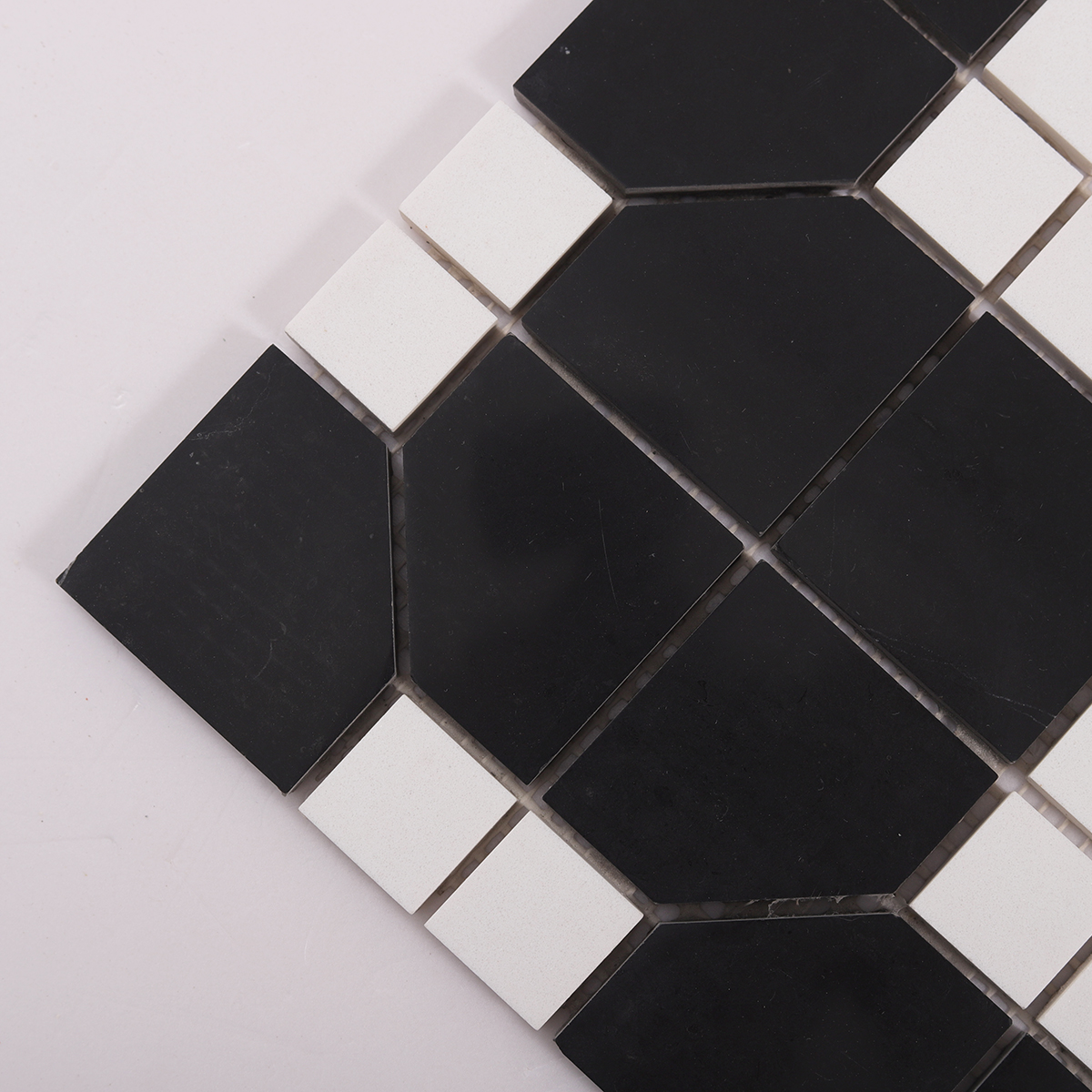
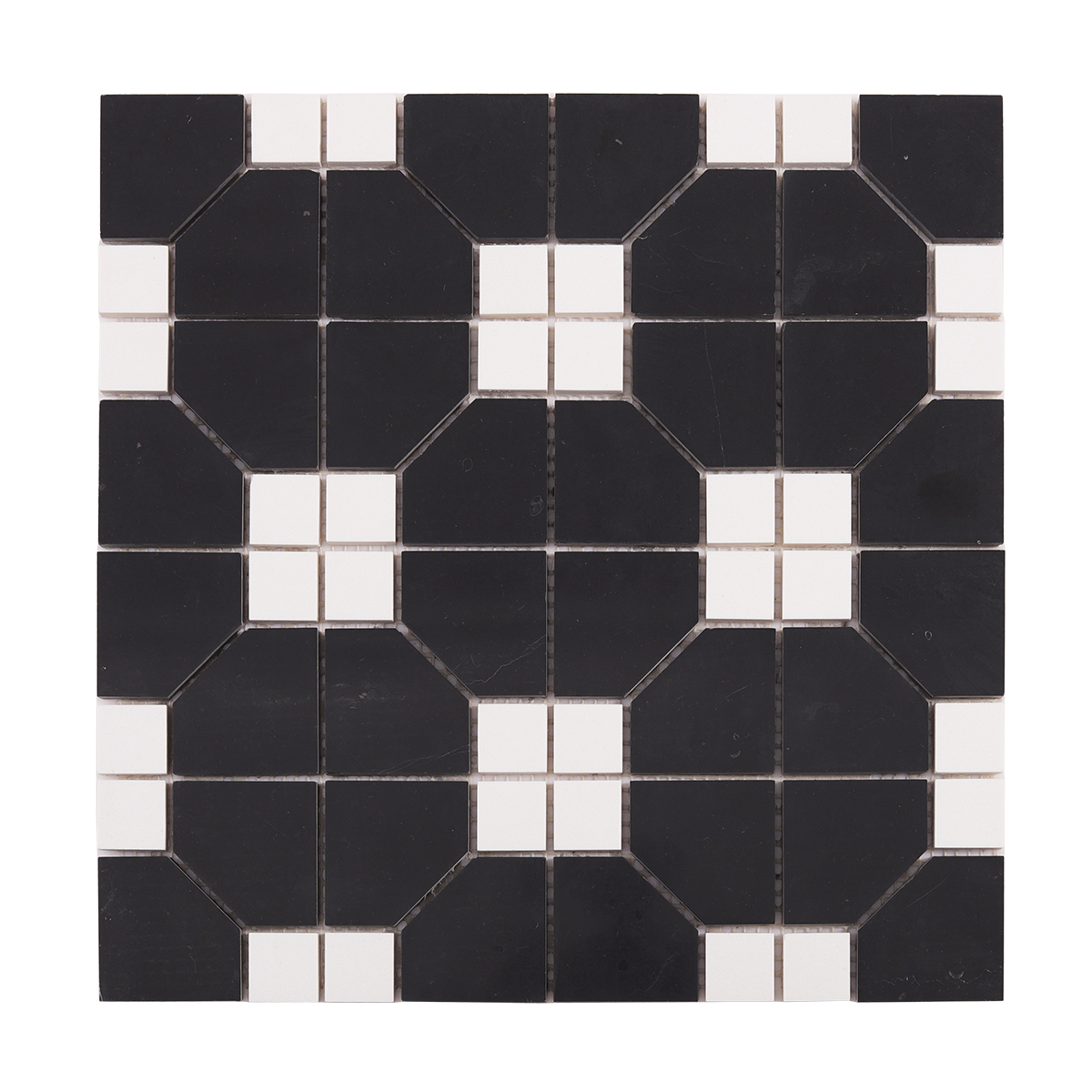
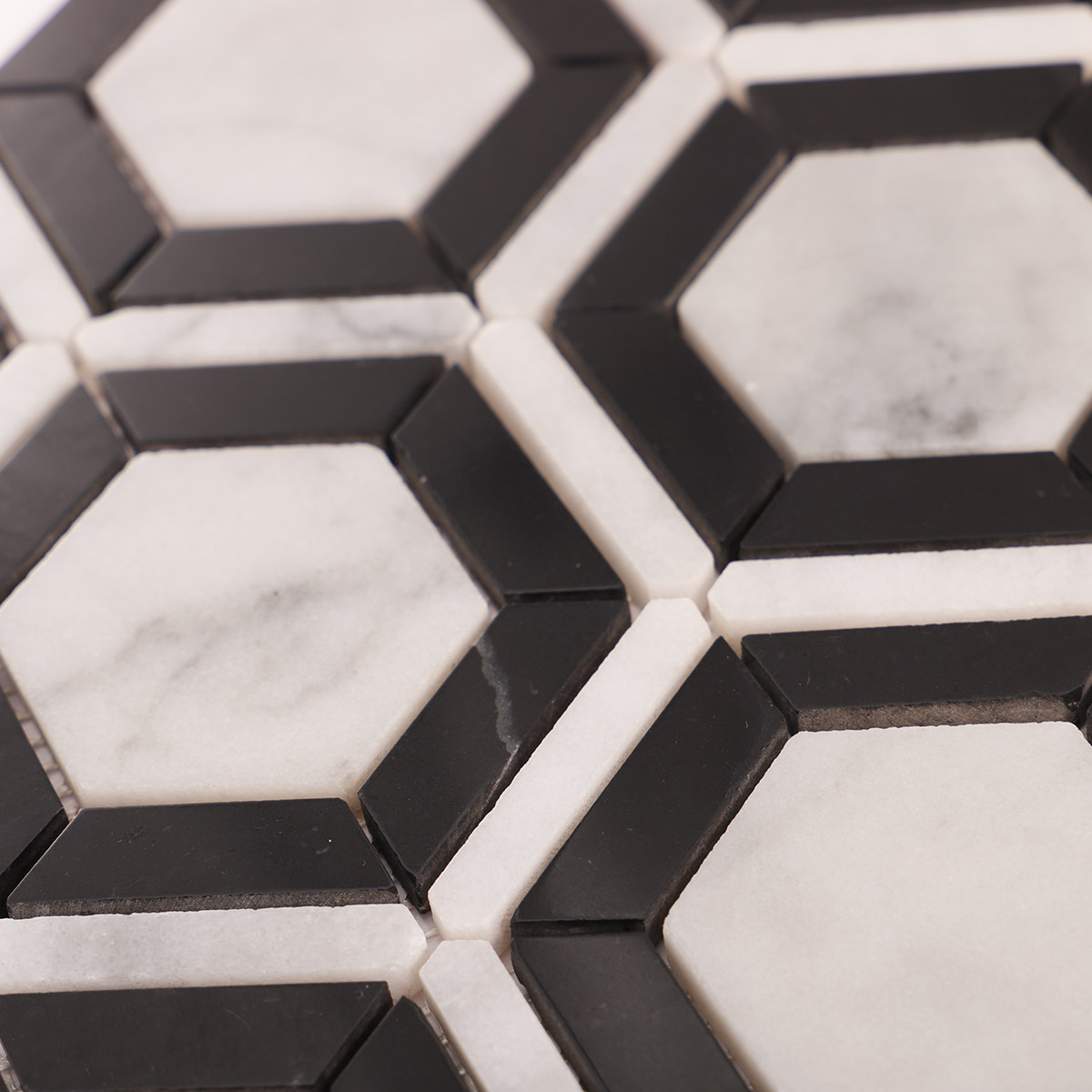
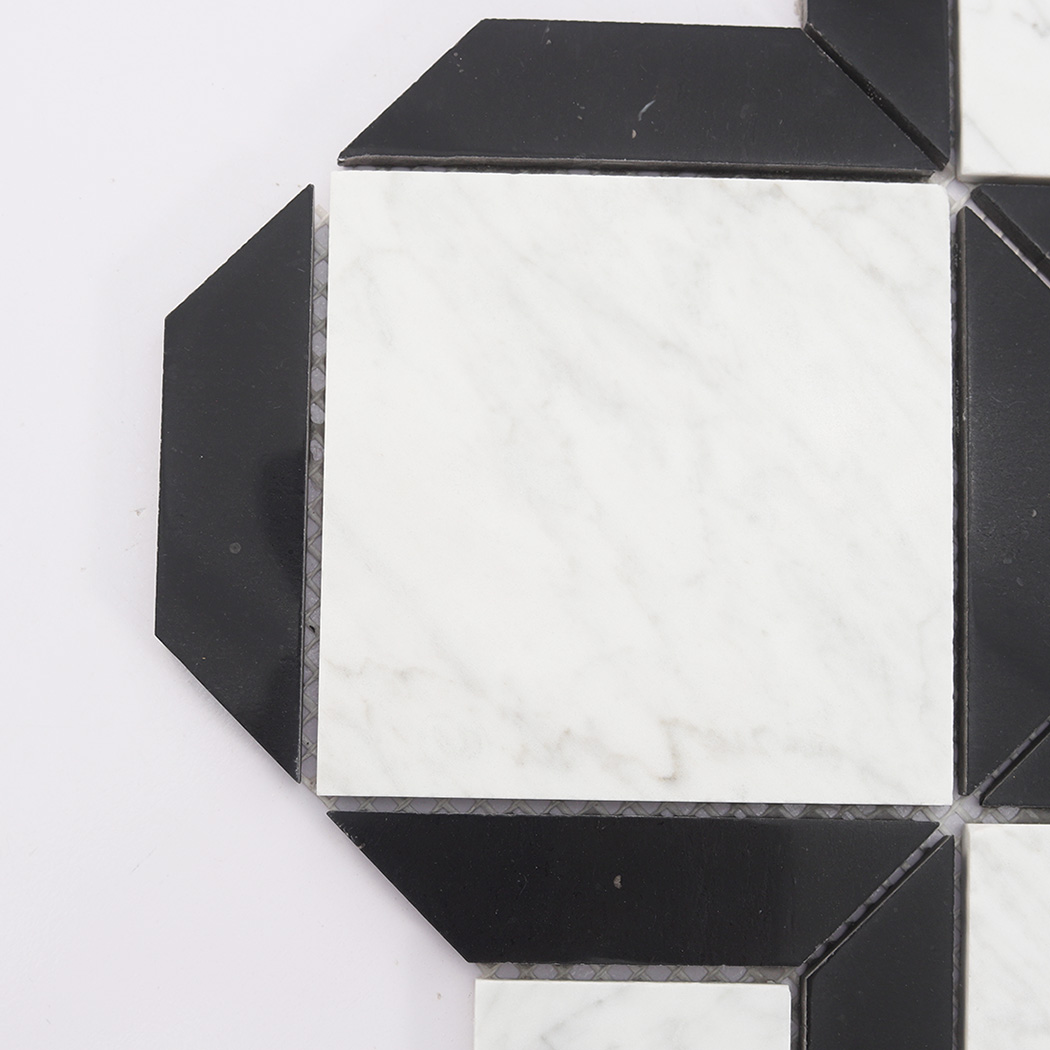
Hexagon and octagon mosaics balance traditional geometry with a clean contemporary appearance. Black dot accents can create a softer alternative to a full checkerboard layout.
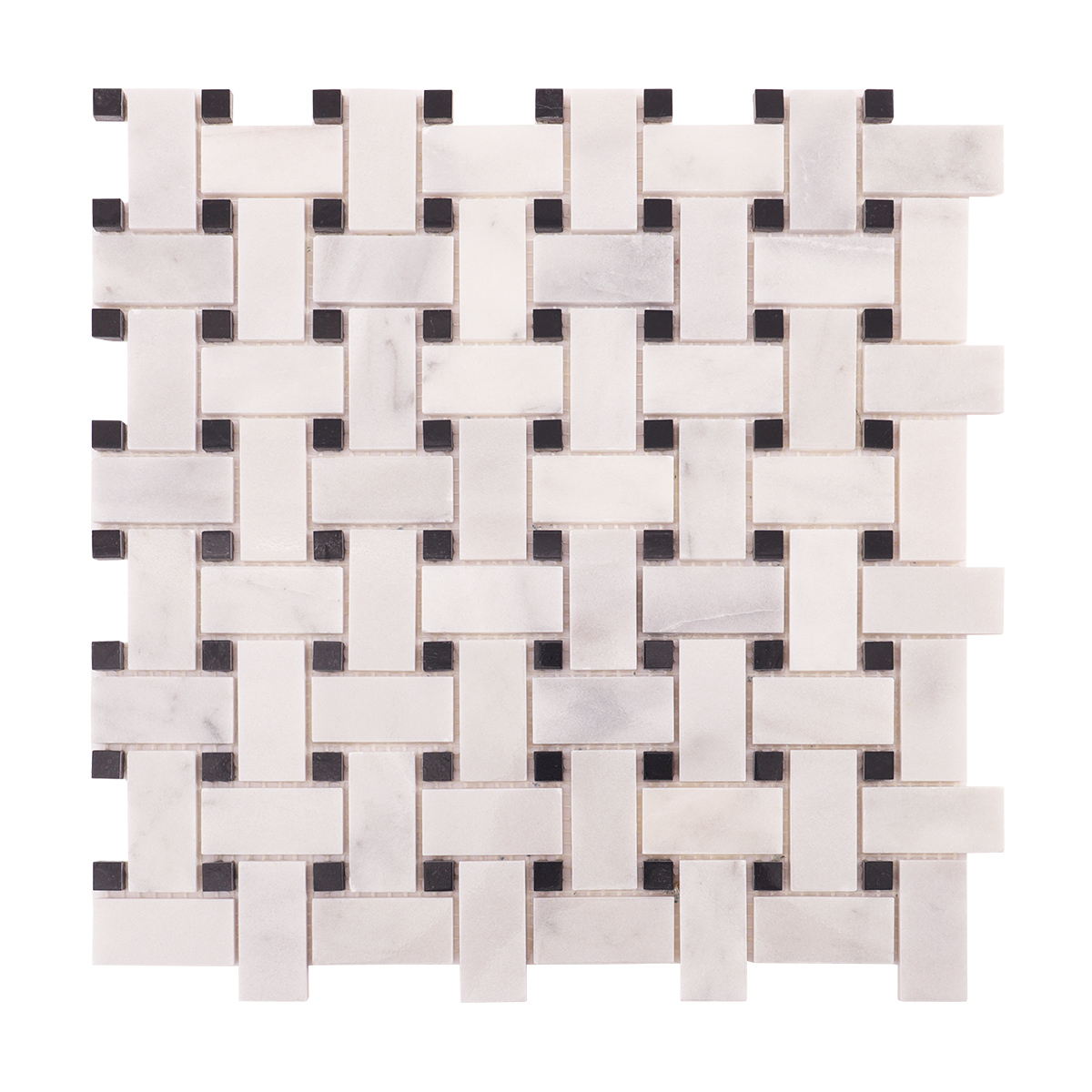
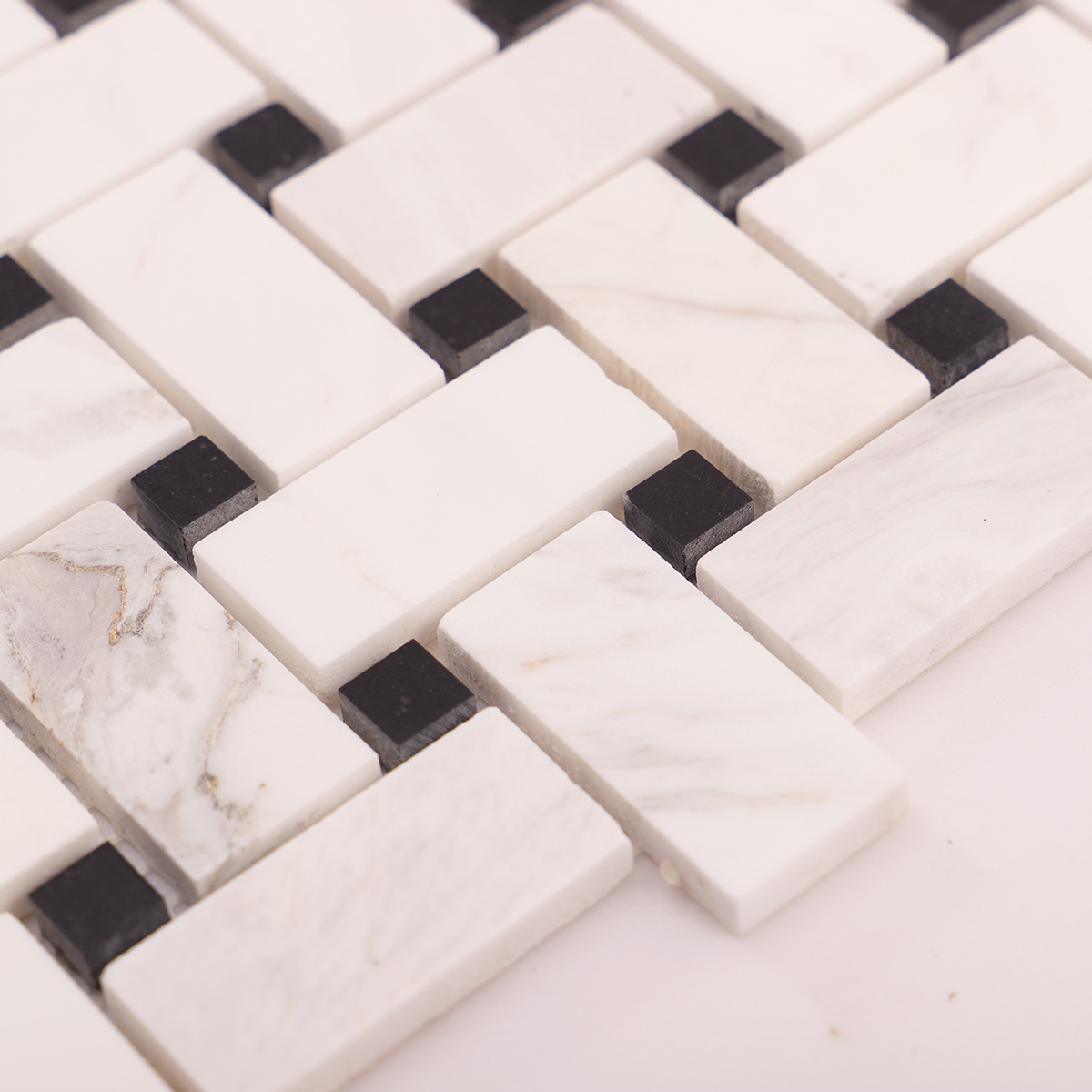
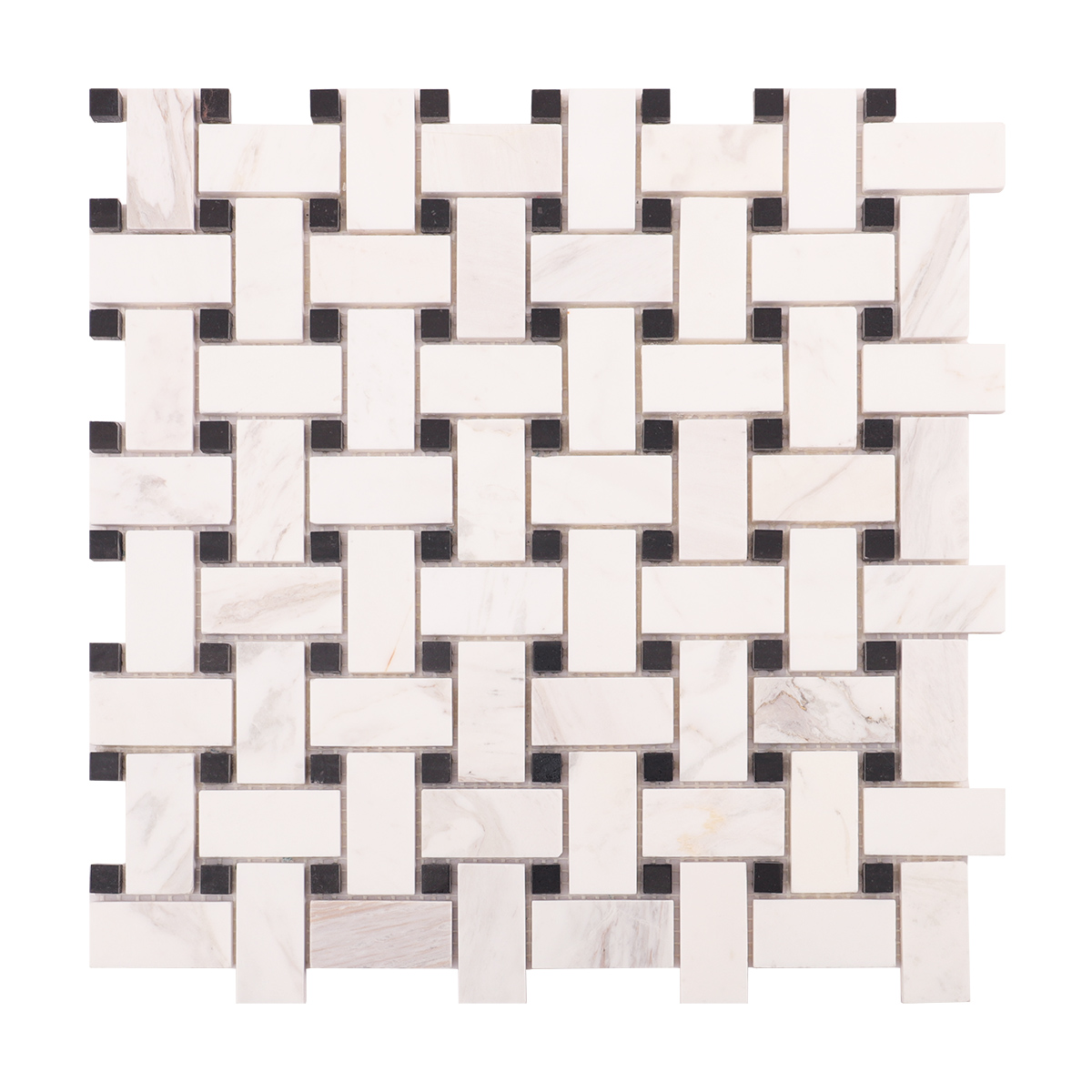
Basketweave Tiles
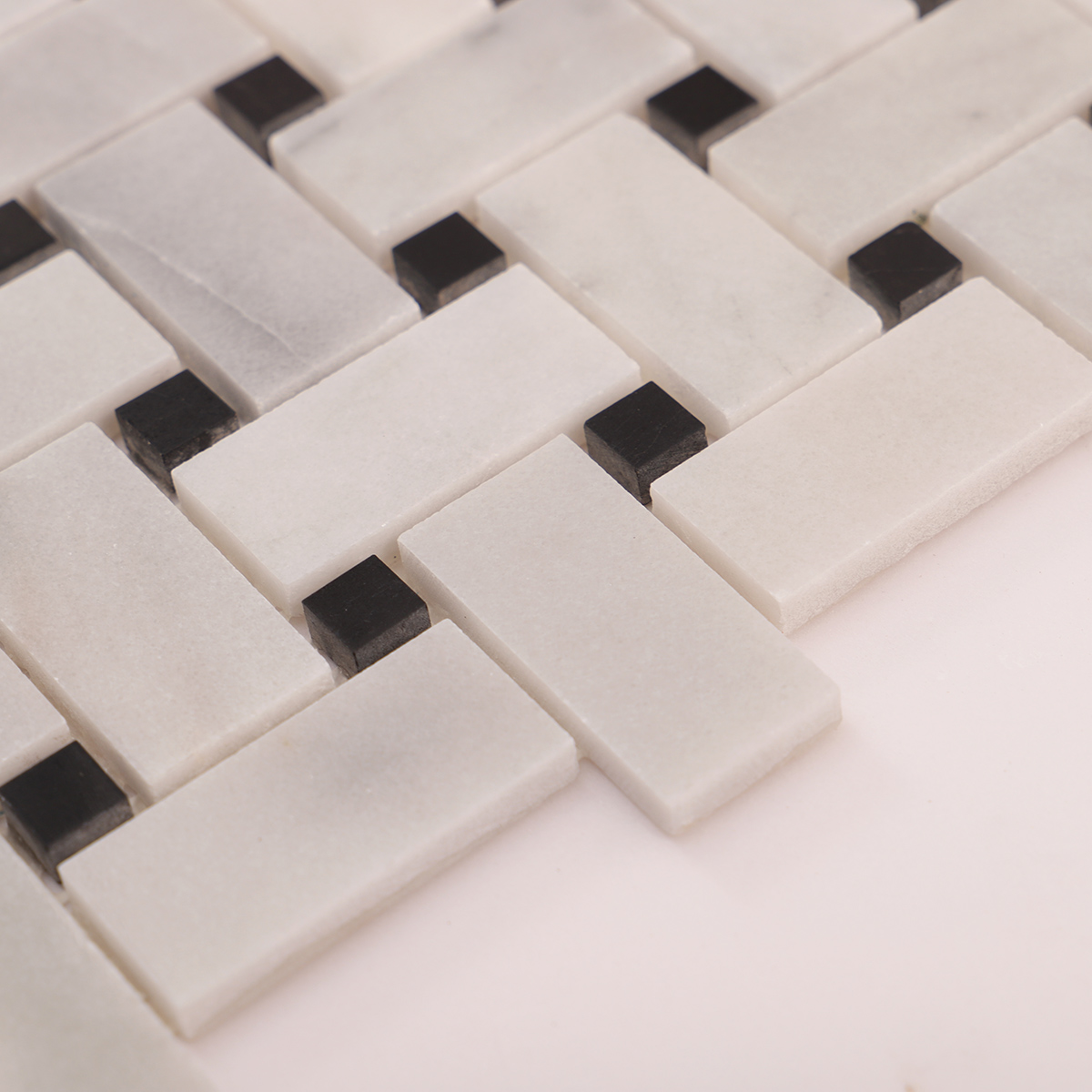
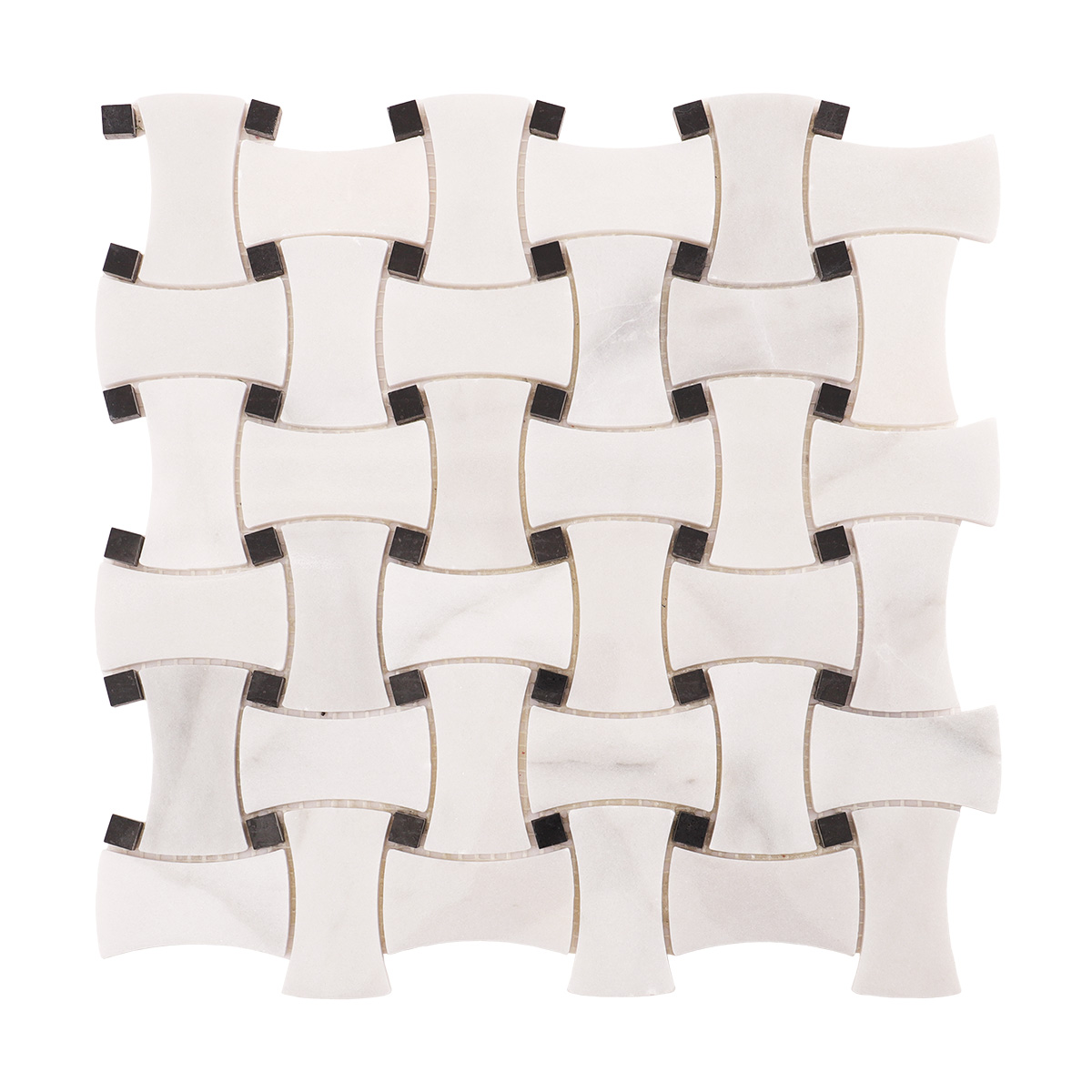
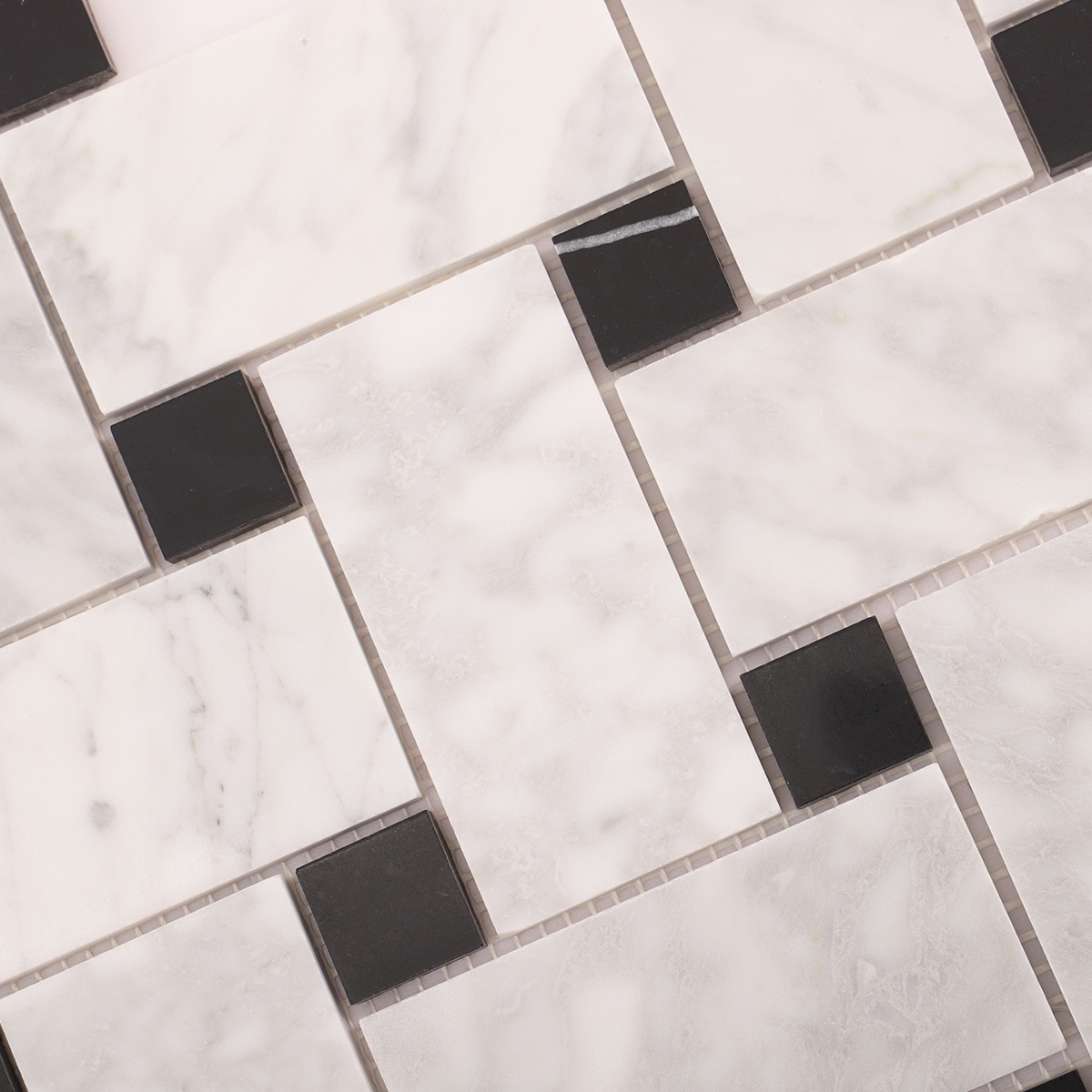
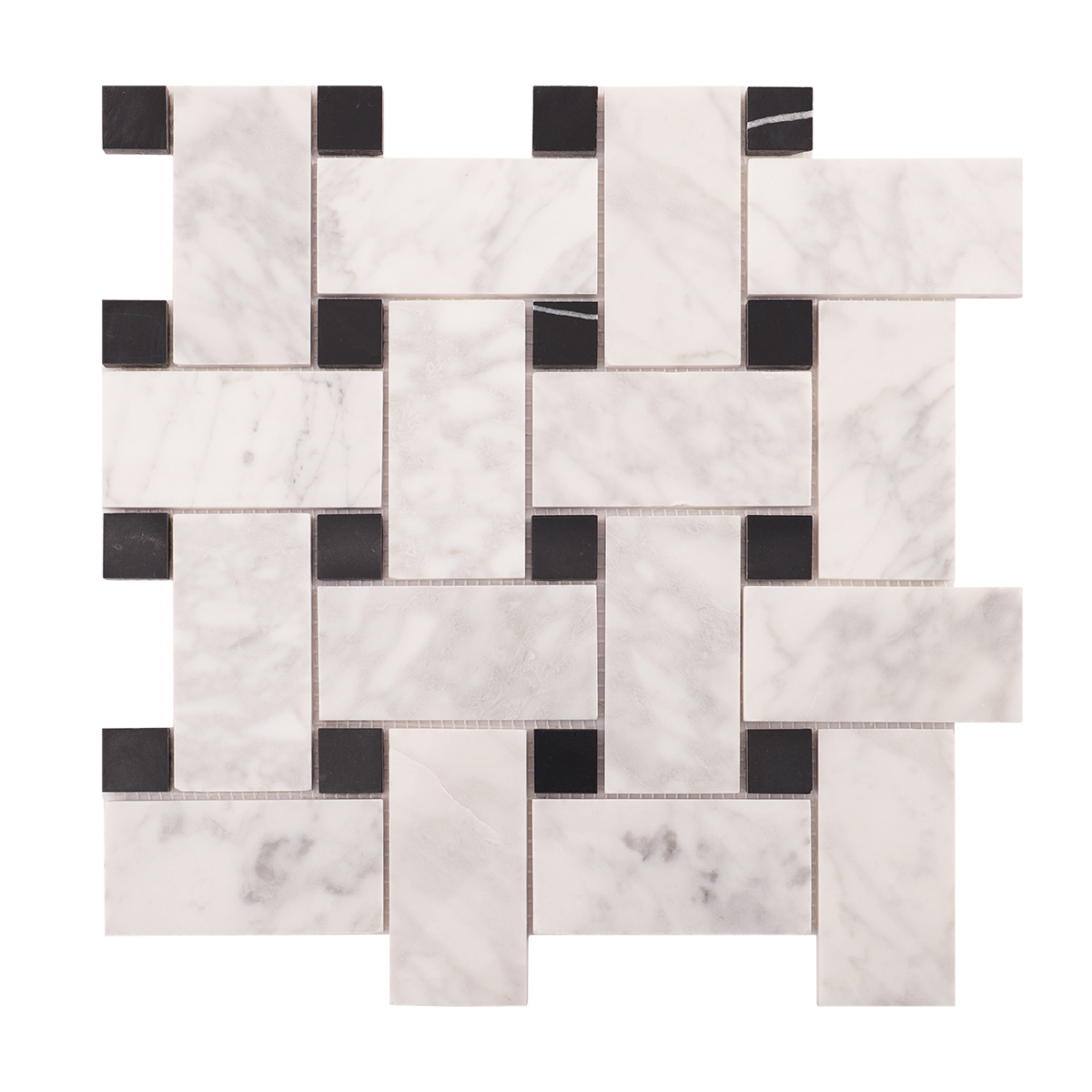
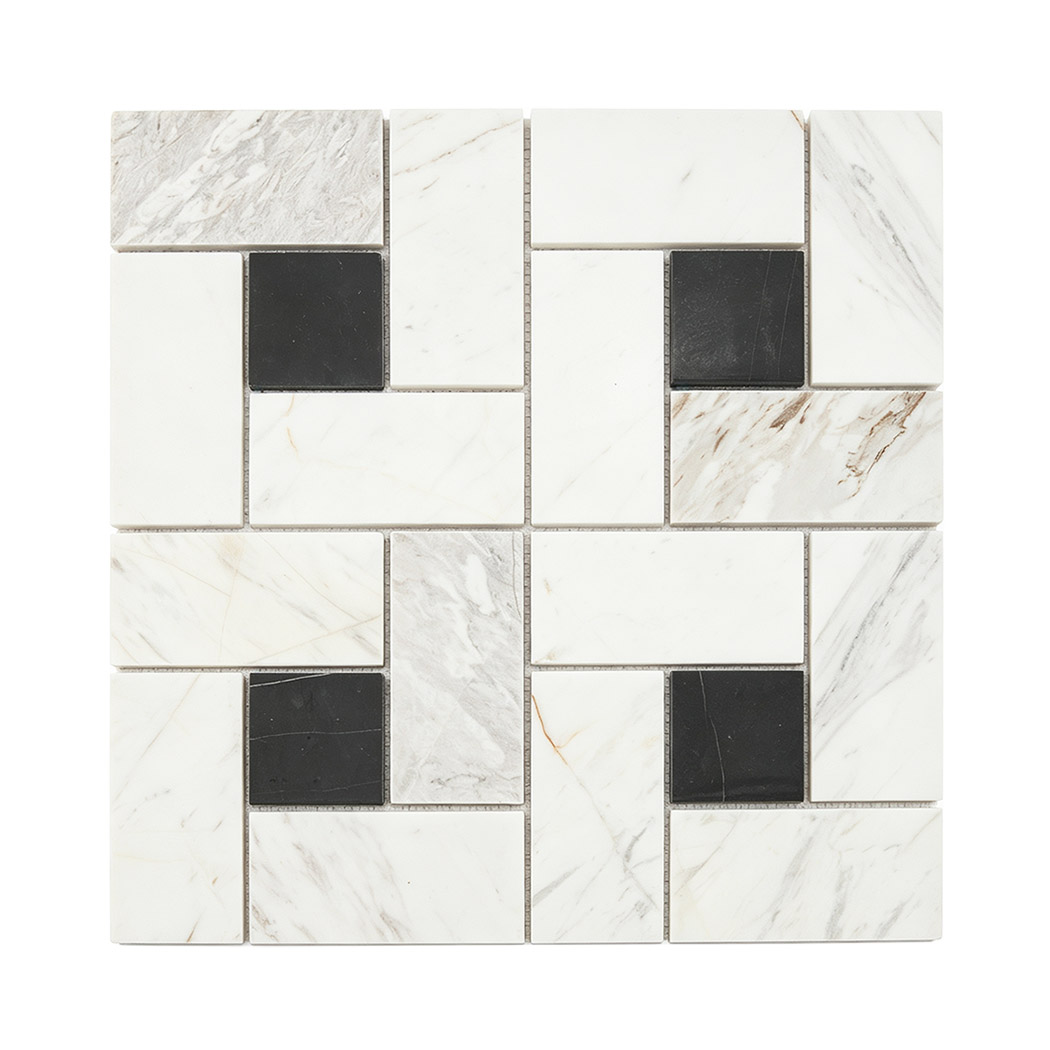
Basketweave mosaics use small rectangular pieces and contrasting dots to create a woven visual rhythm. They are especially suitable for classic bathrooms, powder rooms and entryways when the individual product is approved for flooring.
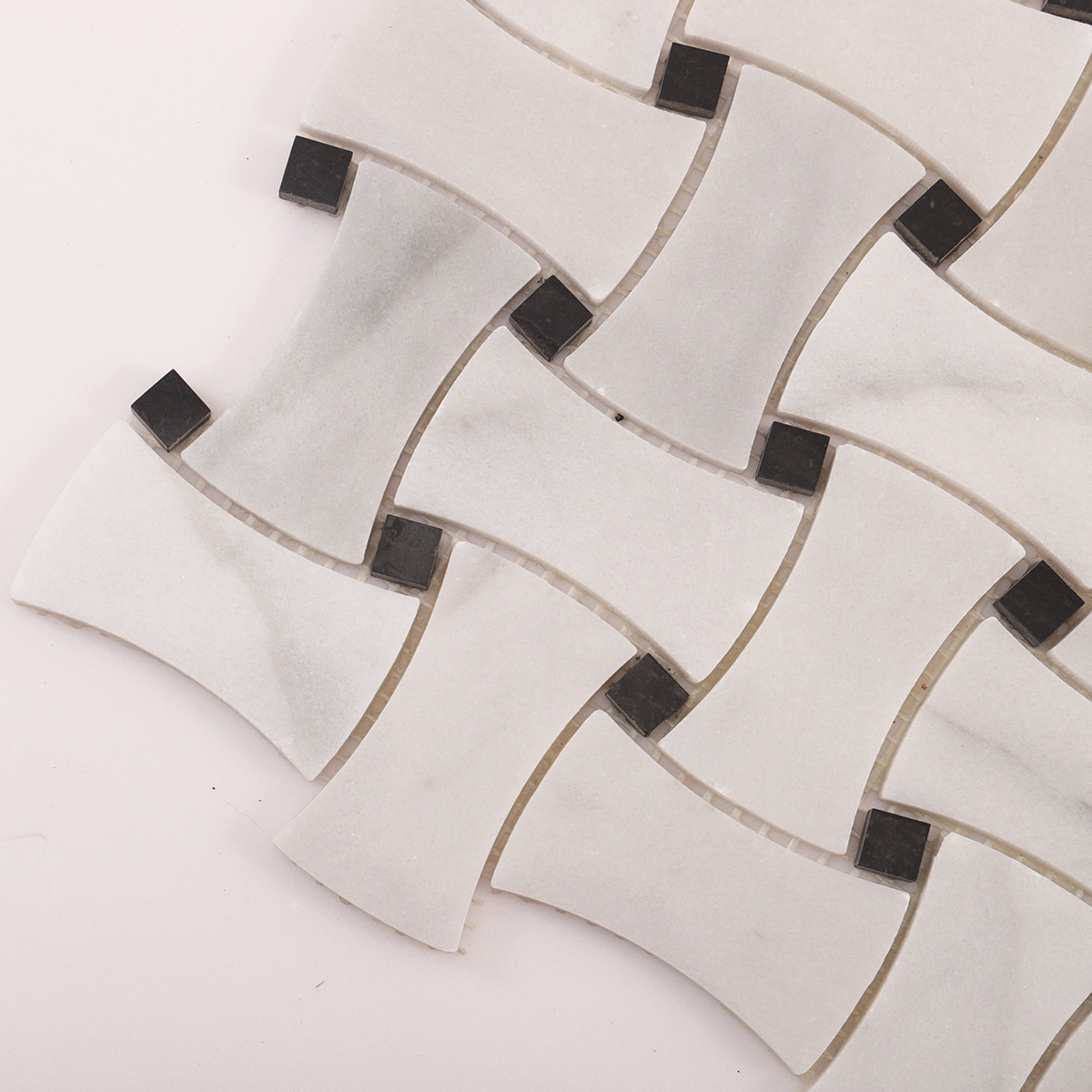
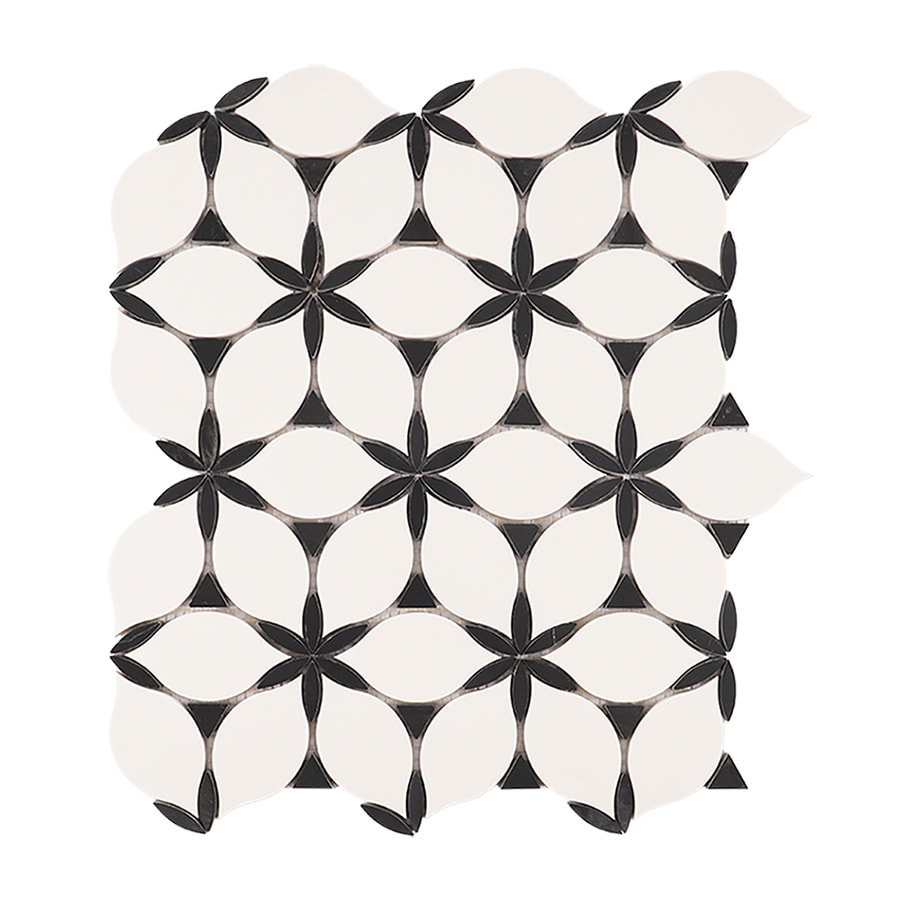
Floral and Waterjet Mosaics
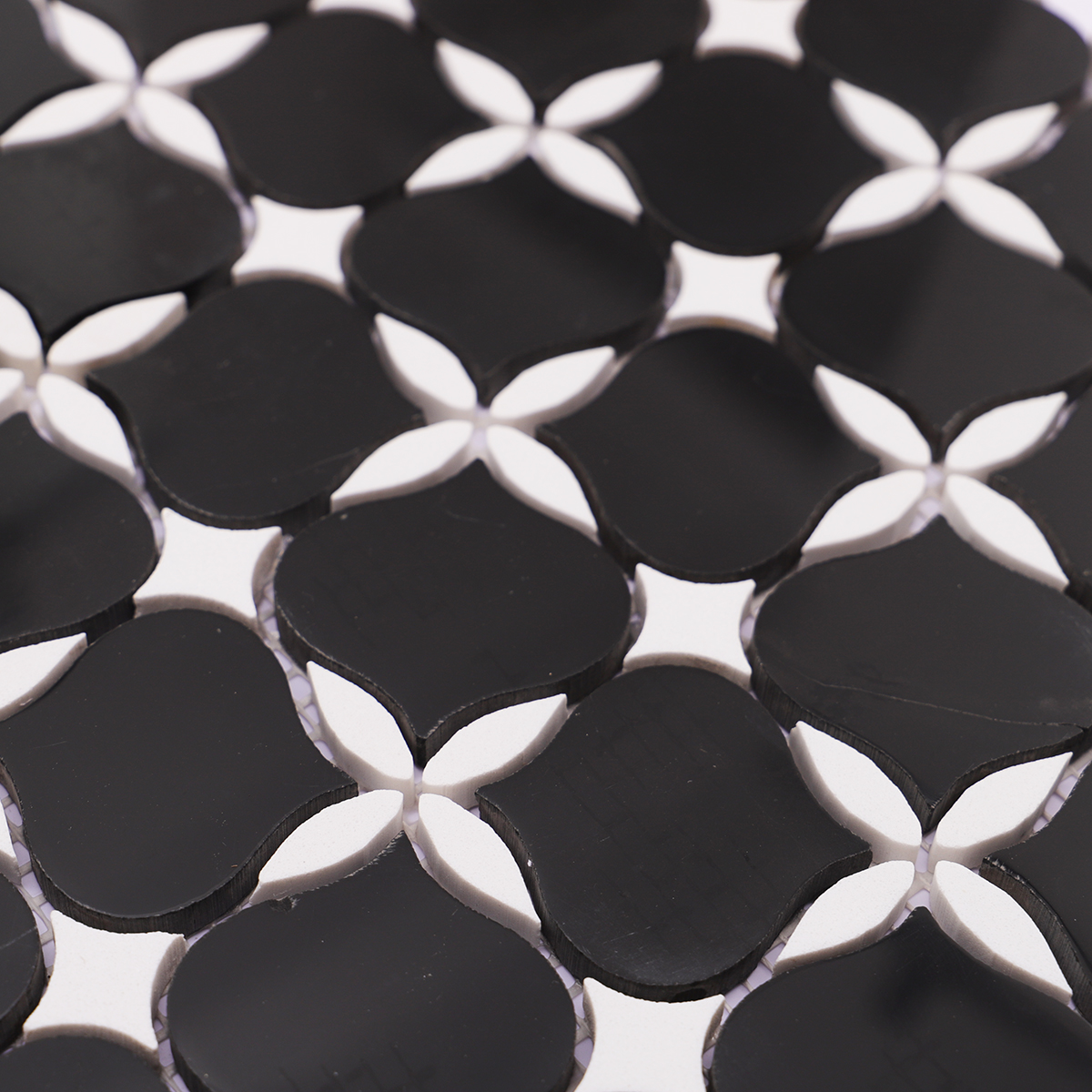
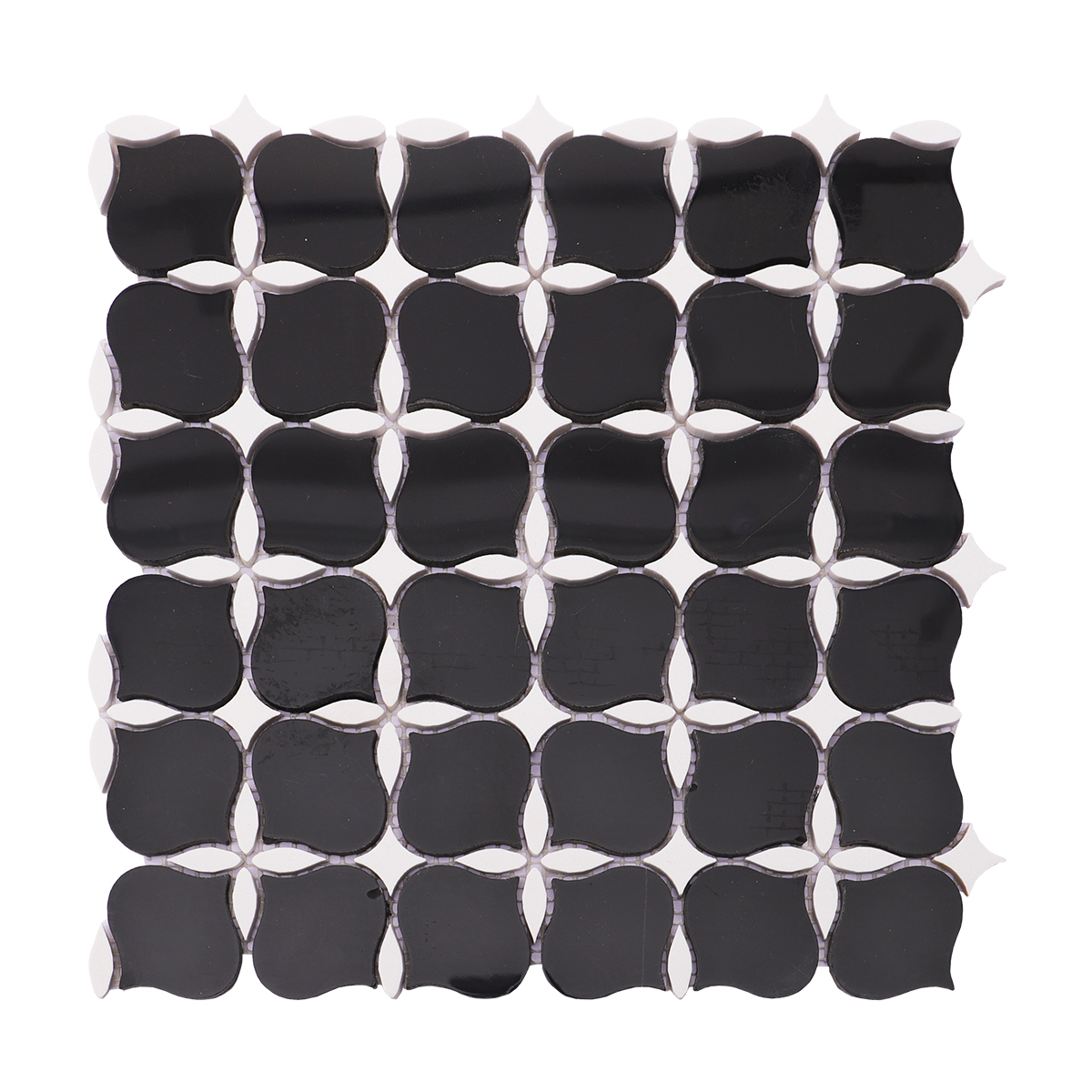
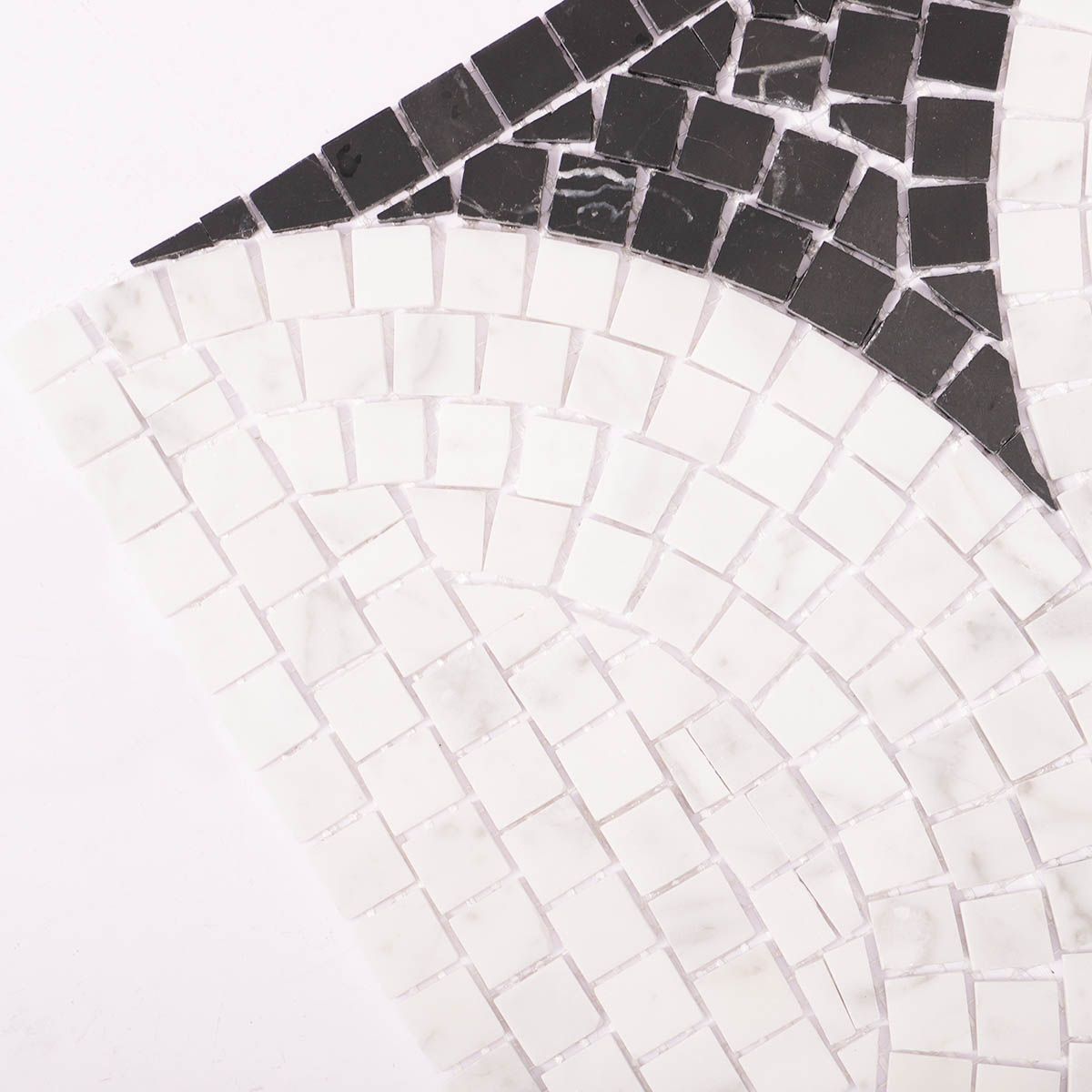
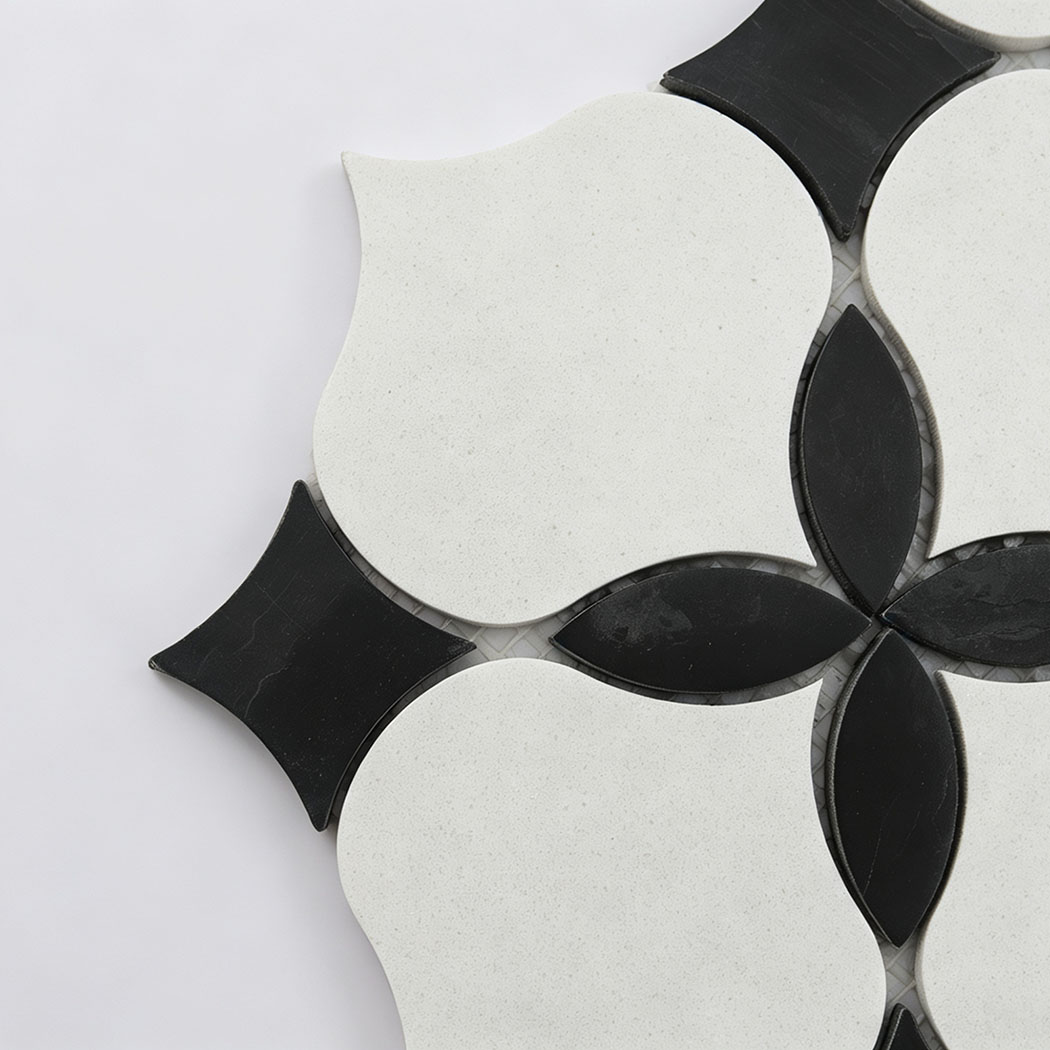
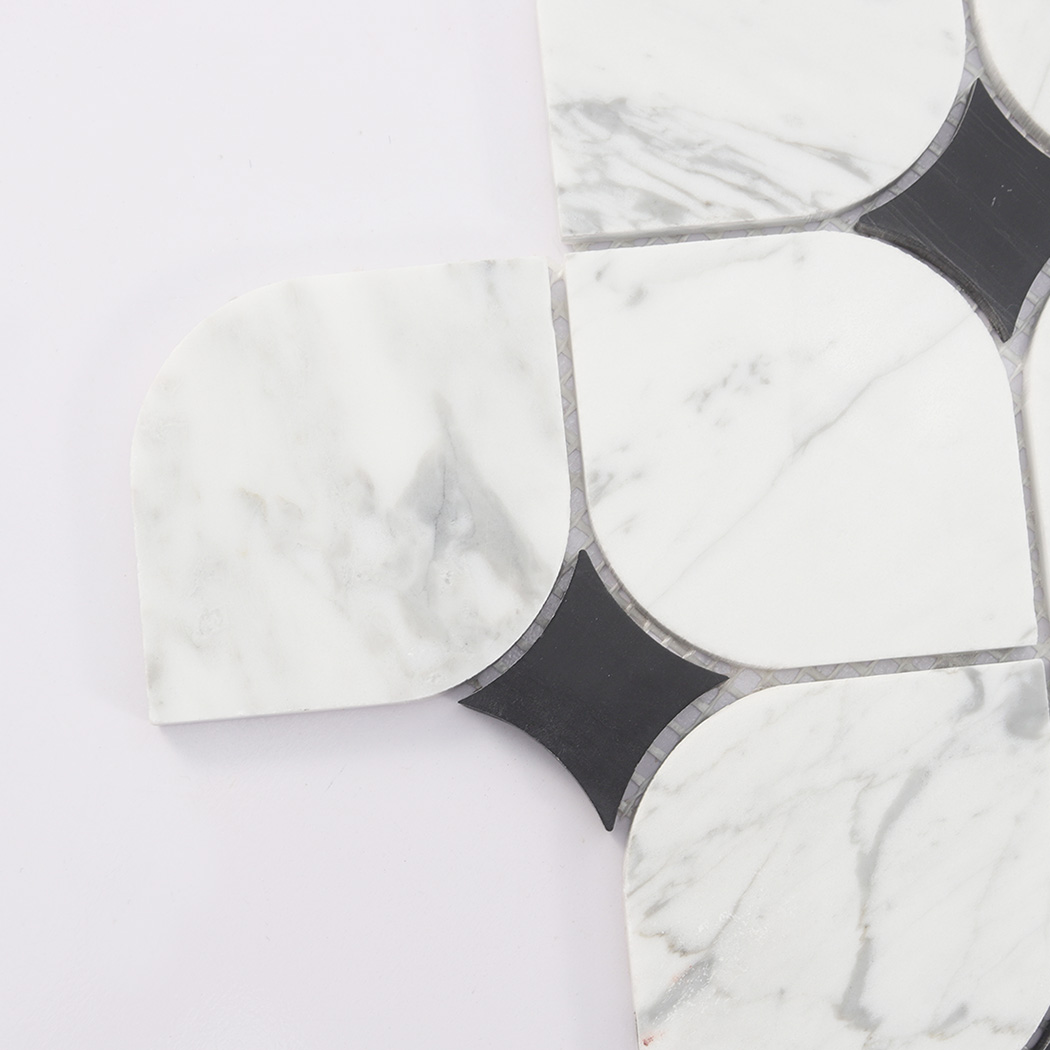
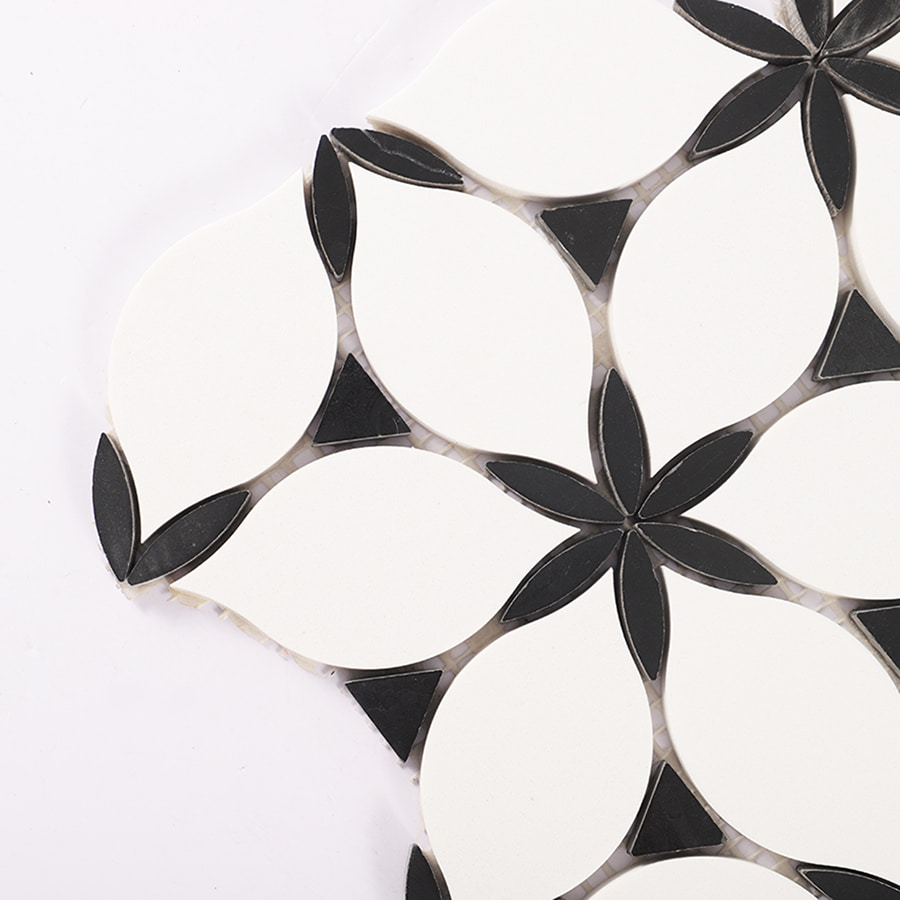
Curved petals and precision-cut marble pieces soften the contrast between black and white, creating decorative feature walls and patterned floor designs.
Where to Use Black and White Tiles
Bathroom Walls and Vanity Areas
Black and white glass and marble mosaics can create clean contrast around vanity areas and decorative bathroom walls. Confirm wet-area suitability before using a product inside a shower.
Kitchen Backsplashes
Checkerboard, geometric, striped and floral patterns can add a strong focal point behind countertops and kitchen work areas.
Patterned Floors
Use only products specifically identified as floor-rated. Polished surfaces, textured finishes and glass mosaics can perform differently under foot, particularly in wet areas.
Entryways and Powder Rooms
Black and white mosaics can define compact spaces with detailed pattern and visual structure. Review traffic suitability and maintenance requirements before installation.
Choosing the Finish and Grout Color
Honed Marble
Honed marble has a softer, low-sheen surface that gives black and white patterns a more understated appearance.
Polished Marble
Polished marble reflects more light and makes the contrast appear stronger. Floor and wet-area suitability must be evaluated for each product.
Glossy Glass
Glossy glass creates crisp color and reflection, making it especially effective on backsplashes and decorative walls.
Grout Color
White grout creates a brighter appearance, while gray or black grout emphasizes the pattern and individual tile shapes. Test grout on a sample first, especially with natural marble and translucent glass.
Natural Variation in Black and White Marble
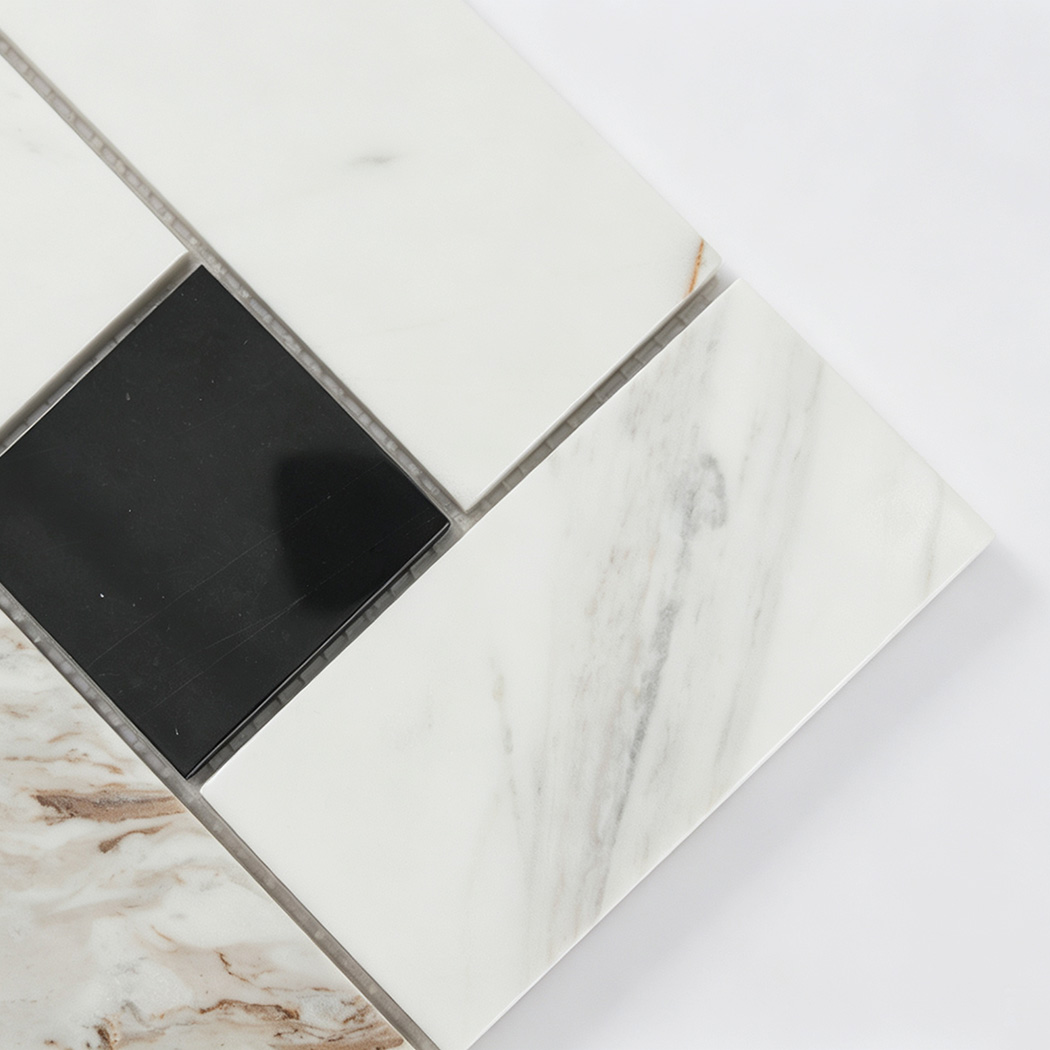
Natural marble varies in veining, shade and mineral markings. White marble may include gray, beige or green-toned veins, while black marble can show white or lighter mineral lines. These differences are natural characteristics rather than manufacturing defects.
Review several sheets together and blend tiles from different boxes before installation to create a balanced appearance.
Cleaning and Care
Clean glass and marble tiles with a soft cloth or non-abrasive cleaning tool. Use a pH-neutral, stone-safe cleaner on natural marble and avoid acidic products that may etch the surface.
Sealing requirements depend on the marble, finish, grout and installation area. Test any cleaner or sealer on a sample before applying it to the complete installation.
Black and White Tile FAQs
What materials are black and white tiles made from?
This collection primarily includes natural marble and glass mosaics. Material, finish and construction vary by product, so review the individual specifications before ordering.
Can black and white tiles be used on floors?
Only products specifically identified as floor-rated should be used on floors. Confirm the finish, traffic suitability and wet-area application of each product.
Are polished black and white marble tiles suitable for shower floors?
Not automatically. Polished marble may become slippery when wet. Use it on a shower floor only when the specific product and finish are approved for that application.
Do black and white marble tiles need to be sealed?
Many natural marble installations benefit from sealing, but requirements vary by stone, finish, grout and installation area. Follow the product and sealer manufacturer’s instructions.
Is color variation normal in natural marble?
Yes. Natural marble varies in veining, shade and mineral markings. Review and blend multiple sheets before installation.
Are black and white mosaics mesh mounted?
Many products are supplied on mesh-mounted sheets, but sheet dimensions and mounting methods vary. Check the individual product specifications.
What grout color works best with black and white tiles?
White grout creates a brighter, more continuous appearance, while gray or black grout emphasizes the pattern. Test the grout with the selected tile before installation.
How much extra tile should I order?
Order approximately 10% extra for straightforward layouts and around 15% for diagonal, waterjet or complex patterned installations. Confirm the final quantity with your installer.
Can I request a sample?
Yes. Request a sample to evaluate the actual color, veining, finish and pattern scale before placing a full order.
Find Your Black and White Tile Pattern
Explore black and white marble and glass mosaics in checkerboard, hexagon, basketweave, floral, striped and geometric patterns. Compare materials, finishes and approved applications, then request a sample before ordering.